






















Can Any Mattress Work With an Adjustable Bed?
Got an email from a friend last month who'd just dropped $1,800 on an adjustable bed and was now panicking about whether her four-year-old hybrid mattress would actually survive on it. That email is basically my Monday at this point — the question lands in my inbox at least twice a week from clients and friends. Yes, plenty of modern mattresses work fine on an adjustable bed. Plenty of older ones don't, and the ones that don't tend to fail in pretty visible ways inside the first few months.
The whole question of whether any mattress can work with an adjustable bed really comes down to whether your mattress bends with the moving frame underneath, or fights it. Memory foam and modern hybrids bend. Old innerspring mattresses with continuous coil systems fight, and they lose. Below is what to actually check on your current mattress before you commit one way or the other.
What is an adjustable bed frame?

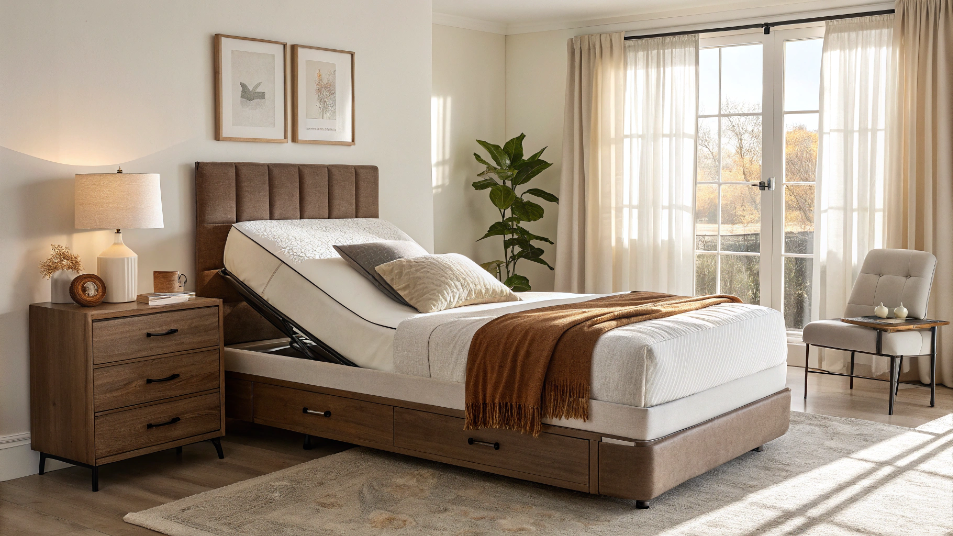
An adjustable bed frame (sometimes called an adjustable base or a power foundation, depending on the brand) is essentially a bed frame with built-in motors. Hit a button on the remote, and the head section lifts. Hit another and your feet rise. The whole thing replaces your old box spring and any traditional metal frame underneath. It sits on the floor on adjustable-height legs, plugs into a wall outlet, and ships in roughly two heavy boxes that take two people to assemble.
These used to be hospital equipment. My grandmother had one in her assisted-living apartment back around 2008 — heavy, loud motor, three positions max, looked exactly like a hospital bed because it basically was. The current generation is nothing like that. Hotel chains started showing up with them in suites around 2015. Consumer adoption ramped up hard during the pandemic when everyone suddenly cared a lot more about how they were actually sleeping. Now I see them in normal bedrooms, owned by people in their thirties with no health issues, just trying to read in bed without breaking their neck.
What does an adjustable bed frame do?

The base bends, lifts, and lowers your mattress into different positions. Sleeping. Reading. Watching something stupid on Netflix. Whatever you're doing up there, it gives you better posture for the activity. Two or three pivot points handle the mechanics — one near the shoulders, one at the hips, sometimes a third one for the calves. Build quality varies widely between brands; the cheap bases use plastic gears that strip out after about a year of regular use, while the decent ones run brushless DC motors that last 20 years and barely make a sound.
Benefits of an adjustable bed frame
- Reduces snoring and helps with mild sleep apnea by keeping the airways open during sleep
- Eases acid reflux and GERD symptoms by elevating the upper body above stomach level
- Improves leg circulation and reduces swelling when the foot section is raised at night
- Relieves lower-back pressure through the Zero-G position (originally designed for astronaut launches)
- Adds daily comfort for reading, working, watching TV, or recovering from injury without a wedge pillow situation
Characteristics to consider when choosing a mattress for an adjustable base

Four things matter more than the rest when you're matching a mattress to an adjustable base. People sometimes obsess over irrelevant features like cooling gel layers and skip the basics. Here's what actually decides whether the pairing works:
- Durability — What's the warranty length, and is it pro-rated or full replacement? Does it specifically cover use with an adjustable base, or does the fine print quietly exclude that?
- Support — Firmness depends on body weight and sleep position. Side sleepers usually want softer, back and stomach sleepers usually want firmer, and there's no universal right answer.
- Flexibility — The mattress has to be adjustable-base friendly, which is jargon for "it bends with the frame without breaking down internally over time."
- Thickness — Mattresses that are too thick won't fold cleanly at the pivot points. Too thin and they don't feel right in the elevated positions; you can feel the base through the mattress.
A mattress somewhere between 10 and 14 inches thick pairs well with most adjustable bases on the market. The 12 to 13-inch range is where most sleep specialists land when asked for the sweet spot — enough of a comfort layer to feel right when raised, thin enough to bend without seam damage.
Can any mattress work with an adjustable bed frame?
Yes, technically. Most modern mattresses (memory foam, latex, and hybrid with pocketed coils) handle constant flexing well. Traditional innerspring mattresses with rigid border wires or continuous coil systems don't, and they tend to fail fast — like, three to six months fast, sometimes faster if you're using the base every night.
Worth saying out loud, because people miss this: you can physically lay any mattress on an adjustable base. Gravity isn't the issue here. The issue is what happens when that base raises and lowers it 50,000 times over the next decade. An incompatible mattress resists movement, develops permanent creases at the pivot points, and begins to break down internally. I've seen foam layers crack open like old plaster, and springs poke right through fabric upholstery on a client's mattress within five months. Not a graceful failure mode.
How do I know if my current mattress is compatible?

Three checks I run on every client's mattress before they buy a base. First, push down hard on one end while lifting the opposite end off its current support. If you hear cracking or a metallic ping, that's a no. Second, find the law label sewn into the side (the "Do Not Remove" tag everyone ignores), and read what's actually listed in the construction. Memory foam, latex, individually wrapped coils — green lights. Continuous coil, interlocking spring, Bonnell coils — all red lights. Third, check the age. Anything older than maybe eight years probably needs replacement regardless of original construction; the foam dries out, the springs lose tension, and the fabric backings go brittle.
Types of mattresses well designed for an adjustable bed
From foam to springs to pillow tops, the options for pairing with an adjustable bed are pretty wide. Three categories work reliably; everything else is a coin flip.
Hybrid

Hybrid mattresses combine a foam comfort layer over individually pocketed coils. Each coil moves independently of its neighbors, so the mattress flexes at the pivot points instead of fighting the base. Most hybrids built after roughly 2018 or so are explicitly designed for adjustable base compatibility — they say so on the product page. Skip the ones that advertise "tied" coils or "continuous" coils, though; those are basically traditional innerspring mattresses with a foam topper, and they fail just as fast as the actual innersprings do.
Memory foam

Memory foam is the safe pick for adjustable beds, full stop. It bends without resistance, conforms to whatever position the base puts you in, and stays completely silent during movement (no creaks, no pings, no sound at all, really). Sleep Foundation testing on adjustable bases found that memory foam mattresses transition smoothly between positions and outlast spring alternatives in adjustable-base setups by a noticeable margin. It's also my go-to recommendation for couples — memory foam absorbs motion transfer well, so when one person adjusts the base, the other one barely feels it.
Latex

Latex feels more responsive than memory foam — more bounce, cooler sleep surface, less of that "sinking into quicksand" sensation that some people hate about foam. Natural latex (made through Talalay or Dunlop processing) flexes well at adjustable pivot points and resists indentation for years on end. The drawback is weight. Latex is heavy. A queen-size latex mattress can hit 130 pounds, which approaches the rated limit on some residential adjustable bases. Check your base's weight capacity before placing the order.
Designing your bedroom around an adjustable bed

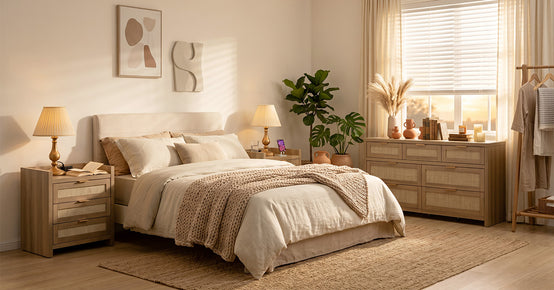
Buying an adjustable bed actually changes the rest of the bedroom in ways most people don't anticipate. The bed sits taller. The head section rises during use. Suddenly, the nightstand looks short, the dresser starts looking dated, and the room feels visually unbalanced even though only one piece has changed. A coordinated set from the Sicotas'bedroom storage essentials keeps everything looking like it belongs in the same room rather than like the bed showed up to a party where nobody else got the dress code memo.
Nightstands at the right height

Standard nightstand height (around 24 inches) suddenly looks short next to an adjustable base, which sits 14 to 16 inches tall before you even add a mattress on top. Your sleep surface ends up at 28 to 32 inches off the floor, sometimes more. The nightstand should match the height of the mattress top, or at least come within 2 to 3 inches of it. Reaching down for a glass of water shouldn't feel like leaning out of a treehouse. The Crescent three-drawer bedside nightstand sits at a height that works with most adjustable base setups, with three drawers for the remote, charging cables, the sleep mask you forgot to use last night, and whatever else accumulates next to a bed.
Dressers and bedroom storage

Adjustable beds tend to pair with more contemporary bedroom furniture overall. The boxy six-drawer dresser your parents had can look genuinely out of place next to a sleek modern adjustable base — like a beige carpet under a leather sectional. A cleaner-lined option like the Cas six-drawer storage dresser holds its visual weight without competing with the bed for attention, which matters when the bed itself occupies more visual real estate than it used to.
Wardrobe for clothing overflow

Adjustable beds eat more visual mass than standard frames. Less floor space ends up available for everything else, and clothing storage suddenly feels tighter than it did. Vertical storage is starting to matter more than it did before. A tall 71-inch wardrobe storage unit handles seasonal clothing and overflow that would otherwise pile across the dresser top or end up draped over the chair you keep meaning to deal with.
Horizontal storage to balance the room
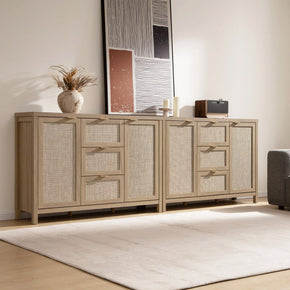
Where vertical storage compresses visual space, low horizontal storage like the Terra horizontal-format dresser, opens it back up. The lower profile fits well under windows or against the wall opposite the bed. Six drawers arranged horizontally hold a substantial amount of clothing without visually dominating the room, and the lower silhouette balances the elevated visual weight of the adjustable base on the other side of the room.
Elevate your bed for better sleep
Sleep is when the body actually heals. Hormones reset, muscles repair, and the brain clears out whatever it's been processing all day. So spending money on a better sleep system isn't really an indulgence — it's basic maintenance, the same way you'd service a car. If you've already decided on the adjustable base part, the mattress is the next piece that actually matters. Memory foam, latex, or pocketed-coil hybrids all work; older spring beds and thick pillow-tops over 14 inches will cause problems, and you might as well replace them up front.
Plan the rest of the bedroom around the new setup, too, while you're at it. Nightstand height that matches the new bed. A coordinated dresser. Enough clothing storage to keep the room from feeling cluttered around the taller bed. The goal isn't just a better bed; it's a better room to come home to at the end of a long day.
FAQs
Can I use my existing mattress on an adjustable bed?
Maybe, depends on what's actually inside it. Memory foam, latex, or modern hybrids with individually pocketed coils — probably yes. Traditional innerspring, anything with a rigid border wire, or thick pillow-tops over 14 inches — probably no. Run the bend test before you commit either way.
Will an adjustable bed ruin my mattress?
Only if the mattress isn't built to flex. Compatible mattresses last just as long on an adjustable base as on a flat foundation. Incompatible ones can show real damage within a few months, sometimes within weeks if you're using the base nightly.
How thick should a mattress be for an adjustable base?
Between 10 and 14 inches works for most setups. Thinner mattresses don't have enough of a comfort layer to feel right when raised. Thicker ones, especially pillow-tops north of 14 inches, tend to fight the bend at the pivot points and develop stress damage.
Do you need a special bed frame for an adjustable base?
The adjustable base IS the bed frame. It replaces both the box spring and any traditional metal frame underneath. Some bases will fit inside an existing platform bed if you want to keep the headboard for visual continuity. Browse the Sicotas nightstand range to find compatible bedside pieces that match the new bed height after you install the base.
Sources
- Sleep Foundation — Best Mattress for Adjustable Beds (2026 testing)
- Sleep Foundation — Best Adjustable Beds of 2026
- Sleep Foundation — Best Split Queen Adjustable Bed
- NIH PMC — The Influence of Head-of-Bed Elevation in Patients With Obstructive Sleep Apnea
- Journal of Clinical Sleep Medicine — Effect of Head-of-Bed Elevation on Upper Airway Collapsibility
- NIH PMC — Head-of-Bed Elevation (HOBE) for Improving Positional OSA
- ClinicalTrials.gov — Influence of Elevation of the Head of the Bed in Patients With OSA


Looking for something else?

Furniture Materials Guide: Picking the Right Material Room by Room
LEARN MORE
How to Mix Wood Tones Without Making a Room Look Mismatched
LEARN MORE
18 College Apartment Furniture Ideas That Save Space and Money
LEARN MORE
Types of Entertainment Centers: 11 Designs and How to Pick One
LEARN MORELooking for something else?

Curio Cabinet Decor Ideas: How to Style a Display Cabinet Without the Clutter
LEARN MORE
Curved Furniture: How to Style, Measure, and Buy It in 2026
LEARN MORE
What Is Rattan Furniture? A Buyer Guide to Types and Care
LEARN MORE


Further reading

How to Choose a Nightstand for a CPAP Machine

How to Choose a Shoe Cabinet for Men's Sizes, High-Tops, and Bulky Shoes


