




Boho Mid Century Modern Bedroom: How to Mix Clean Lines With Cozy Texture
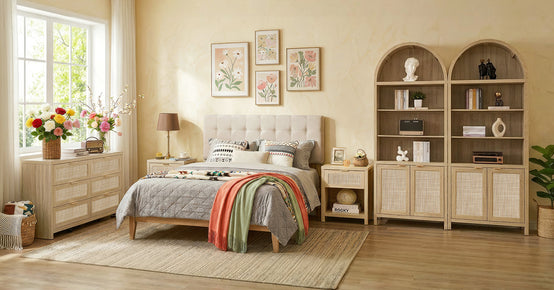
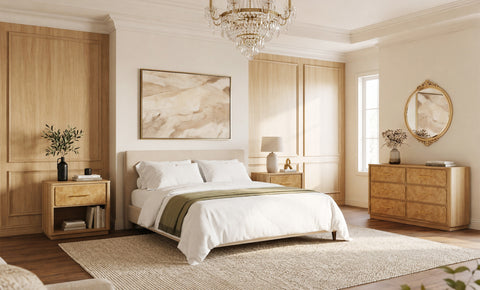
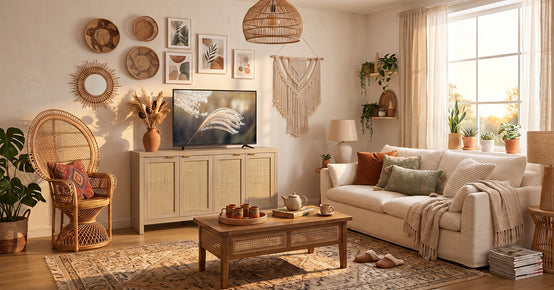
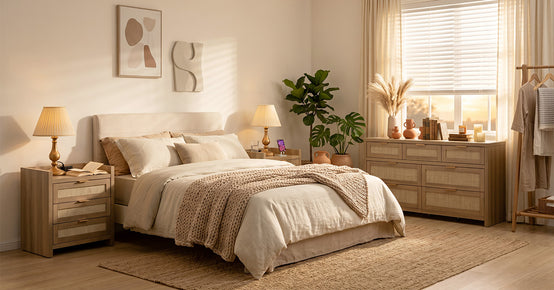
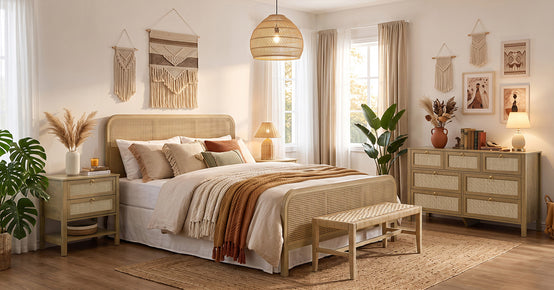
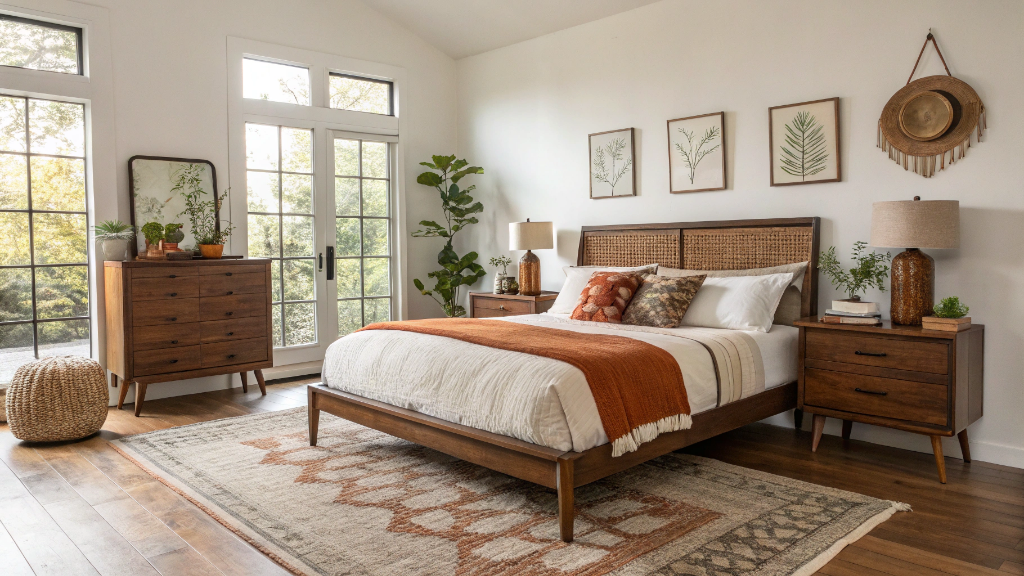
There's a bedroom look that keeps showing up on Pinterest, in home tours, in the guest rooms of people whose houses you secretly want to live in. Warm walnut dresser. Low wood bed frame. Jute rug on the floor. A macrame piece above the bed. Plants. Layered linen in off-white and cream. It doesn't have a tidy name, but it's mid-century—a boho mid-century modern bedroom—and the reason it keeps appearing is that it actually works, both visually and practically, in a way that most single-style bedrooms don't.
Mid-century modern on its own can be a bit austere. Beautiful furniture, clean geometry, warm wood — but sometimes a bedroom built purely around MCM principles feels like it belongs in an architecture magazine rather than a life. Bohemian style on its own has the opposite pro. So much warmth and texture and personality that, without anything to anchor it, it tips over into clutte,r. Put them together, and you get something genuinely hard to achieve with either style alone: a bedroom that's calm and personable at the same time.
The thing most people don't realize is that this combination isn't accidental — the styles are constructed at a structural level. MCM design handles the bones of the room: the furniture silhouettes, the wood tones, the low profiles, the clean edges. Boho handles everything that makes those bones feel lived-in: the rugs, the textures, the plants, the handmade pieces that give the room its character. Neither side needs to dominate. The goal is balance, not compromise.
Before any of the styling decisions, though, one thing has to happen first. Get the furniture sorted. Bed, dresser, nightstands — those three things establish the room's proportions and its visual language. The boho layers come after that foundation is in place, not before, art with macrame, plants,s and a rug, and then try to find furniture that fits around them, and the room ends up feeling like a mood board that never quite became a bedroom.
What a Boho Mid Century Modern Bedroom Actually Is
Two design eras sharing a room without either one losing what makes it good. That's pulled to say than to pull off, so it helps to know exactly what each side contributes.
What Mid-Century Modern Brings

MCM is a period style — roughly 1945 through the late 1960s — built around a few fixed ideas. Furniture sits low to the ground. Legs taper and lift pieces off the floor. Wood is the primary material: walnut, teak, and oak, in warm natural finishes. Ornamentation is minimal or absent. As HGTV's mid-century modern guide puts it, MCM is defined by 'minimal fuss and ornamentation, along with sleek lines juxtaposed by organic shapes.' Every piece has a job. Nothing purely decorative makes the cut.
What Bohemian Style Brings

Boho doesn't operate on a rulebook — which is the point. It's about accumulation over time: the rug you found, the basket you picked up, the wall hanging a friend made. In a bedroom, it shows up as layered linen bedding, a patterned jute rug, rattan baskets with some genuine function, a macrame piece over the bed, and a couple of plants that are actually alive. The mood is relaxed and personal. It looks collected rather than ordered, which takes more confidence than people realize.
Why the Two Don't Just Coexist — They Help Each Other

MCM without boho can feel sparse. Great bones, but the room doesn't quite invite you in. Boho without MCM can feel chaotic — textures and patterns everywhere with nothing to hold them in place. But MCM furniture as the frame, with boho layered on top of it? The structure gives the warmth somewhere to land. The warmth makes the structure feel human. You end up with a room that works at both levels simultaneously. That's the trade worth making.
Getting the Color Palette Right
Color goes wrong faster than anything else in this style. Too many saturated tones, and the room looks like an argument. Too much gray-based neutral and you lose the warmth that makes boho feel like boho. The middle path is simple enough once you see it.
Neutrals Do the Heavy Lifting

Warm white, cream, beige, oatmeal, tan, taupe, and soft warm gray. These live on walls, in bedding, on curtains, and in the larger sections of the rug. They're not just backdrops — they're the breathing room between your accent colors and patterns. Without a neutral base, layered boho textures read as chaos. With it, they read as deliberate. That difference is almost entirely down to how much neutral ground the eye has to rest on between each interesting thing.
Two Earthy Accent Colors — Then Stop

Terracotta. Rust. Mustard yellow. Burnt orange. Olive green. Warm clay. Muted teal. Any two of these, alongside warm wood furniture and neutral bedding,g will carry the room. Pick your lead tone and a quieter supporting shade, then repeat them consistently: a pillow, a throw, the plant pot on the dresser, maybe an abstract print on the wall. Repetition is what separates a color scheme from a collection of colors. The MCM-friendly version of boho color uses earthy warmth, rather than primary boldness.
The Mistake That Kills This Style
Terracotta walls, mustard pillows, teal art, burnt orange curtains, and a deep burgundy rug — all simultaneously. Every tone is competing for the same attention, none of them winning. The boho MCM palette works because it's warm, earthy,y and restrained. The moment you start pulling in more than two accent colors, the 'mid-century' half of the equation disappears, and you're just left with a chaotic boho bedroom. Stay with two. Let the neutrals and the wood tones handle the rest.
Furniture First — This Is Not Optional
Every time a boho MCM bedroom doesn't quite work, the reason is usually the same: someone started with the accessories and tried to find furniture that fit around them afterward. The furniture has to come first. It establishes the proportional relationshipto which visuallightresponds—
The Bed Frame's Whole Visual Register

Low platform bed. Clean headboard. Simple silhouette. That's the target. Cane headboards are worth singling out — they're genuinely MCM in their geometry and genuinely boho in their natural material, which makes them one of the rare pieces that bridges both styles without looking like a compromise. Whatever you go with, keep it simple. Carved wood, ornate upholstery, and dramatic tufting all pull in a direction that fights the MCM side of this equation.
Nightstands: Matching, Warm Wood, With Storage

Two of them. Same finish. Warm wood or walnut tone. And drawers — actual drawers, not just a shelf or a bare surface. Surface-only nightstands look good in a catalog and become a dumping ground for everything within a week. A wood nightstand with 3 drawers keeps glasses, chargers, books, and assorted bedtime items inside and off the top. In a boho MCM room, clear nightstand surfaces matter — they're part of what makes the woven throw and the plant on the dresser read as styling rather than overflow.
The Dresser: More Than Storage

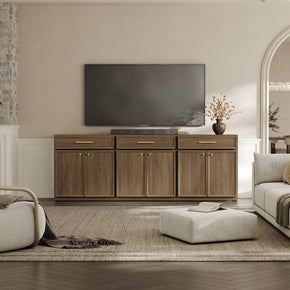
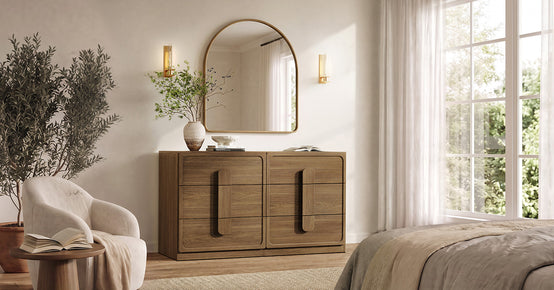
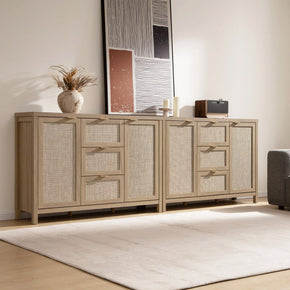
Pick a dresser with real storage capacity — six drawers minimum — and a clean warm-wood finish, and it becomes the visual anchor of the room's main wall, not just a place to put folded clothes. Put a small tray on top, one plant, one lamp, and that wall is done. The Terra 6-Drawer Horizontal Dresser works well here: wide, flat-fronted drawers in a warm finish that reads naturally with both MCM structure and the earthy warmth boho layers need. The horizontal profile also gives you a proper surface for those few pieces that deserve to be at eye level.
When the Room Needs More Capacity
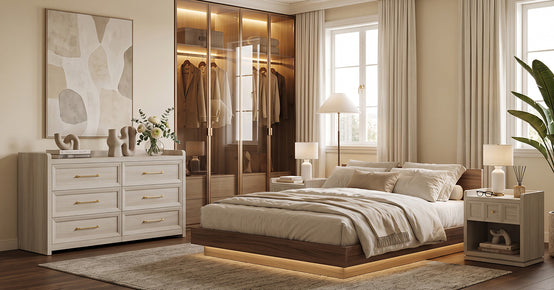
Not every bedroom has wall space for a wide dresser. In apartments or tighter rooms, going taller and slimmer solves the same storage problem without the footprint. The Stria Dresser delivers large drawers with serious capacity in a footprint that hugs the wall, taking up less space andleavingless floor space. For a shared primary suite where two wardrobes need to coexist in one dresser, the Zura Modular 9-Drawer Dresser gives you that capacity in a modular format you can configure to the actual room, not just a theoretical layout.
Leave Space Between Pieces — It's Not Wasted
MCM rooms are airy. That's not a function of budget or square footage; it's a function of restraint. Furniture was always meant to float with space around it — the tapered legs that lift pieces off the floor, the effort to communicate that idea. Pack a bedroom too tightly with furniture, and the boho layers you add later get absorbed into the clutter instead of reading as design. The empty floor between pieces is doing work.
How to Layer Boho Texture Without the Room Getting Away From You
'Layering' in boho design means adding things in stages and stopping before it becomes too much. Here's where each layer actually belongs.
Bedding: Texture in Neutral Colors

Linen duvet in off-white or warm cream. A waffle cotton blanket folded across the foot of the bed. Maybe a tasseled throw in your main accent color draped casually over one corner. That's the full bedding story for this style — texture doing the visual work rather than pattern. A richly textured neutral bed against warm wood furniture looks intentional and warm without any color conflict. The moment you reach for a bol,d patterned duvet, the MCM side of the room starts to lose the argument.
The Pillow Count Has a Ceiling

Three on a queen. Five maximum on a king. One patterned — geometric or abstract in your lead accent color. One solid in your second accent color. One or two textured neutrals — something with tassels, pom-pom trim, or a chunky woven face. More than five almost always means someone's removing half of them before getting into bed, which means they're not actually living in the room. They're just being moved from chair to bed to chair every day.
One Rug — But the Right Size

Jute, Moroccan flatweave, geometric wool, vintage-style Persian — all at home in a boho MCM bedroom. The style of rug matters less than the size. It should extend at least 24 inches beyond b, inside of the b, ed, in most bedrooms, that's 8x10 at minimum. A rug that stops at the bed frame makes every piece of furniture in the room look like it's sitting on a small island. And a small island reads as cautious rather than designed.
Rattan Baskets and a Pouf — Both Functional

A rattan basket next to the dresser or tucked at the corner of the bed. A woven or leather pouf somewhere on the floor. These pieces aren't purely decorative — the basket holds extra throws or spare pillows, the pouf gives you somewhere to sit out of shoes, and the ottoman is for putting shoes on that isn't the edge of the bed. They add organic floor-level texture without taking up meaningful space, and they look genuinely found rather than ordered from a style kit, which is the boho quality that matters most.
Wall Decor: How to Use It Without Overdoing It
Walls are where most boho bedrooms tip into overcrowding. The fix isn't less personality — it's fewer, bigger, better-chosen pieces.
One Piece of Art, Properly Scaled

A large abstract print in earthy tones — warm ochre, muted rust, a black line drawing on cream — sits at the intersection of MCM geometry and boho earthiness without committing fully to either. Thin black metal or natural wood frame. One piece, large, above the dresser or on a side wall. It carries more visual weight than four smats group, ed together, and it's also far easier to get right. Scale up. A 24x36 print in a room with 9 goods looks considered. Six 5x7 prints in a grid look like a project you haven't finished.
The Woven Piece Above the Bed — Singular

Macrame or a woven textile above the bed is the single most recognizable element of the boho half of this style. And it works, specifically in rooms with clean-lined MCM furniture — the organic texture and soft, irregular edges contrast directly with the structure beneath it. But one piece. Not one above the bed and two on the side walls. One. Used that way, it reads as a deliberate choice. Used across multiple walls, it reads as something that happened rather than something designed.
An Accent Wall Behind the Bed

Warm clay, deep forest green, dark charcoal — any of these behind the bed reframes how the whole room reads. The wall becomes a backdrop that makes the walnut furniture glow, makes the cream bedding pop, and gives the woven wall piece a surface that suits it. It's a bigger commitment than changing a pillow, but a single wall color is also one of those changes that reshapes a room more than almost anything else you could do in an afternoon.
Lighting: Two Rules That Cover Almost Everything
Most people underinvest in bedroom lighting and then can't figure out why the room doesn't feel the way it looks in photos. Two decisions handle the majority of it.
Get a Globe, Mushroom, or Pendant Shape

Sputnik chandeliers, globe pendants, mushroom table lamps — these shapes are from the MCM era, they signal the style immediately, and they're widely available in finishes (brass, matte black, warm bronze, natural rattan) that all sit comfortably with earthy boho tones. A pendant above the bed or a globe lamp on each nightstand is plenty. You don't need a ceiling fixture, two table lamps, a floor lamp, and string lights — that's four different lighting decisions competing in a room that benefits from simplicity.
Warm Bulbs — Non-Negotiable
5000K cool-white bulbs make walnut look gray, and terracotta look faded. 2700–3000K warm white bulbs do the opposite: the wood glows, the earthy colors deepen, and the room feels exactly the way a boho MCM bedroom is supposed to feel — like somewhere worth spending time. This is a two-dollar decision that changes how the room reads after sundown. There's no reason not to do it.
Plants and Natural Materials
Plants in a boho MCM bedroom aren't decorative accessories. They're structural — they add scale, organic form, and color that no purchased item can replicate. And they tie the natural-materials thread that runs through both styles.
Plants That Actually Survive in a Bedroom

Snake plant in the corner — handles low light and irregular watering without protest. A pothos trailing from the dresser or the top of a bookshelf, going wherever it goes. A rubber tree beside the window if there's real light. One tall, one medium. That's the right amount for most bedareoms. Three plants are already starting to push it unless the room is genuinely large. More than three, and you're growing a collection, not decorating a bedroom,which is fine, but it's a different room.
Why Natural Materials Hold the Room Together
Walnut wood. Rattan. Linen. A clay pot. Jute. These are all completely different materials in different forms doing different jobs — and yet they all read as part of the same visual language. That continuity across materials is what prevents a boho MCM bedroom from looking like two separate styles sharing a single room,m rather than a single coherent space. Replace any of those natural materials with convincing synthetics, and the room loses something specific and hard to name. The eye can tell, even if the brain can't immediately explain why.
Adapting the Style to Different Room Sizes
Small Bedroom

The rule in a small room: every piece of furniture has to earn its space twice—a low platform bed, two slim nightstands, and one dresser that handles the full wardrobe. The Cas 6-Drawer Dresser fits this well — six drawers in a clean footprint that doesn't crowd a tight room. For the boho layers, go vertical: wall hooks instead of a standing coat rack, wall sconces instead of bedside lamps, one rattan basket instead of three. Fewer floor-level pieces make a small room feel bigger, and the layers you do add show up properly instead of disappearing into the crowd.
Guest Bedroom
The instinct is to make the guest room feel impressive. The better instinct is to make it feel comfortable and calm. Wood bed, neutral linen bedding, one good rug, a nightstand with a lamp, one plant, and a single piece of wall art. Guests don't need a maximalist showroom. They need a room that feels consistent and reflects someone who thought about what they'd actually need rather than what would look best in a photo.
Primary Bedroom

The primary suite is where this style has the room to breathe fully. A bench at the foot of the bed. A proper reading chair in the corner — something with tapered legs and a natural fabric. Layered curtains: sheer panels behind linen drapes. A larger rug that goes under the full bed frame, not just in front of it. Stronger wall art at a bigger scale. More plants. lends itself to a primary bedroom,earning more boho layering because the space's footage gives every element room to read separately rather than compressing into visual noise.
Mistakes That Are Worth Avoiding
Multiple Competing Patterns
One pattern leads. Everything else supports. The rug or the duvet — pick one as the pattern feature of the room. Two bold patterns at the same visual scale don't create interest; they create noise. The supporting pieces are there to frame the main pattern, not argue with it. This is the single most common reason a boho MCM bedroom looks busy rather than layered.
Furniture That's Too Cold or Too Glossy
White lacquer. Heavy chrome hardware. Sharp contemporary profiles with no warmth. These fight the boho side of the equation at every turn. The warmth of this style comes from organic materials and natural wood, and cold modern furniture undermines that, no matter how nice the individual piece is. If it looks like it came from a tech company's office, it's the wrong dresser.
No Empty Surface Anywhere in the Room
MCM design is deliberate about open space. The tapered legs, the low profiles, the absence of ornamentation — these were always about letting the room breathe. A bedroom where every surface, shelf, window ledge, and corner is occupied stops reading as designed. It reads as accumulated. Leave the nightstand top mostly clear. Leave gaps between the dresser objects. That visible emptiness is structural — ikes each piece actually registers.
A Room That Looks Good But Doesn't Work
Drawers that overflow because there aren't enough of them. A nightstand with storage. The lighting is too dim to read by. A beautiful bedroom that doesn't function daily won't stay beautiful — the practical workarounds show up fast, and they show up in ways that undo everything the styling was trying to do. The boho MCM aesthetic is not exempt from the requirement to work.
Quick Shopping Checklist
Furniture first. Then the layers. In that order.
- Platform bed or low wood frame — clean headboard, simple silhouette
- Two matching nightstands with drawer storage
- A dresser with six drawers minimum — warm wood finish
- One rug at the proper scale: 8x10 in most bedrooms
- Neutral linen or cotton bedding — texture over pattern
- 3–5 throw pillows: one patterned, one solid accent, one or two textured neutral
- Globe pendant, mushroom lamp, or paired table lamps
- One macrame or woven wall hanging — above the bed, not everywhere
- A rattan basket or two — functional, not just decorative
- One to three plants in natural clay pots
- Abstract wall art in earthy tones, properly sized
FAQs
Does Mid-Century Modern go with Boho?
Yes — and genuinely well, not just as a trend. MCM provides structure through clean-lined furniture and warm wood. Boho provides softness through natural textures, plants, rugs, and layered materials. They're not fighting the same design battle. MCM handles the form of the room; boho handles its feeling. That's a better division of labor than most style pairings manage.
How do you do a boho style in a bedroom?
Start with the furniture, not the accessories — a clean wood bed and a simple dresser give the boho layers something to land against. Then: neutral linen bedding, a textured rug, one or two rattan baskets, layered macramé, a woven or macramé wall piece, and at least one plant. The key is adding slowly. Boho rooms look collected over time. Rooms assembled in a day tend to look it.
What are the common mistakes with Boho colors?
Pulling in too many saturated accent tones simultaneously — terracotta and mustard and teal and burgundy all in the same room with no neutral base to separate them. The palette reads as overwhelming rather than warm. Two earthy accent colors are repeated consistently across pillows, art, and plant pots, with neutrals carrying the rest of the room. That's the version that actually looks in the tensional.
What are the 5 key elements of MCM decor?
Clean straight lines. Tapered legs. Warm natural wood — walnut, teak, or oak, most authentically. Low-profile furniture with a horizontal visual weight. And a functional-first approach where every piece has a clear job. Ornamentation that exists purely to look good didn't make it into the original MCM vocabulary, and it still doesn't belong in this style today.
Is boho out of style in 2026?
The cluttered, overstuffed version is fading. What's staying is the earthier, more edited take: natural materials, warm tones, linen textures, vintage pieces, organic shapes. That direction aligns naturally with mid-century modern — which is why the boho MCM combination has more staying power than most trend-driven bedroom looks. It's not riding a wave; it's built on things that don't go out of style.
Can you mix modern and boho?
Yes. Use modern or MCM furniture as the structural base — the pieces that give the room its architecture — and add boho through rugs, textiles, plants, baskets, and wall art. Neither style needs to dominate. The furniture provides the shape; the boho pieces provide the warmth and personality. They need each other more than they compete.
What colors work best in a boho room?
Warm whites, cream, beige, tan, and oatmeal as the base. Terracotta, rust, olive, mustard, clay, and muted teal as accent tones. Cool grays and blue-based whites work against the warmth that makes this style feel right. If the neutral in your palette reads as cold, the earthy accents can't compensate for it.
What are the rules for boho style?
There aren't strict rules — that's the whole point. But the principles that keep boho rooms from tipping into chaos: work with natural textures, layer textiles deliberately, include things with personal meaning, add plants, mix patterns at different scales so they don't compete, and leave some surfaces clear. 'Collected over time' is the quality to aim for. If the room looks like it was finished in an afternoon, something went wrong.
What does a bohemian bedroom look like?
Warm. Layered. Personal. A patterned rug. Linen bedding that looks—aenuinely slept in—a macrame piece on the wall. Plants — more than one, placed where the light actually reaches. A ris attan basket or two is doing real work somewhere on the floor. Pillows that mix without quite matching. Colors that are earthy and warm: terracotta, olive, cream, warm wood tones. And a consistent feeling that whoever lives there has a specific and genuine point of view — not a style that was installed but one that developed.
Conclusion

The boho mid-century modern bedroom succeeds when the furniture comes first, and the styling comes second. A warm-wood dresser, a low platform bed, two simple nightstands — those three pieces establish the room. The macrame, the rug, the plants, the linen throws — those pieces complete it. Neither half of this equation works without the other.
And the part most people miss: knowing when to stop. One rug. One woven wall piece. Three or four plants, not twelve. Five pillows maximum. The rooms that land this style correctly all have the same quality — there's still space in them. Space between objects, space on surfaces, space on the floor. That space isn't emptiness. It's what makes everything else visible.
Start with one piece. A dresser that's the right scale and finish for your room. A bed frame with clean lines. Two matching nightstands with storage. Browse Sicotas mid-century furniture for clean-lined dressers and nightstands in warm wood finishes — pieces built to anchor a room like this. Get the bones right, and the boho layers tend to fall into place on their own.
Sources
- HGTV — 30 Bohemian Bedroom Ideas
- HGTV — Midcentury POISONtyle 101
- POISON— 13 Mid Century Modern Bedroom Design Ideas
- Houzz — Colorful Boho Style for a Midcentury Modern Makeover
- Living Spaces — Mid-Century Boho Bedrooms That Get It Right
- Parachute Home — Bedroom Organizing Tips


Looking for something else?

Furniture Materials Guide: Picking the Right Material Room by Room
LEARN MORE
How to Mix Wood Tones Without Making a Room Look Mismatched
LEARN MORE
18 College Apartment Furniture Ideas That Save Space and Money
LEARN MORE
Types of Entertainment Centers: 11 Designs and How to Pick One
LEARN MORELooking for something else?

Curio Cabinet Decor Ideas: How to Style a Display Cabinet Without the Clutter
LEARN MORE
Curved Furniture: How to Style, Measure, and Buy It in 2026
LEARN MORE
What Is Rattan Furniture? A Buyer Guide to Types and Care
LEARN MORE


Further reading

How to Choose a Nightstand for a CPAP Machine

How to Choose a Shoe Cabinet for Men's Sizes, High-Tops, and Bulky Shoes


