




19 Best Living Room Furniture Ideas for a Comfortable, Stylish Home
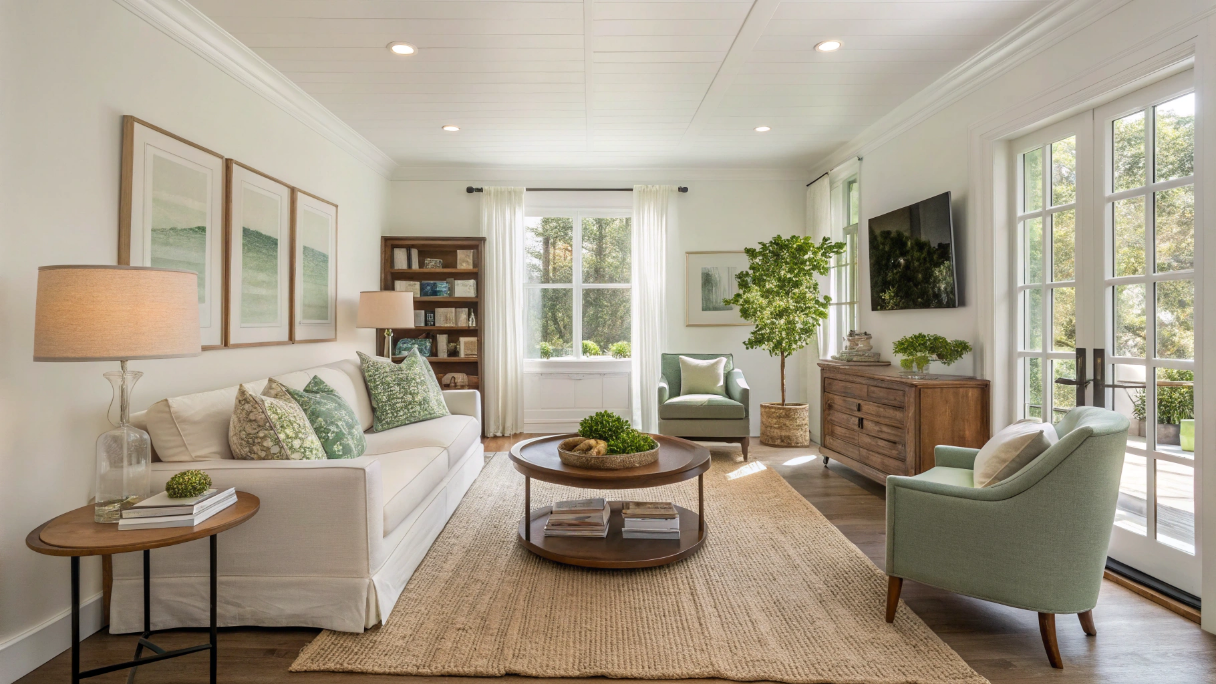
Spend enough time helping people furnish living rooms, and a pattern emerges. The rooms that work — the ones people genuinely like coming home to — almost always get the sequence right. Sofa decided first. The layout is thought about before shopping. Storage was considered before the cables and remotes started colonizing every flat surface. The rooms that don't work usually reverse that order. They shopped first and figured out the sequencing later, and later never quite fixed it. These 19 ideas come from that pattern. Living room furniture sets and individual pieces both have their place here — what matters is knowing which decision to make when.
Pick the ideas that apply to what your room is doing wrong right now. The rest will wait.
1. Start With the Sofa

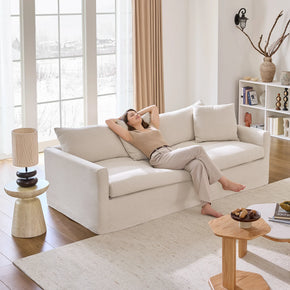
Not the cushions. Not the rug. Not the side table you found at a market. The sofa — because it is the gravitational center of every other decision in the room. Rug size responds to the sofa. The coffee table height matches the sofa's cushion level. The wall art has to relate to the sofa's position. Buy those other things first, and you'll spend months adjusting them around a sofa that hasn't arrived yet.
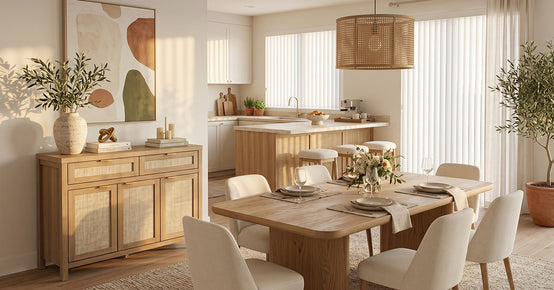
One practical fix: look at pieces designed to work together rather than assembled from different places over time. The Sicotas premium living room furniture range covers sofas alongside sideboards, bookcases, and storage pieces that share a design language — so the coordination problem doesn't have to be your problem.
2. Measure Before You Buy

Everyone skips this, and almost everyone regrets it. The sofa looked perfect in the showroom on the day of delivery. The two men standing in the hallway with a tape measure and expressions that said this was not going to fit through the door. Before anything gets ordered: room dimensions, wall length, doorway width, stairwell clearance, hallway width at every turn between the front door and the final destination. That last measurement — the delivery path — is the one people forget. It's also the most expensive one to get wrong.
Rule for the actual room: 18 inches of clear walkway around every piece of furniture. Less than that, and the room has furniture in it rather than being a room.
3. Sectional Beats Matched Set

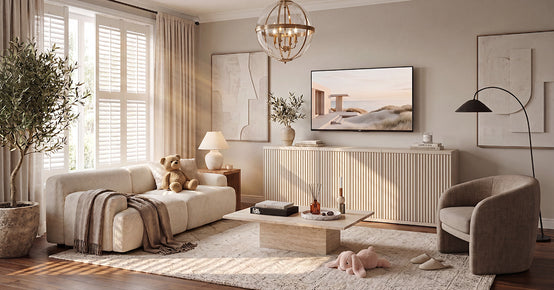
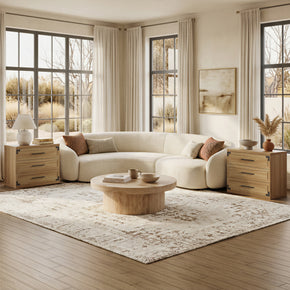
The matched three-piece set — sofa, loveseat, armchair, same fabric, same day, same catalog page — is one of the most efficient ways to make a living room look like a furniture showroom. Not a home. A showroom. Because everything signals purchase rather than collection, nothing looks chosen. A sectional avoids this by being one decisive piece rather than three matching ones, and leaves room for an accent chair or two in a completely different material, which is what gives the room visual variety the matched set never achieves.
Worth comparing sectional configurations to full-set options before committing. The right answer for a family with kids who watch a lot of TV is often a different configuration than the right answer for a room that mainly hosts conversation.
4. Add Two Accent Chairs

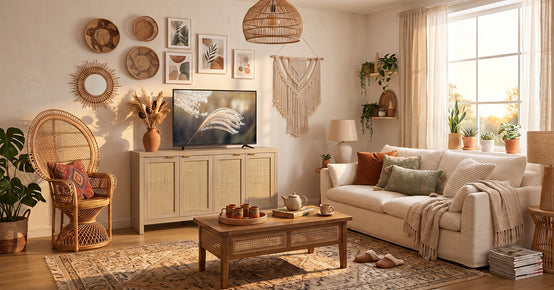
A matching loveseat doubles the sofa. Two accent chairs in a different material do something the loveseat can't: they add visual variation, they create an actual conversation zone when angled toward the sofa, and they can be repositioned when the room needs to work differently. Velvet chairs beside a linen sofa. Leather armchairs beside a fabric sectional—Rattan beside velvet. The material difference is the point — the eye needs somewhere to travel, other than a single continuous shape of identical upholstery.
5. The Ottoman Earns Its Place

A footrest when you're watching something. A coffee table with a tray on it, when you need a surface. An extra seat is provided when more people arrive than expected. Storage for blankets and board games if the lid lifts. That's four jobs. A standard coffee table manages one — being a surface — and you still can't put your feet on it without someone wincing. The one sizing constraint worth memorizing: about two-thirds of the sofa length, height within a couple of inches of the cushion. Beyond that, the ottoman is one of the most honest pieces of furniture in a living room.
6. Get the Coffee Table Right

Wrong size and even a beautiful coffee table makes the room feel slightly off — the kind of off nobody can name, but everyone feels. Too small: the sofa overwhelms it. Too large: you're navigating around it all night—the proportion that actually works: two-thirds of the sofa's length. Height matched to the cushion surface within two inches. Get those two numbers right before deciding anything about shape, material, or design. A plain wood table at the correct proportions looks more intentional than an expensive table at the wrong proportions.
7. Every Seat Needs a Surface

Try this: sit in every chair in your living room and reach for somewhere to put a drink. There will almost always be one seat — usually the armchair in the corner, sometimes the far sectional end — where nothing is reachable without leaning significantly forward. That chair becomes the one nobody wants to settle into for a full evening, and nobody can explain why. A small stool, a drum table, and a low ceramic block with a coaster on it. Height within reach of the arm. That's the entire requirement.
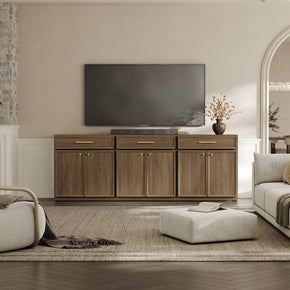
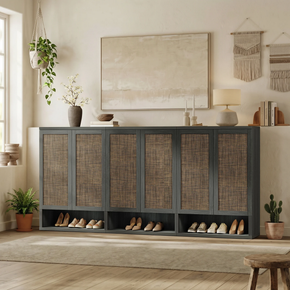
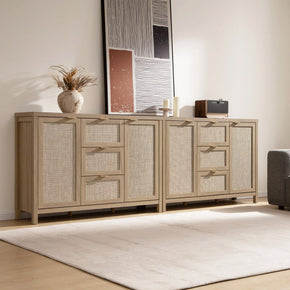
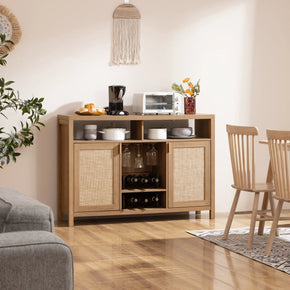
For wall space that needs to do more than hold a small side table — serve storage AND provide a surface — the Stria modern sideboard cabinet handles both: two closed cabinet doors for concealed storage, clean drawer fronts above, and a top surface. Reads as furniture, not as equipment that ended up against a wall.
8. Console Table Behind the Sofa

Open-plan rooms that run the kitchen into the living room andthe dining area, without a visual break, feel like one large, undifferentiated space. Walls help, but walls are expensive and permanent. A slim console table placed directly behind the sofa — facing outward toward the dining or kitchen side — costs nothing by comparison and does the same soft organizational work. It marks where the living zone ends. Without it, the back of the sofa just faces a room that doesn't belong to it.
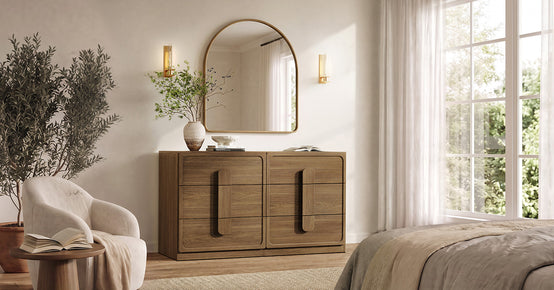
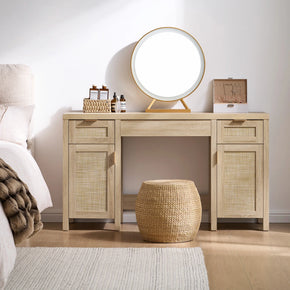
The Savanna Console Table 3 Drawers works particularly well here because the drawers absorb the daily clutter that always migrates toward wherever the sofa is — remotes, cables, charging accessories — while the surface holds a lamp and a plant that make the back of the sofa look like a decision rather than a default.
9. End Tables Don't Have to Match

One rule. Height within two inches of the sofa arm. That's it. Everything else — material, style, whether they match each other, whether they match the coffee table, whether they came from the same place — is optional. A rattan drum table beside a linen sofa. A marble-top side table beside a leather armchair. A rough ceramic stool beside a velvet sectional end. None of those combinations needs coordinating. They all work because the height is right, and the variety of materials is actually better than matching — it's one of the cheapest ways to stop a living room from looking like a catalog page.
10. Get a Sideboard

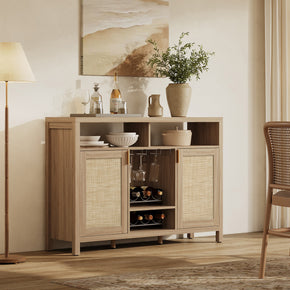
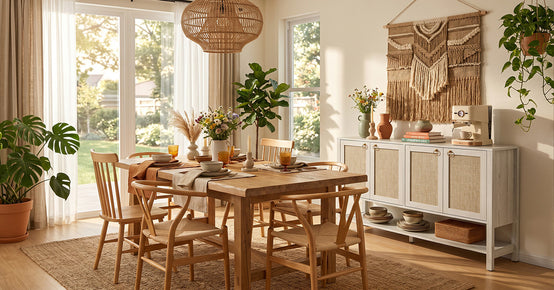
Board games. The TV, the remote, the soundbar remote, and the streaming device remote. The spare cushion covers that only come out twice a year. Cables. The candles nobody lights, but everyone keeps. A sideboard hides all of it. Cabinet closes. The top holds a lamp, a plant, and two intentional objects. That's the room's daily reality absorbed and invisible. Most living rooms that look genuinely calm and put-together aren't especially tidy — they've just got a sideboard doing the quiet work that would otherwise show up on every surface in the room.
11. TV Console, Not TV Stand

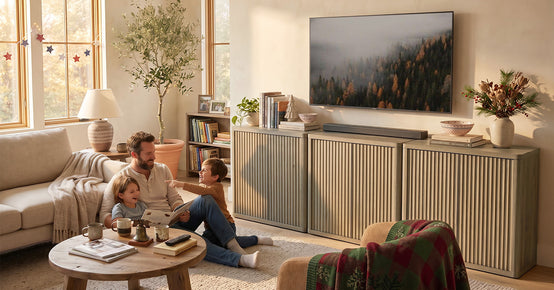
A TV stand built to hold a television makes the room read as organized around technology — the piece exists because of the screen, and the screen is the reason for the piece. A low sideboard or buffet used instead reads as furniture that also happens to hold a TV—same structural function. The visual difference is significant—one more thing that consistently gets ignored: the height. The screen should be at eye level when you're sitting down on the sofa. Too low and you're craning your neck downward for the entire film. And that's every evening of the rest of the time you live there.
12. Use the Bookcase Wall

There's almost certainly a full wall in your living room holding nothing but paint. A tall bookcase on that wall changes the room more than almost any other single addition — it fills the vertical space nobody was using, makes the ceiling feel higher than it is, and creates a display surface with more personality than any amount of arranged accessories on a coffee table. Style it with books you've actually read alongside a couple of plants and a few objects from somewhere. The lived-in rhythm of that mix is what makes a bookcase wall look collected rather than installed.
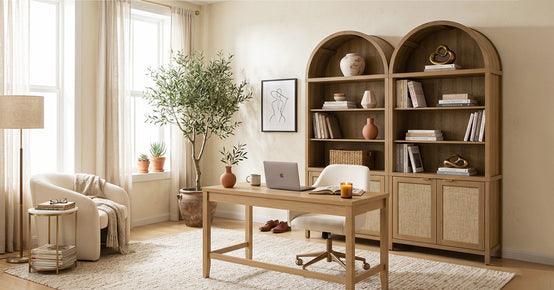
The Willow 75-Inch Tall Bookshelf is built for exactly this wall: multiple tiers from near-floor to near-ceiling, open shelving for books and display, closed-door storage at the bottom for things you don't need on show. The kind of piece that changes the entire feeling of the room simply by being in it.
13. Try Glass-Door Storage

Open shelves: everything visible, including the things you'd rather hide—solid doors: everything hidden, including the things worth seeing. A glass-door cabinet splits the difference — objects are visible and organized behind a panel rather than scattered on a surface or sealed behind solid doors. Ceramics, books, glassware, and the odd thing picked up from somewhere worth remembering. Behind glass, these read as a collection. On an open shelf, they're competing with the remote controls and the charging cable that escaped its drawer and never went back.
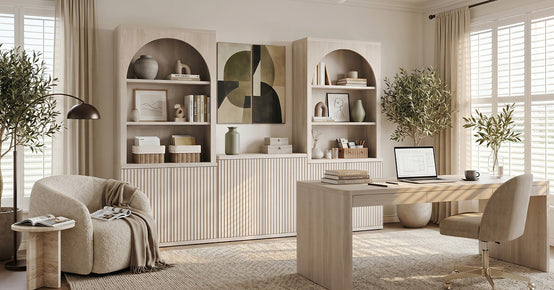
The Helio Decorative Sideboard Cabinet manages this well. Decorative door paneling that earns its place visually rather than just serving a storage function. One piece that works as both decor and function — the living room combination that's harder to find than it sounds.
14. Stop Hugging the Walls

Furniture against every wall. The floor is empty in the middle. The room looks like a waiting area. Nobody decided to do this — it just happens by default when furniture drifts toward the perimeter and stays there. But guests feel the result immediately. There's no zone, no center, nowhere that looks like the point of the room. The sofa isn't floating in a space — it's hiding against a wall that has nothing to do with it.
Pull the sofa forward. Let it claim the center. Position the bookcase at the edge of the living zone rather than flat against the back wall. A side table in the middle of a seating zone rather than at its absolute edge. Rooms where the furniture occupies the space rather than retreats from it feel designed. They are designed — just not in the way most people think about designing.
15. Pull the Sofa Forward

Here is the thing that every interior designer will tell you, and almost no homeowner does before they're shown the difference. Sofa against the wall: the center of the room is dead space. Nobody gravitates to the middle of an empty floor. The room has no actual zone, just furniture around the edges. Pull the sofa forward twelve inches — literally measure it, move it, see what happens. The gap behind it becomes something you can use: a console table, a lamp, a plant. The center of the room suddenly exists.
The room also reads as larger. Not because it got larger, but because the space is being used rather than avoided. That's a real perceptual effect, and it costs nothing.
16. Define Zones with Furniture

No walls between the living room and the dining area doesn't mean no definition. A rug under the sofa and chairs marks the start of the living zone—the console behind the sofa marks where it ends. A tall bookcase at the side marks the boundary between living and dining without blocking light, sightlines, or the ability to pass between rooms freely.
The Savanna Arched Bookcase works well at a zone edge because it's tall enough to read as a boundary from across the room, and the open-plus-closed shelf combination means the living side sees display and books. At the same time, the practical storage stays behind closed doors at the bottom. The living area reads as its own room even when the floor plan technically says otherwise.
17. Go Bigger on the Rug

An undersized rug makes the sofa and chairs look like they landed independently — furniture that arrived separately, and nobody introduced them to each other. The rug's job is to anchor the whole group: at minimum, the front legs of every piece on the rug, ideally all four legs. When choosing between two sizes and the larger one feels almost too committed, buy the larger one. No living room in the history of interior design was ruined by a rug that was too large. Rooms are ruined by small rugs all the time. The too-small rug is the error you notice every single time you walk into the room and never stop noticing.
18. Sort the Lighting

One ceiling light is not lighting. It's the state the room was in before you moved in and added furniture. One overhead source at full brightness lights everything at the same intensity — no warmth, no depth, no shadow. The room looks like it's being inspected rather than lived in. Fix: floor lamp behind the sofa, table lamp at each end, warm bulbs at 2700K in every socket. The overhead becomes one of several sources rather than the only plan. After dark, the room becomes a completely different place.
Seriously — sort the bulbs before you consider repainting. The paint color has rarely been the problem.
19. One Plant. One Bookcase. Done.

Two things that close the visual gaps that a sofa, a coffee table, and a sideboard, however good, still leave. A large floor plant — fiddle-leaf fig, monstera, olive tree, doesn't particularly matter — fills the corner furniture can't reach, adds organic shape into a room of right angles, and tells the room it's being maintained rather than preserved. Not four small pots scattered around. One large plant in one good corner with sufficient light.
And a tall bookcase on the main wall — actual books alongside plants and a few objects with a story attached — gives the room vertical scale and human evidence. Those two, more than the specific sofa or the perfect coffee table, are the reasons certain rooms feel finished. The furniture is doing its job. The plant and the bookcase are doing the rest.
FAQs
What is the 3/4/5 rule in interior design?
A proportion guideline, not a law. The sofa should occupy roughly three-quarters of the wall behind it. Coffee table: two-thirds the sofa length. Art hangs so that its center is about two-thirds of the way up the wall from the floor. The specific numbers are less important than the principle they encode: furniture and objects at consistent proportional relationships to each other and to the room look considered rather than placed. The rule gives you a starting point. From there, you can break it deliberately rather than accidentally.
What is the 2/3 rule for living rooms?
The sofa should be about two-thirds the wall length behind it. The coffee table should be about two-thirds the sofa's length. Both proportions create visual rhythm — the sense that each piece was chosen in relation to the others rather than independently. A sofa that fills the full wall crowds the room. A sofa set against a much longer wall looks underpowered and tentative. The 2/3 relationship is the middle ground that reads as intentional. Follow it until you have a specific reason not to.
What furniture is needed in a living room?
Six things first: sofa, coffee table or ottoman, end table near every main seat, TV console or media storage, correctly-sized rug under the whole seating group, and two lamp sources that aren't the ceiling fixture. Those six cover seating, surfaces, storage, and light. Accent chairs, sideboard, bookcase, plants, art — those come second. They complete the room. Most living rooms that feel unfinished are missing something from the first six. Rarely something from the second list.
What are the seven major 7 categories of furniture?
Seating, tables, storage, beds, dining furniture, office furniture, and outdoor furniture. A living room uses three things: seating, tables, and storage. Get scale, material, and proportion right across those three, and the living room works. Lighting, rugs, art, plants, and accessories layer on top. The foundational three are where the thinking goes. The accessories mostly take care of themselves once the base is right, which is why people agonize over accessory choices. At the same time, the sofa is always wrong and ends up starting again anyway.
What are the 10 essential items in every house?
Sofa. Bed. Dining table with chairs. Some form of storage in every main room — wardrobe, dresser, sideboard, bookcase, whatever fits. Rug in the main living area. Window treatments. Lamps beyond the overhead. A coffee table or surface near the main seating group. TV setup if the household watches things. And personal objects — art, books, plants, something from somewhere that means something — that make the spaces feel occupied by actual people rather than by a general concept of living. That last one is the category that most furnishing checklists don't mention, and most furnished rooms are missing it.
What is the 3-5-7 rule for decorating?
Odd numbers look naturally balanced. Even numbers look like rows or pairs waiting for something. Three objects on a coffee table form a composition. Four look like they're waiting for a fifth. Five on a shelf or mantel becomes a genuine display. Seven is about as far as you can go before it starts reading as a collection that needs editing. Apply it wherever you're grouping objects. Three candles. Five books with objects between them. The result looks considerable,d and it costs nothing to implement — it's just a matter of adding or removing one object.
What are 5 examples of furniture?
Sofa, coffee table, dining chair, bookcase, bed. Those five cover the main categories across a house. In a living room specifically: sofa, coffee table, accent chair, TV console, sideboard. In a smaller space where every piece has to pull double duty: an ottoman instead of a coffee table (storage inside, surface on top), a wall-mounted console instead of a floor-standing TV unit, and a tall bookcase doubling as a zone boundary and display wall. The test for any piece: is it earning its floor space? If not, it's usually either the wrong size or in the wrong place.
What is the biggest furniture placement mistake?
Everything against the walls. It happens by default — furniture drifts to the perimeter without anyone consciously choosing it. The result: a room with furniture around the edges and nothing in the middle, which reads as a space being avoided rather than used. Pull the sofa forward. Float the chairs inward. Let the bookcase mark a zone edge rather than press against the back wall. The second-biggest mistake: the rug that's too small, which makes the whole seating group look like it arrived in the room without the room having been prepared for it. Both mistakes are invisible to the people who live with them and obvious to everyone else.
Sources
- Jennifer Furniture — Living Room Furniture Sets Buying Guide
- Living Spaces — 14 Best Living Room Sets of 2026
- Crate & Barrel — Living Room Furniture Collections and Sets
- Ethan Allen — Best Living Room Furniture Picks
- Luna Furniture — Living Room Sets and Buying Advice
- Society6 — 16 Must-Have Living Room Essentials Checklist
- The Design House — 10 Best Furniture Ideas for a Living Room on a Budget


Looking for something else?

Furniture Materials Guide: Picking the Right Material Room by Room
LEARN MORE
How to Mix Wood Tones Without Making a Room Look Mismatched
LEARN MORE
18 College Apartment Furniture Ideas That Save Space and Money
LEARN MORE
Types of Entertainment Centers: 11 Designs and How to Pick One
LEARN MORELooking for something else?

Curio Cabinet Decor Ideas: How to Style a Display Cabinet Without the Clutter
LEARN MORE
Curved Furniture: How to Style, Measure, and Buy It in 2026
LEARN MORE
What Is Rattan Furniture? A Buyer Guide to Types and Care
LEARN MORE


Further reading

How to Choose a Nightstand for a CPAP Machine

How to Choose a Shoe Cabinet for Men's Sizes, High-Tops, and Bulky Shoes


