




Bedroom Furniture Essentials: 21 Things Every Bedroom Really Needs
Ask anyone who’s furnished a bedroom from scratch and you’ll hear the same story — they got it wrong the first time. You drag in a bed, throw a mattress on top, move in, and three weeks later, the laundry is on the floor, the only lamp blinds you when it’s on, and the rug you saved on Instagram still hasn’t shipped. The right bedroom furniture essentials cut that whole mess off at the source.This Wikipedia entry on bedrooms outlines the general role each piece plays, but the practical decisions about what you actually need come down to how you live in the room day to day.Look, some pieces are flat-out non-negotiable. A bed frame. A mattress. A nightstand with somewhere to plug in a lamp. The rest are the quiet ones that turn a place you sleep in into a place you genuinely want to be at 9 pm on a Tuesday. Below: the 21 essentials worth actually owning, sorted by what to buy first. Plus, blunt answers to the eight questions everyone Googles before spending real money on the most-used room in the house.
What Counts as a Bedroom Furniture Essential, Really?
There’s a wide gap between what a bedroom actually needs and what Pinterest thinks it needs. Honest test: would you notice if a piece vanished within a week of moving in? If yes, it’s essential. If no, it’s decoration. A bed sitting on the floor with no frame. Bare mattress, no sheets. No nightstands, so the phone charges from the carpet. No bedside lamps, so post-sunset means flipping the overhead and feeling like you’re in an interrogation room. Those are the pieces that change how the room actually functions — not how it photographs.
Everything else — accent chair, third throw blanket, framed honeymoon photo from Greece — lives in the nice-to-have pile. Worth owning down the line. Not worth losing sleep over in week one. A cozy bedroom always comes from sorting the essentials first, then layering bedroom decor on top that actually reflects who lives there.
The 21 Bedroom Furniture Essentials Checklist
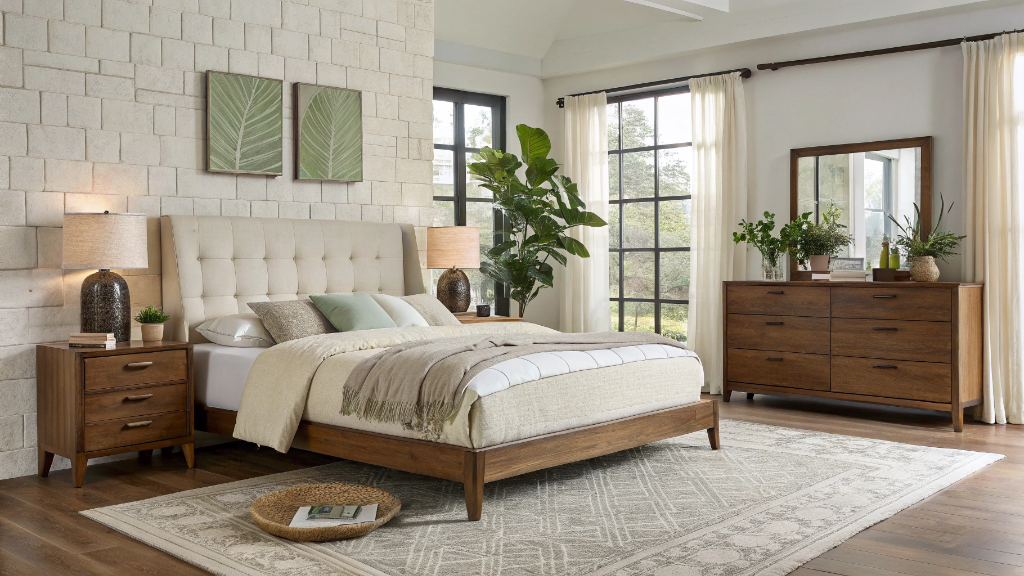
This bedroom furniture essentials checklist sorts all 21 pieces by buying priority, not by random order. Sleep foundation first. Then storage. Then lighting. Then comfort. Then the lifestyle pieces that finish off the room. Get the order on your bedroom essentials list right, and the room works from week one. Get it wrong, and you'll spend the next twelve months trying to fix something you can't quite put your finger on.
Sleep Foundation (Essentials 1–5)
1. Bed frame.

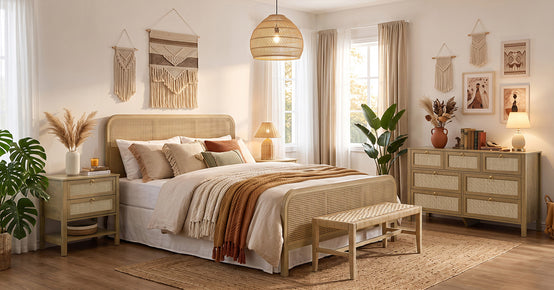
The single biggest piece in the room. The mattress sits on it, the eye lands on it first, walking through the doorway, and the whole bedroom sort of orients itself around it. So this is the place to spend properly. Upholstered for softness, solid wood for longevity — both work, neither is wrong. Just check the dimensions twice before ordering, because a bed frame that doesn’t match the mattress by even a couple of inches becomes a problem you notice every single night. And the creaks? A cheap frame will squeak for the next ten years,s and you’ll wish you’d spent another $200 the first time around.
2. Mattress.

Run the math: eight hours a night, every night, for the next eight to ten years. That’s roughly 26,000 hours of direct contact with one piece of furniture. Whatever your gut says to spend on a mattress, spend more. Seriously. Side sleepers, back sleepers, stomach sleepers — different bodies actually need different firmness, and walking into a showroom without knowing which sleeper you are is how people end up returning mattresses three times in a single year. The right one disappears underneath you. The wrong one wakes you up at 4 am with a stiff neck that doesn’t fully shake out till noon.
3. Mattress protector.

Skipped by most people, quietly regretted by all of them the first time something spills. A protector shields the mattress from coffee, water, kid accidents, dog accidents, allergens, dust mites, and the regular wear that’ll void your warranty without anyone telling you. The modern ones actually breathe — not the crinkly vinyl your grandmother had — so the mattress doesn’t trap heat or feel plasticky underneath the sheets. Cheap insurance for the most expensive thing in the bedroom. Buy it the same day you buy the mattress.
4. Pillows.

Two for sleeping, full stop. Maybe a third one for sitting up to read or watch TV in bed. Down pillows feel ridiculous in the best way — cloud-like and structured at the same time. Down-alternative is the hypoallergenic, machine-washable cousin that costs less. Side sleepers need firmer, thicker pillows than back sleepers, or the spine bends the wrong way for eight straight hours. Replace them every two years, sooner if you sweat. They quietly collect skin cells, dust mites, and other things you’d rather not picture before going to sleep tonight.
5. Bed linens.

Fitted sheet. Flat sheet. Two pillowcases. Duvet insert. Duvet cover. That’s a complete bedding set, and you actually need two of them — one always on the bed, one always in the wash, no gap days where you’re sleeping on a bare mattress because Sunday laundry got away from you. Cotton breathes best in any climate. Linen breathes even better but wrinkles like crazy, which is either a feature or a bug depending on how you feel about ironing. Skip polyester blends entirely. They sweat. And hotel-quality sheets are one of the few household luxuries that pay you back every single night, regardless of how exhausted you crawl into bed.
Storage That Actually Works (Essentials 6–10)
6. Nightstands.

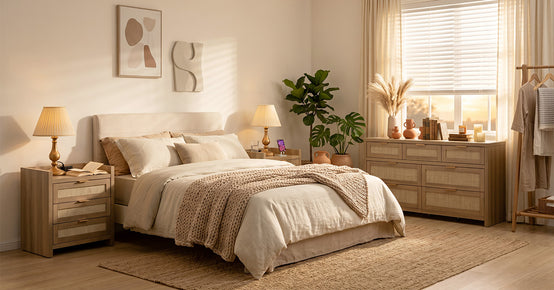
Two of them, one on each side, matching if you can swing it. Mismatched works fine if they at least share a color or a wood tone. Nightstands with drawers are the upgrade everyone says they don’t need and then quietly regrets for years — top drawer for chargers and meds, middle drawer for books and journals, bottom one for the random odds and ends that always pile up beside a bed (the half-used tube of lip balm, the spare hair tie, the receipt you swore you’d file). Without real bedside storage, that stuff lands on the floor or balances on the edge of the mattress, where it falls off the second you roll over. Every. Single. Time.
7. Dresser.

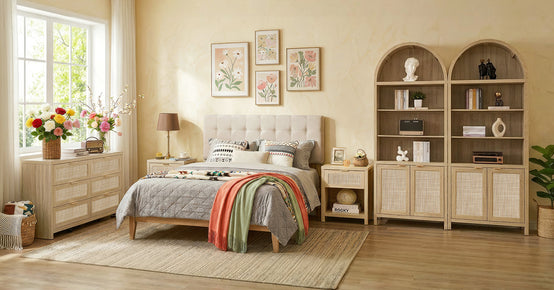
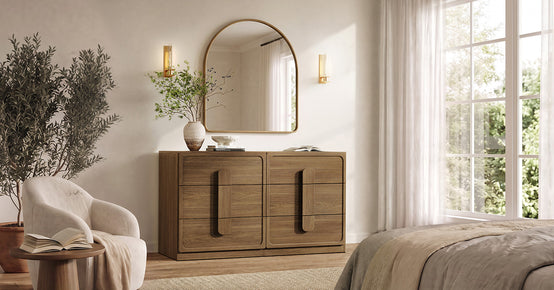
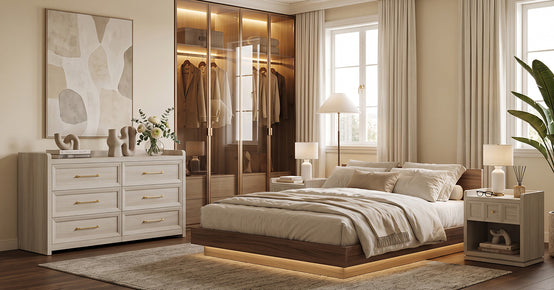
A dresser handles every piece of clothing that doesn’t belong on a hanger. Socks. T-shirts. Sweaters. Sleepwear. Pajamas. The accessories drawer that’s 80% belts and scarves. A piece like the Zura Modular 9-Drawer Dresseroffers nine separate drawers for folded storage and serves as an anchor against the longest wall in the room. Width matters more than depth here — you’re reaching into these drawers daily, and shallower-but-wider drawers lay clothes flat instead of bunched up at the back. Tall vertical stacks of drawers grab more clothing in less floor space, which is exactly what you want when the bedroom isn’t huge to begin with.
8. Wardrobe or armoire.

If your closet is small or your bedroom doesn’t have one at all, a wardrobe is non-negotiable bedroom furniture. The Savanna Wardrobe 71-inch gives you full hanging space plus internal shelving in one piece. Choose internal configuration based on what you actually hang — a wardrobe of all shelves is just a tall dresser. A wardrobe of all hangers is missing a folded-clothes space.
9. Bench at the foot of the bed.

Functional and visual at the same time. A bench at the foot of the bed is where you actually sit to put on shoes, drop tomorrow’s outfit, or toss extra blankets in summer. Upholstered for softness; storage interior for hidden linens. It also breaks up the long visual line of the bed and finishes off the room in a way that’s hard to describe but obvious the moment you see it.
10. Extra storage.

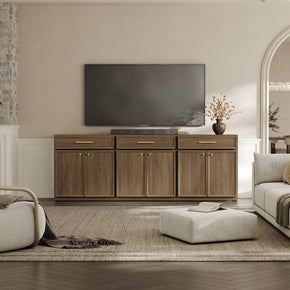
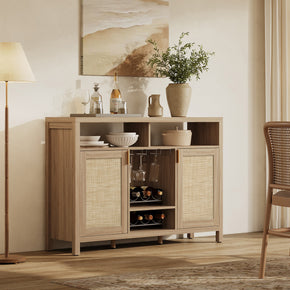
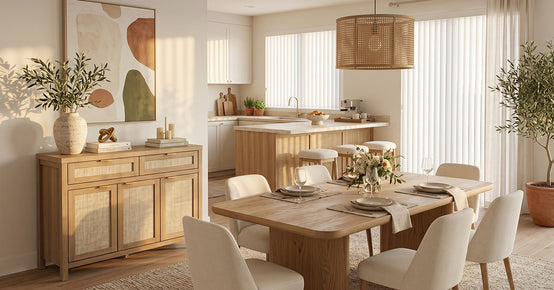
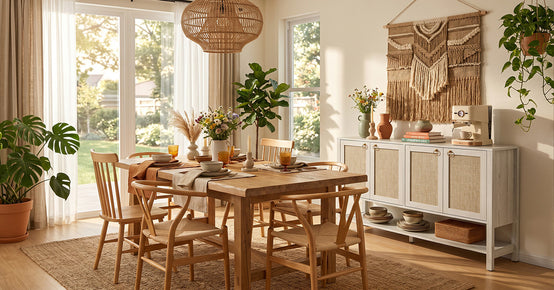
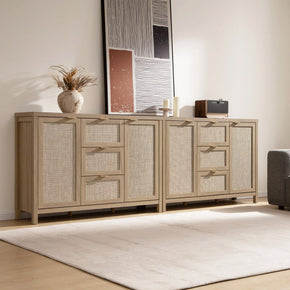
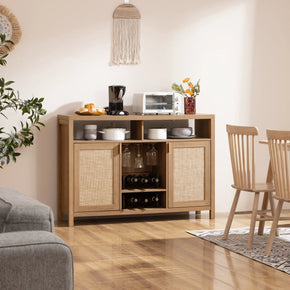
Baskets, under-bed drawers, lidded boxes. A sideboard against an empty wall, like the Savanna Sideboard with 3 Drawers, adds substantial closed storage for sweaters, off-season clothing, or stuff you’d rather not see. The rule: every room needs at least 30% more closed storage than you think it needs. Visible storage looks tidy; hidden storage actually is.
Lighting That Sets the Mood (Essentials 11–13)
11. Bedside lamps.

Two of them. Matching is better, but mismatched works fine if they share a color or material. Bedside lamps do the heaviest lifting in any bedroom — reading at night, getting up at 2 am, the soft glow that signals “wind down” for a tired brain. Pick lamps with dimmers or three-way bulbs so the brightness shifts with whatever you’re doing. Shade height is non-negotiable: the bottom of the shade should sit just below eye level when you’re sitting up in bed.
12. Floor lamp.

For the dark corner, the overhead light can’t quite reach. A single floor lamp turns an empty corner into a reading nook or a soft accent zone. Pick one with an arched arm if you want overhead-style light without rewiring the ceiling. Keep the bulb warm — 2,700K to 3,000K Kelvin. Anything cooler, and the bedroom starts to feel like a dentist’s waiting room.
13. Ambient or overhead lighting.

Bright light for the cleaning-and-getting-ready parts of the day. An overhead pendant works. A flush mount in soft fabric or warm metal works better than the builder-grade ceiling glob most apartments come with. If you can install wall-mounted sconces above the nightstands, do it. They free up tabletop space, add real architectural interest, and let you skip the lamp clutter on the surface entirely.
Comfort and Texture (Essentials 14–17)
14. Area rug.

The difference between waking up to a freezing floor on a January morning and waking up to something soft. A bedroom rug is the most under-appreciated piece in the room. Wool is the gold standard, but jute and cotton work fine on a budget. Place the rug under the lower two-thirds of the bed — that’s the layout that survives bed-making and gets used by your feet every morning. The rug also does more visual work than people expect because it’s the largest piece of soft texture in the room.
15. Throw blanket.

Folded across the foot of the bed for daytime styling. Pulled up for late-night TV and pulled into the reading chair on cold winter mornings. One throw is plenty: wool, cashmere blend, or chunky knit. Skip the polyester throws that feel cheap the moment your hand touches them — you’ll just leave them in a closet.
16. Decorative pillows.

One. Maybe two. Definitely not eight. Decorative pillows are stylish, not functional — too many on the bed and you end up tossing them on the floor every single night before sleep. A single long lumbar or two square Euros at the back does more visual work than a wall of throw pillows ever has.
17. Curtains or window treatments.

Bedroom curtains do four jobs at once — privacy, light control, a bit of sound dampening, plus actual decoration. If you're a light sleeper or you live anywhere with streetlights bleeding through the glass at night, blackout panels are worth every dollar. Layer them with sheer panels behind for that soft, filtered daytime light. The trick most people get wrong is the rod itself. Hang it high. Hang it wide. Higher than the window frame, wider on both sides than the window is. Suddenly, the window looks bigger, the ceiling looks taller, and the room reads more expensive than it actually is.
Function and Lifestyle (Essentials 18–21)
18. Full-length mirror.

Where else are you checking your outfit before you walk out the door? You've got two options — lean it against a wall, which keeps things casual and renter-friendly, or mount it properly for the permanent setup. Where you put it matters way more than how it looks. Don't aim it straight at the bed. Feng shui people will tell you it disturbs your energy. Even if you don't buy into any of that, catching a glimpse of yourself at 3 a.m. on the way to the bathroom isn't anyone's idea of restful.
19. Bedroom seating.

A chair. An ottoman. A small slipper chair tucked into the corner. Anything that gives you somewhere to sit besides the bed itself. Just one piece changes how the room functions — suddenly it's not only for sleeping, it's also where you'll read with your coffee on a slow Saturday morning. In small bedrooms a storage ottoman is the smart pick because it does two things at once, hiding spare linens or off-season sweaters underneath the seat.
20. Bedside catchall.

A small tray. A shallow ceramic dish. One of those nice wooden bowls. Doesn't matter which, honestly, as long as it lives on the nightstand. It's where your glasses go. Your jewelry. Your watch. The lip balm that always seems to vanish exactly when you need it. A catchall is the difference between a chaotic bedside table and one that actually looks intentional. Get one, use it, and stop dropping your rings into drawer corners you won't think about for three weeks.
21. Plants or greenery.

One plant shifts the whole feel of the room. Two and you can feel the difference in the air. Snake plants, pothos, peace lilies — they're all low-light, all forgive you when you forget to water them for a week. Plants soften up the straight lines of furniture and stop the bedroom from looking staged for a real estate photo. Real or faux both work, by the way. The bedroom needs something organic to balance out all the hard edges.
How to Choose Bedroom Furniture That Actually Lasts
Here’s the brutal economics: cheap furniture costs the most over time. You buy it twice. Sometimes three times. Long-term thinking saves real money — and saves the Saturday afternoons spent re-assembling flatpack pieces that started wobbling six months in.
When there's room in the budget, go solid wood over particleboard. Pull a drawer open and look underneath — metal glides, not the plastic ones, because the plastic ones snap. Every single time, usually around year two. Heavier furniture is almost always denser, and denser pieces last. For sofas, headboards, anything upholstered, performance fabric is the real-life answer. Pets jump on it, kids spill on it, you knock over a glass of red wine at dinner, and it still wipes clean. Out of every piece in the bedroom, the bed frame and the dresser are the two you should put the most money into. Buy those well one time, and they'll outlast everything else by a solid decade. Maybe longer.
Bedroom Essentials by Room Size
Not every essential makes sense in every room. A small bedroom has to make every square foot pull double duty, so the list of essentials for a tight room looks different from what fits comfortably in a big primary suite. Larger bedrooms have room for pieces a small layout simply can't carry. Below is how the priorities actually shift across three common room sizes — and where small bedroom furniture choices need the most thought, because that's where most people overspend on stuff that doesn't work .
Small Bedroom (Under 120 sq ft)

Small bedrooms are unforgiving. Every piece earns its spot, or it doesn't get one. The rule is simple — if a piece of furniture only does one job, it's probably the wrong piece for the room.
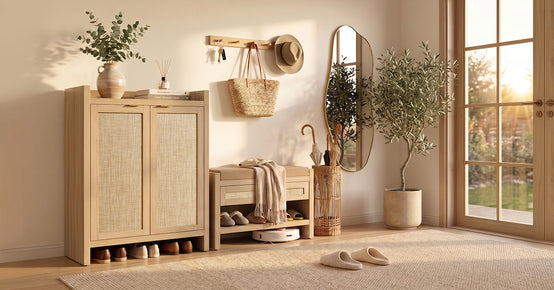
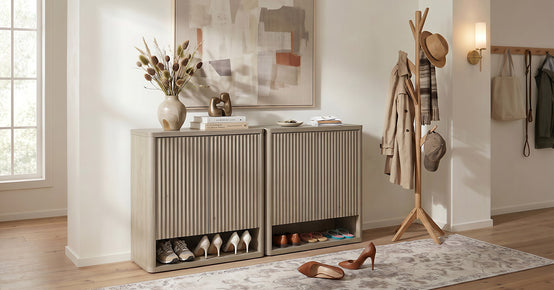
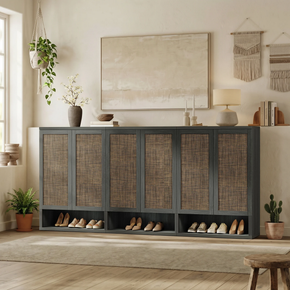
A storage bed with drawers underneath replaces a separate dresser for half your wardrobe. A tall vertical chest of drawers takes the same floor space as a small one but holds nearly twice as much. Wall-mounted shelves above the nightstands handle the books that won't fit on the table itself. A slim shoe cabinet, the Cas Black Shoe Cabinet, for example, tucks flat against a wall and holds the shoes a tiny closet won't take. One good floor lamp for the corner. Two nightstands with drawers, not open shelves — open shelves in a small room read as clutter within a week. A rug under the bottom half of the bed only. And the curtains — hung wide, hung high, well past the actual window frame. It's the cheapest trick in the book for making a small bedroom feel taller and bigger than it really is.
Medium Bedroom (120–200 sq ft)

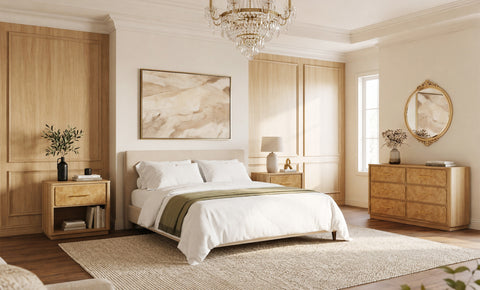
The standard layout most homes have. A queen bed. Two matching nightstands. A mid-size dresser. A wardrobe if the closet is tight — browse the Sicotas armoires and wardrobes collection for proportional options that won’t overpower the wall. Bedside lamps on both sides. A floor lamp in the dark corner. A small bench at the foot of the bed, if there’s room left over. Add the seating piece last — it’s the one that pushes a medium bedroom from comfortable to genuinely cozy.
Large Primary Bedroom (200+ sq ft)
This is the room where you can finally stop compromising. King bed centered on the main wall. Two wide nightstands are big enough for a lamp plus everything else. A statement dresser and a full wardrobe — storage isn’t a tradeoff in a room this size. A bench at the foot of the bed plus a pair of armchairs near the window creates a real second seating zone. Layered lighting on a smart-home schedule. A 9x12 rug centered under the bed. The room can absolutely take all of it, and the layout finally has the breathing space to feel intentional rather than crammed.
Common Bedroom Furniture Mistakes to Avoid
Five patterns kill the function of even nicely styled bedrooms. Spot them now, save yourself the redo.
Buying everything at once. Bedrooms furnished in a single weekend always read as showroom sets — too matchy, too staged, too disconnected from how anyone actually lives. Build slowly. Live with each piece for a few weeks before bringing in the next. The room tells you what it needs if you give it the time.
Skipping the bed frame upgrade. People casually drop $2,000 on a mattress and then mount it on a $99 squeaky metal frame from Amazon. The frame is the foundation. Buy a good one. It outlasts three different mattresses easily.
Underestimating storage.Most bedrooms end up needing more storage than the first plan accounts for. As a rough guideline, aim for around 30% more closed storage than you think you'll need on day one — most people end up filling that extra space within the first year, whether it's seasonal clothing, linens, or things that simply don't have another home in the room.
Relying on one harsh overhead light. The bedroom is the single room where lighting matters most for both function and mood. Layered lighting — ambient overhead plus two bedside lamps plus one floor lamp — beats a single fixture trying to do all the work alone, every single time.
Decorating before the bed is sized. Buying the rug, the curtains, and the bench before the bed itself is sized leads to expensive returns and mismatched proportions. Buy the bed first. Size everything else to it, in that order.
Quick Bedroom Furniture Essentials Checklist
Use this before you buy:
- Bed frame, sized correctly for the mattress
- Quality mattress, matched to your sleep style
- Mattress protector, breathable
- Two sleeping pillows, replaced every two years
- Two sets of bed linens (so one is always clean)
- Two matching nightstands with drawers
- Dresser sized to your wall and real bedroom storage needs, not the showroom
- Wardrobe if your closet is too small for your everyday bedroom furniture essentials
- Bench or storage piece at the foot of the bed
- Bedside lamps on both sides, with dimmers
- Floor lamp for the dark corner
- Area rug under the lower two-thirds of the bed
- Blackout-lined curtains, hung high and wide
- Full-length mirror, not facing the bed
- One chair, ottoman, or seating piece
- Bedside catchall tray or dish
- One healthy plant
FAQs
What furniture is needed in a bedroom?
At a minimum, a bedroom needs a bed frame, a mattress, two nightstands, a dresser or wardrobe, bedside lamps, and curtains. Add a rug, a bench, and a full-length mirror to round out the basics. Everything past that is comfort or styling. You don’t need a vanity, an accent chair, or three throw blankets to call a bedroom finished. The basics handle 90% of the function.
What are some essentials for a bedroom?
The essentials are split into five buying-priority categories: sleep foundation (bed frame, mattress, linens), storage (nightstands with drawers, dresser, wardrobe), lighting (bedside lamps, ambient lighting, one floor lamp), comfort (rug, curtains, decorative pillows), and lifestyle (mirror, seating, plants). Start with the sleep foundation and build outward as the budget allows. Skip the lifestyle pieces until the first four categories are solid.
What is a must in a bedroom?
The non-negotiables are a bed frame, a mattress, lighting that’s not just overhead, privacy on the windows, and enough storage to keep clothes off the floor. Everything else — the chair, the second throw, the framed art — is optional. Nail those five basics, and the room functions properly from day one. The rest is decoration.
What does bedroom furniture include?
Bedroom furniture typically includes the bed frame, mattress, nightstands, dresser, wardrobe or armoire, bench or ottoman, vanity, chair, and full-length mirror. Not every bedroom needs every piece. The list depends on your room size, your closet space, and whether the bedroom doubles as a workspace or reading zone.
What are common items in a bedroom?
Common bedroom items include a bed, pillows, blankets, nightstands, table lamps, a dresser, a mirror, an area rug, curtains, decorative pillows, framed artwork, and storage baskets or trays. Most bedrooms also have a clock, a chair or stool, and at least one plant or other natural element. The exact mix varies by household and lifestyle.
What is the 2/3 rule furniture?
The 2/3 rule says a furniture piece or decor element should be roughly two-thirds the size of what it relates to. Artwork above a bed looks balanced at about two-thirds the headboard width. A coffee table works at two-thirds the sofa length. In bedrooms, the rug under the bed often follows the same rule — sized to about two-thirds the wall it sits against.
What should be in every bedroom?
Every bedroom should have comfortable sleep gear (frame, mattress, pillows, bedding), practical storage (nightstands and either a dresser or wardrobe), layered lighting (ambient plus bedside), window treatments for privacy and sleep, and a few personal touches like a rug, art, or plants. These elements together make a bedroom work as both a sleeping space and a place you actually want to spend time.
What is the 60-30-10 rule for bedrooms?
The 60-30-10 rule is a color guideline: 60% of the room is a dominant neutral color (walls, large furniture), 30% is a secondary color (bedding, curtains, rug), and 10% is an accent color (throw pillows, art, lamp shades). Applied to bedrooms, this keeps the palette calm enough for rest while still adding visual interest and personality to the room.
Build Your Bedroom Slowly and Intentionally
You don’t need every essential at once. You need the right ones, in the right order. Start with sleep. Then add storage. Then lighting. Then comfort. Then lifestyle. The Sicotas furniture range covers most of these categories with pieces designed to coordinate, so a bedroom built one piece at a time still reads cohesive rather than accidentally collected. Slow always beats wrong. And a bedroom built with real intention will always beat one filled in a single weekend — every single time, regardless of budget.
Sources
- Better Homes & Gardens – Bedroom Design and Furniture Guides
- The Spruce – Bedroom Furniture and Layout Tips
- Martha Stewart – Home and Garden Bedroom Inspiration
- Real Simple – Bedroom Organizing and Decor
- Architectural Digest – Bedroom Design Inspiration
- Sleep Foundation – Mattress and Sleep Environment Guides
- Wikipedia – Bedroom


Looking for something else?

Furniture Materials Guide: Picking the Right Material Room by Room
LEARN MORE
How to Mix Wood Tones Without Making a Room Look Mismatched
LEARN MORE
18 College Apartment Furniture Ideas That Save Space and Money
LEARN MORE
Types of Entertainment Centers: 11 Designs and How to Pick One
LEARN MORELooking for something else?

Curio Cabinet Decor Ideas: How to Style a Display Cabinet Without the Clutter
LEARN MORE
Curved Furniture: How to Style, Measure, and Buy It in 2026
LEARN MORE
What Is Rattan Furniture? A Buyer Guide to Types and Care
LEARN MORE


Further reading

How to Choose a Nightstand for a CPAP Machine

How to Choose a Shoe Cabinet for Men's Sizes, High-Tops, and Bulky Shoes


