



What Is an Ottoman Used For? A Complete Guide with 9 Smart Uses for Your Home
An ottoman pulls double or triple duty in most homes — a footrest one minute, a coffee table the next, then extra seating, hidden storage, or a soft little style accent when the mood calls for it. That range is the whole appeal. Few pieces of furniture do this much in this little space, which is why design editors keep calling the ottoman one of the hardest-working pieces you can own.
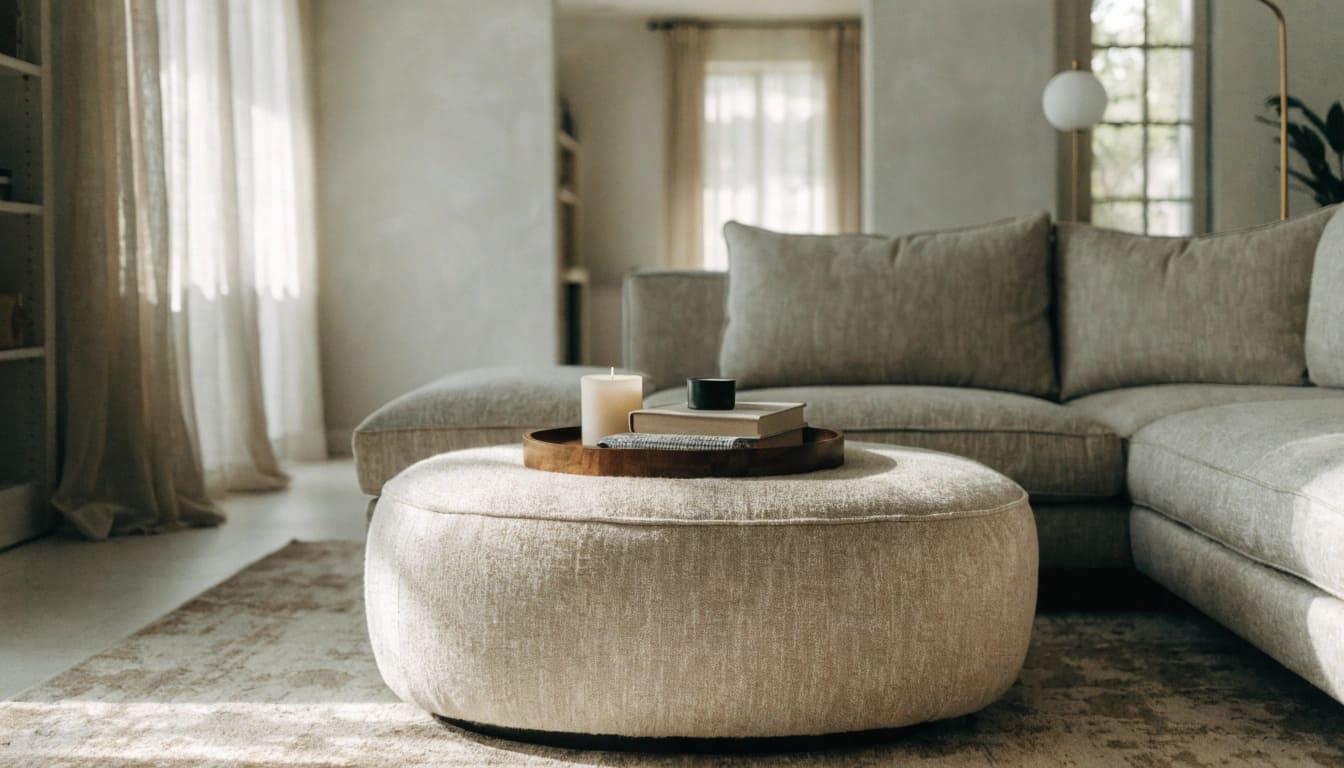
This guide covers what an ottoman actually is, nine practical uses for an ottoman, the types you'll run into while shopping, and how to pick the right size. By the end, you’ll know exactly where one fits in your own home.
What Is an Ottoman?

An ottoman is a low, upholstered piece, usually with no back and no arms. People use it as a footrest, an extra seat, a stand-in for a coffee table, or a storage piece — often more than one of those at the same time. Shapes vary: round, square, rectangular, or stretched long into a bench. Some have firm flat tops you can set a tray on. Others are soft and tufted. And plenty lift open to reveal storage inside.
Where the name comes from

The word itself comes from the Ottoman Empire — modern-day Türkiye. Back then it wasn't a footstool at all. It was a long, low cushioned platform, heaped with pillows, and it sat right in the middle of the room where everyone gathered. Europe got hold of the idea in the late 1700s and held onto the name. The shape, though, kept changing. By the time the 20th century rolled around it had shrunk way down, grown a hinged lid for tucking things away, and turned up in homes just about everywhere.
How modern Ottomans have changed

Today’s ottoman is smaller, lighter, and built to multitask. Many come with storage inside, firm tops for trays, casters for easy moving, or matching sofa sets. The old wall-spanning platform became the flexible little workhorse you see now — browse Sicotas living room pieces and the modern, multitasking versions are easy to spot.
What Is an Ottoman Used For?
Short answer first, then the details. An ottoman serves as a footrest, extra seating, a coffee-table alternative, hidden storage, a bedroom bench, and a style accent — often several of those at once. The footrest is the classic role, letting you stretch out beside a sofa or armchair. Extra seating kicks in when guests show up. A flat, firm top plus a tray turns it into a coffee table. Lift the lid, and it swallows blankets and clutter. At the foot of a bed, there's a bench. And in any room, the right color or texture makes it a quiet design piece. That's really the point of an ottoman: it can be a footrest, a seat, a coffee table, and storage all at once, depending on where you put it. One small thing, six jobs.
9 Practical Ways to Use an Ottoman at Home
1. As a footrest in the living room

Start with the obvious. Park it in front of the sofa or an armchair, kick your feet up, and that’s the whole pitch — comfort. Keep the top close to the seat height of your sofa,so your legs sit level rather than dangle or bend up awkwardly.
2. As a coffee table alternative

Drop a tray on top, and you’ve got a coffee table that won’t bruise a shin. Books, candles, a couple of drinks, the remote — it holds the lot. Softer than a hard-edged table, it warms up a stiff seating group at the same time.
3. As extra seating without another chair

This is the small-space trick. An ottoman adds a seat without the bulk of a whole armchair, so a tight living room doesn’t feel crammed. Some come built in — a modular sofa set with a movable ottoman lets you slide the piece out for company and tuck it back when the room empties.
4. As hidden storage

Lift-top ottomans are clutter’s worst enemy. Blankets, throw pillows, toys, magazines, remotes, the stuff that breeds on a coffee table — all of it disappears inside. In a small home, that hidden storage earns the piece its keep on its own.
5. As a bench at the foot of the bed

In the bedroom, a long ottoman becomes a bench — somewhere to sit and pull on socks, drop a bag, or fold the quilt over at night. Pair it with a bedroom furniture collection in matching tones, and it reads built-in rather than added on.
6. As entryway seating

By the front door, an ottoman is the spot to sit and deal with shoes, or to drop a bag the second you walk in. A cushioned entryway storage bench doubles the trick — a seat on top, a place for shoes underneath, no clutter on the floor.
7. To stretch a sofa into a chaise

Push an ottoman against one end of the sofa, and you’ve built a chaise lounge — no sectional, no commitment, no extra floor space eaten up. Perfect for renters and afternoon nappers. Guests over? Slide it back, and the room resets in seconds.
8. To add texture or color to a room

An ottoman is a cheap way to shake up a room without replacing anything. Play contrast — leather against boucle, velvet against linen — or pick a bold color that echoes your rug or pillows. It breaks up a flat, one-note space and adds a layer of texture where the room felt bare.
9. To make a family room safer and softer
If the living room doubles as a play zone, soft furniture matters. Ottomans have rounded corners and padded tops instead of the sharp edges a coffee table can throw at toddler foreheads. Choose a durable or performance fabric, and it shrugs off paw prints, juice, and the rest of daily life.
Types of Ottomans and Their Uses

Not every ottoman does every job. Knowing the type helps you buy the right one.
Storage ottoman
A lid that lifts or hinges open, with room inside for blankets, toys, and clutter. The go-to for small apartments, living rooms, and playrooms where every cubic inch counts.
Cocktail ottoman
Bigger and firmer, built to stand in for a coffee table in front of a sofa. Flat enough for a tray of drinks and snacks — the name comes from cocktail parties, but it works any day of the week.
Ottoman bench
Long and narrow, made for the foot of a bed, an entryway, or under a window. More seat than footrest, and a natural fit anywhere you want a soft place to perch.
Pouf
Softer, lighter, and more casual than a structured ottoman — essentially a firm cushion with no hard base. Great for flexible seating and kids’ rooms, less suited to holding a tray.
Glider ottoman
Paired with a nursery glider or rocking chair, it moves with the chair so your feet glide along too. A small thing that matters a lot at 3 a.m. with a newborn.
Ottoman bed
Worth clearing up: an ottoman bed isn’t the same as ottoman furniture. It’s a bed frame whose base lifts on gas struts to reveal a large storage cavity underneath — the “ottoman” bit just refers to the lift-up storage idea.
Ottoman vs Footstool vs Pouf
People mix these three up all the time, so let me sort them out fast. Take ottoman vs. footstool. The ottoman is the multitasker; the footstool does one job. An ottoman is structured and upholstered, often with storage inside, and you can use it as a footrest, a seat, or a low table. A footstool was built for one thing — resting your feet — and its design dates back to ancient Egypt. It's usually smaller, and it stays in its lane. A pouf is the soft one. Think large cushion, no hard frame underneath, leaning more decorative than useful. Now the annoying part: brands throw these names around however they like. So don't shop the label. Shop for the function, the firmness, the size, and whether the top lifts for storage.
Coffee Table or Ottoman: Which Is Better?

What matters is what that middle-of-the-room piece has to do for you. Can't decide between a coffee table or an ottoman? An ottoman wins on comfort and flexibility. A coffee table wins when you need a firm work-and-games surface. Lean ottoman when softness is the goal. It serves as a footrest and spare seat, won't crack a shin on a hard corner, and looks right at home in small or casual rooms. The coffee table earns its spot when you need something hard and stable underneath — laptops, board games, whatever can't be allowed to wobble. Tight on space? Aslim console table pushed against the wall can cover the surface area you need, and the ottoman provides comfort. Or split the difference: keep the ottoman and drop a firm tray on top for drinks and decor. Best of both, no compromise.
How to Choose the Right Ottoman Size

Two numbers do most of the work here—first, height. People often ask whether an ottoman should be lower than a sofa; in general, you want to match the seat height or go just a touch lower so it works comfortably as a footrest.Too tall and your feet ramp uphill. Second, length — a living room ottoman looks balanced at roughly half to two-thirds the length of the sofa it serves. Then leave a walking room around it, three feet or so, so the piece doesn’t choke the path through the room. Shape follows the layout: rectangular ottomans pair with sofas and beds, round ones soften tight spaces, and square ones sit neatly inside a sectional.
Where to Put an Ottoman in Different Rooms

An ottoman has no loyalty to one room. In the living room, it goes in front of the sofa, beside an accent chair, or dead center as the anchor of a seating group — work through a living room furniture range, and you’ll spot the right scale fast. In the bedroom, it lives at the foot of the bed, by a window, or in a dressing corner. In the entryway,there’s a shoe-changing seat and a bag drop. In a nursery, a glider ottoman pairs with the feeding chair. Even a closet or dressing room gets a lift from a small ottoman — somewhere to sit while you get ready, with a boutique feel thrown in.
What Are the Disadvantages of an Ottoman?
It's not all upside, so here's the honest list.
- Less stable surface. Soft tops can't match a coffee table for steadiness, so drinks wobble unless you set them on a tray.
- Takes up floor space. A large ottoman can eat up a small living room if you skip the measuring step.
- Fabric can stain. Light upholstery shows every spill, so families with kids or pets are better off with performance fabric or leather.
- Storage can hide clutter. Storage ottomans are handy, but they quietly turn into catch-all traps if nobody tidies them.
- Ottoman bed drawbacks. Great for storage, but they run heavy, cost more than a plain frame, and need both clearance and a solid lift mechanism to work well.
FAQs
What is the point of an ottoman?
Flexibility, plain and simple. One ottoman can be a footrest, an extra seat, a coffee table alternative, a storage box, a bedroom bench, or a decorative accent — sometimes all in the same week. That’s why such a small piece earns its spot in so many rooms.
Are you supposed to sit on ottomans?
Plenty of them, yes — the firm, structured kinds are built to take a sitter. The soft, unstructured poufs are less reliable for it. When in doubt, check the weight capacity in the maker’s specs before anyone perches on it.
What is the use of an ottoman in the bedroom?
At the foot of the bed, it works as a bench — a place to sit and put on shoes, set down a bag, or drape tomorrow’s clothes. Storage versions also stash spare bedding and pillows, which is gold in a room short on closet space.
What are the disadvantages of an Ottoman bed?
They’re heavier than standard frames, usually pricier, and harder to shift once they’re in place. The lift mechanism needs clearance above and decent build quality, or it gets awkward fast. The trade-off is a huge hidden storage cavity, which, for small bedrooms, is often worth it.
Where to put an ottoman in a bedroom?
The foot of the bed is the classic spot. Beyond that, try it as a reading perch by a window, beside a wardrobe, or in a dressing corner near a vanity. Anywhere you’d like a soft place to sit while getting ready.
What destroyed the Ottomans?
This one’s about the empire, not the furniture. The Ottoman Empire declined over centuries and formally ended after World War I, leading to the founding of modern Türkiye in 1923. The footstool just kept the name.
Can you sleep on an ottoman?
Not a regular ottoman — it’s too short and unsupported for a full night. Sleeper ottomans are the exception; they unfold into a small guest bed. Check the size and support before you actually plan to sleep on one.
Is it better to have a coffee table or an ottoman?
Coffee table if you want a hard, steady surface. Ottoman if you want softness, a footrest, extra seating, and a more flexible layout. A lot of people land in the middle — an ottoman with a tray on top — and get both at once.
Should an ottoman be lower than a sofa?
Same height as the sofa seat is ideal, or a touch lower. That keeps it comfortable as a footrest and maintains the seating group's balance. Much taller, and it stops working under your feet.
Sources
- Britannica – Ottoman | Furniture, Definition & History
- Wikipedia – Ottoman (Furniture)
- The Spruce – What Is an Ottoman?
- HOUSE & GARDEN – How to Decorate With Ottomans
- AD – How to Style an Ottoman
- Real Simple – Decorating With Ottomans
- Merriam-Webster – Ottoman: Definition & Meaning


Stay In The Know
Expert advice. Very good deals. The absolute best (and worst) things we've tested lately.
Looking for something else?
What Is Organic Modern Style? How to Use Warm Wood, Rattan, and Storage Furniture
LEARN MORE
Rug Under Bed Guide: How to Style Rugs With Dressers and Nightstands
LEARN MORE
Rug Bed Placement: Bedroom Rug Rules for Size, Layout, and Style
LEARN MORE
End Table Decor Ideas: How to Style a Living Room Table Beautifully
LEARN MORERead more from Blogs
Looking for something else?
Small Living Room Layout With TV: How to Choose the Right TV Stand
LEARN MORE
Bedroom Furniture Essentials: 21 Things Every Bedroom Really Needs
LEARN MORE
15 Living Room Arrangement Ideas to Transform Any Space
LEARN MORERead more from Blogs
You may also like


Further reading
What Colour Goes With Brown Leather Sofa? 31 Ideas That Work.docx
What Is a Platform Bed? A Simple Guide to Types, Benefits & Buying Guide