




What Is Organic Modern Style? How to Use Warm Wood, Rattan, and Storage Furniture
Organic modern works because it figured out something modern minimalism kept missing — warmth doesn’t ruin the look. The style mixes clean lines and quiet color with warm wood, rattan, linen, and stone. When it’s done right, the room reads calm the second you walk in. Not bare-bones. Not magazine-staged. Somewhere in between, where actual people live. I’ve been pulling these rooms together for about a decade now, and the recipe is honestly simpler than most design blogs make it out to be.
This guide breaks down what makes organic modern interior design actually work — the warm woods and rattan pieces anchoring it, the storage furniture that quietly keeps everything uncluttered, the color palette that ties it all together, and room-by-room ideas you can use this weekend.This MoMA exhibition on organic design traces some of the historical roots, but the rest of this article skips the theory and design-school jargon. Just practical, opinionated advice from someone who lives with the style every day.
What Is Organic Modern Interior Design?

Organic modern interior design blends two styles that usually pull in opposite directions: the clean lines of modern design and the warm, natural textures of organic style. The result is a space that feels minimal without being cold, and grounded without being cluttered. In short — modern structure, organic soul. On one side, you’ve got modern minimalism: clean lines, restraint, open layout, no clutter on surfaces. On the other hand, you’ve got nature pulling in raw wood grain, stone, linen, pottery, and indoor plants. Most styles pick one side or the other. This one stubbornly refuses to.
The way I describe it to clients: picture a modern home that spent a whole year living in the countryside. Same architecture. Same restraint. But the bones picked up some texture along the way. The walls feel warmer. The floors feel softer underfoot. The whole place stops looking like a showroom and starts looking like somewhere someone actually unwinds after work.
The Simple Definition
Strip the whole idea down to one sentence, and it goes like this: organic modern interior design combines modern shapes, natural materials, neutral tones, and open space, so a room ends up feeling intentional but never sterile.
Three things really matter:
- A minimalist foundation — less said, sincerely, not aggressively.
- Natural finishes and organic silhouettes (curves over corners, raw over polished).
- Open space, on purpose, so that the room can breathe.
That last bullet is the one most people stumble on. In a smaller home, especially, an empty floor feels like wasted real estate, so the instinct is to fill it. Fight that. Leave the floor some breathing room. Let one wall just stay quiet without art on it. Let the wood grain do the talking, instead of cramming an end table into every gap because you have an end table that needs a home.
Why This Style Feels Timeless

Trends come and go. This one keeps showing up year after year, and the reason isn’t fancy. Organic modern interior design is built on materials that simply don’t go out of style. Wood. Stone. Linen. Clay. Plants. None of those expired in the last ten years, and they’re not going to expire in the next ten either.
There’s also some genuinely nature-inspired psychology underneath the look. Brains read natural texture and warm neutrals as calming, whether you consciously notice it or not. That’s biophilic design at work — the idea that interiors that stay connected to the natural world just feel better to be in. The research backs it up pretty consistently.
That’s also why so many busy professionals keep landing on this style. A warm modern home, low-stimulation by design, the kind of room you exhale when you walk into, not because of any one clever trick. Every single piece in the room is doing quiet work behind the scenes.
Organic Modern vs. Modern, Minimalist, and Mid-Century Modern
People confuse these styles constantly. They share some DNA, sure. But the way each one actually makes a room feel is wildly, wildly different.
Organic Modern vs. Modern

Modern design is sleek. Polished metal, glass, clean lines, a tight monochrome palette. It looks great in photos, but can come off a little cold in person, kind of like a hotel lobby that forgot to invite anyone home. Organic modern keeps the clean structural bones of modern interior design while warming up everything around it. Wood grain. Soft linen drape. Stone accents. Curves showing up where you’d normally see corners. Modern reads removed. Organic modern reads lived-in—same skeleton, totally different feel.
Organic Modern vs. Minimalism
Minimalism takes “less is more” all the way to the cliff edge and keeps walking. A truly minimalist living room might hold a total of three objects, and a quiet rule that you can’t put a coffee cup down without checking with someone first. Organic modern uses restraint too, but it allows texture, soft edges, plants, and handcrafted pieces back into the room. You can actually live in the space without feeling like you’re disturbing the curation.
Biggest difference: minimalism prizes order. Organic modern prizes calm. Reads subtly on paper. Massive in how the room feels on a Wednesday at 9 pm when you’re crashed on the couch.
Organic Modern vs. Mid-Century Modern
Mid-century modern goes hard on bold forms, teak wood, geometric patterns, and the occasional saturated color pop. Eames chairs. Atomic prints. The whole 1960s thing. Organic modern shares some of those silhouettes — clean lines, low-slung sofas, low profiles — but everything else gets softer. Neutral colors instead of mustard yellow. Curved edges instead of pointed angles. Less personality, in a good way.
You can absolutely mix the two, by the way. A vintage Eames lounge chair dropped into an organic modern living room is honestly stunning. The trick is keeping the mid-century pieces to one or two per room. Once you stack three of them together, it stops being organic modern and becomes mid-century modern, with some plants thrown in for company.
Key Elements of Organic Modern Interior Design

Natural Materials

Natural materials are the entire foundation. Everything else builds on top of them. Wood, stone, linen, jute, wool, rattan, clay, leather, concrete — the more of these you layer into a room, the more grounded the whole thing feels. Variation is where the look gets interesting. Smooth marble sitting next to rough oak. Soft boucle against crisp linen. Glossy ceramic beside matte stone. That contrast in natural texture is what stops a neutral room from going flat — or worse, looking like a West Elm catalog page that gave up halfway through.
Clean Lines and Organic Shapes

Clean lines are where the “modern” in organic modern earns its keep. Furniture silhouettes stay simple — no carved feet, no fussy hardware, nothing trying too hard. Then you soften all that discipline with organic shapes. Round coffee tables. An arched mirror. A sculptural decor piece. A table lamp with curves.
Quick rule I rely on in projects: count the rectangular pieces in a room, then make sure two or three curved pieces are doing visual balance work in the same space. Without that mix, the room stays rigid. With it, the whole thing relaxes. Try it once. It works.
Neutral, Earthy Colors and Warm Neutrals
The palette runs warm across the board. Soft white. Beige. Sand. Taupe. Oat. Stone gray. Mushroom. Clay. Olive. Sage. These earthy tones all feel like they came straight from a long beach walk or a forest hike — which is exactly the point. Save the louder shades like terracotta, deep charcoal, or forest green for small accent moments. Pillows. Art. Ceramics. A single accent chair. The full palette logic comes up later.
Open Space and Restraint
The hardest part of organic modern style isn’t choosing what to add. It’s choosing what to leave out.
Empty floor space matters. Empty wall space matters too. The eye needs places to rest, and an open layout gives the rest of the room’s details room actually to land and register. Pick fewer pieces. Pick better ones. Don’t fill the corners just because they’re there waiting for something to go in them.
The Role of Warm Wood in Organic Modern Interior Design

Why Wood Anchors the Whole Style

If I had to pick the single most important material in the entire aesthetic, it would be wood. Not just any wood, though. Specifically warm wood. We’re talking honey oak, walnut, ash, smoked oak — the kind of wood furniture where the grain stays visible and looks alive when daylight hits it. The gray-washed, cool-tone wood that was everywhere around 2018? Skip it. It’s the fastest way to date a room these days.
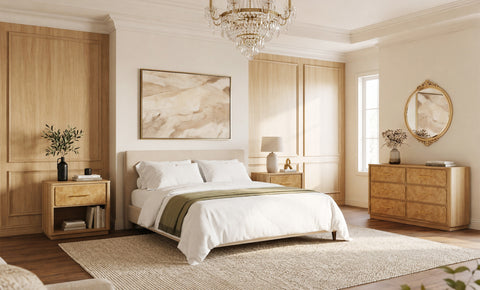
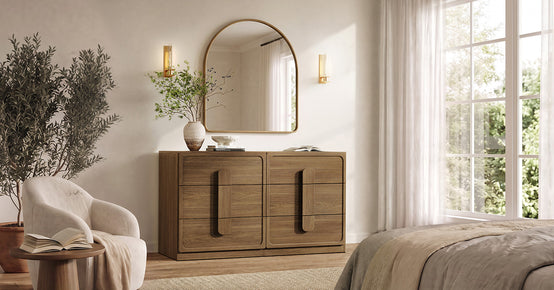
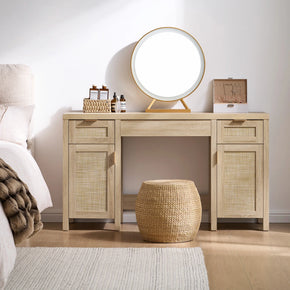
Wood does most of the heavy lifting in this style because it brings warmth into the room without adding any actual color. A walnut sideboard against a cream wall makes the whole space feel intentional, instantly. A solid oak dresser anchors a bedroom in a way a painted piece just can’t. Look at something like the Savanna 6-Drawer Wood Dresser — visible grain, clean silhouette, and proportions that sit low and wide. Natural finish, modern shape. That’s the whole organic modern formula compressed into one piece of furniture.
Choosing the Right Wood Tones
You don’t have to match every wood piece in a room. In fact, a slight variation reads way more authentic. People lived in actual homes long before furniture catalogs trained everyone to buy everything in matching sets. The trick is just keeping the undertones compatible.
- Warm with warm: honey oak, walnut, cherry, smoked oak
- Cool with cool: ash, gray oak, weathered driftwood
- Mixing the two: doable, but you’ll need neutral textiles — a wool rug, linen curtains — to bridge the contrast, or the eye keeps catching on the mismatch
When you’re not sure, default to warm. Cool wood tones can slip into sterile fast, especially in homes that don’t get a lot of natural sunlight through the windows.
Rattan and Other Natural Texture Picks
Where to Add Rattan Without Going Boho

Rattan is a brilliant material. It can also turn on you fast. Done right, it adds warmth and a soft, handmade quality that the room would otherwise be missing. Done wrong, the whole space starts looking like a 1970s sunroom you inherited from a great-aunt who genuinely collected peacock chairs.
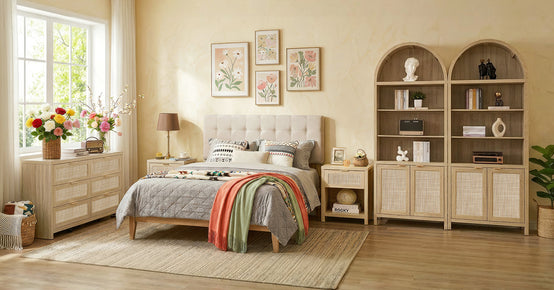
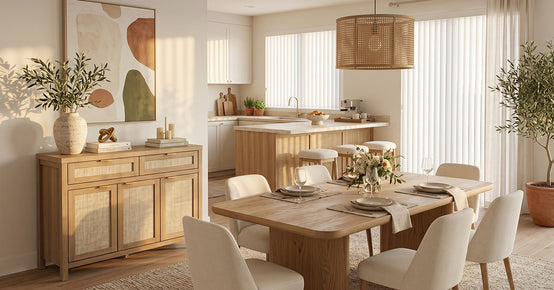
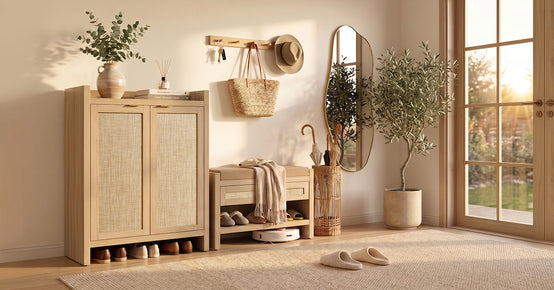
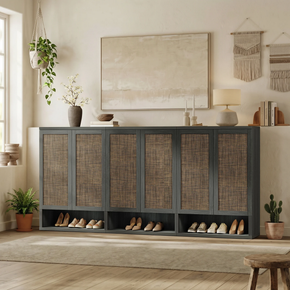
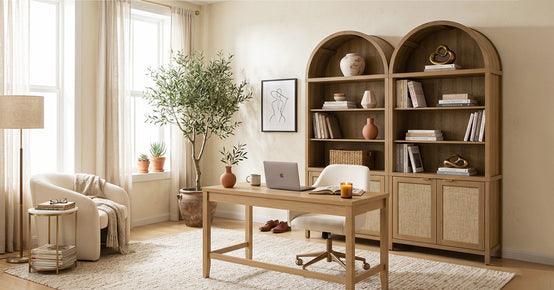
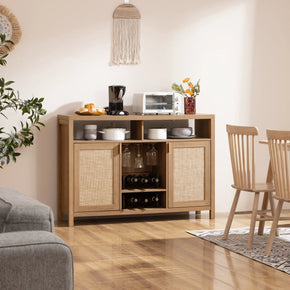
The dividing line between organic modern style and full-blown boho comes down to one word: restraint. Organic modern uses rattan sparingly, only in clean, modern forms. One rattan-paneled cabinet door. One bookcase. One pendant light. That’s plenty. A piece like the Savanna rattan arched bookshelf nails this approach — the arched silhouette is soft and architectural, and the rattan brings in texture without dominating the conversation. Pair it with a linen sofa and a wood console table, and the room settles fast.
Mixing Rattan with Modern Forms
Contrast is the whole game with rattan. It plays best when surrounded by clean lines and matte finishes. A rattan accent piece next to a sleek leather chair. A woven pendant over a marble dining table. A rattan headboard against crisp white sheets. Each of those reads modern, not boho.
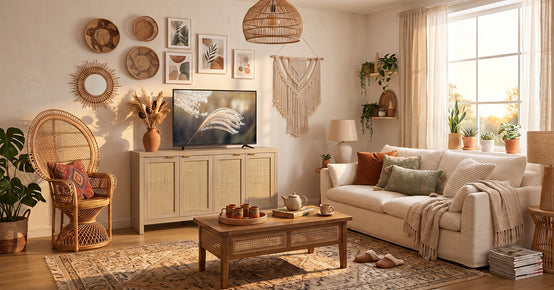
Where things go sideways is stacking too many woven elements all in the same room. One rattan piece, one jute rug, one woven basket — totally fine. Add a wicker accent chair, a bamboo room divider, and three macramé wall hangings on top of that, and you’ve crossed into full boho territory, which is fine, by the way. Just a totally different aesthetic that needs a completely different playbook.
Storage Furniture for an Organic Modern Home

Why Closed Storage Matters in This Style
Here’s the part most decor articles skip, and it’s actually the secret behind every great room. Organic modern interior design lives or dies on calm, uncluttered surfaces. Open shelves piled with stuff break the spell within about a week, every time.
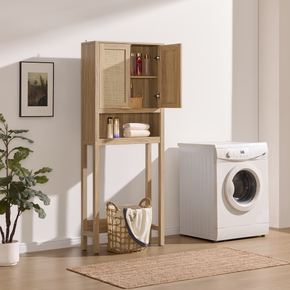
Closed storage furniture solves the problem. Sideboards, dressers, cabinets, console tables with drawers — these are how the style stays clean without you having to live like a Buddhist monk who doesn’t own anything. The everyday chaos (phone chargers, mail that needs sorting, board games, those AAA batteries you keep buying for reasons unclear) all go behind a door. The surfaces people actually see stay quiet and curated.
Modern minimalism and organic modern design both rely heavily on this trick for the same simple reason. The clean, breathing look only works because the daily mess has somewhere to vanish to.
Smart Storage Pieces Room by Room
Here’s what I’d actually shop for in each room, in plain terms:
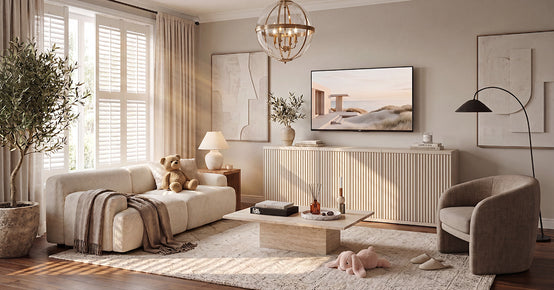
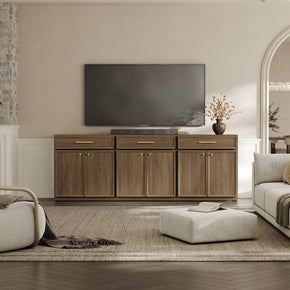
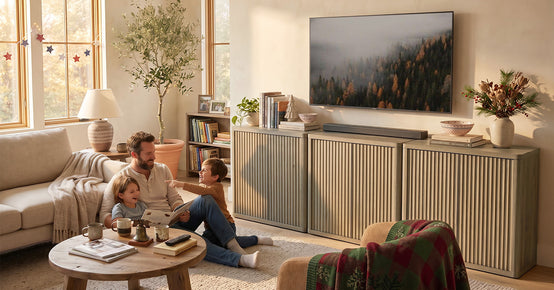
Living room: A low sideboard or media console with closed doors. Something like the Stria Sideboard with 2 Doors works well — clean, modern silhouette, closed-cabinet storage inside, fits under a wall-mounted TV or anchors the wall behind a floating sofa.

Dining room: A sideboard for serveware, table linens, candles, and the bottles of wine you bought intending to open at a dinner party that never quite happened.
Bedroom: A wide dresser plus a closed-drawer nightstand. Skip the open-shelf nightstand entirely. It turns into a clutter magnet within a month—every single time, without exception.
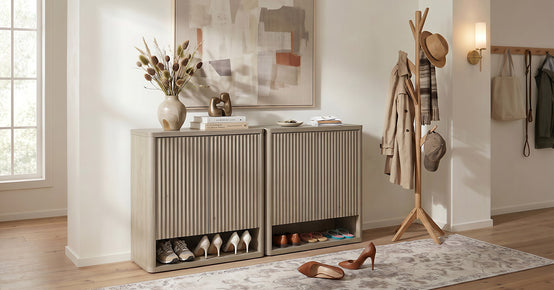
Entryway: A console table with drawers. Keys, mail, the receipts you mean to deal with eventually, and the random stuff that piles up by the front door because no one has time to put it away properly.
Every one of these pieces looks quietly beautiful and pulls real weight. Honestly, the best kind of furniture there is.
Organic Modern Color Palette
Best Organic Modern Colors
Here’s a working palette I’d build an entire room around with my eyes closed:
- Warm white on walls and ceiling
- Soft beige or oat for the sofa and bigger upholstered pieces
- Sand or taupe for curtains and larger rugs
- Warm walnut or oak for the wood furniture
- One accent color: olive, sage, clay, or charcoal
Pull from that short list, and you genuinely can’t make a wrong move. The harder part is keeping the palette consistent across rooms, so the home reads as one cohesive space instead of five separate moods stitched together at every doorway.
What Colors Make a House Look Expensive?
Honestly? The secret to making colors look expensive has very little to do with the colors themselves. It comes down to restraint. Warm white walls, deep charcoal accents, muted olive, soft taupe, natural wood tones — they all read elevated when paired with good lighting, fewer competing colors, and decent materials. Strip those three things away, and the same palette looks ordinary. Even cheap, in the wrong room.
Avoid too many bright colors fighting for attention in one space. Skip stark cool-white paint if warmth is the goal. And undertones matter way more than people realize. Yellow-cream looks dated almost immediately. Cooler-leaning cream reads expensive and considered. Tiny difference on the paint chip. Massive difference once it’s on the wall.
How to Use the 5 Color Rule
The 5-color rule is a simple ratio you can use to keep a room from getting chaotic on you. Hold yourself to about five total color elements in a single room, and the eye doesn’t burn out trying to take everything in:
|
Layer |
Where it shows up |
|
Base color |
Walls, ceiling, the largest furniture (warm white, cream, soft beige) |
|
Supporting neutral |
Curtains, rugs, secondary upholstery (oat, sand, stone gray) |
|
Material tone |
Wood furniture and natural surfaces (oak, walnut, travertine) |
|
Accent color |
Pillows, vases, art (olive, clay, terracotta, sage) |
|
Contrast |
Small grounding touches (charcoal, deep brown, soft black) |
Stay within those five categories in a single room, and you’ll end up with a unified, calm space that just works. Push past five layers, and things start looking busy fast — even when every individual color, on its own, is genuinely gorgeous.
Room-by-Room Organic Modern Styling Guide
Organic Modern Living Room

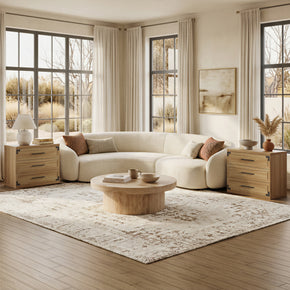
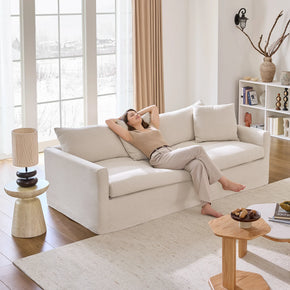
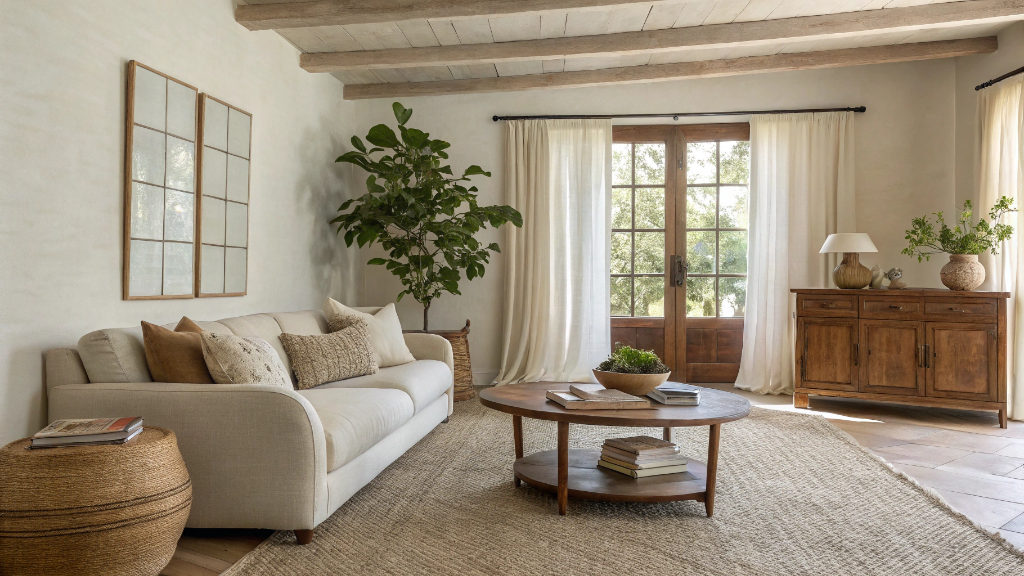
In an organic modern living room, start the layout with a low-profile sofa in a soft neutral fabric. Linen, boucle, brushed cotton — any of those work just fine. Add one curved coffee table in wood, travertine, or plaster. Layer a textured rug underneath it: jute, wool, or another natural fiber. Finish the seating area with one statement plant, a sculptural lamp, and maybe a leather bench or accent chair off to the side.
The mistake I see almost everyone make in living rooms? Too many accent pieces. Three throw pillows on the sofa, not five. One coffee table book, not seven stacked artfully on top of each other. The whole room should read as composed, not staged, for a real estate listing.
Organic Modern Dining Room

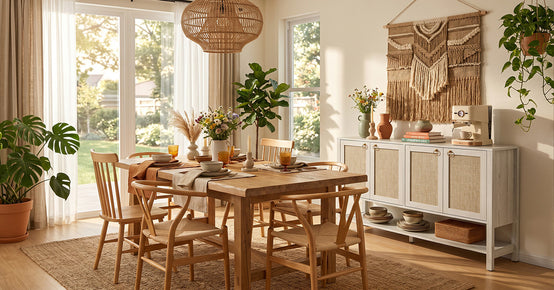
In an organic-modern dining room, the table is the headliner. Pick something made of solid wood with visible grain — oak, walnut, or ash — with simple, uncomplicated legs. Surround it with upholstered chairs in neutral linen or wool. Keep the tabletop mostly clear, anchored by one sculptural object: a ceramic vase, a wood bowl, or a single tall stem in a glass bottle.
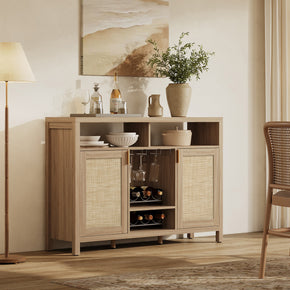
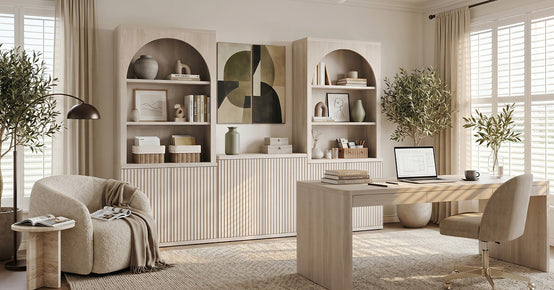
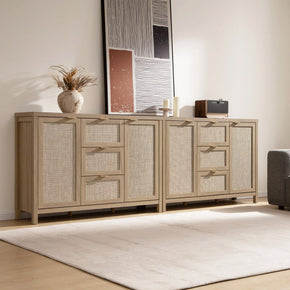
A piece like the Helio Decorative Sideboard Cabinet adds wall storage for plates, table linens, and the candles you actually use — while still pulling real visual weight in the room. Skip the runner. Skip the matching place mats and napkin rings. Less is honestly more in here.
Organic Modern Bedroom

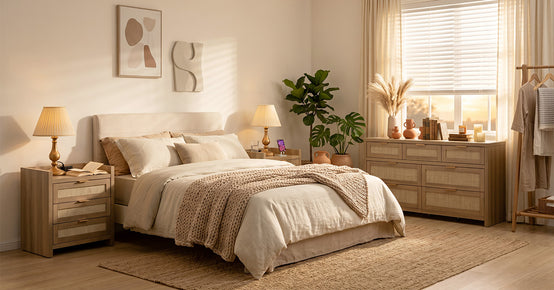
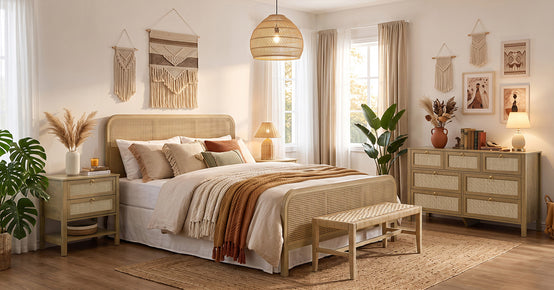
The organic modern bedroom is where calm gets prioritized over absolutely everything else. Warm white walls. Beige or stone-taupe bedding. A low-profile bed with a soft upholstered or wood headboard. Two matching nightstands for that symmetry your eye actually likes. Linen curtains that filter natural light rather than block it out completely.
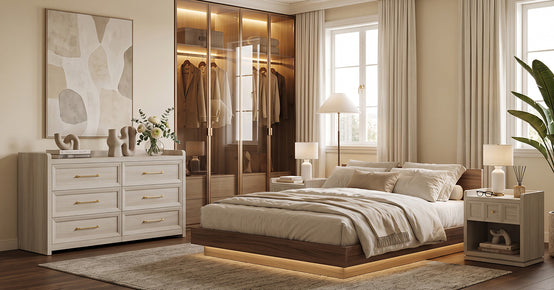
Texture is doing almost all the work in here—layered linen sheets, wool throws, and brushed cotton pillows. Closed-drawer storage is what keeps the room visually uncluttered — the Sicotas dresser collection has wide, low-profile dressers built for exactly this aesthetic. Bedside lamps should glow warm, not bright. One ottoman or bench at the foot of the bed. And that, honestly, is the whole list.
Organic Modern Bathroom

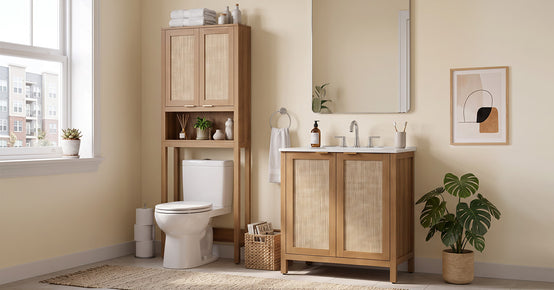
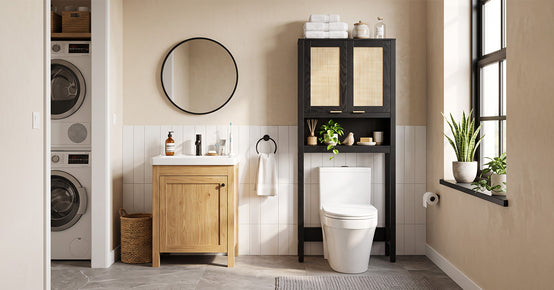
The organic modern bathroom is basically what happens when you want spa-like without trying too hard. Stone vanity, marble or travertine counter, wood cabinetry, brass or matte black fixtures. Round or oval mirrors. Linen hand towels in neutral tones. One or two plants, but only if the room actually gets enough natural light to keep them alive. Hidden storage under the sink so the counter doesn’t end up a disaster zone.
Two tricks I keep seeing in the best organic modern bathrooms: large mirrors hung specifically to bounce natural light around the room, and a single small textured tray to corral the handful of things that genuinely need to live out on the counter.
Organic Modern Kitchen

For an organic modern kitchen, go with flat-panel cabinetry in muted tones. Warm white, sage, taupe, or natural wood all work—marble or stone for the island: brass, bronze, or matte black hardware. Woven pendants hanging overhead. Warm bulbs throughout, never the cold fluorescent kind that make everyone look exhausted at 6 pm.
Counters mostly stay empty. A wood cutting board left out, one fruit bowl, maybe a ceramic spoon rest near the stove. Big appliances live behind cabinet doors whenever the layout allows. That visual quiet is exactly what makes the kitchen feel like part of the same home as the living room — and not a separate, purely functional zone tacked on.
Organic Modern Decor: What to Add and What to Avoid
What to Add
- Wood bowls and serving trays
- Ceramic vases — one large, one small
- Stone or marble sculptures (small but substantial in weight)
- Jute rug, wool rug, or natural-fiber runner
- Linen or brushed cotton curtains
- Indoor plants — one statement piece, two or three smaller ones
- Handcrafted pieces: pottery, basketry, hand-thrown ceramics
- Abstract or nature-inspired art
- Woven baskets for hidden storage
- Brass or warm metal accents
What to Avoid
- Shiny chrome or polished steel (reads cold next to natural materials)
- Bright synthetic colors
- Ornate carved furniture
- Matching furniture sets that look catalog-bought
- Faux plants in bulk (a couple is fine; a whole room of them screams fake)
- Too many small accessories — the surfaces need to breathe
- Stark all-white spaces with zero texture
- Heavy farmhouse touches, if the goal is genuinely modern
How to Make It Personal
This is where a lot of organic modern interiors lose the plot, and, honestly, the same trap shows up on Pinterest every single day. People nail the neutral palette part beautifully, and then completely forget to layer in any actual personality. The fix is intentional. Travel pieces from places you’ve been. Books you actually read, not just props chosen for their spine colors. Handmade objects. Family things. Art that means something to you, not the print that everyone has from Society6. Without that personal layer, the room slides straight into generic beige territory, and the whole look quietly stops doing its job.
Common Organic Modern Design Mistakes
A few traps worth watching out for:
Making the room too plain. Neutral really doesn’t mean empty. If the room reads boring, the issue isn’t a missing color. It’s missing texture and material variety.
Mixing too many wood tones. Wood mixing is totally fine, but the undertones have to play nice together. Three different wood finishes in one space rarely land well.
Forgetting comfort. If the sofa looks beautiful but feels like a wooden bench, you’ve drifted into showroom territory. Pull back from the styling and put comfort first.
Going overboard on plants. Plants are wonderful. But once more than five are visible from one spot, the room starts sliding toward boho.
Cluttered surfaces. The single biggest killer of the whole look. Hidden storage exists for a reason. Use it.
Quick Organic Modern Design Checklist
Before you decide the room is finally done, walk through this checklist:
- Warm neutral base across walls and the largest furniture
- At least one curved or organic-shaped piece per room
- A real mix of natural materials — wood, stone, linen, jute, rattan
- One main accent color, used sparingly
- Closed storage handles the everyday clutter
- Open floor space; nothing crammed into the corners
- One or two healthy plants, not a small jungle
- Layered lighting: overhead, floor, table, accent
- Handcrafted pieces with real character
- A genuine sense of calm when you walk into the room
Hit most of those, and you’re honestly 90% of the way there.
Build Your Organic Modern Home, One Piece at a Time

You don’t need to overhaul a whole house at once. Start with one anchor piece — a wood dresser, a sideboard, a curved coffee table — and grow the rest of the room around it over time. Each new piece earns its spot. None of it has to arrive in the same week.
For warm wood, rattan accents, and storage furniture that suits the organic modern aesthetic, the Sicotas furniture range covers most of the categories you’d realistically need anyway: dressers, sideboards, console tables, bookcases, and bedroom storage. The actual goal here isn’t a finished room. It’s a room that keeps feeling right, year after year after year. And that’s exactly what organic modern style does best, once you let it.
FAQs
What is the 3/4/5 rule in interior design?
The 3/4/5 approach is a practical styling shortcut, not a formal industry rule — many designers simply call it an extension of the more familiar "rule of three." The idea is to arrange decorative objects in groups of three, four, or five. Odd-number groupings (three or five) tend to feel more dynamic to the eye, while even-number ones (four) feel more balanced and grounded. In an organic modern interior, it comes in handy for shelf styling, pillow arrangements, or grouping decor like vases, books, and ceramic objects on a sideboard.
What colors are organic modern?
Organic modern colors are warm, muted, and pulled almost directly from nature. The usual suspects: warm white, cream, beige, taupe, oat, stone gray, mushroom, clay, terracotta, olive, sage, warm walnut, and charcoal. The whole palette should feel grounded and quiet — never bright, never anything synthetic-looking.
What is Gen Z interior design?
Gen Z interior design leans expressive, personal, and pretty eclectic. It mixes vintage finds, bolder colors, sustainable pieces, DIY decor, and statement plants. There’s some genuine overlap with organic modern through the plants and natural materials, but Gen Z style embraces louder color and more personality out in the open.
What are the top 5 styles of interior design?
The five most popular interior design styles right now are organic modern, modern, contemporary, Scandinavian, and traditional. Other widely loved styles include mid-century modern, industrial, farmhouse, coastal, bohemian, and minimalist. The right pick depends on your home’s bones, your daily lifestyle, and what genuinely feels calming when you walk in the door.
What are the 7 rules of interior design?
The seven core principles of interior design are balance, harmony, rhythm, proportion and scale, emphasis, contrast, and detail. Organic modern interiors apply each of these through calm room layouts, layered natural textures, restrained use of color, clean lines, and one strong focal point per room.
What is the 5 color rule?
The 5-color rule limits a room to roughly 5 total color elements: one base color, one or two supporting neutrals, one natural material tone, and one accent. In organic modern interior design, sticking to this rule keeps the palette grounded while still leaving room for personality to come through.
What is an organic modern style?
Organic modern style pairs modern minimalism with natural materials and shapes. It runs on clean lines, neutral tones, organic curves, and textured naturals like wood, stone, linen, and rattan. The result is a home that reads modern, calm, and warm at the same time.
What colors make a house look expensive?
Warm white, soft taupe, deep charcoal, muted clay, sage green, and warm wood tones tend to read expensive when they’re paired with good lighting and quality materials. The “expensive look” is mostly about restraint — fewer competing colors, more attention to texture, and surfaces that aren’t covered in stuff.
What are the 7 main colors?
The seven main colors of the visible spectrum are red, orange, yellow, green, blue, indigo, and violet. In organic modern design, these tend to get softened into earthier versions: clay red, muted ochre, olive green, dusty blue. That softening is what keeps the whole palette grounded and calm.
Sources
- King Living – Organic Modernism: Why This Interior Design Trend Is Here to Stay
- The Spruce – What Is Organic Modern Style?
- Decorilla – Organic Modern Style Home Before and After
- The Citizenry – The Organic Modern Home
- MoMA – Organic Design in Home Furnishings
- Frank Lloyd Wright Foundation – About Frank Lloyd Wright and Organic Architecture
- Dwell – Modern Natural Home Design
- Wikipedia – Organic Architecture


Looking for something else?

Furniture Materials Guide: Picking the Right Material Room by Room
LEARN MORE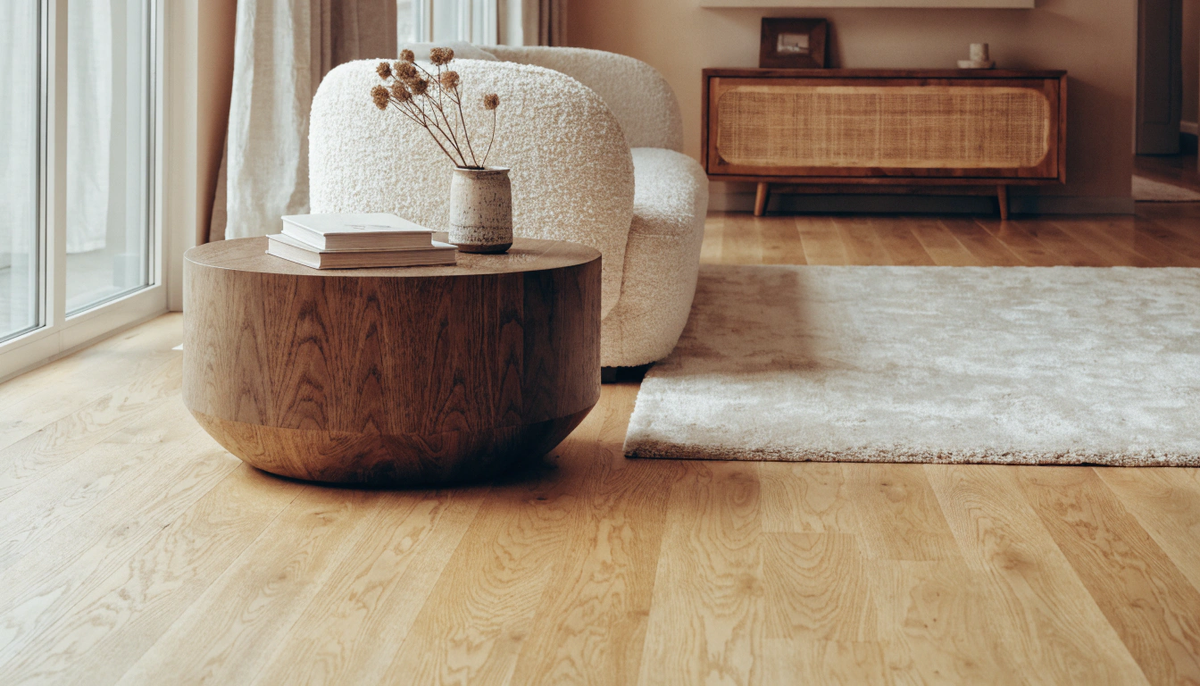
How to Mix Wood Tones Without Making a Room Look Mismatched
LEARN MORE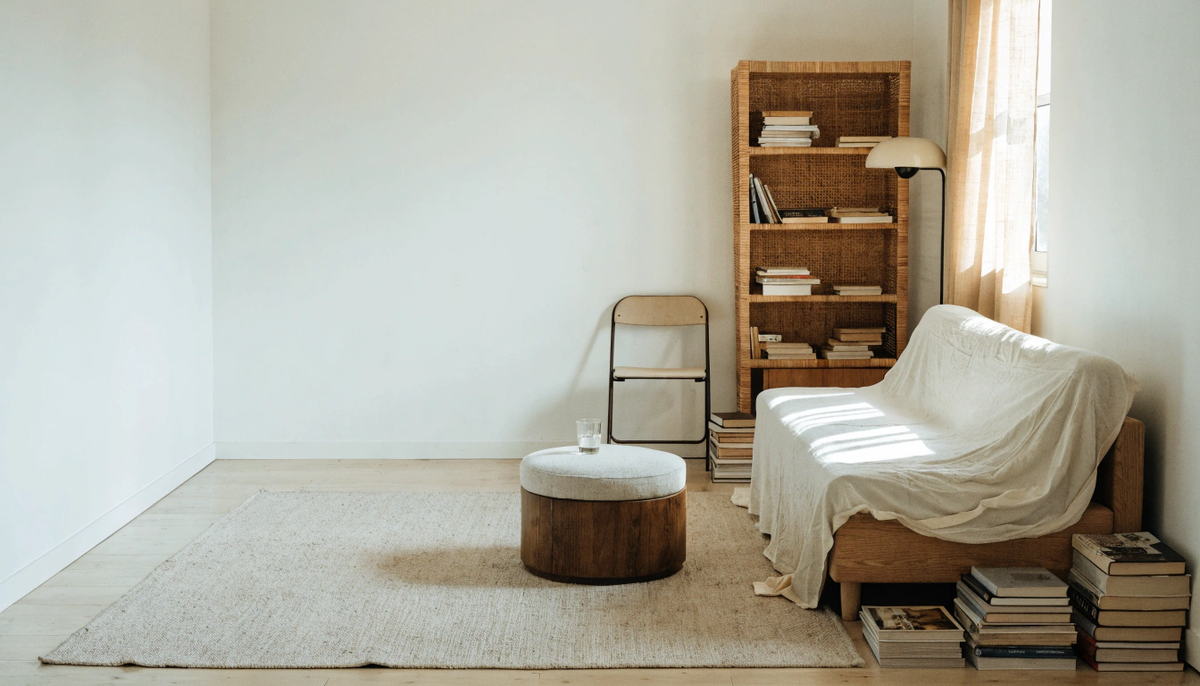
18 College Apartment Furniture Ideas That Save Space and Money
LEARN MORE
Types of Entertainment Centers: 11 Designs and How to Pick One
LEARN MORELooking for something else?

Curio Cabinet Decor Ideas: How to Style a Display Cabinet Without the Clutter
LEARN MORE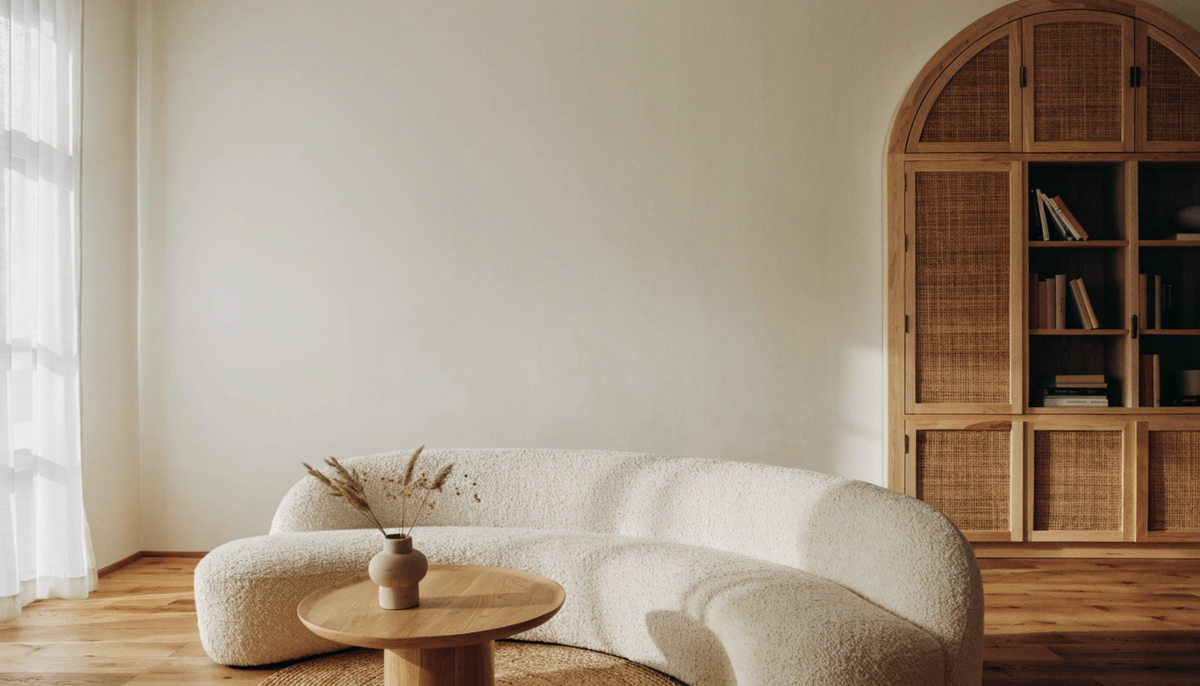
Curved Furniture: How to Style, Measure, and Buy It in 2026
LEARN MORE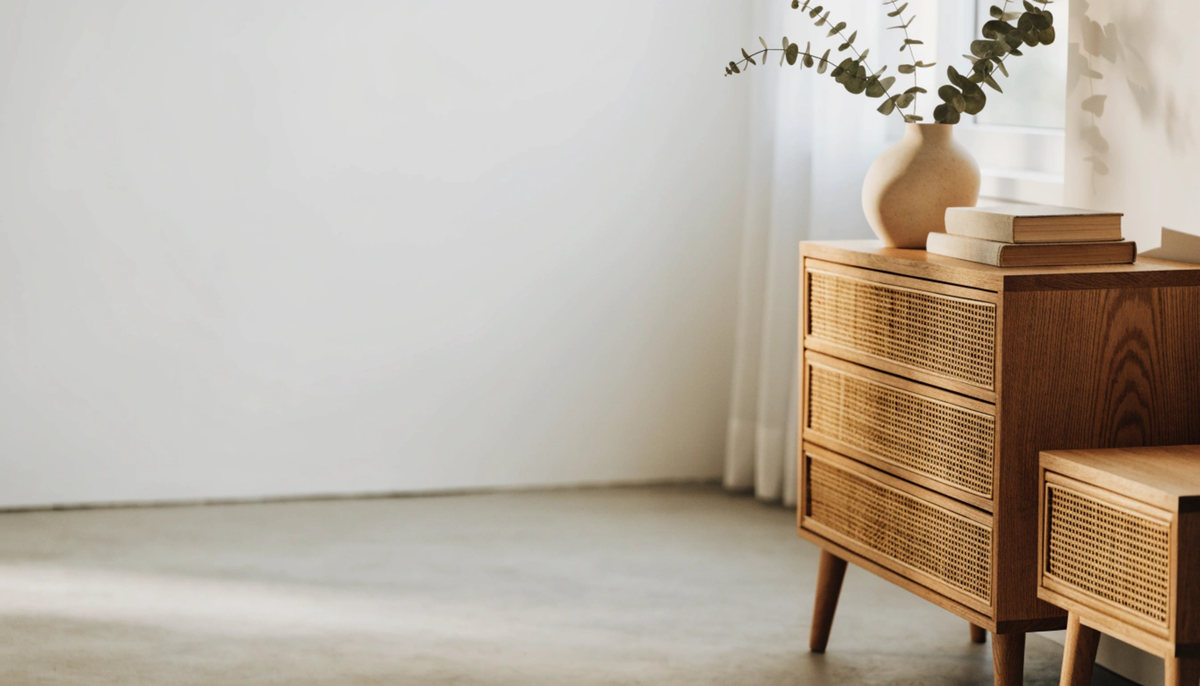
What Is Rattan Furniture? A Buyer Guide to Types and Care
LEARN MORE


Further reading

How to Choose a Nightstand for a CPAP Machine

How to Choose a Shoe Cabinet for Men's Sizes, High-Tops, and Bulky Shoes


