





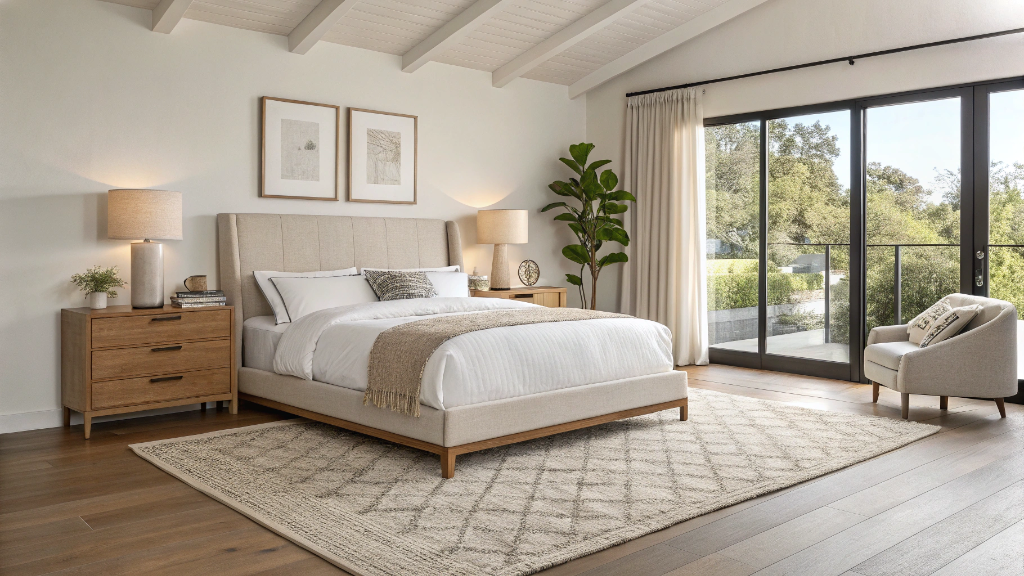

Rug Under Bed Guide: How to Style Rugs With Dressers and Nightstands
I've helped friends set up more bedrooms than I can count, and the same thing trips them up every time: the rug under the bed.This BHG bedroom rug guide covers many visual examples, but the placement and sizing decisions are where most people get stuck. It sounds like the easiest part. It isn't. Buy one that's too small, and the bed looks marooned. Slide it too far under the frame, and you're left with a sad strip of fabric peeking out at the foot. Most folks figure this out the slow way, three months in, staring at a setup that just feels off. So here's the shortcut. Real size charts. Four placements that actually work in real rooms. Plus, the bits nobody tells you about dressers, nightstands, and how far the thing should sit from the wall.
Why a Rug Under Your Bed Matters

Think of your bed as the anchor in the room. Heavy. Big. Loud, visually speaking. It needs something underneath to hold it down, or it ends up looking weirdly disconnected from everything else. That's where a bedroom rug earns its money. The right one stitches the bed, nightstands, and surrounding furniture into one designed pocket. Without it? The bed kind of hovers there. You'll feel it before you can name it.
And there's more going on than just looks:
- Soft landing. Stepping onto cold tile at 6 a.m. is a small daily horror. Easy to fix.
- Quieter room. Hardwood and laminate echo like a gymnasium. A rug shuts that down.
- Texture, warmth, all that good stuff. You add depth without dragging in more furniture.
- Floor protection. Bed legs scuff—vacuums bump baseboards. The rug takes the hit.

And if you've already got a solid piece anchoring the room, say a well-built dresser from Sicotas, the rug is what visually links it to the bed. Without one, both pieces just float around.
Where Should a Rug Go Under the Bed and Nightstand?

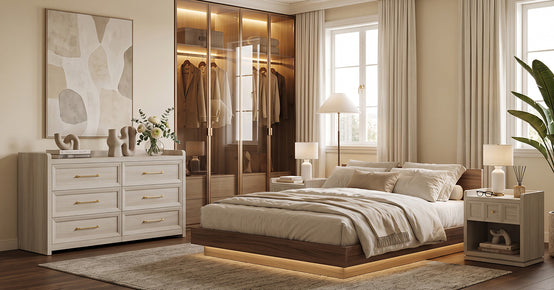
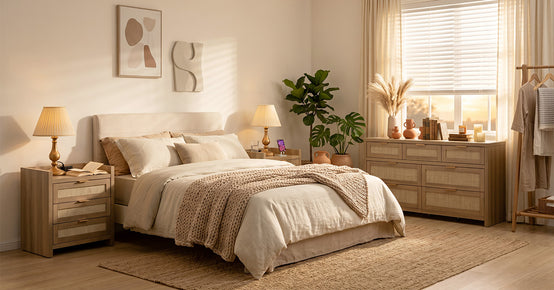
Short answer? Start it at the lower two-thirds of the bed. For most rooms, that means the rug edge lines up just in front of your nightstands, or maybe slides under their front legs. From there, it sprawls past the foot of the bed and stretches a good way out on either side.
Why this works: the rug placement does its anchoring job, but you still see the floor around the edges. The room breathes. Wall-to-wall rug coverage is rarely the answer.
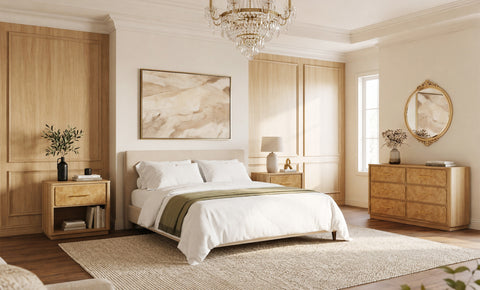
Now, if you're going for that hotel-suite vibe, you can push the rug up further so the whole bed and both nightstands sit on it. Looks gorgeous. Only works in a big primary bedroom, though, especially one built around a king bed.
Best Rug Placement Options Under the Bed
There's no single right answer here. The best area rug placement depends on the room you're working with, your budget, and the feel you're after.
Option 1: Full Rug Under Bed and Nightstands
Lie on the rug. Both nightstands are on the rug. Bench at the foot of the bed? Also on the rug. Everything sits together, and the whole thing reads like a high-end hotel suite. It's the most polished option, no question.
Best for:
- Large primary bedrooms with room to spare
- King bed setups
- Symmetrical room layouts where both sides mirror each other
You'll need a large bedroom rug that extends 18 to 24 inches past the sides and foot of the bed. For a king bed, that usually lands you at 9x12 or 10x14.
Option 2: Bed on the Rug, Nightstands Off

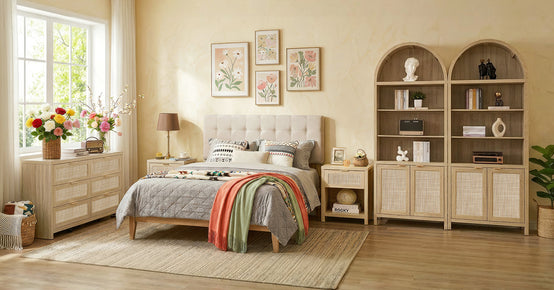
The bed sits on the rug. Nightstands stay on bare floor. Easily the most flexible setup, and probably the one I'd recommend for nine out of ten medium rooms.
Best for:
- Queen-size bed layouts
- Standard bedrooms that aren't huge
- Anyone who doesn't want to spring for the largest rug in the catalog
A clean piece like the Crescent three-drawer bedside table looks really right sitting just off the rug, with the wood catching the floor color. Keeps the rug focused on the bed itself.
Option 3: Lower Two-Thirds of the Bed

Here the rug starts about two-thirds of the way down the bed and runs well past the foot. Headboard end, nightstands, all of that sits on the bare floor. It's the most casual look on the list.
Best for:
- Smaller bedrooms
- Layered rugs over carpet
- Showing off pretty hardwood you spent money on
Bonus: this is the friendliest option for your wallet: smaller rug, same finished look, fewer headaches getting it positioned.
Option 4: Side Runners Instead of One Area Rug

Skip the area rug altogether and run two runners down each side of the bed. Sounds weird until you try it. Works beautifully in narrow rooms. Also, a smart move if anyone in the house has dust allergies, since runners trap way less than a big area rug does.
You still get that soft landing without the dust factor. Pair it with a tall statement piece across the room, something like the Stria storage dresser with deep drawers, and the room balances out nicely.
Rug Size Guide by Bed Size

Half the battle is just buying the right size. Use this rug size guide as your starting point. The rest is taste.
Rug Under Twin Bed
- 5x8 rug: Standard pick. Works for most kids' rooms and guest setups.
- 6x9 rug: Better if the room has an open floor begging to be filled.
Make sure the rug extends at least 18 inches past whichever side of the bed isn't against a wall. If the twin is pushed flat against a wall, a single runner does the job and saves you cash.
Rug Under Full Bed
- 6x9 rug: Tight rooms only.
- 8x10 rug: The best call for most adult bedrooms.
A full bed on a tiny rug just looks top-heavy. It's a weirdly common mistake. Size up when the room lets you.
Rug Under Queen Size Bed

- 6x9 rug: Bare minimum, only if you're tight on space.
- 8x10 rug: The sweet spot, hands down.
- 9x12 rug: Ideal for larger primary bedrooms.
For a queen-size bed, you'd really have to try to mess up 8x10. It gives enough rug under the queen bed on both sides, plus a generous strip past the foot of the bed. That's all you actually need for a soft, even landing every morning.
Rug Under King Bed
- 8x10 rug: Acceptable, but on the small side.
- 9x12 rug: The most common pick for a reason.
- 10x14 rug: For big luxury bedrooms with serious square footage.
Here's the truth nobody likes hearing: a small rug under a king bed rarely looks right. The scale is just off. I've literally never met someone who said they regretted going bigger.
How Far Should a Rug Extend Beyond the Bed?

Stick with these and you'll skip most of the headaches I see in friends' bedrooms:
Sides of the bed: Aim for 18 to 24 inches of rug visible on each side. That's enough that your feet actually land on the rug when you swing out of bed, not on cold floor.
Foot of the bed: At least 18 inches past the foot of the bed. If a bench or chair is sitting there, make sure it's fully on the rug. Half on, half off looks unfinished.
Distance from the walls: Leave 8 to 18 inches of bare floor between the rug edge and the walls. Any closer and the room starts feeling cramped, like the rug is trying to swallow the floor whole.
How to Style a Rug With Your Dresser and Nightstand
Rug placement under the bed isn't a bed-only conversation. The rest of your bedroom furniture matters just as much. This is where the bedroom layout either clicks or just sits there, slightly off.
Match the Rug Tone to Your Dresser Finish

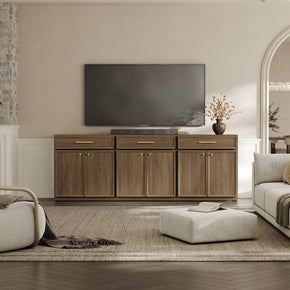
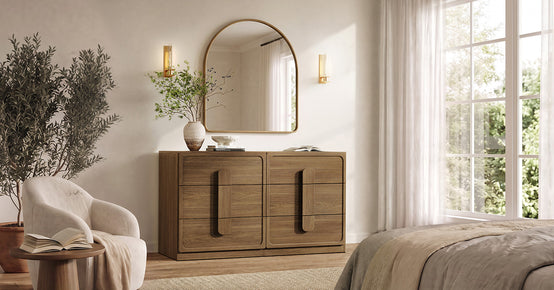
Choosing a rug means looking at your dresser first. Warm wood pieces like the Savanna six-drawer wood dresser pair beautifully with cream, oatmeal, or soft beige. Darker wood handles deeper tones, rust, indigo, charcoal, that whole moody palette.
One rule I'd stick by: don't park a heavy, dark dresser on the same rug as the bed unless the room is genuinely huge. The visual weight piles up too fast and the whole thing reads cluttered.
Place Both Nightstands the Same Way

Whatever you do with the rug under nightstands, do it identically on both sides. Both fully on, both completely off, or both with just the front legs touching. Mixing it up looks accidental, not intentional. Trust me on this one.
If you're using something like the Savanna nightstand with charging station on each side, settle this question before you unroll the rug. Way easier than scooting heavy furniture around later.
Usually, Keep the Dresser Off the Rug
In most average-sized bedrooms, it works best if the dresser stays off the main bed rug. That keeps the rug doing its main job: defining the sleep zone, without competing visually with the storage piece against the wall.
That said, in larger primary bedrooms, there's more flexibility — the rug can sometimes extend far enough to include a dresser or seating area without losing its purpose, as long as the proportions still feel balanced.
Big exception: a really spacious primary bedroom. There, you've got room for two separate rugs. One under the bed, another defining a seating or dressing area near the dresser. Looks intentional rather than crowded.
Avoid Pattern Overload
Loud bedding? Pick a quieter rug. Simple bedding? A patterned rug can carry the room's personality. The thing nobody tells you: look at everything competing for attention: dresser, nightstand styling, curtains, artwork, even a busy throw blanket. Pick one statement piece and let the rest hold the line.
Common Rug Placement Mistakes to Avoid

These rug under-bed rules are worth tattooing on the inside of your eyelids:
- Going too small. A rug barely peeking out from under the bed reads like an afterthought. Size up.
- Hiding too much rug. If 80% of the rug is buried, what's the point? Aim for 30 inches of visible rug on every exposed side.
- Touching the walls. Rug crashing into the baseboards. The room instantly feels boxed in.
- Asymmetrical nightstand placement. One on, one off. Looks accidental. Always.
- Forgetting door clearance. Thick rugs can jam a swinging door. Measure the gap under your door before you order.
Do You Need a Rug Pad Under Your Bed?
Yes. Almost every time. A good rug pad pulls weight in four different ways:
- Keeps the rug from sliding on hardwood, tile, or laminate
- Adds noticeable cushion when you step on it
- Stops the rug from wearing thin in high-traffic spots
- Prevents bunching under heavy bed legs (this one's underrated)
Rug pads are non-negotiable under thin rugs, flatweaves, low-pile rug styles, and any setup with a layered rug over carpet. The only time you can really skip the pad is if your rug is thick and plush, and the bed alone holds it in place. Even then, the edges might shift.
How to Measure and Visualize Before You Buy

Spend five minutes on this before you hit order. Seriously, just five:
- Measure your bed length and width. Write it down somewhere you won't lose it.
- Add 36 to 48 inches to each dimension. That's your target rug size.
- Tape the shape out on the floor using painter's tape. Cheap. Effective.
- Walk around the bed. Sit on the edge. See how the imaginary rug actually feels in the room.
That one trick has saved me from probably four bad rug orders. For more bedroom layout inspiration, browse the Crescent bedroom collection. It's a useful way to see how nightstands and storage pieces look when the rug underneath actually fits the scale.
FAQs
Where should a rug go under bed and nightstand?
Big bedroom? Slide the rug fully under the bed and both nightstands. Smaller room? Start the rug just in front of the nightstands and run it under the lower two-thirds of the bed. The one thing you can't fudge: keep both nightstands consistent. One-on, one-off looks like a mistake every time.
How to style a rug under the bed?
Center it with the bed, leave 18 to 24 inches of rug visible on each side, and pick colors that don't fight your bedding or dresser. Patterned bedding is like a quiet rug. Simple bedding can handle a louder one. Wood tones should generally agree with each other.
What is a common mistake for rug placement?
Buying too small. By far. A tiny rug under a queen or king bed just looks lost out there. Second mistake: shoving the rug so far under the bed that almost nothing shows. Both kill the look.
How to arrange furniture with a rug?
The bed is the anchor. Center it on the rug. Nightstands can sit on or off the rug, depending on the rug size. The bench at the foot of the bed should sit fully on the floor. Dresser usually stays off. Don't force every piece of bedroom furniture onto the rug just because it's there.
What is the rule of thumb for bedroom rugs?
Extend the rug 18 to 24 inches past the sides and foot of the bed. Queen-size bed? 8x10 almost always nails it. King bed? 9x12 is the safe bet. Always keep some bare floor visible between the rug and the walls.
Why do people put rugs under their beds?
Softness, warmth, sound control, visual balance. That's the short list. The rug also anchors the bed so the room reads as designed rather than thrown together. It turns a pile of bedroom furniture into something that actually feels intentional.
Do I need a rug pad for a rug under the bed?
Yes. It stops slipping, adds cushion, protects your floor, and makes the rug last longer. Most important under thin rugs, flatweaves, washable rugs, hard floors, and any layered rug over carpet.
Sources
- Castlery, rug placement under bed guide, Castlery Australia Blog
- Elegant Simplicity, everything to know about placing a rug under your bed, Elegant Simplicity Blog
- The Spruce, best bedroom rugs guide, The Spruce Home
- Better Homes & Gardens, bedroom rug ideas and styling, BHG Bedroom Decor
- HGTV, How to choose the right rug, HGTV Design 101
- Real Simple, bedroom rug size guide, Real Simple Home
- Rug Editorial, common area rug mistakes to avoid, Apartment Therapy Decor


Looking for something else?

Furniture Materials Guide: Picking the Right Material Room by Room
LEARN MORE
How to Mix Wood Tones Without Making a Room Look Mismatched
LEARN MORE
18 College Apartment Furniture Ideas That Save Space and Money
LEARN MORE
Types of Entertainment Centers: 11 Designs and How to Pick One
LEARN MORELooking for something else?

Curio Cabinet Decor Ideas: How to Style a Display Cabinet Without the Clutter
LEARN MORE
Curved Furniture: How to Style, Measure, and Buy It in 2026
LEARN MORE
What Is Rattan Furniture? A Buyer Guide to Types and Care
LEARN MORE


Further reading

How to Choose a Nightstand for a CPAP Machine

How to Choose a Shoe Cabinet for Men's Sizes, High-Tops, and Bulky Shoes


