






Rug Bed Placement: Bedroom Rug Rules for Size, Layout, and Style
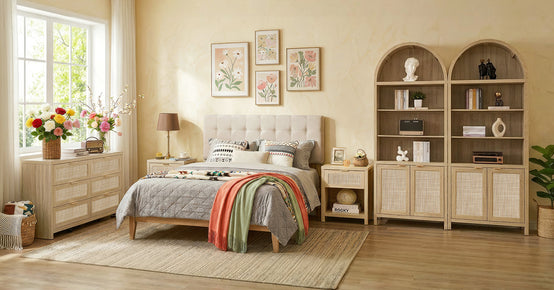
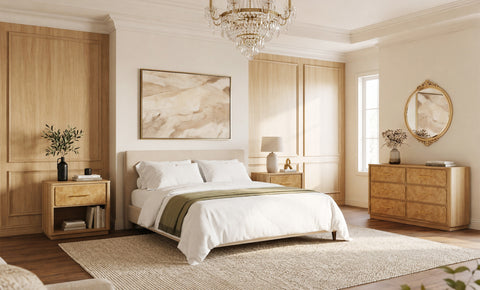
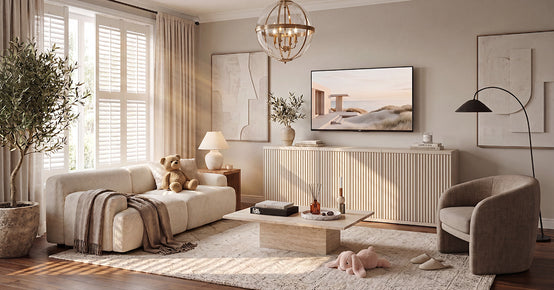
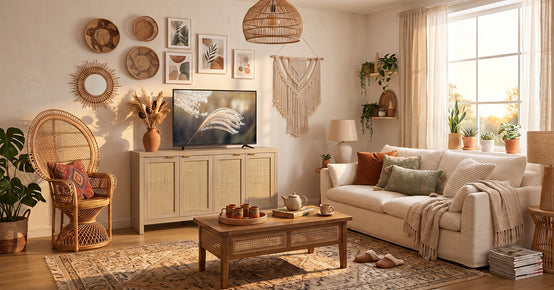
Buying the rug is honestly the easy part. Placing it right is where most people lose the plot. I've seen $3,000 wool rugs make a bedroom look amateur because the rug bed placement was wrong, and I've seen $200 jutes absolutely nail it.This Martha Stewart bedroom rug guide shows plenty of polished examples, but the photos only tell part of the story — placement decisions are what actually separate the good setups from the awkward ones. When it comes to bedroom rug placement, the rug itself doesn't have to be fancy. It just has to follow the basic rug-bed placement rules — the right size, the right spot, and enough border showing on each side of the bed. Get that part wrong, and even the prettiest rug looks like an accident. So no theory below — just what works in bedrooms people actually live in. Four placement layouts, sizing by bed size, what to do when the bed’s against a wall, the bedroom rugs mistakes I see most often, and the FAQs people Google before they hit buy.
Why Rug Bed Placement Matters

A rug under your bed earns its place by doing three different jobs at the same time, and most people don’t notice any of them until they roll the rug up and the room feels weirdly hollow.
First, it anchors the bed. The bed is usually the heaviest piece of furniture you own, and the natural focal point of the room — without something soft pulling the eye toward it, the whole space looks oddly empty around the base. Second, it gives you a soft landing every morning. That sounds small until it’s January, the floor’s freezing, and you’re trying to find your slippers in the dark. Third, in larger rooms, it separates the sleep zone from a vanity or reading nook, even when there’s no wall between them: three jobs, one rug. Pretty hard to argue with the ROI on that.
Main Rug Placement Options for Bedrooms
Four placements get used over and over by designers. None of the other ones are technically wrong, but these four hold up in real bedrooms. Pick the one that matches your room size and budget — not the one you saved from Pinterest at midnight.
Option 1: Entire Bed and Nightstands on the Rug

Everything sits on one rug. Bed, both nightstands, the bench at the foot of the bed — all on. This is the hotel-suite look. It works in primary suites with a king bed and serious floor space, and almost nowhere else. You’re looking at a 9x12 minimum, more often a 10x14. Pricey. Worth it if your room can handle it. Just leave a generous visible floor border around the edges, or the whole layout will look crammed.
Option 2: Rug Under the Lower Two-Thirds of the Bed

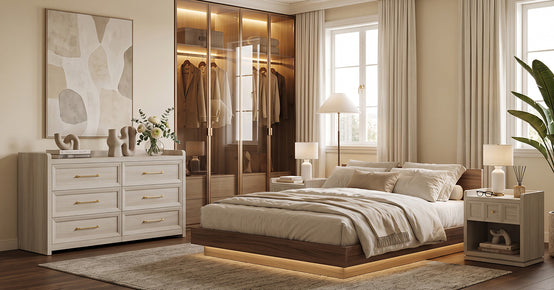
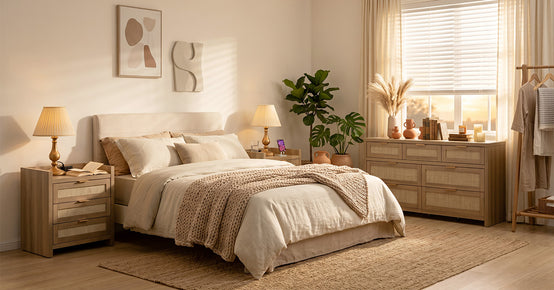
The layout most actual bedrooms end up using, by a mile. The rug slips under the bottom two-thirds of the bed, starting just in front of the nightstands and ending past the foot—no oversized rug required. The nightstands sit on bare floor. You still get the soft step-out moment when you swing your legs over the side at 7 am. For a queen, an 8x10 is perfect. For a king, you’ll want a 9x12. This is the layout I recommend more than any other when clients ask.
Option 3: Rug at the Foot of the Bed

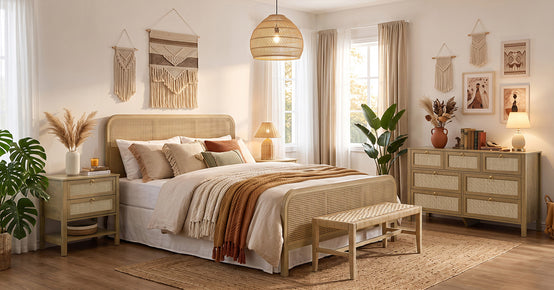
Small rug, placed flat across the foot of the bed. Best pick for cozy bedrooms, rooms that already have wall-to-wall carpet, or layouts with a bench in front of the bed that needs an anchor. A 4x6 works in most cases. Sometimes you’ll size up to a 5x8. The point here isn’t the soft landing — it’s texture, plus giving that bench a reason to exist without eating up the floor.
Option 4: A Rug on Either Side of the Bed

Two narrow runners, one on each side of the bed. This is the budget-conscious move (and honestly, the renter’s move). Narrow rooms work better with this than with one big rug. Beds against the wall, too. You still get the soft step-out on both sides, and you spend a fraction of what a 9x12 costs. Pick runners that are slightly wider than your nightstands — a slim piece like the Crescent 3-Drawer Nightstand makes the proportions easier to balance — and don’t let the runners extend past the foot of the bed. That’s where it goes wrong.
Rug Size Guide by Bed Size

When you choose a rug for the bedroom, your bed size mostly does the math for you. Aim for 18 to 24 inches of visible rug on each side of the bed. Less than 18 and the rug starts looking skimpy fast. More than 24 and you’re paying for a rug you’ll never actually see, because it’s hidden under furniture. Smaller rugs only work as runners on either side or as anchors for a bench at the foot of the bed.
|
Bed Size |
Ideal Rug Size |
Why It Works |
|
Queen |
8x10 (or 9x12) |
Leaves 18–24 inches of rug showing on each side |
|
King |
9x12 (or 10x14) |
Gives the larger bed the width and foot space it needs |
|
Full |
6x9 (or 8x10) |
Anchors the bed without overwhelming a smaller room |
|
Twin |
5x8 or two 3x5 runners |
Works centered under the bed or flanking each side |
Rug Size for a Queen Bed
8x10 is the sweet spot for almost every queen-size bed using the two-thirds layout. If your room runs bigger, size up to a 9x12 and let the whole bed plus the nightstands sit on it — that’s the more luxurious option, but it eats budget. Either size leaves enough rug showing on the sides to look deliberate. Skip the 6x9 unless your space is genuinely tight.
Rug Size for a King Bed

A king bed needs more width to breathe than a queen. A 9x12 is your standard for the two-thirds approach. For the fully grounded look with everything on the rug, go 10x14. Don’t skimp — a king on a queen-sized rug looks comically off. To balance the room’s overall scale, pair the bed with something with vertical presence, like the Savanna 7-Drawer Tall Dresser on the opposite wall: equal weight, both sides.
Rug Size for Twin or Full Beds
A 5x8 works for a twin bed using the two-thirds approach. For a full bed, 6x9 fits most rooms comfortably. Even with smaller beds, you still want a generous border of visible rug. Go too small, and the rug shrinks to a postage stamp under the bed, which is somehow worse than no rug at all.
How to Place a Rug When the Bed Is Against a Wall

When you're dealing with a bed-against-the-wall rug setup — common in narrow rooms, kids' rooms, and apartments where space is tight — the rules of symmetrical placement collapse. The bed isn't centered against the open floor on both sides, so the rug shouldn't be either. Stop trying to force it.
The best move here is to use one larger rug, offset toward the open side of the bed. More rug shows up where you actually step out. The wall side gets less coverage, sure, but who stands there? Nobody. If wall-side storage is also tight, slim-profile pieces like the Stria Dresser with Large Drawers work way better than wide horizontal dressers in narrow rooms. The rug, the bed, the storage — they all have to coexist with the floor space you actually have, not the floor space you wish you had.
How to Arrange Bedroom Furniture With a Rug
The rug doesn’t exist in a vacuum. Every other piece of furniture in the room has to coexist with it without fighting it.
Nightstands
In larger rooms with a generous rug, both nightstands can sit fully on it — fine, looks great. In most bedrooms, though, the rug starts just in front of the nightstands, so they rest on bare floor. The one thing you want to avoid absolutely is nightstands sitting half on, half off the rug. I don’t care how nice the rug or the nightstands are. That setup looks wrong, full stop, every time.
Dressers and Wardrobes

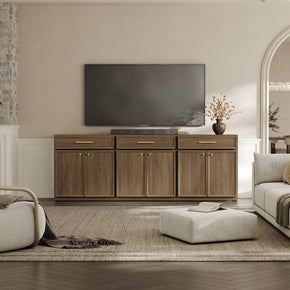
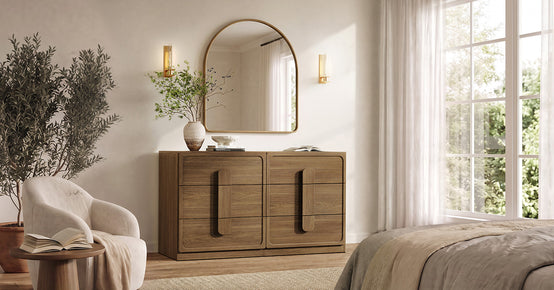
The bed’s rug doesn’t need to reach a tall dresser or wardrobe — actually, it shouldn’t try to. Leave clear floor space so drawers and doors can open without dragging across the rug. If your dresser sits on a different wall from the bed, a horizontal piece like the Terra 6-Drawer Horizontal Dresser works fine on a bare floor, with a small accent rug nearby for warmth if you want one. Skip the urge to extend the bed rug to every piece of furniture in the room. It doesn’t help.
Bench at the Foot of the Bed
Always sits fully on the rug—no exceptions to this one. A bench floating off the rug looks like an afterthought every single time. If you need to pull the rug forward six to twelve inches to clear the bench legs, do it—the rug shifts. The bench doesn’t.
Choosing the Right Rug Material
Material matters more in a bedroom than in almost any other room. You’re walking on this thing barefoot every morning.
Wool is still the gold standard for a reason. Soft, warm, naturally stain-resistant, and lasts decades if you treat it right. Pricey though. Save it for the primary suite, where you’ll get years of barefoot mornings out of it.
Cotton is lightweight, easy to throw in the wash, and easy on the wallet. Great pick for casual bedrooms, guest rooms, and seasonal swaps when you want different colors in summer than in winter.
Jute or sisal brings real natural texture into the room and looks fantastic under the foot of the bed. Just don’t put it where you stand barefoot daily. It’s not unpleasant, but it’s not plush either. Better as an accent than a main rug.
Synthetic or performance rugs stand up to pets, spills, kids, basically everything else without complaint. They clean easily. They’re hard to ruin. Not the most luxurious option, but if your bedroom doubles as the dog'ssleeping spot, performance fibers earn their keep fast.

For matching bed, dresser, and nightstand pieces that style well alongside any of these rug materials, browse the Sicotas bedroom furniture collection. Matching the rug undertone to the wood tone of the furniture is honestly half the styling battle, and it’s the part most people skip.
Common Rug Bed Placement Mistakes

A few traps to dodge before you buy:
Going too small. Hands down, the most common rug placement mistake there is. A rug that doesn’t extend past the bed looks lost, asit shrank in the wash. Any time you’re between two sizes, size up. Not down. Up.
Letting it float. The floating rug. Sits in the middle of the room, touches no furniture, and looks like an island that drifted there by accident. The fix is dead simple: slide it under at least the bottom two-thirds of the bed. The rug has to touch furniture to earn its place.
Pushing too far under the bed. If most of the rug is hidden under the bed, you’ve defeated the whole purpose of buying it. Keep at least 18 inches showing on the sides and the foot of the bed. Measure if you have to.
Ignoring clearance. Thick rugs can block bedroom doors or stop dresser drawers from sliding open all the way. Measure the gap between your door and the floor before you commit. A half-inch pile clears most doors. A three-quarter-inch can absolutely be a problem.
Picking the wrong tone. Very dark rugs feel heavy in small bedrooms, especially with limited natural light. A rug with subtle color and texture usually outperforms a flat, solid one. Hides crumbs and dust better between vacuums, too.
Quick Bedroom Rug Placement Checklist

Walk through this list before you commit to anything:
- Center the rug with the bed, not the room
- Leave 18–24 inches of visible rug on each side of the bed
- Match the rug size to your bed, not the full floor space
- Keep nightstands fully on or fully off the rug
- Check that doors and drawers open clear of the rug
- Use a rug pad for grip and added cushioning
- Pick low-pile or washable for allergy-prone bedrooms
FAQs
Where to place a bed on a rug?
The bottom two-thirds of the bed sits on the rug, with the rug sticking out past both sides and the foot of the bed. That’s the standard. If you’ve got a generous primary suite, put the whole bed and both nightstands on a single larger rug — that reads more luxurious. In a tight room, scrap the area rug and use two runners, one on each side of the bed. Way cleaner than forcing a too-small rug under the frame.
Do rugs help with allergies?
Not really, and sometimes the opposite. Rugs collect dust mites and pet dander, and the longer you go between cleanings, the worse the buildup gets. The ACAAI generally recommends solid flooring with washable, low-pile rugs over wall-to-wall carpet, plus a HEPA-filter vacuum at least once a week. Smaller rugs are easier to drag outside and shake out, which honestly helps more than people give it credit for.
What is the best rug placement in a bedroom?
The two-thirds layout. That’s the placement most designers reach for and the one I’d point you toward for almost any standard bedroom. It anchors the bed; you get a soft landing on both sides of the bed every morning, and the nightstands stay off the rug. For a larger primary suite with the space to accommodate it, you can go bigger — put the entire bed plus the nightstands on a single rug—more luxurious, more expensive, same basic principle.
What is a common mistake for rug placement?
Going too small. Period. A skimpy rug under a queen or king bed looks lost and disconnected, no matter how nice the rug itself is. The other classic mistake is pushing the rug too far under the headboard, which hides 80% of it and basically defeats the point of buying a rug in the first place.
Which direction should your bed face for wealth?
Feng shui directional rules vary by school and by your personal kua number, so there isn’t one universal answer. The more practical rule that shows up across pretty much every feng shui guide is the commanding position: you should be able to see the bedroom door from where you sleep, but the bed shouldn’t be directly in line with it.
What is the rug rule?
The basic rug rule is dead simple. The rug has to be large enough to anchor the main furniture in the room, not float alone in the middle of the floor. In bedrooms specifically, the rug needs to extend beyond the bed on both sides and at the foot. Bigger bed equals bigger rug. There aren’t really exceptions worth mentioning.
Where is the best place to put a bed in a room?
Avoid putting the bed where it blocks doors, windows, closets, or main walking paths. In feng shui, beds directly in line with the bedroom door are called the “coffin position” for a reason and are usually avoided. Also, skip layouts where one sleeper has to climb over the other to get in or out. Your relationship will thank you.
Where to place the rug if the bed is against the wall?
When the bed is pushed against a wall, place the rug offset toward the open side so more of it shows where you actually step out. A single runner along the open side works too, or a small rug at the foot of the bed if both options feel like overkill. Don’t try to center a rug under a bed that isn’t centered itself — it just looks off.
Build Your Bedroom Around the Right Rug

The rug is the foundation, but the bed, nightstands, and dressers around it have to coordinate for the whole layout to land. Pair a warm-wood nightstand with a tonal rug. Match the dresser’s finish to the bed frame, not the other way around. For modern bedroom pieces designed to play nicely with rugs of all sizes, browse the Sicotas furniture range. The right rug bed placement plus the right pieces equals a bedroom that finally feels finished, not just decorated.
Sources
- Martha Stewart – Bedroom Rug Placement Tips
- Sisal Rugs – Best Practices for Bedroom Rug Placement
- The Spruce – Home Design and Rug Guides
- AAFA – Asthma and Allergy Foundation of America
- ACAAI – Allergy and Asthma Information
- AAAAI – Indoor Allergens Library
- Wikipedia – Carpet


Looking for something else?

Furniture Materials Guide: Picking the Right Material Room by Room
LEARN MORE
How to Mix Wood Tones Without Making a Room Look Mismatched
LEARN MORE
18 College Apartment Furniture Ideas That Save Space and Money
LEARN MORE
Types of Entertainment Centers: 11 Designs and How to Pick One
LEARN MORELooking for something else?

Curio Cabinet Decor Ideas: How to Style a Display Cabinet Without the Clutter
LEARN MORE
Curved Furniture: How to Style, Measure, and Buy It in 2026
LEARN MORE
What Is Rattan Furniture? A Buyer Guide to Types and Care
LEARN MORE


Further reading

How to Choose a Nightstand for a CPAP Machine

How to Choose a Shoe Cabinet for Men's Sizes, High-Tops, and Bulky Shoes


