

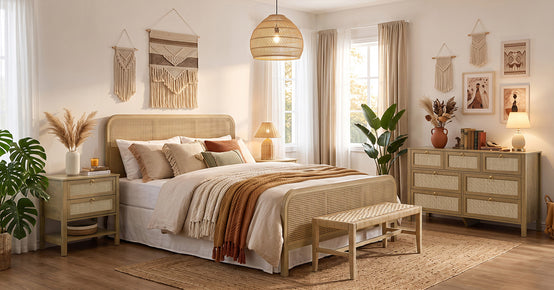


Lowboy Dressers: When a Low, Wide Dresser Beats a Tall One
Here's the question nobody asks at the furniture store. Not "which dresser holds the most?" — the better question is which shape actually fits your room.
A tallboy and a lowboy hold roughly the same pile of clothes — they just treat your walls completely differently. Wrong shape, and the bedroom feels cramped. Or weirdly empty, like something's missing.
So here's the plan: what a lowboy actually is, six situations where low and wide wins outright, when tall still wins — and two verified SICOTAS lowboy picks, dimensions checked against the live product pages.
In a hurry? Wall width to spare — go low. Low window, TV to place, kids who should reach their own drawers — go low. Short on floor space? That's the tallboy's pitch.
What Exactly Is a Lowboy Dresser?
The word's been around the block, which is the problem — listings slap "lowboy" on anything short and wide.
Back in the 1700s, a lowboy was a small, short table-like dresser — the matching bottom half of a tallboy set, raised legs, two or three drawers. More side table with storage than a dresser, really.
Retailers stretched the meaning — of course they did. Now "lowboy" means any dresser with a low, horizontal profile: top around waist height or lower, wide enough to demand a real stretch of wall. Typically 28 to 34 inches tall, 48 to 72 wide, 16 to 20 deep, four to nine drawers in two or three rows. The wide, low shape is the whole point: a usable top — lamp, mirror, frames — and drawers that run deep and wide instead of tall and stacked, with everything you reach for daily between waist and shoulder height.
Lowboy vs Tallboy: The Honest Comparison

Line them up side by side. Neither's "better" in the abstract — just answers to different room problems.
|
Feature |
Lowboy |
Tallboy |
|
Profile |
Short and wide, horizontal |
Tall and narrow, vertical |
|
Typical height |
26 to 34 inches |
45 to 60 inches |
|
Typical width |
48 to 72 inches |
30 to 36 inches |
|
Footprint |
Needs a broad stretch of wall |
Fits a narrow corner or alcove |
|
Drawers |
Fewer, wider, deeper drawers |
More, smaller, stacked drawers |
|
Top surface |
Large: fits a TV, lamp, mirror, frames |
Small: holds a plant or a clock |
|
Drawer reach |
Every drawer at easy height |
Top drawer can be hard to see into below 5'8" |
|
Best room |
Master bedroom, living room, nursery |
Small bedroom, studio, guest room |
Tallboys are corner-huggers: narrow spots, plenty of storage, no floor eaten. Lowboys are wall-hogs — in the best way — demanding a broad stretch of wall and paying you back with a usable top.
Capacity's rarely the tiebreaker people think: a wide lowboy with nine big drawers swallows about as much as a seven-drawer tallboy. The real question is what your room's short on — floor space, go tall; wall space to spare, go low.
6 Times a Low, Wide Dresser Beats a Tall One

1. There is an empty wall, not a tall corner
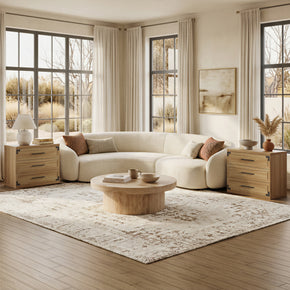
That one empty wall — long, blank, nothing on it. A tallboy parked in the middle of twelve feet of nothing looks lost. A lowboy fills that width the way the wall's begging to be filled, anchoring the room like a sideboard anchors a dining room. Wide room, plain walls? Horizontal storage is the proportion that works.
2. It needs to double as a media console
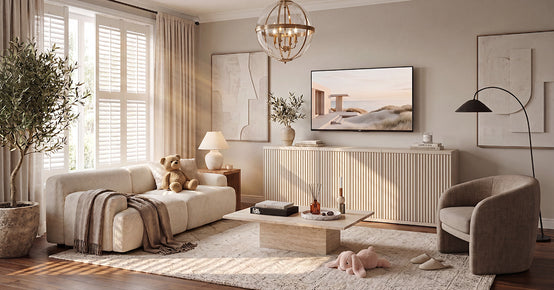
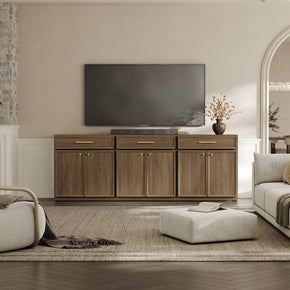
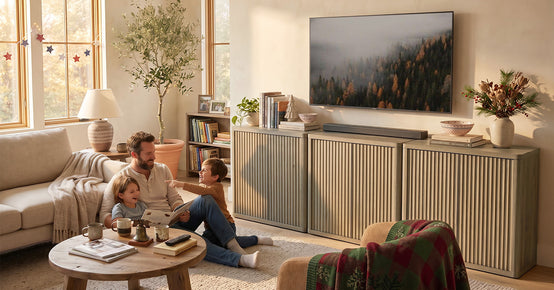
At 26.6 inches tall, a lowboy lands a TV right around seated eye level — which is why so many double as media consoles. The wide top swallows a soundbar, a console, the remotes. A tallboy either parks the TV too high or forces a separate media stand. Dresser pulling double duty? Low wins. Every time.
3. Every drawer should be at arm's reach
No stretching, no step stool, no blind top drawer. On a lowboy every drawer is where your hands already are. On a 55-inch chest, the top drawer sits around chest or chin height, and anyone under about 5'8" stretches just to see inside. A lowboy keeps all nine drawers between hip and shoulder level — laundry day becomes one easy motion instead of a workout.
4. Kids or older family members use it
A child can open the bottom drawers of a lowboy on their own. That is out of reach on most tallboys. A six-year-old can pick out their own clothes; an older parent never stretches overhead. Lower and wider means naturally steadier than a tall, narrow chest — though any dresser around small kids should still be anchored to the wall.
5. You store bulky things, not tiny ones
Wide drawers swallow folded jeans, sweaters, and bedding in flat, easy-to-find layers. Tallboy drawers run narrow and stack high — great for socks and tees, terrible for anything wide. A lowboy drawer some 30 inches wide and 11 deep lets you file-fold a whole wardrobe in visible layers. The big stuff living in this dresser? Wide beats tall. Not close.
6. The top surface is the whole point
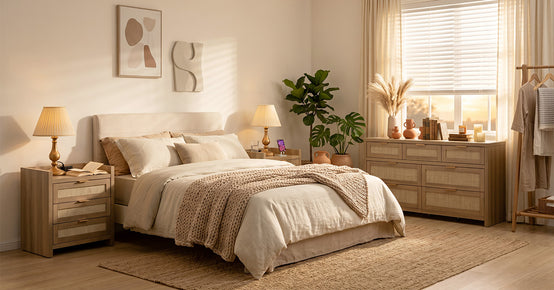
Under a low window, a lowboy keeps the light coming in while giving you a full-width display ledge. Its top is a 60-inch stage: mirror, lamp, frames, books. A tallboy gives you about a square foot — it holds a plant. Want the dresser to display as well as store? Only one of the two plays that role.
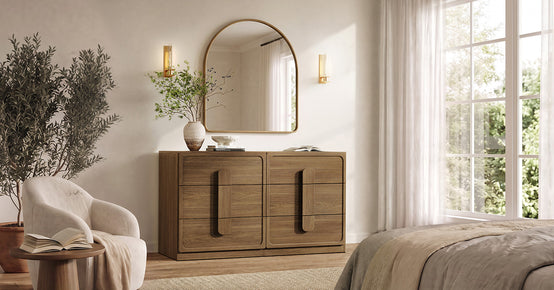
Mirror, lamp, frames, vase: a lowboy top styled in layers, with room to spare.
When a Tall Dresser Still Wins

Fair's fair — the other side. Some rooms just don't have a broad stretch of wall to give. In a studio or a 10-by-10 bedroom, five or six feet of dresser can leave no room for the nightstand or the door swing. A tallboy parks in a 30-inch corner and still hands you six or seven drawers — between the wardrobe and the door, beside a window without blocking light.
Tall dressers also suit sorters: seven small drawers, seven little homes — underwear, socks, tees, accessories, one each. A lowboy's few big drawers need organizers, or small stuff slides into one chaotic drawer within a week. Rule of thumb: tight floor, tall piece; generous wall, low piece.
The 30-second decision: stand in the room, look at the empty spot. Taller than it is wide — tallboy. Wider than it is tall — lowboy.
Measuring for a Lowboy: 5 Numbers to Get Right

A lowboy forgives height and punishes width. Measure like the wall's the boss.
● Wall width: dresser width plus 6 to 12 inches of breathing room per side. A 93.9-inch dresser wants a wall around 100 to 106 inches wide, minimum.
● Window sill: floor to sill, and the dresser must clear it by at least an inch. At 26.6 inches the Crescent slides under the great majority of sills — but measure yours anyway.
● Drawer clearance: drawers pull out the full depth plus a few inches — keep about 36 inches of open floor in front.
● Walkway clearance: leave 30 to 36 inches of passage wherever people walk past.
● TV height (as a stand): dresser top plus TV height should land the screen center near seated eye level, roughly 36 to 42 inches off the floor.
Last step, the one everyone skips: measure your wall span casing to casing and walk the delivery path through every doorway. You'll know.
Styling a Low, Wide Dresser Without Clutter

One long low dresser on a wide wall reads calmer than two small pieces fighting to fill the same space — but that long top is a clutter magnet.
Decorate in layers and leave most of the surface empty: one tall anchor on one side — mirror or art just above — then small things grouped in threes. A lamp, a frame, a plant read as one arrangement instead of three random objects.
Keep the center clear so it still looks like furniture, not a shelf. Art above should run about two-thirds the dresser's width, bottom edge 4 to 8 inches above the top — too small floats, too large swallows the wall.
A Real Lowboy Pick: The Crescent Modular 9-Drawer Dressers
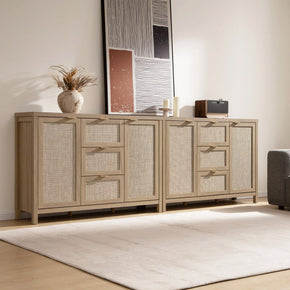
Plenty of dressers call themselves lowboys; fewer hit the numbers that make the category work: 26.6 inches tall, 93.9 wide, 16.3 to 16.4 deep; nine drawers on metal roller glides with safety stops; every drawer interior 30.1 wide by 11.4 deep by 7.5 high. Engineered-wood body, matte finish.
Three independent cabinet units side by side make one 93.9-inch lowboy. Split them later and each becomes its own piece.
The interesting part is the modular build: three independent cabinets, not one rigid carcass. Line them up today; split them into separate pieces later. Per the product FAQ you can even add a fourth unit to go wider. One brand warning: don't add legs — it can affect the bottom structure and stability. Same footprint and drawer layout in both, small differences aside:
|
Feature |
For Living Room |
26.6'' Tall |
|
Overall dimensions |
26.6" H x 93.9" W x 16.4" D |
26.6" H x 93.9" W x 16.3" D |
|
Configuration |
Modular, 3 independent units |
Modular, 3 independent units |
|
Drawers |
9, metal roller glides with safety stop |
9, metal roller glides with safety stop |
|
Drawer interior |
30.1" W x 11.4" D x 7.5" H |
30.1" W x 11.4" D x 7.5" H |
|
Material / finish |
Engineered wood, matte |
Engineered wood, matte |
|
Overall weight |
180 lb |
193.5 lb |
|
Assembly |
Required, about 100 minutes |
Required, about 45 minutes |
|
Suits best |
Open living areas and media duty |
Bedrooms and flexible layouts |
Both ship free in the contiguous U.S., with a 60-day return window and a 360-day replacement and repair warranty. Still comparing? Browse the full dresser collection — and our guide to different types of dressers covers every shape, from bachelor chests to gentleman's chests.


Looking for something else?

Dresser With Mirror vs. Without: Which Setup Works Better?
LEARN MORE
How Deep Should a Nightstand Be_ A Bedside Fit Guide
LEARN MORE
Flip, Hinged, Sliding, or Slatted: Which Shoe Cabinet Door Type Fits Your Entryway?
LEARN MORE
TV Stand With Doors vs. Drawers: Which Storage Works Better
LEARN MORELooking for something else?

Bookcase With Doors vs. Open Shelves: Which One Should You Buy?
LEARN MORE
Buffet Cabinet With Drawers vs. Doors: Which Storage Mix Should You Choose?
LEARN MORE
Tilt-Out vs. Shelf Shoe Cabinets: Which Fits More in a Narrow Entryway?
LEARN MORE


Further reading
Lowboy Dressers: When a Low, Wide Dresser Beats a Tall One

How to Choose a Long Dresser for a Master Bedroom Wall


