



How to Choose a Dresser for a Small Bedroom Without Crowding It
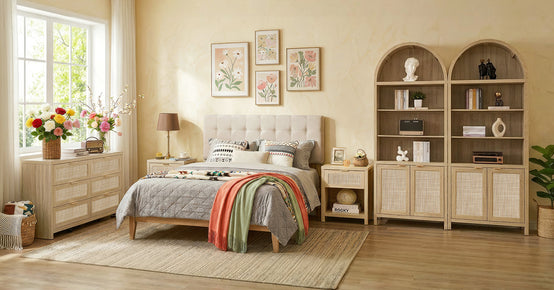
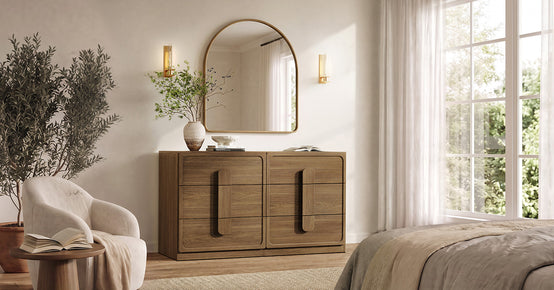
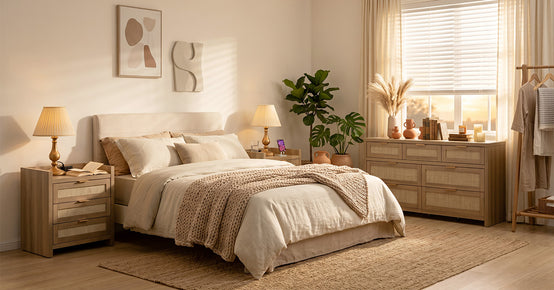
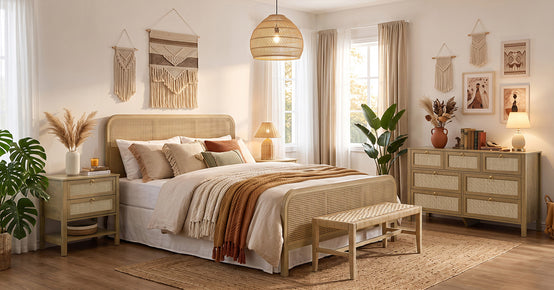
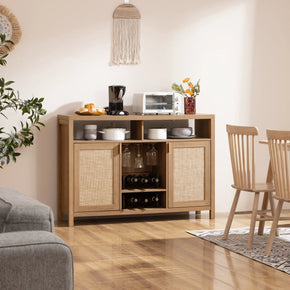
A low dresser tucked beneath the window keeps the sightline wide open — the oldest trick in the small-bedroom book.
Want the number that wrecks most small-bedroom dresser buys? Zero. As in zero inches measured before clicking "order." Folks size up the wall, swoon over a finish, and discover the truth on delivery day — usually while wedged sideways between the bed frame and a half-open drawer.
"Close enough" doesn't survive a small bedroom. Every single inch already has a job description. The good news? The math is friendlier than it looks. Nail the real clearance numbers, learn the three dimensions that call the shots, and hunt down the five dead zones in your room that are doing absolutely nothing — and suddenly the decision gets almost dull. Stick around to the end and I'll show you two SICOTAS dressers you can literally tape out on your floor tonight.
The Room Gets a Vote, Not Just the Dresser

Here's the classic blunder: shopping for a dresser. What you're really shopping for is a dresser plus every inch of empty air it demands around it.
Walkways come first — 30 to 36 inches of clear path, enough to move through the room like a person instead of a crab.
Then there's the ambush everybody walks into exactly once. A dresser never takes up just its footprint. It takes its footprint plus every drawer dragged open — another 14 to 18 inches past the case — plus you, down on your knees, fishing for socks. Call it 36 inches of open floor out front. Skip that and your back is against the bed frame every single morning.
Two more thieves nobody budgets for until moving day. Doors that swing inward — a door sweep devours 30 inches of wall you were counting on. And bedding spilling past the bed frame, quietly shoplifting walkway inches all night long. A drawer that snags the bedspread each morning? Its own private circle of hell.
The fix runs about four bucks. Painter's tape. Outline the dresser's footprint on the floor — width, depth — then a second rectangle where the open drawers would land. Live with it for a day. Circle it. Pretend to open the drawers. If your hip clips the tape, it'll clip the dresser. Tape doesn't lie.
One more walk before you order: the delivery route, tape measure in hand. Doorways, the elevator, stairwell turns. A dresser that can't reach the bedroom is just pricey warehouse decor.
Width, Depth, Height. Done.
Room math settled? Then shopping is practically anticlimactic. Three numbers do ninety percent of the heavy lifting.
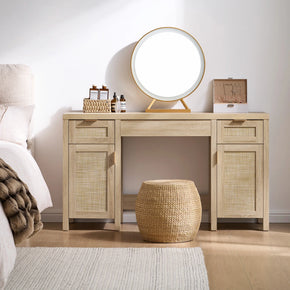
Width hits your eyes first, so put a ceiling on it: 36 to 40 inches for a small bedroom. Stretch past that and the dresser starts throwing its weight around the wall. Need more storage than a 36-inch case offers? Build up, not out. One exception — a low dresser parked under a window can run longer, since the open sightline above it lets the room keep breathing.
Depth is the quiet thief. Standard dressers run 18 to 22 inches deep — fine in a big room, a bully in a small one. Fourteen to 18 is the sweet spot for tight bedrooms: drawers still swallow folded clothes, but the case sits shallower and your walkway survives. Studios and genuinely tiny rooms can dip under 14. Just add dividers, because shallow drawers turn into junk pits fast without them.
Height decides what the dresser does besides hold your clothes. Thirty to 34 inches slides under most windowsills — clean fit, no awkward gap. Twenty-six to 28 pulls nightstand duty, the top landing about level with your mattress, lamp and water glass within easy reach. Forty-four inches and up crams serious storage into a tiny footprint — but anything over 40 gets an anti-tip strap into a stud. Ten bucks for a strap. Cheapest safety you'll ever buy.
And keep the drawers you touch daily between 24 and 48 inches off the floor. That's the comfortable reach zone — above it you're stretching, below it you're crouching.
Five Dead Spots in Your Bedroom

Somewhere in your bedroom there's a stretch of wall doing absolutely nothing. Probably five. Start with the one nobody considers.
Inside the closet. If yours has the depth, moving the dresser in there consolidates every stitch you own in one place and wipes visual clutter clean out of the bedroom. Push it far enough back that the drawers open fully. Slide it under the hanging rod and shift the long garments aside. Inward-swinging closet doors picking a fight every morning? Trade them for a curtain. Weekend project — pays off daily.
A dresser inside the closet gathers every stitch in one place and erases bedroom clutter.
Next: beside the bed, with the dresser pulling nightstand duty. One compact piece deletes an entire piece of furniture. Two checks — top roughly level with the mattress, depth shallow enough that you're not clipping it at 2 a.m. Keep the top to lamp, book, charger. Not a landing strip for everything you own.
One compact dresser beside the bed does two jobs and deletes a piece of furniture.
Corners collect dust and dead air. But a tall, narrow chest turns that forgotten patch into the hardest-working square footage in the room. Vertical storage trades height for floor area — exactly the trade a small bedroom wants to make. Leave 30 inches of walkway clear in front, anchor it if it's tall, and float a small shelf above.
A tall, narrow chest turns a dead corner into the room's hardest-working spot.
The obvious one: under the window. In most bedrooms that wall is dead space, and a low dresser converts it into storage without touching the light. Measure the sill first, though — the dresser should sit a few inches below it. That's the line between "intentional" and "crammed." Keep curtains and blinds moving, don't block radiators or vents, and aim for 26 to 30 inches tall. Taller eats the view. The view was the whole point of the window.
Under-window placement only works when the dresser clears the sill by a few inches.
And the classic: opposite the bed. It's the first thing you see waking up, so it sets the room's whole mood. Leave 2 to 3 feet between the dresser and the foot of the bed. Confirm the drawers clear the frame — measure, don't eyeball. Hang a mirror above it: light bounces, eyes travel, brain reads "spacious." In a narrow room, go shallow on this wall. Depth matters most here.
Opposite the bed, a mirror above the dresser visually doubles the room.
Two Dressers That Actually Fit Small Rooms

Now the part with real numbers you can verify tonight. Two SICOTAS dressers attacking the small-bedroom problem from opposite directions.
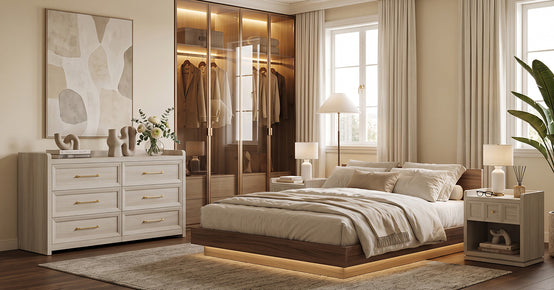
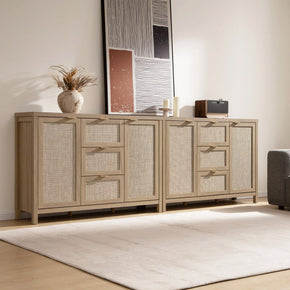
The flexible one: the Crescent Modular 9-Drawer Dresser. Three separate 3-drawer units, side by side — that's the whole trick. Each unit runs 31.3 inches wide, 26.6 tall, 16.4 deep. Park one beside the bed. Slide two under a window for 62.6 inches of storage. Line up all three for the full 93.9-inch, 9-drawer wall. At 26.6 inches it ducks under most windowsills, and 16.4 inches of depth lands right in the small-room sweet spot. Drawer interiors run 7.5 inches high and 11.4 deep — genuine space for folded clothes, not token drawers. Engineered wood, matte finish, metal roller glides, and the product Q&A confirms a fourth unit can join the lineup later. For renters and chronic rearrangers, modular beats monolithic.
Three 31.3-inch units side by side, or split across the room.
The capacity one: the Savanna 7-Drawer Dresser. One substantial piece — 31.34 inches high, 56.88 wide, 17.72 deep, with seven genuinely deep drawers (6.88 high, 15.16 deep, 24.61 wide inside). Sweaters and jeans actually fit. It demands a real wall, though: at nearly 57 inches wide, confirm your wall span first and keep 36 inches clear out front. Same sturdy formula — matte engineered-wood case, metal roller glides — and at 31 inches tall the top doubles as display space.
One substantial piece with genuinely deep drawers, made for a long clear wall.
Side by side:

|
Crescent Modular 9-Drawer |
Savanna 7-Drawer |
|
Overall size |
26.6"H x 93.9"W x 16.4"D (3 units) |
31.34"H x 56.88"W x 17.72"D |
|
Smallest footprint |
31.3"W x 16.4"D (single unit) |
56.88"W x 17.72"D (one piece) |
|
Drawers |
9 (7.5"H x 11.4"D interiors) |
7 (6.88"H x 15.16"D interiors) |
|
Superpower |
Splits across two spots; expandable |
Deep drawers; single statement piece |
|
Best for |
Awkward layouts, renters, under windows |
One long clear wall, maximum capacity |
My take: windows, doors, and short walls all fighting each other? The Crescent wins — split it across two spots instead of forcing one big case where it never belonged. One good long wall and maximum storage in a single piece? The Savanna's deep drawers win. Compare both in the dresser collection before you decide.
How to Make It Look Smaller Than It Is

A dresser can nail every measurement and still crowd the room visually. Four details fix that — and none of them cost much.
Finish first. Pure psychology: light, matte finishes recede; dark, glossy ones lunge forward. In a small bedroom, a light oak or neutral matte case reads as background, not furniture. Keep the contrast on the hardware, where it stays small.
Then the mirror. Hung above the dresser on the main wall, it does more for perceived space than any furniture decision you'll make. Doubles the light. Gives your eyes somewhere to travel.
Anchor the tall ones — strap into a stud, every time. Non-negotiable with kids or pets; just smart regardless. Ten minutes on assembly day. Because let's be honest: skip it now and it will never happen.
And divide the drawers. Slim dividers turn one chaotic drawer into six tidy compartments — the difference between a drawer you use and one you quietly avoid. Same logic on top: styled, not stacked. Tray, plant, lamp. Done. A dresser buried under clutter reads twice its actual size.
Still torn on style? Read our guide to the different types of dressers first. Then, tape measurements in hand, browse the full dresser collection and filter for the width and depth your room actually allows.
FAQs
What size dresser is best for a small bedroom?
Think 36 to 40 inches wide and 14 to 18 deep — that's your box. Then match the height to the spot: 26 to 30 inches under a window, about mattress height beside the bed. And guard your clearances like a bouncer: 30 to 36 inches of walkway, around 36 inches of open floor in front of the drawers.
Can I put a dresser under a window?
Yes — that dead wall is begging for it. Pick a dresser that sits a few inches below your sill; 26 to 30 inches tall is the usual zone. Keep the curtains and blinds moving, don't block radiators or vents, and measure the sill before anything else.
Can a dresser replace a nightstand?
My favorite small-bedroom trade. Find a compact unit with the top roughly level with your mattress, keep it shallow enough that you're not clipping it at 2 a.m. — and you've gained drawers while deleting a whole piece of furniture.
How much clearance do drawers need to open fully?
More than you'd guess. Drawers swing out 14 to 18 inches past the case, and you need room to kneel and dig through the bottom one. Budget around 36 inches of clear floor.
Should I choose a tall or a wide dresser for a small room?
That's a wall question, not a dresser question. Tall and narrow wins for corners and awkward walls; low and wide wins under windows and on long walls, where the open sightline does the heavy lifting. Tape out both footprints — the room will tell you.
How do I keep a dresser from tipping over?
Ten dollars, ten minutes: an anti-tip strap into a stud, especially on anything over 40 inches tall. The CPSC recommends it for every dresser in homes with kids. Cheap insurance everywhere else.
What dresser depth works for a very small bedroom?
Go shallow — 12 to 16 inches. Still handles folded tees, underwear, accessories. Slim dividers keep everything in its lane.
Is a modular dresser good for a small bedroom?
For weird layouts, it's the cheat code. The Crescent splits into 31.3-inch units — one beside the bed, two under a window — instead of cramming one big case against a wall. Each unit runs 26.6 inches tall and 16.4 deep, and a fourth can join later.


Looking for something else?

Dresser With Mirror vs. Without: Which Setup Works Better?
LEARN MORE
How Deep Should a Nightstand Be_ A Bedside Fit Guide
LEARN MORE
Flip, Hinged, Sliding, or Slatted: Which Shoe Cabinet Door Type Fits Your Entryway?
LEARN MORE
TV Stand With Doors vs. Drawers: Which Storage Works Better
LEARN MORELooking for something else?

Bookcase With Doors vs. Open Shelves: Which One Should You Buy?
LEARN MORE
Buffet Cabinet With Drawers vs. Doors: Which Storage Mix Should You Choose?
LEARN MORE
Tilt-Out vs. Shelf Shoe Cabinets: Which Fits More in a Narrow Entryway?
LEARN MORE


Further reading

Lowboy Dressers: When a Low, Wide Dresser Beats a Tall One

How to Choose a Long Dresser for a Master Bedroom Wall


