

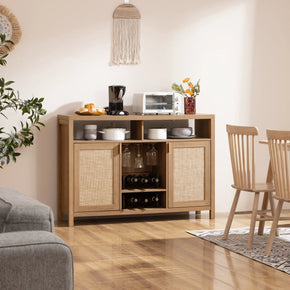
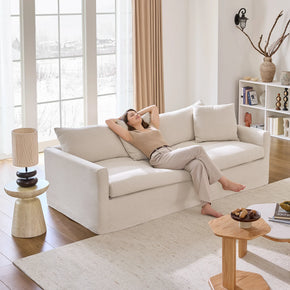


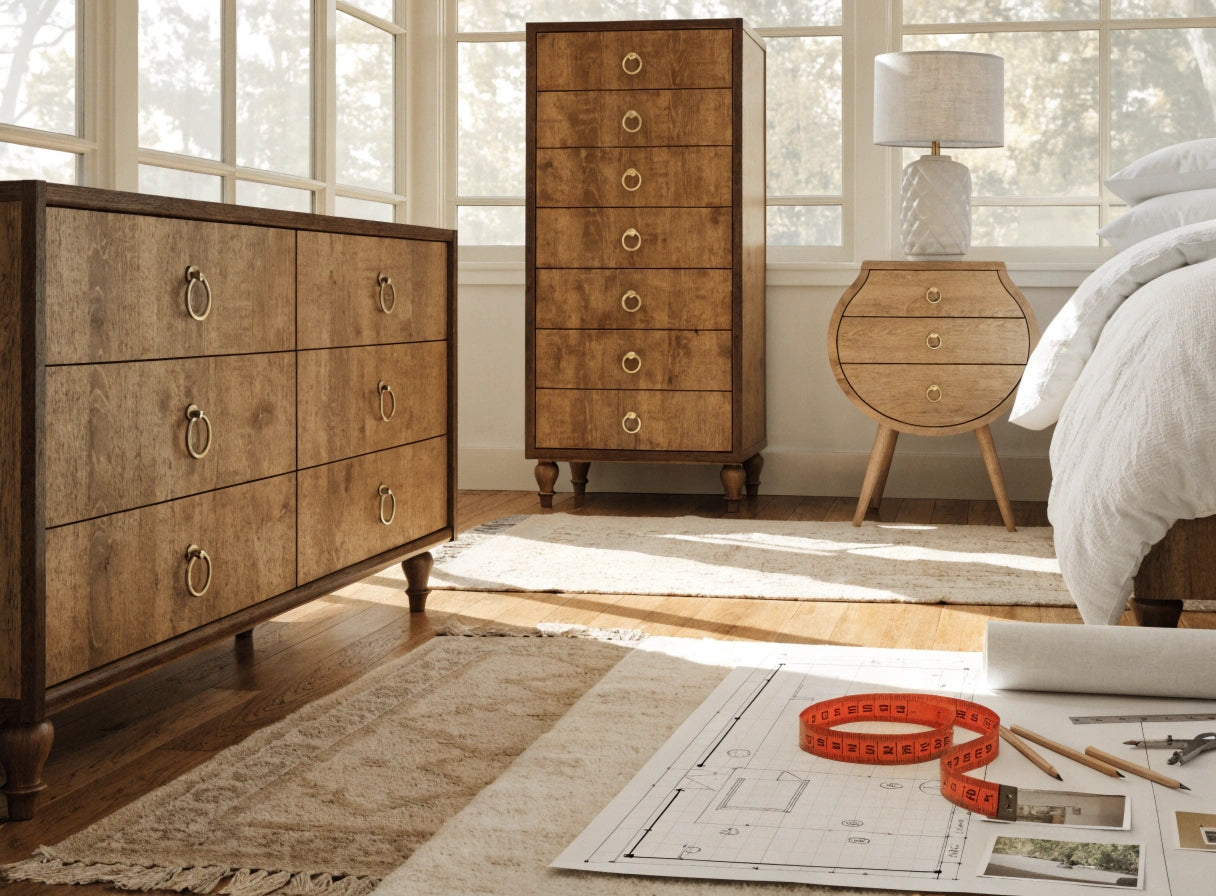

How to Measure a Room for Furniture Without Costly Mistakes
Buying a dresser, nightstand, TV stand, or shoe cabinet online feels simple — until the piece arrives and the drawers won't open, the box won't fit through the hallway, or the room suddenly feels cramped. This guide walks you through the room, the doorway, the clearance rules, and the right size for each piece.
Why Measuring Your Room Matters Before You Buy
Your eye lies to you. An empty room always looks larger than it really is. The moment a bed, dresser, sofa, or TV stand goes inside, the usable floor space shrinks fast.
Measuring helps answer the questions that returns are made of:
-
Will the piece physically fit on the wall?
-
Can people walk around it without turning sideways?
-
Can drawers and cabinet doors open all the way?
-
Will the box clear the front door, hallway, stairs, and corners?
A wide dresser may look perfect on a product page, but if the bed is two feet from the drawer side, those drawers won't open without bumping the mattress. A TV stand may look balanced under the screen but block a walkway you use every day. Skip the measuring step, and these problems only show up after delivery.

The Tools You Need to Measure a Room
You don't need design software for this. A few basics are enough:
-
A 25-foot metal tape measure. Stays straight along long walls and gives accurate numbers. Avoid fabric tapes — they stretch.
-
A notepad and pencil. Sketch the room, label each wall A, B, C, D, and write each measurement directly on the sketch.
-
Your phone camera. Snap photos of vents, outlets, baseboards, window trim, and tight corners. You'll forget half of these by the time you're shopping.
-
Painter's tape (optional but useful). Tape the footprint of the piece on the floor before ordering. If the taped shape feels tight when you walk around it, the real piece will feel tighter.

How to Measure a Room: Step by Step
Start with a quick floor-plan sketch. It doesn't need to be perfect — just label the walls and mark the doors, windows, vents, outlets, and any built-ins.
- Measure each wall, corner to corner. Run the tape along the floor and write the number on the matching wall in your sketch. Older homes can be uneven, so for long walls measure at floor level, mid-wall, and near the ceiling. Use the smallest number as your safe figure.
- Measure ceiling height. This matters for tall dressers, wardrobes, and bookcases. Leave at least 3–4 inches between the top of the piece and the ceiling so it can be tilted upright during setup.
- Mark every door and door swing. Note the width and height, and which way each door opens. Don't place a dresser, nightstand, or shoe cabinet inside a door's swing arc. It will block the door from opening fully and quickly become annoying.
- Walk the perimeter. Mark window width and sill height, floor vents, radiators, outlets, light switches, fireplaces, and any built-ins. Always measure from the outermost point, including baseboards and trim — those reduce usable wall space.
Once your room numbers are ready, you can shop with confidence. Browse Sicotas Furniture by room and category once you know exactly how much space you have to work with.

How to Measure a Doorway for Furniture Delivery
A piece can fit in the room and still fail to reach it. This is the single most common cause of delivery failures, and it takes about three minutes to check.
Measure the full delivery path, not just the final room:
-
Front door width and height
-
Hallway width
-
Staircase width and landing depth
-
Ceiling clearance on stairs
-
Tight turns
-
Elevator opening (if applicable)
-
Bedroom or living room door
Then add a 2–3 inch buffer to every tight point. Boxed furniture is always larger than the assembled product.
The diagonal doorway trick. For tall pieces — dressers, bookcases, wardrobes, large TV stands — measure the doorway diagonally from the lower hinge corner to the upper opposite corner. That diagonal is often larger than the straight width and tells you whether a piece can be tilted through at an angle.
Clearance Rules That Make a Room Feel Comfortable
The right room size for furniture isn't only about square footage. A piece can technically fit and still make daily life uncomfortable. The real test is whether you can walk, sit, open drawers, and pull out chairs without rearranging your route.
|
Furniture or Area |
Recommended Clearance |
Why It Matters |
|---|---|---|
|
Sofa to coffee table |
16–18 inches |
Close enough to reach, with room for legs |
|
Bedside aisle |
24–30 inches each side |
Comfortable walking beside the bed |
|
Dresser drawer side |
Drawer depth + 2 inches |
Drawers open fully without hitting the bed |
|
Main walkway |
30–36 inches |
Smooth daily traffic flow |
|
TV stand to seating |
7–10 feet (most rooms) |
Comfortable viewing distance |
|
Shoe cabinet in entryway |
30 inches walkway if possible |
Keeps the entry path clear |
|
Dining table to wall |
36 inches minimum |
Chairs can pull out fully |
If any main walkway drops below 30 inches in your plan, swap to a smaller piece before ordering.

Furniture Sizing Guide by Type
The same room can take a wide horizontal piece or a tall vertical one — but only one will work for your specific layout. Use this table for a quick reference, then read the H3 sections below for the rules that matter most for each type.
|
Furniture Type |
Common Size Range |
Recommended Room or Clearance Space |
What to Check Before Buying |
|---|---|---|---|
|
Dresser (horizontal) |
48–72 in wide, 16–20 in deep |
Drawer depth + 2 in clearance in front |
Open every drawer fully on your floor plan |
|
Tall Dresser |
30–40 in wide, 48–60 in high |
3–4 in below ceiling minimum |
Check ceiling height and tilt-up space during setup |
|
Nightstand |
18–28 in wide, 22–30 in high |
Top should sit close to mattress height |
Measure bed height before buying |
|
TV Stand |
50–75 in wide, 15–20 in deep |
Seating usually 7–10 ft away |
Choose a stand wider than the TV for balance |
|
Shoe Cabinet |
28–48 in wide, 10–16 in deep |
Keep 30 in walkway if possible |
Check entryway depth and door swing |
|
Sofa |
72–96 in wide, 32–40 in deep |
30–36 in main walkway; 16–18 in to coffee table |
Check overall depth, not just seat depth |
|
Queen Bed |
60 × 80 in mattress |
24–30 in clearance on each side |
Confirm nightstand width and walkway space |
|
King Bed |
76 × 80 in mattress |
30 in each side is ideal |
Measure wall width before choosing two nightstands |
|
Bookcase / Wardrobe |
60–84 in high |
3–4 in ceiling clearance minimum |
Confirm it can be tilted upright |
How to Size a Dresser for Your Bedroom
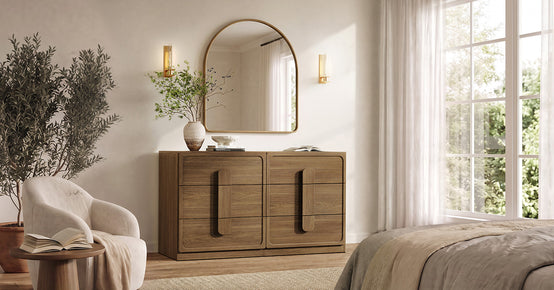
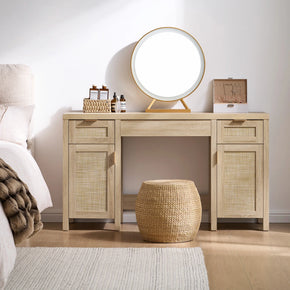
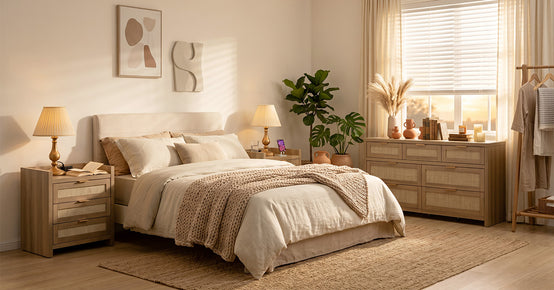
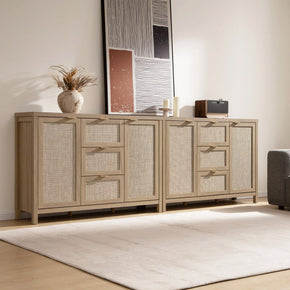
Standard dressers are 48–72 inches wide and 16–20 inches deep. Tall dressers are typically 30–40 inches wide and 48–60 inches high.
Match the shape to your wall:
-
Wide bedroom wall, low ceiling fixtures. Pick a horizontal 6-drawer dresser. It grounds the room and gives long-line storage.
-
Narrow wall, taller ceiling. Pick a tall dresser. You get the same drawer count vertically without losing floor space.
-
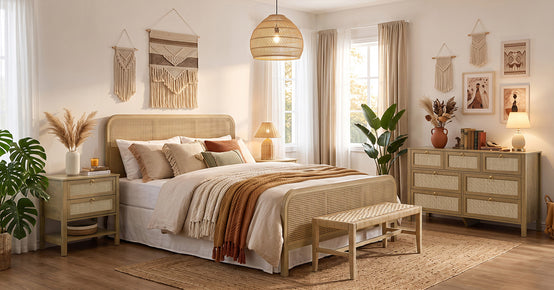
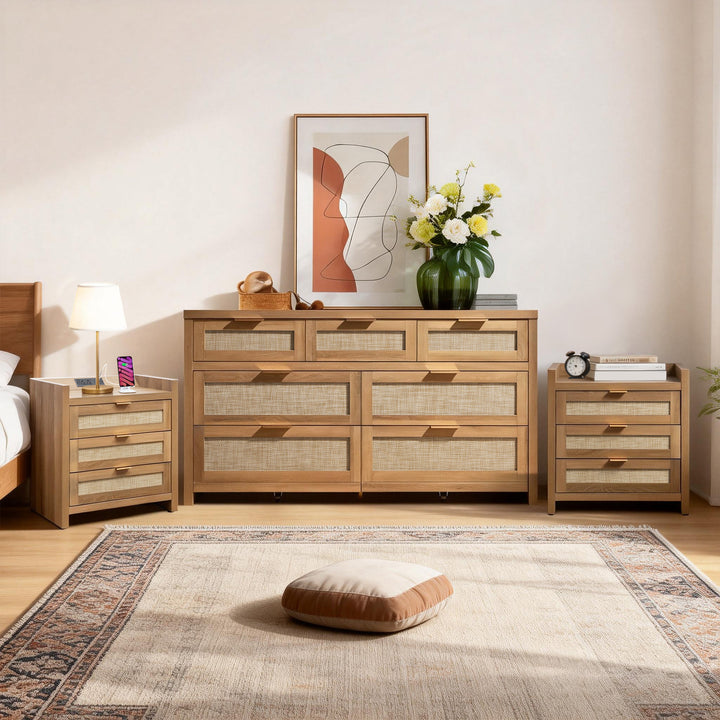
Drawer side faces the bed. Add the drawer depth plus 2 inches to your bedside walkway calculation. Otherwise, you can't open the drawer without moving the bed.
If you want a horizontal piece that anchors the room without crowding it, browse modern dressers in 6-drawer and tall layouts to match the wall shape you actually have.

How to Choose Nightstand Height and Width
Nightstands run 18–28 inches wide and 22–30 inches tall. Two rules cover almost every layout:
-
The top should sit close to mattress height — within 2 inches above or below — so you can reach the lamp, water glass, and phone without lifting your shoulder.
-
Don't push the bedside walkway below 24 inches. A bigger nightstand isn't a win if it makes the aisle uncomfortable.
For a king bed, two matching nightstands look balanced and fit the wider footprint. The Crescent Nightstand, 3 Drawers works well as a pair when you want real bedside storage without crowding the walking space.
How to Pick the Right TV Stand Size
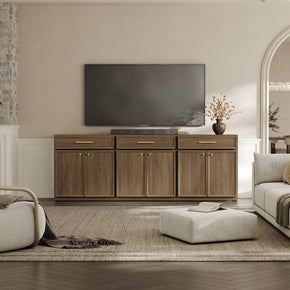
TV stands typically measure 50–75 inches wide and 15–20 inches deep. Three rules keep the proportions right:
-
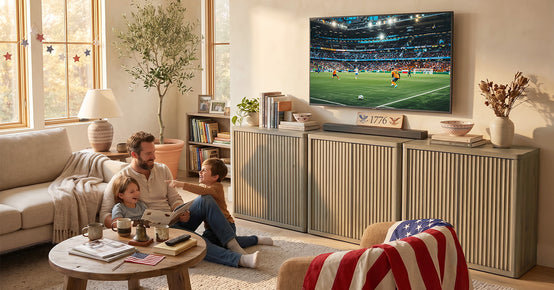
The stand should be wider than the TV. A 65-inch TV looks balanced on a 70-inch stand. Equal-width or narrower stands look top-heavy.
-
Seating distance is usually 7–10 feet for a 55–65 inch TV in most living rooms.
-
Cable management matters more than people expect. Routers, consoles, soundbars, and chargers pile up quickly. A stand with built-in cable channels keeps the wall behind the TV from turning into a knot.
If your living room collects media equipment, a piece like the Cas 65-Inch TV Stand with Cable Management hides the clutter while keeping a 65-inch screen well-supported.
How to Choose a Shoe Cabinet for Your Entryway
Shoe cabinets are usually 28–48 inches wide and 10–16 inches deep. The depth is what matters most in tight entryways.
Before ordering, check:
-
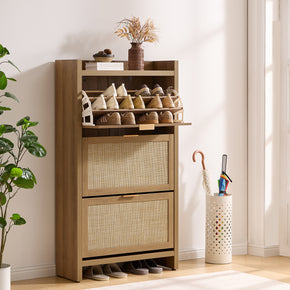
Entryway walkway width. Subtract the cabinet depth from the floor space. If the result drops below 30 inches, choose a slimmer cabinet.
-
Front door swing. Don't place the cabinet inside the door's arc.
-
Capacity vs. profile. A 20-pair cabinet in a slim 10-inch depth often beats a 30-pair cabinet that blocks the path.
Closed-door shoe storage keeps shoes out of sight and makes the first view of the home feel cleaner. The Cas Black Shoe Cabinet works in narrow entryways where you need real capacity but can't sacrifice walkway space.
Common Furniture Measuring Mistakes to Avoid
Most return-worthy purchases come from one of these five errors. Skim them before placing any order.
- Measuring only the room, not the delivery path. A dresser can fit beautifully on the wall and still get stuck on the staircase landing. Always measure the full route from the front door to the final spot.
- Forgetting drawer and door clearance. Wall space is only half of what a dresser needs. The other half is in front, where the drawers actually open. The same goes for shoe cabinet doors and TV stand cabinet fronts.
- Skipping ceiling height. Tall pieces have to be tilted upright during setup. A wardrobe that's exactly your ceiling height won't fit through that move.
- Forgetting packaging. A product spec sheet shows assembled dimensions. The box is bigger. Add 2–3 inches to every tight point on the delivery path.
- Trusting the empty room. It always looks larger than it is. Tape the footprint of the dresser on the floor, walk around it, and pretend to open drawers before ordering. If a wide horizontal piece feels tight in the taped layout, a piece like the Savanna 6-Drawer Dresser in a tall format may serve the same storage need with a smaller footprint.

FAQs
How do you measure the square footage of a room?
Multiply room length by width. A 12 × 14 foot room is 168 sq ft. For L-shaped or irregular rooms, break the space into rectangles, measure each section, and add the totals.
How do you measure for a dining room table?
Take your available space, subtract 36 inches from all sides for chair pull-out and circulation, and that remaining rectangle is your maximum table footprint. For a round table, allow 36 to 42 inches from the table’s edge to any surrounding wall, sideboard, or cabinet.
What is the minimum space around a round dining table?
At minimum, 36 inches on all sides. Round tables are trickier because chairs face every direction, so the clearance applies in a full circle. Where space allows, 42 inches makes the dining area much more comfortable when guests are moving around.
How do you measure furniture dimensions?
Record width (left to right across the front), depth (front to back), and height (floor to highest point). For sofas, also check diagonal depth — from top of back to front base — as it determines whether the piece can be angled through a doorway during delivery.
What clearance should be left between furniture pieces?
16–18 inches between sofa and coffee table. 30–36 inches for main walkways. 24–30 inches for bed aisles on each side. 36 inches from a dining table to any surrounding wall on all sides. These numbers are what make the difference between a room that functions and one that just technically fits.
What is the 2/3 rule for furniture?
A proportion guideline: a sofa tends to look right when it occupies roughly two-thirds of the wall it sits against. Too short and it floats; too long and it overwhelms the space. It’s a useful starting point, not an absolute rule — nearby windows and doors change the ideal every time.
How do I measure for an L-shaped sectional sofa?
Measure each arm from the back corner out to the end. Record depth on both sides. Sketch the L-shape on your floor plan and check that it doesn’t block doorways or narrow main walkways below 30 inches. The back corner is where the combined footprint is largest — that’s the trickiest measurement to get right.
Should I round measurements up or down?
For room dimensions, always use the smallest number you measure — that’s the realistic working space. For clearance zones around furniture, round up slightly so you have a buffer. When two sofa sizes could both technically fit, the smaller one almost always lives better in the room.
When should I ask for professional help?
For one piece in a straightforward room, this guide handles it. For unusually shaped rooms, multi-room furnishing projects, or layouts that keep not resolving on paper, a one-hour designer consultation is genuinely worth the time. Most furniture retailers — including Sicotas — have design support available if you’re working through a more complex space.
How do I measure a room for furniture?
Measure the length and width of each wall, then mark doors, windows, outlets, vents, and fixed features. After that, measure the delivery path and tape out the furniture footprint on the floor before buying.
What is the most important measurement before buying furniture?
Depth is often the most important measurement because it affects walkways, drawer clearance, and how much usable space remains in the room.
How do I measure doorway for furniture delivery?
Measure the door width, height, diagonal clearance, hallway width, stair width, and landing depth. Add 2–3 inches for packaging if the item arrives boxed.
How much space should I leave around a dresser?
Leave enough space for the drawer to open fully, plus at least 2 inches. If the dresser faces a bed, measure from the dresser front to the bed frame, not just the wall.
How much space do I need around a dining table?
Leave at least 36 inches from the table edge to any wall, cabinet, or sideboard. Round dining tables may need 36–42 inches because chairs can face every direction.
What room size is best for large furniture?
The best room size depends on usable clearance, not just square footage. A large piece can work if walkways, door swings, drawers, and delivery paths remain clear.
Final Takeaway
A tape measure, a sketch, and ten minutes will save you the hassle of returning a piece you already love. Measure the room, measure the delivery path, tape out the footprint, and check the everyday clearances before you buy. When the numbers are clear, the shopping decision becomes simple — you stop guessing whether a piece will fit and start choosing furniture that works for the room, the routine, and the way you actually live.
Sources
- Jordan Wogenstahl, furniture consultant, “How to Measure Your Space for New Furniture Pieces,” Voltage Furniture, October 2023.
- Home Depot Design Team, “How to Measure a Room for Furniture,” The Home Depot, June 2025.
- Guynn Furniture Staff, “How to Measure a Room for Furniture: A Stress-Free Guide,” Guynn Furniture, 2024.
- Clara West, interior specialist, “How to Measure a Room for Furniture (Step-by-Step Guide),” Room Genius, January 2026.




Looking for something else?
How to Organize Your Jewelry Collection: 12 Smart Ways to Keep Every Piece Tangle-Free
LEARN MORE
How to Decorate a Bathroom Sink: 15 Easy Ideas That Work
LEARN MORE
How to Choose a Pet-Friendly Sofa: A Guide to Fabric, Color, and Care
LEARN MORE
Thanksgiving Table Setting Ideas: A Step-by-Step Tablescape Guide (15 Looks)
LEARN MORELooking for something else?
How to Decorate a Small Living Room: Ideas and Layout Tips (2026 Guide)
LEARN MORE
Spring Table Setting: 15 Fresh Ideas for a Bright, Welcoming Table
LEARN MORE
Unique Storage Solutions for Your Kitchen: Smart Ideas to Maximize Every Inch
LEARN MORE


Further reading

20 Small Media Room Ideas for a Cozy, Space-Smart Setup

15 Bookshelf Styling Ideas for a Collected, Designer Look


