




Dining Table Rug Size Chart: How to Choose the Right Rug for Your Dining Room
Stop guessing. A dining table rug size chart hands you the number, so you quit eyeballing it and buying the wrong rug. One trick beats the rest. Size around the chairs, not the table. Slide a chair out to sit, and every leg should stay on the rug. Miss that, and the chair snags the edge. It rocks. The rug wears thin. Getting the dining room rug size right comes down to one fix: the 24-inch rule, which interior designers atHomes & Gardens swear by. Charts by seating and shape are below, along with instructions for measuring your room so you can match a dining table rug size chart to your exact setup.
Quick Answer: What Size Rug Goes Under a Dining Table?

At least 24 inches past the table on every side. That one gap is what keeps chairs on the rug when guests slide them out. Bigger chairs, padded seats, or a formal room? Make it 30 or 36. The math could not be simpler. Add 48 to 72 inches to the table's length and width. That is your rug. In real terms, an 8x10 dining room rug suits most 4- to 6-person tables, while a 9x12 dining room rug is the safer call when seating 8 to 10.
Dining Table Rug Size Chart by Seating Capacity

This is the part you came for. Consider it your rug size for 4-, 6-, 8-, and 10-person dining tables, with the right dimensions matched to each seating capacity. Find your table. Grab the size. Then check it against your own chairs and room before you order.
|
Dining Table |
Seats |
Rug Size |
Best For |
|
Small, round, or square |
2 to 4 |
6'x9' or 8' round |
Breakfast nook or small dining area |
|
Rectangular up to 60" |
4 |
8'x10' |
Standard small dining rooms |
|
Rectangular 60" to 84" |
6 |
8'x10' or 9'x12' |
9'x12' gives better clearance |
|
Rectangular 84" to 108" |
8 to 10 |
10'x14' |
Large rooms and entertaining |
|
Round 42 to 48" |
4 |
8' round |
Keeps chairs on the rug |
|
Round 54" to 60" |
4 to 6 |
9' or 10' round |
Roomier for larger chairs |
|
Round 72" |
6 to 8 |
10' to 12' round |
Large round tables |
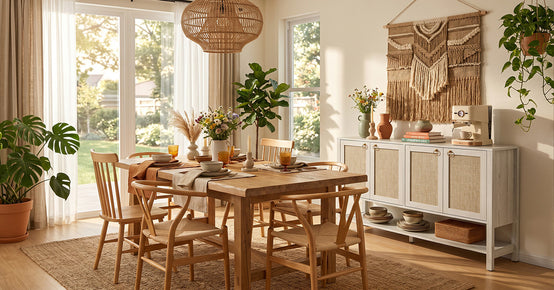
A starting point, not a strict rule. Deep, padded chairs shift the math. A solid wood dining table set with chunky seats leans towards the larger end of its row. Those chairs slide back farther. They need the room.
What Is the Rule for Rug Size Under a Dining Table?

The 24-Inch Rule
Short and simple. At least 24 inches past every edge of the table. That gap lets a chair slide back and still sit fully on the rug. Nothing fancier than that.
Why Chair Clearance Matters
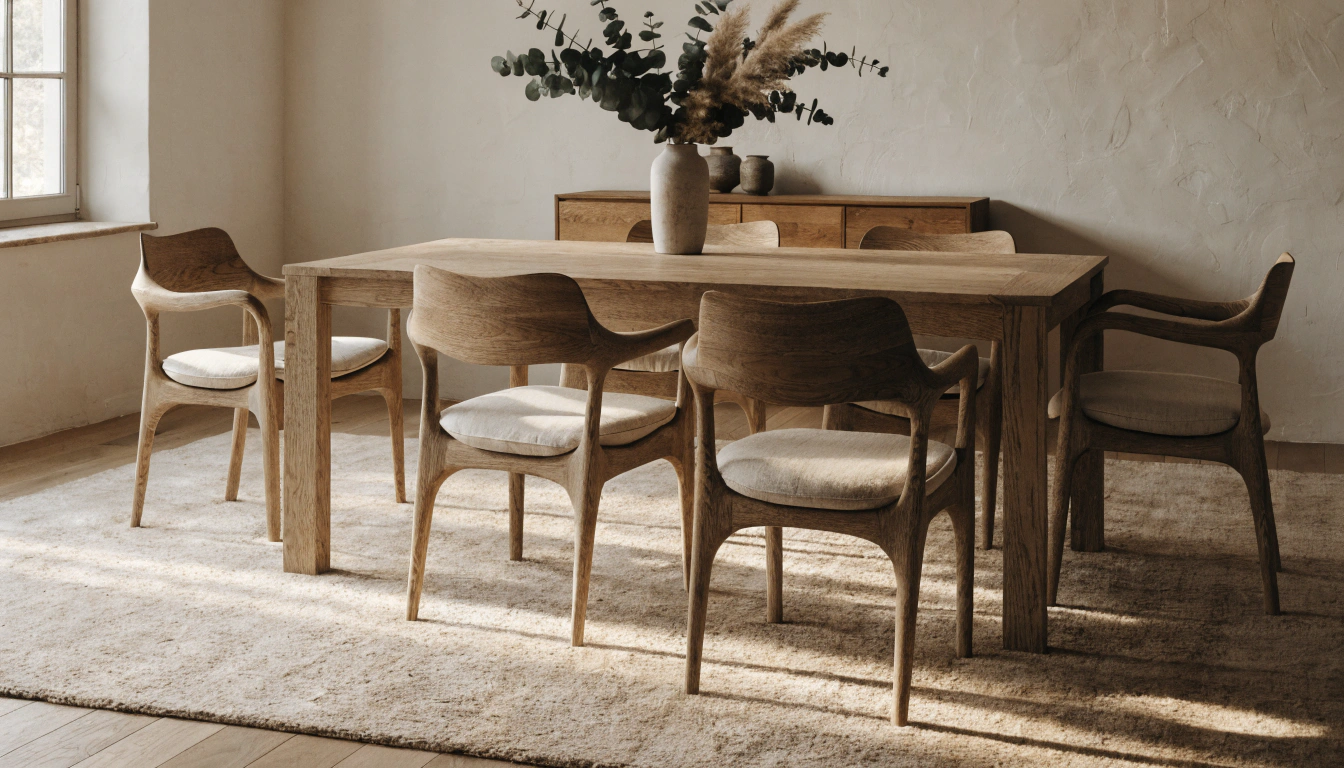
Chairs move at every meal. Out to sit, back to leave, all evening long. Too small a rug and the back legs drop off the edge the second someone sits. The chair tips. Or it catches. Day after day, that edge wears. Sizing for chair movement is the whole game. Nail it once, and you forget about it.
When to Use 30 to 36 Inches Instead
Armchairs, deep upholstered seats, a giant table, or a dining room in daily use. In any of those cases, go with 30 or 36 inches. That bit of extra keeps a chair off the edge even when somebody pushes way back after a big plate of food.
How to Measure for a Dining Room Rug

- Measure the table. Write down the length and width. Got leaves you use often? Measure it with the leaves in.
- Add chair clearance. Throw in 48 inches total for the basic 24-inch rule, or 60 to 72 inches total for a roomier feel.
- Pull the chairs out. Drag each one back to the way it sits at dinner. The back legs should still rest on the rug.
- Check the room. Some bare floor should show around the rug, ideally 12 to 18 inches from the walls. That stops it from looking like fitted carpet.
- Tape it out. Run painter's tape on the floor in the rug's size before you order. No nasty surprise when the real thing turns up too small or too big.
Rug Size by Dining Table Shape
Rectangular Dining Table Rug Size

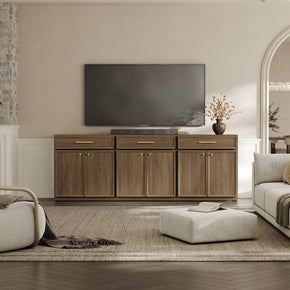
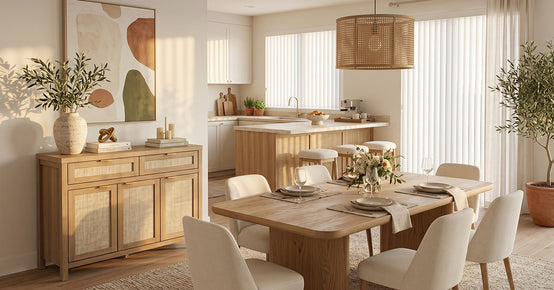
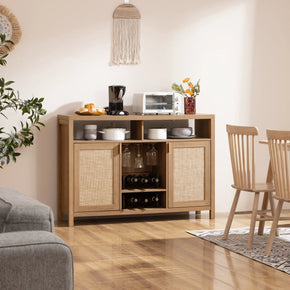
The rectangular dining table rug size is the easy one: rectangular table, rectangular rug, just about always. Each side wants 24 inches or more past the table. Go low-pile or flatweave so the chairs roll rather than catch. Set adining room buffet cabinet along the wall, and the room's long lines stay tidy.
Round Dining Table Rug Size

Working out the round dining table rug size is mostly arithmetic: the round table wants a round rug, so take the diameter and add 48 to 60 inches. A 48-inch round table, by that count, needs about a 96-inch, or 8-foot, round rug. Once the chairs start moving, around dining table for six tends to be 9 to 10 feet in diameter.
Square Dining Table Rug Size
For the square dining table rug size, either a square or a round rug works. Keep the clearance even on all four sides, and the rug under the dining table looks centered.
Oval Dining Table Rug Size
The oval dining table rug size calls for a rectangular rug, since the straight length backs up the table's long shape and gives the end chairs somewhere to go.
Rug Size for 4-, 6-, 8-, and 10-Person Dining Tables

What Size Rug for a 4-Person Dining Table?
The rug size for a 4-person dining table is usually an 8'x10', the safe standard for most setups. Drop to a 6'x9' only in a tight breakfast nook, the sort where chairs barely shift.
What Size Rug for a 6-Person Dining Table?

The rug size for a 6-person dining table starts at 8'x10' for a compact layout. After more clearance? 9'x12'. Wide or padded chairs steer you to the 9'x12' as well. Seat six at afamily-size round dining table, and a 9- or 10-foot round rug suits it best.
What Size Rug for an 8-Person Dining Table?
The rug size for an 8-person dining table is typically a 9'x12', the usual best start for a standard layout. It anchors the table. The end chairs stay on the rug when they slide out, too.
What Size Rug for a 10-Person Dining Table?
The rug size for a 10-person dining table is a 10'x14', and do not skimp here. A smaller rug looks fine under the table right up to the moment the end chairs slide clean off in real use.
Does a Dining Table Need a Rug?

Not a must. It still earns its keep, though. A rug stakes out the dining zone, takes the scrapes your chairs would leave on the floor, dials down the noise, and ties the room together. Where it really pays off is in an open-plan space that traces a clean border around the eating area without a single wall. Leave it out when the room is cramped, the chairs cannot glide, or spills would turn into a daily war with no easy-clean rug on hand. Kids or pets underfoot? A washable, low-pile, or patterned rug with threads that are needle-punched. Browse the full dining room furniture collection to match the table and rug to the rest of the room.
Does a Dining Table Have to Be Centered on a Rug?

Yes. Center it under the table, not in the middle of the room. With the rug table-centered, the clearance stays even on every side, and the whole setup looks planned. Shove it to the room's center instead, while the table sits off near a doorway or built-in, and the dining area drifts loose. Line the rug up with the table. It reads right every time. A piece from the Terra dining and storage range can anchor the look if your layout feels a little off.
Best Type of Rug for a Dining Room

Dining rooms take a beating. Heavy traffic, the odd spill. So practical wins over plush. A low-pile flatweave rug wipes clean easily and lets chairs slide without catching. Flatweave is one of the best picks going, sitting low, and rolling chairs are smooth. With families, pets, and weeknight dinners, washable rugs are the ones that save you. Low-pile wool holds up well and bounces back, though gentler cleaning is the price. The performance fibers like polypropylene, brush stains off, run cheaper, and wipe down in a second. Jute, sisal, and seagrass bring great texture. One catch: a few of them put up a fight after a spill. Whichever you land on, a patterned or mid-tone color rug buries crumbs and small marks far better than a plain, light rug.
Color and Pattern Tips for Dining Room Rugs

Pattern is your friend here. It buries daily wear and the odd spill better than a solid, so the rug keeps looking sharp between cleans. In spill-prone spaces, lean toward darker or mid-tone. Very light rugs flash every stain. Tie the color to the room's mood. Cozy rooms take warm tones. Cool tones read modern. Neutrals never date. And when the table or chairs already shout, go with a quieter rug. Two loud pieces just fight.
Common Dining Room Rug Size Mistakes

Most rug regrets trace back to the same few slips. Dodge them, and you get it right on the first try.
- Sizing for the table and forgetting the chairs. The rug has to cover both, pulled out. Instead, do this: measure your table, then add at least 24 inches on every side so a chair stays fully on the rug even when someone pushes back to stand.
- A 5'x7' under a standard table. Too small nine times out of ten, and the chairs slip off the edge. Instead, do this: jump to an 8'x10' for most six-seaters, and treat that as your floor, not your ceiling.
- Treating every 6-seat table the same. Chair size, table length, and room size change the answer. Instead, measure your actual setup rather than trusting a generic chart, since a chunky farmhouse table and a slim oval table need different rugs.
- Going thick and high-pile. It traps crumbs and turns moving a chair into a workout. Instead, do this: choose a low-pile or flatweave rug that wipes clean and lets chairs glide.
- Forgetting the leaves. Stretch the table for guests; size the rug for that longer length.
- Centering on the room, not the table. That one throws the whole balance off.
Dining Room Rug Placement Checklist
Run this check before you buy. Every box ticked, the rug works in real life.
- The rug runs 24 inches or more past the table on all sides.
- Chairs stay fully on the rug when pulled out.
- It is centered under the table, with bare floor showing around the edges. Aim to leave roughly 12 to 18 inches of bare floor between the rug's edge and the walls, so the rug frames the table instead of crowding the room.
- Doors, cabinets, and walkways stay clear.
- Low-pile or flat enough that chairs move with no fight.
- The material and color hold up to everyday dining.
Final Takeaway
Size for real chair movement, not just to slip under the table. Kick off with the 24-inch rule. Match your seating count to the dining table rug size chart. Pick a low-pile or easy-clean material. Caught between two sizes? Go bigger. Get that right, and the dining room feels balanced and comfortable, set for a quiet weeknight or a full table of guests.
FAQs
What is the rule for rug size under a dining table?
At least 24 inches past the table on all sides. Bigger chairs and a roomier feel bump that to 30 to 36 inches.
Does a dining table need a rug?
Not always. It earns its place when you want to stake out the dining area, shield the floor, quiet the room, and warm it up. Tight or high-spill rooms can skip it or go washable.
What size rug goes under a dinner table?
Match the rug to your seating:
- 4- to 6-seat tables: An 8'x10' covers most of them.
- 6- to 8-seat tables: step up to a 9'x12'.
- 8- to 10-seat tables: a 10'x14' is the safe call.
What size rug for a dining room area?
Table plus chair clearance, then eye the room. The rug should cover the table and chairs, leavinga bare floor showing around the edges.
Does a dining table have to be centered on a rug?
Yes. Center the rug under the table so the clearance is even on all sides, even when the table itself sits off-center in the room.
What is the rule of thumb for dining room rugs?
Put 24 inches or more of rug on every side of the table so chairs stay put when pulled and stuck between sizes? Go bigger.
What is the best type of rug for a dining room?
A few solid options, all easy to live with:
- Low-pile, so chairs roll across it without snagging.
- Flatweave, low, smooth, and simple to clean.
- Washable or stain-resistant, the practical pick for spills.
How do I measure for a rug?
Measure the table's length and width, then add 48 to 72 inches to each. That totally hands the chairs room to move on every side.
Can I use a round rug under a rectangular table?
Better to match shapes. Here is why:
- A rectangular rug suits a rectangular table and frames it cleanly.
- A round rug under a rectangular table leaves the corners bare.
- The end chairs often hang off the edge as a result.
Sources
- Homes & Gardens – Living Room and Rug Placement Rules
- Jaipur Living – The Dining Room Rug Guide
- The Spruce – How to Choose the Right Rug Size
- Better Homes & Gardens – Best Area Rugs for Every Room
- Real Simple – How to Pick the Right Rug Size
- HGTV – How to Choose an Area Rug


Looking for something else?

Burl Wood Furniture: The Complete Buying Guide
LEARN MORE
What Is a Hope Chest? Meaning, History, and Modern Uses
LEARN MORE
What Is a Foyer? Meaning, Purpose and Design Guide
LEARN MORE
GREENGUARD Gold Certified Furniture: What It Really Means for Your Home
LEARN MORELooking for something else?

How to Clean a Mirror Without Streaks: Simple Step-by-Step Guide
LEARN MORE
21 Above-Bed Decor Ideas for a Stylish Bedroom Wall
LEARN MORE
Furniture Materials Guide: Picking the Right Material Room by Room
LEARN MORE


Further reading

18 Decorative Storage Box Ideas That Hide Clutter Well

How to Store Comforters Without Losing Space or Loft


