



Coffee Table Size Guide: How to Choose the Right Dimensions

Most people pick a coffee table based on how it looks in a photo.
Which is fine — until it shows up and the room looks completely wrong. Either the table is swallowed by the sofa, or it's so big you're doing a sideways shuffle every time someone wants to get up. I've been covering furniture and interiors for over ten years, and this exact problem — table out of proportion with the rest of the room — is probably the most common layout mistake I come across. And the most preventable.
A few simple numbers solve most of it. If you want a quick reference before we get into the details, Southern Living's coffee-table-sized tips are a solid starting point — but this guide goes deeper into every dimension that actually matters.
Here's everything worth knowing.
Standard Coffee Table Sizes — and Why They're Just a Starting Point

Most coffee tables are 16 to 18 inches tall, 36 to 60 inches long, and 18 to 30 inches wide. That range covers the majority of living rooms reasonably well — it's not wrong, it's just not specific. A table that hits every standard number but doesn't match your sofa height or room dimensions will still look off.
How a coffee table fits alongside everything else — the sofa, rug, TV stand, and accent chairs — determines whether the room actually works. If you're figuring out a full living room, it helps to look at pieces together before locking anything in. Sicotas furniture collection is worth browsing with that in mind before any single order gets placed.
Height — Check This Before Anything Else

Sixteen to 18 inches. That works for most standard sofas.
But here's the thing about height — it only makes sense relative to your sofa's seat. Not the armrest, not the back cushion. The actual seat surface. Measure that. Then find a table that is within 1 to 2 inches of it,at the level or a touch below. Never above. A table that sits higher than the sofa seat looks like someone brought in a dining table by mistake, and a table that's six inches lower means leaning down every time you pick up a glass.
Low-profile sofas at 13 or 14 inches want tables in the 12to 15-inch range. High-profile seating at 20 or 21 inches can accommodate tables up to about 2 square feet. Everyone else — which is most people — 16 to 18 inches covers it.
Length
Standard runs 36 to 60 inches, though longer sofas push well past that. This number is almost meaningless without knowing your sofa's length. That's what the 2/3 rule is for — covered in the next section.
Depth
Eighteen to 30 inches, typically. Narrow tables give you walking room. Deeper tables give you more usable surface. The right answer depends on the gap between your sofa and whatever sits across from it — TV stand, fireplace, another chair — and how much of that space you can give to the table without making the room feel cramped.
The 2/3 Rule: The One Number That Handles Most Situations

Ask any interior designer what the coffee table sizing rule is.
They'll say the same thing every time: your coffee table should be about two-thirds the length of the sofa. For a 72-inch sofa, that's roughly 48 inches. For an 84-inch sofa — the most common living room setup — aim for about 56 inches. Two-thirds spans enough of the seating area that everyone seated can reach the table comfortably, without the table taking up so much floor space that the room starts to feel like a furniture showroom.
Ellie Christopher, a designer from Birmingham, Alabama, put it well: you'd rather be slightly overdressed to a party than underdressed. For coffee tables, slightly too long beats obviously too short. An undersized table next to a large sofa just looks wrong — not dangerously wrong, just the kind of wrong that bothers you every time you walk into the room.
Quick Reference Chart
These are starting points, not rules you have to hit exactly:
|
Sofa Length |
Target Table Length |
Shape That Works Best |
|
60 in — loveseat |
~40 inches |
Round or oval — keeps it light |
|
72 in — smaller sofa |
~48 inches |
Rectangular or oval |
|
84 in — standard 7 ft |
~56 inches |
Rectangular — most common setup |
|
96 in — 4-seater |
~64 inches |
Rectangular or split into two |
|
108 in+ — large sectional |
70–72 inches |
Two tables or a square centerpiece |
When to Ignore It
Round tables don't have a length, so you match by diameter — roughly two-thirds of the sofa's width works as the diameter. Nesting tables get sized individually, then combined: the total width when spread should hit that two-thirds target.
And in a small apartment where any table is a compromise — a slightly undersized table with real walking clearance is a better daily experience than a correctly proportioned one that makes the room feel like an obstacle course. Use the rule where it helps. Drop it where it doesn't.
Getting Coffee Table Height Right
Match It to the Sofa Seat
Grab a tape. Floor to the top of the sofa seat cushion — not the armrest, not the back, the actual sitting surface. That number is your anchor. Your coffee table should land within 1 to 2 inches of it,level or just below.
One wrinkle worth knowing: cushion firmness changes things. A firm sofa doesn't compress much when you sit — so the labeled seat height is basically the real height. A soft, plush sofa can compress two or three inches when you actually sit down. Which means 'two inches below seat height' can feel more like three or four inches in practice. If your cushions are deep and squishy, size up a little on the table height.
Low Tables: Who They Actually Work For

Tables in the 12- to 15-inch range look great — but only with the right sofa. Low-profile modern sofas that sit close to the floor, floor-cushion rooms, casual apartments. In those contexts, a low table makes the room feel intentionally relaxed and open. Architectural Digest's low table guide covers this trend well — low tables have been making a comeback in minimalist and modern interiors for a few years now.
Paired with a standard sofa at 17 or 18 inches? That same low table becomes a daily reach-down every time you want your coffee. And for older guests or anyone with back issues, it's genuinely uncomfortable. Worth thinking about who actually uses the room before you go ultra-low.
Taller Tables
Tables in the 18- to 22-inch range suit high sofas, firm-cushion seating, or rooms where the table is used for eating or working from the sofa. Past 22 inches,it starts reading as a dining piece rather than a coffee table — fine if that's intentional, confusing if it isn't.
Spacing — The Dimension Most People Don't Measure

Gap From Sofa to Table
Fourteen to 18 inches between the sofa front and the near edge of the table.
Fifteen is the number most designers settle on. Close enough that reaching forward for a drink is easy. Wide enough that getting up doesn't feel like stepping over something. Under 14 inches, the room feels cramped in a way that's hard to pinpoint but impossible to ignore. Over 18 to 20 inches, and the table starts to look disconnected — floating in the room rather than belonging to the seating area.
Clearance to Other Furniture
Between the coffee table and whatever sits across from it — TV stand, fireplace, another chair, a second sofa — plan for at least 24 to 30 inches. That's enough for two people to pass each other without turning sideways.
Designer Sarah Sherman Samuel said it better than I could: 'Circulation space is non-negotiable. I'd rather see a slightly undersized coffee table with proper clearance than a perfectly proportioned one that forces people to shuffle through the room.' That's right. A table that breaks the room's flow isn't a good table for that room, regardless of how its dimensions look on paper.
Right Size for Your Room Type
Small Rooms and Apartments

Round, oval, or narrow rectangular tables. No sharp corners — in a tight space, corners are a shin-level daily hazard that people put up with for far too long before doing anything about it.
Lighter visual materials help, too. Glass, acrylic, and slim metal frames take up less visual real estate than solid wood blocks. And nesting tables are genuinely the most underrated format for small apartments — pull them apart when you need the surface, stack them back together when you want the floor. The flexibility is worth more than people give it credit for.
Large and Open-Plan Rooms

One small table floating in a large open-plan room doesn't anchor anything — it just looks like something forgot to get picked up. Big spaces need a more substantial piece, or a pair of tables, or the seating area feels like it's hovering in the middle of nothing. In a larger room, it also makes sense to define the seating zone with pieces that frame the space — something like the Savanna Console Table placed behind the sofa works well as a clear back edge to the seating area while adding a useful surface.
Two Sofas Facing Each Other

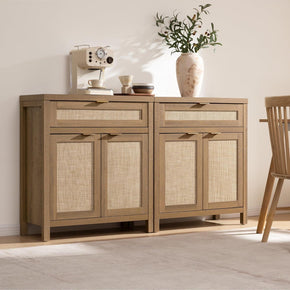
When two sofas face across a coffee table, depth matters more than length — every person on both sides needs comfortable reach to the center. A large rectangular table handles this well if there's enough depth. Two round tables placed close together can feel more conversational and are often easier to navigate around. Either way, rounding out the arrangement with something behind it — like the Helio Decorative Sideboard Cabinet against the back wall — gives the whole setup a finished look that a table alone doesn't create.
Coffee Table Size by Sofa Type
Standard Sofa, 7 to 8 Feet
An 84-inch sofa calls for a table around 56 inches long. An 8-footer — 96 inches — works with roughly 64 inches. Rectangular tables are the natural fit. They span the sofa well, give everyone clear access to some surface space, and slot into most room layouts without making any decisions difficult.
Loveseat
Most loveseats run about 60 inches wide. Target table length is 36 to 42 inches. Round or oval tends to feel proportionally right here — a bit lighter visually, and more forgiving for the traffic flow around a smaller seating area.
L-Shaped Sectional

Here's where people consistently get the measurement wrong. They measure the full sectional — chaise and all — and size the table to the total. That's not how it works. Measure only the main sofa section; ignore the chaise completely, and apply two-thirds of that length. Round, square, or oval tables serve sectionals better than long rectangular ones because you're managing access from multiple angles.
The chaise still matters for clearance planning, though. If it juts out parallel to one side of the table, make sure there's enough breathing room between them — otherwise, anyone trying to sit on the chaise ends up negotiating around a corner.
U-Shaped Sectional
Three-sided seating means it can be reached from three directions. A long, narrow, rectangular table only serves the people directly in front of it, which defeats the point of a wraparound sectional. Square tables or two round tables set close together work better. Equal reach from every side without awkward lunging across the center.
Which Shape Makes Sense for Your Room

Rectangular
Most popular for a reason. Best surface-to-footprint ratio for a single sofa. Works in most room layouts. Particularly good in narrow rooms where a round table would either block a walking path or look out of proportion with the sofa length.
Round and Oval
No sharp corners — and yes, that actually matters. In a tight family room or anywhere with regular foot traffic, corners at shin height take a daily toll. Round and oval tables also handle multi-directional traffic better, which is why they suit sectional seating more naturally than rectangular options.
Difference between the two: round gives equal reach in all directions but a shorter linear span. Oval gives more length while keeping the soft edges. Better for a longer sofa, since a round table wouldn't look proportional.
Square
Works best in larger rooms with seating on multiple sides — U-shaped sectionals, two sofas facing each other, sofa plus a pair of accent chairs. Balanced from all four directions. In a room with only one sofa, a square table tends to look either too small or oddly blocky unless the room is quite generous.
Nesting Tables
Pull them apart when you need the surface. Stack them back when the floor matters more. For small homes and apartments, this is probably the smartest format on the market — and it gets far less attention than it deserves. A fixed coffee table can't adapt to how a space actually gets used day to day. Two nesting tables can, and they do it without asking you to compromise on anything.
Size Based on How the Table Actually Gets Used
Mostly a Landing Spot for Drinks and a Remote. Suppose that's the table's job — size down. A smaller, simpler table does it without taking upmore floor space than necessary. Keep the surface clear. Don't oversize something that's only going to hold a mug and two remotes.
Movie Nights, Guests, Game Nights
Multiple people, multiple drinks, snack bowls, board games on a Saturday night — you need more real estate. Width matters here more than length. Some depth too: deep enough that people on both sides of the table (if you have seating on multiple sides) can reach the center without stretching.
Square tables, genuine opinion: better for games than rectangular. Equal reach from all four seats—no awkward ' bad end' where one person can't reach the center.
If You Eat or Work from the Sofa

Lift-top tables exist for exactly this. They raise to a comfortable working height and lower when you're done. A standard 16- to 18-inch table is a real ergonomics problem for anyone doing extended laptop work from the sofa — the downward angle adds up to neck and wrist strain faster than most people expect. If the sofa is a regular work spot, that adds up over time. And wherever the table is, nearby storage helps keep the surface usable. The Stria Sideboard with 2 Doors handles overflow — chargers, books, controllers, anything that would otherwise pile up on the table itself — so the surface stays clear for actual use.
Sizing Mistakes That Break the Room

These are the ones worth knowing before anything gets ordered.
Too Small
A small table next to a large sofa doesn't just look underwhelming — it makes the sofa look enormous by comparison. The room loses its balance. An undersized table says 'I ran out of space in the budget' or 'I didn't measure.' Neither is a great look. Interior designer Ellie Christopher's take was blunt: slightly overdressed beats underdressed every time. The same goes for coffee tables. Slightly too big is a design choice. Obviously,"too small" is just wrong. When furnishing a living room, having the right pieces on both sides of the coffee table matters too — something like the Helio Glass Sideboard with Doors opposite the sofa gives the room a finished quality that a standalone undersized table can't create on its own.
Too Big
More common, actually, than going too small. A table that leaves under 14 inches of legroom, narrows the walking paths to a squeeze, or visually competes with the sofa — that's a problem you live with every single day. Not dramatically bad. Just consistently inconvenient. And that specific kind of inconvenience has a way of getting more annoying over time, not less.
Wrong Clearance
Correct table size, wrong placement. Too far from the sofa — nobody uses it as a surface. Too close to the TV stand — nobody walks through comfortably. Most people measure the table and forget to measure the placement. Then they spend a year mildly annoyed at a living room that 'just doesn't feel right' without knowing exactly why.
Tape the footprint on the floor before anything arrives—Painter's tape, five minutes. You'll see immediately whether the placement works — before there's a delivery to return.
Height Mismatch
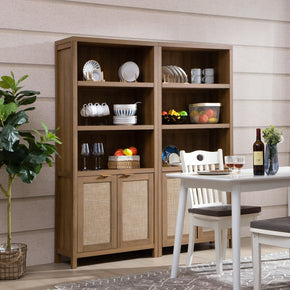
A coffee table noticeably higher or lower than the sofa seat creates a reach that's subtly wrong in a way that never becomes comfortable. And the table doesn't sit in isolation — its height has to make sense relative to everything else in the room too. A low coffee table can absolutely coexist with taller vertical storage. The Willow 75-inch Tall Bookshelf works in the same space as a 16-inch coffee table without any visual conflict — as long as the proportions across the room are considered together rather than picked out one at a time and forced to coexist.
Wrong Shape for Traffic Flow
A sharp rectangular corner in a tight family room is a shin-level hazard every single day. Not occasionally. Every time anyone passes. Round and oval tables eliminate this without any functional trade-off. Shape is partly aesthetic and partly practical — in smaller or more active rooms, it's the more important of the two.
Five Checks Before You Order
Run through these before placing anything.
- Sofa length. Divide by 1.5. That's your target table length.
- Sofa seat height.The table should land within 1 to 2 inches of the level, or just below. Never above.
- Tape it out first. Painter's tape on the floor takes five minutes and shows you exactly how the footprint will sit in the room before anything is delivered.
- Measure both gaps. 14–18 in between the sofa and the table. 24–30 in between the table and the V stand or opposing furniture.
- Shape based on the room, not just the sofa. Round or oval for tight or active rooms. Rectangular for long sofas and simple layouts.
FAQs
What is the standard size for a coffee table?
Standard is 16 to 18 inches tall, 36 to 60 inches long, and 18 to 30 inches wide. That covers most setups reasonably well — but treat it as a starting range, not a prescription. What matters is how those numbers relate to your specific sofa height, room dimensions, and the gaps between the table and surrounding furniture. Standard in the wrong context still looks wrong.
What is the 2/3 rule for coffee tables?
Your coffee table should be about two-thirds the length of your sofa. That's the whole rule. 84-inch sofa: aim for roughly 56 inches. 72-inch sofa: about 48. It's been the go-to sizing guide in interior design for decades because it covers the widest range of setups without overcomplicating the decision. Two-thirds gives everyone seated a comfortable reach while keeping the table from visually dominating the floor.
Is a 36-inch coffee table too small?
Not for a loveseat or a compact apartment sofa. 36 inches is a good fit for smaller seating setups. Next to a full-length sofa or a large sectional, though, 36 inches looks like it was pulled from a different room — too narrow to anchor the seating area visually. If you're working with a bigger sofa, size up or use two smaller tables together rather than one undersized piece.
Is 12 inches too short for a coffee table?
For most standard setups, yes. A 12-inch table paired with a 1-7 or 18-inch sofa seat means noticeably reaching down just to set something on it — not dramatically uncomfortable, just consistently slightly off. Works well with genuinely low-profile sofas at a 1-3 or 14-inch seat height, floor seating, or Japanese-style living rooms. For everyone else, 15 to 16 inches is a safer floor.
What is the 2:1 coffee rule?
Not a single formally defined rule — people use this phrase loosely to refer to furniture proportion guidelines. For coffee tables specifically, the main rule is the 2/3 rule: the table length is roughly two-thirds of the sofa length. Some designers apply similar ratios elsewhere — rugs, art placement, side table heights — but for coffee table sizing, 2/3 is the one that actually gets used.
What is the biggest mistake in furniture placement?
Blocking the walkways. Every time. You can have a perfectly sized coffee table and still ruin the room if it's positioned too close to the TV stand, sits too far from the sofa, or narrows a traffic path to a squeeze. Clearance is what makes a room livable rather than just photogenic. Maintain 14 to 18 inches between the sofa and the table. Keep 24 to 30 inches on the other side. Non-negotiable.
What is the 2-3 rule for furniture?
For coffee tables: the table should be roughly two-thirds the length of the sofa. That same proportional logic shows up elsewhere in interior design — rugs usually extend about two-thirds under the sofa, and wall art typically covers about two-thirds of the wall width above a furniture piece. Nobody invented it as a rule on purpose. It just consistently looks right to the eye, which is why designers keep using it.
How big is too big for a coffee table?
Too big when less than 14 inches of legroom remains between the sofa and table, when walking paths get narrowed to a shuffle, or when the table visually competes with the sofa for being the main piece in the room. The sofa should win that competition — always. Slightly oversized, ten to fifteen percent past the 2/3 target, usually still works fine. Being significantly oversized is a daily inconvenience that doesn't get any less annoying over time.
What size coffee table for a 7 ft sofa?
Seven feet is 84 inches. Two-thirds of that is 56 inches — that's the target table length. Height should land within an inch or two of the sofa seat, which for most standard sofas is 16 to 18 inches. A depth of 24 to 30 inches provides enough surface area without encroaching on the walking space. Keep 14 to 18 inches between the front of the sofa and the table edge, and double-check clearance to the TV stand before anything is delivered.
Sources
- James & James Furniture — Coffee Table Size Guide — Height, shape, spacing, room proportions, and buying factors.
- Southern Living — How to Choose the Right Coffee Table Size and Shape — 2/3 rule, height guidance, shape selection, placement — by designer Ellie Christopher.
- Dimensions.com — Coffee & Accent Tables — Standard dimensions, clearance specs, and common table types.
- Homary — Coffee Table Height & Size Selection Guide — Sofa height matching, width charts, sectional sizing, clearance guidance.
- Living Spaces — Average Coffee Table Dimensions for Every Space — Average dimensions, sofa spacing, small-room tips, material guidance.
- Joybird — Coffee Table Size Guide — Proportion, placement, styling, and shape advice.
- Architectural Digest — The Super-Low Coffee Table Is In Again — Low table trend and modern living room context.
- Statista — Average Daily TV Viewing Time in the U.S. — Context for daily living room use and how often coffee tables get used.


Stay In The Know
Expert advice. Very good deals. The absolute best (and worst) things we've tested lately.
Looking for something else?
Small Bedroom Organization: Smart Ideas for a Clutter-Free Room
LEARN MORE
Shoe Storage Ideas for a Cleaner, More Organized Home
LEARN MORE
Shoe Cabinet vs Shoe Rack: Which Shoe Storage Option Is Better?
LEARN MORE
10 Entryway Organization Ideas That Actually Work
LEARN MORERead more from Blogs
Looking for something else?
Rattan Shoe Cabinet: A Practical Guide to Style, Storage, and the Right Fit
LEARN MORE
Arched Bookcase Ideas 2026: How to Build, Buy, and Style 15 Stunning Picks
LEARN MORE
TV Stand Height Guide: Find the Perfect Height for Your TV
LEARN MORERead more from Blogs
You may also like


Further reading
Mold on Furniture: Causes, Cleaning and Removal, Health Risks, and Prevention
Best Time to Buy Furniture: 2026 Month-by-Month Sale Guide