




Armchair Dimensions: A Complete Size Guide for Every Room
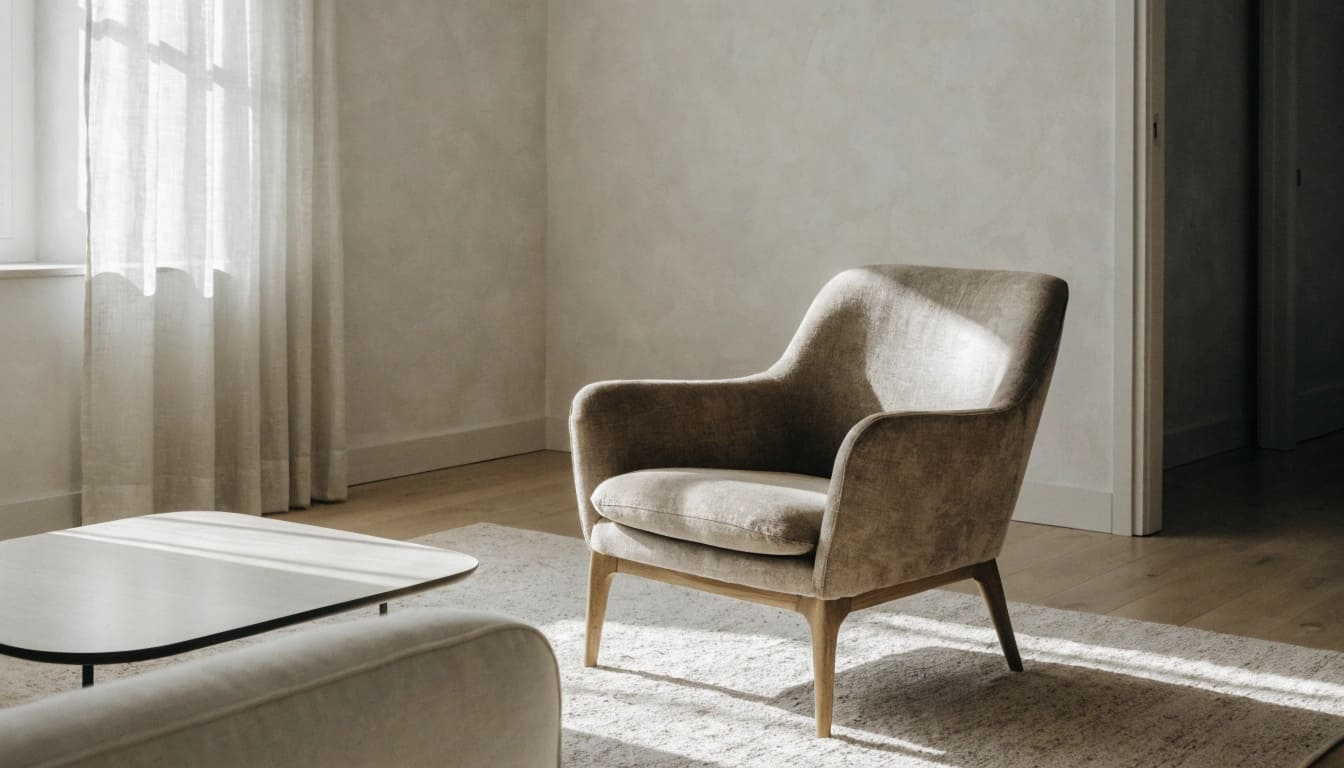
Armchair dimensions decide whether a chair fits your room or fights it. Get them wrong, and the chair feels huge. Get them right and it just works. Most armchairs run 26 to 40 inches wide and deep. The seat usually sits 16 to 20 inches off the floor. But the numbers vary widely by style, as furniture sizing references point out. This guide keeps it simple. You will get the standard sizes, a chart by chair type, easy steps to measure your space, the clearance rules that matter, and quick tips to match a chair to your room and your body.
Quick Answer: What Are Standard Armchair Dimensions?

Most armchairs aren't built to one fixed size. Still, they cluster. Pull a tape measure across a dozen of them, and you'll see width and depth land somewhere between 26 and 40 inches almost every time. Height does the same thing — roughly 30 to 40 inches from the floor to the top of the back. The seat is lower, of course. That sits 16 to 20 inches up, about the same as a kitchen chair, so your feet rest flat.
Seat depth is the one thing people forget. It usually settles around 18 to 24 inches once the chair's style kicks in. A tight, upright reading chair stays near the shallow end. A slouchy lounge model pushes deeper, because the whole point is to sink in.
And that's the catch with the word "armchair." It covers a thin little accent chair you'd tuck in a corner and a massive lounge chair you practically disappear into. Same label, almost nothing in common. I'd measure your actual spot before trusting any chart — these ranges are a starting line, not a rulebook.
Standard Armchair Dimensions in Inches
Shopping in the US? Here is the cheat sheet most chairs follow, give or take a brand quirk:
-
Overall width: 26 to 40 inches
-
Overall depth: 26 to 40 inches
-
Seat height: 16 to 20 inches
-
Seat depth: 18 to 24 inches
-
Overall height: 30 to 40-plus inches
A tall back or a deep lounge build will sail right past the top of those, and honestly, that is half the reason people buy one.
Standard Armchair Dimensions in Centimeters
Prefer metric? Run the conversion, and that same chair comes back like this:
-
Overall width: 66 to 102 cm
-
Overall depth: 66 to 102 cm
-
Seat height: 41 to 51 cm
-
Seat depth: 46 to 61 cm
-
Overall height: 76 to 102-plus cm
Every product page buries these in its spec section, so do yourself a favor and hold the figures up against your room before the buy button ever gets pressed.
Why Dimensions Vary So Much by Style
Put four chairs in a row — a wingback, a low club chair, a swivel armchair, and a skinny accent chair. They all wear the same "armchair" tag. Not one of them feels like the next.
Where does the difference come from? Backrest height does a lot of it. Arm width does even more. Then the cushion depth and the frame finish the job. So a single "standard" number won't help you much. That's why the chart below splits things by type. One size never fits all of these anyway.
Armchair Size Chart by Type

I built the chart so you wouldn't have to guess. Skip the tape measure for a second and just look at how the chairs sort out by size — the small compact ones, the everyday standard pick most people land on, the oversized pieces that eat a whole corner, and a few odd types that don't fit anywhere neatly. But here's the catch: real chairs drift from these numbers.
Brand changes things. So does the cushion fill, how chunky the arms run, and the upholstery you choose. Find the style that fits your room, then hold that chair's spec sheet up against your actual space before you commit.
|
Chair Type
|
Width
|
Depth
|
Best For
|
|
Compact armchair
|
22–28 in
|
24–32 in
|
Small rooms, reading corners, a second seat
|
|
Standard armchair
|
26–36 in
|
26–36 in
|
Most living rooms
|
|
Oversized armchair
|
36–45+ in
|
36–42+ in
|
Large living rooms, deep lounging
|
|
Wingback chair
|
28–36 in
|
30–38 in
|
Reading nooks, formal rooms
|
|
Swivel armchair
|
28–40 in
|
30–40 in
|
Open-plan living spaces
|
|
Lounge chair
|
30–40+ in
|
34–45+ in
|
Deep relaxation, large rooms
|
Key Armchair Measurements Explained

Every spec sheet hits you with a wall of numbers. A few of them actually decide comfort and fit, and the rest are noise. Here is what each one really means once the chair is sitting in your room.
Overall Width
Arms and all, side to side. That is the overall width, and it is the number that quietly runs the show. Your layout bends around it, the doorway either swallows the chair or does not, and the whole piece looks light or heavy depending on it. Funny thing is, two armchairs can hide the same seat and feel like totally different chairs, all because one of them came with big, padded arms.
Seat Width
This is the one that actually decides comfort. Seat width is the real estate you get between the arms, and day-to-day, it beats the overall number hands down. Plenty of chairs look roomy in the listing photo, then seat you snug as a glove once those wide arms eat into the middle. So if you are the type who shifts around or tucks a leg up under you, this is the figure worth hunting down.
Overall Depth
How far back does it go? That is depth, front-to-back. A deep chair almost pulls you in. You slide back, you slouch, you lounge. A shallow one does the opposite — it keeps your back upright. That suits a lot of situations. Conversation, for one. Reading at a desk. Or a tight room where every inch of clearance around the furniture you already own actually counts.
Seat Depth
Seat depth is sneaky. Get it wrong, and your posture pays for it. Too deep, and shorter folks either slide forward or kiss their back support goodbye. Go too shallow and taller folks end up perched right on the front lip of the cushion. Not comfortable. Most adults are fine in the middle, though — somewhere around 18 to 22 inches. That leaves a bit of daylight behind the knees and keeps you sitting square instead of sliding forward.
Seat Height
Sit down and check your knees. They should bend at roughly a right angle while your feet stay planted, no dangling, no scrunching. That comfort level is reached when the seat sits 16 to 20 inches up, and there is real logic behind the range. Accessibility guidelines tend to flag the 17- to 19-inch band as the easiest to drop into and push back up from. Drop much below that, and standing up turns into a small wrestling match. Nobody enjoys that, an older adult who just wanted a quiet spot to read, least of all.
Back Height and Armrest Height
A taller back catches your shoulders, neck, and head all at once. That's exactly why wingback and highback chairs rule the reading-nook corner. As for armrests, you want them to meet your elbows naturally — not ride up so high they shove your shoulders toward your ears. Nail both, and the chair feels easy to sink into and just as easy to climb back out of.
Armchair Dimensions by Type

Style moves the footprint around as much as it moves the look. Here is how the usual types of chairs for living rooms stack up so that you can match size to room and purpose.
Accent Chairs

Accent chairs have one job, and it isn't seating six people on movie night. They're the piece you put in a corner that's been sitting empty, or beside the fireplace where nothing else fits. Their small frame is the whole advantage — a compact living room can take one, so can most bedrooms. And they work best with the company. Park one next to themodern sofas and couches already holding down the room, and it adds a bit of personality without crowding anything.
Standard and Club Armchairs

A standard armchair is the safe pick, and there's nothing wrong with that. It's comfortable enough to sit in, but the frame stays compact, so it slides in next to a sofa or a side table without throwing off the layout. Club chairs are a different story. Same family, but with thick rolled arms and a seat that sits lower and deeper — they take up more visual space and need some breathing room to look right. Give one a low neighbor like theStria round coffee table, and the height contrast does the work for you. The corner reads as intentional instead of crowded.
Wingback Armchairs

Wingbacks bring a tall back and a dressier, more formal feel, with those side wings curling in around your shoulders. They pull their weight in reading corners, bedrooms, and traditional living rooms. Just keep in mind that the taller frame carries real visual weight, so that a single one can tip the balance in a small room.
Swivel Armchairs

Open-plan rooms basically beg for a swivel armchair. One spins to catch the TV, then swings toward the window or the person who just wandered in, and you never lift a finger to drag it around. Watch the base, though. It often eats a bit more floor than the seat hints at, so trace the full circle it can spin through before you commit to where it goes.
Lounge and Recliner Armchairs

Some chairs are made for truly melting into, and lounge styles are exactly that, running deeper and lower than the rest, which means they will demand some genuine floor space in return. Recliners ask for even more room. You need clearance behind them for the tilt, plus a stretch of floor up front for the footrest. So check both numbers before you fall for one: how it measures sitting upright, and how far it sprawls when it's fully kicked back.
Loveseats and 1.5-Seater Chairs

Some rooms have an awkward gap, like too small for a sofa, too big for one chair. The loveseat exists for exactly that. It's basically an armchair and a half — listings sometimes call it a 1.5-seater — and it sits right between a single chair and a compact three-seater sofa. The bonus is that you can sit in it. Legs folded up, sideways, sharing with a toddler, or letting the dog claim half. A regular armchair doesn't give you room for any of that.
How to Measure Your Space for an Armchair

Knowing how to measure your space for an armchair comes down to a simple, step-by-step routine. First job: track down the chair's listed width, depth, and height. Only then do you measure your room and lay the two side by side. Follow these steps in order. They exist to save you from the most avoidable furniture disaster there is: the chair that arrives and won't fit through your front door.
Step 1: Measure the Available Floor Space
Head to the exact corner the chair is destined for and measure it, both the width and the depth. While you are crouched there, clock whatever is muscling in on the space, a radiator pumping out heat, a window you would never want covered, a door that swings wide into the spot. The number that matters is the footprint the chair must fit within, not merely the square of the floor it rests on.
Step 2: Mark the Footprint on the Floor
This is the trick that saves people: outline the chair on the floor with painter's tape, or cut a cardboard shape to its size, and those flat inches on a spec sheet turn into a real shape you can pace around. Live with it for a day or two. If there is a pinch point, it will make itself known long before the actual chair turns up, and nudging a strip of tape is a whole lot kinder on your back than heaving a 60-pound armchair around the room.
Step 3: Check Walking Space Around It
Hold back about 30 inches of walking room anywhere people need to get by, the very gap designers keep open around a coffee table. Trim it tighter than that, and the whole room becomes a low-grade obstacle course, no matter how good the chair looks sitting in it.
Step 4: Measure From Your Existing Furniture
Do not let the chair crowd the sofa, side tables, shelves, doors, or windows. Pulled in close for easy conversation is the goal. Pulled in so close you cannot edge past is not. A chair parked in front of a drawer or planted in a walkway turns into a daily little irritation, however gorgeous it looked on the website.
Step 5: Measure Doorways, Hallways, and Stairs
Almost everyone skips this step. A good number of them regret it later. Run the tape measure along the whole delivery route — every doorframe, each tight corner, the bend at the top of the stairs, the elevator if you've got one. Most sizing nightmares happen right at the front door, not in the room itself. So leave yourself a few inches of breathing space at every opening.
How Much Clearance Does an Armchair Need?
Clearance is the one thing no photo ever shows. But it's exactly what decides whether a room feels breezy to walk through or quietly boxed in. The rough rule: most armchairs want about 30 inches of walking space around them, and 14 to 18 inches between the chair and a coffee table. Hold to those two numbers, and the detailed breakdown below mostly takes care of itself. Think of it as the unseen half of armchair dimensions, the part the listing photos conveniently leave out.
Clearance Around the Chair

Target around 30 inches of walking room on whichever side you need to slip past; this is the number furniture clearance standards treat as the comfortable baseline for getting around. Squeezed for room? You can drop it toward 24, but fair warning, every inch you sacrifice there is an inch your feet will keep finding.
Space Between the Chair and Coffee Table

The gap between your armchair and the coffee table should land somewhere around 14 to 18 inches. Under 14, and your knees hit the table edge every time you sit down or get up. Within the range, you can lean over for a mug or a book without it being a workout, and there's still room for your legs. The other thing worth doing: put a smallend table or side table right beside the chair. Once the drink and the phone live there, the coffee table doesn't need to be close at all.
Space Between the Chair and Sofa
The armchair should sit somewhere between 18 and 30 inches from the sofa. It depends on the room. Tight space, go closer. Open space, spread out. You'll know the distance is wrong when you sit in it — too far and conversation starts feeling like a phone call, too close and guests keep angling their knees away from each other. Most rooms land around 24 inches without much fuss.
Standard vs Oversized vs Compact Armchair Dimensions

The right size is dictated by your room far more than by whichever chair looks best in the catalog spread. Below is the honest rundown of when each one actually earns its keep.
When to Choose a Standard Armchair
Standard armchair dimensions usually run 30 to 35 inches wide, 32 to 36 inches deep, and 30 to 38 inches tall. That mid-size build is why they work so well in apartments, smaller living rooms, bedrooms — pretty much anywhere you've already got furniture to move around. They keep the room feeling open. And they slide right in as a spare seat pulled up beside the sofa.
When to Choose an Oversized Armchair
Save the oversized armchair for a big living room that has the square footage to back it up. Oversized armchairs usually run 38 to 50 inches wide and 40 inches or more deep. Give it that kind of room, and it becomes a statement piece — sometimes the main seat in the space. It's the chair you sink into deeply, the one that anchors a cozy reading corner. Try to force it into a small room, though, and it just swallows the floor.
When to Choose a Compact Armchair
When space is tight — a rental, a bedroom, any spot that just needs a spare seat — the compact armchair is your friend. A compact armchair generally measures 28 to 30 inches wide and 30 to 32 inches deep, with slim arms, legs left open underneath, and a swivel base. All of it fools the eye into reading the chair as light rather than bulky, and the room gets to breathe a little.
How to Choose Armchair Size by Room

Fit the chair to the room it will actually live in. It gets a lot simpler when you shop a single living roomfurniture range, since the proportions are already designed to play nicely together rather than clash.
Small Living Rooms
Reach for a compact armchair here, slim arms, legs you can see daylight under, a swivel, or an accent chair that keeps clear of the walking path. Anything that lets a sliver of light and floor show through is what stops a small room from feeling packed wall to wall.
Large Living Rooms and Bedrooms
A big room can take the weight of an oversized armchair, a lounge chair, a wingback, even a matched pair to fill out all that open visual space. Over in the bedroom, a compact or medium chair is enough to carve out a quiet reading or dressing corner, without elbowing the bed out of its own territory.
Home Offices and Reading Nooks

For a home office, lean on an upright armchair or accent chair that keeps your back honest without swallowing the room, and place a slim entrywayconsole table nearby for a landing spot that does not box in the seat. And for a reading nook? Hard to top a wingback or a deep, cushioned chair with a little side table and a lamp drawn up next to it.
How to Choose Armchair Size by Body Fit

A chair can fit the room like a glove and still fit your body the second you sit down. These are the fit checks worth making before you hand over the money.
Seat Height, Depth, and Width
Feet flat, knees near a right angle, that is the seat height you are aiming at. The seat depth should fit your back without jamming up behind the knees, and the seat width should hold your frame with a touch of room to shift around. Bigger bodies generally want a little more of all three.
Back Height and Armrest Height
Taller folks tend to want higher backs for that shoulder and neck support, while shorter ones can get swallowed whole by an oversized frame. Armrests that align with your elbows make standing up painless, and that is a genuine comfort in a chair you actually use every day.
Armchair Materials and Upholstery Choices

Size gets the chair into the room. Upholstery decides how it actually lives there, how it cleans up after a spill, and how long it lasts before it looks tired.
Leather, Fabric, and Performance Fabric
Leather is structured and tough, and it ages into a nice worn-in patina, which makes it a natural for formal rooms and the long haul. Soft fabric adds color and texture to an everyday living room. Performance fabric is the no-drama pick for kids, pets, and spills, since it brushes off most of whatever daily life throws at it.
Boucle, Velvet, and Rattan

Boucle is that cozy, nubby texture made for soft, modern rooms. Velvet brings a rich, slightly dramatic edge that really pops on a statement accent chair. Rattan and exposed-wood frames read as lighter and lean toward the natural or coastal, sitting easily next to the rest of your modern furniture pieces in a relaxed, lived-in space.
Interior Design Rules That Affect Armchair Size

A handful of well-worn design rules tie straight back to armchair dimensions. None of them are laws carved in stone, but they make handy shortcuts for getting the scale and the balance right.
What Is the 4-Inch Rule in Design?
The 4-inch rule is really about breathing room. Leaving a small gap, the one people often quote as about four inches, between a piece and the wall or its neighbor, stops your furniture from looking jammed together. For an armchair, a hat might mean a few inches between the chair and a side table or wall when you do not need a full walkway.
What Is the 2/3 Rule for Furniture?
The 2/3 rule says a piece should run about two-thirds the size of whatever it relates to. A coffee table at roughly two-thirds the sofa length is the textbook example. For an armchair, it just means the chair ought to feel balanced beside the sofa and the rug, not bullying them or disappearing next to them.
What Is the 70/20/10 Rule in Design?
This one balances color and style: roughly 70 percent dominant tone, 20 percent secondary, and 10 percent accent. A bold armchair in a loud color or a striking fabric makes the perfect 10 percent accent, the little jolt that lifts an otherwise neutral room without hijacking it.
Common Armchair Size Mistakes to Avoid
Most regrets trace back to the same few repeat offenders. Sidestep these, and you're most of the way to a chair that simply works.
Buying on looks alone. A gorgeous chair can still turn out the wrong size or flat-out uncomfortable. This is the giant one.
Forgetting to measure the doorway. A chair that won't fit through the door is a return waiting to happen, no matter how well it suits the room.
Ignoring seat height. Skip this, and standing back up slowly becomes a chore, especially for taller folks or anyone with stiff knees.
Too much depth for a small room. Deep seats swallow floor space fast, and in a tight room, that depth reads as bulk.
Clashing scale. A chair that fights the sofa, rug, and side tables throws the whole room off balance.
When you genuinely cannot decide, lean a hair smaller. You can always toss on cushions and a throw, but there's no shrinking an oversized chair down to fit a tight room.
FAQs
What is the 4-inch rule in design?
Mostly, it is about not keeping our furniture looking rammed. The idea is to leave a little breathing gap, the figure people throw around is roughly four inches, between a piece and its neighbor or the wall. For an armchair, that might just mean a few fingers of space between the chair and a side table when you do not need a whole path to walk through.
What is the size of a sitting chair?
A plain sitting chair is fairly modest, somewhere in the 18- to 24-inch range across and about the same depth, with the seat 16 to 20 inches off the ground. An armchair outgrows that on both counts, because the arms and that extra padding tack more onto the footprint.
What is the standard size of a chair in centimeters?
In metric, a standard chair seat tends to sit around 41 to 51 cm high and at least 46 cm deep. A proper armchair is the bigger animal here, measuring 66 to 102 cm wide and deep, with exact dimensions depending on whether it is a trim accent chair or a deep lounge piece.
How big is a standard chair?
A standard chair is the smaller relative. Your dining and side chairs are around 18 to 24 inches wide, whereas armchairs tend to measure 26 to 40 inches across once the arms are counted in.
What is the 2/3 rule for furniture?
It is a fast proportion check; the piece should run about two-thirds the size of whatever it sits with. The classic is a coffee table at roughly two-thirds the sofa length. With an armchair, the same logic applies: it ought to feel right beside the things around it, not oversized next to them.
What is the 70 20 10 rule in design?
Treat it as a recipe for balancing color and style, 70 percent the dominant tone, 20 percent a secondary one, 10 percent the accent. A bold armchair is a natural fit for that final 10 percent, the piece that drops a hit of color or texture into a room that is otherwise playing it cool.
What are the common dimensions for armchairs?
Most armchairs are 26 to 40 inches wide, roughly the same depth, and 30 to 40 inches tall, with a seat height of 16 to 20 inches. Style pushes those figures around a fair bit, so the honest answer is always: check the spec on the actual chair you are eyeing.
How long is a 3 seater chair?
A 3-seater, which most people just call a 3-seater sofa, usually stretches about 72 to 96 inches long, or nearly 183 to 244 cm if you prefer metric. The exact length depends on how wide the arms are, how big the cushions are, and the overall style.
What is the size of a seat in cm?
A seat that feels comfortable usually sits around 41 to 51 cm off the floor. On an armchair, the seat depth often ranges from 46 to 61 cm, depending on whether you have picked an upright chair, a compact one, or a deep, lounge-style one, you basically vanish into.
Sources
- Dimensions.com – Armchairs Dimensions & Drawings
- Dimensions.com – Outline Armchair Dimensions & Drawings
- Dimensions.com – Coffee & Accent Tables Dimensions & Drawings
- ADA.gov – 2010 ADA Standards for Accessible Design
- Swyft Home – Armchair Dimensions Guide
- Voyage Maison – Armchair Buying Guide: How to Choose the Perfect Armchair
- Eureka Ergonomic – Dining Table & Chair Dimensions Guide


Looking for something else?

Burl Wood Furniture: The Complete Buying Guide
LEARN MORE
What Is a Hope Chest? Meaning, History, and Modern Uses
LEARN MORE
What Is a Foyer? Meaning, Purpose and Design Guide
LEARN MORE
GREENGUARD Gold Certified Furniture: What It Really Means for Your Home
LEARN MORELooking for something else?

How to Clean a Mirror Without Streaks: Simple Step-by-Step Guide
LEARN MORE
21 Above-Bed Decor Ideas for a Stylish Bedroom Wall
LEARN MORE
Furniture Materials Guide: Picking the Right Material Room by Room
LEARN MORE


Further reading

18 Decorative Storage Box Ideas That Hide Clutter Well
ARTICLE BRIEF
Primary Keyword
decorative storage box ideas
Secondary Keywords
decorative storage boxes · decorative boxes with lids · stylish storage boxes · DIY storage boxes
...

How to Store Comforters Without Losing Space or Loft
Storing comforters comes down to four things. Clean and bone dry. Loosely folded, and sitting in something that breathes. Miss any one, and next season you pull out something that smells like a dam...

Furniture Distance From a Fireplace: How Far Is Safe?
Furniture distance from a fireplace answers two questions with one number. Keep anything that can burn at least 3 feet from heat sources.The U.S. Fire Administration gives that message for fireplac...


