





TV Stand with LED Lights: Benefits, Types, and Buying Tips
A TV stand with LED lights does a lot more than look sharp on the wall. That soft glow behind the screen cuts eye strain. It helps you find the remote at night. And an LED TV stand makes a plain media wall look finished. This updated 2026 guide to TV stands with LED lights keeps it simple, because as living room upgrades go, this one is easy. But the lights are the bonus here, not the main event. A good TV stand with lights still needs a strong build, real storage, and tidy cable management. Stability counts too, since theConsumer Product Safety Commission links thousands of tip-over injuries each year to unstable units. Below is how to pick one that earns its spot.
What Is a TV Stand with LED Lights?

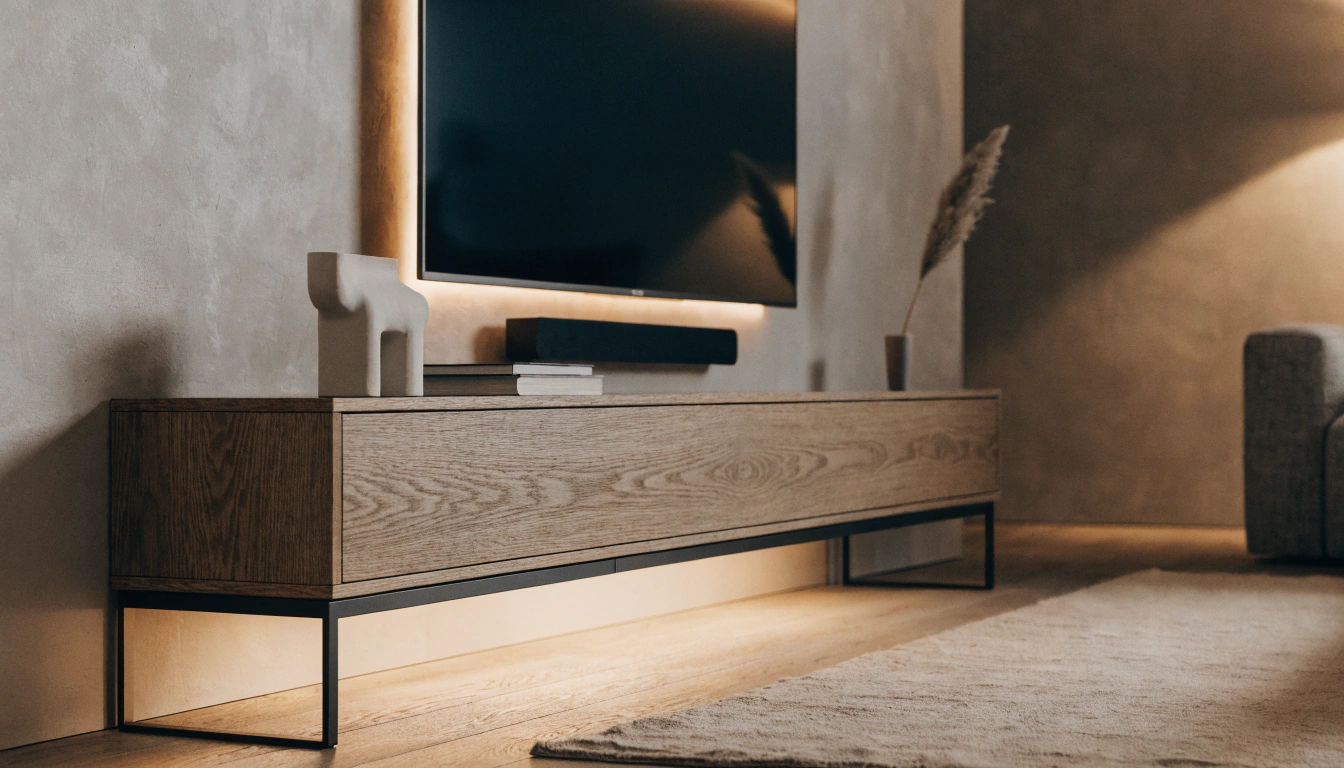
A TV stand with LED lights is really just a media console with LED lights or an entertainment center with LED lights, the same familiar furniture with strips or panels built right in. Most of the time, the lights hide behind the shelves, under the top, or along the base. Plug it in, and soft ambient lighting washes around the TV. No harsh overhead bulb. No pitch-black room. The basics are all there as well. A steady surface for the TV and soundbar, plus storage to swallow consoles, remotes, and clutter.
How the LED Lights Work

Most LED TV stands just plug into a wall outlet and run off a small power adapter. After that, a remote or a phone app runs the show. Better models let you switch the color, dim the brightness, and lock in a setting you like. An RGB TV stand for gaming rooms pushes it further still, pairing color-changing RGB lighting with a music-sync mode, so the glow pulses right along with the sound during a movie or a match. And while we are at it, LED stands for light-emitting diode, the same small, efficient lights behind the backlight on your TV, just put to work along the stand this time.
Is It Just for Looks?
No. The style is real, but so is the use. A low LED glow softens the jump from a bright screen to a dark room, and your eyes notice the difference. And at night, you can get across the room without hitting the big light and waking the whole house. They barely sip power and never get hot, so leaving them on for hours costs you nothing. No hot console. No scary power bill.
Benefits of Using an LED TV Stand

Looks aside, the everyday payoff is the real draw. In a busy living room, a TV stand with LED lights quietly clears up a handful of small daily headaches.
- Easier on the eyes. Ambient lighting behind the screen softens the contrast with a dark room, so your eyes are not straining all movie night.
- More immersive viewing. RGB lights and music sync modes lift gaming sessions, movie marathons, and party nights with color that matches the mood.
- Better visibility at night. That low glow helps you find remotes, controllers, and cables without the harsh overhead light blasting on.
- A cleaner, modern look. The light draws the eye to clean lines, while drawers and cabinets hide the console clutter behind them.
Add them up and an LED TV stand earns its place by easing eye strain, deepening the viewing mood, lighting your way at night, and tidying the whole setup, all at once.
Different Types of LED TV Stands
Not every LED TV stand suits every home. Pick based on how you actually use the room, not on the prettiest photo. These are the main types.
Modern LED TV Stand

This is the everyday pick for apartments and minimalist rooms. Picture clean lines, glossy or matte panels, and a simple white, black, or wood finish, with a soft strip of ambient light running under the top.
Gaming TV Stand with RGB Lights

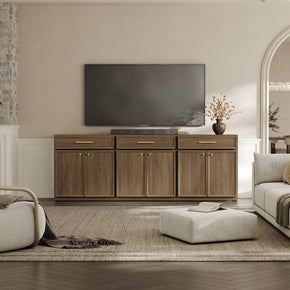
Built for console players. You want open shelving here, the kind that lets air move through, plus somewhere to drop the controllers and RGB lighting that'll sync to whatever's playing. Something roomy and well-ventilated, say theCas 4-door TV stand, keeps your gear from cooking, and nothing is stopping you from running your own LED strips down the shelves if you want the full RGB thing.
Fireplace TV Stand with LED Lights

Best for cozy living rooms. These mix a media console with an electric fireplace insert, not a real gas flame, plus ambient LED lighting. Warmth and glow in one piece. Hard to beat on a cold movie night.
Floating LED TV Stand

Best when floor space is tight. A wall-mounted floating LED stand frees up floor space and casts light down the wall for a modern, weightless look. Just mount it into studs or solid anchors, since it carries the full weight of the TV and gear.
Large LED Entertainment Center

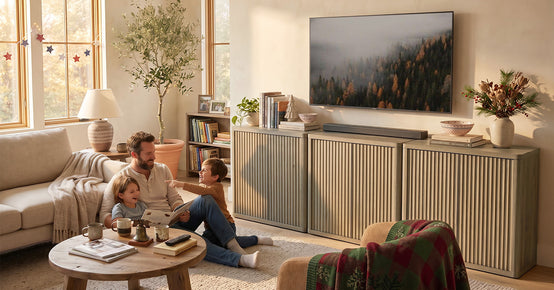
Best for 65-, 75-, or even 85-inch screens. Width, weight capacity, and storage matter most here. A wide unit, such as the Helio media cabinet for big screens,accommodates a large TV with ample space for a soundbar, consoles, and decor.
LED TV Stand with Storage Drawers

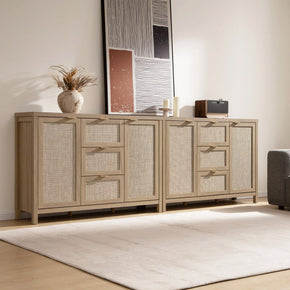
Best for families who need to hide things fast. Drawers and closed cabinets eat up toys, remotes, games, and media bits, so the top stays clear. A piece like the Savanna TV console with storage hides the clutter while the LED glow keeps the room feeling calm.
How to Choose the Right Size LED TV Stand

A lot of buyers choose by screen size alone, only to end up with a stand that looks off or feels wobbly. Two quick checks fix that.
Should a TV Stand Be Wider Than the TV?
Yes. Always. The stand needs to outrun the TV, so picture 3 to 6 inches of bare space sitting at each end. Quick math that never fails me: whatever the TV measures, tack on another 10 to 20 percent. So a 65 inch TV stand usually lands somewhere around 70 to 75 inches wide, a 75 inch TV stand closer to 80 to 90, and an 85 inch TV stand comfortably past 90. Do that, and it sits balanced, not like it's tipping forward off the stand. And that wider base stays put if a kid or pet knocks into it.
TV Stand Size Guide
Use this as a fast starting point. TV widths are rough, since bezels vary by brand.
|
TV Size |
Approx. TV Width |
Recommended Stand Width |
|
55-inch TV |
About 48 inches |
58 to 65 inches |
|
65-inch TV |
About 57 inches |
65 to 75 inches |
|
75-inch TV |
About 65 inches |
75 to 85 inches |
|
85-inch TV |
About 74 inches |
85 to 95 inches |
How Do I Know If My TV Can Go on a Stand?
Check three numbers before you buy. First, the real width of your TV. Second, the width of its feet or base, because wide-set feet need a wider top. Third, the stand’s weight capacity. As long as the stand is wider than the TV and rated to hold its weight, you are good to go.
How Much Weight Can an LED TV Stand Support?

It comes down to three things: size, material, and build quality. Small budget stands may hold less. A large, solid wood, metal, or reinforced unit handles far more. Do not guess from the screen size, either. A big new TV can weigh less than an older, smaller one, so match the TV’s real product weight to the stand’s rating.
It's the top shelf that does the heavy lifting; that's where the TV, the soundbar, and anything you set out on display go. Whatever you choose, get an anti-tip strap or a wall anchor for it, especially if there are kids or pets around. And when you've got a real stack of gear, a flexible run like amodular media furniture layout splits the load over a few units instead of piling it all on one.
Best Materials for an LED TV Stand

The lights get the attention, but the material decides how long the stand lasts. This is the honest rundown for a busy home.
Solid Wood and Sintered Stone
A solid wood TV stand is durable, easy to fix, and ages well, so it wins for the long haul. Sintered stone is tougher still. It is hard, heat- and scratch-resistant, so it withstands heavy daily use. Both cost more, but in a home with kids or pets, that money comes back to you.
MDF, Particle Board, and Metal

An MDF TV stand is smooth, affordable, and takes paint or a glossy finish well. The edges do chip if you leave them unsealed, though. Particle board is the cheapest of the bunch and the flimsiest too, and it can sag or swell as the years go by. A metal TV stand has a strong, modern frame, a good fit for gaming or industrial rooms. A well-built option from theStria media console range balances a clean look with a solid, durable frame.
Glass Shelves
Glass looks sleek and reflective, and it loves LED lighting because the glow skips around it. The catch is that it scratches and shows every fingerprint, so you will wipe it down more than wood or stone.
Advantages and Disadvantages of LED Lights

If you have ever stopped to wonder what are the disadvantages and advantages of LED lights, this is the quick rundown worth reading before you buy. LED lighting is popular for a reason, but the trade-offs are worth a look too. Both sides, in brief.
Advantages of LED Lights
LEDs are energy-efficient and run on just a few watts. Leaving them on costs next to nothing. They give off very little heat and last for years. You also get full control over brightness and color. That mix makes them perfect for soft ambient lighting in a movie or gaming room.
Disadvantages of LED Lights
Cheap strips can die early or flicker. Some lights feel too bright or too blue when you cannot dim them. RGB colors will not match every decor style, and a separate strip adds one more cord to hide. Built-in lights can also be harder to fix if they quit. The cure for most of this is simple. Go with adjustable, dimmable lighting, safe wiring, and a stand that has good cable management.
What Does LED Stand For on a TV?
LED stands for light-emitting diode. There is one mix-up worth sorting out here. LED on a TV means the tiny lights that backlight the screen itself. LED on a TV stand means the decorative or ambient lights built into the furniture. One technology, two very different jobs.
Final Takeaway: Is a TV Stand with LED Lights Worth It?

A TV stand with LED lights earns its place when you're after a softer viewing glow, tidier cables, and a more modern-looking living room. Just shop in the right order. Size, weight capacity, material, storage, and safety come first. The lights are the bonus layer on top. So if you have been weighing whether an LED TV stand is worth it, let this LED TV stand buying guide be your answer: get the fundamentals right, treat the glow as the finishing touch, and you end up with a unit that performs as well as it shows off. Match the width to your TV. Pick solid wood, stone, or metal where it counts. And add an anti-tip anchor. If you would rather start with a rock-solid stand and add your own LED strips, browse the wider Sicotas furniture range and light it up your way.
FAQs
What are the benefits of using an LED TV stand?
An LED TV stand gives you a few clear wins:
- Soft ambient lighting that reduces eye strain on movie nights.
- Better visibility at night, so you find remotes and avoid tripping.
- A modern focal point that makes a plain TV wall look finished.
- More immersive gaming and viewing with adjustable or RGB color options.
What is the best material for an LED TV stand?
For everyday use, the strongest picks are:
- Solid wood, for durability and easy repairs.
- Sintered stone, for heat and scratch resistance.
- Metal frames, for strength and a modern, gaming-friendly look.
MDF works for budget or glossy finishes, while particle board is the least durable.
How much weight can an LED TV stand support?
It varies by size, material, and build. A small-budget stand may support a modest load. A large, solid wood or metal unit supports much more. Always read the listed weight capacity and check that it covers your TV, soundbar, and decor altogether.
How do I know if my TV can go on a stand?
Look at three things: how wide your TV really is, how far apart its feet or base sit, and the stand’s weight rating. Get a stand wider than the TV and rated to hold its weight, and you are set.
What does LED stand for on a TV?
LED stands for light-emitting diode. On a TV, it points to the screen’s backlighting. On a TV stand, it points to the built-in furniture lighting. One tech, two jobs.
What are the different types of LED TV stands?
The ones you will run into most are the modern LED TV stand, the RGB gaming TV stand, the fireplace TV stand, the floating LED stand, the large entertainment center, and the LED TV stand with storage drawers.
What are the disadvantages and advantages of LED?
LED lights are energy-efficient, low-heat, long-lasting, and simple to adjust for color and brightness. The flip side: cheap strips can fail, some look too bright, and built-in lights can be harder to replace.
What is the advantage of using LED lights?
LEDs use less energy, give off less heat, and last longer than many older bulbs. They also offer flexible color and brightness settings, making them perfect for soft ambient lighting around a TV.
Sources
- U.S. Consumer Product Safety Commission – Anchor It! Furniture Tip-Over Prevention
- U.S. Department of Energy – LED Lighting and Energy Efficiency
- Energy Star – Light Bulbs: LED Basics
- VBU FURNITURE – How to Choose a TV Stand or Media Console
- Architectural Digest – Living Room Lighting Ideas and Tips
- Britannica – Light-Emitting Diode (LED): How It Works


Looking for something else?

Burl Wood Furniture: The Complete Buying Guide
LEARN MORE
What Is a Hope Chest? Meaning, History, and Modern Uses
LEARN MORE
What Is a Foyer? Meaning, Purpose and Design Guide
LEARN MORE
GREENGUARD Gold Certified Furniture: What It Really Means for Your Home
LEARN MORELooking for something else?

How to Clean a Mirror Without Streaks: Simple Step-by-Step Guide
LEARN MORE
21 Above-Bed Decor Ideas for a Stylish Bedroom Wall
LEARN MORE
Furniture Materials Guide: Picking the Right Material Room by Room
LEARN MORE


Further reading

18 Decorative Storage Box Ideas That Hide Clutter Well

How to Store Comforters Without Losing Space or Loft


