













TV Stand with Gas Fireplace: Is It Safe, Practical, or Better to Choose Electric?
A TV stand with a gas fireplace is not really the product most people think they are buying. Type that phrase, or "gas fireplace TV stand," into a search bar, and what comes back is mostly electric fireplace TV stands. Real gas units? Almost none. And the gap between the two is huge. A real gas fireplace requires a gas line, venting or an approved ventless design, set clearances, and a pro to fit it. An electric fireplace TV stand just plugs into the wall, and you are watching TV ten minutes later. This updated 2026 guide comparing gas versus electric fireplace TV stands sorts out the confusion. We will cover what is actually safe, how much clearance a gas fireplace really needs, where any fireplace TV stand crosses the line between gas and electric, and which setup makes sense for your room. Fire safety groups such as theNFPA keep saying the same thing: heat clearance and a proper install come before looks. Let us get into it.
Quick Answer: Can You Buy a TV Stand with a Gas Fireplace?

Short version: in practice, no, not as a ready-made plug-in furniture unit. The phrase tends to mean one of two things, and only one of them is genuinely safe.
Most Fireplace TV Stands Are Electric, Not Gas
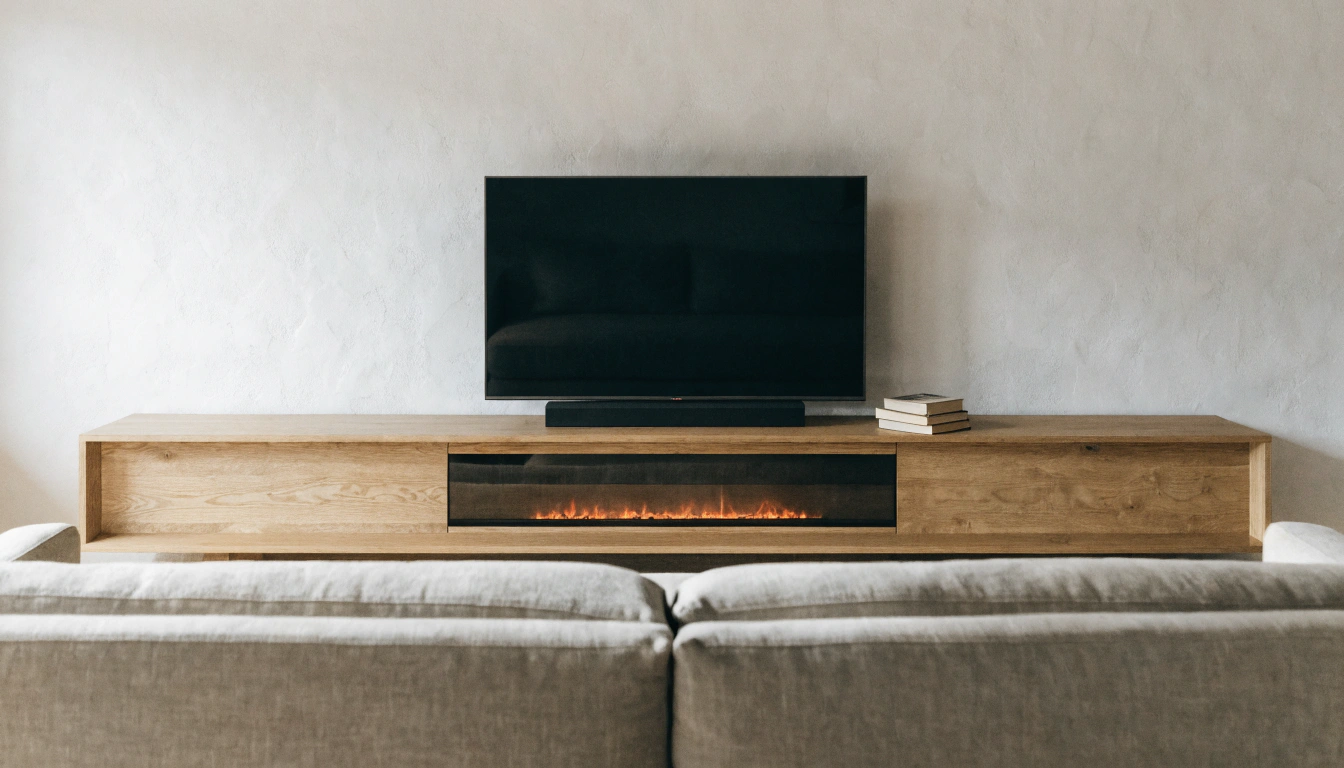
See a fireplace TV stand on a store page? Nine times out of ten, it is an electric fireplace media console. The flame is an LED effect, with a small heater tucked behind it. A real gas fireplace TV stand, with a live flame burning inside a piece of furniture you can slide around, just isn't a normal product you can add to your cart. Gas and furniture do not get along that easily.
A Gas Fireplace Inside a Regular TV Stand Is Usually Not a Simple DIY Project
Dropping a real gas fireplace into an everyday TV stand is not a Saturday project. Gas units demand proper venting, a gas line, set clearances, heat-safe materials, and a licensed installer to sign off. Your average wood or MDF console was never built to handle that heat, let alone a gas connection.
The Safer Alternative for Most Homes
For most renters, apartments, bedrooms, and small living rooms, the electric fireplace TV stand wins on ease and safety. You get the cozy glow and a bit of warmth, minus the gas lines, the venting, and the construction crew. Plug it in. Done.
What Is a TV Stand with a Gas Fireplace?

That one phrase covers two setups that could not be more different. Knowing which one you actually mean saves you money and keeps you safe.
Gas Fireplace TV Stand Meaning
Most of the time, a gas fireplace TV stand means a custom media cabinet or entertainment center built around a real gas flame, not a standard plug-in stand, and it usually takes the shape of a built-in fireplace TV wall or a fireplace media console designed to handle the heat. Think of a built-in wall where the fireplace, the TV niche, and the storage are planned together, then finished with heat-safe materials.
Gas Fireplace vs Electric Fireplace TV Stand
Stripped down, the difference is this. A gas fireplace burns a real flame, runs on a gas line, uses a vent or an approved ventless design, and requires professional installation. An electric fireplace TV stand plugs in, fakes the flame with LEDs, has a heat setting and built-in storage, and goes together with a screwdriver.
Why the Difference Matters
Why care about the difference? Safety, heat, and money. Real gas flame drags in building codes, material limits, venting rules, and a lot more heat sitting near your TV. Get one of those wrong, and you are looking at damage, maybe something worse. Electric skips most of that headache.
Can You Put a Gas Fireplace Under a TV?

Whether you call it putting a TV above gas fireplace or a gas fireplace under TV, both questions land on the same answer, and it all comes down to clearance. Yes, but only with the right fireplace and the right clearance. It is one of the questions people ask most, so it deserves a careful answer.
Yes, But Only with the Right Fireplace and Clearance
Certain gas fireplaces are built for a TV-above installation, usually with a heat management kit or a mantel to do the work. The catch? You have to follow the maker’s manual to the letter. That manual sets the safe distance, not a blog post, not your neighbor.
Clearance Depends on the Fireplace Model
No single magic number exists here. The distance you need varies based on the unit, the mantel design, the heat management system, the wall material, and whether the TV is recessed or mounted flat on the wall. A direct vent gas fireplace and a ventless gas fireplace can play by completely different rules.
Why Heat Management Matters
Heat is the real enemy in any TV setup above a gas fireplace. Too much of it warps the screen, cooks the wiring, and quietly shortens the life of a soundbar or media box. Most TV brands list a top operating temperature somewhere, and rising heat can exceed it faster than you might think.
When to Avoid It
Drop the TV-above plan if the gas fireplace emits a lot of heat, lacks approved clearances, or leaves the wall above it hot to the touch while running. Simple test: if your hand cannot sit comfortably on that wall, your electronics have no business there either.
Can I Put a Fireplace Insert in My TV Stand?

Depends entirely on the kind of insert. Electric and gas inserts are not swappable here, not even close.
Electric Fireplace Inserts Are Common for TV Stands
Loads of TV stands are made to hold an electric fireplace insert. They plug in, run cool, and play nicely with furniture as long as you use them the way the maker says. This is the normal, safe version of the whole idea.
Gas Fireplace Inserts Are Not Meant for Standard TV Furniture
A gas fireplace insert is a whole different animal. It typically requires a fire-rated enclosure, set clearances, venting, a gas connection, and a pro to install it. Shove one into a regular wood TV stand, and you are looking at something that is neither safe nor up to code.
Why Materials Matter
Engineered wood, MDF, veneer, and particleboard are inherently safe near gas heat. They scorch. They warp. Sometimes worse. Only an approved, fire-rated enclosure has any business wrapping a gas insert.
Best Rule for Buyers
Keep it simple. Use an insert only if it is specifically approved for the cabinet, wall system, or enclosure you are putting it in. If the maker never lists your setup, take that as a no.
Gas Fireplace vs Electric Fireplace TV Stand: Which Is Better?

The right call really hangs on your home, your budget, and how much real flame you are after.
Choose a Gas Fireplace If You Want Real Flame and Strong Heat
Go gas when a real flame and serious heat genuinely matter to you. It fits homeowners, remodels, built-in fireplace TV walls, and any room where you want the fireplace to actually heat the place, not just sit there glowing.
Choose an Electric Fireplace TV Stand If You Want Easy Setup

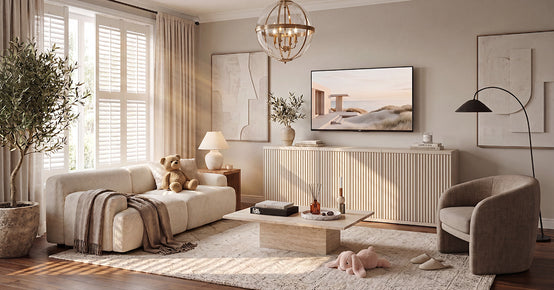
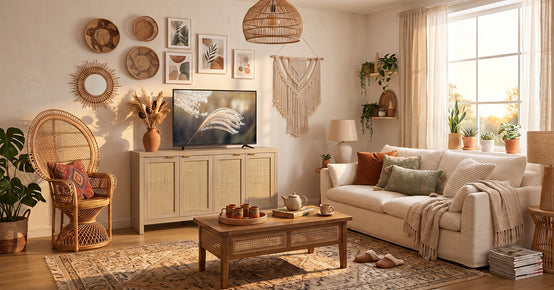
Reach for an electric fireplace TV stand when you want the mood without the construction. It is the obvious fit for apartments, renters, bedrooms, and small living rooms. Something like a modern closed-door media console pairs with a plug-in insert to give you the look minus the building work.
Choose a Fireplace TV Wall If You Want a Built-In Look

A built-in fireplace TV wall shines in remodels and custom cabinetry, where the TV, fireplace, shelves, and storage all get planned as one. To pull off that layered look, modular media wall units can frame a fireplace niche while keeping the lines clean.
Quick Comparison Table
|
Feature |
Gas Fireplace Setup |
Electric Fireplace TV Stand |
|
Flame type |
Real flame |
LED flame effect |
|
Installation |
Professional |
Usually DIY assembly |
|
Venting |
Often required |
Not required |
|
Heat output |
Higher |
Lower to moderate |
|
Best for |
Permanent homes |
Apartments and flexible rooms |
|
Safety concern |
Heat, gas, venting |
Electrical safety and clearance |
|
Cost |
Usually higher |
Usually lower |
How Far Away Should a TV Be from a Gas Fireplace?

Far enough that heat never gets to the screen. No one-size number exists, so here is how to pin down yours.
Follow the Fireplace Manual First
The maker’s installation guide is hands down the most important source for clearance. It beats every rule of thumb floating around online. Read it before a single screw goes into the wall.
Check Vertical Clearance Above the Fireplace
Plenty of gas fireplaces will only allow a TV above them if you add a mantel, a heat deflector, a recess, or a heat management kit. Asmounting guides note, ensuring proper TV clearance above a fireplace, along with proper gas fireplace clearance and a heat shield, is often what makes a TV installation above a gas fireplace safe in the first place.
Check Side Clearance Too
Setting the TV beside the fireplace usually runs cooler, sure, but it can still need clearance from heat and nearby materials. Do not assume side placement means no rules at all.
Use a Heat Test Before Mounting Electronics
Run the fireplace for a while, then put your hand on the wall where the TV would go. Many guides say the surface should stay between 100 and 110 degrees Fahrenheit. Handy test, but it is no substitute for the manual or a pro’s advice.
How Much Clearance Do You Need Above a Gas Fireplace?

Enough to keep both the wall and the TV safe, and the exact figure rides on the unit. A handful of things affect that number.
Clearance Varies by Fireplace Type
Different gas fireplaces play by different rules. A direct-vent gas fireplace, a ventless gas fireplace, a gas fireplace insert, a linear gas fireplace, and a traditional gas fireplace each may requireits own clearances. Never paste one model’s spec onto another and hope.
Mantel and Shelf Clearance
Mantels, shelves, and cabinets above a gas fireplace have their own clearance rules for combustible materials. National fire codes, such asNFPA 211 and the National Fuel Gas Code, lay the groundwork that local building codes build on.
TV Clearance Is Different from Mantel Clearance
A mantel can block some of the rising heat from the TV, but the TV still needs its own safe distance and a wall that stays cool. Mantel clearance and TV clearance are two separate checks. Do not treat them as one. Good fireplace heat management is what keeps the two working together, since rising heat can cause TV heat damage over time if the screen sits too low or too close.
Why Professional Installation Matters
Gas connection, ventilation, combustion safety, and local code compliance, are not DIY territory. A licensed pro keeps the whole install safe and legal and keeps your warranty intact while they are at it.
Is a TV Above a Fireplace a Good Idea?

Sometimes yes, sometimes no. Part of it is design taste, part comfort, part plain safety.
When It Works Well
It can look great in small rooms, open-plan spaces, and on fireplace TV walls, where the TV and fireplace share a single neat focal point. One wall pulls double duty, and the floor stays clear.
When It Feels Uncomfortable
Mount that TV too high, and your neck pays the bill through every movie night. A hot wall stacks an electronics risk on top of the neck strain. People regret both, all the time, with this layout.
Better Alternatives
Worried about the height or the heat? You have easier paths. Put the TV to the side of the fireplace. Set it on a separate media console. Hide it in a cabinet. Use a frame-style TV above the fireplace. Or skip the whole debate with an electric fireplace TV stand.
Best Layout Options for a TV and Gas Fireplace

Honestly, your room's shape usually picks the layout for you. Five setups tend to do the job best.
TV Above the Fireplace
Good for rooms short on wall space, provided the fireplace has approved heat clearance. Lower the screen as far as that clearance allows, so the viewing angle does not wreck your neck.
TV Beside the Fireplace
Good for wider rooms. The TV sits at a lower, comfier height and dodges most of the rising heat. Meanwhile, the fireplace gets to stay a feature in its own right.
Fireplace Below, TV in Custom Cabinetry

Good for built-in media walls. Cables vanish inside the wall, and the whole thing reads as planned, not improvised. A row of living room sofas and seating facing the wall ties the room together.
Fireplace as the Focal Point, TV Hidden
Good for design-first living rooms. A sliding panel or a cabinet door tucks the TV out of sight, so the flame gets center stage whenever you want it.
Freestanding Fireplace with TV on a Console
Good when the fireplace and TV just cannot safely share one vertical wall. Park the TV on a four-door media console for tidy living rooms off to one side, and let the two pieces balance each other out.
Is It Safe to Have an Electric Fireplace Under a TV?

Generally, yes, which is a big part of why the electric route is so popular. A couple of checks keep it that way.
Yes, If the Unit Is Designed for TV Use
Most electric fireplace TV stands are designed with a TV sitting on top from the start. Both the LED fireplace TV stand and the infrared fireplace TV stand are typical electric options built to sit safely under a screen, since they run cool and vent their heat out the front. Just double-check the weight capacity, the ventilation, and the manual before you pile everything on.
Flame-Only Mode Adds Ambiance Without Heat
Many electric units let you run the flame effect with the heater switched off. On a warm night, that means the glow without heating the room or the TV.
Heat Output Is Usually Lower Than Gas
Most electric fireplace stands are designed for supplemental heat, not to warm the whole house. The BTU heat output stays modest, and that is part of why they sit safely under a TV.
Still Check Cords, Outlets, and Clearance
Do not overload the outlet, block the vents, or run a frayed cord. Basic electrical sense still matters, even with a low-heat unit.
Does a Fireplace TV Stand Use a Lot of Electricity?
It depends on which mode you are running. The flame and the heater pull wildly different amounts of power.
LED Flame Effects Use Less Power Than Heat Mode
The LED flame and lighting barely sip power. Running just the visual effect costs almost nothing, so you can leave it glowing for hours and hardly notice it on the bill.
Heat Mode Uses More Electricity
Flip the heater on, and the draw jumps because generating heat takes real wattage. Run it for hours, and your bill will notice, the same way any space heater would.
Use Flame-Only Mode for Ambiance
When all you want is the look, stick to flame-only mode. The SAVE ON ENERGY space heater guidance is a good reminder that the heating element is the real energy hog, so leave it off when you do not actually need the warmth.
Gas Fireplaces Use Fuel Instead of Electricity
A gas fireplace runs mostly on natural gas or propane, not electricity at all. That said, some models still want a trickle of power for ignition, a fan, or the controls.
Best Materials for a TV Stand Near a Fireplace

Near heat, looks are not the thing that counts most. Build quality matters more.
Solid Wood
Tough, good-looking, and it shrugs off daily life. Even so, it still needs proper clearance from any real flame and heat.
Engineered Wood and MDF

You will find these in plenty of electric fireplace TV stands, and they do fine there. Put them near a real gas flame, though, and they are not safe unless the maker specifically signs off on them. ASavanna media console with cabinet storage is a solid choice for an electric setup that hides the gear away. Even with an electric fireplace media console, real TV stand safety still comes down to proper fireplace ventilation and following the manufacturer's guidance, so keep the vents clear and stick to the clearances they specify.
Metal and Glass
Good for a modern look, with a bit more built-in heat resistance. The catch is that glass shelving tends to scratch over the years.
Stone, Tile, and Fire-Rated Surrounds
Best for a built-in gas fireplace TV wall, because these handle heat far more safely. Stone and tile are exactly why custom fireplace walls can sit so close to a real flame.
What to Look for in an Electric Fireplace TV Stand Instead

Leaning electric? These are the boxes worth ticking before you hand over any money.
- TV size and weight capacity: make sure the stand handles your TV's width and weight with a margin.
- Heat output: look for room-size guidance and the BTU or wattage details.
- Ventilation: keep air vents clear of walls, rugs, cabinets, and decor.
- Cable management: rear holes, channels, or shelves for the console and soundbar.
- Adjustable flame and heat settings: a remote, flame-only mode, brightness, a timer, and a thermostat all help.
- Storage and safety features: cabinets, shelves, soft-close doors, anti-tip hardware, and child-friendly controls.
A low-profile, modern TV console that hides cables and supports an electric insert checks off most of the items on this list in a single piece.
Common Mistakes to Avoid
A few wrong moves here get pricey or downright risky. Steer well clear of these.
- Putting a gas insert in regular furniture. Gas inserts need approved enclosures, not an ordinary wood TV stand. Instead, install a gas fireplace insert only in an approved, built-in fireplace TV wall or a rated enclosure designed for it, and leave standard TV furniture for electric units alone.
- Mounting the TV too high. It can look impressive but feel uncomfortable every single day.
- Ignoring heat clearance. Heat can damage electronics, wall materials, cables, and decor.
- Blocking fireplace ventilation. Covered vents can trap heat and create a safety risk.
- Buying a budget stand that cannot support the TV. Always check the top weight capacity, the TV size range, and overall stability.
- Forgetting local code and permits. Gas work may need permits, inspections, and licensed professionals.
Final Takeaway

Bottom line: a true TV stand with a gas fireplace is entirely different from a plug-in electric fireplace TV stand. Real gas means proper clearances, approved materials, ventilation, and a professional installation. For most renters, apartments, bedrooms, and small living rooms, the electric fireplace TV stand is the simpler, safer pick. Set on a real flame? A custom gas fireplace TV wall can absolutely work, as long as you build it around the fireplace manual, the TV clearance, and local code from day one. A rustic wood entertainment center and the right layout are the next easy steps once the plan is locked.
FAQs
Can you put a gas fireplace under a TV?
Yes, but only when the gas fireplace is approved for that kind of installation and the TV has the required clearance. Always go by the fireplace manufacturer’s manual and your local building codes.
Does a fireplace TV stand use a lot of electricity?
- Run it on flames alone, and the draw is tiny, hardly enough to notice on a bill.
- Heat mode is the thirsty one. That's when it pulls like a space heater.
- Gas fireplaces are a different animal, mostly burning natural gas or propane, though plenty still want a bit of electricity for the controls or a fan.
Is a TV above a fireplace a good idea?
It can be, as long as the TV is not mounted too high and the fireplace has proper heat management. If the wall heats up or the screen ends up at an awkward height, the TV is usually better off beside the fireplace.
Can I put a fireplace insert in my TV stand?
An electric insert is fine if the TV stand is made for it. A gas fireplace insert, though, should never go inside a regular TV stand, since it needs approved clearances, venting, and a professional installation.
How far away should a TV be from a gas fireplace?
It comes down to the fireplace model, heat output, mantel design, wall material, and installation. Check the fireplace manual for the required clearance before any TV goes up.
Is it safe to have an electric fireplace under a TV?
Generally, yes, as long as the electric fireplace TV stand is built for TV use, is well-ventilated, and runs as the manual says. Just keep the TV's weight under the stand’s limit.
How do you put a TV above a gas fireplace?
- Start with the fireplace itself. It has to be one that's rated for a TV mounted above it, so check that before anything else.
- Measure the clearance the manufacturer asks for, and don't fudge it.
- Some units run hot enough to need a mantel or a heat shield. Add one if yours does.
- Mount the TV where your neck won't regret it, sit on the couch first, and find the height that feels right.
- Run the cables out of sight, but route them safely while you're at it.
- Leave the gas and electricity to licensed pros. Not the corner to save money on.
How much clearance do you need above a gas fireplace?
It varies by model and installation type. Some units want a lot of space; others allow a lower TV with a heat management system doing the heavy lifting. The manufacturer’s installation guide gets the final say.
Sources
- NFPA – NFPA 211: Chimneys, Fireplaces, Vents, and Solid Fuel-Burning Appliances
- NFPA – National Fuel Gas Code Standard Development
- Mount-It! – Mounting a TV Over a Fireplace: Best Practices
- ICC – 2018 International Residential Code (Chimneys and Fireplaces)
- SAVE ON ENERGY – Space Heaters and Energy Use
- NFPA – Heating Safety and Home Fire Prevention


Looking for something else?

Burl Wood Furniture: The Complete Buying Guide
LEARN MORE
What Is a Hope Chest? Meaning, History, and Modern Uses
LEARN MORE
What Is a Foyer? Meaning, Purpose and Design Guide
LEARN MORE
GREENGUARD Gold Certified Furniture: What It Really Means for Your Home
LEARN MORELooking for something else?

How to Clean a Mirror Without Streaks: Simple Step-by-Step Guide
LEARN MORE
21 Above-Bed Decor Ideas for a Stylish Bedroom Wall
LEARN MORE
Furniture Materials Guide: Picking the Right Material Room by Room
LEARN MORE


Further reading

18 Decorative Storage Box Ideas That Hide Clutter Well

How to Store Comforters Without Losing Space or Loft


