




18 Best Small Leather Couches for Compact Living Rooms
Small living room? A small leather sofa might be the smartest thing you buy for it. It looks sharp. It wipes clean in seconds. It gives a tight space some real backbone, minus the bulk of a giant couch. The tricky part is matching style, size, and leather type to your real life, not a showroom shot. This is an updated 2026 guide to the best small leather sofas for compact living rooms, where I have rounded up 18 of them, the kind that bring real style and comfort without overwhelming a tight space. You will find slim loveseats, compact sectionals, and a small leather loveseat or two, with quick notes on color, leather grade, sizing, and styling throughout. The right small leather couch goes the distance, too. Groups like theLeather Working Group will tell you that good hides only look better as they age into a soft patina. Let us find the one for your room.
What to Look for in a Small Leather Couch
First, know what actually makes a small leather sofa work in a tight room. Width beats the label, always. A loveseat can run wide. An apartment sofa can seat two with room to spare. Check three things up front. Width against your wall and walkways. Seat depth, based on how you sit. Leather type, which sets how it ages and cleans. Slim arms and raised legs earn their keep, too. They give seat space back and show more floor, and that alone keeps a small living room feeling open.
Quick Small Leather Sofa Size Guide
Rough guide only, covering the sizes that matter most for a compact leather sofa, a 2-seater leather sofa, or an apartment leather sofa where space is tight. Measure your own room before you buy anything.
|
Width |
Best For |
Seats |
|
58 to 65 inches |
Studios and bedrooms, or any really tight room |
2 |
|
66 to 75 inches |
Most apartments and compact living rooms |
2 to 3 |
|
76 to 85 inches |
Small rooms that still need extra seats |
3 |
|
86 inches and up |
Only if the layout can really take it |
3 plus |
18 Best Small Leather Couches for Compact Living Rooms
Compact couches do not all solve the same problem. A few are made for narrow rooms. Some win on function. Others just look fantastic. So I have pulled together 18 of them here, grouped loosely enough that you can skip straight to whatever suits your room.
1. Small Leather Loveseat

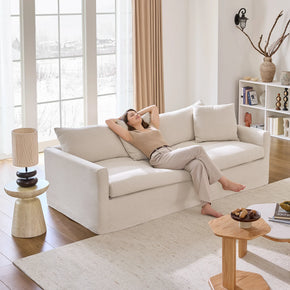
Most people start right here. And why wouldn’t they? A small leather loveseat seats two people and tucks into a studio, a bedroom, or a narrow living room without ever crowding the space. That is exactly why a small leather loveseat for compact living rooms and studio apartments earns its keep, giving you real seating and a polished look without swallowing the little floor space you have. Nothing else on this list asks for less floor space, and you still end up with something clean and grown-up-looking. Craving that footprint in a soft fabric instead? Something like the Nimbus compact sofa shows how a slim two- to three-seat frame can anchor a small room.
2. Leather Apartment Sofa

Stuck choosing between a loveseat and a full couch? A leather apartment sofa meets in the middle. Most sit between 70 and 75 inches wide. Two people fit easily, three at a push, and a walkway stays clear. When a compact living room needs real seating but not the bulk, I steer folks straight to this one.
3. Small Leather Sectional

Have a corner going to waste? A small leather sectional puts it to use. That L-shape settles right into the angle and hands you chaise-style lounging without eating the whole room. Measure before you fall for one, though. A sectional, even a small one, takes more floor space than a loveseat does, so it is happier in an open-plan space than boxed into a tight square.
4. Reclining Leather Loveseat

Is comfort the thing you care about most? Then meet your match. A reclining leather loveseat is made for TV rooms and for couples who like to tip all the way back. And in a tight space, one feature beats the rest: the wall-hugger build. Instead of sliding backward, it glides forward to recline, which closes the gap you would normally leave behind it. That single trick slips a recliner into rooms a standard model could never manage.
5. Leather Sleeper Sofa

One sofa doing two jobs, and no guest room in sight. A leather sleeper sofa is a couch by day and a bed at night. In a studio or one-room apartment, nothing beats it. Today’s models slide open way smoother than those squeaky metal-bar pull-outs, and leather copes with the wear better than fabric on a piece run this hard.
6. Modular Leather Sofa

This one fits you. A modular leather sofa turns up in separate pieces. Slide them around, break them apart, tack on more as your room or your life changes. Renters and people who move a lot adore that, since the sections just tag along to the next place. For the same flexible fabric idea, the Eira L-shaped sofa with ottoman shows how a movable section can switch between sofa and lounge configurations.
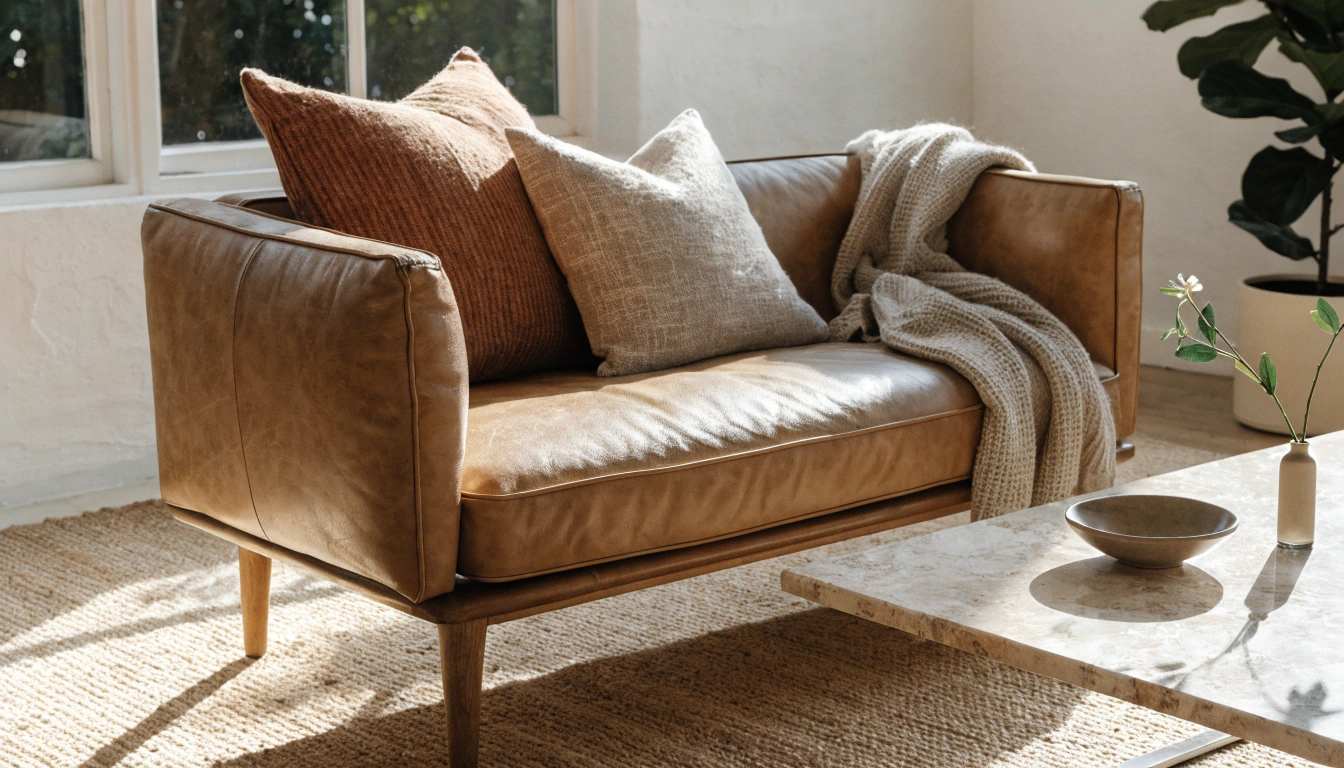
7. Mid-Century Leather Loveseat

Its small-room fame is no accident. Put a mid-century leather loveseat on raised, tapered legs, give it a slim frame, and your eye reads the whole thing as lighter than it is. The base sits open, with more floor space underneath, and the room has room to breathe. Warm brown or caramel leather tops it all off.
8. Compact Chesterfield Leather Sofa

Classic looks in a smaller size. A Chesterfield comes with deep button tufting and those famous rolled arms, and yes, the whole package can feel heavy in a tight room. The answer is a compact version in a lighter tan or cognac. The timeless feel sticks around. The sofa stops ruling the room.
9. Vintage Leather Sofa

Drawn to a sofa that’s lived a little? A vintage leather couch carries patina and character that no new piece can fake, and buying used is the greener move besides. Just put your hands on it first. Run them along the frame, press the cushions, feel the leather, and watch for sag, for cracks, for any musty smell before a cent changes hands. A decent one reupholsters just fine. A frame that is shot, though, sends me straight out the door.
10. Tan Leather Sofa with Boho Layers

Fuss-free and a joy to style. Pile a tan leather sofa with layered rugs, trailing plants, and a heap of bright pillows, and you’ve got that easy, breezy boho thing going. Tan also forgives more than just about any other leather color, so it keeps a small room sunny rather than dragging it down. Renters who switch their textiles often will get plenty of wear out of them.
11. Brown Leather Sofa for Cozy Rooms

After zero fuss? Brown comes through. A brown leather sofa hides scuffs and everyday marks, and it pairs naturally with wood tones and warm decor. Drop it into a small, cozy room, and it reads rich, never cold or bare. And if your place runs on kids, pets, or just nonstop motion, brown takes it all in stride.
12. Sleek Black Leather Sofa

After a little bite? A black leather sofa looks crisp and shrugs off stains, but it’ll dim a small room fast if you let it. So balance it. Light walls, a pale rug, a glint of glass or metal here and there. Sit it next to a Nimbus accent chair in a lighter tone, and the look stays edgy without turning the room into a cave.
13. White or Cream Leather Sofa

Open, fresh, a touch upscale. A white or cream leather sofa throws light around a small room and photographs beautifully. The catch is upkeep. Pale leather picks up marks quicker than dark leather does, full stop. Save it for tidy homes, formal sitting rooms, or anyone who's fine with a quick wipe now and then.
14. Statement-Color Leather Sofa

Bored stiff by neutral? Then leap. A leather sofa in navy, olive, oxblood, or forest green turns the couch into the main event. In a small space, one deep color like that does most of your decorating for you. So keep everything around it quiet, and let the sofa hold center stage.
15. Slim-Arm Leather Sofa

A sly space-saver, this one. Thick arms can swallow a whole foot of seat on each side. A slim-arm leather sofa has that width back to the cushions, so a 72-inch piece feels roomier than the tape suggests. It’s one of the most slept-on tricks for small-room seating.
16. Leather Sofa with Raised Legs

A few sofas just make a room feel airier. A leather sofa on visible legs lets the floor peek through, and that little detail makes the room read as bigger. Cleaning under it is far easier, too. Does the room feel tight? Skip the floor-hugging styles. A raised base truly changes the feel.
17. Two-Seat Leather Sofa with Ottoman

Chasing sectional comfort minus the sectional? Park a compact 2-seater leather sofa beside a leather or fabric ottoman. And there it is, a footrest, a spare seat, and a soft coffee table, all in one move. Push the ottoman aside when you need the floor. The combo lends a modest loveseat the feel of something far bigger.
18. Faux or Vegan Leather Sofa

Trying to spend less? A faux leather sofa skips the real hide, costs less, and still wipes clean in a second. No, it won’t patina the way genuine leather does, but for a first apartment or a low-traffic room, it’s a smart enough buy. You can browse more small-space seating in the small living room furniture range to compare compact frames and finishes.
The 5 Types of Leather for Sofas

If you have been wondering what the 5 types of leather for sofas are, the answer matters because the grade drives how a sofa ages and how long it holds together. Learn the grades, and you sidestep the couch that peels inside two years. Five common types are worth knowing.
- Full-grain leather. This comes from the very top layer of the hide, natural markings and all. The toughest grade out there, and it ages into a rich patina.
- Top-grain leather. Buffed lightly for a smoother, more even surface. Turns up on plenty of quality sofas, where it strikes a fair middle ground between toughness and price.
- Split leather. Pulled from the lower layers of the hide. Less hard-wearing than full or top-grain, so it usually goes on the sides or back.
- Bonded leather. Leather scraps stuck together with glue and binders—the cheapest choice peel and crack, which makes it the weakest pick for the long haul.
- Faux or vegan leather. Not real animal leather at all. Easy on the budget and quick to wipe, though it never ages the way real hide does.
Which Animal Leather Is Used for Sofas?
Most leather sofas are cowhide, and for good reason: it’s large, it’s strong, and it takes daily life without complaint. Buffalo leather shows up here and there in rugged, textured designs. Goat and sheep leather is softer and thinner, so it rarely ends up on a full-size sofa.
Leather Sofa Pros and Cons

A leather sofa costs real money, so it's worth weighing both sides first. Weighing the pros and cons of a leather sofa for small living rooms matters even more when every inch counts and one big purchase sets the tone for the whole space. Here's the plain rundown for a small living room.
Advantages of Leather Sofas
Look after it, and the leather just keeps going, and most spills and crumbs come up with one quick wipe. Pet hair? It brushes right off; none of that clinging that it does on fabric. Then there’s the way it ages, softening into a handsome patina that sits well with almost any decor and looks sharp in a small room. For plenty of homes, that mix of good looks and easy care is the entire reason to buy one.
Disadvantages of Leather Sofas
Leather scratches. It can feel cold in winter and tacky in summer. The good stuff costs more up front, and pale shades show marks sooner. Cheap bonded leather can peel or crack, and even quality hides need conditioning now and then. Sharp-clawed pets or a sun-soaked room? Plan around them.
How to Make a Small Leather Couch More Comfortable

Fresh leather feels a little slick and stiff at first. A few cheap moves loosen it up fast.
Start with a handful of soft throw pillows. Linen, cotton, boucle, velvet, whatever you reach for, they break up that smooth surface. Throw a cozy blanket over one arm, and suddenly the leather feels warm instead of cool. Add an ottoman or a pouf, and a loveseat opens up like something larger. For seat depth, go medium if you sit upright in a tight room, deeper if you're a sprawler. After that, just give it time, because real leather only softens the more you sit on it. A soft seat like theNimbus cushioned couch shows how the right cushion fill changes how a small sofa feels day to day. Stack up a few of these small tweaks, and you make a small leather couch more comfortable without spending much or swapping the sofa at all.
Do Leather Sofas Get Softer Over Time?
Yes, quality leather sofas do get softer over time, and "do leather sofas get softer" has a clear answer once you know the type of leather. Full-grain and top-grain break in as you use them, softening and developing a natural patina over the months. Faux and bonded leather heads, when turned in the opposite direction, are more likely to wear or crack than to soften. And don't forget the cushion fill in all this, since foam, down, and springs each have a say in how it feels.
How to Style a Small Leather Sofa

What keeps a leather couch from feeling heavy in a small room is the styling around it. A few simple calls do most of the work.
Roll out a light or patterned rug under it. That balances dark leather and gives the seating something to sit on. Keep the coffee table slim, round, or oval, so you’re not squeezing past corners. Instead of a second sofa, try a single accent chair, and the layout holds onto its breathing room. Light it with floor lamps or wall sconces, warmth that costs you no surface space. Two or three main colors are plenty, and once the room feels calm, you can layer in texture, baskets, wood, and a few plants. A clean-lined piece from the Sicotas collection can tie the whole small-space look together.
Leather Sofa Care and Maintenance
A little steady care keeps leather looking good for years. It also answers a few questions buyers keep raising.
What Is the Cream for Leather Couches?
Leather couch cream is really just a conditioner or a balm. What it does is push moisture back into the hide, resist dryness, and prevent cracking before it starts. Use one meant for furniture leather, and test it on a spot no one sees first. No exceptions there. Reach for a water-based, pH-balanced conditioner over anything heavy or waxy, and work in a thin coat every three to six months, more often if you run the heat hard in winter.
What Softens Leather Fast?
For dry leather, a leather-safe conditioner is the safest way to restore it. Skip the cooking oils, the heat, the DIY hacks you read about, any of them can stain the surface or wreck the finish for good. Slow and gentle win this one. Massage the conditioner in with a soft cloth using small circles, let it soak for an hour, then buff off the excess, and repeat once more on badly parched spots rather than piling on one thick layer.
How Long Do Leather Sofas Last?
Treat a good leather sofa right, and it'll give you years. Full-grain and top-grain tend to outlast bonded or low-grade faux by a wide margin. Condition it twice a year, keep it out of direct sun, and that small effort pays off. To stretch the life of a smaller leather sofa, set it at least a couple of feet from radiators and vents, rotate the loose cushions every few weeks so one seat does not wear faster, and blot spills the moment they happen instead of letting them sink in.
Final Takeaway: Choosing Your Small Leather Sofa
The best small leather sofa is just the one that suits your room, your comfort, and how you actually live. In a compact living room, that means slim arms, raised legs, a leather type you can live with, and a width that protects your walking space. When durability is the priority, reach for top-grain or full-grain. Match the color to your light. Then soften the seat with a couple of pillows and a throw. Get those basics right, and a small leather couch turns into the piece that pulls the whole room together.
FAQs
What are the 5 types of leather for sofas?
Five of them turn up most:
- Full-grain, the toughest of the lot, ages into a patina.
- Top-grain, smoother underhand, and the usual pick on quality sofas.
- Split leather, taken from the lower layers of the hide, is less hard-wearing.
- Bonded, glued together from scraps, which is why it peels.
- Faux or vegan, which isn’t real animal leather at all.
How to make a small leather couch more comfortable?
A handful of easy moves do it:
- Throw on some soft pillows and a cozy blanket.
- Bring in an ottoman or pouf for a footrest and an extra seat.
- Pick a seat depth that matches how you sit, then let the leather break in over time.
What are the advantages and disadvantages of a leather sofa?
On the plus side, leather is sturdy, it looks sharp, it wipes down fast, and pet hair doesn’t cling to it. Against that, it costs more, it scratches, it reacts to heat and cold, and it needs conditioning every so often.
How long do leather sofas last?
Cared for properly, a quality leather sofa lasts for many years, often past a decade. Full-grain and top-grain usually last a good deal longer than bonded or low-quality faux leather.
What are the 4 types of leather?
The four main grades are full-grain, top-grain, split, and bonded. Faux leather is a common sofa choice as well, though it isn’t real animal leather.
Which animal leather is used for sofas?
Cowhide, mostly, because it’s strong, large, and built to last. Buffalo leather also shows up, usually in rugged, textured designs.
Do leather sofas get softer?
They do. Full-grain and top-grain leather soften and develop a natural patina the more you use them. Faux and bonded usually won’t.
What is the cream for leather couches?
It goes by a few names: leather conditioner, balm, or cream. Whatever you call it, it keeps the hide moisturized and helps fend off dryness and cracking.
What softens leather fast?
A leather-safe conditioner will soften dry leather. Keep heat, cooking oils, and harsh chemicals well away, as they can ruin or stain the finish.
Sources
- Leather Working Group – About Leather and Leather Types
- Architectural Digest – The Best Leather Sofas, Tested and Reviewed
- MyDomaine – Living Rooms That Make the Case for a Leather Sofa
- HGTV – How to Clean, Condition, and Protect Leather
- Real Simple – How to Choose a Sofa for a Small Space
- Britannica – Leather: Tanning and Hides
- Houzz – Small Living Room Layout Ideas


Looking for something else?

Burl Wood Furniture: The Complete Buying Guide
LEARN MORE
What Is a Hope Chest? Meaning, History, and Modern Uses
LEARN MORE
What Is a Foyer? Meaning, Purpose and Design Guide
LEARN MORE
GREENGUARD Gold Certified Furniture: What It Really Means for Your Home
LEARN MORELooking for something else?

How to Clean a Mirror Without Streaks: Simple Step-by-Step Guide
LEARN MORE
21 Above-Bed Decor Ideas for a Stylish Bedroom Wall
LEARN MORE
Furniture Materials Guide: Picking the Right Material Room by Room
LEARN MORE


Further reading

18 Decorative Storage Box Ideas That Hide Clutter Well

How to Store Comforters Without Losing Space or Loft


