
















How to Choose the Perfect Bath Rug: Size, Material, and Fit for Every Bathroom (2026)
A bath rug is the smallest thing in a bathroom, but it has the biggest daily job. It catches drips. It warms cold tile. It steadies that first wet step out of the shower. The safety angle is real, too, since the CDC counted about 234,000 bathroom injuries in a single year, and most of those were falls near the tub or shower. The right rug quietly helps with all of it. Choosing the perfect bath rug really comes down to five calls. Work through them in order and the rest falls into place.
- Size: Match the rug to the fixture and the floor space it needs to cover.
- Material: Pick one that dries fast and holds up to daily splashes.
- Non-slip backing: Check for rubber or latex grip that keeps the rug planted on wet tile.
- Placement: Put each rug where the water actually lands, from the shower exit to the vanity.
- Care: Know the wash routine before you buy, so upkeep stays simple.
Each one gets a plain breakdown below, so the rug you buy is the one you keep.
Bath Rug vs. Bath Mat: What Is the Difference?

The two terms get swapped all day, and they are not quite the same thing. The bath mat vs bath rug question really comes down to one split: a mat is built for function, while a rug is built for looks. A bath mat works. It parks right where you step out, drinks water fast, and usually carries a rubber or latex non-slip backing. A bath rug decorates. Bigger, softer, picked for looks as much as function. Plenty of rooms run both, and abathroom storage collection rounds out the refresh with cabinets that keep towels close at hand. Figure out which job you are hiring for before you shop. Wet-zone duty calls for a mat, comfort and style lean toward a rug.
Get the Bath Rug Size Right First

Whether a rug works or just gets underfoot depends on size. Measure the open floor before anything else. Then check the door swing, because a rug that blocks the door gets kicked around forever. Standard bath mat sizes match the fixtures they serve, which makes the pick easier than it sounds.
The chart below breaks down the most common bath rug sizes so you can match one to your layout at a glance.
|
Rug Size |
Best Spot |
|
17 x 24 inches |
Half baths, by the toilet or a narrow sink |
|
20 x 30 inches |
A standard tub or a single shower |
|
21 x 34 inches |
The usual pick besides a standard bathtub |
|
24 x 36 inches |
Walk-in showers and bigger bathrooms |
|
24 x 60 inch runner |
A double vanity or a long counter |
|
Round, 24 to 30 inches |
A pedestal sink or a tight corner |
Keep one habit either way: a few inches of bare floor around the rug. The border reads as planned, and wet edges get somewhere to dry.
Pick a Bath Rug Material That Loves Water

The best bath mat material comes down to three things: how a rug feels, how fast it dries, and how long it lasts. Each of the main players has its own personality.
Cotton
The classic, and for a reason. Soft, very absorbent, and simple to machine wash. The catch is drying time, since cotton takes longer than synthetics and wants real airflow. For daily traffic, a tight loop or tufted cotton bath mat holds up well.
Microfiber and Chenille
Both synthetics pull water fast and dry in a hurry. Chenille brings that plush, noodle-soft feel underfoot. Light, budget-friendly, easy to throw in the wash. Lifespan is the trade, since neither lasts as long as dense cotton.
Memory Foam

Nothing cushions like a memory foam bath mat, and tired feet notice right away. That plush feel earns its spot at the vanity, where you stand for a few minutes brushing or getting ready and stay mostly dry. A memory foam bath mat struggles right at the tub or shower exit, though. The dense foam holds water instead of drying fast, so in a soaking-wet zone it stays damp underfoot and takes longer to air out. Keep it where the floor sees light splashes, not standing puddles. The foam core retains moisture longer and cannot withstand high heat in a dryer. Park it at the vanity, not the splash zone.
Bamboo and Teak
Wood mats flip the formula. Water runs straight through the slats; nothing soaks in, and mildew has nowhere to live. The feel is spa-like and firm. Pair one with a soft rug elsewhere, and you get the best of both.
Check Absorbency and Drying Speed

A great bath mat does two things in order. It pulls water off your feet, then lets it go. Thick, dense pile soaks up the most. On the release side, quick-dry weaves win. Buyers underrate drying speed, and a rug that sits damp is an open door to mildew. The EPA calls moisture control the key to stopping mold. A sniff test will not save you here. A mat that never fully dries between showers is the wrong mat for that spot. After heavy use, hang it over the edge of the tub, and it will last much longer.
The Non-Slip Backing Is Not Optional

Before you buy, flip the rug over. On wet tile, a rubber or latex non-slip backing is what keeps the rug, and you, planted. A true non-slip bath mat grips the floor instead of sliding when wet, which is the whole point in a room full of hard surfaces. TheNational Institute on Aging lists non-slip mats among its top bathroom fixes for preventing falls at home. The advice is not just for older adults, either. Every few months, take another look at the backing. Flaking rubber or bald patches mean the grip is gone, and the rug is done. Larger decorative pieces without their own backing can ride on a rug pad instead.
Plan Placement Around Your Wet Zones

Here's the section with "bathroom rug placement" introduced and the tips broken into short scannable lines:
Bathroom rug placement gets simple once you follow the water. Each rug answers to a wet zone, so start there and the layout sorts itself.
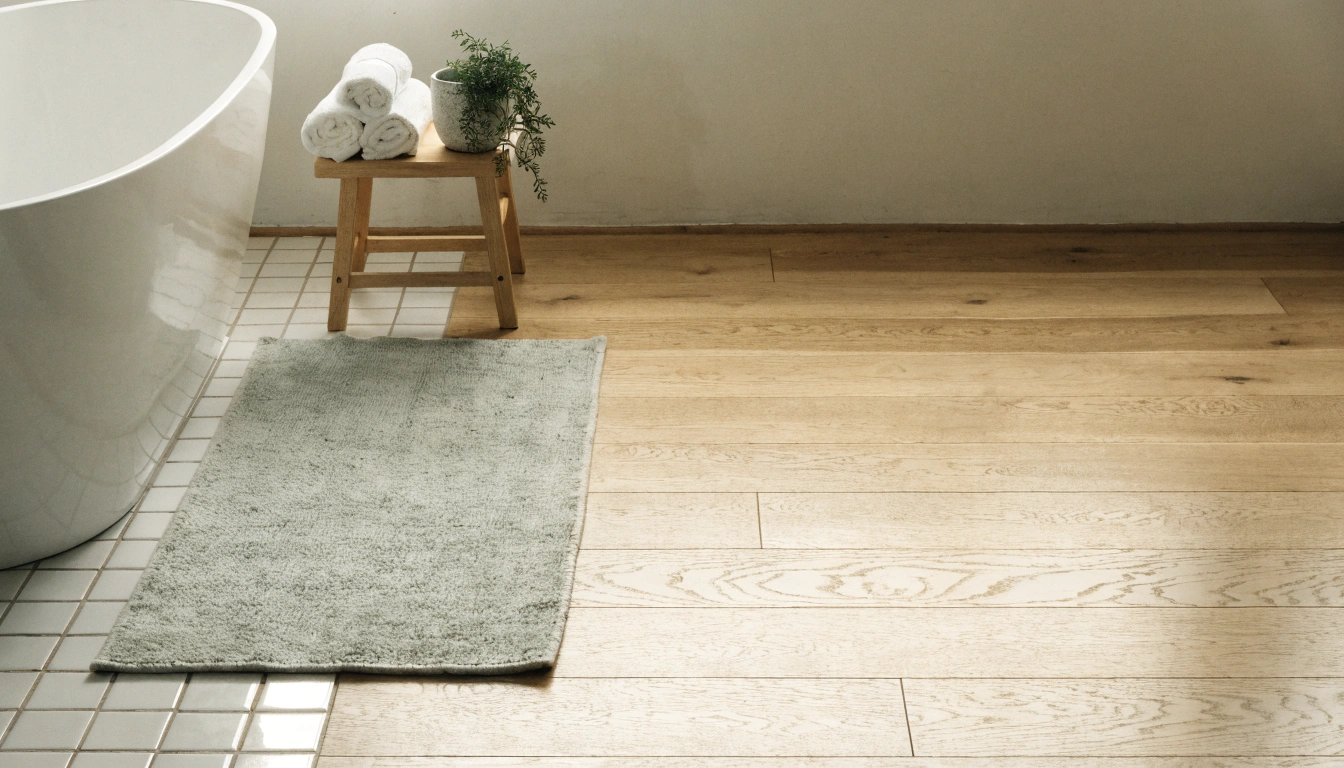
- Shower exit: Rug one goes where you step out of the tub or shower, long side parallel to it.
- Vanity: Rug two covers the sink, since avanity cabinet with sink and storage zone catches drips from washing and brushing all day long.
- Toilet: A contour mat handles coverage around the base if you want it.
- Runner: A single runner ties the walkway together in a long bathroom.
Two things to check before you commit. The door needs to swing freely, and heat vents need air, so plan around both.
Match the Style to the Rest of Your Home

A mostly white room gets color fastest from a bath rug. The 2026 palettes lean warm: soft sage, muted terracotta, warm neutrals, and wood tones flatter all three. An en-suite looks sharpest when borrowing from the bedroom furniture collection it connects to, so the two rooms read as one suite. Texture is style here, too. A chunky loop leans boho; a flat weave stays modern. One accent color, repeated in the towels, finishes the job.
How Many Bath Rugs Do You Need?

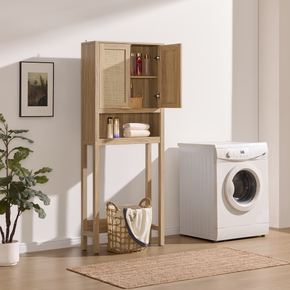
Two is the number for most bathrooms. One mat is on wet-zone duty by the tub—one rug at the vanity. A single 17 x 24 covers a half bath fine. Veterans buy a spare set, since rugs rotate out on wash day. A Savanna over-the-toilet space saver holds the clean set folded above the tank, ready when wash day comes. With the past two rugs, a small room starts to feel carpeted. Some floor should stay bare.
How to Wash Bath Rugs and Keep Everyday Care Simple

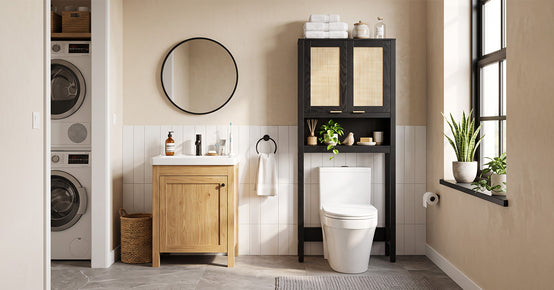
Bath rugs live hard lives. A simple routine keeps them fresh anyway. Every one to two weeks, machine wash on gentle in cool or warm water. Two things stay out of that load: fabric softener, which coats the fibers and kills absorbency, and bleach, which eats rubber backing. High dryer heat cracks latex too, which is why backed mats air-dry flat or over a rail. On the days in between, shake it out and hang it after a steamy shower. A Savanna 2-door over-the-toilet organizer parks the backup towels and the rug rotation behind closed doors, and swapping takes ten seconds flat.
Common Bath Rug Mistakes to Avoid

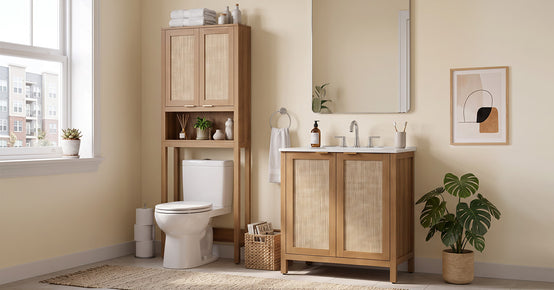
Almost every bathroom repeats the same few missteps. Several trace back to storage, and anover-the-toilet storage cabinet answers the where-do-spares-live question for good. The usual suspects:
- Buying first and measuring the floor and door swing later.
- Passing on the non-slip backing to save a little.
- Letting looks beat absorbency at the shower exit.
- Stretching one rug across three separate wet zones.
- Adding fabric softener, or bleaching the backing.
- Sending rubber-backed mats through a hot dryer.
- Letting a soaked mat sit flat on the floor for days.
Final Takeaway
Five small calls are made in order, and the perfect bath rug is chosen. Size matches the fixture and the floor. Material follows the spot, absorbent where you step out, cushy at the vanity. The non-slip backing is the one non-negotiable. Rugs go where water actually lands. Wash often; dry fully. Land those, and the humble bath mat quietly upgrades every morning after.
FAQs
What size bath rug should I buy?
Let the fixture pick the size:
- A standard bathtub takes 21 x 34 inches.
- A walk-in shower fits 24 x 36 inches.
- For a double vanity, go with a 24-by-60-inch runner.
What is the difference between a bath mat and a bath rug?
Function first, that is a bath mat. Its post is the tub or shower exit, where it absorbs water fast and grips the floor with a rubber backing. A bath rug goes bigger and leans toward decorative, warming up the rest of the room with color. Many bathrooms keep one of each.
What is the best material for a bath rug?
At the shower exit, cotton wins out for absorbency and ease of washing: faster drying and a plush feel come from microfiber and chenille. Memory foam owns the comfort spot at the vanity. Bamboo or teak suits anyone who wants a mat that never holds water.
How often should you wash bath rugs?
Mildew loses to a steady schedule:
- Mats in daily use are washed every 1 to 2 weeks.
- Cool or warm water, gentle cycle.
- Rubber or latex backing means air-dry, always.
Can you use a regular rug in the bathroom?
You can, within reason. Set it well back from the splash zone, put a non-slip rug pad under it, and stick with a washable weave. Wool and viscose have a hard time in damp rooms. Near the tub, a true bath rug or mat is still the safer call.
What type of bath mat is most hygienic?
The most hygienic mat is a quick-dry one, since bacteria and mildew both need moisture that hangs around. Water rolls straight off bamboo and teak. Among fabrics, a machine-washable microfiber or flat-weave cotton mat, washed weekly and dried completely, is hard to beat.
Sources
- Centers for Disease Control and Prevention – Nonfatal Bathroom Injuries Among Persons Aged 15 Years and Older
- National Institute on Aging – Preventing Falls at Home: Room by Room
- U.S. Environmental Protection Agency – A Brief Guide to Mold, Moisture and Your Home
- MasterClass – How to Use Scale and Proportion for Better Interior Design
- VDCI – Design Principles: Harmony, Scale, Proportion, Balance, Rhythm
- Utah State University Extension – Cleaning, Repairing, and Reconditioning Wood Furniture


Looking for something else?

Burl Wood Furniture: The Complete Buying Guide
LEARN MORE
What Is a Hope Chest? Meaning, History, and Modern Uses
LEARN MORE
What Is a Foyer? Meaning, Purpose and Design Guide
LEARN MORE
GREENGUARD Gold Certified Furniture: What It Really Means for Your Home
LEARN MORELooking for something else?

How to Clean a Mirror Without Streaks: Simple Step-by-Step Guide
LEARN MORE
21 Above-Bed Decor Ideas for a Stylish Bedroom Wall
LEARN MORE
Furniture Materials Guide: Picking the Right Material Room by Room
LEARN MORE


Further reading

18 Decorative Storage Box Ideas That Hide Clutter Well

How to Store Comforters Without Losing Space or Loft


