




17 Retro 80s Bedroom Ideas for a Bold, Nostalgic Makeover
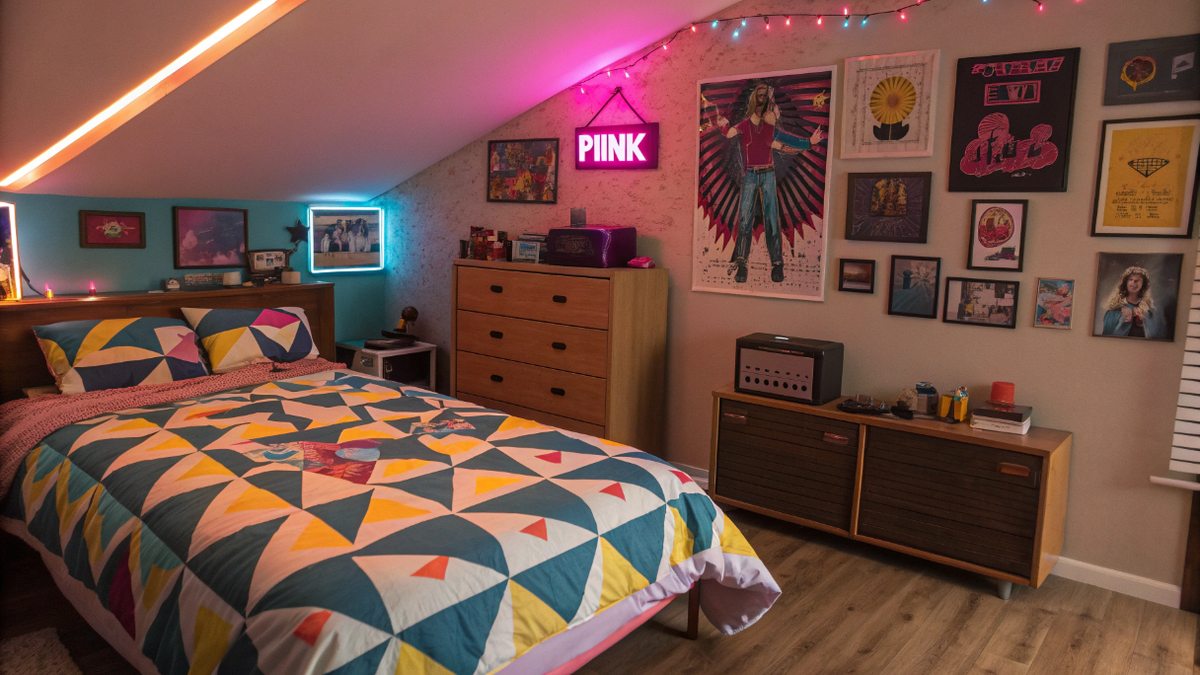
The 1980s bedroom was not subtle. Every wall had something on it. Every flat surface had something stacked on it. Colors were chosen the way arguments were settled — loudly and without apology. Neon signs. Cassette towers. Posters overlapping posters. A boombox that weighed approximately as much as a medium-sized dog. And somehow, against all reasonable expectations, it worked. Rooms that looked genuinely alive rather than carefully arranged. That energy is what people are after when they search for retro 80s bedroom ideas in 2026 — not a historical recreation, but the feeling. Bold, personal, layered, and unafraid of color.
These 17 ideas cover the full range of 80s directions. Some are cheap. Some take an afternoon. Pick the ones that match your version of the decade.
What Makes a Retro 80s Bedroom Different?
The 80s Was Not One Single Look
Most people imagine neon and arcade games when they think of an 80s bedroom. That's one version. The actual decade had more going on: soft pastels and Laura Ashley florals, brown wood paneling and warm lamps, preppy red-and-green collegiate style, Miami-influenced tropical prints, Memphis Design's angular geometric forms. Each of those is a legitimate 80s bedroom — they just look nothing alike. Before buying anything, decide which one you're going for.
The Goal Is Nostalgia With Comfort
A retro 80s bedroom should feel lived-in and personal, not like a film set that gets locked up between shoots. The best versions of this aesthetic mix era-specific decor — neon signs, band posters, cassette displays — with genuinely good bedding and furniture that actually works for sleeping and storage. The decade was maximalist. It was not uncomfortable. Getting both of those things right at the same time is where most 80s room attempts either succeed or turn into a cluttered mess you stop noticing after a week.
1. Choose Your 80s Direction

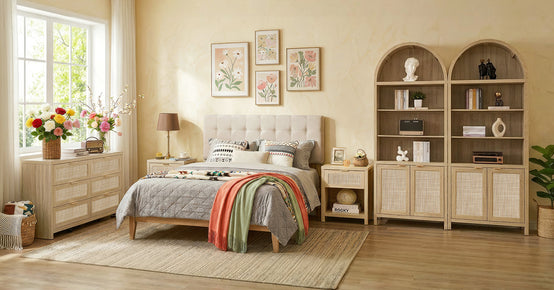
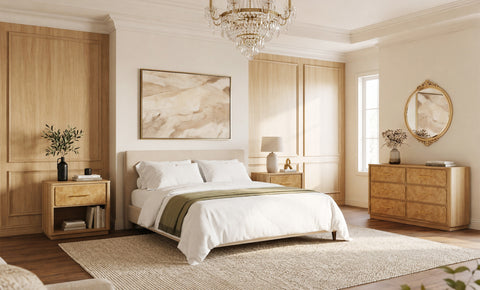
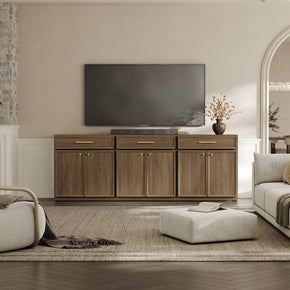
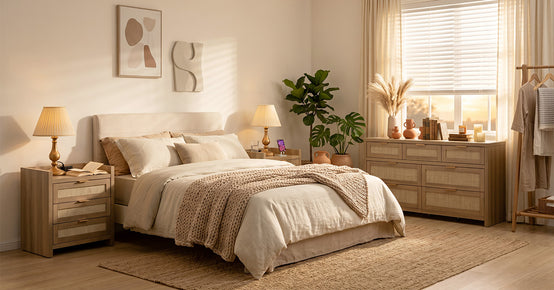
This is the step everyone skips, and almost everyone regrets. The 80s weren'ta single look — there were at least four running simultaneously, and they don't mix well without a plan. Neon arcade: electric blue, hot pink, black, glowing signs, gaming energy. Memphis design: bold geometric shapes, clashing colors, asymmetry, and triangles placed aggressively. Soft pastel: lavender, mauve, peach, mint, floral prints, Laura Ashley on every surface. Vintage brown: wood paneling, warm lamp light, rust-orange carpet, mismatched hand-me-down furniture. Pick one. Seriously — pick before you buy the first piece. A room that mixes all four without intent looks like a costume shop rather than a bedroom. The Sicotas bedroom furniture rangeserves as a clean backdrop for whichever direction you choose — warm wood finishes that don't fight the 80s decor layered on top; they just support it.
2. Go Bold With the Color Palette

Here's where most retro bedroom attempts fail: one bold color surrounded by cautious neutral. That's not the 80s. The whole point of the decade's color sensibility was tension. Colors that pressed against each other. Hot pink beside electric blue. Lavender beside forest green. Teal against salmon. Mauve beside black. You need at least two strong colors, and they should be arguing slightly rather than agreeing. Neon arcade direction: hot pink, electric blue, black, white. Memphis design: coral, cobalt, mustard, black. Soft pastel: lavender, peach, mint, dusty rose. Vintage brown: warm caramel, rust, orange, avocado. Each of these sounds wrong when listed. Each one works in an actual room. Trust the decade.
3. Paint a Color Block Accent Wall

One of the most effective — and reversible — retro 80s bedroom upgrades is a color block wall. Geometric sections of two or three different colors in hard-edged blocks or diagonal stripes. No specialist required. Painter's tape and two cans of paint, one afternoon. The most reliably 80s-looking approach: a horizontal block of teal, coral, or violet at roughly two-thirds wall height, leaving the upper third a lighter complementary tone, then a geometric shape — triangle, circle, diamond — in a third color somewhere it doesn't expect to be. Emily Henderson Design used exactly this technique for a client's daughter's room: a hand-painted color block mural in purple, peach, and pink. Three hours of work. Looked like a set piece from a decade that actually meant it.
4. Get the Dresser Right

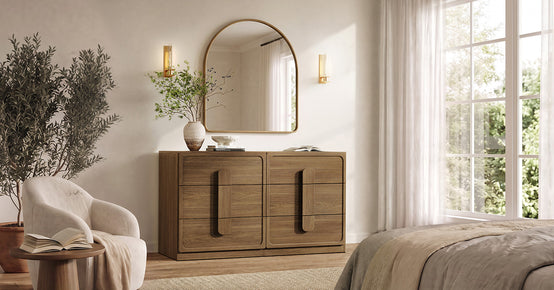
The dresser in an 80s bedroom was not background furniture. It had presence. It had things on top of it. A boombox. A cassette holder. A Rubik's Cube mid-solve. The piece itself tended to be substantial — built for the volume of a bedroom that collected things. In a retro bedroom in 2026, the dresser earns its place by offering both the storage capacity to hold the actual clothes and the top surface to support the 80s-style display you're going to build on it. The Zura 9-drawer modular dresser handles this on both counts: nine drawers give you real depth rather than the cosmetic drawer count on cheaper pieces, and the wide top surface carries a layered vintage display — cassette tower, framed print leaned against the wall, a lava lamp — without looking crowded. Put it on the main wall. Stack something above it. Let it be seen.
5. Cover the Walls With Posters

Not one poster. Not three posters nicely framed and spaced at equal intervals. Posters plural, overlapping, at slightly inconsistent angles, the way an actual 16-year-old in 1984 would have done it, because the tape ran out before the wall was actually covered. The 1980s teenager's bedroom wall had band art, movie reprints, sports legends, car imagery — specifically a Lamborghini Countach at some point, that was basically federal law — and whatever else resonated enough to earn wall space. The modern approach: mix four or five framed prints with two or three loose poster-sized pieces pinned directly. The irregular mix of framed and unframed is what makes it look 80s rather than gallery. The Spruce identifies Memphis Design, band posters, and clashing patterns as the most immediately recognizable 80s wall references. Five pieces minimum per wall.
6. Install a Neon Sign

Neon was the decade's signature light source in a way that fluorescent and incandescent never were. Above the bed. Around a mirror. In a shop-window frame on the bedroom wall. The real thing — glass tube neon — is expensive and runs warm. LED neon is the practical version: same visual result, fraction of the cost, runs cool, and every color and script style available. What makes a neon sign read as 80s rather than generic: script rather than block letters, hot pink or electric blue rather than white, and a phrase that means something personal rather than a stock motivational word. A name. A year. A lyric from something that mattered. The neon sign is one of the few 80s elements that also reads as current — it appears in well-designed modern rooms constantly, which means you get the retro reference without the room looking like a theme exhibit.
7. Add a Second Dresser for Display

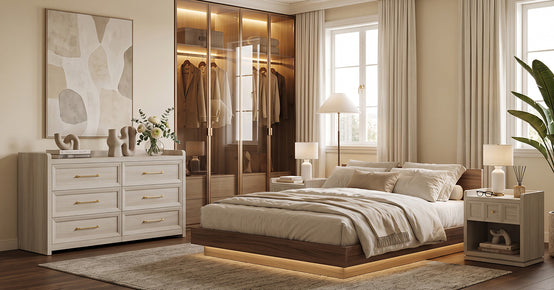
Here's something the 80s bedroom understood that minimal modern design forgot: not every piece of furniture has to justify its existence by being invisible. A second dresser in a bedroom isn't excess — it's both storage and display. The top serves as a working surface for the cassette display, the lava lamp, and the framed poster leaning casually against the wall. The drawers handle the actual organization underneath. The Cas 6-drawer bedroom dresser has the surface area for this kind of layered styling — wide enough to carry a real 80s-style vignette without looking cluttered, with six drawers that actually organize rather than filling the visual requirement. Style the top deliberately: a small CRT-style speaker, a cassette holder with tapes visible, and one object of personal significance. The visible surface becomes the 80s story. The drawers handle the boring part.
8. Bring in Geometric Patterns

Memphis design — the Italian postmodern movement that defined 80s visual culture — was constructed from geometric shapes used at maximum confidence. Squiggles. Triangles. Checkers. Polka dots at three different scales. Color-saturated forms overlap without any of them matching. In a retro 80s bedroom, the practical version of this is three things: one geometric-patterned duvet or bedspread, one geometric area rug, and one geometric throw pillow or a pair of throw pillows. Different scales. Different colorways that share at least one color from the 80s palette you chose in idea one. Three geometric elements are enough. More than three, and the room reads as confused rather than committed. Less than one, and the Memphis design reference doesn't register at all. The pattern is the signature. Use it deliberately.
9. Layer Mismatched Bedding

The 80s did not match its bedding. This wasn't a mistake or a budget limitation — it was the decade's philosophy applied to textiles. A duvet in one pattern. Pillowcases in another. Fitted sheet in a third. A throw blanket from a completely different design universe draped across the foot. Pick a bold patterned duvet in the 80s color family you've chosen — lavender florals for the soft pastel approach, neon geometric for the arcade approach — then add pillowcases in a solid pulled from the duvet print, then a throw in a contrasting tone. The bed should look full, layered, and slightly improbable. A bed that perfectly matches a retro 80s bedroom is the wrong move. Perfect matching is what the 90s reaction against the 80s looked like. Don't do the reaction.
10. Use Mirrored and Chrome Accents

The 80s loved a reflective surface in a way no other decade quite matched. Mirrored wardrobe doors. Chrome lamp bases. Lacquered furniture with a high-gloss finish that caught every light source in the room and threw it back amplified. In a retro bedroom, you don't need a mirrored wardrobe (though it works if you have one). What you need: one large mirror with a distinctive frame — octagonal gilt, black geometric, sunburst — positioned to catch the neon sign or the window light. One chrome or metallic lamp on each side of the bed. One glossy or lacquered surface somewhere — a small side table in high-gloss black, a mirrored vanity tray. The reflective pieces amplify whatever bold color is in the room. They're why 80s bedrooms always looked lit differently from every other room in the house.
11. Upgrade the Nightstand

In an 80s bedroom, the nightstand worked hard. It held a clock radio with red LED numbers visible from across the room. A phone with a curly cord. A lamp with a base interesting enough to be worth looking at. Whatever book or magazine was currently being read, plus the one that hadn't been started yet. A glass, probably a cassette case, and three other things that were there because they'd been there for a while. The modern equivalent needs the same work surface, along with actual drawer storage for cables and charging accessories,that the 80s clock radio didn't have to compete with. The Savanna 3-drawer bedside table has a built-in charging station — the one functional upgrade an 80s nightstand couldn't offer — alongside three drawers that keep the surface clear while everything necessary stays accessible. Put a bold-based lamp on it. A small display object beside it. The cassette-or-vinyl-sleeve display that tells the room which decade it's operating in.
12. Add Floral Prints or Palm Motifs

The neon-arcade version of the 80s gets most of the attention. It's the one that shows up in Stranger Things sets and nostalgia marketing. But it was only one side of the decade. Simultaneously, Laura Ashley floral prints were in millions of bedrooms: all-over bloom patterns on curtains, bedspreads, wallpaper, and upholstered headboards. Pink and green. Peach and sage. Dusty rose and cream. And by the mid-80s, palm trees and tropical motifs were everywhere — partly Miami Vice, partly the general 1980s fascination with anything that felt like an escape from the actual weather. Living Spaces specifically calls out palm motifs as one of the key 80s trends making a strong comeback in current bedroom design. For the softer retro direction: one large floral-print element plus a palm-motif throw. You don't need both. You don't need either to be expensive.
13. Display Retro Tech as Decor

You don't need a working CRT TV. You don't need a functional cassette player. The objects work as decor, even completely silent. A boombox on the dresser with a cassette visible in the window. A stack of VHS cases on a shelf, cases facing outward. A Rubik's Cube frozen at a particular stage of solving, suggesting someone walked away from it years ago and hasn't come back. A vintage clock radio with a red LED display. The cassette holder has actual 80s-era tape labels visible. These are the detail objects that make a room read as 80s to everyone who grew up in the decade, and, interestingly, analog and physically real to everyone who didn't. Source them from thrift stores and garage sales. Most cost almost nothing. The power is in the accumulation of details, not in any single piece.
14. Use the Wardrobe as a Design Element

The wardrobe was never background furniture in the 80s bedroom. Mirrored sliding doors were everywhere. Dark wood finishes with brass-tone hardware. The wardrobe occupied a full wall, and it made a statement whether it tried to or not. In a retro bedroom, the wardrobe should contribute rather than disappear. Lean a framed poster against its side. Use the top surface for oversized display objects — a large vintage speaker, a stack of hat boxes in a bold color. Let the doors be part of the color story: if the wardrobe is wood-toned, it anchors the warm palette. If it has mirrored doors, it amplifies the neon. The Savanna 71-inch wardrobe closet brings the vertical scale the 80s wardrobe had — 71 inches of height that fills the wall the way the decade's furniture did — in a warm, natural wood finish that anchors the room without fighting whatever bold elements are layered around it. Use the surface above the wardrobe doors. That dead space at the top is where the oversized vintage poster goes.
15. Add a Bean Bag Chair or Papasan

Both of these seating types were everywhere in 80s bedrooms. The bean bag for a specific reason: it was the only piece of furniture that could accommodate a three-hour gaming session at the correct distance from the television without your back staging a protest. You sank into it. Getting out of it required a different kind of effort. The papasan was the exotic alternative — a bowl-shaped cushion on a rattan base, the kind of seat that appeared in bedrooms that considered themselves slightly more sophisticated while still being teenagers' rooms. Either one adds the right casual energy. The bean bag goes in a corner near a low shelf with the gaming console display. The papasan goes near the window with a throw and a stack of magazines from the era. Both can be sourced at thrift stores for almost nothing, which is where most 80s bedrooms acquired theirs in the first place.
16. Add a Tall Shelf for Display

The 80s bedroom displayed its occupant. That's the phrase worth holding onto. Not styled vignettes. Not curated collections. The actual contents of a specific person's life, arranged on visible shelves: records and cassette towers and sports trophies alongside school photos and action figures and whatever else had accumulated by last Tuesday. A tall bookcase wall in a retro bedroom gives you the vertical surface for this kind of layered, personal display.
The Willow 75-inch bookshelf uses the full wall height, as 80s shelving did — tall enough to draw the eye upward, with enough tiers to mix books, display objects, and practical storage. Style it with deliberate asymmetry: books on one shelf, objects on the next, a larger piece on the bottom — the record player, the boombox, the vintage console. The slight disorder is the point. A perfectly symmetrical bookshelf reads as 2024. An asymmetric, one-layered arrangement with personal objects reads as the decade you're actually going for.
17. Balance the Retro Without Losing the Room

The most common mistake in a retro 80s bedroom in 2026 is trying to do it all at once. Neon arcade AND Memphis design AND Laura Ashley florals AND brown wood paneling AND mirrored surfaces AND Southwestern rugs. The result is a room that reads as a theme restaurant rather than a bedroom someone actually lives in. Pick one direction from idea one. Build the palette around that choice. Add three or four strong elements — the poster wall, the neon sign, the geometric bedding, the dresser display — and then stop.
Leave the ceiling alone. Leave the built-in architecture alone unless it naturally supports the theme. A single neon sign and one color-blocked wall read as a deliberate retro 80s bedroom. Fifteen references from four different 80s sub-styles read as a room nobody finished thinking about. The decade was maximalist. Your approach doesn't have to be.
FAQs
How do I make my room look 80s?
Start with one specific 80s direction — neon arcade, Memphis design, soft pastel, or vintage brown — and build the room around that single choice rather than trying to represent every 80s reference simultaneously. Add bold color through a wall treatment or the bedding. Cover the walls with posters in volume rather than spacing them carefully. Bring in one or two retro tech objects as display pieces rather than buying all of them. Add a neon sign or a bold lamp for the decade's characteristic light. The room's 80s character comes from three or four strong elements in a consistent direction, not from attempting a complete historical recreation.
What did bedrooms look like in the 1980s?
They varied significantly depending on whose bedroom it was and what year of the decade you're looking at. A mid-80s teenager's room typically had posters covering most of the available wall space, mismatched bedding in bold or pastel colors, wood furniture that was probably slightly too large for the room, a cassette player or boombox, and a flat surface with too many things on it. More aspirational 80s bedrooms leaned toward mirrored surfaces, chrome accents, lacquered furniture, pastel palettes, and the all-over floral or geometric prints that now read immediately as the era. Both versions shared one quality: empty space was not a design goal anyone was pursuing.
What is retro style in interior design?
Retro style uses design elements from a specific past decade deliberately rather than accidentally. In a bedroom context, 80s retro means choosing the color palettes, furniture shapes, graphic patterns, and decorative objects associated with the 1980s and using them in a room that's clearly built around that reference. Memphis design is the most formally named 80s interior style — geometric shapes, clashing colors, postmodern asymmetry — but 80s retro bedroom equally refers to the decade's pastel softness, neon maximalism, warm brown nostalgia, or preppy athletic direction. Retro style works when it references one specific aspect of the decade clearly, rather than sampling from all of them without an organizing principle.
How can I recreate an 80s look?
Choose a specific 80s palette and apply it somewhere with commitment — a color-blocked wall, a bold bedspread, both. Cover the walls with posters in volume rather than treating each one as a framed gallery piece. Add one retro tech object on a dresser or shelf as a display piece rather than a functional item. Use geometric or floral-patterned bedding depending on which sub-style you're working from. Add a neon or colorful lamp. Source thrifted wood furniture or mirrored accessories for period authenticity without high cost. The most important single decision is the palette — the right two or three colors do more work than any individual purchase.
What is a classic 80s outfit?
A classic 80s outfit included denim jackets, high-waisted jeans, bright windbreakers, oversized sweatshirts with raw-edge collars, leg warmers worn over jeans, shoulder pads in everything, bold neon accessories, and chunky sneakers. For bedroom design purposes, the color sensibility of 80s fashion translates directly into room palettes and bedding choices — the same electric blue, hot pink, and acid yellow that appeared on windbreakers and tracksuits appear in neon signs, geometric bedspreads, and color-block walls. The fashion and interior design of the decade were drawing from the same cultural energy.
What are the 2026 bedroom trends?
2026 bedroom trends include warmer palettes; color-drenched rooms where walls, bedding, and upholstery share a single saturated color family; cocoon-like spaces that prioritize enclosure and comfort over open minimalism; and analog design choices that push back against screens-on-every-surface aesthetics. These trends align surprisingly well with retro 80s bedroom principles. The decade's warmth, layering, personality, and comfort-through-excess sit in the same design conversation as 2026's focus on bedrooms that feel personal, immersive, and visually committed to something. The timing is not coincidental.
What is the 1980s style called?
The 1980s had several design styles running simultaneously. Memphis design is the most formally named — an Italian postmodern movement founded by Ettore Sottsass in Milan, characterized by bold geometric shapes, clashing colors, and deliberate asymmetry. More broadly, 80s interior design gets described as postmodern, maximalist, 80s retro, or simply 80s aesthetic. The decade also included Art Deco revival, Southwestern themes, nautical decor, the preppy yuppie aesthetic, and the Laura Ashley floral direction — all operating at the same time, often in the same suburb, occasionally in adjacent bedrooms.
What is the 3-5-7 rule in interior design?
The 3-5-7 rule means grouping decor objects in odd numbers because odd-numbered arrangements look naturally balanced, where even numbers tend to read as rows or symmetrical pairs waiting for a fifth or seventh member. Three posters are clustered. Five objects on a shelf. Seven items in a gallery wall grouping. In a retro 80s bedroom, this principle applies specifically to poster arrangements, shelf displays, and the small object groupings on a dresser or nightstand. It's a useful counterweight to the decade's maximalist instinct — even in a heavily decorated 80s room, the individual groupings within the maximalism land better at odd numbers than even ones.
Sources
- The Spruce — 80s Bedrooms For People Who Hate Minimalism
- Living Spaces — Totally 80s Bedrooms That Are So Not Bogus
- Aesthetic Roomcore — 80s Bedroom Decor Collection
- Reddit r/80s — I Want to Transform My Room Into an 80s Style Room
- Elle Decor — 3 Major Bedroom Trends Designers Say Will Define 2026
- Apartment Therapy — This ’80s Wood Trend Is Back, and It’s Coming for Your Living Room


Looking for something else?

Furniture Materials Guide: Picking the Right Material Room by Room
LEARN MORE
How to Mix Wood Tones Without Making a Room Look Mismatched
LEARN MORE
18 College Apartment Furniture Ideas That Save Space and Money
LEARN MORE
Types of Entertainment Centers: 11 Designs and How to Pick One
LEARN MORELooking for something else?

Curio Cabinet Decor Ideas: How to Style a Display Cabinet Without the Clutter
LEARN MORE
Curved Furniture: How to Style, Measure, and Buy It in 2026
LEARN MORE
What Is Rattan Furniture? A Buyer Guide to Types and Care
LEARN MORE


Further reading

How to Choose a Nightstand for a CPAP Machine

How to Choose a Shoe Cabinet for Men's Sizes, High-Tops, and Bulky Shoes


