



How to Choose a Bookcase for Board Games: Shelf Depth, Height, and Access
Start With Your Five Biggest Boxes
Put the bookcase out of your mind for a minute. We'll get to the bookcase — first, pull out the five largest boxes wherever your games live. Not your favorites — the five with the biggest footprint. Measure the width, depth, and height of each one, and write those numbers down. Every decision in this guide flows from those three measurements.
Most collections look the same: everyday euros and family games at 11.5 to 12 inches square and about 3 inches thick, plus one monster of a campaign or deluxe edition stretching 15 or 16 inches. That one box matters more for your shelf depth than the other forty combined.

That's why the five-box audit beats any product photo. Listings describe the average case. Your collection has outliers — and outliers are what jam, overhang, and bow shelves.
The Number on the Listing Is Not the Number You Get
A bookcase listed at 14 inches deep won't give you 14 inches of shelf. The back panel, face frame, and any front lip or door track eat an inch to an inch and a half — before a single game goes in.
What they advertise as exterior depth isn't your box-fit depth. A standard 12-inch square box wants about 12.5 inches of usable depth to sit fully supported with pull room. On a nominal 12-inch shelf, it'll hang past the edge or wedge in so tight you need two hands and a prayer.To measure usable depth, go from the deepest back obstruction to the front edge of the shelf itself. Not the wall. Not the outside of the frame. Put the tape on the shelf surface, start behind the back panel, read to the front lip, and subtract an inch for your fingers. That is the number your deepest box has to beat.

The fit math — usable depth minus 1 inch of pull room must be greater than your deepest box. If your biggest box is 12 inches deep, you need at least 13 inches of usable shelf — which usually means a 14-inch-deep listing.
Vertical or Horizontal? It Depends on the Box
Any board game cafe shows you both — games stored upright like books, spines out, and games stacked flat in piles. Both work. They just fail differently, and the right choice depends on the shelf you are filling.
Vertical wins on access — read the spine, pull one box, the rest stay put, and no lid carries a pile's weight. The catch: a 3-inch-thick box standing 12 inches tall needs neighbors or a bookend on both sides, or the row slowly avalanches

Horizontal wins on stability for the odd sizes — monster boxes, long rectangles, lids sitting proud on chunky inserts. The price is access — every box above the one you want has to move. Keep your stacks to three or four boxes, heaviest on the bottom.
For a real collection, do both. Standard square boxes go upright where spines read clearly and grabbing is fast. Oversized, heavy boxes lie flat on the lowest shelf, where the frame is strongest. Decide per shelf — not per collection.
Plan Shelf Height Around the Boxes
Depth gets the attention. Height is where collections die. A 10-inch clearance cannot hold a 12-inch-tall box upright — and gamers learn this the expensive way. The game arrives, the shelf rejects it, and the box lives on top of the bookcase gathering dust.
Adjustable shelves are the most valuable feature for a game collection. More than depth, more than doors. Box heights run from 2-inch card games to 12-inch big boxes — and fixed shelves waste the gap above every short row. Set each opening to its tallest box plus an inch of finger room — and reset as the collection grow.

When you're reading a listing, check the shelf adjustment increments and number of positions — not just the overall height. A 71-inch bookcase with five shelves sounds generous until you do the math. If two of those shelves are fixed, you've really only got three usable openings.
Leave Room for Your Fingers
Every collector has lived this frustration — the box that fits, technically. It slides in with a millimeter to spare and sits perfectly flush. Then it refuses to come back out without dragging its neighbors along. Fitting isn't the same as being accessible.
A deep shelf only works if you can actually grip the box at the front. That means an inch of pull room ahead of your deepest box, plus side clearance for vertical storage. Recessed backs, overhanging lips, and tight doors all steal this room without you noticing. Measure every overhang and recess as if your fingers depended on t.

Try it in the store — slide the display books aside and mime pulling a 12-inch box from the back of the shelf. If your knuckles hit the shelf above, the opening is too short. Your hands don't lie — they're the most honest measuring tool you own.
Weight: The Sag Problem Nobody Budgets For
Board games are dense — paper, cardboard, wood tokens, sometimes a frankly unreasonable number of metal coins. Twenty medium boxes weigh 40 to 60 pounds a shelf — big campaign boxes run 10 to 15 pounds each. That weight sits in fewer, wider boxes than books — which is worse for sag.
Sag creeps in. The middle dips, boxes lean inward — and a shelf that takes a set does not come back. Three things stop it. Shorter spans — a 30-inch shelf sags far less than a 36-inch one. Thicker shelves. And load discipline, with heavy boxes low and light boxes hgh.

Engineered wood handles game weight just fine, as long as the spans stay sane. The Savanna 5 Shelf Bookcase weighs 99 pounds on its own. Its 30.7-inch width keeps every span short enough to resist bowing. Monsters low, everyday boxes middle, card games up top — sag stays a theory.
Doors or Open Shelves?
Open shelves are the default: every spine visible, game night moves fast. The downsides are dust and sunlight exposure. Sunlight fades box art faster than you would believe — so it matters if your shelves face a bright window.
Doors solve dust and fade but charge rent: swing clearance in front, hinge hardware eating interior depth, every grab a two-step motion. Glass doors are the compromise collectors love. Solid doors suit the rarely played overflow at the bottom.
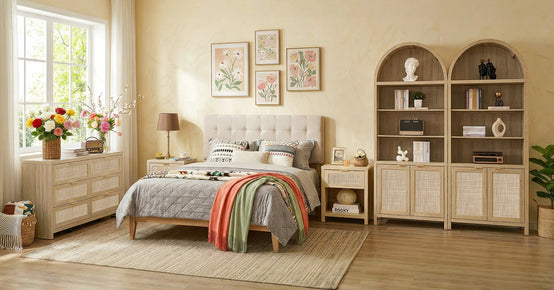
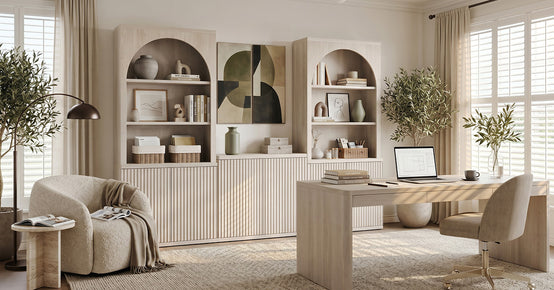
A box that fits only before the door closes doesn't fit. Measure with the door swing and the hinge side in mind. The Cas Modern Arched Bookcase pairs open display shelves up top with a fluted-door cabinet below: daily players visible, long tail behind doors.
Buy for the Collection You Will Have
Nobody's collection shrinks — the average hobbyist adds several games a year, and boxes keep getting bigger as publishers chase the deluxe market. A bookcase that fits today's forty games with zero room to spare gets replaced in eighteen months.
Leave one shelf — about twenty percent of total capacity — empty on day one. It sounds wasteful until the alternative arrives: games stacked on top of the case, migrating to the dining room. Expansion room is the cheapest insurance in this hbby.

Height is the cheapest expansion you can buy: an 82-inch bookcase holds roughly a third more than a 71-inch one on the same footprint. Buy tall if your ceilings allow, and install the anti-tip kit on day one — on a tall case loaded with games, it is not optional.
The Fit Grid: Match Your Boxes to the Shelf
Run your five-box numbers through this grid before buying: find your largest box on the left and read across. Usable depth runs about half an inch to an inch past the box; the opening needs box height plus finger room.
|
Your largest box |
Minimum usable depth |
Minimum shelf opening |
Storage style |
|
Standard square box, ~12 in |
12.5 in |
13 in tall |
Vertical, spines out |
|
Long rectangle, ~15 in |
15.5 in |
10 in tall |
Horizontal, bottom shelf |
|
Big campaign box, ~16 in+ |
16.5 in |
12 in tall |
Horizontal, bottom shelf |
|
Small card games, ~6 in |
7 in |
8 in tall |
Vertical or small bins |
|
Oversized deluxe, 18 in+ |
Does not fit standard cases |
Measure first |
Dedicated deep shelf or cabinet |
If the numbers do not clear, keep shopping.

Two Bookcases That Handle Game Boxes Well
Picked for the two numbers that matter most — usable depth and adjustable shelf positions — and both from the SICOTAS bookcases collection:
|
Savanna 5 Shelf Bookcase, 70.9 inch |
Cas Modern Arched Bookcase, Large Storage |
|
|
Exterior dimensions |
70.9 H x 30.7 W x 14 D in |
82.2 H x 32.3 W x 13.8 D in |
|
Estimated usable depth |
~12.5 in |
~12.3 in |
|
Shelves |
5, adjustable |
5, adjustable |
|
Closed storage |
2-door cabinet |
2-door fluted cabinet |
|
Best for |
Deep-box collections on a budget |
Tall collections that need display + hidden storage |
|
Anti-tip kit |
Included |
Included |
The Savanna's 14-inch exterior depth is the standout — after back panel and frame you keep roughly 12.5 inches of working shelf, clearing the standard 12-inch square box with real pull room. Five adjustable shelves plus a two-door base cabinet swallow the oversized games that miss the grid.
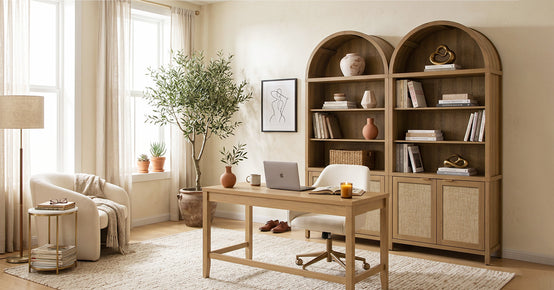
The Cas trades a touch of depth for eleven extra inches of height. At 82.2 inches it holds roughly a sixth more boxes on the same footprint. The fluted-door cabinet keeps rarely played titles dust-free while the open arched shelves keep game night fast.
Verify fit before buying — run your five-box numbers against the listing dimensions.
The 10-Minute Game-Box Audit
Do this once with a tape measure and you'll never buy the wrong shelf again.
● Pull your five largest boxes and measure width, depth, height. Circle the deepest and the tallest.
● Add 1 inch to the deepest box — that is your minimum usable shelf depth.
● Add 1.5 inches to that. That is the minimum exterior depth to accept on a listing.
● Add 1 inch to the tallest box. That is your minimum shelf opening — confirm the shelves adjust to it.
● Estimate total weight at roughly 2 to 3 pounds per box — and keep the heaviest third on the bottom two shelves.
● Leave 20 percent empty for the games you'll buy next year.
● Check the wall — measure from the baseboard face, confirm the case fits, and plan the anti-tip anchor before delivery.
A bookcase is the one piece of furniture your hobby will fill to the last inch. Buy it with a tape measure in hand and your five biggest boxes in mind, and game night starts with grabbing a box, not fighting a shelf.
FAQs
How deep should a bookcase be for board games?
About 12.5 inches of usable shelf — usually a 14-inch-deep listing. The standard large box is roughly 12 inches square and needs that half inch plus an inch of pull room — subtract about 1.5 inches for back panel and frame.
Will a standard 12-inch square game box fit on a 12-inch-deep bookcase?
Probably not, no. A 12-inch-deep listing typically yields only 10.5 to 11 inches of usable shelf — so the box overhangs or wedges. You want 13.5 to 14 inches of exterior depth.
Should I store board games vertically or horizontally?
Standard square boxes stand vertical, spines out, for fast access. Oversized or very heavy boxes go flat on the bottom shelf — three or four to a stack, heaviest on the bottom. Make the call shelf by shelf.
How much weight can a bookshelf hold for board games?
Figure 40 to 60 pounds per shelf for twenty medium boxes; big campaign boxes run 10 to 15 pounds each. Keep the spans short and the heaviest boxes lowest, with weight spread wide. Sag never reverses — redistribute the moment a shelf starts to bow.
Do I need doors on a board game bookcase?
Use open shelves for games you play often. Faster access, visible spines. Put doors or a closed cabinet on the overflow and rarely played titles. You get dust protection too. Glass doors give you both.
How do I stop shelves from sagging under heavy games?
Short spans. Thick shelves. Heavy boxes low. Spread the weight across adjustable openings instead of cramming everything in. And anchor tall cases, so a loaded top shelf never becomes a tipping risk.
How many board games fit on one bookshelf?
You'll fit roughly 15 to 25 medium boxes per shelf. That's 75 to 125 games in a five-shelf case, with sensible spacing. Keep twenty percent empty for growth.
What is the best way to organize a growing board game collection?
Group by size first, then by how often you play. Big boxes go vertical mid-shelf. Oversized boxes lie flat on the bottom. Card games live in bins up top. Always keep one shelf partly empty.


Looking for something else?

How to Choose a Bookcase for Plants Without Damaging the Shelves
LEARN MORE
How to Choose a Bookcase for Board Games: Shelf Depth, Height, and Access
LEARN MORE
7 Best Narrow Nightstands for Small Bedrooms With Real Storage
LEARN MORE
Chest of Drawers vs Dresser: Key Differences and Which One to Choose
LEARN MORELooking for something else?
Narrow Shoe Cabinet Buying Guide: Depth, Sizes and Styles That Fit a Small Entryway
LEARN MORE
11 Best Mid-Century Modern TV Stands for Style and Real Storage
LEARN MORE
Mid Century Sideboard Guide: How to Choose the Right Size, Wood and Style
LEARN MORE


Further reading

Zen Bedroom Ideas for a Calmer Room

Sage Green Bedroom Ideas and Furniture That Suits It


