



How to Choose a Bookcase for Plants Without Damaging the Shelves
A friend of mine ruined a bookshelf with a watering can. She lined up six plants across three shelves of a light-wood bookcase, watered every Sunday like clockwork, and by March the middle shelf wore a pale ring the size of a dinner plate — the front edge gone soft when you pressed it.
She'd bought it for books; then the plant hobby happened, and the rings crept in so gradually she convinced herself they'd always been there.
That's the whole problem in one story: books sit still and stay dry, and a potted plant does neither.
Your Bookcase Is About to Carry a Wet, Moving Target
A potted plant never weighs the same thing twice. Heaviest right after watering, lighter by week's end. Terracotta sweats moisture straight through its walls. It's porous by design. Drainage holes keep dripping for a good hour after you finish watering. Leaves pump out vapor all day, raising the humidity right around the shelf. None of that is the plant misbehaving. It's just physics.
So judge a bookcase for plants like equipment, not decor. Weight capacity, water behavior, finish limits, light shelf by shelf, airflow — and whether it stays upright when loaded.

Step 1: Weigh Your Pots Right After Watering
Don’t guess at this — weigh them wet, always. The number that matters is the Sunday-morning one, right after watering, not some dry Tuesday afternoon. Wet soil is shockingly heavy: a little 4-inch nursery pot can hit 2 to 3 pounds once it’s soaked through. Your classic 6-inch terracotta lands around 5 to 8 pounds after a good soak, an 8-inch pot runs 10 to 15, and a 10-inch pot holding a thirsty monstera can push past 20 without even trying. That’s heavier than a bowling ball sitting on one small circle of shelf.
The ten-minute method, done when the load peaks: stand on a bathroom scale holding the freshly watered pot, note the number, set it down, weigh yourself again, and subtract. Write down the wet weight of your three heaviest pots somewhere you'll find it. Anything topping 20 pounds belongs on the lowest shelf.

Step 2: Match the Weight to What Shelves Really Hold
A full shelf of hardcovers weighs roughly 40 kilograms — about 88 pounds. A decent bookcase is engineered for exactly that. A shelf that carries books without sagging carries most plant collections too.
One catch — books spread weight across the full width, while pots concentrate it in circles. Three 15-pound pots in a row put 45 pounds on the middle third of a shelf — and that is where sag begins.

Two habits fix it. First — spread pots across the full width instead of bunching them in the center. Weight near the side panels transfers almost straight down into the frame. Second — put the heaviest pots on the lowest shelf. It's nearly always fixed, which makes it the strongest surface in the unit.
Build a Water-Catching Plan Before the First Plant Goes Up
Every single pot on wood needs something between the pot and the shelf. No exceptions, ever. A two-dollar plastic saucer catches daily drips plus the slow seep through a terracotta wall. One long boot tray does the work of six saucers for a row of small pots — and slides out for cleaning. Hate the look? Use cache pots and water lightly so nothing pools. Or water at the sink, let it drain fully, then return the plant — two extra minutes per plant, and the single best habit for wood shelving.
Inspect every saucer and every shelf monthly. A saucer holding a permanent puddle is slow-motion damage wearing a plastic rim. Tip the saucers out, wipe them dry, check the shelf underneath. A problem caught in month two costs a wipe. In month eight it costs you the shelf.

Know What Your Shelf Finish Can Actually Survive
The sentence that decides whether your bookcase lasts — the Savanna bookcases use engineered wood with a matte finish, and the care line reads "wipe clean with a dry cloth, or a damp cloth." Damp, not wet. A matte finish shrugs off a quick wipe, but it won't survive a puddle sitting from Sunday to Wednesday. Water attacks unfinished spots first — the shelf's front lip, the pin holes, any nick in the coating. Once engineered wood swells, it never goes back.
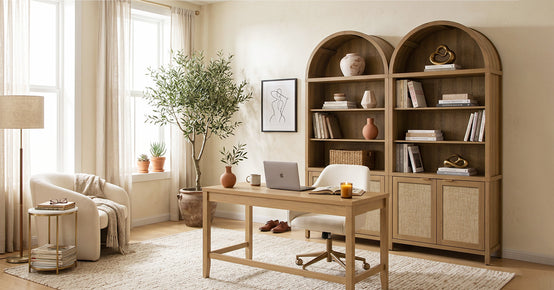
The rattan door panels on the Savanna with-doors version breathe, so humidity doesn't get trapped the way it does behind solid doors. Open shelves breathe better still. But they catch every drip, so the saucer routine is non-negotiable. Avoid setups where water sits unnoticed: raised lips hiding puddles, very dark finishes where rings show late.

Light Changes on Every Shelf
A bookcase near a window never has just one light level. It's a gradient, with the top dramatically brighter than the bottom shelf. Test it at noon — hold your hand above each shelf and read the shadow. Sharp, dark shadow on top means strong light. Soft, fuzzy shadow in the middle means medium. Barely any shadow at the bottom means low light. Match every plant to its shelf. Succulents, herbs, and ficus all go high. Pothos, ZZ, and snake plants handle the dim lower shelves. In one office-plant test, the ZZ plant went three to four weeks between waterings while fussier plants collapsed.
Rotate every pot a quarter turn at each watering — plants lean toward the window within weeks.

Leave Room to Grow: Adjustable Spacing Matters More for Plants
The plant that fits today won’t fit in a year — that cute 12-inch fiddle-leaf fig becomes a three-foot monster. This is why adjustable shelves matter way more for plants than they do for books. Raise a shelf to give a fast grower some headroom, or drop one down to bring a small plant up to eye level. Both Savanna bookcases come with adjustable shelving built in.
Leave at least six inches of clear air above each leafy plant. Leaves pressed against the shelf above stay damp — and damp, airless leaves invite fungus. Trailing plants need the opposite: empty air below. Give a pothos two to three feet of clear drop below the top shelf.

Airflow Keeps Mold Away
Plants pump humidity into the air right around themselves. In an open room, no big deal. But on a crowded shelf? That’s when you get mold spots on the surface, white fuzz on the soil, mildew on the wall behind. The fix is mostly about spacing — leave gaps between your pots, and pull the bookcase an inch or two off the wall so air can move behind it. If you’ve got doors, ventilation becomes a real decision: solid doors seal all that humidity in, while the rattan panels on the Savanna with-doors version let air pass right through.

The Top-Heavy Problem Nobody Plans For
A tall bookcase is already tip-prone — tall, narrow, front-heavy. Add sixty pounds of wet soil and ceramic up high and the center of gravity shifts dangerously. Anchor every tall bookcase to the wall before the plants go on — not after. The Savanna bookcases include an anti-tip kit. Drive it into a stud, not bare drywall.
Loading discipline is the other half — heaviest pots low, lightest high, always. Never let a small child climb a bookcase full of plants. The manufacturer recommends wall-mounting tall units — especially around children.
Keep Maintenance Access in Mind
You will water these plants weekly for years — so design for your future self. Leave two inches of finger room around each pot for lifting without scraping. Put the thirstiest plants at chest height, where they're easiest to reach. Once a season, pull every plant off and wipe the shelves with a damp (not wet) cloth, checking for missed rings.
Two Bookcases, Two Ways to Do Plant Duty
Same bones, different owners. Pick your style.
|
Savanna Arched Bookcase, 84.2Inch Height |
Savanna Arched Bookcase with Doors |
|
|
Overall size |
84.2" H x 35.5" W x 16.1" D |
84.2" H x 35.5" W x 16.1" D |
|
Unit weight |
114 lb |
79.37 lb |
|
Shelving |
5 open adjustable shelves |
5-tier with 2-door lower cabinet |
|
Material and finish |
Engineered wood with rattan accents, matte finish |
Engineered wood, matte finish |
|
Plant strengths |
Maximum light and airflow on every shelf |
Rattan doors breathe; cabinet hides supplies and spare pots |
|
Water risk |
Higher: open shelves catch every drip, saucers mandatory |
Lower: doors shield lower shelves; top still needs drip protection |
|
Stability hardware |
Anti-tip kit included |
Anti-tip kit included |
|
Best for |
Collectors whose plants are the display |
Owners who want plants up top and supplies out of sight |
If your collection is the display, get the open Savanna Arched Bookcase and commit to the saucer routine. If you'd rather have greenery up top with supplies hidden below, the with-doors version is the calmer pick of the two. Either way, the water discipline stays the same. Doors hide the mess; they don't prevent it.
Your 10-Minute Plant-Bookcase Audit
Ten minutes now prevents every expensive mistake in this guide.
● 1. Weigh your three heaviest pots right after watering, using the bathroom-scale method from Step 1.
● 2. Measure your tallest plant, pot and all, then add six inches. That's your minimum shelf clearance.
● 3. Run the noon shadow test on the target wall. Sharp shadow means sun-lovers are welcome. Faint shadow means low-light plants only.
● 4. Count up your saucers and trays. One catcher per pot, plus a spare.
● 5. Read the finish care line on the product page. If it says damp-cloth-only, plan your drip protection accordingly.
● 6. Confirm the anti-tip kit is included, and find your studs. Anchor first, plants second.
FAQs
Can I put potted plants directly on a wood bookcase?
Nope — wood and standing water just don’t mix. Every single pot needs something between it and the shelf: a saucer, a tray, or a cache pot. Terracotta seeps right through, drainage holes keep dripping, and condensation forms under pots. Put a pot directly on the wood and you’re guaranteed rings and swollen edges.
How much weight can a bookcase shelf hold with plants on it?
Think of it this way — a full shelf of hardcovers runs about 88 pounds, and most plant collections come in well under that. The real danger isn’t total weight, it’s concentration. Spread your pots across the full width of the shelf. Anything over 20 pounds wet weight goes on the lowest shelf, and recheck everything after you repot.
Do houseplants damage bookshelves?
Just the water, honestly. The plant itself won’t hurt a thing — leaves don’t damage shelves. All the rings, swelling, and soft edges come from moisture sitting on the finish: drips from drainage holes, seepage through terracotta, saucers that never got emptied. Get strict about catching water and you’ll prevent nearly all of it.
What is the best bookcase material for holding plants?
Look for two things: a finish you can wipe down, and shelves you can adjust. Engineered wood with a matte finish does the job — as long as you stick to the damp-cloth-only rule and never let water stand on it. Solid wood handles the occasional splash a bit better but it’ll still ring. Metal and glass shelves are the most forgiving with water, though they show every single drip. And keep unfinished wood far away from your plants.
How do I protect my shelves from water rings?
Layer up your defenses: a saucer or tray under every pot, cache pots if you want that clean look, and water the heavy drinkers in the sink. Then actually empty those saucers — don’t ever let water just sit in them. Check under every pot once a month. Here’s the thing: rings come from the water you forgot about, not the water you managed.
Will my plants get enough light on the lower shelves?
Usually not, no. Light drops off fast as you go down. That top shelf near the window might be perfect for succulents, while the bottom shelf only works for pothos, ZZ plants, and snake plants. Do the noon shadow test on each shelf individually. Put your light-lovers up high, and grab a small LED grow-light bar for the dim ones.
Should I anchor a bookcase that holds heavy plants?
Yes — no debate on this one. A tall bookcase loaded with wet pots gets top-heavy fast, and that’s exactly what anti-tip kits are for. Anchor it into a wall stud before the plants go on, and keep your heaviest pots on the lowest shelves.
Can I use a bookcase with doors for plants?
Yes, but only if those doors can breathe. Solid closed doors trap all the humidity your plants release, and that’s an open invitation for mold. Rattan or cane panels let air move through while still hiding the clutter — which is exactly why the Savanna with-doors version works so well for plant people. Just leave the doors cracked open on watering day until everything dries out.


Looking for something else?
How to Choose a Bookcase for Plants Without Damaging the Shelves
LEARN MORE
How to Choose a Bookcase for Board Games: Shelf Depth, Height, and Access
LEARN MORE
7 Best Narrow Nightstands for Small Bedrooms With Real Storage
LEARN MORE
Chest of Drawers vs Dresser: Key Differences and Which One to Choose
LEARN MORELooking for something else?
Narrow Shoe Cabinet Buying Guide: Depth, Sizes and Styles That Fit a Small Entryway
LEARN MORE
11 Best Mid-Century Modern TV Stands for Style and Real Storage
LEARN MORE
Mid Century Sideboard Guide: How to Choose the Right Size, Wood and Style
LEARN MORE


Further reading

Zen Bedroom Ideas for a Calmer Room

Sage Green Bedroom Ideas and Furniture That Suits It


