




19 Relaxing Room Ideas for a Calm, Cozy Home
So here’s the thing nobody warned me about when I first got into interior design. You can spend a stupid amount of money making a room look incredible — the right paint, matching furniture, accent pieces from that one boutique everyone recommends — and still walk in after work and feel... nothing. No sense of relief. No shoulder-drop moment. Just a pretty room you happen to sleep in.
Took me years to figure out what was off. And the answer was embarrassingly simple. I was decorating for my eyes. Not for my body. Not for my nervous system. The rooms looked peaceful, but they didn’t feel peaceful. Big difference.
What actually makes a room relaxing? It’s less about the furniture catalog and more about stuff you barely notice — how warm the light is at 9 PM, whether there’s a surface for your feet that isn’t freezing, how much visual clutter your brain has to sort through before it can slow down. I pulled together 19 relaxing room ideas based on what I’ve seen work in real homes — not showrooms, not Instagram flat-lays — actual rooms where actual people unwind.
Color Ideas for a Calming Room
1. Warm Neutrals Over Cool Grays

I know, I know — everybody and their mother painted everything gray between like 2015 and 2021. And sure, it photographs well. But have you ever sat in a cool gray bedroom on a Tuesday night in February? Feels like an exam room. There’s zero warmth in it.
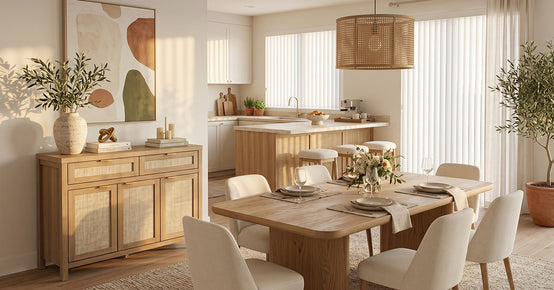
Warm neutrals hit different. Oatmeal. Sandy beige. That creamy off-white that’s not quite white and not quite yellow. Taupe if you want something a little moodier. These tones wrap a space instead of flattening it. They bounce lamplight around the room gently instead of making everything look like a fluorescent tube lit it.
Quick tip from someone who’s learned the hard way: grab a sample pot. Paint a patch. Look at it at 7 AM and again at 10 PM with only your lamps on. Colors shift way more than you’d expect, depending on the light. That ten-dollar test saves you from repainting an entire bedroom.
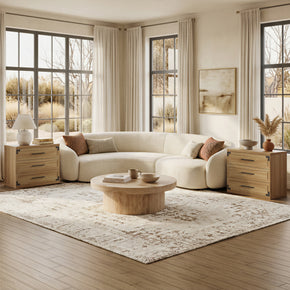
2. Nature-Pulled Accent Colors

Once your warm base is on the walls, you need maybe one or two accent tones to keep things from feeling flat. But not bright ones. Not “pop of color” ones. The calming room ideas that actually work use shades you’d find on a quiet walk outside — sage green, dusty blue, soft clay, muted terracotta.
Like... a single sage cushion on the bed. A dusty blue ceramic on the shelf. Maybe terracotta linen curtains if you’re feeling bold. Keep the contrast gentle. Everything in the room should feel like it belongs at the same dinner party — same vibe, same volume level. Not six strangers all trying to be the loudest.
Lighting Ideas That Actually Change How You Feel
3. Multiple Warm Lamps Instead of One Ceiling Fixture

Okay, this is the one. If you take nothing else from this whole article, take this. That overhead ceiling light you’ve been using as your only light source after dark? It’s the single biggest reason your room doesn’t feel relaxing. I’m dead serious.
Overhead light flattens everything. Kills shadow. Kills warmth. Makes 9:30 PM feel identical to 2 PM. Your brain literally does not know it’s supposed to be winding down because the light is telling it otherwise.
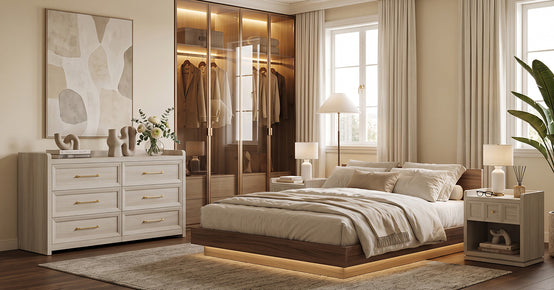
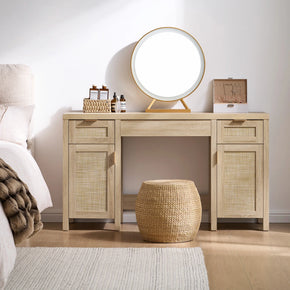
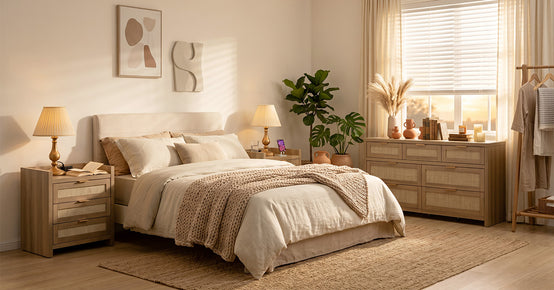
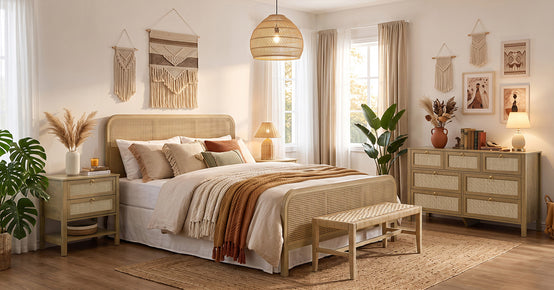
What to do instead: get three or four smaller warm light sources. Bedside table lamp. Floor lamp behind the chair. Maybe a little wall sconce. Use bulbs labeled 2700K — that’s the warm candlelight tone. A Savanna Nightstand with 3 Drawers is perfect for this because it offers a solid lamp surface and built-in charging, so there aren’t cables snaking everywhere. Boring detail? Maybe. But cables everywhere are visual noise, and visual noise is the enemy here.
4. Flip Off the Overhead After Dinner

This sounds ridiculous until you actually try it for a week. Just turn the ceiling light off once the sun goes down. Use your lamps. That’s it. That’s the whole tip.
My partner thought I’d lost it when I started doing this. Within five days, she was doing it too. There’s real science behind it — warm dim light after dark triggers melatonin production, bright overhead light suppresses it — but honestly, you don’t need the science. You’ll feel the difference by night two.
Declutter and Storage Ideas
5. Take Everything Off Your Surfaces

Nobody loves hearing this. Including me. But I’m going to say it anyway because it’s the truth: clutter wrecks calm faster than anything else. Faster than bad lighting. Faster than ugly paint. You could have the most gorgeous, peaceful bedroom design on the planet, and if your nightstand looks like a junk drawer exploded on it, the room still feels stressful.
Here’s what I do with clients. We clear every surface completely. Nightstand, dresser top, desk, coffee table — all of it, bare. Then we put back only the things they physically touch every single day. Lamp. Phone charger. Water glass. Everything else goes into a drawer or behind a door.
If you’re thinking “but I don’t have enough drawer space” — that’s a furniture problem, not a willpower problem. Modern bedroom furniture from Sicotas is worth a look. Clean designs with built-in storage, not just legs and a flat top.
6. Hidden Storage Is the Whole Game

Want to know the dirty secret behind every minimalist bedroom you’ve ever drooled over on Pinterest? Those people own just as much random stuff as you. They’ve just got it hidden better.
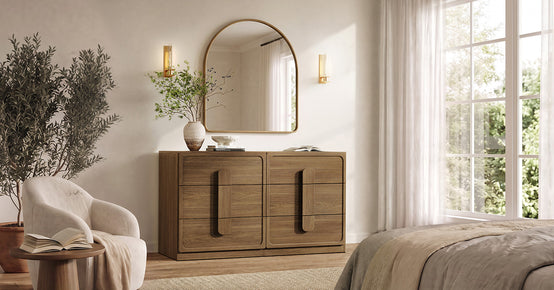
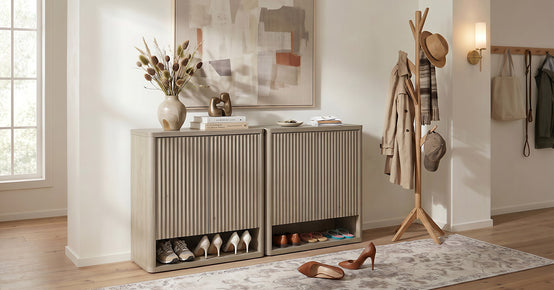
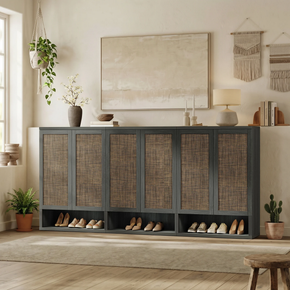
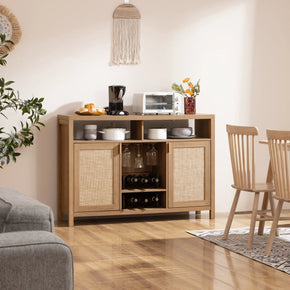
Deep dressers. Sideboards with doors. Bookshelves that close on the bottom. The Stria Dresser with Large Drawers is the kind of piece that changes a room overnight — wide, generous drawers that swallow sweaters, blankets, all of it. Gone. And when you walk in, and every surface is clear? Something in your body actually unclenches. Hard to describe. Easy to feel.
Texture and Comfort Ideas
7. Soft Stuff on Every Surface Your Body Touches

Your bedroom isn’t a gallery. You’re supposed to touch things in it. Lie on them. Drag your feet across them half-asleep. So if the bedding is scratchy, the floor is cold, and the throw pillow is mostly decorative stiffness, your body knows this room isn’t really for resting. It’s for looking at.
Fix: thick comforter you can burrow into. Linen pillowcases that go softer with each wash. Chunky knit throw at the foot of the bed that’s heavy enough to feel like a gentle squeeze. And a rug — a real, plush one — next to the bed so your bare feet land on something warm at 6 AM instead of cold wood.
Living room version: wool rug under the coffee table. Cotton cushions that give when you lean into them. Lightweight blanket over the sofa arm. Mix the fabrics. Linen next to cotton next to chunky knit creates that layered, Sunday-morning, cozy room feeling that no single material pulls off alone.
8. Curtains That Do Real Work

I used to think curtains were just window decoration. Then I moved into an apartment on a bus route and discovered that curtains are actually sound barriers, light blockers, and insulation — all disguised as fabric.
Bedroom: go blackout. Heavy. Neutral color. They’ll kill streetlight glow, muffle the 5 AM garbage truck, and make the whole room feel more enclosed and safe — like a cocoon rather than a fishbowl. Living room: softer linen panels in cream or oatmeal, filtering daylight gently without blocking it entirely. Either way, bare windows feel unfinished. Curtains close the gap.
9. One Big Rug, Not a Small One

People always go too small with rugs. I get it — big rugs cost more. But a tiny rug floating in the middle of a room looks lonely and does basically nothing. It’s like wearing a scarf in a blizzard. Nice gesture, wrong scale.
For bedrooms: extend the rug at least a couple of feet past each side of the bed so you step onto it when you get up. For living rooms: front legs of the sofa and chairs should be on the rug. Neutral tones — cream, warm gray, oatmeal. The rug anchors the furniture, absorbs echo (rooms without rugs sound weirdly hollow), and warms the floor. Three jobs, one purchase.
Nature and Materials Ideas
10. Houseplants — Even If You’ve Killed Every Plant You’ve Owned

I am the last person who should be recommending plants. I’ve murdered succulents. I drowned a cactus once, which I didn’t even know was possible. A fern I bought in 2019 lasted nine days.
But then someone gave me a snake plant. And this thing — I swear — survived three months of total neglect, basically zero direct light, and watering so irregular it probably constitutes abuse. Still alive. Still green. Sits on my desk looking unbothered.
Start there. Snake plants, pothos, and ZZ plants. The unkillable squad. A peace lily on the nightstand. Some trailing pothos on a high shelf. Cluster a few together in a corner at different heights, and suddenly the room feels alive in a way no amount of candles or cushions can match. Indoor plants don’t just look good — they fundamentally shift the energy of a space. Sounds woo-woo. Don’t care. It’s true.
11. Real Materials Instead of Fake Ones

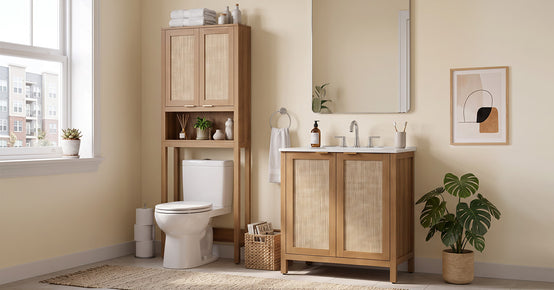
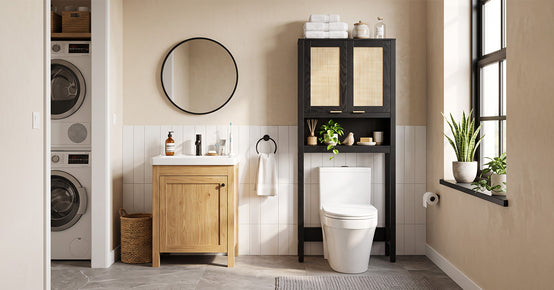
There’s this thing that happens when you swap synthetic stuff for natural materials, and I can’t fully explain it. A ceramic lamp base instead of plastic. Linen curtains instead of polyester. A rattan basket where a fabric bin once was. On paper, the same function. In practice? The room feels warmer. More grounded. More like somewhere a person lives and less like somewhere furniture gets stored.
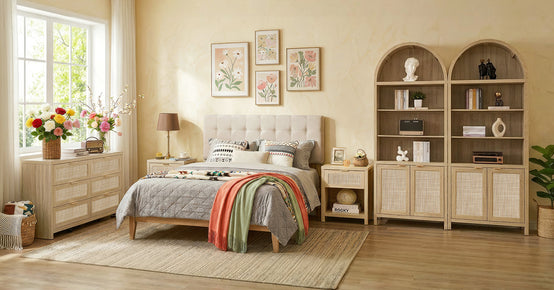
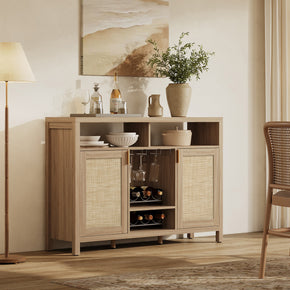
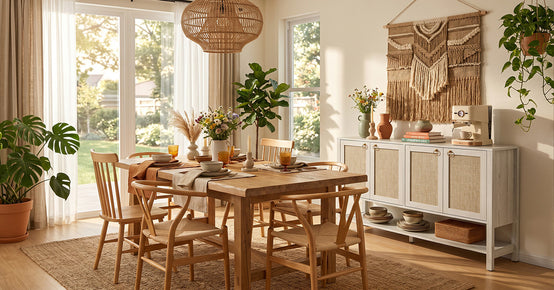
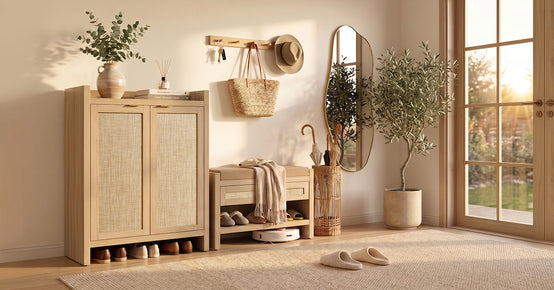
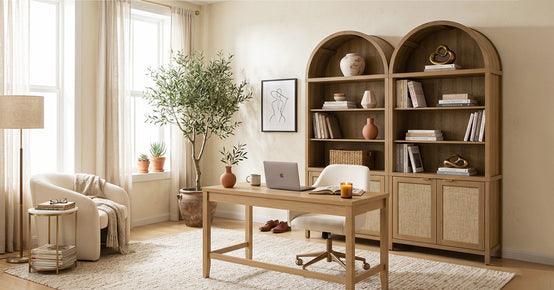
Solid wood. Woven rattan. Fired ceramic. Natural linen. Actual stone. These materials have textures your eyes register from across the room — grain, weave, imperfection. The Savanna Arched Bookcase does this beautifully — handwoven rattan panels paired with a solid wood frame, and the enclosed bottom half keeps your mess out of sight while the open shelves up top display whatever you actually want to see.
Quiet Corners and Personal Retreats
12. A Reading Corner You’ll Actually Use

This is the idea I get most excited about, and I realize that’s kind of nerdy, but I don’t care. Because having one spot in your home that’s purely for sitting with a book — no phone, no laptop, no TV — changes your entire evening routine. Not gradually. Pretty much immediately.
What you need: a comfortable chair. Doesn’t have to be expensive — I found mine at a thrift store for thirty-five bucks. A small table for your book and a mug. One warm lamp. A blanket. That’s the full kit.
Pick a corner you’ve been walking past for months without thinking about. Everyone has one. Mine was next to the bedroom window behind a plant stand I never used. Moved the plant stand, put the chair there, and added a twelve-dollar lamp from the hardware store. Done. That forty-seven-dollar reading nook is genuinely my favorite spot in the house now.
13. A Meditation Spot (Relax — It’s Just a Cushion on the Floor)

Please don’t skip this one because you think meditation requires incense and chanting and sitting cross-legged until your knees scream. It doesn’t. A meditation spot is one cushion. On the floor. In a corner that’s reasonably quiet. Maybe you put a candle next to it, maybe you don’t. That’s the whole setup.
Here’s why it works, though: if you sit in the same spot every time, even for just five minutes, your brain starts building an association. Walk toward that corner → nervous system begins to settle. After a couple of weeks, it’s almost automatic. Like how your mouth waters when you smell food cooking — same mechanism, different response.
Scent and Sound Ideas
14. Scent — Your Secret Weapon

Fun brain fact: your nose is hardwired directly into the emotional center of your brain. That’s why one random whiff of sunscreen can throw you back to a beach trip from 2014 in half a second flat. And it’s why the right scent in your bedroom does more work than you’d ever guess.
Lavender is the obvious pick for sleep. Chamomile if lavender smells too much like your grandmother’s soap drawer (no judgment). Eucalyptus for clearing your head. Vanilla for warmth. Sandalwood goes deep and woody and kind of grounds you.
Run a diffuser for fifteen to twenty minutes before bed. Not all night — just enough to scent the room. Use real essential oils, not the synthetic fragrance bottles from the dollar aisle. And switch scents every couple of weeks because your nose adapts. After day ten of the same lavender oil, you literally stop smelling it.
15. Deal with the Noise

We think about room aesthetics constantly. We almost never think about room acoustics. But random noise — traffic, neighbor’s TV, a door slamming two rooms over — keeps your fight-or-flight system on a low simmer even when you’re not consciously bothered.
Here’s the thing, though: if you’ve done the other stuff on this list, you’ve already helped. That thick rug eats echo. Heavy curtains dampen outside noise. Upholstered furniture absorbs sound. All the soft textures you added for comfort? They’re doing acoustic work too. If you need more, a twenty-dollar white noise machine or, honestly, just a box fan creates a steady background layer that masks the sudden jarring sounds.
Styling and Layout Ideas
16. Three Meaningful Objects > Seventeen Meaningless Ones

I once had a client who had 42 framed photos in her bedroom. Forty-two. I counted. Every surface, both nightstands, the dresser, and two shelves. She loved them all. And her room felt like an archive, not a bedroom sanctuary.
We edited down to five. Five photos that actually stopped her in her tracks every time she looked at them. The rest went into an album in the living room. The bedroom immediately felt different. More air. More quiet. More room for her eyes to rest.
The same goes for art on the walls. Quiet pieces. Nature photography. Soft abstract washes. Simple line drawings. Nothing too emotionally intense for a space where the goal is powering down.
17. Three Colors Maximum

I’ve been in rooms where every individual thing is beautiful. Gorgeous rug, gorgeous art, gorgeous cushions, gorgeous curtains. And the room as a whole? Headache. Because there are like eight colors all going at once, and your eyes can’t settle anywhere.
Rule I give every client: pick three. A warm neutral for the big stuff — walls, bedding, main furniture. One soft accent for smaller touches. A natural wood tone. That’s your entire palette. When the whole room speaks one visual language, your brain reads it as calm before you even sit down.
18. Less Screen Glow

Not gonna lecture you about phones. We all have them, we’re all on them too much, nobody wants another article telling them to put it away. But here’s what I will say: even when you’re not looking at a screen, that blue-white glow it casts across the room keeps your brain thinking it’s afternoon. And when you’ve got the phone, the laptop, and the TV all doing it simultaneously? That’s a lot of artificial daylight in a room that’s supposed to be winding down.
Easy fixes. Move the charger off the nightstand and across the room. Grab a six-dollar alarm clock so the phone isn’t the first and last thing you see each day. Close laptop lids when done. Turn the TV brightness down and enable the warm color filter at night. Not dramatic changes. Just dialing back the ambient glow enough that your body gets the message: day’s over.
19. Empty Space Is Not Wasted Space

Hardest sell on this list, especially if you love decorating. Every empty corner whispers, “Put something here.” Every bare shelf says, “fill me.” But the most genuinely peaceful rooms I’ve stepped into — every single one — had space where nothing lived.
Pull the sofa three inches off the wall. Leave the pathway between the bed and the door completely clear. If the room feels cramped, resist rearranging and instead remove one piece of furniture entirely. See what happens. You’ll be surprised.
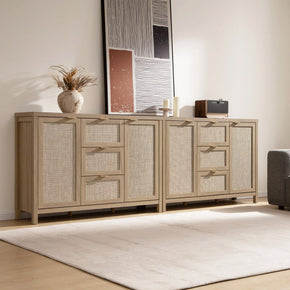
A Helio Glass Sideboard with Doors works well in rooms where you need storage but can’t afford visual bulk. The glass panels keep things feeling light and open. You get real storage without the room feeling stuffed.
Empty space is where the calm actually lives. Protect it.
Relaxing Room Ideas by Space

Relaxing Bedroom Ideas
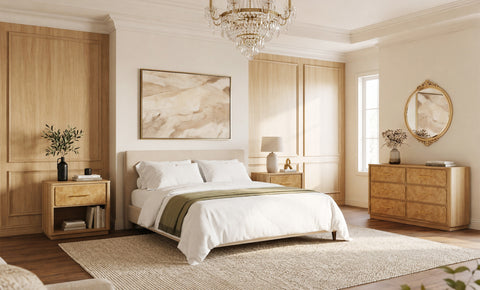
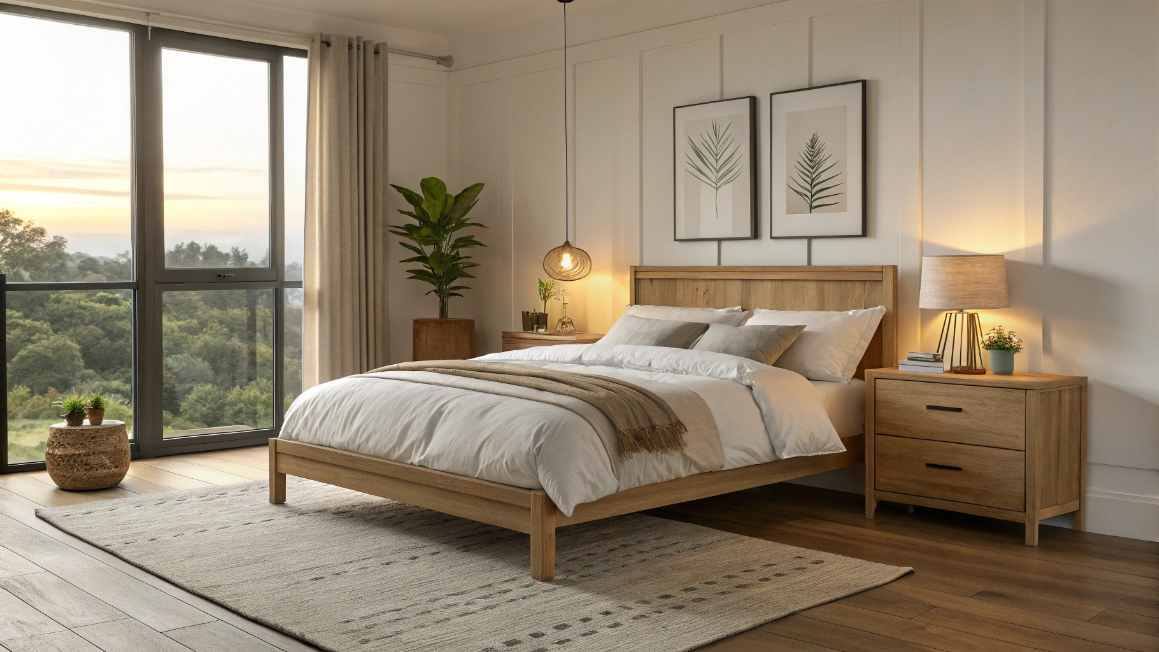
This is home base. Blackout curtains are non-negotiable if there’s any light source outside your window. Warm lamps only after dark. Nightstand stripped down to a lamp and maybe one book — nothing else. Your bed should feel like a reward at the end of the day, not just a flat surface you collapse onto. For storage that keeps clothing out of sight, the contemporary dresser collection has clean designs built for exactly that.
Relaxing Living Room Ideas
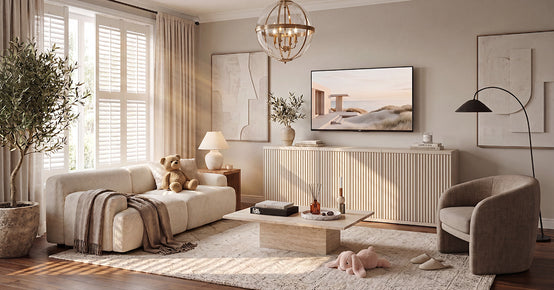
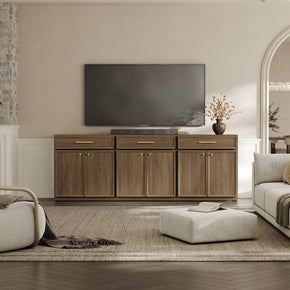
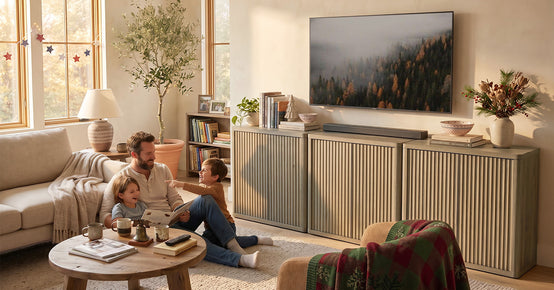
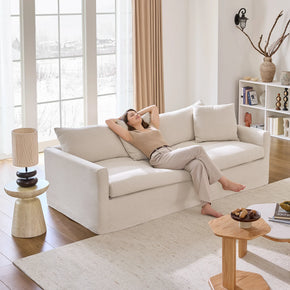
Comfortable seating first, aesthetics second. Nobody relaxes in an uncomfortable chair, no matter how beautiful it is. Soft rug anchoring the furniture. Warm lamps for evenings. A plant or two. A coffee table you can actually see the surface of. If your media setup is a tangle of cables and three remotes, tuck everything into a console or sideboard. Visual clutter doesn’t take weekends off.
Relaxing Home Office Ideas
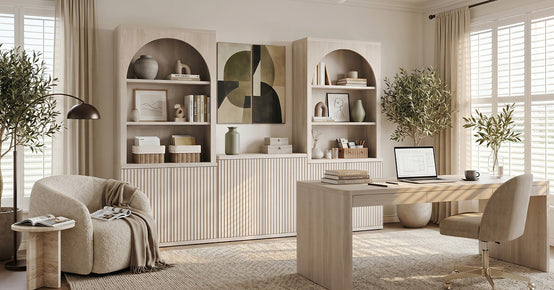
A messy desk is an anxious desk. Clear it down to only what you’re using right now. One warm lamp so the overhead isn’t blasting you during late-night work sessions. One small plant. One piece of art that makes you feel something other than stressed. Route your cables behind the desk or zip-tie the whole mess together. When you can walk away from a clean desk at 6 PM, you actually leave work behind.
Relaxing Small Room Ideas
Tiny rooms are secretly easier to make cozy because they’re already intimate by nature. Light warm colors on the walls so it doesn’t feel like a cave. Vertical storage instead of wide pieces. One or two decor items instead of a dozen. A mirror doubles perceived space. Multi-functional furniture — a storage ottoman, a bed with drawers underneath — does the heavy lifting without taking up floor space.
2026 Relaxing Room Trends

Warm Minimalism
The cold, stark minimalism thing — white walls, bare floors, one lonely plant in the corner — is finally dying, and I’m not gonna pretend I’m sad about it. What’s replacing it keeps the clean lines but adds warmth. Real wood. Soft textiles. Earthy paint colors. Fewer things, but each one actually has soul. Decorilla flagged this as one of the defining interior shifts of 2026. I’d call it minimalism that doesn’t make you feel like you’re living in a coworking space.
Natural Materials Everywhere
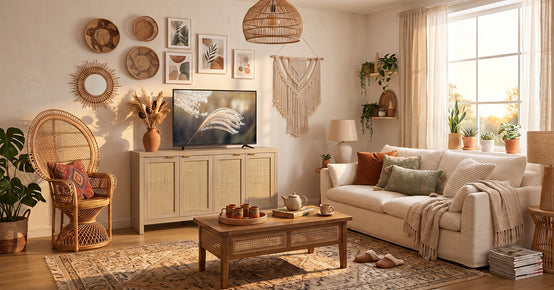
Rattan, linen, solid wood, stone, wool, handmade ceramics. The mass-produced shiny-surface era is fading. People want pieces that look like a human made them. Even one swap — plastic lamp for ceramic, polyester for linen — shifts the whole room’s temperature. This trend’s been building for years and shows zero signs of slowing down.
Atmospheric Lighting
Rechargeable cordless lamps are everywhere right now. So are dimmable sconces and warm-tone pendants. Designers are stacking four or five different light sources in a single bedroom to build a gradient that follows the day. Bright morning, soft afternoon, warm evening glow. The era of one overhead light running the show? Done.
Cocooning Color Palettes
Warm taupe. Creamy beige. Soft clay. Brown-pink tones. Muted sage. The industry keeps calling it “cocooning,” and honestly, the word fits. These colors feel like being wrapped in something warm. Cool grays and crisp whites are falling out of favor fast. The 2026 bedroom wants to hold you, not impress visitors.
Mistakes That Quietly Wreck the Calm

Shelves stuffed to capacity. If every shelf is full, the room feels full. Leave a third of each one empty. White space is a feature.
The ceiling light is running all evening. At a minimum, swap the bulb for a warm one. Better: kill it at sundown and use your lamps.
Pattern warfare. One pattern mixed with solids reads as “styled.” Five competing patterns read as “chaos.” When in doubt, subtract.
Designing for photos instead of your body. Sit in the chair before you buy it. Lie on the bedding. Step barefoot on the rug. If it doesn’t feel good against your skin, the room isn’t relaxing — it’s performing.
FAQs
How do I make my room more relaxing?
Three moves get you most of the way: clear your surfaces of everything that isn’t used daily, replace the overhead light with two or three warm lamps, and add one genuinely soft textile you enjoy touching — a plush rug, a thick throw, or upgraded bedding. Those three changes shift a room’s feel immediately. After that, layer in calm wall color, a plant or two, and closed storage to keep the effect going.
How to style a boring room?
Texture kills boredom faster than new furniture. A chunky wool rug where there was bare floor. Linen curtains were swapped for the builder-grade ones. A warm ceramic lamp replacing a basic one. One trailing plant on a shelf. Mix your materials — linen, wood,clay, and knit — while keeping colors to 3 max. That’s how a room goes from blank to interesting without getting cluttered.
What are the 2026 bedroom trends?
Warm minimalism is the big story — clean rooms that feel genuinely inviting rather than sterile. Natural materials dominate: rattan, linen, solid wood, and stone. Atmospheric layered lighting is replacing single overhead fixtures. Color palettes lean hard into warm neutrals — taupe, clay, warm beige, muted sage. Statement headboards and portable rechargeable lamps are also picking up real momentum.
How to create a relaxation room at home?
Grab a quiet corner, a spare room, or even a large closet. Remove everything that doesn’t serve rest. Add one comfortable seat, a soft rug, a warm lamp, and a plant if you’ve got one. No TV, no laptop, no phone charger. The fewer decisions the room forces on your brain, the more relaxing it gets. Simplicity is literally the whole recipe.
What color is most calming for sleep?
Soft blue, muted sage green, warm beige, and gentle gray consistently test best. They echo nature — sky, forest, sand, stone — and our brains read those as safe. Bright white, stark gray, and high-contrast combinations keep your visual system engaged when it should be shutting down. Go gentle.
How to create a calm home?
The secret is consistency, room to room. Pick a calming palette and carry it everywhere, not just the bedroom. Reduce clutter in shared spaces, not just behind closed doors. Warm lighting throughout. Natural materials and a plant in every room where people spend time in. Calm isn’t one pretty room — it’s a feeling that flows through the whole home.
What is the 5 4 3 2 1 calm method?
Grounding exercise therapists love. Name five things you see, four you physically feel, three you hear, two you smell, and one you taste. Takes about a minute. Works almost anywhere. I do it in my reading corner sometimes when my brain won’t shut up. Sounds corny. Works anyway.
What are the 7 steps of meditation?
Simple version: find a quiet spot. Sit comfortably — the chair is fine, you don’t need to pretzel yourself. Relax your body, feet-to-forehead. Close your eyes, focus on breathing. Notice thoughts when they pop up without beating yourself up. Bring attention back to breath each time. End slowly — wiggle fingers, open eyes. Even five minutes a day can change how your bedroom feels at night.
What is the 2 3 rule for living rooms?
Decorating shorthand for visual balance. Pairs for symmetry: two matching lamps, two nightstands. Three for organic feel: three vases at different heights, three cushions. In a relaxing living room, this keeps your styling looking effortless rather than overthought. It’s one of those rules that sounds obvious but actually solves the “something feels off” problem ninety percent of the time.
Sources
- Kristin Hohenadel, interior design journalist, "45 Cozy Bedroom Ideas That Feel Like a Warm Hug," The Spruce
- Decorilla Editorial Team, "2026 Bedroom Trends to Create Your Dream Escape," Decorilla Online Interior Design
- King Living Design Team, "Calm Bedroom Design Ideas," King Living Blog
- IKEA Editorial Team, "A Modern Space Full of Calming Bedroom Ideas," IKEA
- Ideal Home Editors, "2026 Bedroom Decor Trends: Cocooning Bedrooms," Ideal Home
- Good Homes Magazine, "7 Hottest Bedroom Trends for 2026," Good Homes Magazine
- Farrow & Ball Design Team, "Living Room Inspiration," Farrow & Ball


Looking for something else?

Furniture Materials Guide: Picking the Right Material Room by Room
LEARN MORE
How to Mix Wood Tones Without Making a Room Look Mismatched
LEARN MORE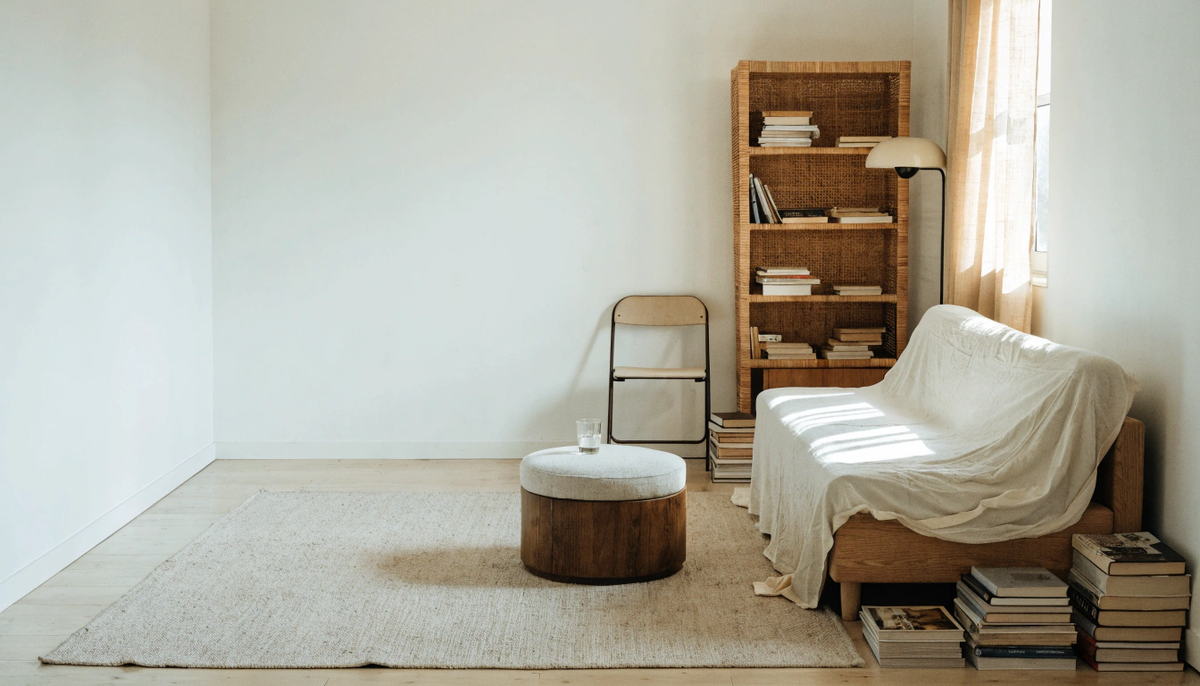
18 College Apartment Furniture Ideas That Save Space and Money
LEARN MORE
Types of Entertainment Centers: 11 Designs and How to Pick One
LEARN MORELooking for something else?

Curio Cabinet Decor Ideas: How to Style a Display Cabinet Without the Clutter
LEARN MORE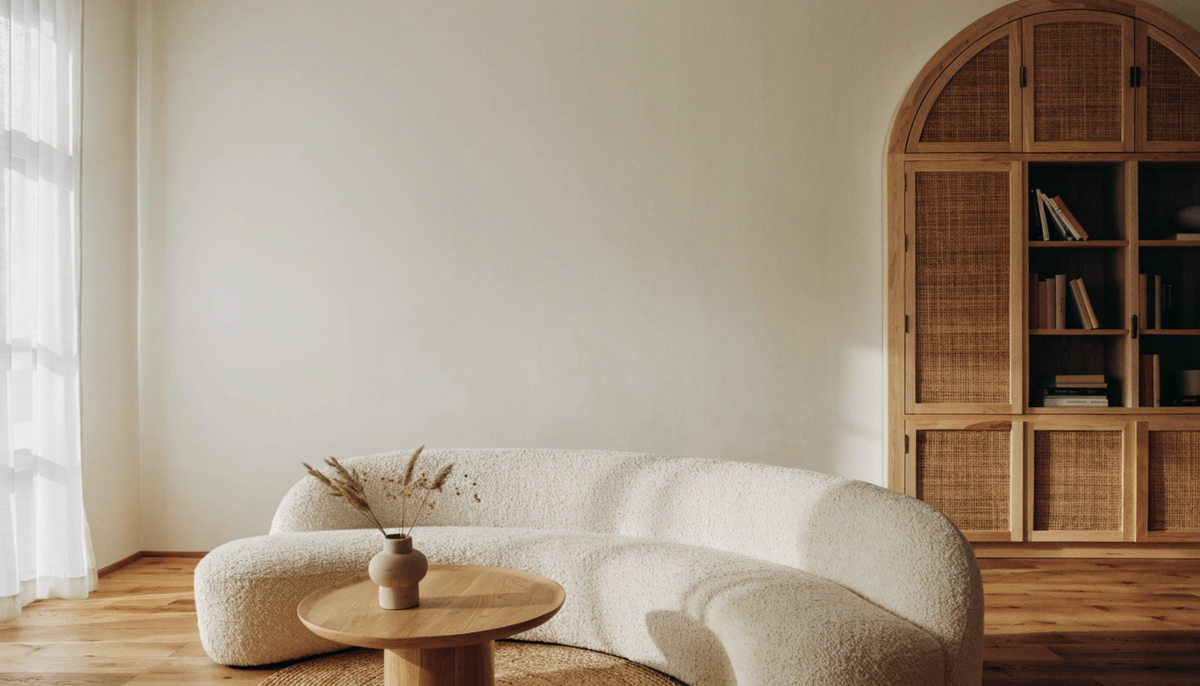
Curved Furniture: How to Style, Measure, and Buy It in 2026
LEARN MORE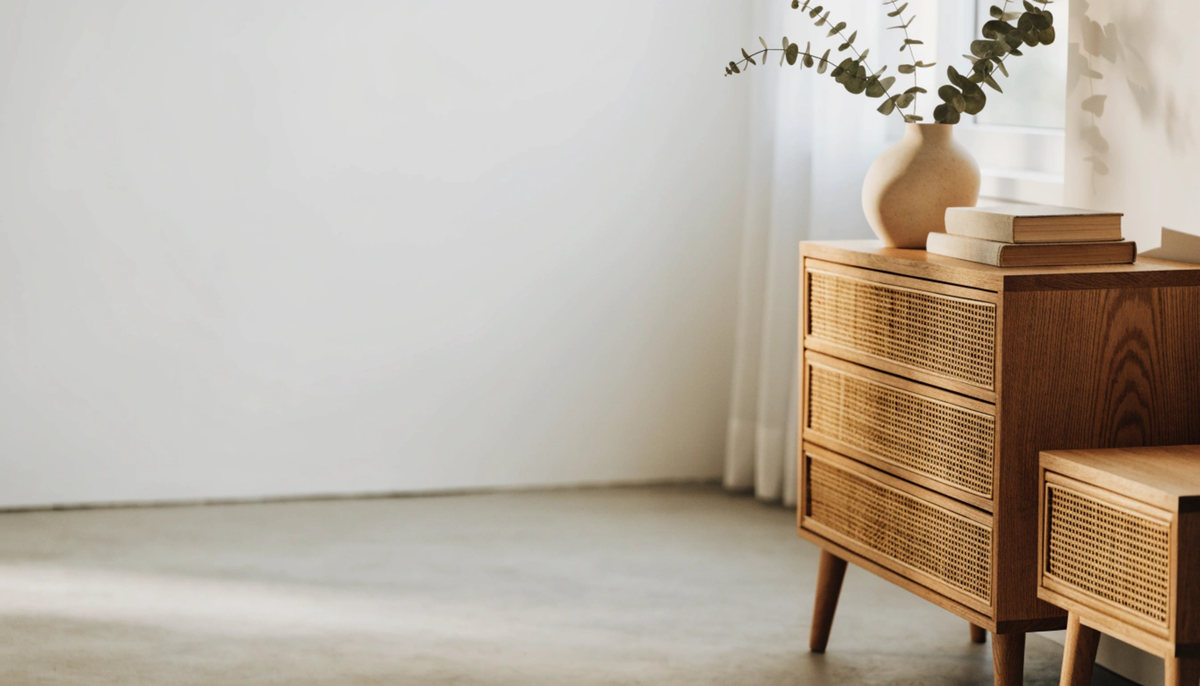
What Is Rattan Furniture? A Buyer Guide to Types and Care
LEARN MORE


Further reading

How to Choose a Nightstand for a CPAP Machine

How to Choose a Shoe Cabinet for Men's Sizes, High-Tops, and Bulky Shoes


