


















Narrow TV Stand Guide: Best Depth, Width and Styles for Small Rooms
Narrow TV stands are usually 10 to 16 inches deep. Regular ones are more like 16 to 20 inches deep. In a small living room, you lose those extra inches from the floor in front of the TV, and that's where you walk.
But depth isn't everything. Your TV's feet have to sit fully on top of the stand, and your PS5 or Xbox needs air around it. You also want to get through the room without bumping into stuff. We'd keep about 36 inches open for that, the same as the clear width used in ADA standards.
We start with depth below, then cover width, stand styles, and game consoles.
Please test this as part of the whole article rather than on its own. Detectors misjudge passages under about 150 words, so a short intro tested alone can score high either way.
What Is a Narrow TV Stand?

When someone says narrow, nine times out of ten they mean shallow, front to back. Width's a different question. A console can be 60 inches long and still be a narrow TV stand as long as it's only 12 or 15 inches deep.
Stores can't seem to agree on what to call these, which makes searching kind of a pain. You'll run into slim TV stand, shallow TV stand, thin media console, and low depth TV console, and they all mean roughly the same thing.
Narrow TV Stand Depth Chart
On the thin end,d there are ultra-slim consoles, around 10 to 13 inches deep. Those are great under a wall-mounted TV if all you're putting on them is a soundbar and a Roku.
Most small living rooms end up with a shallow TV stand somewhere in the 14 to 16 inch range. That's deep enough for a TV on its own feet plus one console, and it's what we end up recommending more than anything else.
Standard media consoles tend to be 16 to 20 inches. Then there are the big media cabinets, 18 to 22 inches or more, which were really built for receivers, turntables, and tower speakers. Put one in a tight room and it kind of takes over.
Something that trips people up: the depth listed online is the outside measurement. By the time you subtract the back panel, the doors and any cable channel, you might have 1 to 3 inches less to work with inside.
Why Depth Matters More Than Width in a Small Room

Width eats wall, and most rooms have wall to spare. Depth eats floor, which is what you're actually walking on. Make the stand 4 inches deeper and your coffee table, rug, and sofa all get squeezed 4 inches closer together.
It changes how big the thing looks, too. Think of a tall, deep cabinet in a 10 by 12 bedroom. It sort of looms over you. Swap in a low, shallow one on legs at the same width and it looks maybe half as heavy.
That said, you can go too far. Pick one that's too thi,n and the console hangs off the back, the HDMI plugs get jammed against the wall, and the heat has nowhere to go.
You're after the shallowest stand your gear still fits on without a fight. Not the thinnest one on the site.
What Is the Recommended Depth for a TV Stand?
In most homes, the recommended depth for a TV stand lands between 14 and 17 inches. That leaves space for a TV on its feet and a game console or cable box next to it.
If the TV's on the wall and there's only a soundbar under it, 10 to 13 will do.
Checking your own setup is pretty simple. Grab the deepest thing you own, measure it, and add 3 or 4 inches for plugs and cables. A standard PS5 lying flat is about 10.2 inches deep, so you'd be looking for roughly 14 inches of usable space inside.
How Wide Should a Narrow TV Stand Be?
Measure the Real TV Width

TVs are sold by the diagonal, which is why a 65-inch TV is really only about 57 inches wide. The spec sheet will have the actual width. While you're on that page, find out how far apart the feet are too, because that matters just as much.
As a rough guide, a 43-inch TV is about 38 inches across and looks right on a stand 42 to 48 inches wide. A 55-inch is closer to 48 inches wide, so something between 52 and 60 works.
With a 65, you'd want 60 to 66 inches of stand. A 75-inch TV is around 66 inches wide on its own, so you're shopping in the 70 to 78 range.
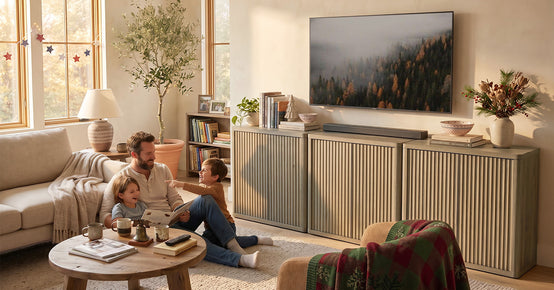
What you're going for is 2 or 3 inches of stand peeking out on each side. It looks balanced, and the edges of the screen don't take a hit every time someone squeezes past with a laundry basket.
Is a TV Stand Too Narrow for My TV?
If the feet hang over the edge at all, it's too narrow. Lots of newer TVs have their feet way out near the corners rather than one stand in the middle, so measure from the outer edge of the left foot to the outer edge of the right.
Two other warning signs. The stand's weight limit is lower than the TV and soundbar put together, or the whole thing looks top-heavy when you stand by the door and look at it.
Mounted TVs are a different story. The stand underneath isn't holding any real weight, so it can be a bit narrower than the screen.
Get the Height Right Too

Height matters just as much for comfort. From the couch, the middle of the screen should be about at eye level. Any higher and your neck will let you know halfway through a movie. Our guide on how high a TV stand should be breaks it down by TV size.
Best Types of Narrow TV Stands for Small Spaces
Sometimes the better move is a different kind of stand, not a smaller version of what you've already got. Everything below works as a TV stand for small spaces. They just fix different problems.
Low Profile Shallow Media Console

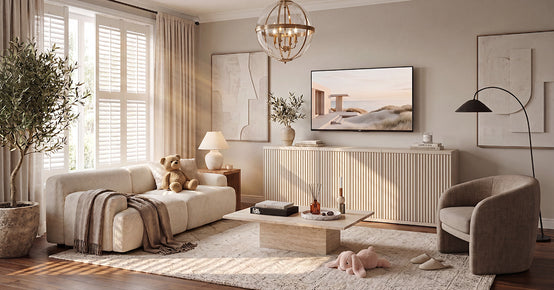
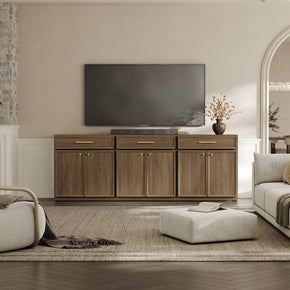
This is what most people picture when they think of a TV stand, and there's a reason it's popular. Doors to hide the mess, a flat top for the TV, and it looks like regular furniture.
For a small living room, we'd stay around 14 to 16 inches deep and under 26 inches tall.
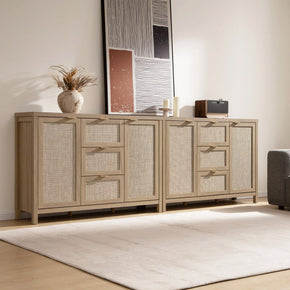
The Willow low-profile TV stand, 61.3 inches wide, is a nice example. It's about 15.4 inches deep and just under 25 inches tall, and the two doors are good for hiding game controllers and that ugly router.
Compact Cabinet for Bedrooms and Corners

Bedrooms and awkward corners usually don't need a long console. A small cabinet is enough for a smaller TV, and the remotes and phone chargers can live inside it instead of piling up on top.
The Prelude 2 door TV stand with storage is 14 inches deep and a bit over 29 inches wide. It fits nicely under a bedroom TV, or you can put it beside a wall-mounted screen and use it as a media cabinet.
Floating TV Stand

A floating stand screws right into the wall and doesn't touch the floor at all. Seeing the floor underneath makes the room feel bigger, and you can actually get a vacuum under it, which is a nice bonus.
It has to go into studs or masonry with proper anchors, though. Plain drywall anchors aren't going to hold a shelf with a TV and a console sitting on it.
Easel or Floor TV Stand

These hold the TV up on an A-frame or a single pole. They barely take up any floor, and you don't have to put holes in the wall, which is why renters love them. The catch is you lose most of your storage.
Before you order one, make sure your TV's weight and its VESA mounting pattern both fall inside what the stand says it can handle.
Shallow Sideboard or Console Table
A shallow sideboard can pull double duty as a TV stand, as long as it's about 24 to 30 inches tall, rated for more than your TV weighs, and has some way to run cables out the back.
A lot of them don't, so look at photos of the back before you buy.
How Much Clearance Does a Narrow TV Stand Need?

When you measure, think about how much room the stand takes up when it's open, not just closed. A 14-inch-deep stand can need 30 inches of floor once a door swings out.
Start with the closed depth, wall to front edge, and count handles or a top that overhangs. Then add the door swing. A hinged door adds its whole width out in front, while sliding or tambour doors add pretty much nothing.
Most stands also end up an inch or two off the wall because of plugs and power strips, so count that in. And try to keep around 36 inches clear on the main path through the room.
The painter's tape trick is worth the five minutes. Tape the outline on the floor, pretend to open the door, and walk past a few times the way you normally would, maybe holding a plate of food.
Will a PS5 or Xbox Fit in a Slim TV Stand?
Measure the console with everything plugged in, because HDMI and power cables stick out another 2 or 3 inches. Then compare that number to the inside depth of the stand. The outside number doesn't really tell you anything here.
Leave Room for Airflow

Heat's the bigger problem. Sony's PS5 safety guide says not to run the console inside a closed cabinet, and to keep it at least 10 cm (about 4 inches) from the wall.
That means you're looking for open bays, vent holes, mesh or slatted doors, or a back panel you can take off.
Choose Open Shelves for Hot Devices
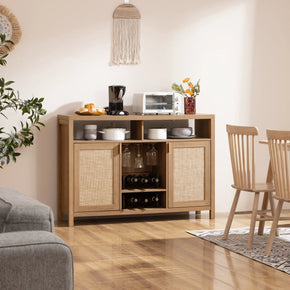
What we like is putting the console and receiver on open shelves and tucking everything else away. The Cas 65 inch TV stand with cable management is set up exactly like that, open display space next to closed storage, so the hot stuff gets air and the cables stay hidden.
Open vs Closed Storage on a Shallow TV Stand
Open shelves win on airflow, and you can grab things fast, but anything on them is always on display. Hinged doors hide the mess, though they need room to swing and they keep the heat in.
Sliding or tambour doors get around the swing issue, but only half the cabinet opens at a time. Drawers are great for remotes and controllers and pretty bad for electronics. A flip-down door gives you wide access; it just takes up floor space while it's hanging open.
In most small rooms, a mix ends up working best. One open section for the electronics, doors or drawers for everything else.
How to Make a Small TV Stand Look Lighter

Raised legs help a lot since you can see the floor under the stand. Light oak, white, or beige finishes kind of disappear against pale walls.
Keeping only two or three things on top makes a bigger difference than you'd expect. And one stand that's the right size looks better than two little cabinets shoved together.
Matching the rest of the furniture helps too. Take a look through our space-friendly living room furniture if you want a coffee table or side cabinet in the same finish.
Best TV Stand for a Small Living Room
Which one's best really comes down to what you own and how you watch.
If the TV's on the wall and you've only got a soundbar, a floating stand or an ultra-slim console at 10 to 13 inches is plenty.
With the TV sitting on the stand and one game console next to it, look for a shallow console with an open bay, around 14 to 16 inches deep.
If you've got a lot of cables and extras, a closed cabinet with cable holes at 15 to 16 inches keeps things tidy.
If you rent and can't drill, go with a freestanding low console or an easel stand. Depth matters less in that case. Just keep it low.
For a 65-inch TV in a smaller room, the Savanna TV stand for 65-inch TVs is worth checking out. It's about 61.5 inches wide and 15.6 inches deep, with two doors and cable management built in.
Narrow TV Stand Safety and Stability
A shallow stand has a smaller footprint, so it tips more easily. The CPSC says US emergency rooms treat an average of 17,800 tip-over injuries a year, and 44 percent of the people hurt are kids under 18. That number stuck with us.
First, check that the weight rating covers the TV, soundbar, and whatever else is going on there, and that every TV foot sits fully on the top.
Then use theanti-tipp straps that come in the box to anchor both the TV and the stand to the wall. If you really can't anchor anything, at least push the TV as far back as it'll go.
Alternatives to a Narrow TV Stand
If depth is the real problem, you might not need a stand at all.
Wall mounting the TV with no cabinet saves the most floor space, and a floating shelf under it can hold a streaming box and soundbar.
A sturdy console table can work if the TV feet fit on it. A shallow sideboard gives you real storage at 14 to 16 inches deep. And for renters, or rooms that switch roles a lot, an easel or rolling floor stand is easy to move around.
Final Takeaway
The best narrow TV stand isn't the thinnest one you can find. It's the shallowest one that holds your TV safely, lets your devices breathe, and still leaves you a clear way through the room.
Before you start shopping, measure three things: the TV width, the gap between the feet and your deepest device. After that, compare sizes across our TV stands and media consoles and go with whatever fits your wall.
FAQs
What is a good TV stand with a narrow base?
Something low and shallow, around 12 to 15 inches deep. A floor stand with a weighted base works too. Whichever you pick, the TV feet have to fit fully on top,p and the weight rating needs to cover your TV.
What is the recommended depth for a TV stand?
Usually 14 to 17 inches. If your TV's mounted and you don't have many devices, 10 to 13 inches is fine.
What are the best TV stands for small spaces?
Low-profile, shallow consoles and floating stands are the go-to picks. Easel or floor stands, compact corner cabinets, and shallow sideboards can all work too, depending on your room.
What is a good TV stand for a small room?
Somewhere around 12 to 16 inches deep, under 26 inches tall, and 2 to 3 inches wider than the TV on each side. It's also worth matching the TV size to how far back you sit; the RTINGS size-to-distance calculator makes that easy.
What are some alternatives to narrow TV stands?
You could mount the TV with no cabinet at all, or use a floating shelf, a sturdy console table, a shallow sideboard, or an easel stand instead.
What is the thinnest TV wall mount available?
Low-profile fixed mounts are the slimmest type, and some hold the TV about an inch from the wall. How close it actually gets depends on the mount, the shape of the TV's back, and where the ports are.
What is the best TV cabinet for a small space?
We'd look for something around 14 to 16 inches deep with sliding doors or an open bay, cable holes, and a vented back. Raised legs help it look lighter, too.
Is a TV stand too narrow for my TV?
It is if any of the feet hang over the edge, or if the weight rating's too low. Measure across the outside of the feet. The screen size won't tell you.


Looking for something else?

Best Nightstand Height and Placement for an Adjustable Bed
LEARN MORE
Why Adjustable Shelves Matter When Buying a Shoe Cabinet
LEARN MORE
How Wide Should a Sideboard Be Compared With Your Dining Table?
LEARN MORE
How Deep Should a Bookcase Be? Pick by Book Size and Room Clearance
LEARN MORELooking for something else?

TV Stand Weight Capacity: How to Check It Before Mounting Your TV
LEARN MORE
Dresser With Mirror vs. Without: Which Setup Works Better?
LEARN MORE
How Deep Should a Nightstand Be_ A Bedside Fit Guide
LEARN MORE


Further reading

Nightstand Dimensions: Width, Depth and Height by Bed Size
Narrow TV Stand Guide: Best Depth, Width and Styles for Small Rooms


