



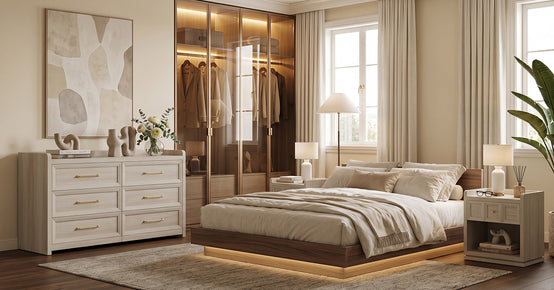





How to Choose a Dresser for a Rental: Assembly, Moving, and Wall Anchoring
Buy the dresser for the move you haven't scheduled yet. Measure your narrowest doorway and stairwell before you order — not the room itself, but the whole path the dresser has to travel. Go for a design that comes apart into small, light pieces instead of showing up as one heavy box. And strap it to a wall stud with a removable anti-tip strap — a freestanding dresser in a rental is a risk you just don't need.
Plan for Moves, Not Just Rooms
Most dresser guides act like the thing arrives once and then never moves again. When you rent, your furniture runs on a lease cycle — truck or car trunk, assembly on the living room floor, twelve to twenty-four months of use, then everything in reverse.
The real question is whether it fits your next bedroom — and the truck and stairwell in between. A dresser that doesn't come apart cleanly ends up abandoned on the curb — or cracked at the joints the second time you put it together. Here's the renter's rule: if you can't picture yourself taking it apart in an empty apartment with two people and a screwdriver, don't buy it.

Measure First: Doorways, Stairs, and Room Space
Before you fall in love with a 60-inch-wide dresser, grab the tape measure — three things matter.
● Your narrowest doorway on the delivery path. Bedroom doors in rentals are usually 28 to 30 inches wide, and the stops and hinges steal another inch off that. Measure the clear opening — not the door slab.
● Then the stairwell, including every turn. Even if a dresser clears your door, it can still jam on a landing with a low ceiling or tight turn — measure stair width and headroom at each one.
● Now the room, drawers open: a 17.7-inch-deep dresser needs another 15 to 18 inches of drawer swing plus a 24-inch walkway, so you're looking at roughly 58 inches of clear floor. Save the numbers in your phone and check every product page against them.
Flat-Pack vs. Mostly Assembled: What Matters for Renters
Flat-pack has one unbeatable renter advantage: cartons a single person can carry. Two long, flat boxes fit in a car trunk and go up narrow stairs with one person. A mostly assembled dresser shows up as one rigid box — you'll need two people and a wide hallway.
The real trade-off is the fasteners. Flat-pack means cam locks, dowels, and screws biting into engineered wood — and honestly, every time you assemble it, those joints wear a little more. A mostly-assembled unit won't break down when the lease ends.

For most renters, flat-pack with decent hardware wins. Keep the manual — SICOTAS dressers ship with one in the box plus an included wrench, and a four-drawer takes about 45 minutes. And ask before you order: does the seller offer replacement hardware? A lost cam lock should be a five-minute email to support, not a new dresser.
How Heavy Is Too Heavy? The Two-Person Rule
If one strong adult can't safely lift one end of the assembled dresser, it's a two-person piece — on assembly day and moving day alike.
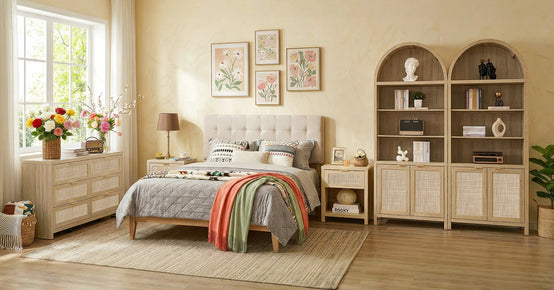
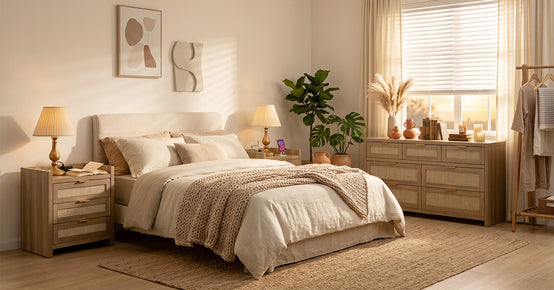
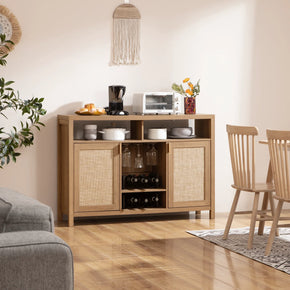
Look at the assembled weight, not the shipping weight. The Savanna Rattan 4 Drawers Dresser is listed at 124 lb assembled, 29.52 inches high by 60.82 wide — that's a two-person carry.

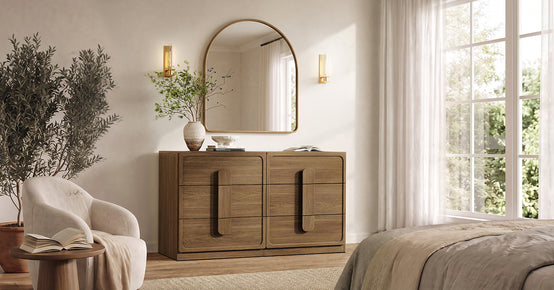
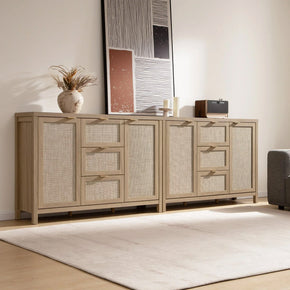
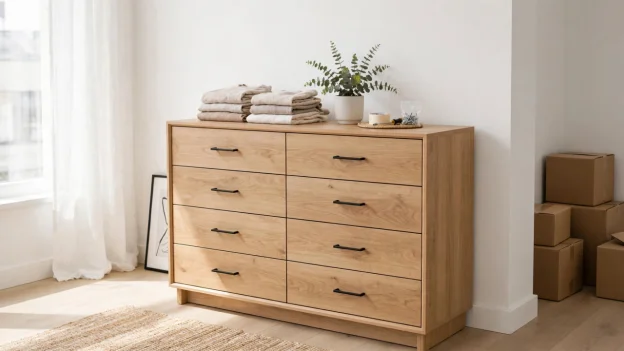
Modular designs change the math. The Crescent Modular 26.6'' Tall 9 Drawers Dresser splits into three separate units, each 26.6 inches high by 31.3 inches wide, shipped in three packages. Come moving day, you're hauling three small cabinets instead of one 56-inch monster.
Fasteners Decide Whether It Survives the Second Move
Fasteners don't all age the same — and that's what decides if your dresser gets a second life.
● Cam locks and dowels in engineered wood will survive two to four careful assemblies if you never overtighten. After that, expect wobble.
● Screws driven straight into particleboard are the weakest choice for repeated moves. They strip fast wherever weight bears down. If that's all the dresser offers, accept it: you've bought a one- or two-move piece.
● Bolts into metal threaded inserts: the best option for movers. Metal on metal survives many cycles, which is why tool-free locking designs earn loyal reviews — buyers of the Simply Built Screw-U Dresser repeatedly cite 10 to 20 minute assembly and easy takedown.
● Metal roller glides beat wooden runners on drawers — they last longer and come through disassembly better. From day one, treat the hardware like it's irreplaceable: bag every spare screw, dowel, and cam lock, label the bag, tape it inside a drawer. Snap a photo of each assembly step while you work.
Taking It Apart in One Piece
Rushed takedowns cause most moving damage: split panels, screws lost in the couch cushions, drawer fronts scuffed from careless stacking.

● Empty it completely, pull every drawer, and stand them upright against a wall, fronts out. Take photos of the back and underside — you'll thank yourself when it's time to remember where each bracket and glide sat.
● Back panel screwed or nailed on? Pull those fasteners first. It's the most fragile piece and the first one to crack. With cam locks, go top to bottom: loosen them, never force them. Cam won't turn? Check the alignment — don't muscle it.
● Sort the hardware into bags by section — top frame, left side, drawer glides — label each one, and tape it to its panel so nothing wanders off. Wrap panels in moving blankets — or the original cartons if you were smart enough to keep them — and stack flat, heaviest on the bottom.
How to Anchor It and Keep Your Deposit
● Drywall over studs — best case. Stud finder, one small pilot hole per strap, spackle the holes when you move out.
● No stud behind the drywall? Toggle bolts or snap toggles, rated for the load.
● Plaster and lath needs a slow drill with a masonry bit, or the plaster cracks. Concrete or brick means a hammer drill and sleeve anchors. That's the one wall where I'd ask the landlord first — those holes aren't going anywhere.
Go with a fabric anti-tip strap over a rigid L-bracket where you can — straps flex, install with two small screws, and come off cleanly. Many dressers ship with an anti-tip kit — the SICOTAS 4-drawer manual lists a wall anchor and strap right in the included hardware. Install it on day one.

If Your Lease Bans Holes Entirely
Some leases forbid wall fasteners outright, and no workaround truly replaces a real anchor.

Put the dresser in a corner so two walls brace it against tipping sideways. Load the heaviest stuff in the bottom drawers and keep the top light — a bottom-heavy dresser is way harder to tip. Or just start with a lower, wider dresser — a 29-inch-high four-drawer is naturally more stable than a tall chest.
So what doesn't work? Adhesive hooks, tension rods, wishful leaning. And if the lease is strict, ask about the strap option in writing anyway — I've seen landlords who refuse shelves say yes to two tiny anchor screws once they understand it prevents damage and liability. Get the yes in an email.
Protecting Floors You'll Be Inspected On
Dragging a 124-pound dresser six inches across oak or laminate is exactly the kind of floor damage rental inspections love to find — and it's cheap to prevent.
Stick felt pads on every foot before you load a single drawer, and swap them yearly — they compress and pick up grit. Never drag it. Lift it — even to shift it an inch — or slide it on a moving blanket or rug remnant. On hard floors, slide a low-pile rug under the footprint: it spreads the load and traps scratching grit.

Move-Day Checklist
Run it in order — boring is the goal.
● Two weeks out: re-check the new place's doorway and stair measurements against the dresser's assembled size. One week out: felt pads, zip bags, a marker, spackle. Night before: empty every drawer, bag the saved hardware, charge the drill.
● Moving morning: drawers out, backs and brackets photographed, disassemble top to bottom, every bag labeled. Loading: panels flat, heaviest at the bottom, blankets between, drawers upright.
Two Dressers Built for the Morning Life
Here are two SICOTAS dressers run through the renter's checklist.
|
Crescent Modular 26.6'' Tall 9 Drawers Dresser |
Savanna Rattan 4 Drawers Dresser |
|
Best for |
Frequent movers, walk-ups, small cars |
A longer stay, big wardrobes, style-first rooms |
|
Assembled size |
56.4 W x 31.3 H x 16.9 D in, as three 26.6 H x 31.3 W units |
60.82 in W x 29.52 in H x 17.72 in D |
|
Weight |
Split across 3 packages, carried per unit |
124 lb assembled — two-person crew |
|
Assembly |
Manual included, modular units build separately |
45 minutes, wrench included |
|
Move advantage |
Breaks into three small cabinets |
Fewer pieces to track, solid one-piece frame |
|
Anchor kit |
Check the box contents on arrival |
Anti-tip wall anchor and strap included |
Move every year or two and the modular design pays for itself the first time you haul it downstairs in pieces. Planning to stay a while? The four-drawer's the simpler machine. Either way: measure the doorways, weigh the assembled dresser against your crew, and settle the anchoring before the truck's booked.
FAQs
Can I anchor a dresser in a rental and still get my deposit back?
Yes: a fabric anti-tip strap into a wall stud leaves two small screw holes to spackle on move-out — most leases count that as normal wear. A short written note to your landlord covers you. Two tiny holes beat a tipping dresser.
What's the best way to get a dresser up a narrow apartment staircase?
Empty it fully, pull every drawer first. That alone can halve the carrying weight. Before moving day, measure stairwell width and headroom at every turn, station one person at each end, and wrap the corners in a blanket. Won't make the landing turn? Take it apart instead of forcing it.
As a renter, is flat-pack or pre-assembled better?
For most renters it's flat-pack — cartons one person can carry, fits in a car trunk, and breaks back down at lease end. Mostly assembled moves as one rigid box — two people and a bigger vehicle. Fastener quality is the decider — sturdy cam locks or bolts into metal inserts survive several moves.
How many teardowns and rebuilds can a dresser survive?
All about the hardware. Cam locks and dowels in engineered wood: two to four careful cycles before the holes loosen. Screws in particleboard strip out much faster; bolts into metal inserts keep going for many cycles. Don't overtighten, keep spare hardware handy, and quit forcing any joint that fights back.
No kids around — do I really need to anchor the dresser?
Yes — a fully loaded top drawer pulled all the way out shifts the center of gravity forward fast, and tip-overs happen to adults too. Anchoring takes ten minutes with a strap and two screws. Do it on assembly day, not "eventually."
What should I do with the drawers on moving day?
Take them out and stand them upright against a wall, fronts facing out — never stack face-down, or the fronts scratch and joints take the load. On the truck they ride upright with a blanket between them, and the hardware bag goes taped inside one drawer.
How do I protect hardwood floors from a heavy dresser?
Felt pads on every foot before you load a single drawer, and never drag it — lift, even for small adjustments. A low-pile rug under the footprint spreads the load across hard floors. Put fresh pads on at the new place — the old ones peel off in the truck.
What measurements do I need before buying a dresser for a rental?
Three numbers: the clear width of your narrowest doorway (measure the opening, not the slab), stairwell width and headroom at each turn, and room depth with drawers open — the dresser depth plus 15 to 18 inches of extension plus a 24-inch walkway.


Looking for something else?

One-Drawer vs. Two-Drawer Nightstands: Which Is More Useful?
LEARN MORE
Adjustable vs. Fixed Bookcase Shelves: Which Is Better for Real Storage?
LEARN MORE
How to Choose a Dresser for Sweaters, Denim, and Bulky Clothes
LEARN MORE
Mixed-Depth vs. Uniform Dresser Drawers: Which Layout Fits Your Wardrobe?
LEARN MORELooking for something else?

How to Choose a Low Dresser for Under a Bedroom Window
LEARN MORE
How to Choose a Dresser for a Rental: Assembly, Moving, and Wall Anchoring
LEARN MORE
How to Choose a TV Stand for an Ultra-Short-Throw Projector
LEARN MORE


Further reading

Small Bedroom Furniture: What to Keep and Skip

Large Bedroom Ideas: How to Fill a Big Room Well


