

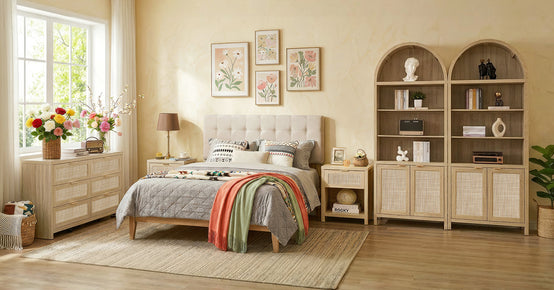
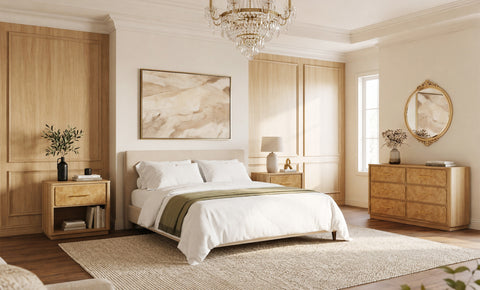
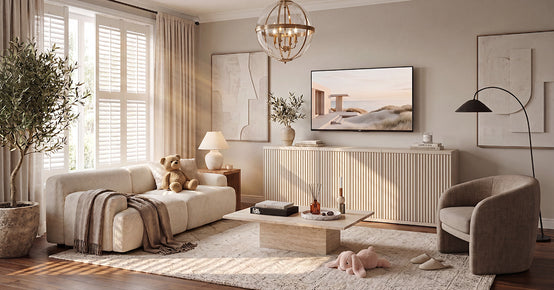
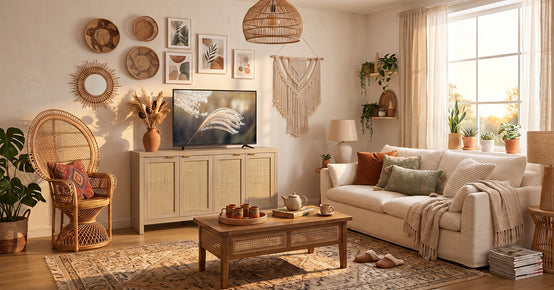






Fluted Nightstand Guide: Meaning, Sizes, Styles and Care Tips
Ever seen a nightstand with skinny vertical grooves running down the drawers and thought, huh, that looks expensive? That's a fluted nightstand.
Catch it in morning light, and every rib casts its own thin stripe of shadow, like a little barcode, and a pretty basic bedside box starts looking designer. Lots of texture, no extra clutter.
Weirdly, the trick is ancient. Fluting on classical columns goes back to ancient Greece, and now the same idea turns up on dressers, headboards, fluted bedside tables, and ribbed nightstands in about every furniture catalog, usually in light oak, white, or black, which would probably confuse a Greek stonemason.
We'll untangle the jargon first, then work out what size you need and admit where the look kind of falls flat, because it does have weak spots, and after that comes the fun part: styling one in your actual bedroom.
What Does Fluted Nightstand Mean?

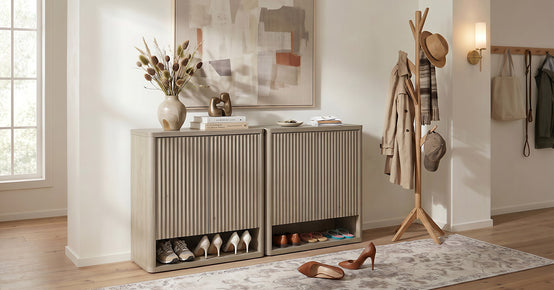
Okay, so fluted is really just a fancy furniture word for grooved. On a fluted nightstand, you'll see shallow, rounded channels running up and down the front, the sides, or the legs, and they're actually shaped into the panel. Not a sticker. Not a clever paint job. Real grooves.
How far brands take it varies a ton. Some just do the drawer fronts. Some wrap grooves around the whole case like it's wearing corduroy pants. And a few go all out with fluted legs, or a round fluted pedestal base that looks a bit like a cake stand.
Fluted vs Reeded vs Ribbed Nightstands

If you've ever mixed these words up, you're in good company; pretty much everyone does. The easiest way to keep them straight is:s fluting is cut in, reeding sticks out, as Houzz explains in its fluting and reeding guide.
|
Term |
Surface |
What It Looks Like |
Common On |
|
Fluted |
Concave grooves cut into the surface |
Soft shadow inside each channel |
Drawer fronts, cabinet doors |
|
Reeded |
Convex ridges that stand out |
Rounded rods side by side |
Glass doors, table legs |
|
Ribbed |
Loose term for either look |
Evenly spaced lines |
Nightstands, headboards |
|
Slatted |
Separate strips with gaps |
Open, airy lines |
Doors that need airflow |
Then stores muddy it further by calling the exact same product a ribbed nightstand on one page and a fluted nightstand on the next.
Hunting for the true fluted look? We pinch-zoom the close-up photo like it's a suspicious text from an ex. Lines dipping into the wood mean fluted, and bumps poking out mean somebody's selling you reeding.
What Design Style Is Fluted?
It all started on columns, believe it or not. And yes, somebody actually counted: a Doric column gets 20 grooves, and Ionic and Corinthian columns usually get 24. Totally useless info, unless you're at pub trivia, in which case you're welcome.
Then a bunch of centuries went by, and fluting kept sneaking back into style like a song your parents loved. Art Deco folks were obsessed in the 1920s. Mid-century designers? Also obsessed.
These days it sits in that comfy middle ground between modern and traditional, and honestly that's its secret, because it means a fluted bedside table can slide into almost any room you throw at it.
Is fluted wood modern? As it's done now, yeah, we'd say so, because boxy shapes, matte paint, and tiny pulls make it read as totally modern furniture that just happens to have a 2,000-year-old family tree hiding behind it.
Why Fluted Bedside Tables Are So Popular
Texture, mostly. A plain flat front is fine, but it's kind of the plain toast of furniture, and grooves are the butter and jam, giving your eye something to wander over without you repainting a wall or buying one more throw pillow.
• It adds depth. Light slides across the channels as the day goes on, so even a white nightstand ends up with some shadow and shape.
• Fingerprints hide better. Smudges and little scuffs get lost in the lines instead of sitting right there on a flat face.
• Some fronts need no hardware. On certain designs, the ribs double as a grip for your fingers.
• Most rooms can take one. It looks right in modern, boho, farmhouse, coastal, even glam rooms. That's a weirdly long list for one little detail.
• It looks made to order. A pretty simple case with fluting on it often feels a lot more custom than it really is.
Pros and Cons of a Fluted Nightstand
Nothing's perfect, fluting included. This table lays out both sides before you buy.
|
Pros |
Cons |
|
Adds texture to a plain room |
Dust settles in the grooves |
|
Hides fingerprints and light scuffs |
Takes a little longer to wipe clean |
|
Works with many decor styles |
Too much fluting can feel busy |
|
Looks more detailed than flat fronts |
Hard to repaint with a roller |
|
Vertical lines make short pieces look taller |
Poor quality ribs can chip at the edges |
What are the disadvantages of fluted panels, then? Mostly cleaning, plus the risk of overdoing it. A House Digest article on the fluted trend quotes a designer who warns that putting fluting on everything is going to date fast, and her advice is to keep it small in scale.
A nightstand is pretty much the perfect small dose of it. All the texture, none of the commitment of a whole fluted wall.
How to Choose the Right Fluted Nightstand
Looks matter, obviously. But if we're being practical, the stuff you'll notice every single night is size, storage, and how well the thing is built, so we'd nail those down before falling for a finish.
Want to see one-, two-, and three-drawer layouts side by side? The Cas fluted nightstand collection lines them all up.
Height and Width

Here's the one measurement that matters. With your bed made (comforter and all, because that puffy thing adds an inch or two), measure from the floor to the top of the mattress.
Write it on your hand if you have to. Your nightstand height should land right there or 1 to 2 inches above it, and for most beds that's somewhere between 24 and 28 inches.
|
Bed Size |
Suggested Nightstand Width |
Notes |
|
Twin or Full |
18 to 22 in |
Keep a clear path to the door |
|
Queen |
20 to 26 in |
Most 2-drawer styles fit here |
|
King or Cal King |
24 to 30 in |
A wider or 3-drawer piece balances the bed |
And please don't shove it right up against the bed frame, because a 2- or 3-inch gap gives the drawer room to open and saves future you from groping around for the lamp switch at 3 a.m. like a raccoon in a dark kitchen.
Drawers and Storage

Do a little inventory of what really piles up by your bed, which for us means books, chargers, glasses, hand lotion, and a sleep mask that's been used exactly twice, and you'll probably find that two drawers handle all of it.
We like using the Cas 2-drawer fluted nightstand as a benchmark. It's about 24.4 inches tall and 22.7 inches wide, with two drawers hiding behind those fluted fronts, and each one has roughly 6 inches of room inside, enough for a paperback with a charger tossed on top.
Peek at the hardware while you're at it, because metal roller glides keep drawers sliding smoothly and safety stops keep a heavy drawer from shooting out and landing on your foot in the middle of the night, which is not a fun way to wake up.
Material and Build Quality
Solid wood lasts the longest, no argument there, but good luck finding it on many fluted pieces, since most are MDF or engineered wood, and that's fine because a well-made one will last you years.
Zoom in on the grooves, because they're kind of a tattletale about quality. Good ones are crisp and evenly deep from top to bottom, like somebody used a ruler.
Wobbly, melted-looking ribs usually mean a thin veneer stretched over a shaped core, and we'd keep scrolling. Then do the thing store employees secretly hate and run a finger down the edges. You want smooth, not splintery or chippy.
One more nerdy thing: engineered wood sold in the US has to meet EPA formaldehyde limits for composite wood, so if the listing mentions a TSCA Title VI label, that's a nice little bit of peace of mind.
Groove Size and Finish Color

Groove size is sneakier than you'd think. Pencil-thin flutes kind of whisper, which is great when the room's tight, while chunky ones shout a bit, so we'd give those some empty wall space, or the corner by the bed gets crowded fast.
• White or cream: our pick for a small bedroom, hands down. It makes a 10 by 10 room feel like it got a few extra feet.
• Light oak: the easygoing one. Linen, rattan, a slightly droopy pothos- it gets along with all of them.
• Walnut or coffee oak: the cozy pick, and under a warm lamp at 10 p.m. it's the one we'd want next to our bed.
• Black or charcoal: super dramatic against light walls and white sheets, though it kind of vanishes against dark paint.
• Gray: quiet and modern, and weirdly good next to a chrome or brass lamp.
Finish tip: go matte, because gloss glares and smears the grooves together. And if warm wood is more your thing, the Domus nightstand comes in warm oak tones: light, warm, or coffee oak, all with two drawers. We'd pick coffee oak, but we're biased toward anything named after coffee.
How to Style a Fluted Nightstand in Any Bedroom
Funny how a nightstand changes depending on who it lives with. Picture the same model in your room and in your cousin's, one with a brass lamp and a velvet throw, the other with a stack of library books and a sleepy cat.
You'd swear they were two different pieces. So jump to whichever look below sounds like you.
Modern and Minimalist

You know that friend whose apartment looks like nobody lives there, in a good way, with clean floors, one really nice chair, and nothing on the dresser? Be that friend.
Black, white, or gray fluting is the move here, ideally with no pulls at all (or teeny ones). One sculptural lamp goes on top. A ring dish if you really must. Then step away and let the grooves do their thing, because they're the decoration here.
Japandi and Scandinavian

Japandi rooms are the ones where you take your shoes off without being asked. Light oak with skinny flutes fits right in. The tricky bit is not overdoing it.
Our rule of thumb? If dusting the top takes more than one swipe, something's gotta go. The duvet should be linen and a little wrinkly. The lamp should be paper. One plant, tops. Colors? Oatmeal, sand, and the kind of sage green you'd only notice on a second look.
Mid-Century Look:

Mid-century is the cheat code of this list, because walnut or warm oak on tapered legs looks right before you've unboxed the lamp. Still, go brass or globe for that lamp and throw a patterned rug down, or all that smooth wood starts giving dentist's waiting room, circa 1964.
Boho and Coastal

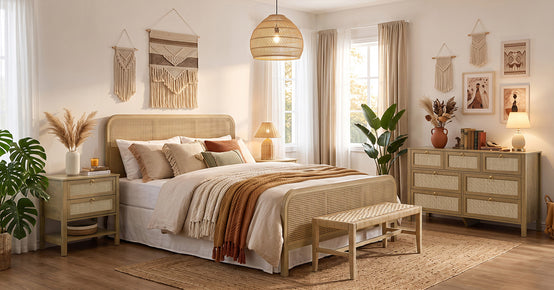
Ever notice how rattan and fluting look like they were made by the same person? Our go-to combo is a light wood nightstand, a rattan headboard, a jute rug that's a little scratchy on bare feet, and a ceramic vase of dried pampas that will shed on literally everything.
Worth it, though. The room starts to feel like a beach rental you never want to check out of.
Farmhouse and Transitional
Farmhouse rooms have a way of getting heavy, between the reclaimed beams, the iron bed, and the shiplap somebody's uncle put up. A white or cream fluted bedside table lightens things up.
Up top, we'd go with a linen shade lamp, a couple of library books (overdue, probably), and a little wooden tray for your keys. Pulls in black or brushed nickel will tie in with the door handles, and probably the bed frame too, if it's iron.
Glam
Glam is the one room where more is more, mostly. Black or deep green fluting, gold pulls, a velvet headboard, a mirrored tray, yes, yes, yes. But that's the limit for shiny stuff on one nightstand, because a fourth gleaming thing and the grooves start losing the fight for attention.
Styling Tips That Show Off the Grooves
Light It From the Side

Want to see fluting at its best? Wait until golden hour, when sunlight comes in sideways, and every groove gets its own skinny shadow. A table lamp or wall sconce off to one side fakes that look all night long, while a ceiling light pointing straight down mostly flattens it.
Oh, and swap in warm bulbs while you're at it. Shadows look richer under them, and the Sleep Foundation says warm light is easier on your sleep than cold blue light, which we should probably apply to our phones too.
Keep the Top Simple
Our rule for the top is three things, max. A lamp, one thing that's just for you (a photo, a candle, the novel you've been on page 40 of since March), and one useful thing like a tray or a clock. Chargers and everything else go in the drawer.
Balance Texture Across the Room
We'd also keep it to one fluted piece per wall, or the room starts looking like a corduroy convention. Fluted nightstand? Smooth headboard. Fluted headboard? Plain nightstands. If it still feels stripy, we'd toss a chunky gray knit throw over the foot of the bed and call it a day.
Should Fluted Nightstands Match?
Nope! Matching pairs are calm and tidy, sure. But a mismatched pair can look like you dug them out of two different flea markets and they just happened to click, which is kind of the dream. Our guide on whether nightstands have to match gets into it a lot more.
If you go the mix and match route, keep the heights within an inch or two and give them one thing in common, maybe the wood tone, maybe the groove pattern.
Pairing With a Fluted Dresser

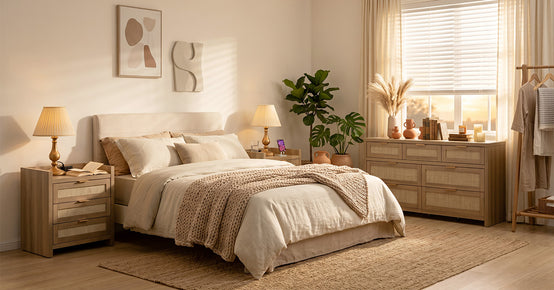
There's something really satisfying about a full fluted set, since the bedroom just looks finished, and the Stria 9-drawer dresser and Cas nightstand set pairs a long fluted dresser with two nightstands in matching finishes.
Fair warning, though: three bold fluted pieces in a row can feel like a lot. If the dresser's flutes are big and chunky, we'd pick nightstands with finer lines, or the other way around.
Mixing Fluted and Plain Pieces
Mixing is our favorite move, and a fluted nightstand beside a plain upholstered bed is the combo we keep coming back to. Tight on space? A fluted chest of drawers with two Cas night tables repeats the same grooves on three pieces so the bed can stay simple.
How to Clean and Care for a Fluted Nightstand

We won't pretend otherwise: dust loves those grooves, settles in way faster than it would on a flat front, and shows up the second you turn on a lamp. Luckily, a two-minute wipe once a week keeps it handled, less time than we spend hunting for the TV remote.
• A dry microfiber cloth, dragged down the grooves from top to bottom, does most of the work, honestly.
• Corners and deep lines? A soft paintbrush gets in there. So does the old blush brush you swore you'd throw out.
• Spilled tea? Happens. Use a cloth that's barely damp, wipe the sticky spot, then dry it with a towel before the water has a chance to sit, because MDF really doesn't like that.
• That can of silicone furniture spray under the sink? Leave it there. According to Reader's Digest cleaning advice, it can soften the finish over time, and then you've got a slightly tacky nightstand forever.
• Coasters and felt pads. Boring, sure, but they're the reason some nightstands still look new after five years.
Final Takeaway
So that's the deal with a fluted nightstand: more texture, fewer fingerprints, and it goes with pretty much any bedroom. If we had to boil all of this down, it'd be height first, a hard look at the grooves second, and finish color dead last.
Let one fluted piece be the star and go easy on the styling around it. Whenever you're ready, have a scroll through our full range of bedroom nightstands and find a fluted bedside table that fits your space.
FAQs
What does fluted nightstand mean?
A bedside table with rounded grooves running down the front or sides. Each groove is technically called a flute, hence the name. Under a lamp, they throw little stripes of shadow, so even a plain white one has some depth to it.
What design style is fluted?
Technically classical, since it goes back to Greek columns. These days, though, it shows up just about everywhere: modern and transitional rooms mostly, but also Art Deco, mid-century, Japandi, boho, even glam. Not a bad range for one little groove.
Is fluted wood modern?
Yep, since most of what's out there now has boxy shapes, matte paint, and little pulls, and that combo looks right at home in a modern bedroom.
Is fluted furniture timeless?
Pretty much, since fluting's been around for more than 2,000 years and calling it a fad would be a stretch, but it can go sideways with overuse, and one or two fluted pieces will age a lot better than a room where every surface has grooves.
What are the disadvantages of fluted panels?
• Dust loves to hide in the grooves
• Cleaning takes a little longer
• You'll need a brush, not a roller, if you ever repaint
• Too much of it can look busy
• Low-quality ribs may chip at the edges
How do you mix furniture styles in a bedroom?
• Repeat one wood tone or metal finish around the room
• Keep the heights close on both sides of the bed
• Let one piece lead and keep the rest low-key
• Use a shared color to tie old and new pieces together
How do you brighten up a bedroom that has dark furniture?
Ah, the espresso bedroom set problem. We'd start with the bed, since white or cream sheets brighten things up faster than anything. After that, a pale rug. Then hang a mirror across from the window so the daylight gets a second bounce. One white fluted nightstand helps, too.
What is the latest trend in interior design?
Texture and warmth, if we had to bet on one trend. Fluted wood and curvy sofas are all over our feeds, usually in earthy browns and creams. The all-gray look had a good run, but folks seem ready for rooms that feel cozy and actually lived in.


Looking for something else?

Best Nightstand Height and Placement for an Adjustable Bed
LEARN MORE
Why Adjustable Shelves Matter When Buying a Shoe Cabinet
LEARN MORE
How Wide Should a Sideboard Be Compared With Your Dining Table?
LEARN MORE
How Deep Should a Bookcase Be? Pick by Book Size and Room Clearance
LEARN MORELooking for something else?

TV Stand Weight Capacity: How to Check It Before Mounting Your TV
LEARN MORE
Dresser With Mirror vs. Without: Which Setup Works Better?
LEARN MORE
How Deep Should a Nightstand Be_ A Bedside Fit Guide
LEARN MORE


Further reading

Nightstand Dimensions: Width, Depth and Height by Bed Size

Narrow TV Stand Guide: Best Depth, Width and Styles for Small Rooms


