

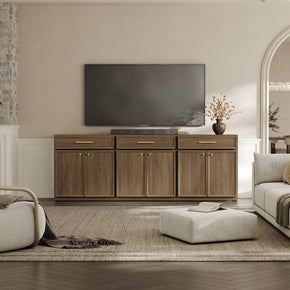
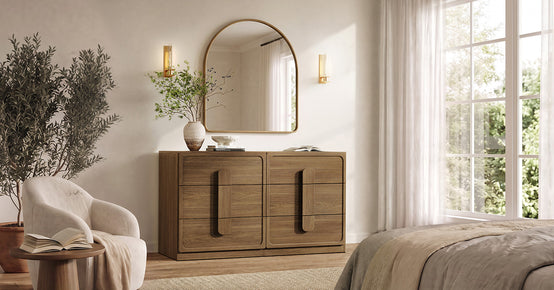
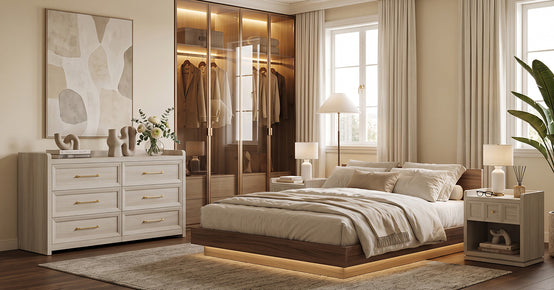
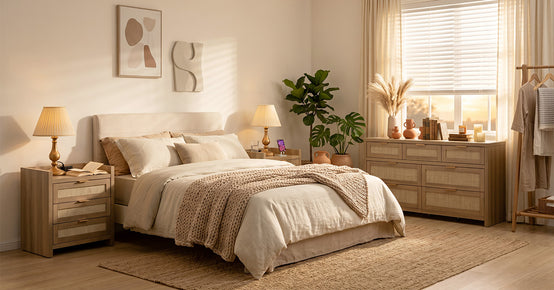
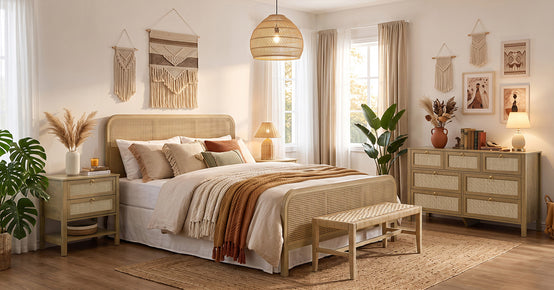
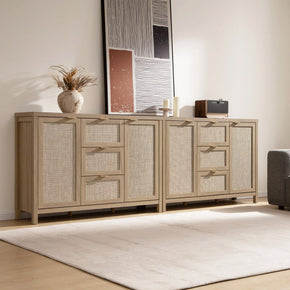
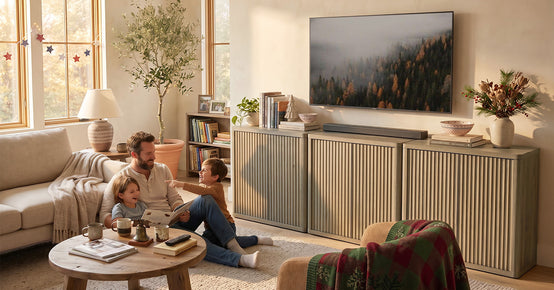
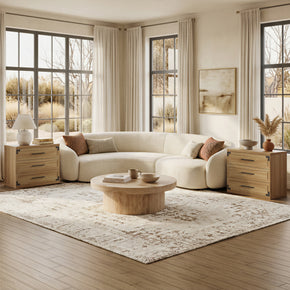



Dresser Dimensions Guide: Standard Width, Height and Depth by Type
Dresser dimensions trip people up more than you'd expect. It's a common story: the wall measurement is perfect, then the drawers hit the bed frame, or the mirror on top covers half the window.
Sizes are all over the place. You'll find dressers as narrow as 35 inches and as long as 70, and anywhere from 30 to about 55 inches tall. Depth is the odd one out, since it hardly changes and usually sits between 18 and 24 inches.
Where yours ends up depends on the style you like and the room you've got to work with.
In this dresser size guide, we cover standard sizes by type, drawer sizes, and how to measure your room. We also cover dresser dimensions that affect walking space, since a dresser can fit the wall perfectly and still leave you squeezing past it.
What Are Standard Dresser Dimensions?

Nobody has written an official rulebook for dresser sizes, which surprises people. Makers mostly stick to similar ranges and group dressers by shape, so the chart below is a decent starting point, as long as you double-check the listing.
|
Dresser Type |
Width |
Height |
Depth |
|
Standard horizontal |
50" to 70" (127 to 178 cm) |
30" to 36" (76 to 91 cm) |
18" to 22" (46 to 56 cm) |
|
Double dresser |
60" to 70"+ (152 to 178+ cm) |
30" to 36" (76 to 91 cm) |
18" to 24" (46 to 61 cm) |
|
Tall dresser or tallboy |
24" to 40" (61 to 102 cm) |
40" to 60" (102 to 152 cm) |
16" to 22" (41 to 56 cm) |
|
Combination dresser |
50" to 70" (127 to 178 cm) |
36" to 40" (91 to 102 cm) |
18" to 24" (46 to 61 cm) |
If you walk into a furniture store and ask for a standard dresser size, you'll likely be shown a long, low dresser with six to nine drawers. It's the one most of us had growing up.
Brands cut things a bit differently, though, so it pays to check the listing before you hit order.
Standard Dresser Width
Width is the number everybody checks first, and fair enough. It determines how much wall the dresser covers and how much room you have on top. In most houses, that top ends up holding a lamp, a tray, and a slowly growing pile of mail.
Narrow Dressers

We'd call anything under roughly 38 inches wide narrow. They're handy in small bedrooms, guest rooms, and that awkward strip of wall between a closet and a window, and most narrow models make up for the lost width by being taller.
Standard Width Dressers
Most bedrooms end up with a dresser somewhere between 38 and 58 inches across. That's room for one person's clothes plus a lamp and a tray on top, and it fits the average bedroom wall without a fight.
Wide and Double Dressers

Double dressers start around 60 inches and can run past 70. With two or three columns of drawers, two people can share one piece without arguing over the top drawer.
A few go even wider. The Crescent modular 9-drawer low dresser is 93.9 inches wide and 26.6 inches tall, built from three cabinets you can keep together or split up. Wider isn't always better, though, since more drawers mean more wall and more floor space.
Standard Dresser Height
Height changes what the top is for. A low dresser becomes a long shelf, and a tall one becomes more of a tower.
Low Dressers
Low dressers stay under about 36 inches. We'd put one under a window, or below a TV or a big mirror, where anything taller would get in the way.
Standard Height Dressers
Most dressers land between 36 and 50 inches tall. That's a comfortable height to reach the top, and it still leaves wall above for a painting or a clock.
Tall Dressers

Once you're over 50 inches, it's a tall dresser, sometimes called a tallboy or highboy. You give up width to get height, and in a small room we think that's usually a good deal.
Take the Cas 5-drawer tall dresser at 50.7 inches. At 30.3 inches wide and 17.7 inches deep, it's pretty compact, yet it still fits five full-width drawers. If you're on the short side, the top drawer might be a stretch.
Standard Dresser Depth
Depth is the boring one. Most listings say somewhere between 18 and 24 inches, and you'll see 18 to 22 more than anything else. Width and height jump around far more.
Why Depth Is Easy to Get Wrong
A lot of people measure the wall, see the dresser fits, and stop there. Then a week later they're turning sideways to get into bed. In a narrow room, even a 22-inch-deep dresser can feel like it's always in the way.
Leave Room to Open the Drawers

We'd leave about 36 inches of open floor in front. That's roughly what it takes to pull a drawer all the way out and still stand there without backing into the bed.
There's a reason for that number. The U.S. Access Board guide to accessible routes uses 36 inches as the minimum clear width for a walking path as well.
Standard Dresser Drawer Dimensions
Drawer size really determines whether your clothes fit. We've compared dressers with the exact same outside size that held very different amounts.
How Deep Should a Dresser Drawer Be?
Open a drawer and measure the inside. Most give you 14 to 18 inches front to back, always a bit less than the outside depth, because the drawer box has walls and the dresser has a back panel, and both take a few inches.
If you'd like a full breakdown by furniture type, this standard drawer depth guide from Sicotas goes into more detail.
Drawer Heights by Row
|
Drawer Position |
Typical Height |
Best For |
|
Top drawers |
4" to 6" |
Socks, underwear, jewelry, belts |
|
Middle drawers |
T-shirts |
|
|
Bottom drawers |
8" to 12" |
Jeans, sweaters, sweatshirts, spare bedding |

Folded jeans are about 1.5 to 2 inches thick. That means a drawer 7 inches tall fits a stack of three or four pairs, which is a handy thing to know when you're comparing listings.
Outside Size vs Inside Drawer Space: Real Examples

This is the part most size guides skip. The outside depth and the drawer depth you can actually use are two different numbers, and three of our own dressers show the gap pretty clearly.
|
Dresser |
Outside Size (W x D x H) |
Inside Drawer Size |
|
Savanna Dresser, 7 Drawers |
56.88" x 17.72" x 31.34" |
24.61" W x 15.16" D x 6.88" H |
|
Crescent Modular 9 Drawers Dresser |
93.9" x 16.3" x 26.6" |
30.1" W x 11.4" D x 7.5" H |
|
Cas Modern 5 Drawer Dresser |
30.3" x 17.7" x 50.7" |
29.4" W x 13.3" D x 9.3" H |
Check the Crescent row, and you'll see it. The cabinet is 16.3 inches deep on the outside, but each drawer gives you 11.4 inches inside. Nothing's wrong with it; that's just how drawers are built, and folded sweaters make the gap feel even bigger.
Dresser Dimensions by Type
Each type has its own shape, and honestly its own personality too.
Horizontal Dresser

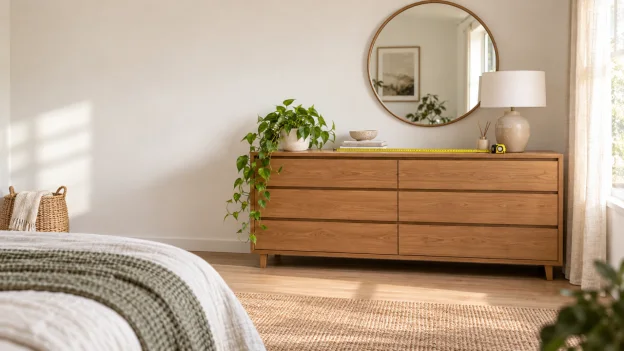
This is the long, low one most people picture. It's usually around 50 to 70 inches wide and 30 to 36 inches tall, with a top big enough for a mirror or a TV. Ours, the Savanna 7-drawer horizontal dresser, measures 56.88 inches wide and 31.34 inches tall.
Double Dresser
Think of a double dresser as two dressers glued side by side. You're looking at 60 to 70 inches or more, two columns of drawers, and about 18 to 24 inches of depth. Couples tend to love them for obvious reasons.
Tall Dresser or Tallboy
Tall dressers run 24 to 40 inches wide and 40 to 60 inches tall. If you tell us your bedroom is tiny, we'll probably point you here first, because a tall dresser holds a surprising amount on very little floor.
Combination Dresser
A combination dresser is half drawers, half cabinet with doors, and it's usually 50 to 70 inches wide. People forget the door swing, since cabinet doors open out too, so you'll want clear space in front of it, the same as for a drawer.
Dresser With a Mirror

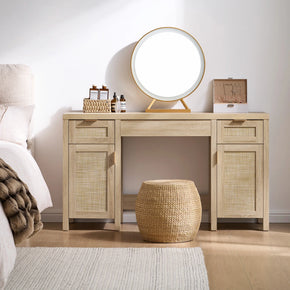
Many dressers come with a matching mirror that bolts on the back, and the mirror often adds 30 inches or more of height. We've seen that combo clip a sloped ceiling, so if there's a window or shelf above the spot, add the dresser and mirror heights together first.
The mirror also adds weight high up, which is another reason to anchor the whole thing to the wall.
What Is the Standard Size of a 6 Drawer Dresser?
Most 6-drawer dressers you'll see are two columns of three. Expect something around 50 to 60 inches wide and 30 to 36 inches tall, with the usual 18 to 22 inches of depth.
There's a catch, though: you can also stack six drawers in one tall column. That piece is a lot skinnier, more like 30 to 40 inches wide and 45 to 55 inches high, so look at the photos and not just the drawer count.
What Size Dresser Works Best for Your Bedroom?
We look at three things, in this order: the wall, the bed, and the space you need to get around.
|
Bed Size |
Mattress Width |
Dresser Width That Usually Looks Balanced |
|
Twin |
38" |
30" to 45" |
|
Full |
54" |
40" to 55" |
|
Queen |
60" |
50" to 65" |
|
King |
76" |
60" to 72"+ |
|
California King |
72" |
60" to 72"+ |
Small Bedroom
Go tall and narrow. A dresser 24 to 40 inches wide that isn't too deep leaves more floor to move around on, and we'd stay away from anything deeper than 20 inches.
Standard Bedroom
In an average bedroom, we'd go with a horizontal dresser somewhere around 40 to 60 inches wide. It holds plenty, gives you a decent top, and doesn't take over the wall.
Large or Primary Bedroom
A big room can take a 60- to 70-inch double dresser, or a dresser paired with a matching tall chest. We like pieces from the same line here because the room looks calmer, and this Sicotas bedroom furniture lineup makes matching easy.
Dresser for a King Bed

A king bed is 76 inches wide, and a little dresser across from it can look like it wandered in from the guest room. We'd go 60 inches or wider. That said, the wall and your walking room still win over the bed.
How to Measure for a Dresser
You'll need a tape measure and a pen. Five minutes is plenty.
Step 1: Find a Good Spot
Start with the wall. Stay out of the path you walk to bed, and don't block the outlet your phone charger lives in. Then fling the bedroom and closet doors open as far as they go and see where they stop.
Step 2: Get the Wall Width
Run the tape across the open wall. Knock a couple of inches off each side so the dresser isn't jammed against the trim or the door frame.
Step 3: Work Out the Depth

Next, measure out from the wall to whatever's in front of it, usually the bed. Take 36 inches off that for open drawers and walking room. Whatever's left over is your maximum dresser depth.
Step 4: Check the Height
If the dresser is going under a window, the sill is your height limit. Hanging a mirror or a TV above it? Then measure right up to the ceiling and make sure the whole stack fits.
Step 5: Walk the Delivery Route

This is the step everyone forgets until delivery day. Front door, hallways, that tight turn on the stairs, and the bedroom door. Plenty of bedroom doors are 30 to 32 inches wide, and we'd hate for your dresser to fit the room but sit in the hall for a week.
How Much Clearance Do You Need Around a Dresser?
Think of clearance as part of the dresser. An 18-inch-deep dresser sounds small, but once you add drawer and walking space, it's really using about 54 inches of floor.
|
Where |
Suggested Clearance |
Why |
|
In front |
About 36" |
Open drawers fully and still stand |
|
On the sides |
1" to 2" |
Keep trim, doors, and outlets free |
|
Next to a door |
Full door swing |
Stop the door hitting the dresser |
|
Above |
Room for mirror, art, or TV |
Avoid a cramped wall |
Can You Use a Dresser as a TV Stand?

Yes, and in small apartments it's really common. Just run through a couple of checks first so it's safe and comfortable to watch.
Most dressers are 30 to 36 inches tall, which is taller than a typical TV stand. Watching from bed, that extra height is usually nice. From a low sofa or armchair, your neck might not thank you.
Go for a dresser wider than the TV itself, not the diagonal size on the box, and leave some top space on each side of the TV feet and a little above the TV too. For screen size and viewing distance, this Sound and Vision seating distance guide is helpful.
Dresser vs Chest of Drawers: Size Difference
|
Feature |
Dresser |
Chest of Drawers |
|
Shape |
Wide and low |
Tall and narrow |
|
Typical width |
50" to 70" |
30" to 40" |
|
Typical height |
30" to 36" |
44" to 60" |
|
Floor space |
More |
Less |
|
Top surface |
Large |
Small |
A chest is about as deep as a dresser, it just stacks the storage up instead of out.
Safety and Build Checks Before You Buy
Size isn't everything, though. A dresser also has to stay put and last.
Anchor Every Dresser

Dressers can tip, especially when drawers are open. The Anchor It campaign shows how to strap furniture to the wall in a few easy steps, and most new dressers come with anti-tip hardware. Please use it.
Know the Tip-Over Standard
In 2023, the CPSC adopted a mandatory tip-over standard for dressers and clothing storage units. The test puts the dresser on carpet, pulls the drawers open, loads them up, and checks that it stays upright. It's a lot stricter than the old voluntary standard.
Read the Material Label
A lot of dressers are engineered wood, and there's nothing wrong with that. We'd just look for a TSCA Title VI label on the box or listing, since the EPA composite wood rules require one on MDF, particleboard, and hardwood plywood.
Test the Drawers
Once it's together, pull each drawer all the way out. A well-made one glides, catches before it falls, and closes flush. Consumer Reports points to joint type and a smooth, even finish as signs of better furniture.
Common Dresser Measurement Mistakes
Measuring Only the Wall
Everyone measures width. Depth and drawer space get forgotten, so measure all three.
Forgetting Open Drawer Space
The closed size isn't the real footprint. Open a drawer on the dresser you have now and measure how far it sticks out. That's the number people forget.
Counting Drawers Instead of Measuring Them
More drawers doesn't always mean more room. Six shallow drawers can hold less than four deep ones, which is why we'd compare inside sizes instead.
Ignoring Doors and Windows
A closet door, a low windowsill, or an old radiator can kill a spot that looked perfect on paper. We'd walk the room once with the tape measure before deciding.
Putting It Next to a Heat Vent
Wood swells and shrinks with humidity, and the USDA Forest Service Wood Handbook explains how it settles to the surrounding air. A dresser shoved against a heater, or sitting in hot afternoon sun all summer, can warp over time. Leave it a little breathing room.
Final Takeaway: Start With the Tape Measure
Standard dresser dimensions get you close. Your room gets the final say. If the dresser fits the wall, leaves you around 36 inches to walk, and holds the clothes you own today, you've picked well.
We'd double-check these before ordering:
• Wall width, minus a little space on each side
• Room depth, minus 36 inches for drawers and walking
• Height to the windowsill, mirror, or TV
• Door and closet swing
• Inside drawer size (not just the outside)
• Doors, halls, and stairs on the delivery route
With all that written down, head over to the Sicotas dresser collection for every room size and compare widths and drawer layouts side by side.
FAQs
What is the standard size of a dresser?
There isn't one standard size, but a typical horizontal dresser is usually around 50 to 70 inches wide and 30 to 36 inches tall, with a depth of 18 to 22 inches.
Tall, skinny styles widen the range, roughly 35 to 70 inches across and up to 55 inches tall.
What is a 24-inch-wide dresser?
Pretty slim. At 24 inches, it's closer to a small chest or a tall dresser than the classic long kind, and we mostly see them tucked into a closet corner, a nursery, or a tiny guest room.
What is the standard size of a 6-drawer dresser?
That depends on the drawer layout. The usual layout is two columns of three, side by side, and it's typically around 50 to 60 inches wide and 30 to 36 inches tall.
Stack all six in one column instead, and it turns into a taller, slimmer piece, about 30 to 40 inches wide and 45 to 55 inches high. Depth stays around 18 to 22 inches either way.
What is the average depth of a dresser drawer?
Most give you 14 to 18 inches inside, sometimes a little more on deeper dressers. The inside is always a few inches shorter than the outside, so check both.
What size dresser for a king bed?
We'd look in the 60 to 72 inch range. A king mattress is 76 inches wide, so a much smaller dresser can look lost across from it. Just don't give up your 36 inches of walking room in front.
What is a 45-inch-wide dresser?
It's the middle size. A 45-inch dresser fits an average bedroom wall and holds one person's clothes, somewhere between a narrow tall chest and a wide double dresser.
How do I measure my dresser?
• Width: side to side across the widest point
• Depth: front to back, including knobs
• Height: floor to the top surface
• Drawers: pull one out and measure the inside
What is a big dresser called?
Usually a double dresser. Really wide ones with three columns are sometimes called triple dressers, and a big tall one is a tallboy or highboy.


Looking for something else?

Best Nightstand Height and Placement for an Adjustable Bed
LEARN MORE
Why Adjustable Shelves Matter When Buying a Shoe Cabinet
LEARN MORE
How Wide Should a Sideboard Be Compared With Your Dining Table?
LEARN MORE
How Deep Should a Bookcase Be? Pick by Book Size and Room Clearance
LEARN MORELooking for something else?

TV Stand Weight Capacity: How to Check It Before Mounting Your TV
LEARN MORE
Dresser With Mirror vs. Without: Which Setup Works Better?
LEARN MORE
How Deep Should a Nightstand Be_ A Bedside Fit Guide
LEARN MORE


Further reading
Nightstand Dimensions: Width, Depth and Height by Bed Size

Narrow TV Stand Guide: Best Depth, Width and Styles for Small Rooms


