




28 Bedroom Organization Ideas for a Calm, Clutter-Free Room
Let me say the quiet part out loud: buying more bins will not fix your bedroom. I know that's not what organizing content usually leads with. But it's the thing most people figure out the hard way — after they've bought the matching baskets, the over-door organizer, the little labeled fabric drawers — and the bedroom still feels like a mess two months later.
The real issue is rarely a shortage of storage. It's a mismatch between how the room is set up and how it actually gets used. Clothes land on the chair by the door because there's nothing better to do with them at that moment. The nightstand fills up because nothing has a drawer to disappear into. The closet becomes a wall of fabric because the layout was designed for a catalog, not for a real person getting dressed at 7 a.m.
Fix the system — the decisions, the furniture, the habits — and the room stays organized without any extra effort. Skip the system and buy the bins instead, and you'll be reorganizing again in six weeks.
These 28 bedroom organization ideas go through every zone that tends to fall apart. The nightstand. The dresser drawers. The closet floor. The space under the bed that you've been pretending isn't a problem. The walls. The laundry situation. All of it.
Some of these take an afternoon. A few take five minutes. Some are furniture swaps that, once you make them, you'll wonder how you tolerated the old setup for so long. None of them is vague advice like 'declutter regularly' or 'keep surfaces clear.' These are specific, practical changes that show up in how the room actually feels.
Start with whatever part of the bedroom irritates you most on an average Tuesday. That's always the right place to begin.
Do These Three Things Before Anything Else
Skipping straight to specific ideas is tempting. But these three steps are why most bedroom organization efforts stick — or don't.
1. Actually Declutter — Not Just Move Things Around

Real decluttering and tidying up are not the same thing, and most people do the second while thinking they're doing the first. Tidying is pushing things into neater arrangements. Decluttering is making actual decisions about what stays. Pull everything out. Go category by category — clothes, books, shoes, random items that have been accumulating in the corner since last year. Ask honestly: do I use this, does it fit, does it belong here? The answer for a lot of it will be no. Donate it. Toss it. Get it out. You can't build a working system around a room that holds twice as much as it should.
2. Give Things Addresses, Not Just Zones

The bedroom' is not a home for an object — it's a room. The reason clutter rebuilds within days of a clean is that things don't have a specific place to return to. So they land on whatever surface is closest and stay there. Fix this by assigning real addresses: Chapstick in the left section of the nightstand drawer, charger coiled inside the right side, and worn-once clothes on the hook behind the door. The more precise the address, the less thinking happens at the end of a tired day — and the longer the room stays organized without any effort.
3. A Donation Bin in the Closet Right Now — Not 'Later.'

Not a bag propped in a corner. An actual bin in the closet, always there, always open. The moment you try on a shirt, and it doesn't feel right, in it goes. The moment you pull a pair of shoes from the back that you haven't worn in two years, in it goes. When the bin fills up, it is taken out of the house. This one habit quietly keeps the wardrobe from slowly getting heavier and more chaotic between the big seasonal cleanouts that never quite happen.
Nightstand Organization: What Actually Works Bedside
Last thing you touch at night, first thing you reach for in the morning. Yet most nightstands look like a small disaster. A few changes here make a bigger difference to the room's feel than almost anything else.
4. A Nightstand With Drawers Beats a Pretty One Without Them Every Time

Open-shelf or flat-top nightstands look clean in photos. In a lived-in bedroom, they collect everything — the book you finished last month, three lip balms, a charger, something you can't identify, and whatever you set down 'just for tonight' three weeks ago. Drawers fix this because things actually disappear into them. The Crescent Nightstand 3 Drawers has three well-sized drawers in a clean, modern build — substantial enough to hold real things, slim enough not to crowd the space beside a bed. Everything you reach for at night gets a drawer. The surface stays clear.
5. Bins Inside the Drawers — Or They'll Be a Mess Within a Week

An open drawer without any internal structure becomes a scrambled mix within days. Doesn't matter how neatly you arranged it. Small bins — fabric, clear acrylic, whatever you have — give each category its own section and keep it there. One area for anything with a cord. One for health and body stuff. One for whatever you're reading. It takes maybe 10 minutes the first time and saves you from rooting around every single night.
6. Cables on the Nightstand Top: Sort This Out Once

A charging cable trailing across the nightstand surface makes a bedroom look messier than it actually is — even when everything else is tidy. The easiest fix by far is a nightstand with a built-in charging station,n so the whole setup lives inside a drawer. The Savanna Nightstand with 3 Drawers has exactly that — three drawers and a built-in charging station, so your phone and earbuds charge out of sight, with a cable included, and the surface is completely clear. No cord management solutions, no clips, no decision-making at 11 pm.
7. Three Objects on the Nightstand Top. That's the Rule.
Lamp. Book. Water glass. Pick those three and hold that line. Everything else — second book, spare charger, several lip balms, the things-with-no-clear-home — goes into a drawer. Try it for a week and notice how different the whole bedroom reads from the doorway. That one clear surface does more for the room's atmosphere than most people expect.
Dresser and Drawer Organization That Holds Up Past Laundry Day
A dresser that's working right means clothes go in easily, come out easily, and the drawers close without a fight. Most dressers in most bedrooms aren't doing any of those things. Here's why — and how to fix it.
8. Capacity First — No Folding Method Fixes a Too-Small Dresser

Drawers that are stuffed shut are a capacity problem. Not an organizational problem. You can file-fold, KonMari, and perfectly categorize a dresser that's too small for what you own — and the drawers will still be a disaster two weeks after laundry day. A six-drawer dresser with wide, deep compartments gives every clothing category breathing room. The Savanna 6-Drawer Dresser expands to 56.9 inches wide,e with solid-wood drawers that remain smooth after years of daily use. Wide enough to separate tops, bottoms, workout gear, underwear, socks, and still have room to spare.
9. No Dividers = Drawer Chaos. Every Time.

This is the step most people skip, and it's alsowhyn most bedroom drawersremainy in a permanent state of mild disorder. Without dividers, socks tangle with underwear, categories drift toward each other, and finding one specific item means half-emptying the drawer. Simple adjustable dividers — even cheap plastic ones — give each category a lane that actually holds. Set it up once,and it stays that way.
10. File Folding Works. The First Try Is Awkward. Push Through It.

The idea is to stand clothes on their edges rather than flat-stacking them. Open the drawer, and you can see everything at once — no digging, no unfolding the bottom stack to find the one shirt you want. It takes a couple of laundry cycles to get the fold tight enough to stay upright. After that,t it gets faster than regular folding, and the drawer looks dramatically better every time. Stick with it past the first attempt.
11. Small Room? Trade Width for Height.

Wide dressers in small bedrooms eat up walls. A tall dresser gives you the same or more storage in a fraction of the floor space. The Savanna 7-Drawer Tall Dresser stacks seven drawers in a slim vertical footprint — creating a completely different impact on the room's feel compared to a standard wide chest. In tight spaces, going vertical is one of those changes that makes the room breathe differently the moment you make it.
12. Label Shared Drawer, even for Adults.

Shared dressers without labels are a source of low-level friction every single laundry day. Someone's socks end up in the wrong section. The kids forget which drawer it is. A strip of masking tape with a marker on the front edge of each drawer removes that friction entirely — no more decisions, no more misplaced piles. Thirty seconds of labeling. Worth it every time.
Closet Organization: Fix This and Half the Room Fixes Itself
Seriously. A disorganized closet doesn't stay contained — it spreads outward. Clothes pile on the chair, overflow onto the dresser, and end up on the floor. Sort the close,t, and most of those other problems either shrink dramatically or disappear.
13. Your Closet Is Probably Two-Thirds Wasted Space Right Now

The standard builder closet — one rod, one shelf above it, everything else dead air — wastes most of its vertical space. The entire area below the hanging clothes defaults to shoes and jumps. A modular system with a double-hang section for shorter items, a shelf tower for folded things, and adjustable cubbies turns that dead space into actual organized storage. You don't have to do the whole closet at once. Start with one section and add pieces over time.
14. Matching Hangers: Small Change, Huge Visual Difference

Mixed hangers — wire ones from the dry cleaner, thick plasticones from the store, random wooden ones — make a closet look like it's in chaos, even when everything is properly hung. Switch to one type. Slim velvet hangers are the consistent choice because they save about half the rod space compared to plastic hangers, keep clothes from sliding off, and give the whole room an intentional, uniform look. Twenty dollars and half an hour. The closet looks completely different afterward.
15. Shoes on the Closet Floor Invite Every Other Problem

A shoe pile on the closet floor is a starting point for clutter, not an endpoint. Other things drift toward it — bags, a piece of laundry, a box that has no other home. Lift the shoes onto a rack, into cubbies, or onto shelf risers. The floor opens up. The closet holds its baseline longer between tidy-ups. And you'll find the pair you want immediately instead of shifting the pile around.
16. High Shelves Aren't Overflow Space — They're Seasonal Storage

The mistake most people make with high closet shelves is using them as a general overflow storage. Stuff that won't fit below gets stacked above, and within a month, it's a precarious pile of things nobody can identify. Reserve the high shelves specifically for seasonal items — off-season clothes in labeled bins, spare bedding, luggage. Stack neatly, label everything, and leave the daily-use zones at a level you can actually reach without a chair.
17. No Real Closet? A Proper Wardrobe Solves It — And Looks Good Doing It

Older apartments sometimes come with a coat closet and nothing else. That's not a real closet. A freestanding wardrobe handles a full wardrobe — hanging space, shelves, enclosed storage — and done right, it looks like a deliberate furniture choice rather than a workaround. The Savanna Wardrobe 71-inch is 71 inches tall with hanging space, adjustable shelving, and a closed profile that doesn't swallow a smaller room. Enough space for a full wardrobe, narrow enough to actually fit.
Under-Bed Storage and Surface Control
18. The Space Under the Bed Is Free Storage. Use It.

Consistently the most underused zone in most bedrooms. Good candidates for under-bed storage: off-season clothes, a spare duvet, extra pillows, shoes you rotate in and out. Not good candidates: random stuff with no category, objects you'd forget about within two months, anything you might need on short notice. Flat lidded bins with handles make retrieval easy. Clear ones let you see contents without pulling everything out. This zone can hold a surprising amount when it's used right.
19. The One Rule That Keeps It From Becoming a Junk Zone

Ask yourself right now — can you name everything that's under your bed without getting on the floor to look? If you can't, the zone has already drifted. Set a simple rule and hold it: everything under there gets a labeled bin, every item in that bin gets used within twelve months, and you go through it twice a year. That's it. Seasonal rotation is the ideal use case. Forgotten miscellaneous storage is not.
20. Dresser Top Is Not a Storage Surface. Hold That Line.

Flat surfaces are clutter magnets. One receipt, one hair clip, one small object without a home — and within a week,k there are seven. The dresser top exists for three things: a lamp or mirror, one plant or candle, and one tray for daily-use items. Everything else that usually lives there belongs in a drawer. Hold that limit for two weeks. After that, maintaining it stops feeling like discipline and starts feeling normal.
21. A Tray Turns a Scatter Into a System

If you keep small daily items on the dresser — a watch, rings, keys, a chapstick — a tray makes the difference between 'messy surface' and 'intentional styling.' Everything sits in one contained spot. It reads differently from across the room. And practically, you find those items every morning without thinking because they're always in the same place. A tray costs almost nothing and solves something that bothers people every single day.
Wall Storage and Multi-Purpose Furniture Worth Having
Floor space runs out. Walls don't. And furniture that does two jobs at once is one of the most useful long-term bedroom storage strategies — not just in small rooms, but in any room where storage needs keep outpacing available surfaces.
22. Wall Hooks Near the Bedroom Door — The Chair's Real Competition

There's a chair in most bedrooms that no one sits in. It holds slightly worn clothes, tomorrow's outfit, and the jacket from two days ago. That chair exists because there's nothing better in that spot. Four hooks on the wall near the door — or behind it — give all of that a real place to go. Robe, bag, the jeans you wore once, tomorrow's shirt. Installation takes twenty minutes. The chair finally regains its identity.
23. Floating Shelves: Great for three items. Problematic at Eight.

A shelf with two or three objects on it looks like a design decision. A shelf with eight objects looks like a surface that got away from you. The rule for bedroom floating shelves: two or three things per shelf, clear space between them, nothing that doesn't belong in a calm bedroom environment. A book, a small basket, one framed photo. That's a shelf working in the room's favor. More than that, it becomes another source of clutter dressed up as a solution.
24. A Storage Bench at the Foot of the Bed Is Worth Every Dollar

Genuinely one of the most functional pieces of bedroom furniture you can add. A seat for putting shoes on in the morning—a real one, not the edge of the bed. Hidden storage for extra blankets, seasonal pillows, and the spare throw that usually lives on the floor. And a visual anchor at the end of the bed that finishes the room in a way that a bare wall or a floor full of stuff cannot, three problems, one piece, permanent payoff.
25. The Dead Zone Under the Hanging Clothes in Your Closet

Below where your hanging clothes end — usually about 18 to 24 inches of clearance — is a strip of space most people either ignore or pile shoes in. A slim rolling cart fits exactly there. Folded tees, accessories, small electronics, whatever overflows from the dresser. Rolls out when you need it, tucks in when you don't. No installation, no wall studs, no commitment — and it genuinely changes how much the closet can hold.
26. Move the Hamper to Where Clothes Actually Land — Not Where It Looks Tidiest

This is embarrassingly simple and embarrassingly effective. Most hampers sit in a corner chosen for aesthetics, rather than function. Clothes land wherever they land — which is usually nowhere near the hamper. Move the hamper to wherever clothes actually end up. By the door. Near the closet entrance. Next to the side of the bed where you undress. The floor stays clear with zero extra effort because you stopped fighting your own habits.
Small Bedroom Ideas and the Visual Side of Organization
27. Compact Dresser as a Nightstand — Better Than It Sounds

In a small bedroom, squeezing both a nightstand and a dresser beside the bed can mean the two pieces are nearly touching,g and the room feels overcrowded before you've added anything else. A small dresser doing both jobs — drawers for clothes, top as a bedside surface — solves the problem cleanly. One piece replaces two, floor space comes back, and honestly, three dresser drawers within reach of the bed are more useful than one small nightstand drawer anyway.
28. Calm Colors and Closed Storage: The Two Things That Carry the Most Visual Weight

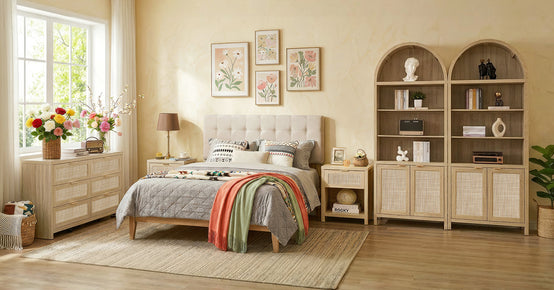
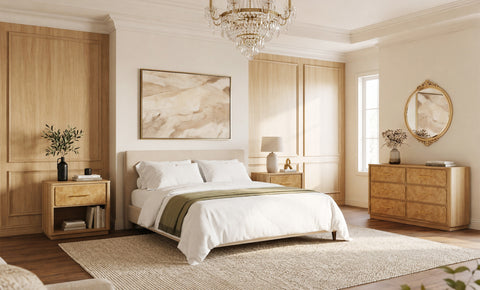
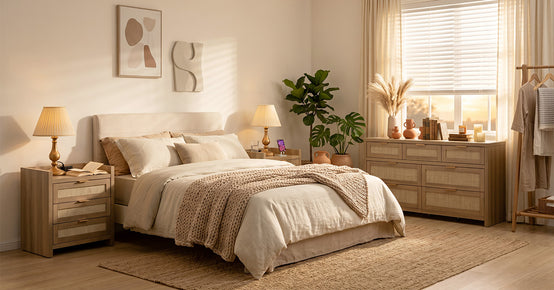
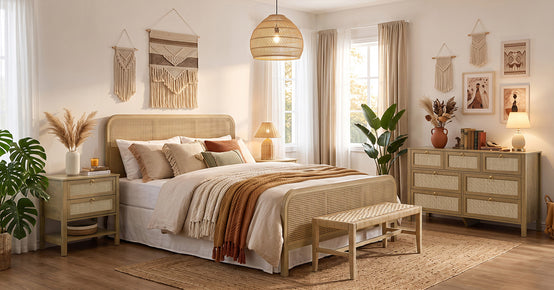
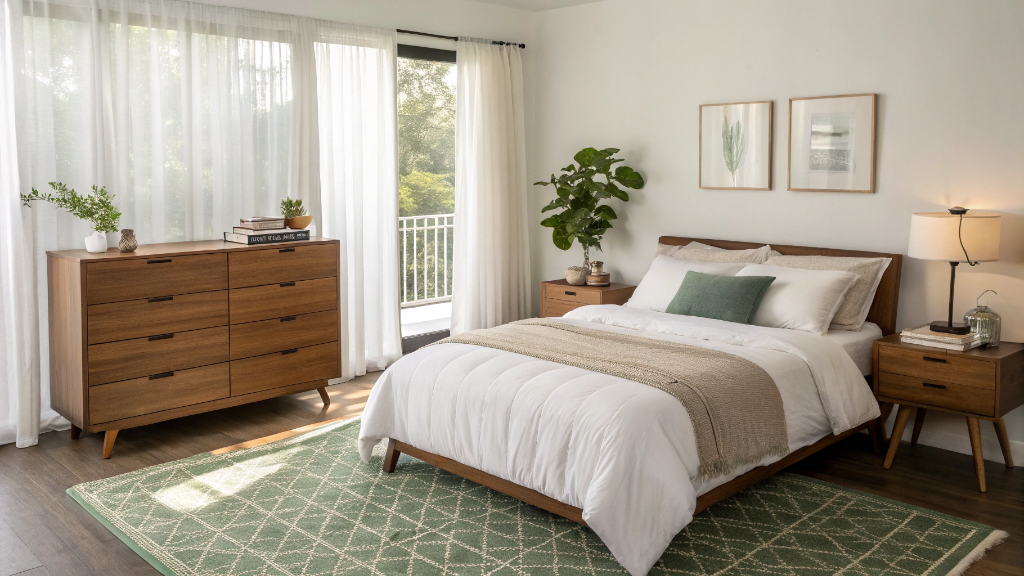
There's physical clutter and then there's visual clutter — and a bedroom can be technically clean and still feel exhausting to be in. Open shelves packed to the edge, furniture in five different finishes, colors competing across the room. That visual noise registers as stress even when nothing is technically out of place. The rooms that feel genuinely calm share a few specific traits: soft neutral tones — warm white, natural wood, muted gray — coordinated furniture finishes, and storage that closes. Drawers instead of open shelves. Doors instead of exposed cubbies. When the daily mess of real life disappears behind panels and into drawers, the room looks pulled together without any ongoing effort from you. Browse Sicotas bedroom furniture for dressers, nightstands, and wardrobes in clean, cohesive finishes built to work together — so the room looks like a decision, not an accumulation.
The Pre-Shopping Checklist
Run through these before buying a single storage product. Most of them cost nothing.
- Declutter — remove the unused, the out-of-place, and the duplicates
- Assign a specific address to every item staying in the bedroom
- Set a hard three-object limit on every open surface
- Add dividers to dresser drawers and nightstand drawers
- Under-bed bins for seasonal items only — label each one
- Double-hang the closet rod or add a shelf tower to use vertical space
- Switch all hangers to the same slim style
- Move the hamper to where clothes actually land
- Install four wall hooks near the bedroom door
- Keep a donation bin running in the closet — always there, always open
FAQs
How do I organize a bedroom that's holding way too much stuff?
Declutter first — seriously, before you do anything else. Go through clothes, shelves, the closet floor, under the bed, and any surface that's become a landing zone. Get rid of what you haven't used in a year. Relocate what doesn't belong in a bedroom. Toss what's broken or expired. Only after that do you start assigning homes for what stays and figuring out what storage you actually need. Buying bins before reducing volume is the move that keeps people reorganizing the same messy room every six months.
My bedroom has basically no built-in storage. What do I do?
Go vertical everywhere you can — tall dresser, freestanding wardrobe, wall hooks, floating shelves. Under-bed bins pick up seasonal items. Multi-purpose furniture does double duty: a compact dresser as a nightstand, a storage bench at the foot of the bed—the goal is to squeeze more functionality out of every piece rather than adding more pieces. Small bedrooms don't need less furniture — they need furniture with a better job description.
What should actually be on a nightstand?
Three things on the surface: lamp, current book, water glass. That's the full list. Glasses, charger, medication, chapstick, hand cream—all of that belongs in a drawer. A nightstand with proper drawers and a built-in charging station keeps everything close without anything sitting on top. Out of sight, still within reach, surface stays clear.
How do I keep clothes organized when the closet is tiny?
Tall dresser for folded items. Wardrobe or freestanding armoire for hanging items. Under-bed bins for the seasonal rotation. Slim velvet hangers on every rod — they save about 40% of rod space compared to standard plastic. A shoe rack gets footwear off the floor. A rolling cart in the dead zone below hanging clothes adds capacity without touching a wall. None of this requires a real closet — just the right combination.
What is the right way to use under-bed storage without it turning into a dumping ground?
A strict rule, honestly. Only things you can name and will actually use within twelve months. Seasonal clothes, a spare duvet, extra blankets —strong candidates. Vague stuff without a clear category is not. Every item gets a labeled bin — clear ones are better, so you can see the contents without having to drag the whole bin out. Check it twice a year. Anything you didn't touch in twelve months leaves the room.
I clean my bedroom,m but it never stays tidy for more than a few days. Why?
Because cleaning and organizing are two different things, and the system that keeps a room organized long-term isn't built during the big clean — it's built in the thirty seconds after you take your clothes off and the three minutes in the morning when you make the bed. The big organization session sets up the structure. The daily micro-habits are what hold it together. Make the bed every morning. Put clothes in the hamper immediately. Do a five-minute reset before bed. Those three habits, done consistently, do more than any weekend organizing project.
Sources
- Parachute Home — 19 Bedroom Organizing Tips
- Just a Girl and Her Blog — 25+ Smart Bedroom Organization Ideas
- Extra Space Storage — 25 Bedroom Storage Ideas and Organization Tips
- IKEA US — Bedroom Decluttering and Organization
- Neighbor Storage Blog — 35 Bedroom Organization Tricks and Hacks
- Living Large in a Small House — Bedroom Organization for Small Spaces


Looking for something else?

Furniture Materials Guide: Picking the Right Material Room by Room
LEARN MORE
How to Mix Wood Tones Without Making a Room Look Mismatched
LEARN MORE
18 College Apartment Furniture Ideas That Save Space and Money
LEARN MORE
Types of Entertainment Centers: 11 Designs and How to Pick One
LEARN MORELooking for something else?

Curio Cabinet Decor Ideas: How to Style a Display Cabinet Without the Clutter
LEARN MORE
Curved Furniture: How to Style, Measure, and Buy It in 2026
LEARN MORE
What Is Rattan Furniture? A Buyer Guide to Types and Care
LEARN MORE


Further reading

How to Choose a Nightstand for a CPAP Machine

How to Choose a Shoe Cabinet for Men's Sizes, High-Tops, and Bulky Shoes


