




10-Person Dining Table: How to Pick the Right Size and Shape
I bought my first big table by eyeballing it, wrong move. I have kicked myself over it at every family dinner since. A 10-person dining table is the one piece that makes a plain dining room the place everybody wants to be. The whole crew fits. It holds a full holiday spread, plates and all. But it is big. Get the size wrong, and you feel it the moment people sit down. For ten, most tables run somewhere between 96 and 120 inches long. If you have ever wondered what size table seats 10 people, that range is the answer, with 108 inches sitting right in the comfortable middle for most rooms. You want a walkway behind the chairs as well. Groups like theAmerican Society of Interior Designers recommend leaving about 36 inches of clearance on every side. Think of this as an updated 2026 size guide for 10-person dining tables: I go through sizes, shapes, materials, and how to pick one below. All in plain English.
How Big Should a 10 Seater Dining Table Be?

Everything starts with one figure, and it is worth memorizing: 24 inches of width per person. Line up ten seats, and you land at roughly 120 inches of edge once both long sides and both ends are counted. A 10-seater dining table tends to be 96 to 120 inches long. Put another way, 8 to 10 feet. The width is around 40-48 inches. I once crammed ten people onto a 90-inch table. We ate with our elbows pinned to our sides all night. Go too short and elbows knock. Go on too long, and nobody can hear the person in the middle.
Most homes seat eight along the two long sides and one at each end. It uses the space well, keeps the table from running too long, and works in metric. Those 24 inches translate to about 60 cm per seat. A roomy table for 10 then measures around 240 to 280 cm long. I really wish somebody had told me that before I bought my first one.
Quick Size Reference by Shape

Shape changes the footprint, too. For 10 seats, the rough sizes break down as follows.
A rectangle is your safe pick. Anywhere from 96 to 120 inches, call it 240 to 300 cm, and it drops into a long room while still suiting most homes. An oval comes in a little tighter at 96 to 110 inches (around 240 to 280 cm), so it's the one for a narrow room where you need people to move past each other. The round table stands apart from both. It runs 70 to 72 inches across, or 178 to 183 cm, and a big square room is the only place it really pays off. Each of these dimensions assumes a table that seats 10 people comfortably, with enough elbow room and clearance for everyone to settle in without crowding.
How Much Room Do You Need for a 10 Person Dining Table?

The table itself is just half the job. The space around it is the half that folks tend to skip. Give yourself a minimum of 36 inches between the table edge and the walls or any furniture. There is no wiggle room on that one. My old setup left only 30 inches behind the chairs. Every dinner, someone had to suck in and shuffle just to reach their seat. That gap is what lets a person slide a chair out and walk behind it without turning sideways or squeezing for room. Stretch that to 42 or even 48 inches.
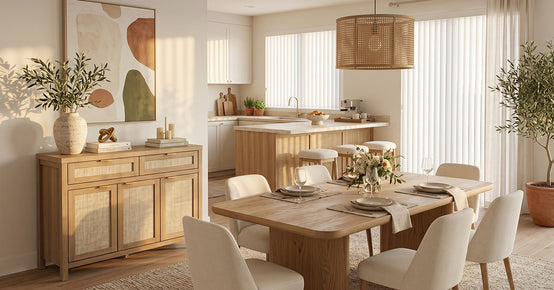
Going with a standard 96-inch rectangular table? Then the room itself needs to be clear, at least 14 by 10 feet. Anything past that is just gravy. Funny thing, in all these years, nobody has ever told me their dining room came out too big. Got the table in an open-plan space next to a kitchen island or aSicotas home furniture sideboard? Leave the main walkway 42 to 48 inches wide. That stops anyone getting boxed in once the chairs are pushed out.
Open-Plan and Walkway Tips
Open layouts need a bit more thought. Island in the mix? Leave 42 to 48 inches between the table edge and the island. That way, two people can pass at once. Where doors or drawers open, like on a sideboard, leave that side clear so nothing catches. And if the table sits on a main walking route, lean oval. The soft ends keep people moving instead of piling up.
Best Shape for a 10 Person Dining Table

Shape decides three things. How many seats? How people move. And how the table fits the room. For ten, three shapes do the job. Each one has a place where it shines and a place where it falls flat.
Rectangular Tables
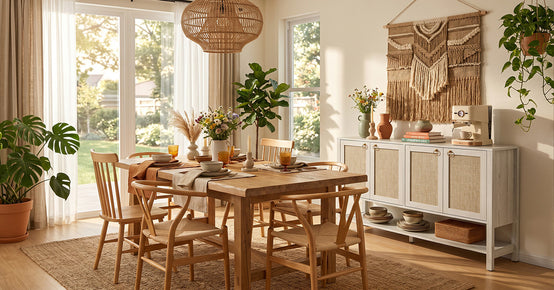
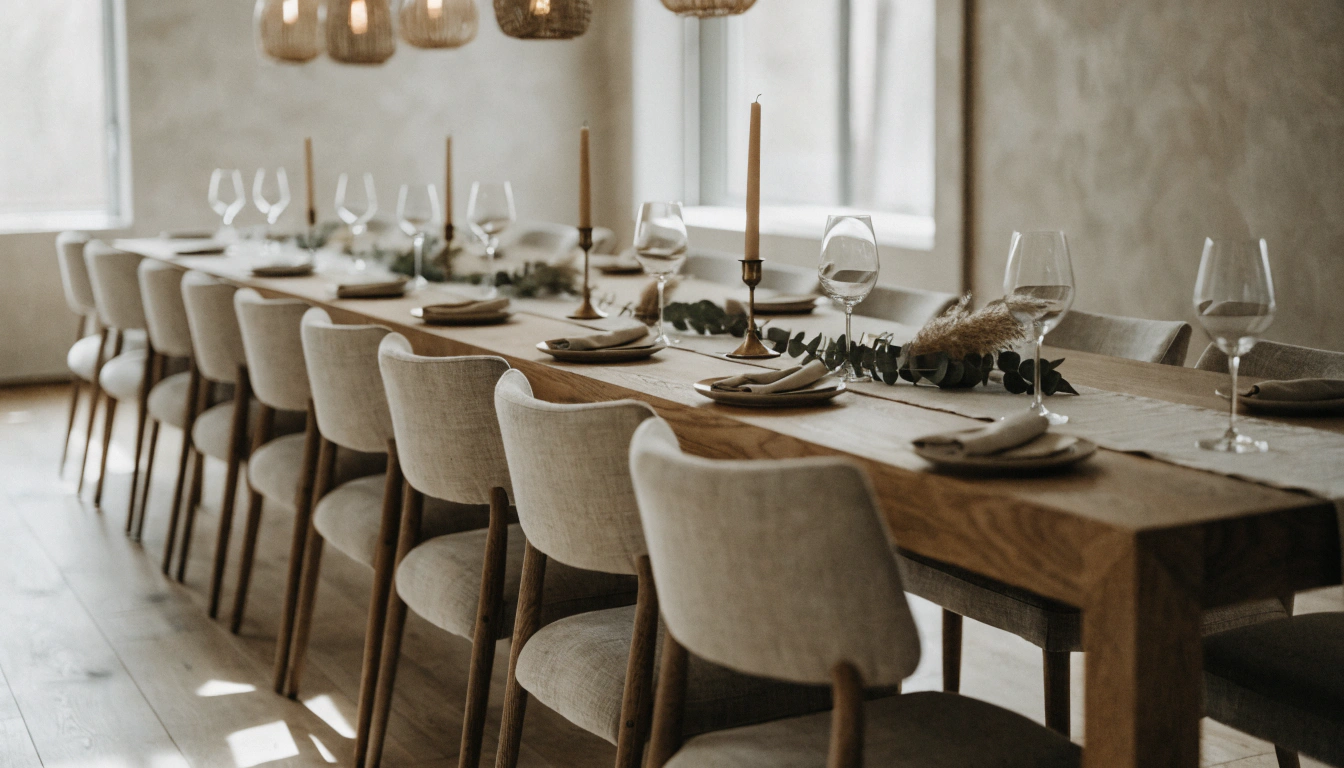
This is the workhorse. It is what most people end up buying. A rectangular 10-seater dining table uses long, linear space best. It tucks neatly against a wall. It looks great under a row of pendants or a long chandelier. Eight on the sides, one at each end. The only real gripe is the sharp corners. In a house full of small kids, those corners are basically hip-height bruises waiting to happen.
Oval Tables
An oval gives you nearly the same seating as a rectangle. But those rounded ends make it feel lighter. They make it a lot easier to walk around, too. It helps the conversation, too. No hard corner means you can actually see the person two seats down. If your room is narrow or in an open-plan layout where people are forever cutting through, this is the one I would pick.
Round Tables
A true 10-person round dining table is a rare bird. It needs a large diameter, around 70 to 72 inches, plus even clearance all the way around. When you have got the room for it, though, it is wonderful. Everyone can see everyone. No one is stuck at a lonely far end. You cannot shove it against a wall, so save it for a big square room where it can sit out in the open.
Pedestal vs Trestle vs Four-Leg Base

The base quietly decides legroom and how many people you can really fit. A pedestal or double-column base keeps the floor open. The end seats stay comfy, and you can wedge in an extra chair on a busy night. A trestle base is sturdy and full of character. But that center beam can steal foot space. Four legs are the classic look, though corner legs sometimes get in the way of chairs. And if you need a spot to set out drinks, a Cas modern console table against the wall frees up the whole tabletop for food.
Fixed vs Extendable 10 Person Dining Table

This is the one most buyers go back and forth on. Do you want a table that is always full-size, or one that grows when guests turn up? Both are fine choices. It really comes down to your room and how often you actually fill all ten seats, not how often you imagine you will.
When a Fixed Table Makes Sense
A fixed dining table is one solid slab, with no moving parts. Pick it if your room can carry a large table year-round and you seat 10 on the regular. It is rock-steady, it looks the part, and nothing can wear out because there is nothing to wear out. The catch? It never shrinks. You live with the full footprint every single day, whether it is a dinner party or a Tuesday.
When an Extendable Table Wins

An extendable dining table for 10 typically seats six or eight when closed, then opens up with a leaf or two to fit the full party when everyone arrives. Then it opens up with a leaf or a sliding top to seat ten for dinners and holidays. It is the smart pick if you host now and then but want a smaller everyday footprint. Two things to know: the leaves need somewhere to live, and the mechanism is one more part that can loosen over time. A flexible Savanna dining table and chair set is a good example of a setup that scales from a small everyday group up to a fuller table when company shows up.
Materials for a Large Dining Table

On a long table, the top is heavy, and the span is wide, so the material you choose matters for both looks and strength. The base has to carry all of it without sagging in the middle, and that is a real risk over a 9-foot span. A fast rundown on each option follows.
Solid wood is tough and ages like a dream, so long as you get it kiln-dried and reseal it down the line. Put a veneer over engineered wood, and you save money and weight, but one scratch in that veneer and you're stuck, because fixing it is a nightmare. Metal? Strong, modern, one wipe and it's clean.
You'll usually find it underneath as the base, not across the top. Stone and ceramic shrug off heat and scratches and look properly expensive, but they weigh a ton and need a real frame to hold them up. The glass, which keeps a long table feeling open and airy, even if it shows every fingerprint, leans on a sturdy base to work.
Solid Wood and Engineered Wood
Solid wood, say oak, walnut, or maple, is the old faithful for a large dining table. The stuff is built like a tank. It takes a repair. And it only gets better looking as it ages. Just confirm it is kiln-dried timber, so it will not warp across a 9-foot span. Engineered wood with a veneer costs less and weighs less. That really helps with this size. The catch is that the veneer scratches more easily. And after that, sanding it down is off the table, which you can actually do with solid wood.
Stone, Ceramic, and Glass
Ceramic and stone tops read high-end and hardly flinch at heat or scratches. That is gold if you host a lot. They are heavy, though, so they want a strong base underneath. Glass keeps a very long table from looking like a slab. It adds a bit of brightness to the room, too. The downside? It shows every fingerprint and smudge. And for safety, it has to sit on a solid base, never a flimsy one.
Key Features to Check Before You Buy

A 10-person dining table sets you back a fair bit. A few quick checks save you from regret later. Run through these before you commit.
- Stability and base support. A 9-to 10-foot top will dip in the middle if the base is weak. These stability checks matter for any large dining table that seats 10 or more, since the longer the top, the more weight and daily use the base must support without flexing. Go hunting for a center support, a trestle, or extra legs. That keeps it flat.
- Weight capacity. It is holding people, platters, and centerpieces all at once, remember. Most large tables handle 800 to 1,200 lbs total, but always check the spec on the one you are eyeing.
- Chair fit. Standard table height runs 28 to 30 inches. Check that armchairs actually slide under without banging the apron, the frame just below the top.
- Finish and upkeep. Matte and textured finishes bury the day-to-day marks. Lighter colors flash scratches and spills sooner than darker ones.
- Delivery and assembly. Big tables show up flat-packed or need white-glove delivery. Measure your doorway before the thing ever leaves the warehouse.
Storage for Hosting Big Groups

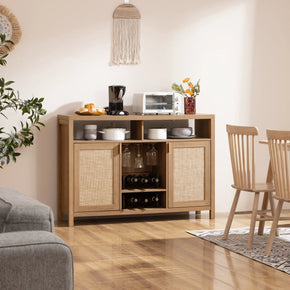
When you set ten, you serve a lot. Storage near the table is a real help. A buffet or sideboard hides plates, linens, and serving dishes away. Its top pulls duty as a serving station, so the table itself stays clear for the food. A set of bar and wine cabinetsnearby keeps drinks and glassware off the table during a busy dinner.
Chairs, Benches, and Seating for 10

Seating is where people quietly lose a chair or two without noticing. The trick is to match the chairs to both the table length and the room they sit in, not just buy ten of whatever looks nice.
Armless Chairs vs Armchairs
Armless, compact chairs let you fit all ten and keep the walkways clear. Armchairs are roomier and feel fancier, but they eat up width fast and can squash the end seats. When you put together a 10-person dining table set, the mix I see working most often is armless chairs along the sides, with two armchairs at the head and foot, so the hosts get the comfy seats.
Using a Dining Bench
A bench on one long side saves space and packs more bodies into less width, which is why families love them. Slide it fully under the table when nobody is using it, and the room opens right back up. The catch is comfort on a long meal. Toss on a back rail or some cushions if your dinners tend to run late.
Is a 10 Person Dining Table Right for You?
A table this size is a commitment. It shines in some homes and feels like total overkill in others. Run a quick gut check first.
Great for Large Families and Hosts
Big or multigenerational family? Host holidays and dinner parties on the regular? Then a 10-person dining table set pays for itself. Mine moonlights as a desk, a craft table, and a homework spot. In a busy house, it hardly ever sits empty.
When to Choose a Smaller or Extendable Table

Is your room small or medium? Do you only need ten seats once or twice a year? Then a large, fixed table can take up the whole space. An extendable model makes more sense. A smaller table with a few folding chairs on hand works too. You can always browse large dining room furniture and size up footprints before you decide.
Care and Maintenance Tips

A large table takes a beating. A little routine care keeps it looking good for years. Just match the routine to your top.
Wood likes a soft, barely damp cloth; then you dry it off without leaving it sitting wet. Keep coasters and placemats around; that's how you stop the rings and heat marks from turning up later. Got stone or ceramic? Grab a pH-neutral cleaner and jump on spills before they etch the surface.
Glass is the easy one: a bit of microfiber and a streak-free spray, and you're set. And whatever the top's made of, hot dishes sit on trivets and decor sits on felt pads. In my house, that part isn't up for debate.
Protecting the Surface During Big Meals

Holidays are rough on a table. Layers win over a plastic cover every single time. A washable runner, a few heat-proof placemats, and a couple of trivets take the worst of it. And you can still show the surface off for photos. A Savanna bar cabinet with a glass holder keeps drinks and glasses off the table, too, which means fewer rings and spills over a long dinner.
Final Takeaway: Choosing the Right Table for 10
It really comes down to four things. Space. Shape. Material. And how often do you actually fill ten seats? Measure the room first. Maintain 36 inches of clearance, and increase it if it is an open-plan space. Go with a rectangle for most rooms and an oval for narrow ones. Save a round for a big square space. For the long haul, pick a solid wood or a stone top with a strong base. Go extendable if ten seats areforholiday-only. Get those basics right, and the table stops being furniture. It becomes the spot where the whole house gathers. That is the part nobody regrets.
FAQs
How big should a 10-seater dining table be?
Aim for 96 to 120 inches long (roughly 240 to 300 cm) and a width of 40 to 48 inches. The math stays simple. Around 24 inches per person, then 36 inches of clearance around the table.
What size table can seat 10 people?
A rectangular table 96 to 120 inches long takes 10, with eight down the sides and one at each end. An oval of similar length pulls it off, too. For a round table, you are looking at about 70 to 72 inches across.
Can you fit 10 people at a 72-inch table?
Not on a 72-inch rectangle, which tops out at six to eight. A 72-inch round table can manage about 10, since the curved edge gives you extra usable space, but plan on it feeling tight.
What is the most popular size of dining table?
Most homes land on a 60- to 72-inch rectangle that fits six. Got a bigger family, or do you host a lot? That's when people size up to a 96-inch table seating eight to ten.
Can you fit 10 chairs at a 60-inch table?
Not a chance, not unless everybody's squeezing in. A 60-inch table is really a four- to six-seater. Want ten? You're looking at something a lot longer, 96 inches or up, or an extendable that opens out when you need it.
How many cm is a 10-seater table?
A rectangular 10-seater usually measures 240 to 300 cm long and 90 to 100 cm wide. A round table for 10 measures roughly 170-180 cm across.
What dining table shape saves the most space?
In a tight room, round and oval shapes save you the most space. No sharp corners, so people just slide right past. But when you're trying to pack the most seats into a long room, the rectangle pulls ahead. For a 10-person dining table in a smaller room, a narrow oval is the smart pick, since it seats ten along its length while the rounded ends still let people squeeze past without bumping a shin on a corner.
How long is a 10-seater?
A 10-seater dining table usually measures 96 to 120 inches long, which is about 8 to 10 feet, or about 240 to 300 cm. Push toward the longer end if you use full place settings or wider chairs.
What table size is best for a large family?
For a large family, a 96- to 108-inch rectangle that seats 8 to 10 is a solid call. Short on space? An extendable table offers easy daily use plus full seating when everyone turns up.
Sources
- American Society of Interior Designers – Residential Interior Design Guidance
- CASTLERY – Standard Dining Table Dimensions, Explained
- Homes & Gardens – How to Measure a Dining Room for the Right Table
- The Spruce – Dining Room Layout and Clearance Basics
- Real Simple – 7 Dining Room Design Mistakes
- Britannica – Table (Furniture): History and Forms


Looking for something else?

Burl Wood Furniture: The Complete Buying Guide
LEARN MORE
What Is a Hope Chest? Meaning, History, and Modern Uses
LEARN MORE
What Is a Foyer? Meaning, Purpose and Design Guide
LEARN MORE
GREENGUARD Gold Certified Furniture: What It Really Means for Your Home
LEARN MORELooking for something else?

How to Clean a Mirror Without Streaks: Simple Step-by-Step Guide
LEARN MORE
21 Above-Bed Decor Ideas for a Stylish Bedroom Wall
LEARN MORE
Furniture Materials Guide: Picking the Right Material Room by Room
LEARN MORE


Further reading

18 Decorative Storage Box Ideas That Hide Clutter Well

How to Store Comforters Without Losing Space or Loft


