





GREENGUARD Gold Certified Furniture: What It Really Means for Your Home
GREENGUARD Gold certified furniture has sat in a lab and been measured for the fumes it puts into a room. UL Solutions runs that test and hands out the mark. The shop selling the piece does not.
Plenty of product pages make the badge sound like a health promise. It is not one. The UL GREENGUARD program makes a single claim about low chemical emissions. This guide sticks to that claim, then shows you how to check any badge yourself.
What GREENGUARD Gold Certified Furniture Means

GREENGUARD Gold certification is an emissions test. A sample goes to a lab. The lab measures what the piece puts into the air once it sits in a room. Nothing on the label describes the panel's recipe.
That is a narrow test, and a fair one. Two dressers can hide the identical particleboard core and still land nowhere near each other on the results, because the topcoat moves the number and so does the glue holding the edge banding down.
UL Solutions issues the mark. Shops only sell GREENGUARD certified furniture. A badge pasted onto a product page proves less than a listing you can pull up on your own.
Why Fumes From Furniture Matter Indoors

Indoor air is usually worse than outdoor air. EPA figures put many volatile organic compounds up to ten times higher indoors. Several common ones are two to five times higher than outdoor levels.
Blame gets spread around. Paint gives off VOCs, and so do most cleaners, with flooring and scented candles adding to that. One new cabinet is not why a room smells stale, and one swap will not clear it.
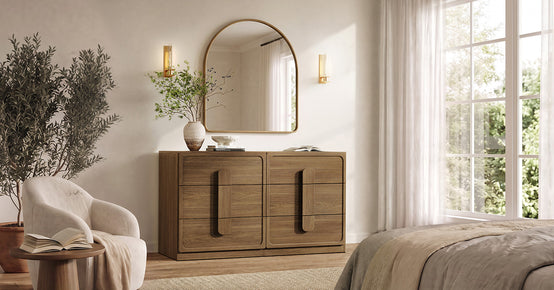
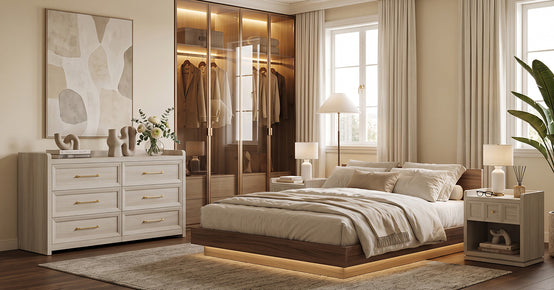
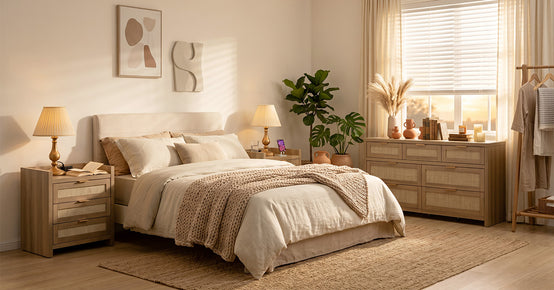
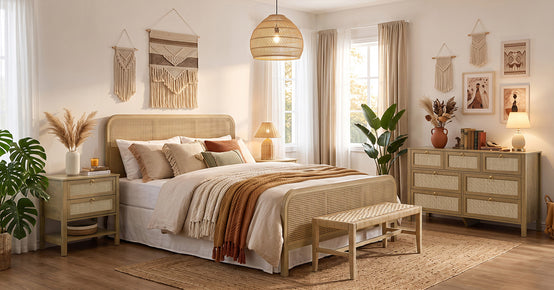
Bedrooms are the room to fuss over. You breathe that air for eight hours with the door shut. Starting with thebedroom furniture collection is a fair place to spend the effort.
Where Furniture Off-Gassing Really Comes From

Blaming the wood alone misses most of it. Emissions come from several places at once: the resins in composite panels, the glues holding it together, the coating on top, and the foam and fabric on anything upholstered.
Natural wood emits too. Softwoods in particular release their own compounds, which is what a pine board smells like.
Which source dominates depends on the piece. Construction, finish, age, room temperature, and airflow all shift the balance, so no single material carries the blame across the board. Furniture off-gassing mostly comes from the resin binding composite panels together, with the finish and the adhesive under a veneer adding more. Foam and fabric on padded pieces cover the rest.
A sealed face holds much of it in. An engineered wood dresser with coated drawer panels puts out less than the same board left bare and sanded.
Who Feels New Furniture Smell the Most

New furniture gives off volatile organic compounds as it airs out. Young children, older adults, and people with asthma or other respiratory conditions may be more susceptible to irritation.
Sensitivity varies by person and by chemical. A new-furniture smell is not a diagnosis. If symptoms stick around, talk to a doctor rather than guessing from a product label.
Airing the room out is the practical step. Open a window, run a fan, and ventilate a new piece for a few days before it lands in a bedroom or a nursery. Asthma and COPD put people in the same bracket. A child breathes more air per pound of body weight than an adult, and a shut bedroom holds that indoor air all night.
The symptoms look like nothing much. A headache after an hour in the room. A throat that feels dry. Eyes that itch in a newly furnished bedroom and settle down the moment you open a window.
GREENGUARD vs GREENGUARD Gold
Both marks sit under one program. Standard UL GREENGUARD certification means a product cleared the normal emission limits for indoor use. That bar is a real one. Gold simply sits above it.
Gold tightens the screws. It covers a longer list of single VOCs and caps total output at a lower level. Gold products also have to clear the California Department of Public Health Standard Method, the test most people call Section 01350.
Gold was written with harder rooms in mind. Nurseries and classrooms. Clinics too. Standard certification does not make a piece wrong for a baby's room, though Gold is the label most parents want to see on nursery furniture.
How Furniture Gets Tested for the Gold Mark

The test runs inside a sealed environmental chamber. Air is drawn off the sample on a set schedule and measured each time. What comes out is a release rate spread over days, not a five-second sniff in a store aisle.
Passing once buys nothing permanent. The program looks at how the factory operates and comes back to test again later. That follow-up puts a GREENGUARD Gold certification in a different class from a vague word like eco-friendly.
Certification covers what the listing names, and nothing past it. A listing can run to one product, a family of related products, or a batch of covered SKUs.
Look up the exact name and model number in UL's own directory rather than trusting a logo on a page. Check whether your color or size is in scope, since variants aren't always included.
A brand with one certified item isn't a certified brand. That gap is where most of the confusion lives. A brand is never certified as a whole. You can list amatching pair of bedside nightstands,but you can't list a near twin from the same line. Match the model number.
Does GREENGUARD Gold Mean Non-Toxic?

No. GREENGUARD Gold reports a low-emission reading. Nobody claims the piece contains zero chemicals of concern. Reading the mark as a non-toxic stamp goes well beyond what the lab actually measured.
The mark also skips build quality altogether. Drawer glides, joinery, and how a finish looks after three years of coffee cups never reach the lab bench. Those are still yours to judge in the showroom.
Use the badge as one filter and keep the rest. Non-toxic, chemical-free and healthy furniture are shop-window phrases. No certifier puts its name behind that package.
The Formaldehyde Rule That Already Covers Your Dresser

Composite wood furniture sold in the United States already has a legal limit. Federal rules cap formaldehyde in the panels themselves. TSCA Title VI, written up as 40 CFR Part 770, covers hardwood plywood, MDF and particleboard, and those panels get tested and certified by an approved third party before anyone builds with them.
The labeling splits in two. A certified panel carries the producer name, a lot number, and the certifier's number. The company that builds the finished piece adds its own label, with its name, the month and year, and a compliance statement.
Importers, distributors, and retailers fall under the rule too, though their part is records and careful sourcing rather than testing. A seller who cannot say whether a piece is covered is worth pressing on.
Most engineered wood on the market falls under that rule. Makers answer to it and so do importers and retailers. A plain dresser with no green sticker still has to meet a federal formaldehyde limit, and retail blogs rarely say so.
Gold goes past that floor voluntarily. A two-drawer bedside table in a sealed matte finish that meets the federal rule is just a normal product. One carrying Gold paid for extra testing.
GREENGUARD Gold Next to Other Furniture Labels
Labels stack up on furniture pages until they start looking alike. GREENGUARD Gold and SCS Indoor Advantage Gold are both emission labels. Green building programs will accept either one for furniture credits.
The rest measure something else entirely. FSC covers forestry, and CertiPUR-US covers foam. OEKO-TEX covers fabric, while BIFMA levels score overall furniture sustainability rather than indoor air quality.
One sticker will not answer every worry. Work out which question you care about first. Low VOC furniture and responsibly sourced furniture are two different shopping jobs.
How to Check if Furniture Is GREENGUARD Certified

Search the piece in the UL SPOT database. That is the official record of UL certifications. Type in the model number instead of the brand, because one certified dresser does not make a certified catalog.
Read the fine print twice. Certified and Gold Certified are separate tiers. A phrase like "tested to GREENGUARD standards" can mean nothing was ever certified. UL itself tells shoppers to watch for marks that only look like the real one.
When a listing stays fuzzy, email the seller for the certificate number. Doing that across a home office furniture range takes a few minutes and beats packing up a return.
What to Do When New Furniture Arrives

Unbox it where the air moves. A garage is fine, and so is a porch, and a spare room with the window pushed open covers the first day or two without much fuss.
Ventilation is the practical fix. Open a window, run a fan, and keep air moving through the room while the piece is new.
No fixed airing period fits every product. Emissions depend on the material, the temperature, the humidity, and how much fresh air the room gets. Off-gassing is usually heaviest early on and eases over time, though the pace varies.
Smell is a poor gauge. Some compounds lose their odor long before they stop releasing. Follow the maker's instructions, and if anyone in the house reacts, move the piece to a garage or spare room and give it more time before bringing it back in.
Assembly order matters more than most people think. Build an office desk with a single drawer out in the open, then walk it into the room. The worst of the smell never reaches your pillow.
Final Thoughts
Read GREENGUARD Gold certified furniture as a signal rather than a promise. An outside lab measured what the piece releases into indoor air, and the readings landed under strict limits. That is the whole claim.
Confirm the model, then go back to the normal shopping questions. Size, build, and finish decide whether the piece deserves the space you are giving it.
FAQs
What is GREENGUARD Gold certified furniture?
- A piece tested in a sealed environmental chamber and found to sit under the stricter emission limits in the UL GREENGUARD program.
- The certification covers one model at a time, so the product listing matters more than the brand name.
What is the difference between GREENGUARD and GREENGUARD Gold?
- Gold holds a longer list of VOCs to lower levels and adds the CDPH Standard Method on top of that.
- Gold is aimed at nurseries, classrooms, and clinics, where the people in the room are most sensitive to air quality.
Does GREENGUARD mean non-toxic?
No. The mark is an emissions reading and nothing more. It does not tell you whether a product contains chemicals of concern. Non-toxic and chemical-free are separate claims, and each one needs its own evidence.
Is GREENGUARD Gold certified furniture good?
Yes, if clean indoor air matters to you. An outside lab tests it and repeats the testing over time. Keep in mind that it grades emissions only. Build quality and materials still need their own checks.
Is GREENGUARD Gold safe?
It shows the piece met strict low-emission limits, and that counts for something. No certification can rule out exposure completely, and none accounts for one person's sensitivity.
Who makes GREENGUARD certified furniture?
Companies across mattresses, seating, casegoods, and office furniture hold certifications, and the list changes as products come and go. Look up the exact model in the UL SPOT database rather than trusting a claim about an entire brand.
How long does new furniture off-gas?
The heaviest off-gassing happens in the first few days and eases off over the next few weeks. Airing the piece out and keeping the room ventilated reduces how long you can smell it.
Sources
- UL Solutions – UL GREENGUARD Certification
- SPOT by UL Solutions – Sustainable Product Database
- U.S. Environmental Protection Agency – Volatile Organic Compounds' Impact on Indoor Air Quality
- California Department of Public Health – Volatile Organic Compounds
- U.S. Environmental Protection Agency – Formaldehyde Emission Standards for Composite Wood Products
- American Lung Association – Volatile Organic Compounds
- U.S. Green Building Council – Low-Emitting Materials Third Party Certification Table
- eCFR – 40 CFR Part 770, Formaldehyde Standards for Composite Wood Products


Looking for something else?

How to Fold Napkins: 10 Easy Ways to Dress Up Any Table
LEARN MORE
How to Choose a Coffee Table: The Complete Buying Guide
LEARN MORE
Burl Wood Furniture: The Complete Buying Guide
LEARN MORE
What Is a Hope Chest? Meaning, History, and Modern Uses
LEARN MORELooking for something else?

What Is a Foyer? Meaning, Purpose and Design Guide
LEARN MORE
GREENGUARD Gold Certified Furniture: What It Really Means for Your Home
LEARN MORE
How to Clean a Mirror Without Streaks: Simple Step-by-Step Guide
LEARN MORE


Further reading

Furniture Distance From a Fireplace: How Far Is Safe?

How to Clean Wood Furniture and Keep the Finish Intact


