



Burl Wood Furniture: The Complete Buying Guide
Burl wood furniture keeps turning up in modern homes again, and the grain is the reason. Swirls. Tight little knots. A top that looks closer to stone than timber.
That pattern comes from a lump on a stressed tree, and foresters still cannot say for certain why it grows. Extension staff call burl a bit of a mystery.
This burl wood furniture guide covers what burl is, how to spot it, which tones suit your room, and how to care for the finish.
What Is Burl Wood?

Burl grows as a bulge on a trunk or a branch. Sometimes on a root. Inside that bulge, the grain runs in loops instead of straight lines. No stain. No printing. The tree did all of it.
Injury sets some off. Insects and fungus turn up in others. Plain stress explains a few more. No single cause covers every burl. Extension foresters say why burls form is still not settled, and that gap in the research is genuine rather than a hedge. The Texas A&M Forest Service says the cells then grow in many directions at once, which is why burl wood ends up heavy and hard to split.
Most burls do no harm to the tree. They just keep growing along with it. Cut one off, and you leave a wound behind. That point comes back later.
Then there is the pattern itself. A straight-grained oak board looks much the same end to end. Burl is not. The wood grain pattern loops around dozens of sleeping buds, so you get curls, small eyes, and patches with real depth under gloss.
Slice one burl twice and the two faces will not match. Natural figure varies board to board, which is the whole appeal.
That is also why a genuine burl or veneer piece never looks exactly like the listing photo. A printed finish is the opposite. It can repeat the same swirl on every unit that ships.
One more thing worth clearing up. There is no burl tree. Burl is a growth pattern that happens in many species, so sellers write walnut burl, maple burl, or mappa burl. The species sets the color. The burl sets the figure.
University extension pages most often report burls on oak and maple. Elm and cherry come up plenty too.
Why Burl Wood Furniture Is Popular Again

Furniture makers have used figured veneers for hundreds of years. Only the way we use them keeps changing.
Art Deco workshops in the 1920s paired burl with gloss lacquer and brass. The 1970s went much further. Burlwood furniture landed on cube tables, credenzas, and low chests in half the houses on the street.
Milo Baughman gets named a lot from that era, and dealers still lean on it. Read those listings slowly. A piece in the style of someone is not a piece by them.
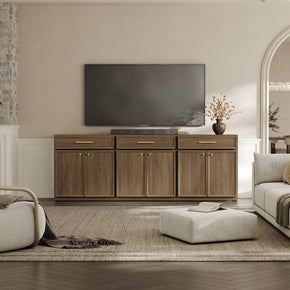
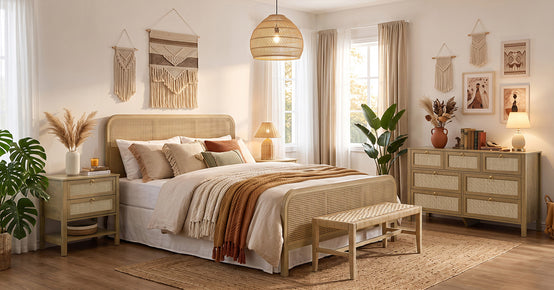
This time round, the look is calmer—one patterned surface, plain walls, simple fabric. Pale tones lead, so a light or medium brown burl wood furniture collection built for modern homes reads modern organic rather than retro.
Shape does a lot of work here as well—soft corners, no handles, low bodies. The pattern stops looking dated once the frame around it stays simple.
Solid Burl, Burl Veneer, or Burl-Look Finish?

Most trend posts skip this part. It is also the part that decides whether you like what turns up at the door.
Solid Burl Wood
Real solid burl exists, mostly in small pieces. Bowls. Turned pieces. Live-edge slabs, mantels and little tabletops. Large, even sections are rare and very heavy, so full solid-burl cabinets stay collector territory.
Real Burl Veneer

Burl veneer is a thin slice of real burl glued onto a steady panel. Nearly every burl piece you can actually buy is built this way, new or vintage.
Veneer is not a shortcut. Cabinetmakers have used it for centuries for one plain reason. It lets a rare figure cover a wide door without that door twisting. Look for bookmatched veneer, where two mirrored slices meet down the middle.
The panel underneath matters too. Engineered wood cores are normal on modern burl pieces, and that is no bad thing.A well-made veneered panel usually moves less than a wide plank of solid timber. The layers underneath run in opposite directions, and cross-laminated construction keeps that movement small across a wide surface.
That is not a guarantee. The core, the glue, the finish and the humidity in your room all change the outcome. A cheap panel in a dry, heated room can still cup.
Burl-Look and Printed Finishes
Some pieces are printed or laminated to copy the look, with no real burl inside. That can still suit a room and a budget. You just need to know what you are paying for.
Read the material line, not the title. Burl effect, burl finish, burl pattern, and faux burl usually mean printed. Genuine burl veneer and solid burl mean real wood.
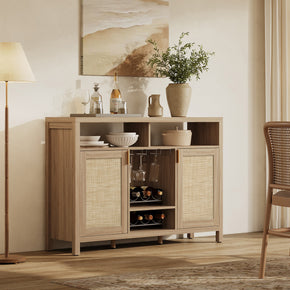
For a wide dresser or a sideboard, both routes work. Genuine veneer over a steady core gives you real figure. A printed finish gives you the look for less, on a panel that behaves the same way in the room.
One note on the pieces linked in this guide. Sicotas lists the Burluxe range as engineered wood, and burl wood there is the color name rather than a material claim. Treat those as a burl-look finish unless the product page confirms genuine veneer.
|
Material wording |
Visual clues |
What to verify |
|
Solid burl |
Thick edges, heavy piece, grain wraps around the corner |
Species and panel thickness |
|
Genuine burl veneer |
Edge band shows a different grain; mirrored halves on paired fronts |
What the core is, and whether the veneer is bookmatched |
|
Burl effect, burl finish, burl pattern, faux burl |
The same swirl repeats on the next drawer along |
Whether the surface is printed or laminated |
|
Burl wood listed as a color |
Sits under Color on the listing, not under Material |
Read the material line separately |
Types of Burl Wood and How They Look

Species names on a listing are really color codes. Learn four of them and shopping gets a lot quicker.
Poplar and Mappa Burl
Pale cream through honey and soft tan, with lots of small eyes packed close together. Mappa is the trade name for European poplar. This tone drives the current trend, and the fine wood grain suits bright rooms.
Walnut Burl
Dark chocolate brown with a tighter, richer figure. Walnut burl feels more formal and a little more traditional. It sits well with deep paint, jewel tones, and warm brass.
Elm and Maple Burl
Elm runs gold to mid-brown. You sometimes get a green or reddish hint, plus swirls and bird-eye dots. Maple burl is paler, closer to cream, with a fine grain and a soft shine.
Redwood, Olive, and Cherry Burl
Redwood burl swirls hard in red and rust tones. Olive ash gives wide flowing shapes instead of tight dots. Cherry burl is harder to find, with a fine texture and a natural shine.
A word on redwood. Old growth redwood is protected in some places, so ask where the wood came from before you buy.
How to Spot Real Burl Wood Furniture

You can do most of this from the listing photos, before anything ships—five things to look at.
- Grain direction. Real burl wanders about. A printed front often repeats the same shape on the adjacent drawer.
- Check the edges. On a veneered piece, the edge band shows a different grain, and that is normal on good furniture.
- Mirrored halves on a door or a drawer front mean bookmatched veneer. Someone laid that up on purpose.
- Read the material line word for word. Burl effect and genuine burl veneer are two very different claims.
- Buying vintage? Ask for labels, photos of the back and inside, and any paperwork before you pay extra for a name.
Zoom into the corners as well. Lifting, bubbling, or a chipped edge band tells you the veneer work was rushed.
Choosing a Burl Wood Dresser or Nightstand
Grain is the easy part. Measuring is what people skip.
- Footprint. Tape the width and depth on your floor and leave it there overnight.
- Walkway. Most designers keep 30 to 36 inches of clear floor around a bed, and a deep dresser eats that fast.
- Drawer swing. A drawer needs its own depth of empty floor in front of it. Measure from the front face, not the wall.
- Anti-tip hardware. Check the listing says a strap or bracket is included, then fit it on day one.
- Assembly. Flat pack or assembled, and how many people the instructions assume.
- Finish. Lacquer, polyurethane, oil and wax each want a different cleaning routine.
- Material line. It should name the core and the surface separately.
- Returns. Figured wood never matches the photo exactly, so check the window and who pays return shipping.
- Warranty. Read what it excludes, not just how many years it runs.
Tone and Size

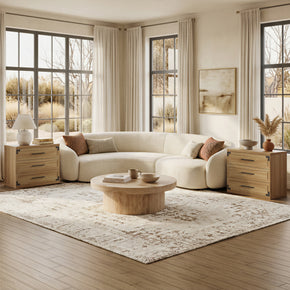
Pale walls and light floors pull toward poplar and maple tones. Darker rooms carry walnut better. Check the piece under your own lamps too, since burl shifts a lot between daylight and warm bulbs.
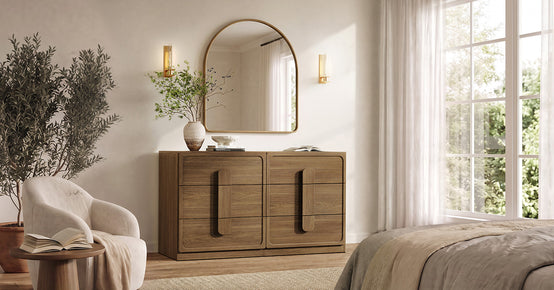
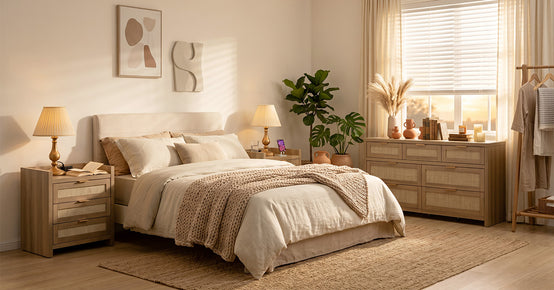
Size counts as much as color does. A 25-inch burl wood nightstand with two drawers suits a narrow gap beside a low bed, as long as the drawer still clears the frame. In a room with a tall headboard the pattern gets lost.
Drawers and Hardware

Open every drawer twice. Feel for smooth metal slides, a stop at the end of travel, and a drawer bottom that does not flex. Then check whether the fronts line up when everything is shut.
Storage is the other half of it. A six-drawer burl wood dresser with large storage earns its wall in a bedroom short on closet space, with room to open drawers fully. A small guest room will feel crowded by it.
Buy the Pair

Burl varies from board to board, so matching a second piece later is genuinely hard. Designers order in pairs for exactly this reason.
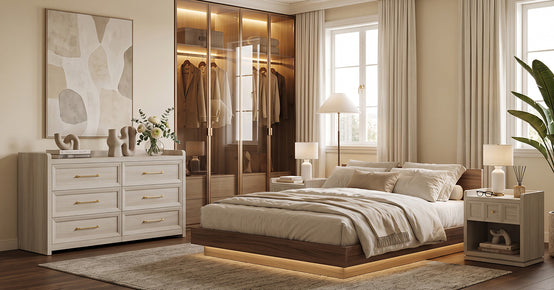
A light burl wood dresser and nightstand set holds one tone right across the room, which makes sense when you are furnishing from scratch. Already own a dresser you like? Buy the nightstand on its own and expect the tone to differ.
How to Style Burl Wood Furniture

Woodworking forums get blunt about rooms with burl on everything, and they're right. Too much figure and the eye never gets a rest.
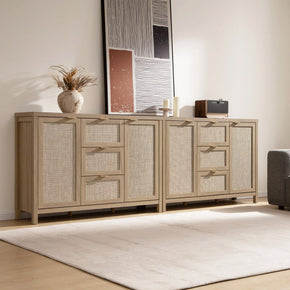
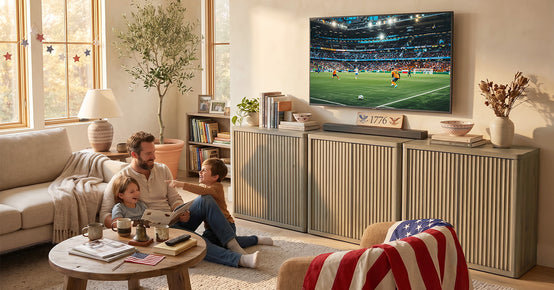
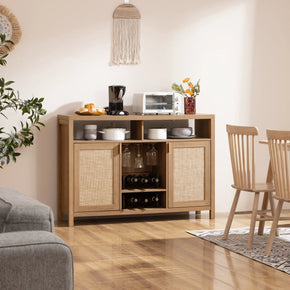
Pick one piece and let it lead. In a living room that could be a coffee table or a long cabinet, and a 59-inch burl wood storage cabinet will hold a whole wall on its own.
A matched pair counts as one gesture. Three unrelated burl pieces do not.
Quiet neighbors make burl look costly. Paint, linen and leather give the eye somewhere to sit. Stone, glass and plain straight-grained wood do the same job.
Keep it away from other loud grains such as zebrawood. If the room needs a second storage piece, take something plain from the wider bedroom furniture range and let the burl lead.
Metal next. Most burl tops carry a mid-to-high sheen, so a brushed or aged finish balances them. Polished nickel, chrome, and darker brass all pull well.
Paint changes the mood more than people expect. Cream and greige let the warm tones glow. Emerald, plum, and near black make the same grain look far richer. Try a swatch beside the piece first.
Where Burl Comes From, and Why It Matters

Trend pieces skip this bit. Burl sells for real money, so people steal it.
Rangers at Redwood National and State Parks have taken burl poaching from old-growth redwoods to court, with some cuts measuring several feet across. Take a burl off a living tree, and you open a wound that insects and disease get into.
Better options are out there. Salvaged and reclaimed stock, wood off private land, and vintage furniture already sitting in homes all skip fresh cutting.
For new furniture, the easy check is a label.FSC labels cover three different claims. FSC 100% means all the wood came from certified forests. FSC Mix blends certified, recycled and controlled sources. FSC Recycled means reclaimed material only.
Engineered wood panels can carry the Mix label, though many do not. Certification applies to a named product and supply chain, never to a brand as a whole. Ask for the certificate code on the exact SKU before you trust the claim.
Care and Maintenance

Dull care beats clever care. Nearly all the damage on a burl surface comes down to water, heat, or a harsh cleaner.
Dust with a soft dry cloth and follow the grain. Conservators at historic sites warn that cloth can catch on loose veneer or molding. Dusting alone can lift a weak edge.
Blot a spill straight away. Do not drag it across a seam. Water that sits in a joint is what loosens veneer in the end.
Leave the scouring pads, strong solvents and thick silicone polish alone. They can cloud a finish for good, and on an older piece that gets expensive to put right.
Use coasters and mats. Keep the piece out of hot afternoon sun and away from radiators, because dry heat shrinks panels.
Then follow the maker on the actual finish. Lacquer, polyurethane, and wax all need different things. Older shellac wants a professional.
Final Thoughts
Burl wood furniture works when the pattern, the build, and the room all agree. Check the material first. Look at the drawers and the edges second. Then buy the tone you will still like in five years, not the one on every mood board this month.
One lead piece, quiet surroundings, gentle cleaning. That is the whole job.
FAQs
Is burl wood good for furniture?
Yes, as a surface. Burl goes on drawer fronts, doors, and tabletops for looks, not strength. How long a piece lasts depends on the core panel, the drawer slides, and the finish. A well-built veneered dresser handles daily bedroom use with no trouble.
What exactly is burl wood?
Wood cut from a bulge that grows on a trunk, a branch, or a root. The grain inside loops around sleeping buds, which creates the swirls. Burl is a growth, not a species, so it always carries its parent tree name.
What is the most expensive burl wood?
- No single species always costs the most.
- Size, figure quality, and usable yield move the price more than the label.
- Walnut and olive burl usually sit above poplar and maple, and matching veneer sheets push it up again.
Is burl wood classic or just a trend?
Classic. Figured burl veneers have been in fine cabinets for centuries. Popularity comes and goes, with peaks in the Art Deco years and again in the 1970s. Shapes date faster than the material, so a simple silhouette ages better than a novelty one.
How do you identify burl wood?
- Look for grain that changes direction and never quite repeats.
- Check the edge band and the back panel for a real wood layer over a core.
- Mirrored halves point to bookmatched veneer. A repeated motif points to printing.
What is the highest quality wood for furniture?
There is no single answer, because different parts of a piece need different wood. Dense hardwoods suit frames and structure. Figured veneers such as burl suit the faces you actually see—dry stock, sound joints, and a steady core matter more than the species name.
How do you clean burlwood?
Gently dust with a soft, dry cloth, following the grain. Blot spills quickly and keep water off the seams and edges. Skip abrasives, solvents, and silicone polish. Then check what the maker says for your finish, because lacquer and wax want different care.
Sources
- University of New Hampshire Extension – The Mystery of Tree Burls
- Texas A&M Forest Service – Burls
- University of Maryland Extension – Burls
- University of Minnesota Extension – Non-Harmful Tree Conditions
- Northern Woodlands – Go Figure: How Tree Burls Grow
- National Park Service – Arrest Made in Burl Poaching Case
- Forest Stewardship Council – What the FSC Labels Mean
- North Carolina Historic Sites – Caring for Your Furniture


Looking for something else?
Types of Leather Furniture: A Simple Guide to Grades and Finishes
LEARN MORE
How to Create a Gallery Wall (2026 Step-by-Step Guide)
LEARN MORE
How to Choose & Style Coffee Table Books Like a Designer
LEARN MORE
How to Decorate Your Front Door for Christmas (2026)
LEARN MORELooking for something else?
How to Fold Napkins: 10 Easy Ways to Dress Up Any Table
LEARN MORE
How to Choose a Coffee Table: The Complete Buying Guide
LEARN MORE
Burl Wood Furniture: The Complete Buying Guide
LEARN MORE


Further reading

16 Bedroom Bench Ideas That Actually Fit Your Room

21 Room Divider Ideas to Split a Space Without Building a Wall


