






What Is Reclaimed Wood? Sources, Benefits, Risks and Buying Tips
Reclaimed wood is timber that already did a job somewhere else. A barn wall. A factory floor. A set of gym bleachers. Somebody pulled the boards out, cleaned them up, and put them back to work instead of throwing them away.
That is the short answer to what reclaimed wood is. The rest of this guide covers the factors that decide whether a batch suits your project.
It is real wood. Not a finish. Not a look. Not a fresh board sanded down to seem older than it is.
Below, you'll find sources, appearance, cost, and the safety checks most guides leave out. Old timber brings its history with it, and parts of that history can include chemicals once used to treat it.
What Reclaimed Wood Actually Means
The Wood Has Had a First Life

The defining feature is previous use. Beams out of a demolished mill. School floorboards. Barn siding. Fencing, water tanks, railway timber.
Age is not part of the definition. Reclaimed wood can be four hundred years old or twenty.
It Is Not New Wood Made to Look Old
Loads of boards sold as rustic or distressed started life as new lumber, then got wire-brushed and stained. That is a finish. It is not a reclaim.
Ask a supplier what the wood used to be. No answer means the word reclaimed is doing marketing work, nothing more.
Reclaimed vs Salvaged, Recycled and Antique Wood
People swap these four words around all the time. That is where most of the confusion comes from.
Reclaimed vs Salvaged Wood

These words are used loosely. Reclaimed, salvaged, and recovered often mean the same thing, depending on who is selling, and nobody enforces a distinction.
One usage pattern is worth knowing, since some suppliers do separate them. Reclaimed then means wood that served in a building or a product before. Salvaged means wood from trees felled for other reasons, such as roadside removals, orchard trees past fruiting, or storm damage. The timber is new even when the tree was old.
Where that distinction holds, the surface tends to show it. Boards from an old building often carry nail holes, bolt marks and stains. Boards milled from a felled tree usually do not.
Ask what the seller means rather than reading the word. The question is where the wood came from, and the label is only a rough guide to the answer.
Reclaimed vs Recycled or Repurposed Wood
Recycled wood and repurposed wood are loose terms, and they overlap with reclaimed. When you talk to a supplier, reclaimed timber and reclaimed lumber are the words that get you a straight answer.
Reclaimed vs Antique Wood
Antique refers to age, not to reuse. There is no fixed threshold, though most suppliers reserve the word for material a few centuries old.
All antique wood in circulation is reclaimed. Hardly any reclaimed wood counts as antique. The two words describe different things. Reclaimed means the wood has been salvaged from an earlier use. Antique means it is old. A piece can be one, both, or neither.
Antique reclaimed wood is both: old timber pulled from a building or structure and put to a new use. Most reclaimed wood does not qualify, since plenty of it comes from structures that are decades rather than centuries old.
The label matters less than the paperwork. Ask where the wood came from, roughly when the source structure was built, and what it was used for.
Where Does Reclaimed Wood Come From?

Where the boards came from shapes everything. Look, size, safety, and how much of it still exists.
Barns, mills, warehouses, factories, and schools supply most of it. Bridges, gym floors, bleachers, snow fencing, and water tanks fill in the rest. Old industrial buildings gave up long, wide boards that are nearly impossible to buy new.
Post-industrial reclaimed wood is different. That is offcuts and rejected stock recovered during manufacturing, before anything reached a customer.
Ask which stream your boards came from. That one question tells you more than anything else on this page.
What Does Reclaimed Wood Look Like?

Expect variation, not matching boards. Nail holes. Dark stains where old fixings sat. Circular or straight saw marks. Checking along the grain, knots, and color that shifts from one plank to the next.
None of that means it has to look rustic. Plane it, sand it, brush it or oil it and the same timber turns clean and modern.
The history stays in the material even when the surface looks refined.
Which Woods Get Reclaimed Most

Oak leads for flooring and furniture. Dense stuff. It wears well and takes almost any finish.
Pine and fir show up constantly, mainly because softwoods framed most industrial buildings. Old longleaf pine is the one people chase. Not much of it is left.
Cedar, redwood, teak, and walnut appear depending on region and source stream.
Old growth describes where the wood came from, not what it looks like. The term refers to timber cut from mature, long-established forest stands rather than to any particular grain pattern.
Slow growth in those stands often produces tight rings and wide boards, which is why the look became shorthand for the label. The traits are common, not definitive. A slow-grown plantation tree can produce tight grain, and old-growth timber does not always show it.
Grain alone will not tell you. Ask the seller where the timber came from and what the source structure was, and treat the appearance as a clue rather than proof.
The Benefits of Reclaimed Wood
Reuse keeps good timber in circulation. Less pressure on freshly cut boards. Be careful with the green claims though, because transport, de-nailing, drying and remilling all burn energy. Nothing reclaimed is automatically zero-impact.
Character is the other draw. Tool marks, patina and grain that new timber cannot fake convincingly.
Old wood that seasoned properly has done most of its moving already. That can make it stable. Species, moisture content and condition decide it though, not age.
It works in biophilic interiors too. Natural texture and a visible past both count for something there.
The Risks Most Guides Skip
This is where reclaimed wood needs more care than the average buying guide admits.
Old Paint and the 1978 Cutoff

Lead in house paint was banned in the US in 1978. Plenty of buildings put up before that still carry it, so painted reclaimed boards from that era are a real question mark.
Intact paint is usually lower risk, though that is only half of EPA's guidance. The other half is that it must not sit on an impact or friction surface. On a painted dresser, the drawer runners and drawer edges are exactly that.
EPA guidance on lead in the home notes that dust also forms when painted surfaces bump or rub together. Paint can also deteriorate, peeling or chipping over time. Intact today does not mean intact in five years.
Sanding, scraping, and heating are the worst things you can do. EPA advises against removing lead paint yourself. Instead, keep the surface in good condition and wipe away chips or dust with a damp cloth rather than dry sweeping.
Test before you work on a painted piece made before 1978. Hardware stores sell lead test kits, and certified inspectors can handle anything you are unsure about. Children under six are most at risk.
Creosote and Treated Timber
Railway ties and utility poles constantly show up on reclaim lists. Most of them are creosote-treated. EPA wood preservative guidance is blunt: creosote has no registered residential uses.
Older pressure-treated lumber is the other one to watch. Manufacturers voluntarily stopped treating wood with chromated arsenicals for most homeowner uses at the end of 2003. EPA never banned the chemicals.
Scope is narrower than a ban.EPA guidance on chromated arsenicals covers residential uses such as decks, fencing and playsets. Treatment continues for utility poles, pilings, permanent foundation beams, and some shakes and shingles.
Salvaged decking or fencing from before 2004 can carry arsenic. EPA does not require removing existing structures, and it suggests a penetrating stain to slow leaching on ones you keep.
Do not burn treated wood. Keep it out of mulch, garden beds, and anything that touches food. Reclaimed CCA-treated lumber is a poor choice for indoor furniture.
Neither one belongs on an indoor wall, and neither belongs in furniture.
Hidden Metal, Rot and Insects

Old nails and screw shanks sit buried in reclaimed boards. Broken heads are invisible. Decent suppliers de-nail and sweep with a metal detector before milling. Hit one with a saw blade and the blade is gone, and bits can fly.
A line runs between character and decay, and it is worth learning. Soft, crumbling, or powdery wood is rot. Fresh boreholes with powder underneath mean live insects.
Is Reclaimed Wood Safe to Use Indoors?
Usually yes, with one catch. Bare wood emits very little. The wood is only half the story.
Old paint, varnish, preservatives, adhesives, industrial residue, animal waste, and mold all ride along with the board. Kiln drying kills insects and does nothing to chemical contamination.
Certification helps. TheFSC Recycled label means an independent party verified the material is genuinely reclaimed. A recycled claim typed onto a product page gives you less assurance, though it does not always mean nothing sits behind it.
Ask what does sit behind it. A seller may have chain-of-custody documentation, a third-party verification scheme, or supplier records tracing where the material came from. Any of those is worth more than the word recycled on its own.
Treat a vague answer as the answer. A seller who can point to paperwork usually will, and one who cannot is telling you how closely the claim was checked.
Can Reclaimed Wood Be Used Structurally?
Sometimes, but old appearance proves nothing about strength.
Reclaimed framing must be regraded before it can carry any load. USDA Forest Products Laboratory research on recovered framing shows that grading is what settles the question.
Anything that holds weight needs grading, plus a check of what your local building rules require. Decorative paneling and furniture stock should never be assumed structural.
What Reclaimed Wood Is Used For

Flooring and stairs need the most processing and pay it back. Wall paneling, cladding, and ceilings are simpler, since they carry no load. After that comes furniture and joinery. Tables, desks, doors, benches, headboards, countertops, sideboards, and buffet cabinets are made to show off the grain.
Exterior siding only works if the species and finish can take the exposure. Ask the supplier straight out.
Warm Wood Character Without Reclaimed Timber

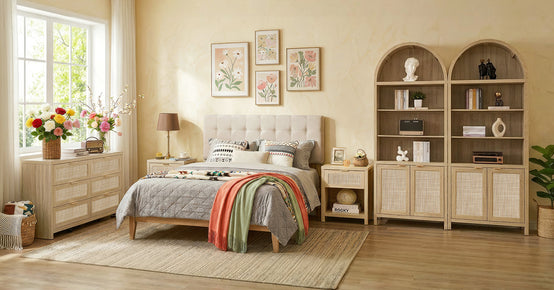
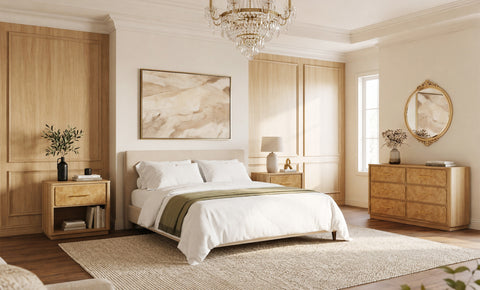
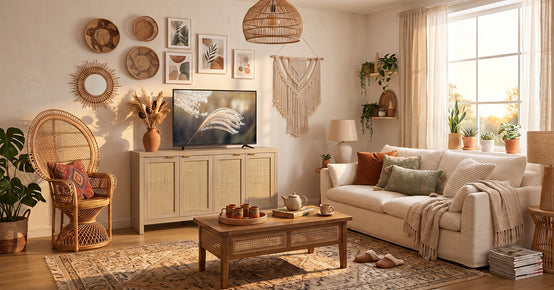
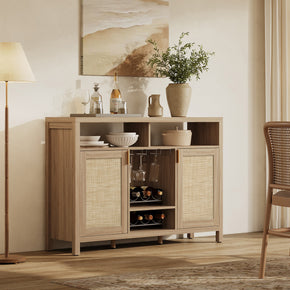
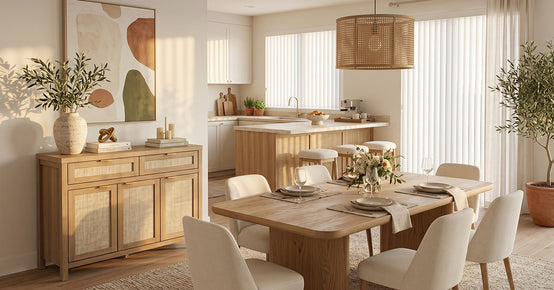
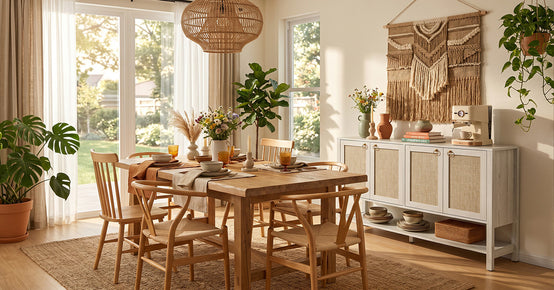
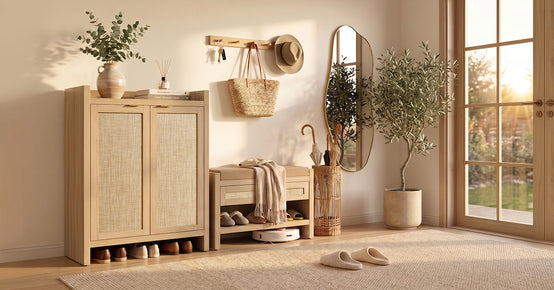
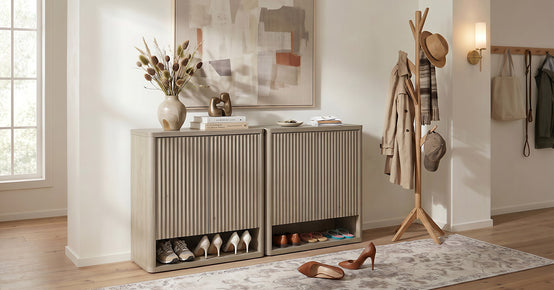
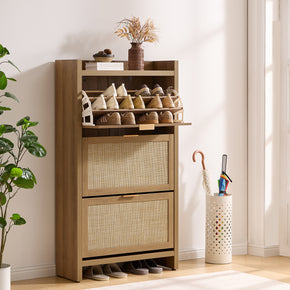
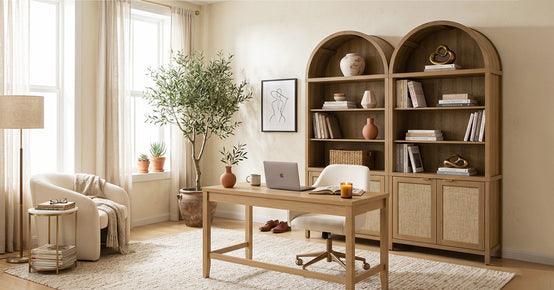
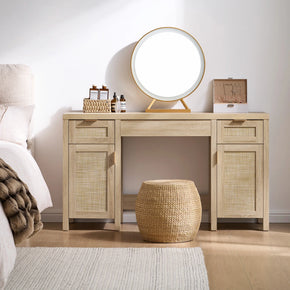
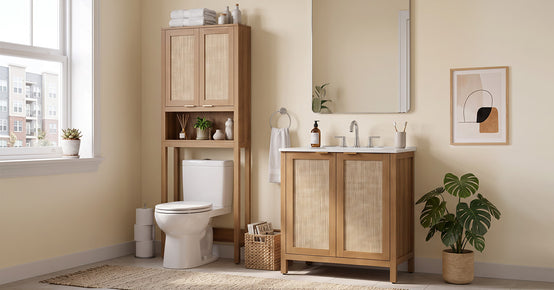
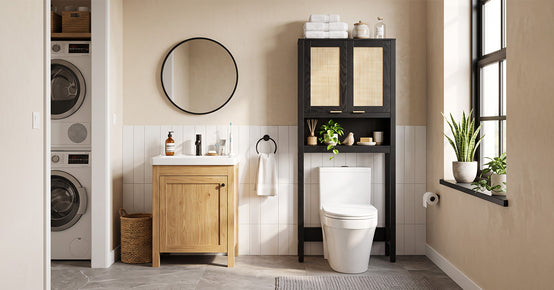
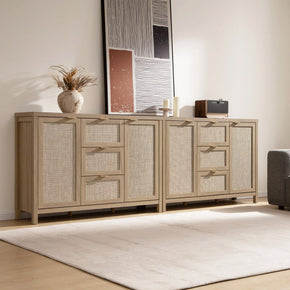
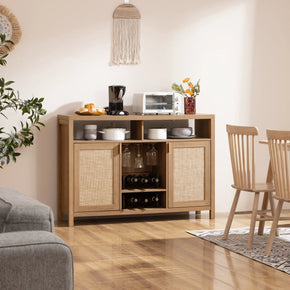
Reclaimed timber is not always practical. Supply comes and goes, prices run high, and a rented flat rarely justifies the spend. Natural texture and warm wood tones cover most of the same ground. That is why woven rattan and oak-toned living room storage pieces keep filling the same design brief.
In Living and Dining Rooms

A boho sideboard with rattan doors brings the woven texture and warm oak tone that people usually want from reclaimed boards, without the sourcing headache.
For a Curved Statement Piece

An arched rattan cabinet with two doors softens a flat wall the way an old timber piece would, and the arch does the work that patina does on reclaimed furniture.
For Narrow Walls

A slim rattan sideboard console fits a hallway or a tight dining wall where a chunky reclaimed beam table never would.
For Books and Display

A rattan bookshelf with a storage door gets you height and natural texture from one piece. It suits the rooms reclaimed shelving usually ends up in.
Those are two separate questions, and one certification does not answer both.
For emissions, ask about TSCA Title VI. It sets the formaldehyde limits for particleboard, MDF, and hardwood plywood sold in the US, and compliant products are labeled accordingly. Request that documentation if indoor air quality is your concern.
For sourcing, ask about FSC or chain-of-custody records. Those tell you where the fiber came from and how it was managed. They say nothing about what the finished panel emits.
A seller worth buying from can answer both separately. Watch for one being offered as though it covers the other.
How to Clean and Care for Reclaimed Wood
Dust first, gently. A soft brush, microfibre cloth, or vacuum with a brush head will do. Textured old boards trap far more dust than planed new ones.
Go easy with water. Damp-wipe only if the finish allows it. Never soak the surface.
After that, it depends on the finish. Oiled and waxed surfaces want topping up now and then. Lacquered and sealed ones mostly just need cleaning.
Watch humidity in bathrooms, kitchens and anywhere with a floor that gets wet.
Why Reclaimed Wood Costs More
The timber itself is the small part of the bill. Everything around it is not.
- Recovery, dismantling, transport and storage
- De-nailing and metal detection
- Drying, cleaning, sorting and grading
- Remilling, plus the boards thrown out along the way
Rare species, unusual widths and genuine antique provenance push it up further. It is not always dearer than new timber, but it usually is.
How to Buy Reclaimed Wood Well
Six questions cover most of it:
- Where did it come from, and what was it before?
- Has it been de-nailed and metal-detected?
- Was it painted, treated, or pressure-treated?
- How was it dried, and what is the moisture content now?
- Can I see samples, since photos never show the real spread?
- Is there enough in this batch for the whole job plus waste?
That last one matters more than people expect. Matching a second batch two years later is usually impossible.
Final Takeaway
Reclaimed wood earns its keep by handing old timber another working life, complete with marks and grain no new material can copy.
Five things decide whether a batch suits your project. Source. Condition. Treatment history. What you plan to do with it. And how openly the supplier answers your questions.
Get those right, and you have a beautiful, hard-wearing material with a genuinely light footprint. Skip them, and you could be sanding somebody else’s problem onto your living room wall.
FAQs
Is reclaimed wood real wood?
Yes. It is genuine timber, taken out of a previous use and prepared for a second one. A board made new and then finished to look aged is not reclaimed, no matter what the product name says.
What is the lifespan of reclaimed wood?
Decades, and often much longer. Plenty of boards had already put in a century of work before anyone milled them for round two.
Species, condition, moisture, finish, and how well you look after it determine it. Age on its own guarantees nothing.
What is another name for reclaimed wood?
Reclaimed timber and reclaimed lumber are the closest equivalents. Recycled wood, repurposed wood, and reused timber are also used.
Salvaged, recovered, and antique wood sound close but mean different things. Worth asking a supplier which one they actually mean.
Which wood is the highest quality?
No single species wins everywhere. Judge it on grade, condition, processing, and the job:
- Oak where flooring, stairs, and furniture take a daily beating
- Old-growth pine and fir when you want long boards and visible character
- Teak and cedar in damp spots, where moisture resistance counts
- Walnut and redwood if color and grain are driving the choice
Is reclaimed wood still popular?
Yes, and the appeal has spread well past farmhouse interiors. Material reuse, circular design and biophilic interiors all keep it in demand.
The look is what changed. Cleaner milling and smoother finishes now sit right beside the old weathered barn-board style.
How do you clean reclaimed wood?
Dry dusting first:
- Soft brush or microfibre cloth on paneling and furniture
- Vacuum with a brush attachment on floors and rough boards
- Damp cloth only if the finish allows, and wring it out well
- Skip harsh cleaners, soaking, and steam entirely
What does reclaimed wood look like?
It can range from heavily weathered to smooth and modern. It depends on how much surface got milled away.
Giveaways include patina, nail holes, dark oxidation stains, saw marks, checking, and knots. Coloralso changes from board to board.
Sources
- U.S. Environmental Protection Agency – Overview of Wood Preservative Chemicals
- Agency for Toxic Substances and Disease Registry – ToxFAQs for Creosote
- HUD Exchange – Lead-Based Paint Regulations
- Forest Stewardship Council – Recycled Materials and the FSC Recycled Label
- USDA Forest Products Laboratory – Framing Lumber from Building Removal
- LSU AgCenter – Wood Preservatives and Treated Wood Processing


Looking for something else?
How to Choose Dinnerware: The Ultimate Dinnerware Sets Buying Guide
LEARN MORE
Velvet 101: How to Care for Velvet (Complete Care Guide)
LEARN MORE
How to Decorate a Narrow Bedroom: 13 Narrow Bedroom Ideas and Layout Tips
LEARN MORE
How to Make a Coastal Centerpiece: Easy DIY Ideas
LEARN MORELooking for something else?
How to Make the Most of Your Hutch: Styling & Organization Ideas
LEARN MORE
How to Decorate a Small Kitchen: Design & Storage Tips
LEARN MORE
Sunbrella Fabric 101: What Is Sunbrella & Why It Lasts
LEARN MORE


Further reading

How to Decorate a Hall Tree: 10 Entryway Ideas That Actually Work
What Is Reclaimed Wood? Sources, Benefits, Risks and Buying Tips


