



What is an Ottoman? 8 Reasons Why You Need One
My mum calls it an ottoman. My sister has always said pouf. I spent about a decade calling the same thing a footstool before anyone corrected me, and even then, I am not sure they were right to do so. Three words. One piece of furniture. Nobody is backing down at Christmas. So if you have searched for what an ottoman is and come away still a little fuzzy on it, honestly, join the club.
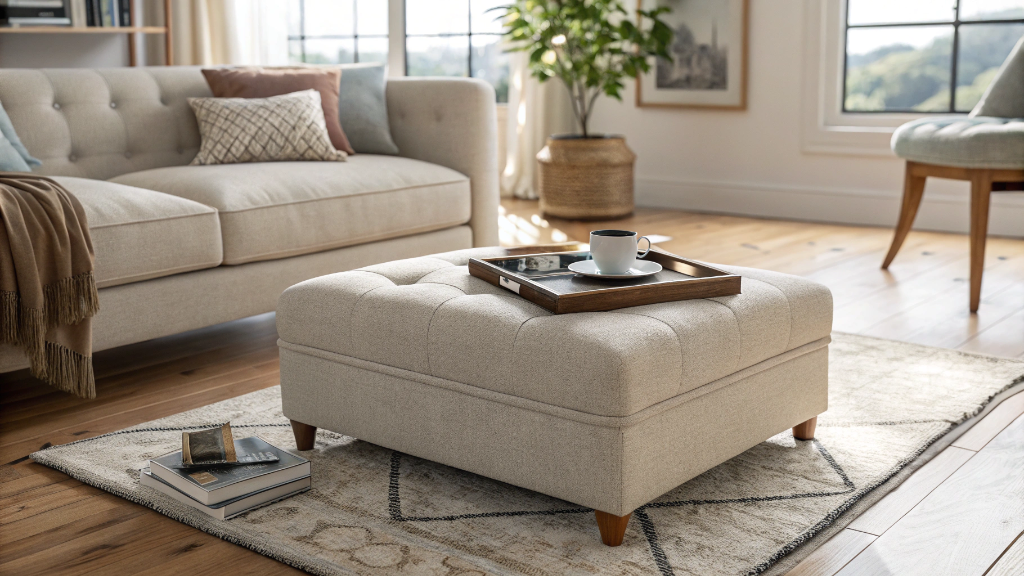
The thing that makes it confusing is also the thing that makes it useful. An ottoman is a low, usually upholstered piece, typically with no arms or back. That is it. That is the whole definition. And because it is barely defined, it ends up doing everything: a footrest, a spare chair, a soft coffee table, a box you hide things in: one small piece, four jobs, sometimes more.
Right, so here is what I want to walk through. What it actually is. Where the odd name came from. How is it different from a footstool and a pouf, because people do mix those up? The types you will run into when you shop. And then eight reasons I think it earns its spot, none of them the obvious filler ones.
What Is an Ottoman, Exactly?

Let me give you the plain version. An ottoman is freestanding, padded, and usually built on a solid frame. Most of the time, there are no back or arms on it. And that stripped-back shape? That is the whole secret. The piece never tells you what to do with it, so the decision is yours.
In real homes, you will catch one doing any of this:
- Holding up tired feet in front of the sofa
- Becoming a sea,t the second three more people show up
- Filling in for a coffee table, minus the corners you stub your shin on
- Hiding clutter, if the lid lifts or the top comes off
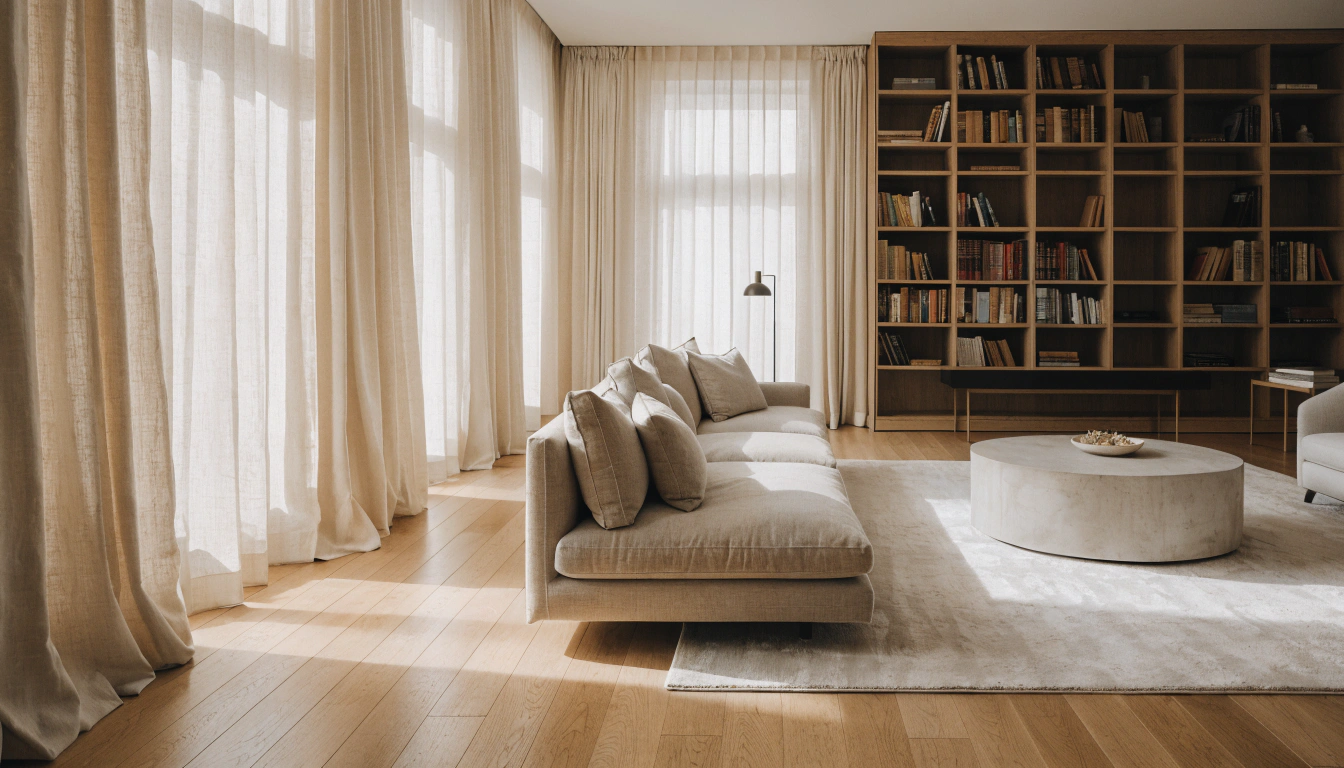
Living rooms are the home base. But they wander. Foot of the bed. Entryway. A corner you have set up for reading. Round ones, square ones, long bench-shaped ones. Some on little legs, some just a solid, padded block sat on the floor. Shape changes constantly. What does not change is how handy the thing is.
Where Does the Word “Ottoman” Come From?

Straight from the Ottoman Empire. That is not a coincidence or a marketing flourish; it is just the actual origin.
The empire spanned parts of Southeastern Europe, Western Asia, and Northern Africa, roughly from the 13th century through the early 20th century. And inside Ottoman homes, low cushioned seating was simply how you sat. No chairs in the Western sense. The early form was a long padded platform piled with cushions, often running along three walls of a room so the whole family could pile on. Wikipedia’s entry on Ottoman furniture pins the first recorded use of the name, spelled “ottomane,” to the French in 1729. Oddly specific, but there you go.
European travelers saw it in the late 1700s, liked it, brought the idea back, and kept the name. Then it shrank. Throughout the 1800s, the design became freestanding and small enough to tuck into a corner. Soho Home, in its history of Ottoman furniture, traces that same path — from a piece wrapped around three walls, to a corner piece, then out into the middle of the room. By the 20th century, the word had loosened up enough to cover footstools and other small upholstered bits,s too. Which is exactly why your mum and your sister can both be technically correct and still argue about it.
Ottoman vs Footstool vs Pouf: What’s the Difference?

People use these three words interchangeably, and I am not going to pretend that is wrong, because the overlap is genuine. But there are real differences, and they matter once money is involved.
|
Feature |
Ottoman |
Footstool |
Pouf |
|
Main use |
Multi-purpose: seat, table, footrest, storage |
Resting feet, mostly |
Casual seating or footrest |
|
Build |
Fully upholstered, often firm, solid frame |
Often, in a visible wood frame, smaller |
Soft, cushion-like, usually no hard frame |
|
Storage inside |
Frequently |
Rarely |
Rarely |
|
Works as a table |
Yes, with a tray |
Usually too small |
No, too soft to trust |
Here is the cheat sheet I give people. Footstool: one job, your feet, done. Pouf: a big soft cushion you nudge around with your foot, looks relaxed, not built to hold much. Ottoman: the one that also stores things, takes a tray, and seats a guest. So a pouf is sort of a casual ottoman. An ottoman is not necessarily a pouf. Close enough for most conversations.
Common Types of Ottomans
Knowing the names takes most of the guesswork out of shopping. There are not that many.
Storage ottoman. Lid lifts or comes off, hollow underneath. Blankets, throw pillows, the kids' stuff, the magazines you genuinely will read someday. Probably the most popular type, especially in flats and family rooms.
Cocktail ottoman. Big, low, built to replace a coffee table outright. Room for a proper tray. Room for more than one set of feet.
Ottoman bench. Long and bench-shaped. Foot of a bed, along an entryway wall, or pressed into service as dining seating when the table is full.
Pouf. Softer, lighter, more casual. Easy to move. At home in boho rooms and tight spaces.
Glider ottoman. Goes with a nursery glider and rocks along with it. Niche, but if you need one, you really need one.
Ottoman bed. This is the one that confuses everybody. In some markets, it is a storage bed with a lift-up base. In other words, it just means a bench-style ottoman at the foot of the bed. You have to read the context.
Anyway. The reasons.
1. It Adds Seating Without Eating the Room Alive

Picture it. You need a spot for one more person. An armchair would do it, but an armchair would also crowd the whole layout, and you know it would. That gap is exactly where the ottoman lives.
It sits low. No bulky arms, no back. So it slides into a room without dominating it. Park it across from the sofa, slot it between two chairs, or just leave it in a corner until people come over. Pair one with something generous like the Nimbus 3-Seater Sofa Couch, and you cover more seating situations than a matching sofa-and-loveseat ever will, for less money and less floor space.
2. It Does the Work of Three or Four Pieces

This is the real argument, as far as I am concerned.
Tray on top: soft coffee table, holds your drink and the remotes. Lift the lid on a storage model: it eats throws, board games, and that magazine pile. Shove it two feet: it is a seat again. The same object holds your coffee at 4 pm and your feet at 9 pm. Nothing about it changed. Just the job did.
In a small place, every piece should pull more than one shift, and most of them quietly refuse to. The Ottoman actually does it. Let a Stria Round Coffee Table hold the center of the room, and the ottoman just floats around it, grabbing whatever job is going on.
3. It Turns a Plain Sofa Into a Stretch-Out Lounge

Small-space trick, and it feels a bit like getting away with something. Push an ottoman against the end of your sofa. There. You have a chaise. No sectional, no extra floor space gone, no big-furniture decision you will second-guess in two years.
Renters love this one. So do nappers. And the part a sectional cannot do: when guests arrive, you slide the ottoman away, and the sofa is just a sofa again. Try un-building a built-in chaise. You cannot.
4. It’s a Soft, Safe Stand-In for a Coffee Table

Anyone with a toddler and a glass coffee table knows the specific anxiety I am about to describe. Those corners sit at roughly head height for a small child. It is a lot.
An ottoman just deletes the problem. The whole thing is padded; there is no sharp corner to begin with. Add a wide tray, and keep the flat surface for snacks, books, and drinks. Want your feet up instead? Move the tray. You lose nothing. Same logic carries into the hallway, where a Cas Storage Shoe Bench gives you a padded perch with none of the shin-height edges. For a busy family room, get a wipe-clean top and stop worrying.
5. It Hides the Clutter You’d Rather Not Look At

Every living room makes clutter. Spare blankets, the throw pillows that migrate off the sofa, controllers, chargers, kids' bits, magazines. It accumulates whether you like it or not.
A storage ottoman gives all of it one place to vanish into. That is the difference between a room that is tidy and a room that just looks tidy — the clutter has not gone anywhere, it is inside the ottoman now. And if you are short on closet space, something roomy like the Terra Flip-Open Storage Bench doubles as a home for photo albums, off-season clothes, and the table linens you use twice a year.
6. It Works Far Beyond the Living Room

I keep saying living room. I know. But the Ottomans have never been loyal to one space.
Foot of the bed: somewhere to sit while you put your socks on, somewhere to drape tomorrow's clothes. Entryway: a soft landing for taking off your shoes. Bedroom corner next to a chair: it quietly turns into a reading nook. Even a narrow piece like the Savanna Console Table works with an ottoman tucked underneath — seating that stays invisible until the second you need it.
7. It’s an Easy Way to Add Style Without a Full Makeover

Want a room to feel different without touching the big furniture? This is the cheap, low-risk way to do it. And it works fast, which is the part people underrate.
Lean into contrast. Texture against a smooth sofa. A color you pull from a tone already living in the rug or the cushions.—around shape to break up a room full of hard angles. Because the piece is small, you can be braver with it than you would ever be with a sofa — worst case, you move it to another room. Even a compact accent like the Crescent Nightstand shows how much one small, deliberate choice can shift the feel of a whole setup.
8. It’s Kid-Friendly and Pet-Approved

If the living room doubles as a play area, or the dog has claimed it, soft furniture stops being a nice-to-have. Rounded, padded edges instead of hard corners. Less for a kid to trip into. Less for a tail to catch.
Get one in a durable, easy-to-clean fabric, and it shrugs off paw prints, juice, and ordinary life. People treat practical surfaces like a compromise. They are not. In a high-traffic home, they are the whole difference between furniture that lasts and furniture that does not.
Final Thoughts
So, what is an ottoman? Low, armless, backless, usually upholstered, and quietly busier than anything else its size. Footrest, then spare seat, then a coffee table with a tray on it, then hidden storage under the whole lot. The history is good trivia, and the type names save you from floundering in a showroom. But the actual reason to own one only really lands once you have lived with it for a week. It earns the floor space. Not much furniture, honestly, can.
Frequently Asked Questions
What is the purpose of an ottoman?
Most people use it as a footrest. But the actual purpose is flexibility — the same piece works as extra seating, a coffee table once you add a tray, hidden storage if it is hollow, or just a decorative accent that ties a seating area together. It depends entirely on what you need that day.
What do Americans call an ottoman?
Usually just “ottoman.” Sometimes a footstool. Once in a while, hassock — though that word is fading.
Why were they called Ottomans?
After the Ottoman Empire, low, backless, cushioned seating was central to the home. European travelers took the style back in the late 18th century and kept the name attached to it.
What is an ottoman called in the UK?
Often a pouf, pouf, footstool, or storage footstool, depending on the style. Worth knowing: in the UK, “ottoman” frequently means an ottoman bed — a bed with a lifting base and storage underneath — so the word can point at something completely different from what an American means by it.
Who destroyed the Ottomans?
Nobody, not in one go. The Ottoman Empire declined slowly over decades — through lost wars, shrinking territory, rising nationalist movements, and major political changes. The Sultanate was formally abolished in 1922, and the Republic of Turkey followed in 1923.
Are Ottomans Turks or Arabs?
The ruling dynasty came from Turkish tribes in Anatolia. The empire, though, governed an enormous mix of people — Arabs, Greeks, Armenians, Kurds, Slavs, plenty more. So: Turkish dynasty, multi-ethnic empire. Both answers are partly right, which is usually why the question gets asked.
Is it okay to sit on an ottoman?
Yes. Most are built solidly enough for occasional sitting, and the bigger, firmer ones handle it easily. It is not a long-term seat — no back, no arms to lean on — but for a quick perch or an extra guest, it is fine. If you plan to use one as a regular chair, check the weight capacity first.
What’s the difference between an ottoman and a pouf?
An ottoman is usually structured and firmer, and it might have interior storage or sit on legs. A pouf is softer, lighter, and more like a cushion, and rarely has storage or a usable hard surface. Pouf for casual seating and decoration. Ottoman when you actually need it to work.
Sources
- Encyclopedia Britannica – Ottoman | Upholstered, Ottoman Empire, Footstools
- Wikipedia – Ottoman (furniture)
- Soho Home – The History of Ottoman Furniture
- Hunker – A Footless Footstool: The Royal History of the Ottoman
- Chita Living – What Is an Ottoman? The Story Behind the Quirky Furniture Piece
- Swyft – What is an Ottoman? A Complete History and Style Guide
- Claudia Giselle Design – History of the Ottoman


Stay In The Know
Expert advice. Very good deals. The absolute best (and worst) things we've tested lately.
Looking for something else?
Best Vase for Tulips: A Florist's Honest Guide to Shape, Height, and Styling
LEARN MORE
41 Small Outdoor Living Spaces Ideas to Transform Even the Tiniest Patio
LEARN MORE
Modern Sideboard for Living Room: Complete Buying & Styling Guide
LEARN MORE
17 Camel Leather Sofa Decorating Ideas to Transform Your Living Room
LEARN MORERead more from Blogs
Looking for something else?
36 Wall Art Ideas That Make Any Room Feel Finished
LEARN MORE
What is an Ottoman? 8 Reasons Why You Need One
LEARN MORE
How to Sit in Bed With Good Posture: 10 Simple Tips
LEARN MORERead more from Blogs
You may also like


Further reading
What Is a Platform Bed? A Simple Guide to Types, Benefits, and Buying
Bed Sizes Guide: Dimensions From Twin to King