




36 Wall Art Ideas That Make Any Room Feel Finished
Walk through almost any home, and you'll find the same thing: a blank wall that's been waiting months for a decision. Maybe there's even a framed print leaning against it, still in the shop wrapping. The piece got bought. It got loved. It just never got hung. That gap — between owning the art and actually committing it to a wall — is where good rooms quietly stall. The fix isn't more inspiration. It's knowing which wall art ideas actually suit your space, and then having the nerve to pick up a hammer.
So treat this as a working guide, not a mood board. You'll get 36 wall art ideas sorted room by room — living room, bedroom, dining room, entryway, kitchen, bathroom, home office — plus a final set of unexpected ones most people never think to try. Some cost about forty dollars, and one free afternoon. A few cost more. None of them needed a designer on call. And along the way, I'll flag exactly where people go wrong, because after enough rooms, you notice they go wrong in the same handful of spots every single time. By the end, you'll know what to hang, how big it should be, and how high it goes.
How We Picked These 36 Wall Art Ideas
These came from a mix of sources: designer-led roundups—Living Spaces, Room & Board, Havenly. Interior advisors talking about what's actually landing in real homes right now, not what photographs well. And our own client work, styling rooms around Sicotas furniture. Every idea had to clear one bar: solve a common decorating headache, work in more than one room style, or give the space a genuine focal point. Anything that only worked in one narrow aesthetic got cut. So did anything that already looks dated.
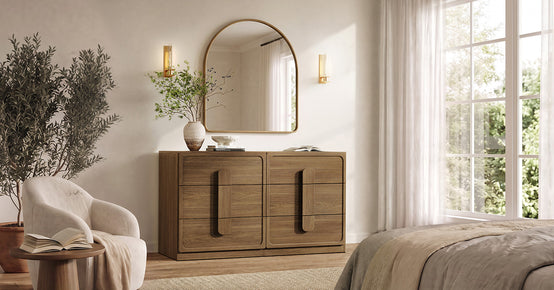
Living Room Wall Art Ideas (1–10)
The living room gets more wall art questions than the rest of the house combined. Makes sense — it's the room people see first. These ten cover the layouts that come up over and over: above the sofa, around the TV, on a console wall, and those awkward leftover stretches nobody knows what to do with.
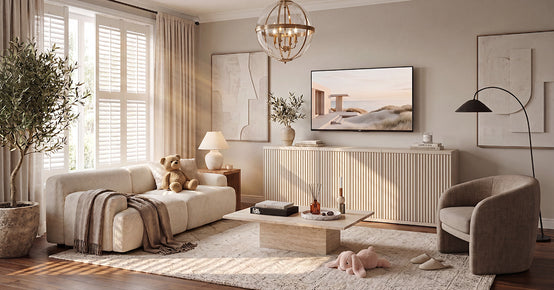
1. Oversized Statement Piece Above the Sofa

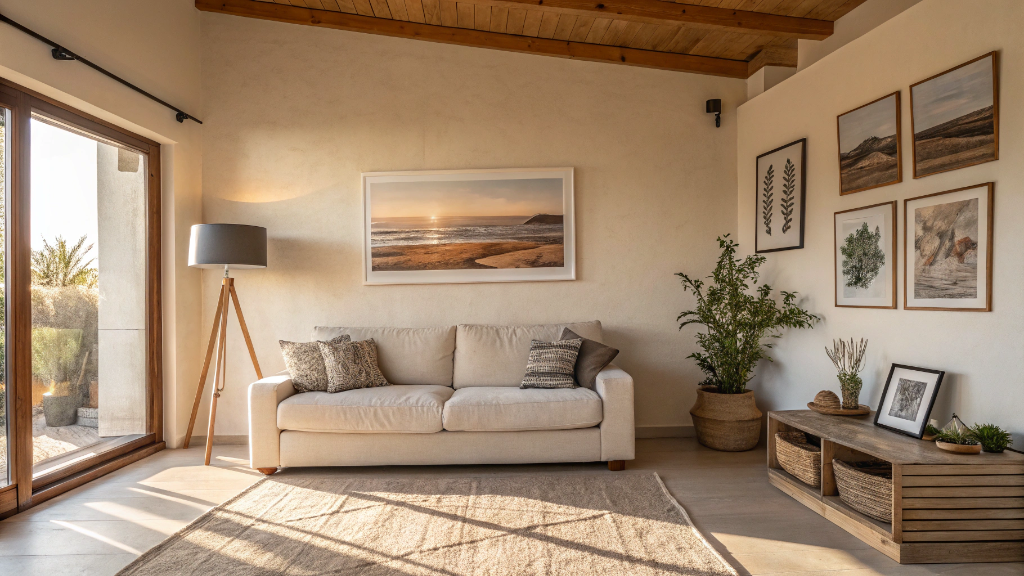
The number one mistake, and I see it constantly: art that's too small. Someone hangs a 24-inch print over an 84-inch sofa and can't figure out why the wall feels off. Your piece should cover about two-thirds to three-quarters of the sofa's width. So for that 84-inch couch, you want something in the 56 to 63-inch range. And one large piece beats a scatter of small ones nearly every time. Small art over a big sofa just looks nervous.
2. Mixed-Frame Gallery Wall

Matching frames in a tidy grid — that's how a gallery wall ends up looking like a dentist's waiting room. Don't. Mix the metals, the wood tones, the widths. Black, walnut, brass, raw oak, whatever you've got. One oval thrown in for good measure. Keep 2 to 3 inches between frames, no more, or the pieces stop talking to each other. And lay the whole thing out on the floor before a single nail goes in. If a full wall feels like a lot, the newer gallery cluster trend — just three or four pieces grouped loosely — is easier and, honestly, looks more collected anyway.
3. Leaning Art on a Picture Ledge or Console

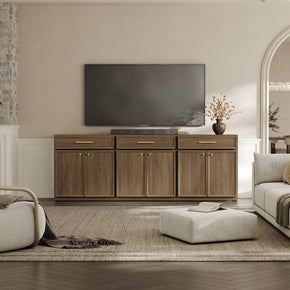
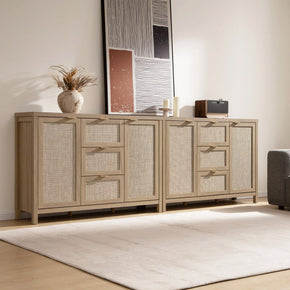
Leaning is underrated. A picture ledge — the shallow kind, maybe 12 inches deep — lets you prop art instead of hanging it, and you can rearrange the whole thing on a Sunday with zero spackle involved. The same goes for leaning bigger pieces on a console. A narrow console table with three drawers does double duty here: surface on top for the art, drawers underneath for the stuff you'd rather not look at: keys, cables, the mail you're ignoring.
4. Diptych or Triptych Sets

Two or three panels meant to be read as one. They hand you rhythm without the full gallery-wall production. Look for a set that shares a palette but not necessarily a subject — a couple of botanical sketches, a run of ocean shots, three abstracts from the same family. Hang them about 2 inches apart so the eye groups them. Any wider and they read as separate pieces that just happen to be near each other.
5. An Oversized Round Mirror as Wall Art

A big round mirror counts as art. Brass frame, black frame, a chunky natural-wood one — pick your lane. Something in the 36 to 48-inch range. It casts light around, makes a tight room feel less tight, and goes with basically every style. Put it across from a window if you can; you'll roughly double the daylight. Over a fireplace or a console, it just becomes the focal point with no other effort. Then lean the rest of the room — modern Sicotas furniture pieces work well for this — into that calm.
6. Layered Botanical Prints

Three to five framed botanicals. Pressed leaves, those old scientific plant plates, modern green-on-cream paintings — any of it works. Tight grid or a looser stagger, your call. What makes this land is restraint: a calm palette, consistent frames, and letting the variety come from the plants themselves. Cheap prints are completely fine. Nobody's checking the price tag. They're looking at the grouping.
7. Vintage Maps or Architectural Drawings

Old maps of places you've lived. Hand-drawn floor plans. Architectural sketches with that faded-ink look. They carry a story without making a fuss about it. Etsy's full of them, antique shops too, often under $40 once framed. The thing that separates "looks like a college dorm" from "looks intentional" is just the framing — decent matting, a plain wood frame, hung at eye level. That's the whole trick. There isn't a second part.
8. Textile Tapestry Above the Sofa

A woven wool piece. A vintage kilim was flipped onto the wall—some modern textile thing in browns and rusts. Fabric on a wall changes the way light falls — it absorbs rather than reflects, and the room goes a little softer for it. Tapestries also fix the dreaded space over the sofa better than a painting usually does, because they've got heft without feeling fragile. And they forgive a lot. Weird wall? Plaster, brick, and an angle that makes no sense? A tapestry doesn't care.
9. A Single Bold Abstract Painting

Skip the gallery wall entirely. Some rooms just want one piece pulling all the weight — a bold abstract, strong color blocking, brushwork you can read from across the room. Instant focal point, nothing is competing with it. Here's the move, though. The Scandinavian off-center trick says hang it off-center. Not a little off — properly off, shoved toward one end of the sofa. It sounds like a mistake when you describe it out loud. In the actual room, it works. I can't fully explain why. It just does.
10. Sculptural Wall Sconces as Functional Art

Light fixtures are art if you choose them like art. Two brass sconces on either side of a painting, and suddenly the whole wall has more going on. Or one weird asymmetric sconce — the kind shaped like a branch — that reads as sculpture in daylight and a lamp at night. Renters, there are plug-in versions. You're not locked out of this. The point is you stop treating lighting as a utility and start treating it as part of the picture.
Bedroom Wall Art Ideas (11–17)
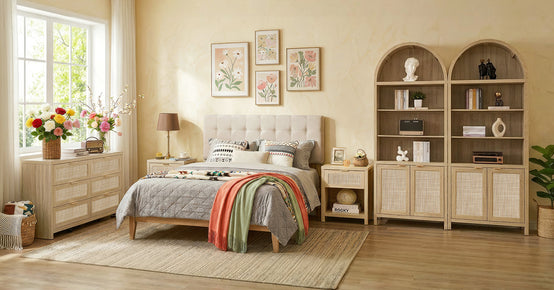
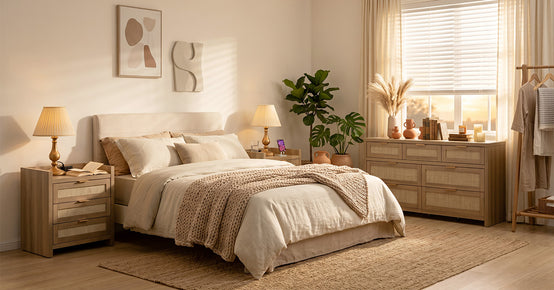
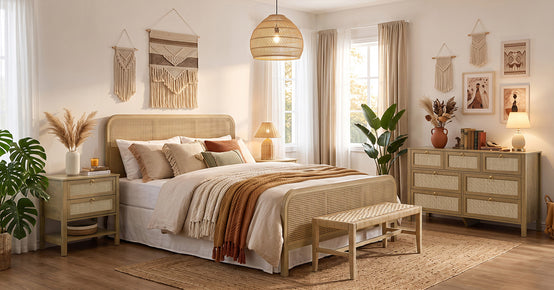
Bedrooms want calm. The art in here should be on the side of sleep, not fighting it — softer colors, less going on, one piece you genuinely like instead of a wall full of compromises. These also sit well next to low bedroom furniture like the rattan-front nightstand collection, the kind of pieces that don't elbow the art for attention.
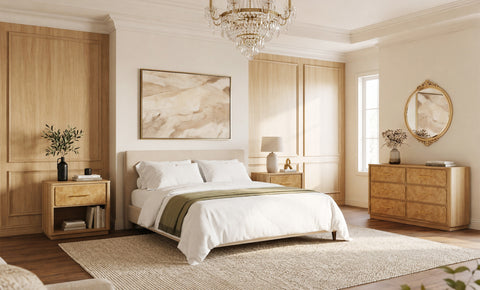
11. Soft Watercolor Above the Headboard

Washed-out blues, a dusty pink, warm taupe — a soft watercolor sits in the room without demanding anything from you. Get one roughly as wide as the headboard and hang it 8 to 12 inches above the headboard. Higher than that, and it floats up there, disconnected from the bed. Lower and it's crowding the pillows. A plain wood frame keeps the whole thing gentle.
12. One Horizontal Piece Spanning the Bed

Instead of two pieces bracketing the bed, go with one long horizontal — a wide painting, a panoramic photo — that runs the width of the headboard. It settles the wall down. And long horizontal art has a quiet side effect: it makes the ceiling feel taller, which is genuinely useful in a standard 8-foot bedroom. Landscapes, panoramic abstracts, and a wide watercolor wash all do the job.
13. Pressed Flowers in Identical Frames

Press flowers from the garden, or just buy one of those pressed botanical kits. Frame them all the same — thin black or natural wood; it doesn't matter as long as they match—four or six in a tight grid over a dresser. The matching is what makes it look deliberate rather than accidental, and the fact that they're real plants makes it feel like yours. This is one of the few times I'll tell you that matching frames is the right call.
14. Wedding or Travel Photos as Bedroom Art

Please don't do the giant printed-canvas wedding portrait. Frame the actual photographs instead — black-and-white, matte paper, a generous mat, a simple black or oak frame. It's a completely different feeling in the room. Travel photos work the same way: three shots from one street in Lisbon, four frames from a single trip, hung as a group. Personal, without sliding into sappy.
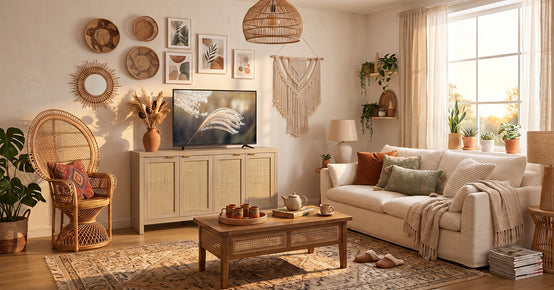
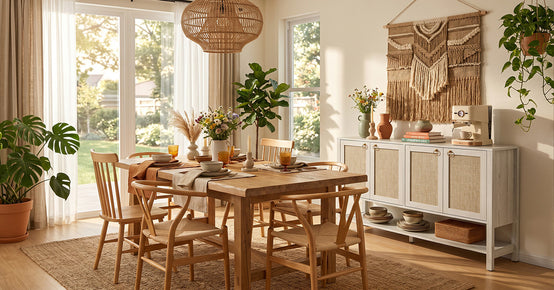
15. Macramé Wall Hanging

Macramé came back, and it's not leaving. A natural-cotton hanging adds soft texture over a bed or a dresser, and it's especially good in a room that's gone heavy on hard surfaces. Look for unbleached cotton, neutral tones, and something around 36 inches across. The brightly dyed ones — I'd skip those. The plain ones still look good in ten years. The neon ones won't.
16. A Small Cluster Above the Dresser

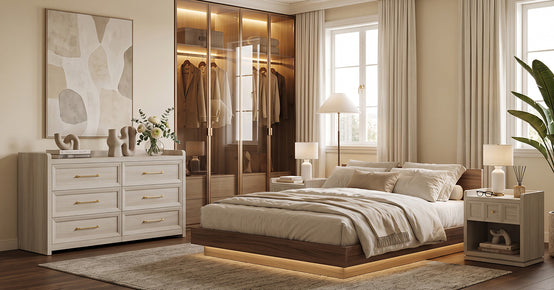
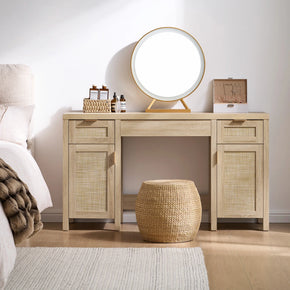
Three to five small frames clustered over a dresser. Mix the shapes, keep the tones in the same family. A little round mirror, a couple of rectangular prints, and one small painting. This is the cluster look — looser than a gallery wall, more thought-out than a lone piece. A wide six-drawer wood dresser underneath gives the arrangement something to sit on, plus room for a lamp and a tray.
17. Black-and-White Portrait Series

Three black-and-white portraits in a vertical line. Family photos, vintage film stars, street photography you shot yourself — the monochrome does the work of tying them together even when the subjects have nothing in common. A good spot for this is a narrow wall: between two doors, up a stairwell, over a low bench. Keep them tight, about 2 inches apart, and the three start to read as one.
Dining Room and Entryway Wall Art (18–23)
Dining rooms can handle more than a bedroom can. Entryways set up everything that follows them. These are the two rooms where I'd push you to be braver — bigger, bolder, more obviously you. Here are six ways to actually do that.
18. A Bold Abstract as Conversation Starter

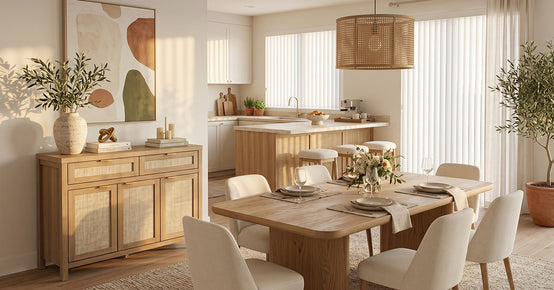
The dining room is where you get to be a little reckless. A bold abstract — color blocks, big strokes, something people will actually ask about — anchors the room and doesn't fight the food for attention. Hang it where you can see it when sitting down. And mind your pendant light: if it's hanging low, make sure it isn't slicing the art in half from across the table.
19. Salon-Style Gallery Wall

Floor-to-ceiling, frame against frame. The salon hang is a wall packed full on purpose. Sizes, mediums, subjects — all mixed. Some frames touch, some get a few inches of air. It's built for tall walls: formal dining rooms, stairwells, a big entryway. Plan it on the floor first. I mean that. The salon looks forgiving, but it does not forgive improvisation.
20. Vintage Botanical Prints in the Dining Room

Four to six vintage botanical prints — the old illustrated plates of ferns, mushrooms, fruit—identical thin black frames. Hang them as a 2x2 or a 2x3 over the sideboard. It's a look that doesn't age. Works in a modern room, a traditional one, ora farmhouse. You can find real prints at estate sales for about $10 each, or solid reproductions for around $30.
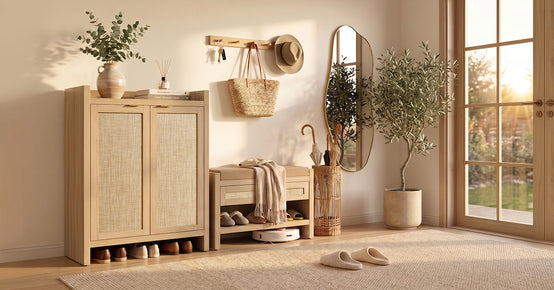
21. A Hand-Mirror Above an Entryway Console

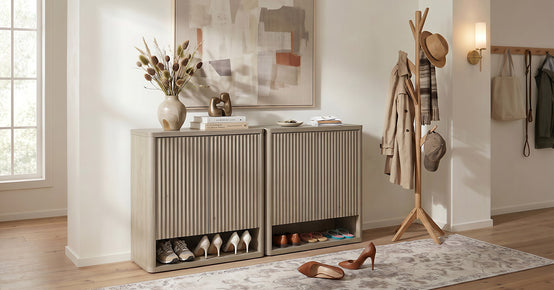
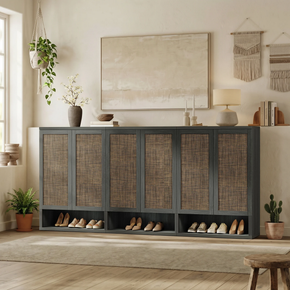
A big round or oval mirror over the entry console gives people a last look before they head out the door, and it pushes afternoon light deeper into the hall. Put a little bowl for keys under it, a candle, a low lamp. The minimalist shoe storage cabinet down there earns its keep twice — as a styling surface up top and as a place where the shoes actually live, hidden behind the doors.
22. A Curated Welcome Vignette

Three or four objects on the console, one piece of art above. The vignette rules are simple. Vary the heights. Keep the colors close. Leave gaps. A tall lamp, two design books stacked, a small bowl, and a little framed print leaning on the wall instead of being hung. Leaning, here, actually looks more relaxed — and it means you can swap things out whenever you feel like it.
23. A Carved Wood Wall Panel

Carved wood panels are having a real moment. Hand-carved teak, mango wood, reclaimed timber — they bring a texture that flat art simply can't. Hang them vertically, not horizontally; most were carved to be read from top to bottom. Over a buffet sideboard with glass display, that rough-wood-against-polished-glass contrast looks completely intentional, like you planned it, which you did.
Kitchen, Bathroom, and Office Wall Art (24–29)
Most decorating articles skip these rooms, which is exactly why putting real thought into the walls here makes a place feel done. Kitchens take personal pieces well. Bathrooms want quiet ones. A home office needs something with a bit of energy that still won't pull your eyes off the screen.
24. A Framed Vintage Recipe in the Kitchen

A handwritten recipe in a plain wood frame. Your grandmother's pie crust, in her actual handwriting. A menu from a restaurant that means something. Frame the original on archival paper, or scan it and print it big. It's personal, people always ask about it, and it's a hundred times more interesting than another "Bless This Mess" sign.
25. A Small Print Trio in the Powder Room

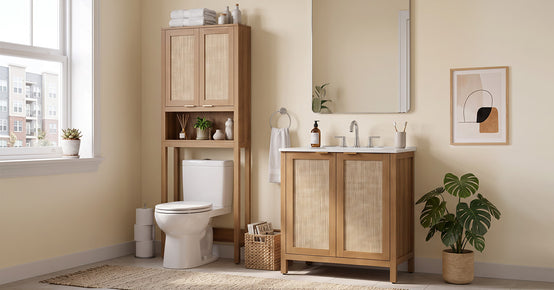
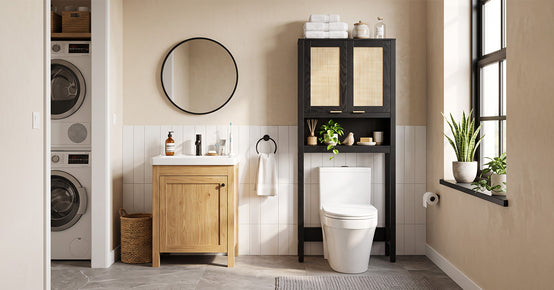
Powder rooms reward nerve, mostly because they're small enough that a bold call doesn't take over your whole house. Three small framed prints over the toilet — odd vintage illustrations, tiny abstracts, whatever you like. Tight spacing, matching frames. Or flip it completely: one piece that's slightly too big for the wall and just becomes the entire personality of the room.
26. A Calming Single Piece Above the Tub

Over the tub, keep it calm. One piece — a soft seascape, a black-and-white landscape, a quiet abstract. If your bathroom gets strong morning light, get non-reflective glazing, or you'll spend bath time staring at yourself instead of the art. Hang it at least 6 inches above the backsplash to keep it clear of the splash zone.
27. Inspirational Lettering in the Home Office

I know, I know — sounds like a cliché. It isn't, if you're careful about it. Skip the swooping cursive and the recycled motivational quotes. Look for typographic prints with a strong sans-serif, one-word pieces ("BUILD," "MAKE," "REST"), or a short hand-lettered phrase on textured paper. One of them, over the desk, was big enough to read at a glance. That's plenty. More than one, and you've made a slogan wall.
28. A Map Print Above the Desk

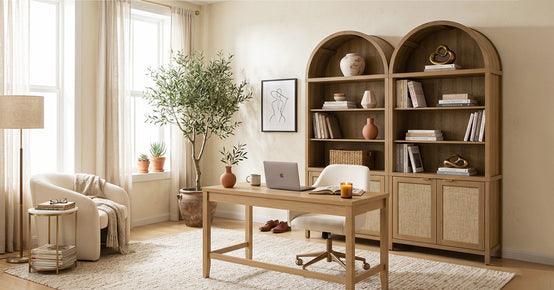
A big map — your hometown, a city you love, an old world map — gives the desk wall a center without being precious about it. A thin natural-wood frame helps; the wood takes the edge off all those hard map lines. Put a tall arched bookcase on one side of the desk and a tall plant on the other, and the whole corner stops feeling so boxy.
29. Open Shelving with Rotating Art Objects

Picture ledges, open shelves — they let you show off art objects and books and small frames without ever fully committing. Layer things in front of each other so it's got depth. Mix tall and short. Swap it around every few months as you pick up new stuff. This is the move for offices, hallways, and small living rooms where wall space is short and you'd rather stay flexible than locked in.
Unique and Unexpected Wall Art Ideas (30–36)
If you've already done the gallery wall and the big abstract, here's where it gets interesting. Seven directions almost nobody's taking yet. A couple of old ideas are quietly coming back around. A couple is genuinely new. All of them give a room something odd enough to make a guest stop mid-sentence and walk over for a closer look.
30. A Moss Wall Panel

A preserved moss panel — real moss, treated so it never needs water or light. Small ones, around 24 inches square, work as an accent. A 48-inch panel becomes the whole focal wall. They smell faintly of forest for the first few weeks, which I'd file under "feature," not flaw. And the texture is unlike anything you'll ever get out of a frame.
31. A Brass Disc Wall Sculpture

One oversized brass disc — solid or perforated, mirror-polished or matte. Over a console, over the fireplace, over a freestanding bar cabinet. It catches light, and the room reads differently depending on the hour. Want more rhythm and less of a single statement? Do three discs instead — graduated sizes, stacked in a vertical line.
32. String Art Revival

String art's back, and it's not your third-grade craft project anymore. The grown-up version is geometric — monochrome thread stretched into patterns on stained wood. Etsy artists are turning out genuinely sharp pieces in the $80-$300 range. Hang it somewhere people get close, like a hallway or over a low piece of furniture. The detail in the threadwork is the whole point, and you want it actually seen.
33. An Antique Hand-Mirror Cluster

Round up five to seven small antique hand mirrors — flea markets, estate sales, that one cluttered antique shop everybody seems to have nearby. Cluster them tightly on a wall. The mismatched frames, ages, and shapes make a vintage moment you can't really fake with new stuff. Over a dresser, in a hall, in a powder room. Each one grabs the light a little differently, so the wall keeps shifting all day.
34. Acoustic Felt Art

Felt panels are designed to absorb sound. The modern ones come in geometric shapes and soft colors, and many are modular so that you can rearrange them later. They earn their place in open-plan living rooms, in a home office where you're on calls all day, in a dining room with hard floors and an echo. They also just look good. Function in a disguise. And it's the fix for that one wall that always bounces noise back at you.
35. A Hanging Tapestry Behind the Bed

A floor-to-ceiling fabric panel hung straight behind the bed — no headboard needed. Perfect for a rental, where drilling in a real headboard isn't happening. Perfect for a studio, where the bed's pushed against a thin wall. It softens the sound, adds color, and gives the bed a sense of being somewhere on purpose. Hang it off a clean wood dowel or a slim metal rod.
36. Lighting as Art

Linear sconces. Sculptural pendants. One oversized fixture that's basically a wall piece that happens to glow. Lighting is the most wasted art form in most homes. A long horizontal sconce over the bed, a sculptural plug-in over the desk, a brass arc lamp just leaning against an empty wall — none of those read as fixtures. They read as decisions. The wall and the lighting plan become the same.
How to Choose the Right Size for Wall Art
The rough rule: art runs about two-thirds the width of whatever's under it. A 72-inch sofa, a 48-inch piece. A 60-inch console, a 40-inch piece. Go smaller than that, and it looks timid; go a touch bigger,r and it almost always looks right. The design team at Living Spaces uses the same two-thirds math across their living room work. For a bare wall with no furniture below, take the wall's width and aim for somewhere between half and two-thirds of it—measure before you buy. And if you're stuck, tape the dimensions onto the wall and just look at it for a day before deciding — that one habit has saved a lot of returns.
The 57-Inch Rule (How High to Hang Wall Art)
Galleries hang things so the center of the piece lands around 57 inches off the floor — roughly average eye level. Almost everyone hangs too high. Pencil a mark at 57 inches, then line up the center of the piece (or the visual center of a group) with it. Apartment Therapy's 57-inch guide runs through the actual math if you want it. Over a sofa, leave 6 to 12 inches between the top of the cushion and the bottom of the frame. The art and the furniture should look related — not like the painting's drifting off somewhere on its own.
Common Wall Art Mistakes to Avoid
The same handful of mistakes, over and over. Hanging too high — that's the big one, by a mile. Buying pieces too small for the wall. Forcing matched frames into a stiff little grid. Forgetting about glare, because glass throws back everything, especially in a morning room. Hanging art behind tall furniture, where it just vanishes. Spreading a bunch of tiny pieces across an enormous wall instead of pulling them together and sticking to one medium when a mix of painting, photo, and texture would have solved it. Apartment Therapy's gallery wall mistakes guide has a few more, including the spacing slip-ups that can wreck an otherwise good wall.
FAQs
What is the wall art trend for 2026?
Mixed media, large-scale abstracts, and gallery clusters — the loose, three-or-four-piece kind — instead of the old packed gallery wall. Texture's having a bigger moment than it has had in years: moss, felt, carved wood, anything woven. Color's leaning earthy, too — terracotta, sage, warm taupe, deep ochre. And there's a real push toward treating light as art, where a sculptural fixture becomes the wall's main event instead of something you buy separately after the art.
How big should wall art be above a couch?
About two-thirds the width of the couch, whether that's one piece or a group. A standard 84-inch sofa wants something in the 56 to 63-inch range. The bottom of the frame sits 6 to 12 inches above the cushion. Too small and it looks under-scaled — and a little too big almost always beats a little too small. Measure the sofa, then go shopping with that number in your head, not a vague sense of "biggish."
How do I make a gallery wall not look cluttered?
Three things. One, hold a consistent color or frame palette even while you mix up sizes and subjects. Two, keep the spacing tight — 2 to 3 inches between frames, no wider, or the pieces start to look orphaned. Three: plan the layout on the floor or with paper templates taped to the wall before you drill anything. The dense salon look is supposed to feel full; the curated look is supposed to breathe. Pick one, and actually stick with it.
Can I mix art styles on one wall?
Yes — and it usually beats matching everything. You just need one thread holding it together: a shared color palette, a frame style, a scale, a subject. A black-and-white photo next to a bright abstract workis the frame's relation. An oil painting next to a line drawing works if they share some color. It should feel like a choice, not a coincidence. When in doubt, match the frames and let the art be the thing that varies.
What's the easiest wall art idea for renters?
Picture ledges and leaning art. Both skip the nail-hole commitment. A 4-foot ledge holds five to seven small-to-medium pieces and goes up with two screws — easy to patch later. Leaning a bigger framed piece against the wall, propped on a dresser or console, costs nothing and still looks deliberate. Either way, you can swap pieces whenever the mood hits without redoing the whole wall.
How high should I hang wall art over a couch?
Bottom of the frame, 6 to 12 inches above the top of the cushion. On most standard sofas, that puts the center of the piece around 57 to 60 inches off the floor, which is the gallery standard anyway. If your sofa's unusually low or unusually tall, trust the relationship between the art and the sofa over the strict 57-inch number. They should look like they belong together.
Where should I hang wall art in a small room?
Small rooms do better with fewer, bigger pieces — one strong focal point beats four little distractions. Hang it over whatever anchors the room: the sofa, the bed, the table. Keep it at the usual 57-inch eye level. Don't sprinkle small frames across every wall; that just makes the room feel busy without giving it any real weight. Mirrors are a smart call here too — they bounce light and trick the eye into reading the room as bigger than it is.
Sources
- Maxwell Ryan, founder and editor, home design publisher, Apartment Therapy — How to Hang Artwork Properly (the 57-inch rule)
- Katharine Earnhardt, founder, Mason Lane art advisory, expert contributor, Apartment Therapy — Gallery Wall Art Hanging Mistakes to Avoid
- Apartment Therapy Editorial Team, home and decor editors, styling feature, Apartment Therapy — How to Style Gallery Clusters
- Apartment Therapy Editorial Team, home and decor editors, styling feature, Apartment Therapy — The Scandinavian Off-Center Trick to Hanging Art
- Brynna Evans, interior designer, design contributor, Living Spaces — 46 Wall Art Ideas for the Living Room (2026)
- Room & Board Design Team, in-house design associates, inspiration gallery, Room & Board — Art and Wall Decor
- Havenly Design Team, professional interior designers, design guide, Havenly — 45 Living Room Wall Decor Ideas


Looking for something else?

Furniture Materials Guide: Picking the Right Material Room by Room
LEARN MORE
How to Mix Wood Tones Without Making a Room Look Mismatched
LEARN MORE
18 College Apartment Furniture Ideas That Save Space and Money
LEARN MORE
Types of Entertainment Centers: 11 Designs and How to Pick One
LEARN MORELooking for something else?

Curio Cabinet Decor Ideas: How to Style a Display Cabinet Without the Clutter
LEARN MORE
Curved Furniture: How to Style, Measure, and Buy It in 2026
LEARN MORE
What Is Rattan Furniture? A Buyer Guide to Types and Care
LEARN MORE


Further reading

How to Choose a Nightstand for a CPAP Machine

How to Choose a Shoe Cabinet for Men's Sizes, High-Tops, and Bulky Shoes


