




Modern Sideboard for Living Room: Complete Buying & Styling Guide
Sideboards have a dining-room past that most people my age don't really share. Silver in the top drawer. Good china behind the cabinet doors. That one massive serving platter your grandmother used twice a year for ham. Walk into a millennial household today, and almost none of those objects exist. The "good china" is six mismatched mugs from past jobs. The silver is a dishwasher-safe set someone bought off a registry. The platter? Probably IKEA. Probably broken.
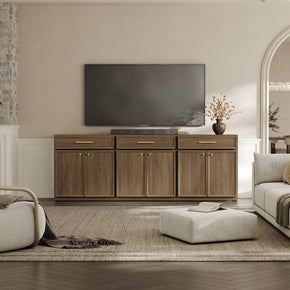
So the sideboard had to find the living. The living room turned out to need it. A modern sideboard for living room use ends up swallowing whatever the rest of the room can't handle—charging cables. Game controllers. Three, throws nobody folds. The remote you stopped trying to program. Books you started and won't finish. Stuff. Just stuff.
Below is the version of this guide I wish someone had handed me before I bought my first one. Size, material, placement, styling, etc. Plus, the small details nobody mentions until you've already opened the box and signed the delivery slip.
What Is a Modern Sideboard?

At its bones? A long, low cabinet you push against a wall. Drawers, doors, sometimes both. Flat top for whatever you want on display. Width usually lands somewhere between 48 and 84 inches. Height runs 30 to 36 inches. Depth, 16 to 18. Those are the numbers most pieces fall inside. Rest is variation.
What makes one "modern" is the absence. No carved feet. No ornate trim. No claw legs. Cleaner lines. Slimmer profile. Hardware that's either minimal or hidden behind push-to-open doors. Proportions that don't fight for the eye.
Then there's the credenza-buffet-sideboard mess. Three words for furniture that overlap, and retailers use them however they want. Translation: if anyone asks, credenzas sit lower, came from offices, run closer to a long bench. Buffets sit taller on loleaner, legs, lean more formal — closer to the original dining-room piece. Sideboards land somewhere in the middle. That's why the word stuck for what most of us actually want in a living room now.
Why a Sideboard Works So Well in the Living Room

Three reasons sideboards work in living rooms. None of them is obvious until you've gone a few years without one.
Storage that doesn't look like storage. Living rooms collect small junk faster than any other room in the house — chargers, three remotes, the random takeout menu that won't go in the recycling, replacement bulbs nobody put away. A sideboard eats all of it. Does the room lose? Room reads as, rather than as belonging, it belongs to someone with an actual life.
The long-wall problem. Almost every living room has at least one wall that's too long for a single piece of art but too short for a serious sectional. A 60 or 72-inch sideboard plugs the gap. Wall stops feeling unfinished.
A surface for the lived-in stuff. Lamps, plants, photos, candles, books you're actually reading. Small objects in a room used by people rather than staged for sale. The top of a sideboard is one of the few horizontal surfaces in a living room where you can put that kind of thing without it sliding into clutter.
Side benefit nobody mentions: sideboards age. A solid walnut piece from 2026 will still look right in 2036. I cannot say that about most furniture I've owned over the last fifteen years.
Modern Sideboard Styles to Choose From
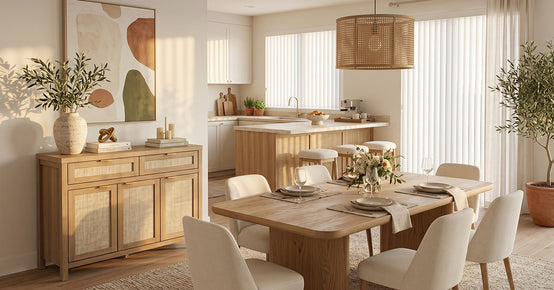
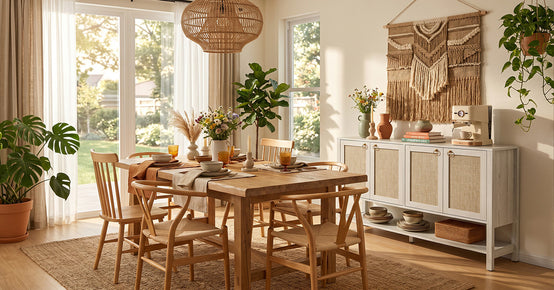
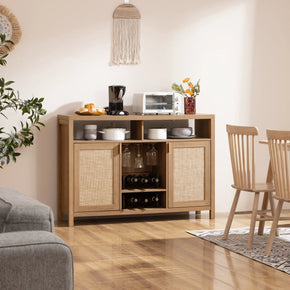
Pick the style backward — most people want to measure the wall before anything else — but style drives every decision after it. Wood tone, land, e.g., shape, and hardware. Get the style wrong, and you'll spend the next year second-guessing every other piece you put in the room. The Helio sideboard collection is a decent place to start because the pieces show how the same basic silhouette can translate into very different visual personalities depending on the finish, hardware, and door treatment.
Mid-Century Modern

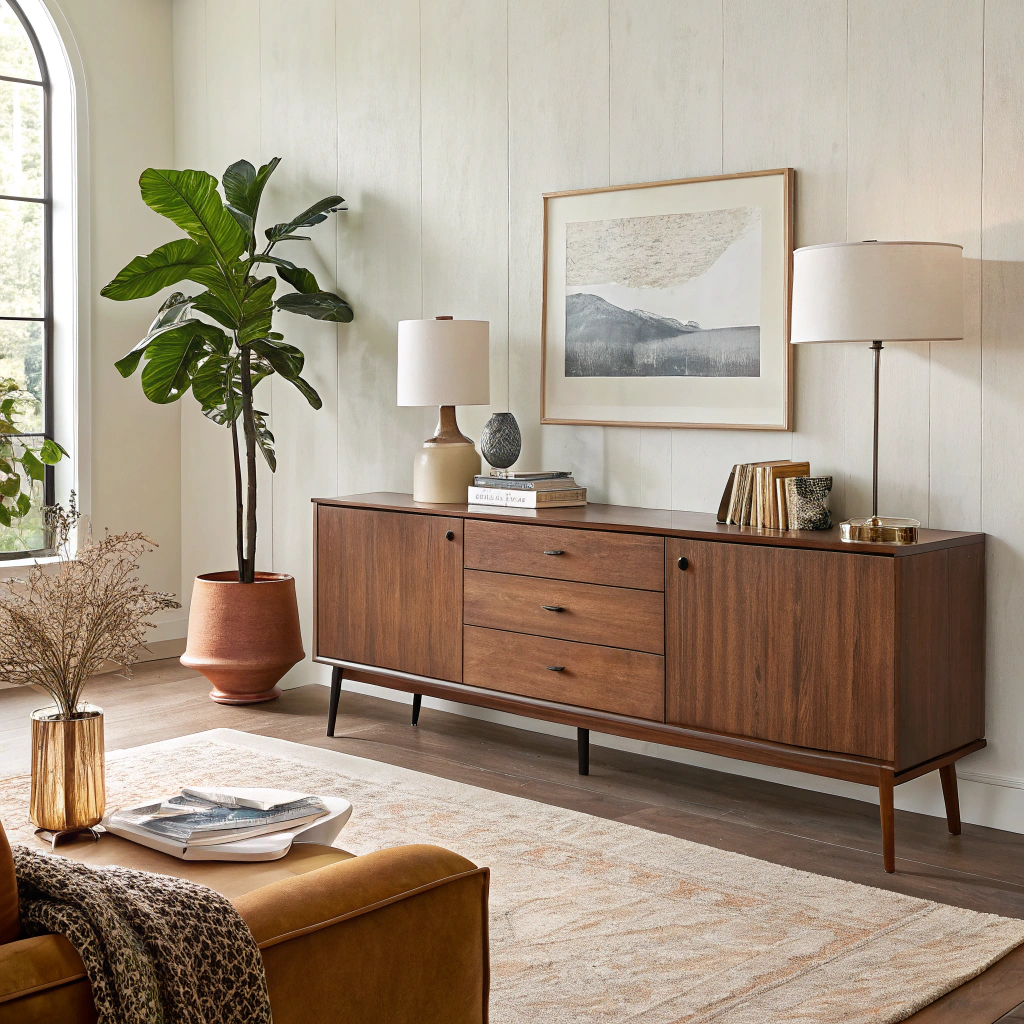
Tapered legs. Walnut or teak. Hardware so slim it might as well not be there. Long, low, slightly elevated off the floor. The kind of silhouette you'd recognize from a 1958 Atomic Ranch photo. It's stayed the modern sideboard look in the US for sixty years and shows no real signs of going anywhere. Why? Pairs with almost any sofa. Reads warm without reading dated. Hard to mess up.
Scandinavian Minimalist

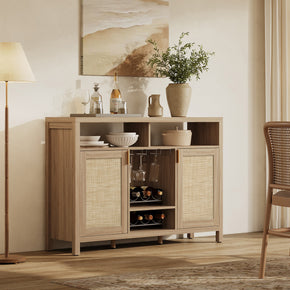
Lighter woods, oak and ash mostly. Pale, almost matte finishes. Geometric forms with absolutely no visible hardware. The whole point is restraint. Pieces that almost disappear into the room. If your living room runs neutral — whites, soft grays, a lot of natural light — a Scandi piece kind of dissolves into the space. Which is good. Sometimes furniture should disappear.
Contemporary Glass-Front

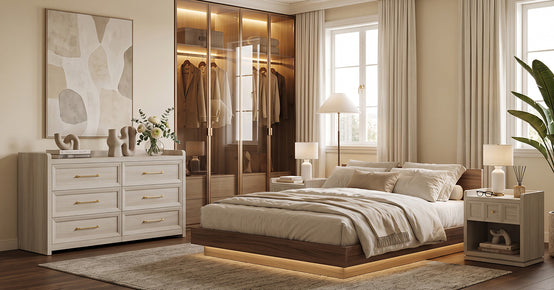
Smoked or fluted glass on the doors. Sometimes internal lighting. Brilliant if you'll style the interior — barware, ceramics, a curated stack of design books. Useless if the cabinet's job is hiding cables and chargers, because every cord becomes visible. Don't buy this unless you're committed to styling the inside the way you'd style the top.
Industrial
Black powder-coated frames are usually paired with reclaimed wood tops or thick veneer. Strong-looking, slightly utilitarian. Right call in lofts, exposed-brick rooms, anywhere already running harder-edged. Wrong call in a soft, traditional space. The piece will feel like it wandered in from someone else's house.
Sculptural Statement Pieces

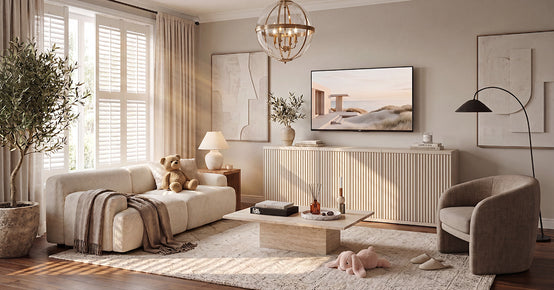
Curved fronts. Fluted wood. Asymmetric door layouts. Stone tops over rounded bases. The sideboards 2026 designers keep gravitating toward, because they read half furniture, half sculpture. Trick: only use one if the room is otherwise quiet. Let the cabinet do the talking. Don't make it fight a busy space.
Best Materials for a Modern Living Room Sideboard
Material is where you actually feel the difference between a budget piece and a real one. Pick it wrong and every other decision works against you.
Solid Wood

Four common woods you'll see: walnut, oak, acacia, and ash. Walnut's the dark one — chocolate-brown grain, warm undertone. White oak runs paler, reads more Scandi. Acacia has a dramatic, almost striped grain you either love or hate immediately. Ash sits between oak and birch.
Heavy. Expensive. Worth it. A 72-inch solid walnut sideboard easily clears 180 pounds, which matters a lot if you live above the second floor or your delivery crew is just you and a friend. Payoff's real, though. Solid wood lasts decades. Develops patina. Picks up character. Can be refinished if, ten years in, you decide you want a different stain. Wood moves, mentally it's real too — humidity swings give you tiny seasonal gaps in the joinery. Not a defect. That's just wood doing wood things. Live with it.
Wood Veneer Finishes
Thin sheet of real wood bonded to an engineered core. Half the weight of so, it is slid. Usually, it is 30 to 50 percent less in price. Better dimensional stability. Trade-off: chip a corner, you can't refinish it the way you can with solid wood. For most living rooms, quality veneer is genuinely fine. I've sat on the floor and looked under cabinets I'd have bet were soonly to find, only to find a particleboard underside. Doesn't change how the piece reads in the room.
Glass and Metal Accents
Tempered glass tops protect the wood underneath and resist water rings. Useful if cocktails ever land on the cabinet. Mixed-metal hardware is the cheapest update for an otherwise plain piece — brushed brass, matte black, and antiqued bronze, all common pairings. Two metals max across one cabinet. Three different finishes, and the piece looks like the design team couldn't decide on anything.
Powder-Coated Metal
Standard on industrial pieces and on the legs of mid-century styles. Tougher than paint. Survives humidity. Comes in everything from matte black to satin gold. Damp cloth, skip abras. The maintenance bar is low.
Stone and Composite Tops
Marble, travertine, engineered quartz. Showing up on higher-end pieces over the last two or three years. They look incredible. They're also heavy, prone to staining (yes, even sealed marble), and cold to the touch. Worth it for the look if the top doesn't see daily action. Skip if the cabinet sits next to a couch where drinks land regularly.
How to Choose the Right Sideboard Size

Sizing is where most people miss. Either the piece swallows the room, or it looks like a lost shoe in the right closet. The right answer exists for almost any space. You just have to measure first.
|
Living Room Size |
Recommended Sideboard Width |
Notes |
|
Small (under 150 sq ft) |
48 to 60 inches |
Slim profile, depth 14 to 16 inches |
|
Medium (150 to 300 sq ft) |
60 to 72 inches |
Standard depth 16 to 18 inches |
|
Large (300+ sq ft) |
72 to 84 inches |
Anchors long walls visually |
|
Open-plan / Great room |
84+ inches |
Can double as a room divider |
Height Rules
Most sideboards are 30 to 36 inches tall. The sweet spot is 32 to 34. High enough for lamps and framed photos to read at standing eye level. Low enough that you don't whack the corner walking past with a hot coffee. Over 36 inches, the piece starts to feel like a cabinet or armoire — a different furniture category entirely.
Width and Wall Proportion

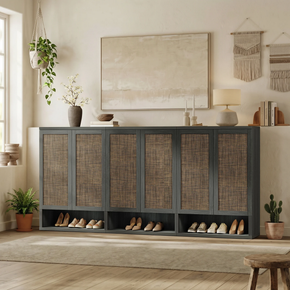
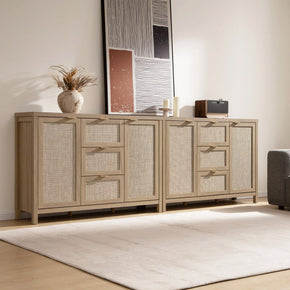
The sideboard should fill about two-thirds of the wall length where it sits. Less than half, and the piece looks lost. More than 80 percent, and it looks like a refrigerator got wedged in there. The Savanna 3-drawer 2-door sideboard is a good example of standard proportions done right — wide enough to anchor a feature wall, with storage split between drawers and cabinet doors so you've got flexibility for whatever ends up living inside.
Depth and Walking Clearance
Depth runs 16 to 18 inches on most modern pieces. Sli14-inch profiles are available for tight rooms or behind-sofa setups. Past 20 inches and you've crossed into credenza or media-console territory. Not wrong. Different piece of furniture, though.
Walking clearance in front: 36 inches minimum, 42 inches better. Less than 3,6 and the room feels squeezed every time two people try to pass each other.
Where to Place a Sideboard in Your Living Room

Where you put the sideboard matters more than which sideboard you bought. The wrong wall and even a beautiful piece look awkward. The right wall and an average piece feel like they were always meant to be there. Browsing best-selling living room storage pieces alongside your actual floor plan is a useful way to see which silhouettes work in which spots before you commit.
Behind the Sofa
When the sofa floats in the middle of a room — open plans love this — a sideboard behind it pulls triple duty. Hides the unattractive sofa back. Gives you a shallow ledge for lamps. Defines the seating zone without needing actual walls.
Two checks before you commit. The sideboard should sit 4 to 6 inches shorter than the sofa back, or the two pieces will visually fight. And if your sofa back is open-frame rather than solid, the sideboard might be partially visible from the front. Worth walking through the layout in your head before delivery.
Opposite the TV
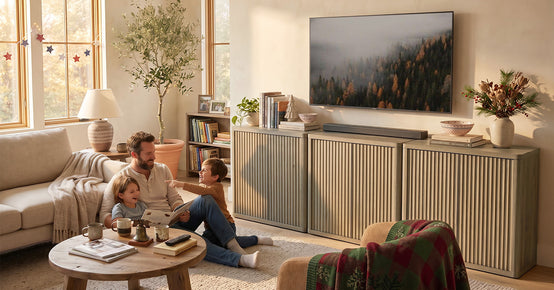
TV on one wall, sideboard on the wall across from it. Balances the room. Both walls anchor equally. The TV wall handles the focal point for actually watching anything. Sideboard wall handles the focal point for everything else — art, lamps, plants, the objects you want to look at when nobody's watching the screen.
Along an Empty Feature Wall

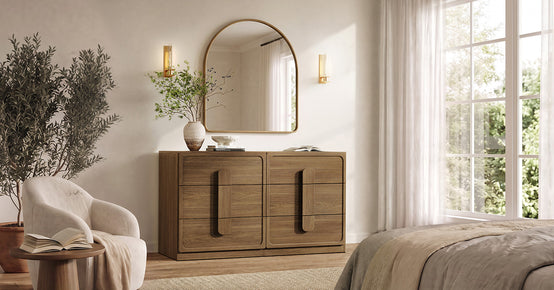
Every living room has that one wall. Too long for a single piece of art. Too narrow for built-ins. Sideboard's natural habitat. Pair it with a mirror, gallery wall, or oversized art above (sized to two-thirds the sideboard's width, hung 6 to 10 inches above the top), and the wall goes from afterthought to focal point in an afternoon.
As a Room Divider in Open-Plan Spaces

Open-plan layouts often need a soft visual boundary between zones — kitchen and living, or living and dining. A sideboard placed perpendicular to a wall, extending outward into the room, does this without blocking light or sightlines. Style the side facing the living room as the front. Use the kitchen-facing side for purely functional storage. Both rooms win.
Below a Window
When wall space is tight, the area under a low window often goes unused. A sideboard slots there cleanly, as long as the top sits at least 4 inches below the windowsill. Style with low-profile items only — short lamps, trailing plants, flat trays. Nothing that crowds the glass or blocks the light.
How to Style a Modern Sideboard in the Living Room

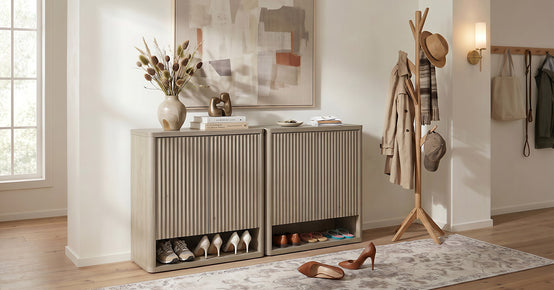
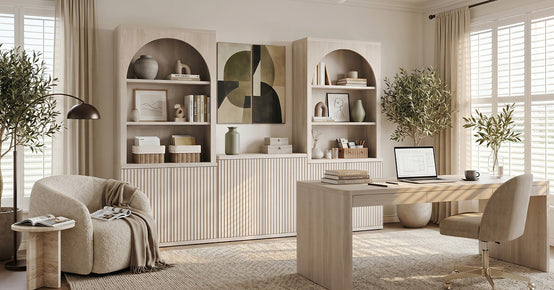
The cabinet does 60 percent of the work. The top surface and what hangs above do the other 40. Get the styling wrong,g and it doesn't matter what you spent on the wood. A clean-lined piece like the Stria 2-door sideboard cabinet gives you a restrained silhouette that lets the styling actually breathe—noNo fussy hardware fighting the decor.
Anchor with a Focal Point Above
Start with the wall. Pick one anchor: big art, round mirror, small gallery wall. The element should run about two-thirds of the sideboard width. Hang the bottom edge 6 to 10 inches above the cabinet top. Closer than that, the grouping feels stacked. Farther and the two pieces look unrelated.
Layer in Odd Numbers
Designers call this the rule of three. Works because human eyes prefer asymmetry to perfect pairs. Three objects on the surface. Five if the cabinet is wide. Avoid even numbers entirely — they read stiff. An exception is intentional symmetry (matching lamps at both ends, art centered between them), which works for formal looks but feels more rigid.
Mix Heights for Balance
Combine tall, medium, and short. Tall lamp or vase at one end. Medium stack of books in A low middle: a low ceramic bowl or tray at the other end. Variation gives the surf—the eye rhythm. The eye moves across instead of getting stuck on one spot.
Add Lighting That Works After Dark
A lamp on a sideboard does more than light the room. Tells the eye the surface matters. Warm bulbs in the 2700K to 3000K range pull the wood grain and flatter art above. Put the lamp on a dimmer. Or a smart plug, so you can flick it on without crossing the room. Small things. Both are worth doing.
Bring in Greenery and Natural Texture
One plant. Real if you can keep it alive — snake plant, pothos, fiddle leaf if you've got the light. Quality faux if you can't, but skip the cheap silk versions. They still look obvious from across the room. Pair with one natural texture: a woven tray, a stack of vintage hardcovers, or a rough-glazed ceramic vase. Texture breaks up smooth lacquered surfaces. Keeps the room from reading clinical.
Pairing Your Sideboard with Other Living Room Furniture

Sideboards don't live alone. They have to talk to the sofa, the coffee table, the TV console, whatever else is already in the room. Coordination matters. The matching-set kind doesn't — that's the move that makes a space feel like a furniture showroom. The Helio glass-door sideboards serve as a useful example because the mixed-material build (wood frame, glass doors) plays well with a wide range of sofa fabrics and coffee-table finishes without locking you into a single, rigid aesthetic.
Coordinating with the Sofa
Pull one tone from the sofa into the sideboard, or vice versa. Warm sofa (taupe, camel, terracotta)? A walnut or warm oak sideboard echoes that warmth. Cool sofa (gray, charcoal, navy)? Lighter ash or whitewashed oak balances. The two pieces shouldn't match. They should rhyme.
Matching Coffee and Accent Tables
Wood tones across tables don't have to be identical, but they should sit in the same color family. The yellow-leaning oak coffee table next to a red-leaning walnut sideboard looks like the furniture was bought piece by piece over a few years without a plan, because it usually was. Two warm walnuts of slightly different shades look intentional. Similar undertones, varying finishes. That's the rule.
Working Alongside the TV Console
Sideboard and TV console both in the same room? Give them clearly separate jobs. TV console handles media — cables, soundbar, speakers, and set-top boxes. Sideboard handles everything else — storage, display, lighting. Vi should usually match in finish or general style, but not be identical pieces. Twin pieces in one room get monotonous fast.
Common Mistakes to Avoid When Buying a Living Room Sideboard
Six things to skip. Most of these I've done. Two I've done twice.
- Buying too small. A 48-inch sideboard against a 14-foot wall looks like a piece of furniture that got lost on its way to a smaller room. deepening too deeply. Standard is 16 to 18 inches. Past that, the piece starts to eat up walking space and feels more like a media console than a sideboard.
- Skipping the styling. An unstyled sideboard reads as unfinished. Three objects of varying heights plus one wall element get you most of the way to a styled look, even if you don't enjoy decorating.
- Mixing too many wood tones. Two complementary woods look intentional. Four different ones look like the furniture was bought piece by piece without a plan, because it usually was.
- Forgetting about cables. If the sideboard sits below or near a TV, plan how cords exit the back. Pre-drilled access holes and cable grommets matter way more than people realize until they've spent a Saturday afternoon drilling their own.
- Buying glass-front doors with no plan for the interior. Glass doors mean you've committed to keeping the inside looking good. If the cabinet's job is hiding board games and a charger, it should have solid doors. Always solid doors.
Modern Sideboard Trends for 2026

Furniture trends move slowly compared to fashion. Good thing too, because nothing's worse than realizing the cabinet you spent two grand on looks dated three years later. Still, a handful of directions have been recurring across 2025-2026 product launches. The Helio decorative sideboard cabinet gives a decent read on where the design conversation is going — pattern detailing, mixed surface treatments, a silhouette that lands more sculptural than utilitarian.
Curved and Sculptural Shapes

Hard 90-degree corners are out. Softened edges, curved fronts, and asymmetric door layouts are everywhere this year. The intent is to feel less manufactured, more crafted. Less assembled, more carved. Small visual shift. Big change in how a room reads.
Mixed Materials
Wood frame, stone top. Glass door, metal hardware. Fluted panels next to smooth lacquered drawers. Mixed-material builds read more interesting than single-material monoliths, especially in larger rooms, where a single material across everything starts to feel flat by year two.
Warm, Moody Wood Tones
Walnut. Smoked oak. Dark-stained ash. The blonde Scandi look hasn't gone anywhere, but the energy is shifting toward warmer, deeper finishes that drink in lamplight and give rooms a more grounded evening atmosphere.
Statement Hardware
Push-to-open and hidden hardware had a long run. Now visible hardware is back — chunky brass pulls, oversized leather tabs, knurled steel knobs. Hardware as jewelry for the cabinet, not as something to engineer out of sight.
Sustainable and Reclaimed Wood
FSC-certified wood, reclaimed barnwood, traceable supply chains. Getting more shelf space every season. Partly that's consumer demand. Partly because reclaimed wood looks good there, the variation in tone and grain that comes from older wood is hard to fake convincingly with new material.
Final Thoughts
A modern sideboard for living room use is one of the smarter furniture investments out there. Storage problem? Solved. Empty wall? Filled. Surface for lam, nd photos and the lived-in stuff? There. And a decent one lasts decades, which is more than I can say for most things I've bought.
Decision order matters: style first, then size, then material, then placement. Skip the matching-set instinct. Buy one good piece you'll keep instead of three you'll replace inside five years. The best living rooms read collected, not coordinated. A sideboard is one of the easier ways to start building toward that.
Measure twice before you order. Map the route the cab must take from your front door to the wall. Budget for the styling pieces — lamp, art above, small objects — because the cabinet alone won't finish the room. And then leave it. Resist the urge to redecorate every season. The best sideboards quietly anchor a space for years.
FAQs
What is the difference between a sideboard and a credenza?
Mostly comes down to height and where the piece came from. Credenzas started in offices, horizontally. Sideboards, sitcoms, and cameos from dining and guest rooms carry more visual weight. Retailers use both words interchangeably. Practical difference if you want one: sideboards usually have legs and a fully enclosed cabinet body. Credenzas tend to sit closer to the floor with shallower depth.
How tall should a sideboard be in a living room?
Most modern living-room sideboards run 30 to 36 inches tall. Sweet spot's 32 to 34. High enough to display things at a comfortable visual level while standing up. Low enough to hang art or a mirror above without the grouping feeling cramped.
Can a sideboard be used as a TV stand?
Yes, but only with the right prop. The options. The top of the sideboard should sit roughly 32 to 36 inches off the floor so the Tister lands near eye level when you're seated. Sideboards with cable management or open-back panels make this easier. Anything taller than 36 inches, and the TV ends up too high — your neck will tell you within a week.
What size sideboard do I need for a 12-by-12-by-12 room (144 square feet)? Is that on the smaller end? Aim for a sideboard 60 to 72 inches wide, no more than 16 inches deep. Slim profiles work way better here than bulky ones. Free up walking space and keep the room from feeling like it shrank overnight.
Where should I place a sideboard in a small living room?
In small rooms, the best spots are the longest wall, behind the sofa if it floats, or under a window. Avoid the wall with the door — it crowds the entry path. Skip room-divider placement unless the floor plan is genuinely open and you've got at least 36 inches of clearance on both sides.
What goes on top of a modern sideboard?
Basics: one lamp, one or two stacked books, one plant (real or quality faux), one or two ceramic or sculptural objects. Plus a focal point above — art, mirror, or small gallery wall. Rule of three or five. Leave at least 40 percent of the surface empty so the objects have breathing room.
Is a sideboard out of style?
Sideboards have been part of Western furniture for 250+ years. Forms keep evolving — today's modern pieces look nothing like a Victorian buffet from 1880 — but the underlying need for long, low storage in a living space hasn't gone anywhere. No, they're not going out of style anytime soon.
What is the best material for a modern sideboard?
Solid hardwood (walnut, oak, acacia, ash) wins for longevity and the ability to refinish later. Quality veneer comes close at significantly lower cost and weight. Glass-front cabinets suit display-focused styling. Powder-coated metal frames suit industrial looks. Best material depends on how you'll actually use the piece — daily heavy use favors solid wood, light decorative use opens the field considerably.
How wide should art above a sideboard be?
About two-thirds the width of the sideboard. A 60-inch sideboard pairs with art roughly 40 inches across. Hang the bottom edge 6 to 10 inches above the cabinet top. Wider than the sideboard itself looks visually heavy. Narrower than half the cabinet width gets visually lost.
Sources
- Homes & Gardens – Sideboard decor ideas: 10 buffet styling tips
- AURA Modern Home – Sideboard Styling Ideas Beyond The Dining Room
- Castlery – Modern Sideboards and Cabinets
- Modern Luxco – Sideboard Ideas for Living Rooms, Entryways & Offices
- Aosom – Where to Put a Sideboard in the Living Room: 10 Smart Spots
- Mobili Fiver – How to Dress a Modern Sideboard
- Rove Concepts – Top Contemporary Sideboards: Modern Design Guide


Looking for something else?

Furniture Materials Guide: Picking the Right Material Room by Room
LEARN MORE
How to Mix Wood Tones Without Making a Room Look Mismatched
LEARN MORE
18 College Apartment Furniture Ideas That Save Space and Money
LEARN MORE
Types of Entertainment Centers: 11 Designs and How to Pick One
LEARN MORELooking for something else?

Curio Cabinet Decor Ideas: How to Style a Display Cabinet Without the Clutter
LEARN MORE
Curved Furniture: How to Style, Measure, and Buy It in 2026
LEARN MORE
What Is Rattan Furniture? A Buyer Guide to Types and Care
LEARN MORE


Further reading

How to Choose a Nightstand for a CPAP Machine

How to Choose a Shoe Cabinet for Men's Sizes, High-Tops, and Bulky Shoes


