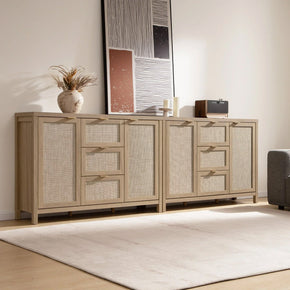

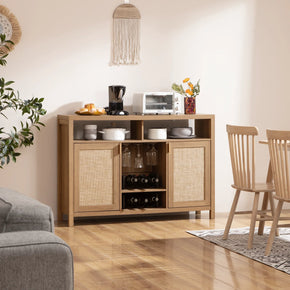
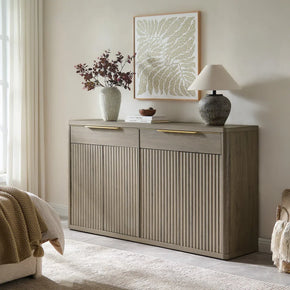



What Is an Armoire? Uses, History & Key Differences Explained

Honestly, the word shows up everywhere in furniture listings, and nobody really explains it properly. Most definitions just say "large cabinet" and leave it at that, which isn't very useful when you're trying to figure out what to actually buy.
The simplest way, actually, to buy an armoire is a tall, freestanding storage cabinet — two doors on the front, a hanging rod inside for your clothes, usually a shelf or two, and often a small set of drawers near the bottom. Shut both doors, and everything inside is completely hidden, which — and this part tends to grow —honestly, doesn't. The word itself is French. A French word that came from the Latin armarium, which referred to a cabinet for storing arms and weapons — swords, shields, that kind of thing. The original armoires weren't bedroom furniture at all. They held actual armor. The clothing storage angle came later, once French nobility figured out that jamming silk gowns into flat wooden chests was wrecking them.
What Actually Defines an Armoire?

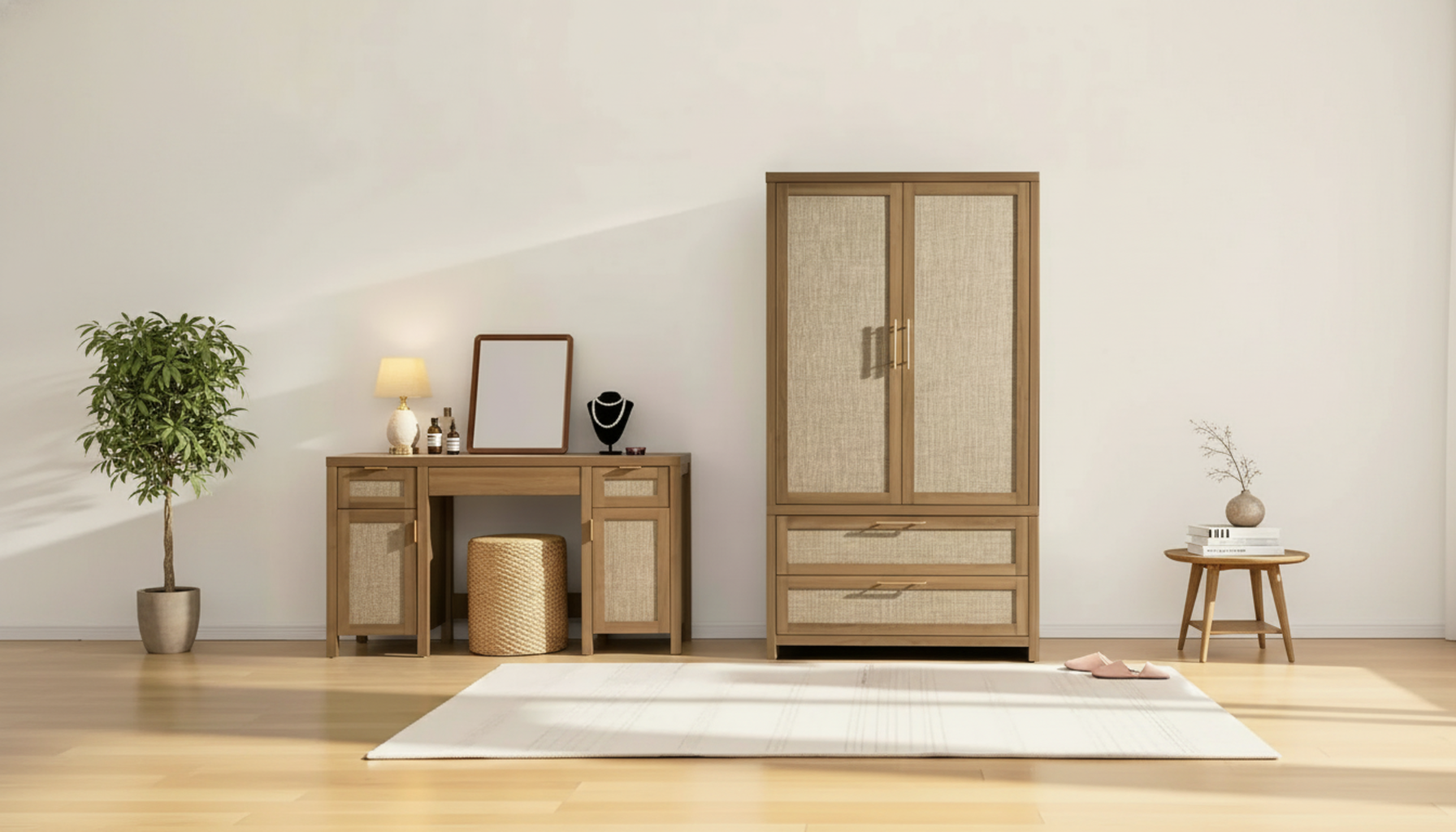
The size thing gets mentioned first in almost every description — 60 to 80 inches tall, 16 to 22 inches deep, tall and wide enough to take up a real section of wall. That's accurate but it's not really what defines the piece. What makes an armoire an armoire rather than just a large cabinet is the combination: two full-length doors that swing shut and cover the whole interior, actual hanging rods inside so you can store clothes the same way a built-in closet would, and then shelves or drawers alongside that hanging space for folded items and accessories. Lose any one of those three things and you've got a different piece of furniture. No doors means open shelving. No hanging rod means it's just a storage box with a nice exterior. You need all three. And the freestanding closet part — that's key. You're not building it into anything; it just stands there and works.
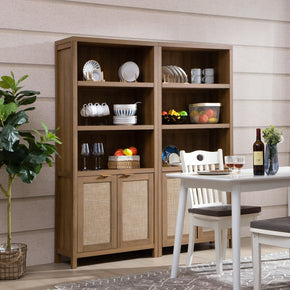
The Savanna Wardrobe Closet 71-Inch is a solid, current example — with a hanging rod, adjustable shelves, and built-in drawers. You don't need to do anything to position it where you want it, and it's functional the same day.
What Else Do People Use These For?
Clothing and accessories is the obvious category, but a lot of armoires end up doing completely different jobs. People put TVs in them — doors open when you're watching, closed when you're not, and the living room looks like it has no screen in it. That use got less common once flat-screens outgrew the door openings, but the dining room bar cabinet version is still very much alive: glasses, bottles, bar tools, all behind two closed panels. Linen closets in hallways, home office storage you can actually shut at the end of the day, toy storage in kids' rooms where "out of sight" does a lot of emotional heavy lifting — the closed-door design works for all of it. Whatever's back there becomes invisible the moment both panels shut, which in a smaller apartment is not nothing.
A Quick History of trmoire (Swords Were Involved)

The armoire did not start its life holding blazers. Before it held anyone's clothing, it held weapons — tools, shields, helmets, actual armor. This was 17th-century France, and the Latin root armarium meant a cabinet for arms and implements. Not design language. Just a description of the content—just a transition to clothing storage: as French nobility built increasingly absurd wardrobes and ran out of ways to keep silk gowns and embroidered coats from creasing in flat wooden chests. The tall, wide cabinet with hanging rods inside was the practical fix — and eventually those hanging rods were joined by shelves, drawers, and the kind of intricate details carved into the exterior that turned some of these pieces into genuine works of craft.
Encyclopedia Britannica traces the term to the 16th century, when Flemish-style carving was the mark of high-quality cabinetmaking, and notes that the name expanded to cover wardrobes and clothespresses across Europe by the 17th century. By the 18th century, craftsmen like André-Charles Boullart were building armoires for Louis XIV — with carved panels, gilded hardware, and intricate interiors that made them more art objects than furniture. What's notable about all of that is how little the basic format changed: tall, two doors, hanging space inside. Four hundred years of essentially the same structure. When a design survives that long it usually means it solves a real problem in a way that's hard to improve on.
Armoire or Wardrobe — Which One Do You Actually Need?

Retailers use these terms interchangeably and that's genuinely part of the problem. There is a real difference though, and if you're spending money on one of these pieces it's worth understanding. A wardrobe is built around one job: you hang clothes in it—Rod inside, maybe a shelf above. Relatively simple construction, not much going on decoratively. The name is Old French — warder, meaning "to protect",and robe meaning "garment" — and the design pretty much matches that description. An armoire does the hanging too, but adds shelves and drawers along its sides, usually made of heavier materials and with more involved construction. George Cabinetry breaks this down well in their armoires vs. wardrobes guide — the functional difference is that armoires combine hanging rods with shelves and drawers, while wardrobes are focused mainly on the hanging side.

So if you're only trying to hang clothes and that's genuinely the whole requirement — a wardrobe is straightforward and it works without overcomplicating things. If you want hanging space plus storage for folded items, shoes, and accessories all in one piece, and you want it to look like a considered choice rather than a utility box — that's the armoire's job. The Sicotas armoires and wardrobes collection shows both side by side, making the actual difference clearer than any description.
Why an Armoire and a Dress Don'tDo the Same Job

You'd think these compete for the same space, but they really don't — they handle completely different categories of clothing. A dresser is wide, low, and entirely drawers. T-shirts, jeans, socks, and underwear. The everyday folded stuff you reach for without thinking. The Savanna 6-Drawer Wood Dresser is a good example of what that looks like — six soft-close drawers at waist height, most models pair with a mirror so it doubles as a vanity. That's the dresser's territory.

An armoire is for the stuff that gets wrecked when you fold it. Suits, dress shirts, blazers, dresses, long winter coats — things where the hanging rod is the whole point. No dresser in the world can offer that regardless of how many drawers it has. The two pieces complement each other rather than competing. Bedroom storage that actually works usually has both: a dresser covers the folded everyday basics, and an armoire handles the hanging pieces. That combination does what a walk-in closet does, just without needing an entire room dedicated to it. Most people who think they need a bigger closet actually just need both pieces working together.
Closet vs. Wardrobe vs. Armoire at a Glance
|
Wardrobe |
Armoire |
|
|
Structure |
Freestanding furniture |
Freestanding furniture |
|
Core storage |
Hanging rod — clothes |
Hanging + shelves + drawers |
|
Design style |
Simple, minimal |
Ornate or clean-modern |
|
Typical uses |
Clothing only |
Clothes, linens, media, bar |
|
Visual role |
Background piece |
Focal point in a room |
Quick clarification on the closet column: that one's permanent — built into the wall, part of the home. You can't take it when you move and you can't really change it without construction work. A wardrobe and armoire are just furniture. They can go wherever you put them; they leave when you do, and you can move them to a different room tomorrow if the layout isn't working.
The Rooms Where an Armoire Actually Earns Its Keep

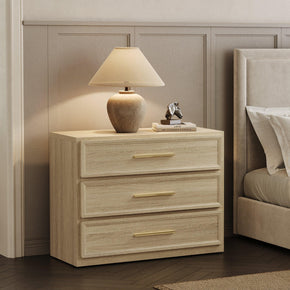
Guest rooms are honestly the most underrated spot — visitors get actual hanging space instead of a hook on the door, which makes a difference during longer stays. Main bedrooms with inadequate closet space are the obvious use, especially in older homes and rental buildings where "closet" sometimes means a rod and a shelf in 24 inches. If you're putting together a complete bedroom setup, the Crescent 3-Drawer Nightstand works well alongside an armoire — same finish family, looks like the room was set up intentionally.

Living rooms are more practical than people give them credit for. Books, seasonal gear, games —things that don't have a logical home anywhere—when closed doors make the whole situation invisible. Dining rooms work too: an armoire used as a cabinet for china and table linens has more visual authority than any standard buffet. Entryways handle coats, shoes, and seasonal accessories behind two panels. The portability is really the underlying point — unlike a built-in closet, you can try it somewhere, decide it works better in a different room, and just move it.
How to Buy One Without Getting It Wrong

Measure first. Seriously, measure first. "I think it'll fit" fails more often than people want to admit with furniture this size, and returning something this large is genuinely unpleasant. Wall height, wall width, how far the doors need to swing open, and the path through every doorway and turn on the way in. More than a few people have gotten new furniture as far as the landing and had to take it apart because a stairwell turn was too tight. Check the delivery route before anything arrives.
Before you even look at exteriors, figure out what's going on in there. You can find a piece that's greatinside and fits the wall perfectly, but if the rod is too short for your full-length coats — and some armoires do have shorter rods, with shelves eating up the lower half — you're going to be annoyed by it for as long as you own the thing. Long coats and floor-length dresses need a full-height hanging section. If you're mainly storing folded items and accessories, adjustable shelves matter more than hanging rods. Most pieces mix both but the proportion of that split varies a lot, and the proportion is what you're actually living with.

On style: you're going to look at this piece every day, so get it right. A heavily carved dark-wood armoire in a minimal bedroom will bother you — maybe not week one, but it'll bother you. The finish and hardware need to actually match what's already in the room, not just be close enough. The Sicotas bedroom furniture collection covers a good range across different looks — natural oak, painted finishes, cleaner contemporary styles — worth browsing before committing. Solid wood is heavier and built to last longer; the right call for a piece you're keeping for years. Engineered wood is lighter, costs less, and handles everyday storage well — sensible for a guest room or somewhere temporary.
Honestly, Aras Still Wo spacerth It in 2025?

The entertainment armoire is basically gone as a category — TVs got too wide for the door openings and that use case died quietly. And for a while, it felt like armoires in general were heading the same way, particularly with newer construction coming with built-in closet cameras. That reading made sense for a decade or so. It doesn't hold up as well now.

City apartments keep getting smaller. Older rental buildings still have closets that are essentially a rod and a shelf in 24 inches of depth. People move apartments more often than previous generations did, and furniture that goes with you when the lease ends is worth considerably more than storage built into a wall you're leaving behind. The Savanna Nightstand with 3 Drawers and Charging Station, alongside a modern armoire, shows what this style of freestanding bedroom storage looks like in a current space — light finishes, minimal hardware, nothing heavy or dated about it.
FAQs
What is the difference between an armoire and a wardrobe?
Short answer — an armoire is a wardrobe that got an upgrade. Both are freestanding closets for hanging clothes. However, an armoire goes further: Still, shelves and drawers inside, as well as the heavier, more decorative construction, take up more visual presence in the room. A wardrobe is stripped-down and straightforward. An armoire is the full version — and it handles storing clothes and accessories together rather than hanging alone.
What is the difference between a dresser and an armoire?
Completely different jobs. A dresser is all horizontal drawers — T-shirts, jeans, socks, underwear, folded stuff you pull out daily without thinking about it. An armoire is built around hanging rods for clothes that wrinkle when folded: suits, dresses, blazers, long coats. If you tried folding a formal jacket and stuffing it in a drawer, you'd immediately understand why the armoire exists. They cover opposite ends of the clothing storage problem.
What is the difference between a closet and a wardrobe?
A closet is baked into the house — built into the wall, permanent, and it stays there when you leave. A wardrobe is furniture. Same job, but you own it, you move it, you take it with you. Older buildings and rental apartments with barely functional built-in closet space are exactly the situation wardrobes were invented for — and nothing has changed about that.
What is the purpose of an armoire?
It gives you closet-style hanging space and storage without needing an actual built-in closet. Good for hanging clothes and accessories, doubling as a linen cabinet, storing china and glassware in a dining room, or hiding a TV in a living room behind two closed doors. The whole point is that the closed-door design keeps everything out of sight — the room looks clean whether the inside is organized or not.
What do Americans call wardrobes?
"Closet" is the default American word — though that usually means the built-in kind that's part of the wall. Freestanding pieces are called wardrobes, armoires, or clothes cabinets, depending on size and style. In the U.S., people generally picture something taller, wider, and more decorative than a basic wardrobe — usually with shelves and drawers inside, too.
What is the 70/30 rule for wardrobe?
It's a closet organizing ratio: 70% of your clothing should be everyday reliable basics you actually wear regularly, and 30% goes to statement pieces and occasional-use items. Inside an armoire, that means most of the hanging space holds your regular rotation — the stuff you reach for weekly. The other section handles the formal suit worn four times a year, the heavy coat that only comes out in winter, and the pieces you keep but rarely touch.
What is another name for an armoire?
"Wardrobe" is the most common one. Freestanding closet, clothes cabinet, and linen cabinet all apply depending on how the piece is being used. Older styles that combine a wardrobe section on one side with a chest of drawers on the other are called a chifforobe — that term is mostly used in the American South. American furniture retailers use armoire and wardrobe "interchangeably in listings, which is the main reason the two terms stay so confusing.
What do British people call dressers?
In British English, "dresser" means a kitchen piece — tall shelving on top for displaying plates and dishes, with closed storage below. What Americans call a dresser is a "chest of drawers" in the UK. And the mirror-topped dressing piece Americans call a vanity? That's a "dressing table" in British English. Simple words, completely different furniture — easy to end up confused when you're shopping across markets.
Final Thoughts
Four hundred years and nobody's managed to improve on the basic design. Tall cabinet, two doors, hanging space inside, shelves or drawers for everything else. It solved a real storage problem in 17th-century France, and it solves the same problem —just in smaller apartments and older homes with closet space that barely qualifies as closet space. If your bedroom is such that hanging clothes is a challenge, if you want folded and hanging storage handled by one piece instead of three, or if you just want a furniture decision that looks deliberate — an armoire makes sense. Measure, before you buy. Check the inside, not just the outside. Pick a finish that actually goes with the room. Get those things right and it's the kind of purchase you stop thinking about after the first week.
Sources
- Encyclopaedia Britannica: Armoire Encyclopedia History and Origin — Historical record of the armoire from 16th-century French cabinetmaking through its evolution into wardrobes and clothespresses across European households.
- George Cabinetry: Armoires vs. Wardrobes — What's the Difference? — Design and function comparison covering shelves, hanging rails, drawers, materials, and best-use scenarios for both pieces.
- Living Spaces: What Is an Armoire? A Complete Guide — Covers armoire sizing, types, makeover and repurposing ideas, and styling guidance for bedrooms, living rooms, and dining rooms.
- Laurel Crown: Armoires vs Wardrobes — What Are the Differences? — Historical and functional comparison of both pieces including material differences and practical identification guidance.
- Apartment Therapy: What Is an Armoire Anyway, and What Makes It Different from a Wardrobe? — Expert-sourced definitions, modern uses by room, styling guidance, and where to buy new and vintage armoires.
- Crown French Furniture: What Is an Armoire? The Complete Guide — Covers the three main armoire types — wardrobe, non-hanging, and TV armoire — plus benefits and the modern resurgence of the piece.


Stay In The Know
Expert advice. Very good deals. The absolute best (and worst) things we've tested lately.
Looking for something else?
Best Vase for Tulips: A Florist's Honest Guide to Shape, Height, and Styling
LEARN MORE
41 Small Outdoor Living Spaces Ideas to Transform Even the Tiniest Patio
LEARN MORE
Modern Sideboard for Living Room: Complete Buying & Styling Guide
LEARN MORE
17 Camel Leather Sofa Decorating Ideas to Transform Your Living Room
LEARN MORERead more from Blogs
Looking for something else?
36 Wall Art Ideas That Make Any Room Feel Finished
LEARN MORE
What is an Ottoman? 8 Reasons Why You Need One
LEARN MORE
How to Sit in Bed With Good Posture: 10 Simple Tips
LEARN MORERead more from Blogs
You may also like


Further reading
What Is a Platform Bed? A Simple Guide to Types, Benefits, and Buying
Bed Sizes Guide: Dimensions From Twin to King