








Velvet Furniture: How to Judge Quality Before You Buy
Ask two people about velvet furniture, and you get two opposite answers. One swears it is the best thing in their living room. The next says theirs looked shabby inside a year.
Both are right. Velvet describes a construction, not a material. Two sofas can wear the same label and behave in completely different ways.
The defining feature is the pile: short, cut fibers standing up from a backing. Most velvet is woven, and some is knitted, which is where velour comes in later. What the pile is made from is a separate question, and it drives how a fabric performs.
Below is what velvet actually is. Which fibers survive daily use. How to read a rub rating. And why some velvet looks cheap the day it turns up.
People have beenweaving it across Asia and Europe for centuries. Almost nothing on the shop floor today is made that old way.
What Velvet Furniture Actually Is
Velvet describes how cloth is built. Not what it is built from. Once that clicks, most of the confusion around it disappears.
How the Pile Is Made

Two layers of cloth go on the loom at the same time. Vertical yarns run between them and hold them together. A blade then slices straight down the middle.
That cut frees thousands of tiny fibers, and they spring upright. Those standing fibers are the pile. The pile is why velvet feels the way it does.
Why the Color Seems to Shift

Brush the pile one way, and it looks lighter. Brush it back, and it darkens. Light bounces off the fiber tips at different angles depending on direction.
Designers call this the nap. It is where velvet gets its depth from. It also explains why a swatch never looks the same at home as it did in the shop.
Almost Any Fiber Can Become Velvet
Cotton. Silk. Viscose, wool, polyester, even recycled bottles. Swap the fiber, and you change how the finished velvet feels, how long it lasts, and how you clean it.
Silk velvet came first, and it is why velvet ever meant money. Museums trace the silk trade and its luxury textiles along the routes that carried the technique west. Modern homes rarely use it.
Is Velvet Good for Furniture?
Yes, with conditions attached. Upholstery-grade velvet on a solid frame handles family life just fine. Fashion velvet stretched over a weak frame does not.
Where Velvet Genuinely Performs
The pile hides small creases better than any flat weave. It also sits warmer in winter because those upright fibers trap a thin layer of air.
Curved furniture is where it really earns its money. A rounded sofa back or a barrel chair catches light along the bend. Flat fabric just cannot do that.
When Velvet Is the Wrong Choice

Skip velvet fabric if nobody in the house will ever brush or vacuum upholstery. Skip it for a seat that bakes in the afternoon sun. And skip cotton or silk velvet entirely if you want a velvet sofa you use every evening.
Some rooms want something tougher, and that is fine. Where the sofa takes muddy dogs and dropped snacks, living room seating in hard-wearing fabrics ages far better than a velvet you have to baby.
Types of Velvet Used in Furniture
Fiber content beats every other spec on a velvet upholstery label. The common ones behave nothing alike.
Polyester Velvet

The workhorse. Nearly all affordable velvet furniture sold now is 100 percent polyester. For a seat used daily, that is usually the right call.
Polyester tends to recover better than natural fibers after being sat on. The pile in a heat-set polyester velvet is more likely to lift again rather than staying flat.
Fiber is only part of it. Pile density, yarn twist, backing construction, and heat-setting all shape how well a velvet bounces back. A loose, thin polyester pile crushes as readily as anything else.
Polyester also holds color well against light and generally cleans more easily than natural fibers, though the finish on a particular fabric affects both. Check the maker's cleaning code rather than assuming.
Compare two swatches if you can. Press each one, wait, and look at them side by side. Two polyester velvets can behave quite differently.
Cotton Velvet
Velvet can absolutely be 100 percent cotton. It looks richer and more matte than polyester: less shine, and a more natural feel under your hand.
The trade is durability. Cotton velvet crushes sooner. It drinks up spills. And it marks in the spots where people actually sit. Better on an occasional chair than a family sofa.
Silk and Viscose Velvet

The prettiest of the lot, and the least practical. Viscose is where that liquid sheen in magazine photos comes from.
Both mark with plain water. One wet glass can leave a ring you never get out. Keep them for headboards, cushions, or a chair nobody really sits in.
Performance Velvet
Performance means the fabric has been engineered or treated for stain and abrasion resistance. Usually polyester-based.
The term isn't regulated, though. Ask what the treatment actually is and what the rub rating measures before paying extra for the label.
Crushed Velvet and Velour
Crushed velvet has been deliberately pressed so the pile lies in different directions. Bold, and hard to place in a calm room.
Velour is usually knitted rather than woven. It stretches more and generally wears faster. Not the same thing, despite the shelf labels.
Which Velvet Quality Is Best?
This is the section competitors skip. Four checks tell you almost everything.
Read the Martindale Number Properly

A machine drags an abrasive disc back and forth across the fabric until wear shows up. The number of passes becomes the rub count. That is the Martindale test.
Rub counts come from two different tests. Martindale is set out in ISO 12947 and reports cycles. Wyzenbeek is set out in ASTM D4157 and reports double rubs. The two do not convert, and no reliable conversion factor exists.
US spec sheets usually quote double rubs. Check which test a figure came from before you compare two fabrics.
The bands below are general trade guidance for home use in Martindale cycles, not a published standard. Suppliers set their own thresholds, and they vary.
- Under 15,000. Decorative only, so cushions and headboards.
- 15,000 to 25,000. Light use, like a chair in a spare room.
- 25,000 to 40,000. Normal seating around the house.
- Above 40,000. Family sofas, homes with pets, anything that takes a beating.
Rub count measures abrasion and nothing more. It tells you nothing about snagging, staining, or seam strength, and nothing at all about the frame underneath. A high number on a poorly built sofa buys very little.
If a seller cannot give you the figure, that is an answer in itself.
Test the Pile Density

Two quick checks help when you are comparing swatches side by side. Neither one predicts how a fabric will wear.
Push your thumb into the swatch and lift it away. Some velvets spring back quickly, others hold the mark. Comparing that response across two samples tells you something about the pile. It does not tell you how the sofa will look in three years.
Part the pile with a fingernail and look down at the backing. A dense pile hides it; a thin one shows it readily. Density is one factor in how velvet holds up, alongside fiber, weave, and how much use the piece gets.
Ask about the fiber and the rub count for a more accurate durability measure. Those numbers come from testing, not from a swatch in your hand.
Check the Cleaning Code
The tag carries a W, an S, a WS, or an X. W lets you use water-based cleaners. S means solvent only. X means vacuum and nothing else, ever.
Put an X-coded velvet in a house with small children, and you will find out the hard way. Usually about ten minutes after the first cup of juice tips.
Look Under the Fabric
No fabric rescues a bad frame. Ask what the frame is made of, and how the joints are held together.
Frame construction varies more than the upholstery covering it. Better frames use kiln-dried hardwood with corner blocks and screwed or doweled joints. Stapled particleboard is at the other end. Neither guarantees an outcome on its own.
Species, timber section, joinery, suspension and artistry all feed into how long a frame lasts, and so does how hard the sofa gets used. A good specification improves the odds, even if it doesn't settle the question.
Ask for the specification instead of judging by feel. Find out what the frame is made from, how the joints are fixed, and what the warranty covers on the frame specifically. Warranty terms are the clearest signal a seller gives, because a manufacturer confident in a frame will stand behind it for longer.
Why Does Some Velvet Furniture Look Cheap?
The velvet is rarely the culprit. Three things create that plasticky look.
All Shine and No Depth
Thin pile over a sparse backing bounces light straight back in a flat sheet. Nothing absorbs it. The result reads as shiny rather than deep.
Turn good velvet a certain way, and it goes almost matte. That is depth. Depth comes from density.
Rushed Upholstery Work

Run your eye along the seams and look for puckering. Then check the nap. It should run the same way on every panel.
If the nap direction is off between a cushion and the frame, the same fabric reads as two different colors. This is the giveaway I see most often.
A Color the Room Cannot Carry
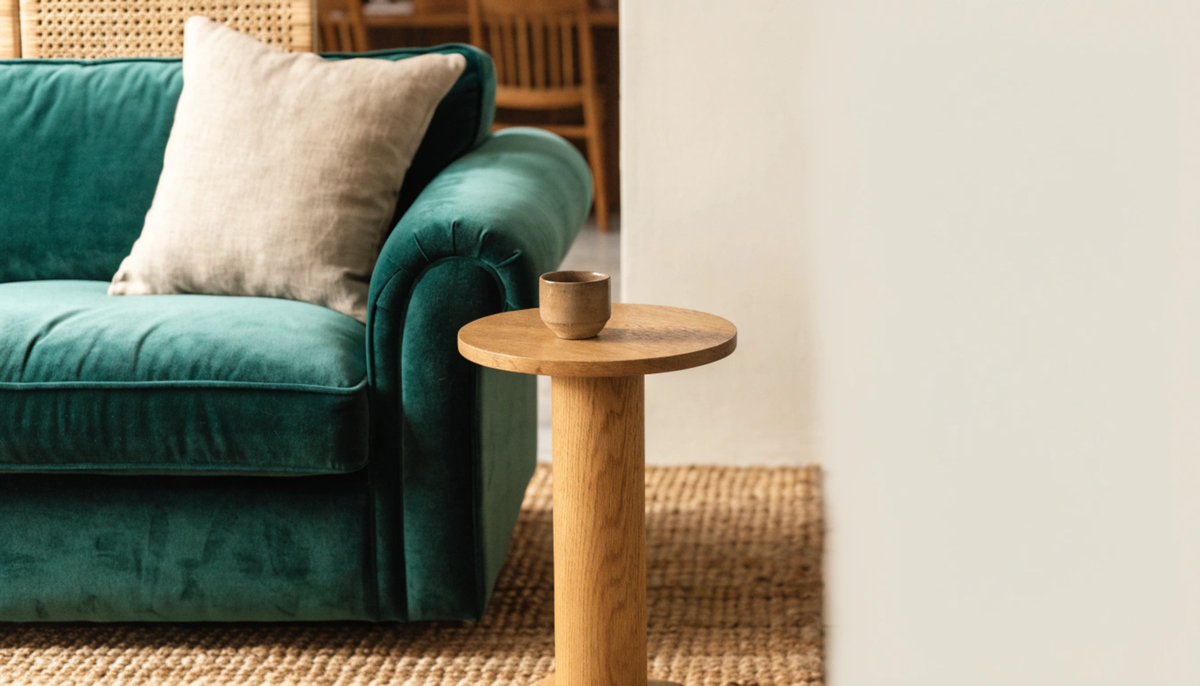
Saturated jewel tones can feel heavy in a small, dim room instead of rich. Emerald, sapphire, burgundy, teal. They all need light before they do anything.
Neutrals carry velvet more quietly—beige and taupe, grey, warm brown. You get the texture and skip the drama.
How to Style Velvet Furniture
Velvet wants contrast around it. Ring it with shinier things, and the room starts to look like a stage set.
Wood Warms Velvet Down

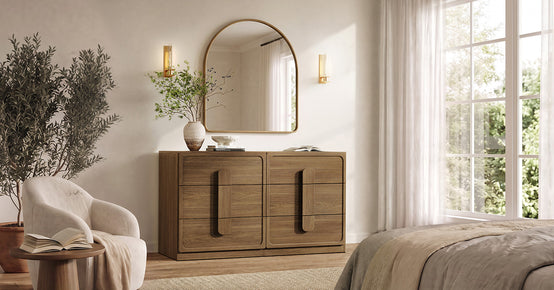
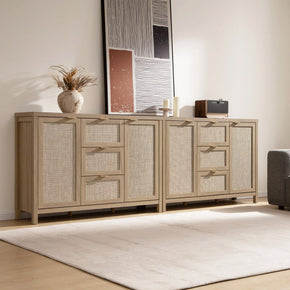
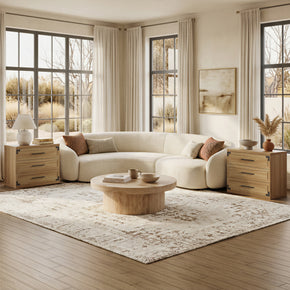
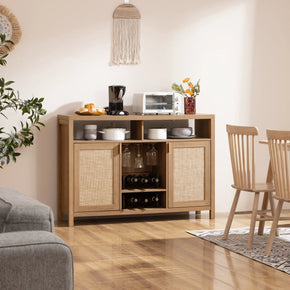
Timber grain against pile is the easiest win going. Put a three-drawer wood console behind or beside a velvet sofa, and the softness breaks up. Without it, the whole corner reads like one big cushion.
Balance Velvet With Rough Texture

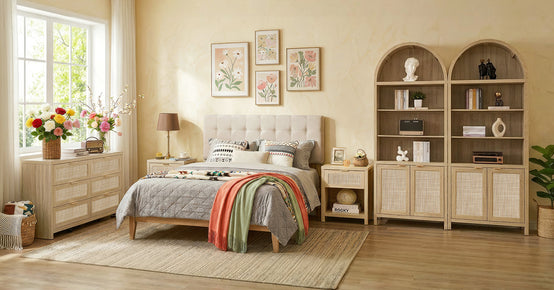
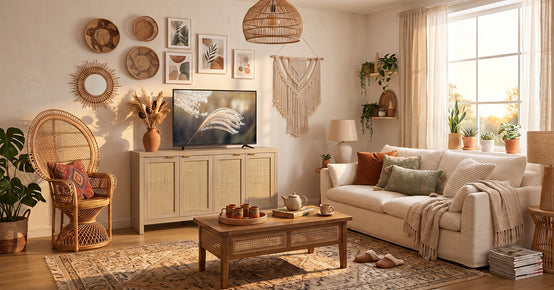
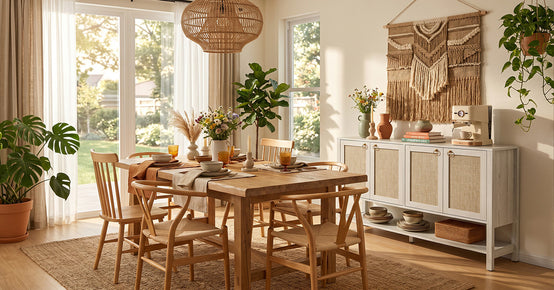
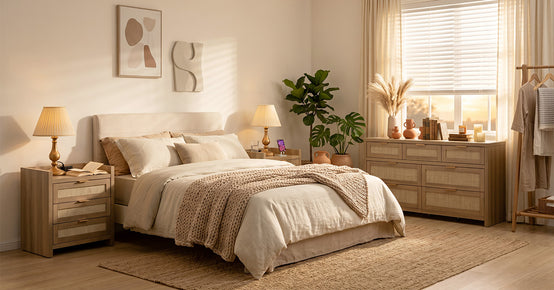
Rattan and jute work. Linen and raw ceramic too. All of them look rough next to pile. In a bedroom, a black rattan bedside table next to a velvet headboard gives your eye something coarse to settle on.
Keep the Surfaces Around It Matte

Velvet, high gloss, and polished brass together is too much. Pick an open-shelf console table in a matte finish instead. The velvet stays the shiniest thing in the room, which was the whole point of buying it.
Velvet in the Bedroom

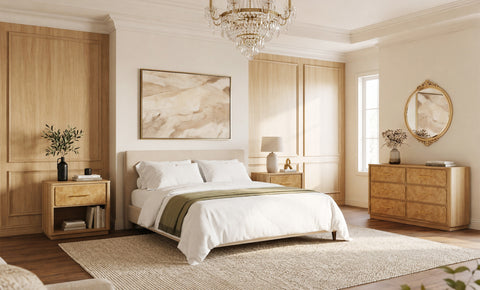
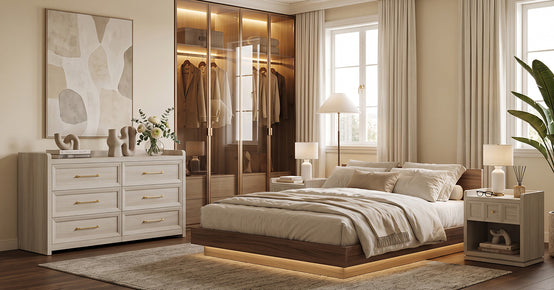
Headboards and benches are the safe way in. Neither takes the friction a sofa does. Pair them with bedroom pieces in warm natural finishes and the room stops feeling like a hotel suite.
Velvet Alternatives Worth Knowing

Two fabrics give you a similar plush feel with fewer conditions attached.
Chenille grows its own pile from twisted yarns. Soft to sit on, better at hiding marks, cheaper to look after. Boucle pulls the same trick with loops instead. For sheer toughness, a dark grey performance-fabric sofa will outlive most velvets in a busy house.
Neither one catches light the way velvet does. That is the trade you are making.
Is Velvet Practical With Kids and Pets?
Two claims float around online, and both are partly right.
The Claw Argument
Velvet is a cut pile, so there are no loops for a claw to hook into. Claws may snag less easily than they would on a loop weave. That is a point about the fabric, not a promise about your cat.
No upholstery is scratch-proof. Cats differ, and a determined one will use whatever is there regardless of construction. Pile can also flatten and mark where an animal sleeps in the same spot.
Order a swatch and leave it where the cat goes. A week tells you more than any fabric description will. Scratching posts near the sofa and regular claw trimming do more for the outcome than the weave does.
The Hair Argument
Hair still clings to the pile's surface, and it shows badly on dark colors. A rubber brush lifts it off easily enough. You'll reach for that brush every week.
If that bothers you, pick a mid-tone close to your pet. Dark velvet plus a white dog is a fight you will not win.
How to Care for Velvet Furniture

Ten minutes a week keeps velvet looking new. Leave it a whole season and the pile mats down.
- Vacuum weekly with a soft brush head. Go with the nap, not against it.
- Blot spills straight away with a dry cloth. Rubbing just drives the liquid into the backing.
- Test any cleaner on a hidden patch first and wait a full day.
- Once it is fully dry, brush against the nap and then back with it. The fibers stand up again.
- Swap the cushions around now and then so the pile wears evenly.
- Keep velvet out of direct sun. It fades unevenly along the nap.
That last step matters more than people expect. Faded velvet cannot be restored.
One Safety Check Nobody Mentions
Tall freestanding storage needs anchoring to the wall, whatever it is covered in. CPSC says itsten-year anchoring campaign contributed to a nearly 50% decline in tip-over injuries and deaths.
Headboards work differently. Most attach to the bed frame rather than standing on their own, so a bed-mounted headboard is not the same hazard as a freestanding cabinet. Follow the instructions that came with it.
Wall-mounted headboards are a separate case again. Those hang on the wall and need fixings matched to the wall type, which the maker should specify.
Consumer Reports has covered where anchors and standards fall short, and the practical answer is to use a strap regardless of what the label claims.
Worth a second check too: most upholstered frames sit on engineered wood, which must be labeled TSCA Title VI compliant when sold in the US.
How to Buy Velvet Furniture Without Regretting It
Six checks, in order:
- Match the rub rating to how hard you'll use the piece.
- Order a swatch and view it in daylight and lamplight before committing.
- Press and part the pile to judge density and recovery.
- Read the cleaning code and decide if you can live with it.
- Ask about the frame, not only the fabric.
- Measure the delivery route. Upholstered pieces do not come apart.
Measure the room as well. Leave 30 to 36 inches for a main walking route around a new sofa. If it's any tighter, it will irritate you every day, no matter how good the fabric is.
The Short Version
Velvet is a construction. It is not a promise. The word on the label tells you how the cloth was woven and nothing whatsoever about how long it lasts.
Judge the fiber, the rub count, the pile density, the cleaning code, and the frame underneath. Get those five right and velvet furniture lasts for years.
Get them wrong, and you own an expensive thing that looks tired by next winter.
FAQs
Is velvet a good sofa material?
Yes, as long as it is upholstery-grade and the rub rating matches your household. Polyester or performance velvet above 40,000 Martindale rubs takes daily family use without complaint. Cotton and silk belong on occasional chairs, where spills and friction are rarer.
What is the price per meter of velvet in Pakistan?
Rates move about, so check the current market before you budget. The bit that matters is this. Dress velvet sold for clothing costs far less than upholstery velvet, and the two aren't interchangeable. Upholstery velvet is heavier, wider, and rub-tested. Dress velvet on a sofa wears through fast.
Is velvet cloth costly?
It ranges enormously. Polyester velvet sits at the cheap end of upholstery fabric. Silk velvet is one of the priciest cloths money buys. Fiber, pile density, width, and whether anyone bothered to test and treat it for upholstery drive the price.
Can velvet be 100% cotton?
Yes. Velvet describes the pile construction, not the fiber, so cotton works perfectly well. Cotton velvet looks softer and more matte than polyester, with less sheen. It crushes and stains more easily, though, so keep it away from the busiest seats.
Is velvet a luxury fabric?
Historically, very much so. In parts of medieval Europe, law restricted silk velvet to nobility and clergy. Synthetic production wiped that exclusivity out. The look now sells at almost any price point, though real silk velvet is still a luxury cloth.
What are the disadvantages of velvet fabric?
Five come up repeatedly:
- The pile crushes and holds pressure marks where people sit.
- Dust, lint, and pet hair all sit right on the surface where you can see them.
- Some velvets are solvent-clean. Some are vacuum-only.
- Direct sun fades the pile in patches.
- Two products with the same name can be worlds apart in quality.
Which velvet quality is best?
For everyday furniture, go for a densely woven polyester or performance velvet. High rub count. A W or WS cleaning code. Check the pile bounces back after you press it. The backing should stay hidden when you part the fibers. Match the grade to the use, not the biggest number.
Why does velvet look cheap?
Usually thin pile with far too much shine. Sometimes it's rushed upholstery, with puckered seams or the nap running in different directions. Sometimes a color the room cannot carry. Weak frames make it worse again, since sagging fabric loses the crisp lines velvet needs. The fabric is rarely the real problem.
Sources
- Encyclopedia – Velvet
- Victoria and Albert Museum – The Story of Silk
- U.S. Consumer Product Safety Commission – Anchor It Campaign Marks 10 Years of Fewer Furniture Tip-Overs
- Consumer Reports – Furniture Anchors Are Not an Easy Fix as Child Tip-Over Deaths Persist
- U.S. Environmental Protection Agency – Formaldehyde Emission Standards for Composite Wood Products
- Grand View Research – Sofa Market Size, Share and Trends Report
- Style by Emily Henderson – Living Room Rules Worth Knowing


Looking for something else?

Burl Wood Furniture: The Complete Buying Guide
LEARN MORE
What Is a Hope Chest? Meaning, History, and Modern Uses
LEARN MORE
What Is a Foyer? Meaning, Purpose and Design Guide
LEARN MORE
GREENGUARD Gold Certified Furniture: What It Really Means for Your Home
LEARN MORELooking for something else?

How to Clean a Mirror Without Streaks: Simple Step-by-Step Guide
LEARN MORE
21 Above-Bed Decor Ideas for a Stylish Bedroom Wall
LEARN MORE
Furniture Materials Guide: Picking the Right Material Room by Room
LEARN MORE


Further reading

18 Decorative Storage Box Ideas That Hide Clutter Well

How to Store Comforters Without Losing Space or Loft


