





























Velvet 101: How to Care for Velvet (Complete Care Guide)
People treat velvet like it belongs in a museum. It does not. Velvet care is simpler than its reputation suggests, and a velvet sofa survives normal family life once you get comfortable with three habits: gentle vacuuming, quick blotting, and a steamer in place of an iron. That is really all cleaning velvet furniture asks of you day to day. Britannica describes velvet as a pile-weave fabric made from short, clipped yarns. Every rule in this guide traces back to that raised pile. It marks when wet and flattens when pressed, and hot metal will crush it for good. Cleaning comes first, then washing, stains, storage, and mistakes to avoid.
What Is Velvet?

Velvet is a woven fabric with a raised surface called a pile. Countless short fibers stand upright on the base cloth, so a hand sinks in a little on contact. You feel it right away. The word describes that construction rather than one fiber. Weavers produce velvet from silk, cotton, polyester, and plenty of blends.
Why Velvet Looks So Rich

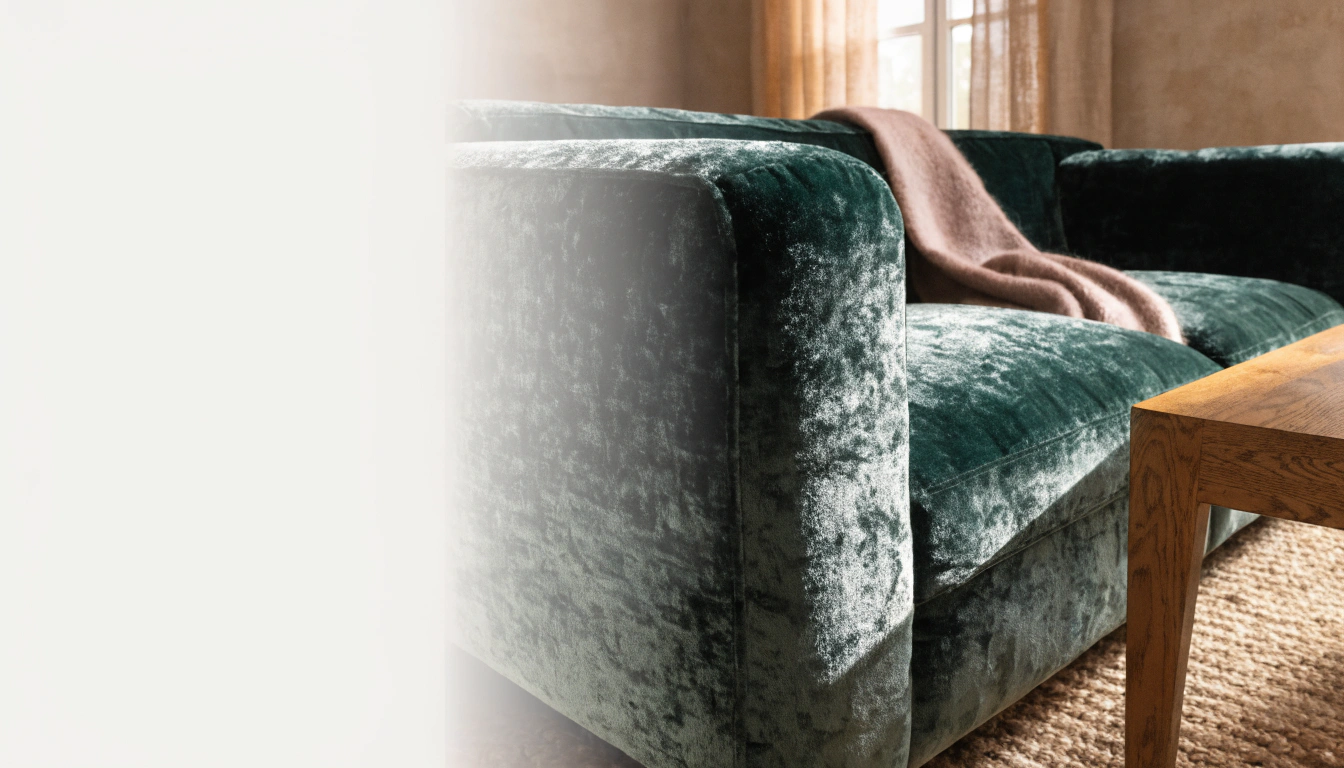
The pile bends light. Stroke it toward you and the color goes darker, while a pass in the other direction brings the shine up. A flat weave has no way to do this. People fall for velvet in showrooms because of that moving depth, long before care crosses their mind.
Why Velvet Needs Gentle Care
The pile causes every headache, too. Dust settles into it, weight flattens it, and water can leave a visible ring behind. Rub it hard, and the surface goes blotchy—press hot metal on it, and the damage stays. A light touch solves nearly all of this.
Common Types of Velvet

A silk pillow and a polyester sofa can look nearly identical on a shelf, yet velvet fabric care treats them as different animals. The tag tells you which one you own. Check it first. Read it before any cleaner comes out. Five fiber types cover most of what stores sell for the home.
Silk Velvet
Silk velvet sits at the top for price and near the bottom for toughness. A few drops of water can spot it, and the pile shifts out of shape fast. Send it to a dry cleaner every time. That rule has no exceptions. Pieces like this belong on low-use decor rather than on the family couch. In short, caring for silk velvet is simple: leave it to a dry cleaner and keep it off high-use seating.
Cotton Velvet
Cotton velvet feels soft and matte with real weight behind it, which suits cushions, curtains, and upholstery. The fiber absorbs moisture faster than any synthetic, so a spill needs to be blotted up within seconds. Keep a cloth nearby. Careful hand washing works on some cotton velvet. Dry cleaning remains the safest option. That is how to care for cotton velvet: blot spills immediately and use dry cleaning when the label allows.
Polyester Velvet
Polyester velvet does the heavy lifting in most homes. Stains, crushing, and moisture bother it far less than any natural fiber, and plenty of covers come through a gentle machine wash just fine. Anyone shopping with kids or pets at home should start here. When it comes to polyester velvet care, its gentle machine-washability and everyday durability make it the easy pick for busy rooms.
Viscose or Rayon Velvet
Viscose velvet, which sometimes appears on tags as rayon, shines harder and drapes better than the rest. The trade-off hurts. Water rings mark it with almost no effort, and the pile crushes quickly. Give it the silk treatment and have it professionally deep cleaned. Professional cleaning is the whole story with viscose or rayon velvet care, since water alone can leave a permanent mark.
Performance Velvet
Performance velvet came out of a simple request: velvet that survives real families. Mills weave it tight from tough synthetic fibers and build the stain resistance right into the strand. On the Martindale rub count used by upholstery makers, performance velvets score near the top. For everyday performance velvet care, a quick blot and a routine vacuum are usually all it asks.
General Velvet Care Rules and Maintenance Basics

Anyone learning how to care for velvet should start with the label, because the fiber and backing determine what the fabric can withstand. Furniture tags carry letter codes for this. W allows water-based cleaning, S restricts you to solvents, and X means nothing beyond a vacuum. Mine reads W.
Past the label, four habits do the real work. Blot spills rather than rubbing at them. Brush and vacuum with the nap, never against it. Keep the fabric away from heaters and direct sunlight. Most velvet damage never happens in homes that hold to those four.
How to Clean Velvet Furniture and Upholstery

Cleaning velvet furniture is more about routine than effort, and that same velvet upholstery care routine transfers straight across to other pile fabrics. Someone who ownsa chenille modular sofa cleans it by the same playbook, since chenille grows a plush pile of its own. Budget ten minutes a week, and both fabrics will stay fresh.
Vacuum Velvet the Right Way
Put the soft brush attachment on and drop the suction to low. Once a week, run slow passes along the nap so dust and pet hair lift out before they work their way down. Skip this long enough, and the pile dulls. Dust that meets a spill turns straight into mud. Weekly is plenty.
Brush the Pile Between Cleanings
Between vacuum sessions, a soft clothes brush or a velvet brush does the refreshing work. Use light strokes and stay with the nap. Brushing velvet pulls the fibers back into line, and the color evens out once they all stand the same way. It takes a minute.
Rotate and Fluff the Cushions
Nobody sits evenly across a sofa, so the cushions wear unevenly too. Flip them over every few weeks and trade their spots around, which keeps permanent velvet pressure marks from settling into one seat. A quick fluff at the same time brings the fill back to life.
Watch Out for Skin and Hair Oils

Skin and hair carry natural oils, and years of contact leave dark patches on velvet headboards and sofa backs. A throw pillow between you and the fabric stops it. Choosing a queen bed frame with a wood headboard in the first place removes the problem altogether.
How to Handle Spills and Stains on Velvet

Velvet stains reward whoever moves first. My order never changes on any fabric in this family. Soak up the liquid, treat what remains, let it dry, and finish with a brush.
Blot, Never Rub
Take a clean white cloth, press it straight down onto the spill, and lift. Move to a dry section and repeat until the cloth comes away clean. Then stop. The moment you rub, the pile crushes and the stain travels deeper. Small marks turn permanent exactly that way.
Use Minimal Moisture
On a W-label fabric, stir one drop of mild dish soap into a cup of water, then lift only the foam onto your cloth. Barely damp is the goal. A soaked patch of velvet dries into rings and flat spots that take real work to undo.
Know When to Call a Professional
Hand the hard cases over. Wine, ink, oil, and anything else sitting on silk or viscose velvet all call for a professional cleaner. The pro advantage goes past stain removal, since their equipment resets the pile evenly in a way home tools never quite manage.
How to Wash a Velvet Blanket

Washing velvet at home is a fiber question first and foremost. A velvet blanket with down fill, a sewn lining, or stitched decoration should never go in a machine. Plain single-layer blankets have better odds.
Check the Label and Fiber First
Polyester velvet blankets come through the machine fine in most cases. Silk and viscose do not, and a blanket missing its care tag deserves the same caution. Spot cleaning or a dry cleaner covers those. Treat any unknown as delicate.
Wash Cold and Gentle
Cold water, a gentle cycle, and a mild detergent make up the whole recipe. Give the blanket the drum to itself, or zip it into a large mesh bag so nothing rough rides along. Bleach dulls the pile, and fabric softener coats it, so leave both out.
Dry With Care

A hot dryer ruins more velvet blankets than all the stains combined. Lay yours flat to air dry, then fluff the pile up with a soft brush. For the off-season, fold it loosely into something deep, like a four-drawer wood chest, where nothing heavy presses a crease into it.
Velvet Cushion and Pillow Care: How to Keep Velvet Pillows Fresh

One question drives all velvet cushion and pillow care: whether the cover comes off. Most do not. Sewn-on covers are only ever spot-cleaned with a barely damp white cloth. A removable cover might be machine-washed inside a mesh bag, provided its label says so.
Move velvet cushions around between seats and rooms so no single pillow absorbs all the wear. Spare covers want a flat, dust-free home, and a lidded seat, likebench storage that keeps velvet pillows dust-free, keeps them steps from where the pillows sit. A fluff and a brush finish every wash day.
How to Fix Crushed Velvet

Crushed velvet panics people more than any stain, yet crushed velvet care is easier than stain removal, not harder. Sitting, folding, and storage all press the pile down. Steam stands it back up in most cases, and the whole fix takes a few minutes. Most pieces recover fully.
Steam, Never Iron
An iron ends a velvet piece even with a pressing cloth in between, because weight plus heat flattens the pile past recovery. A handheld steamer softens the fibers without ever touching them. Float it a few inches off the surface and keep it moving. Never let it rest.
Brush While the Pile Is Warm
Warm fibers move willingly. Nudge them back along the nap with a soft brush or just your fingertips, then wait for that patch to dry before starting the next one. Small sections give you control, and the surface levels out as you go.
How to Protect Velvet From Sun, Dust, and Wear

Sun bleaches velvet a little at a time, and nobody notices until one sofa arm looks paler than the other. Pull velvet seating out of harsh window light or soften it with sheers. Heaters and vents need clearance too. A few feet are enough. Velvet curtains last the longest when the lining faces the glass.
Foot traffic ages fabric the same way sunlight does. Velvet fading and flattening arrive fastest on pieces parked near busy doorways, which is why hard-wearingentryway furniture that takes the traffic velvet cannot suit those zones better, while the velvet sits deeper in the house. Dust everything weekly, and the pile keeps its glow. Handled this way, long-term velvet maintenance comes down to light, heat, and dust kept in check week after week.
How to Store Velvet Properly

More velvet gets crushed in storage than on sofas. Padded hangers protect garments and drapes, but only when air surrounds each piece, since a packed rod presses pile against pile all season. Hanging space insidewardrobes for storing velvet garments gives every item the clearance it needs. Leave gaps between hangers.
Loose velvet fabric stores best rolled, never folded, and never under a stack of heavy boxes. Cotton garment bags breathe where plastic sweats, so choose cotton. A cool and dry corner away from sunlight finishes the job, with cedar blocks on moth duty for natural fibers. These velvet storage tips keep every piece rolled, spaced, and dry so the pile springs back whenever you bring it out.
Common Velvet Care Mistakes to Avoid
Almost every ruined velvet piece I have seen died from one of five habits. Avoid them, and the fabric mostly looks after itself.
-
Scrubbing a fresh spill, since that one motion spreads the stain and flattens the pile together.
-
Putting an iron on the fabric, because the mix of weight and heat leaves a permanent flat patch.
-
Drenching the surface with water or cleaner, which dries into rings and stiff spots.
-
Working a brush against the nap until the color turns patchy and uneven.
-
Parking the piece in strong sun, where the dye pales, and the fibers slowly weaken.
Final Thoughts: Keep Velvet Beautiful With Simple Habits
A light touch on a steady schedule carries the whole job of velvet care. Run the weekly vacuum along the nap, and blot spills the minute they land. Crushing meets steam, never an iron, and the sun stays at a distance. Hold to those velvet care tips, and a good piece outlasts its trends.
Frequently Asked Questions About Velvet Care
FAQs
How do you care for velvet?
Four habits handle nearly all of it:
-
A weekly vacuum with the soft brush attachment, always moving along the nap.
-
Fast blotting with a dry white cloth whenever something spills, with no rubbing.
-
Steam on any light crushing, then brush to stand the pile back up.
-
Distance from direct sunlight and from anything that puts out heat.
Is velvet for summer or winter?
Most people file velvet under fall and winter, and the dense pile does hold warmth. Nothing stops it from working in summer, though. A blush velvet cushion or an accent chair reads perfectly fine in July, especially in a lighter color.
How do you care for velvet fabric?
Start at the care label and let the fiber pick the method. From there, brush softly with the nap, blot rather than scrub, and store every piece free of folds and pressure. Wrinkles get steam. Irons stay in the closet.
What is the use of velvet?
Homes put velvet on sofas, headboards, and accent chairs. Blankets, curtains, clothing, and bedding accents also lean on it. The draw stays the same everywhere—deep color, real softness, and a pile that plays with light.
What is the best type of velvet?
Match the velvet to the job:
-
Family sofas and heavy daily use call for performance velvet or polyester velvet.
-
Curtains, velvet cushions, and accent upholstery do well in cotton velvet.
-
Luxury pieces with gentle handling can carry silk or viscose velvet.
Will velvet fade in the sun?
It will. Hours of direct sun bleach the dye over time and slowly dry out the pile. Sheers, blinds, or UV window film all buy protection, and shifting the piece a few feet out of the beam costs nothing.
What are the disadvantages of velvet?
Dust and pet hair cling to velvet, pressure leaves marks on it, and strong sun fades it. Certain types also react badly to water and heat, so cleaning requires more of you than a flat weave would. The look is what those trade-offs purchase.
How best to wash velvet?
The care label rules here. Plenty of polyester velvet handles a cold, gentle machine cycle in a mesh bag. Silk, viscose, and anything embellished need spot cleaning or a professional. Everything air-dries flat. High heat never enters the picture.
Sources
-
Britannica – Velvet | Luxury, Softness, Durability
-
Apartment Therapy – How To Clean Velvet Upholstery
-
The Laundress – How To Wash Velvet
-
FibreGuard – Velvet Upholstery: Durability, Cleaning and Colors
-
Fiber-Seal Systems – What Is Velvet and How to Care For It
-
Wikipedia – Velvet


Looking for something else?

Burl Wood Furniture: The Complete Buying Guide
LEARN MORE
What Is a Hope Chest? Meaning, History, and Modern Uses
LEARN MORE
What Is a Foyer? Meaning, Purpose and Design Guide
LEARN MORE
GREENGUARD Gold Certified Furniture: What It Really Means for Your Home
LEARN MORELooking for something else?

How to Clean a Mirror Without Streaks: Simple Step-by-Step Guide
LEARN MORE
21 Above-Bed Decor Ideas for a Stylish Bedroom Wall
LEARN MORE
Furniture Materials Guide: Picking the Right Material Room by Room
LEARN MORE


Further reading

18 Decorative Storage Box Ideas That Hide Clutter Well
ARTICLE BRIEF
Primary Keyword
decorative storage box ideas
Secondary Keywords
decorative storage boxes · decorative boxes with lids · stylish storage boxes · DIY storage boxes
...

How to Store Comforters Without Losing Space or Loft
Storing comforters comes down to four things. Clean and bone dry. Loosely folded, and sitting in something that breathes. Miss any one, and next season you pull out something that smells like a dam...

Furniture Distance From a Fireplace: How Far Is Safe?
Furniture distance from a fireplace answers two questions with one number. Keep anything that can burn at least 3 feet from heat sources.The U.S. Fire Administration gives that message for fireplac...


