

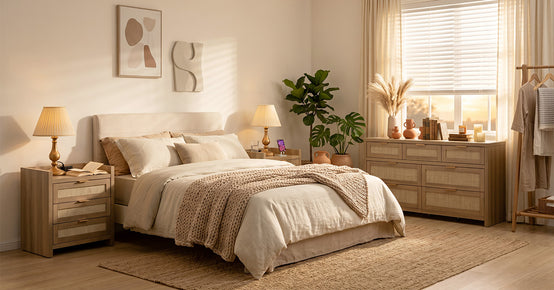



21 Nightstand Alternatives That Work in Real Bedrooms
Nightstand alternatives fix one annoying thing. Your bed has nowhere to put your phone, your water, or the book you dropped when you fell asleep.
Maybe the wall sits too close on that side. Maybe a closet door swings through the gap. Or your bedside table is simply too small for your stuff.
You get 21 options below. Floating shelves, stools, storage headboards, rolling carts. Each one is tied to a problem you might already have. No floor space. Not enough storage. A small budget. A rental where drilling is off limits.
You also get the height and clearance rules that decide whether an idea actually works in a small bedroom, plus the safety checks most small bedroom storage roundups leave out entirely.
What Makes a Good Nightstand Alternative?
Before the list, four rules. They sort the ideas that stick from the ones you get sick of by week two.
Get the Height Close to Your Mattress Top
Grab a tape measure. Measure from the floor to the top of your mattress. For most beds, that number lands near 24 or 25 inches. Your bedside surface should sit at that height or a few inches above it.
Reaching sideways feels fine. Reaching down and behind you does not. That is the whole rule, and it rules out a lot of low baskets and floor cushions right away.
Write Down What You Actually Keep by the Bed
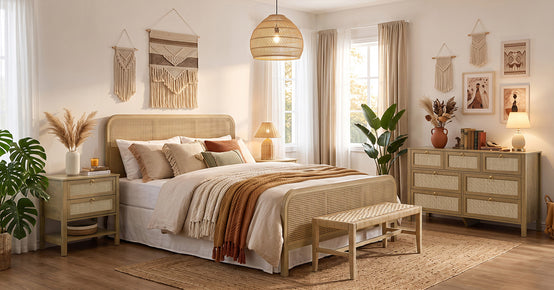
Write down what genuinely lives beside your bed. Phone. Water bottle. Glasses. Medication. A lamp. Chargers. Maybe a book you are halfway through.
If you only need a phone and a charger, a wall pocket works. If you need medication, a water bottle, and a lamp,you need a real surface with a lip and some depth. The list decides the piece.
Keep the Walkway Beside the Bed Clear
Depth matters more than looks in a tight room. Try to keep 22 to 30 inches of walking room next to the bed. Then check that drawers, closet doors, and built-ins still swing open.
A pretty piece that blocks your closet isn't a fix.
Make Sure the Top Is Steady
Chairs, crates, suitcases, and ottomans all work as bedside tables. The top just needs to be flat and steady before you put a lamp or a glass on it. A hard tray fixes most of it.
Anchor anything tall to the wall. Bookcases and chests tip, and the CPSC tip-over prevention guidance is worth five minutes before you load a shelf beside a bed.
21 Nightstand Alternatives Worth Trying
Every idea below is grouped by the problem it fixes. Some suit renters. Some suit people drowning in stuff. Read the ones that match your room and skip the rest.
1. Floating Shelf

A floating shelf gives you a bedside surface with nothing on the floor. Mount it level with the top of the mattress, or an inch or two higher. Phone, glasses, a paperback, a slim lamp. That is usually all it needs to carry.
Cords are the catch. Drop a charger cable down behind the bed frame. A plug-in sconce above the shelf helps too, since the lamp stops eating your surface.
This one earns its place in narrow bedrooms where the bed sits tight against a wall.
2. Wall-Mounted Nightstand or Box Shelf

A box shelf is a floating shelf with sides, and often a small drawer or cubby. That closed storage is what makes it feel like a real nightstand instead of a ledge.
Nothing touches the floor, so the room reads bigger and cleaning underneath is easy.
Mounting is where people go wrong. Hit a stud where you can. On drywall, match the anchor rating to the weight you plan to load, then stay well under it.
Good pick if you want hidden bedside storage and zero floor footprint.
3. Small Stool

A stool is the fastest fix on this list. Tiny footprint. Easy to move. Odds are one is already sitting in your closet or garage.
Woven or curved seats wobble under a glass. Set a hard tray on top, and that disappears.
Lighting is the trade-off, since a table lamp swallows the whole surface. Hang a sconce or clip a light to the bed frame and the top stays free.
Stools suit tiny bedrooms, guest rooms and setups you know will change.
4. Dining Chair

A spare dining chair makes a surprisingly good bedside table alternative. The seat holds a book, a phone, and a small tray. The back adds height and a little character.
Sloped seats and thick padding are the problem. Add a firm tray, or pick a different chair.
Mixing materials helps the look. Put a cane or wood chair next to soft bedding, and it looks planned, not leftover.
Works best in eclectic, vintage, and casual bedrooms.
5. Narrow Side Table with Open Shelves

Got a tight gap next to the bed? A narrow side table gets you close to a real nightstand without the bulk. Open shelves stop it from looking heavy in a small room.
A two-tier piece like this narrow open-shelf bedside table takes a lamp up top and books below. It also fits gaps a standard bedside table cannot.
You give up drawer storage. For most people, that trade buys back valuable floor space.
Pick this one when you're short on width beside the mattress.
6. Pedestal Table

A pedestal table touches the floor in one spot. That single base is exactly why it works in a walkway a four-legged table would crowd.
The top is small. Plan on a phone, a glass, and maybe a book. Not a lamp plus a stack of everything else.
Round edges help too—fewer corners to catch a hip on a 2 a.m. trip to the bathroom.
Pedestal tables shine when the path between bed and wall is really tight.
7. Nesting Tables

Nesting tables come in handy when you need more room. The larger table stays put. The smaller one pulls out for a laptop, a mug, or a weekend guest.
Check both heights before you buy. The big one has to be easy to reach from the mattress. The small one has to slide all the way under, so it stays out of the walkway.
Handy in rooms that keep changing jobs.
8. Drum Table

A drum table has weight that a thin side table never gets. The solid base and flat top look like a choice, not a compromise.
Some lift open for storage inside. Useful if your bedside pile is mostly cables and chargers.
Measure depth as well as width—a round top bulges further at its middle than a square one of the same size.
Go this way when looks matter as much as footprint.
9. Desk Beside the Bed

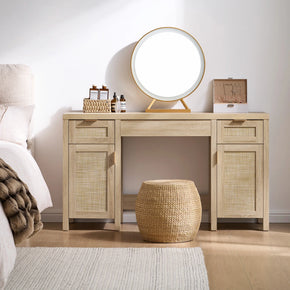
A desk pulls double duty, which is why studio apartments use one so often—wide top. Somewhere to work. Usually a drawer or two as well.
A compact office desk with three drawers holds the lamp, the charger and your notebook in one spot. No second piece of furniture needed.
Push a stool under the desk in the morning, and the walkway stays clear.
Best in studios, student rooms and any bedroom doing two jobs.
10. Console Table

A console table plays two roles in a bedroom. Park it beside the bed, and it works as a slim nightstand with a drawer. Behind the bed, it becomes a ledge both sleepers can reach.
Most people never think of the second one. Pull the bed out six or eight inches. Slide a narrow console into the gap. You end up with surface on both sides at the same time.
Before you move the bed, check what that does to the space at its foot.
This is the answer when side clearance is nearly nonexistent.
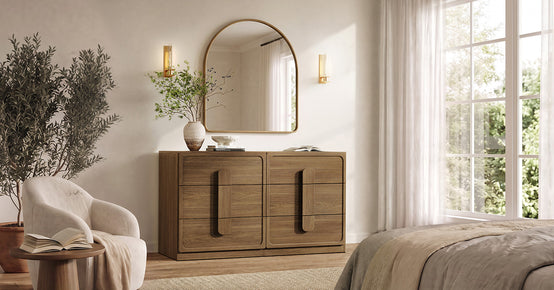
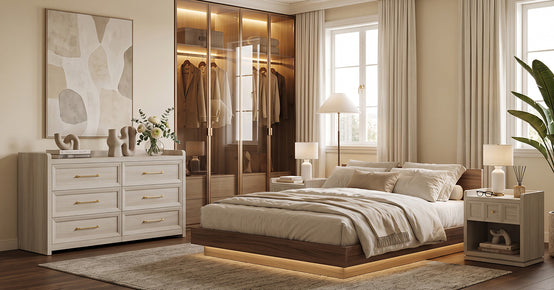
11. Dresser

Putting a dresser beside the bed sounds odd until you run out of wall. One piece covers two jobs, and the rest of the room opens up for a chair or a bench.
Height is the catch. A tall dresser beside a low platform bed looks wrong. Reaching up for the lamp gets old fast too.
Put something of similar size on the far side, or a taller lamp, and the room settles.
Worth it in small bedrooms where every piece has to earn its floor space.
12. Small Chest of Drawers

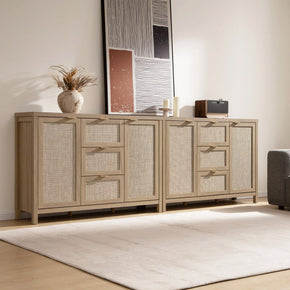
A compact chest lands between a nightstand and a full dresser. More storage than a bedside table. Less width than a double dresser. It still fits a tight wall.
A six-drawer chest with a side cabinet swallows chargers, medication, folded layers and spare linens. No closet trip needed.
Measure drawer clearance first. A drawer that bangs the mattress every morning will drive you mad.
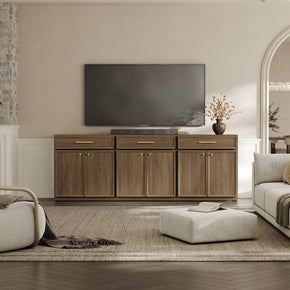
Good call in narrow rooms with weak closet space.
13. Storage Ottoman

An ottoman covers three jobs: a surface, hidden storage, and a seat for pulling on socks. Blankets and spare pillows go inside and disappear.
Soft tops need a tray. A glass of water on bare fabric only ends one way.
Aim for a height near your mattress so you aren't bending down every night.
Best when you need flexible storage more than a fixed table.
14. Rolling Cart or Bar Cart

A cart rolls out of the way. That single trick beats fixed furniture when a closet door or a built-in cabinet has to open every morning.
Two or three shelves give you real bedside storage: books, water, a charger, a small lamp.
Buy one with locking casters. A cart that rolls away when you lean on it is worse than no cart.
Renters and awkward built-in bedrooms both do well with a cart.
15. Bookshelf or Narrow Bookcase

A bookcase turns that side of the bed into vertical storage. Low shelves stay in reach. High shelves hold the stuff you only touch on weekends.
A bookshelf with two doors and a drawer hides the messy half. The open shelves keep books, a lamp and a plant on show.
Keep heavy things down low. Anchor the unit into a stud as well. Tall storage next to a bed is the last thing you want moving.
Best for: readers and anyone who needs serious bedside storage.
16. Storage Headboard or Bookcase Headboard

A bookcase headboard uses the one space nobody else is using: directly behind the mattress: shelves, cubbies, sometimes cabinets, and a built-in outlet.
It pushes the bed six to ten inches into the room, which is a fair trade for storage on both sides at once.
Keep heavy objects off the section directly above your head. Books at the far ends, soft things in the middle.
Best for: beds squeezed between built-ins or two walls.
17. Behind-the-Bed Narrow Table

A very shallow table behind the headboard is a separate idea from a storage headboard, and it is quietly one of the better small bedroom nightstand ideas going.
Five or six inches of depth is enough for a phone, a glass, and a charging cable. Span the full bed width and both sleepers get a spot.
Bulky lamps will not fit. Use a clip light, a slim sconce, or a rechargeable puck light instead.
Best for: rooms with zero side clearance but a few inches behind the bed.
18. Vintage Suitcases or a Trunk

Stacked suitcases reach mattress height and hide seasonal bedding inside. A trunk does the same thing with a bigger top surface.
Curved lid or proud latches? Add a tray. Anything round on that top will roll toward the low side.
Strap or pin the stack together so it does not slide apart when you knock it in the dark.
Suits thrifted, vintage, and budget-friendly bedrooms.
19. Wooden Crate

Turning a crate on its side is the classic DIY nightstand. Open storage at one end, a flat top, and it costs next to nothing.
Stack two for height. Sand the rough edges. Paint or stain it to match the room.
Screw the crates together. Leave them loose, and one bump takes the lamp down with them.
Dorms, first apartments, and anyone who likes a weekend project.
20. Foldable Tray Table

A folding tray table comes out when you need it and goes away when you do not. Guest rooms love this one.
Test the lock before you trust it with a drink. Light frames tip fast if your foot catches a leg.
Made for guest rooms and bedrooms with no space to give up full time.
21. Bedside Caddy or Wall Pocket Organizer

If even a stool will not fit, a caddy is what is left. It hangs off the mattress, the bed frame, or a hook. Floor space used: none.
Phone, remote, glasses, charger, and a thin paperback all sit within reach.
Water is the weak spot. Most caddies will not hold a bottle safely, so add a small wall shelf or a clip-on cup holder next to it.
Dorms, bunk beds, and rooms with almost no clearance at all.
Best Nightstand Alternatives by Problem
Comparing 21 ideas is a lot of work. Find your problem below and start with those few instead.
If You Have No Floor Space
Put the storage on the wall, the headboard, or the bed frame itself.
- Floating shelf set at mattress height
- Wall-mounted box shelf with a drawer
- Bedside caddy or a wall pocket organizer
- Storage headboard with open shelves
- Narrow console table behind the bed
Add a plug-in sconce or a clip light with any of them. The small surface then does not have to carry a lamp.
If You Need More Storage

Go bigger, not smaller. A dresser or a compact chest holds far more than a standard bedside table. Most of the time, nightstand alternatives with real drawer storagelet you skip a second piece of furniture.
A narrow bookcase, a storage ottoman, or a rolling cart will do the same job. Measure the drawer swing first, though.
If You Rent and Cannot Drill
Stay with pieces that stand alone or move without fuss.
- A stool or a spare dining chair
- A rolling cart with locking casters
- A pair of nesting tables
- A foldable tray table
- An over-mattress bedside caddy
Sticky wall strips hold very little and often peel paint. Ask your landlord before you mount anything that has to hold a lamp.
If You Are on a Small Budget
Look around the house first. A spare chair. A step stool. A crate on its side. Two thrifted suitcases stacked up. None of them cost much, and styled well, they look deliberate.
Drop a tray on top and the whole thing looks finished.
If You Need a Workspace Too

A desk or slim writing table next to the bed covers both jobs. That is how home office furniture built for tight corners keeps showing up in studio bedrooms.
Use a stool that slides right under the top. Keep one drawer for bedside things only. Mixing work clutter with bedside essentials is how both piles get lost.
How to Style Mismatched Bedside Furniture
Two different pieces either side of a bed can look collected or just random. Four small habits decide which one you get.
Match the Heights, Not the Furniture
A dresser on one side and a stool on the other is fine. The tops just need to land near the same height. A few inches apart will not bother anyone.
Repeat One Element on Both Sides
Matching lamps do most of the work here. Sconces hung at the same height pull it off too. One shared wood tone or the same tray finish works as well.
Keep Visual Weight in Balance
A wide desk on one side and a thin wall shelf on the other looks lopsided. Stick a plant stand, a floor lamp, or a tall basket opposite, and it evens out. Perfect symmetry is not the goal.
Leave One Side Empty If It Helps
Not every bed needs two bedside surfaces. In a really small room, one solid piece and a clear walkway beat two tiny ones you keep bumping.
Nightstand Alternatives to Avoid in Tight Bedrooms
Some popular ideas photograph well and fail in daily use. These four are worth skipping.
Anything Too Low to Reach From Bed
Floor baskets, low poufs, and stacked books sit well below mattress height. Reaching down for a phone at night is awkward, and it is how glasses get knocked over.
Unstable Stacks and Wobbly Tops
Loose crates, unsecured suitcases, and towers of books all shift. Anything holding a lamp, a drink, or electronics needs a fixed, level surface underneath.
Deep Furniture That Blocks the Walkway
A large dresser only helps if its drawers open fully and you can still walk past. Measure both before it comes home.
Heavy Storage Mounted Over Your Head
Shelves directly above sleeping heads are a real risk, especially in quake-prone areas. Keep them light, mount into studs, and follow the weight ratings for wall anchors rather than guessing.
Final Takeaway
The best nightstand alternative is rarely the prettiest one. It is the piece that keeps your daily essentials in easy reach without making the bedroom harder to move through.
Start with your problem, not the list. No floor space points you to the wall or the headboard. If you have too little storage, look to a chest, a bookcase, or an ottoman. A rental points you to anything that moves.
Measure your mattress height, check your walkway, then pick one option and try it for a week. Most people know within a few nights whether it works.
FAQs
What can I use instead of nightstands?
Almost any stable surface near mattress height can replace a nightstand. Common swaps include:
- Stools, spare dining chairs, and small side tables
- Desks, console tables, dressers, and compact chests of drawers
- Floating shelves, wall-mounted box shelves, and storage headboards
- Rolling carts, storage ottomans, trunks, crates, and bedside caddies
Pick based on your floor space, your storage needs, and how high your mattress sits.
What to do instead of bedside tables?
Move the storage off the floor. A floating shelf, a wall pocket organizer, or a storage headboard gives you bedside access without a table taking up room. A shallow console behind the bed does the same job.
A rolling cart works too, and it rolls out of the way when you need the space back.
What if I do not have room for a nightstand?
Use the wall, the headboard, or the bed frame instead of the floor. A shelf mounted at mattress height covers most needs. A caddy that hangs from the mattress covers the rest.
For lighting, a clip-on light or a plug-in sconce frees the surface for everything else.
What do British people call nightstands?
In the UK, most people say bedside table or bedside cabinet. Nightstand is understood there, but it sounds American. All three describe the same piece of furniture.
Do you really need a nightstand?
No. You need a safe, reachable place for whatever you use at night. That could be a shelf, a stool, a chair, or a caddy.
Some people need only a spot for a phone and a light switch. Others need drawers for medication, chargers, and books. Match the piece to your list, not to convention.
What are some unique and affordable ideas for nightstands?
Budget-friendly options usually start with something you already own:
- A wooden crate turned on its side, sanded and painted
- Two thrifted suitcases stacked with a tray on top
- A step stool or spare chair from another room
- A secondhand side table or a repurposed desk
Add a tray and a small lamp, and it stops looking like a stand-in.
What do Americans call a bedside table?
Americans use both nightstand and bedside table, though nightstand is far more common in stores and everyday conversation. Night table shows up occasionally, too.
How to make a simple nightstand?
The easiest build is a sturdy wooden crate turned on its side. Sand the edges, seal or paint it, and set it so the open end faces out for storage.
For more height, stack two crates and screw them together. Confirm the top is level and steady before you put a lamp or a drink on it.
Sources
- Apartment Therapy – Nightstand Alternatives for Small Space Bedrooms
- Apartment Therapy – 19 Small Nightstand Ideas and Space-Saving Bedside Shelves
- HGTV – 22 Small Bedroom Storage Ideas and Design Tricks to Save Space
- Bob Vila – How to Install Floating Shelves
- Bob Vila – How to Use Drywall Anchors
- U.S. Consumer Product Safety Commission – Anchor It! Tip-Over Prevention Center
- AnchorIt.gov – Furniture and TV Tip-Over Safety Resources


Looking for something else?

Burl Wood Furniture: The Complete Buying Guide
LEARN MORE
What Is a Hope Chest? Meaning, History, and Modern Uses
LEARN MORE
What Is a Foyer? Meaning, Purpose and Design Guide
LEARN MORE
GREENGUARD Gold Certified Furniture: What It Really Means for Your Home
LEARN MORELooking for something else?

How to Clean a Mirror Without Streaks: Simple Step-by-Step Guide
LEARN MORE
21 Above-Bed Decor Ideas for a Stylish Bedroom Wall
LEARN MORE
Furniture Materials Guide: Picking the Right Material Room by Room
LEARN MORE


Further reading

18 Decorative Storage Box Ideas That Hide Clutter Well

How to Store Comforters Without Losing Space or Loft


