




Mid-Century Modern Dining Tables: A Practical Guide for Today’s Homes
A mid-century modern dining table shows you what it is from across the room. Clean lines. Warm wood. Those soft, rounded shapes that never poke at you. And you use it every single day, so it was never meant to sit there like a museum piece. The whole look reads at a glance: a slim top, legs that taper or kick out at an angle, corners rounded off so your hip slides right past them. Put one in an open-plan kitchen, and it belongs. Tuck it into a small condo, and it still works. Even a noisy family dinner won’t make it feel bulky. That is why the style keeps showing up on Pinterest year after year.
This guide breaks down what gives mid-century modern dining tables their look, which woods last the longest, how to size one for six, what shapes suit what rooms, and how to keep the thing clean. TheBritannica write-up puts the movement's start in the postwar years, and it has never really gone away since.
What Makes a Mid-Century Modern Dining Table?

Plenty of tables get called modern. Far fewer earn the mid-century modern label. A few tells separate the real thing from a generic modern dining table, and once you have spotted them, you will never miss them again.
Clean Lines and Simple Shapes

Look for carving, and you will come up empty. A mid-century modern dining table skips the chunky base and the fussy trim, too. That pared-back simplicity is the whole point of an MCM dining table, where the shape does the talking instead of the ornament.
The grain does the talking when the shape stays plain. Rectangle or round, it hardly matters. You end up with a clean piece made for actual dinners, not for showing off.
Tapered Legs and Light Visual Weight

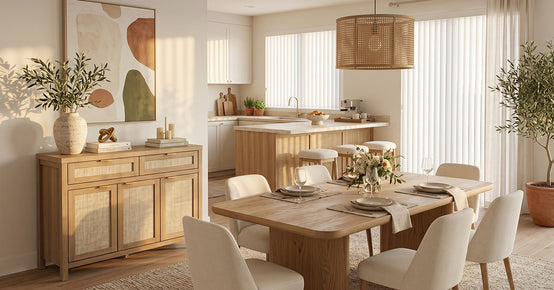
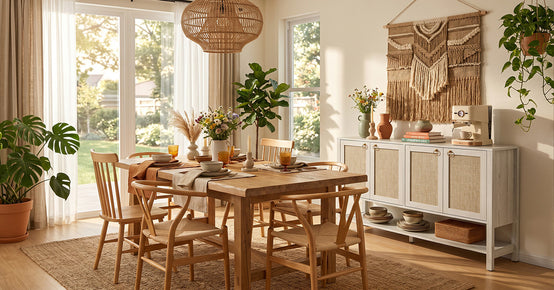
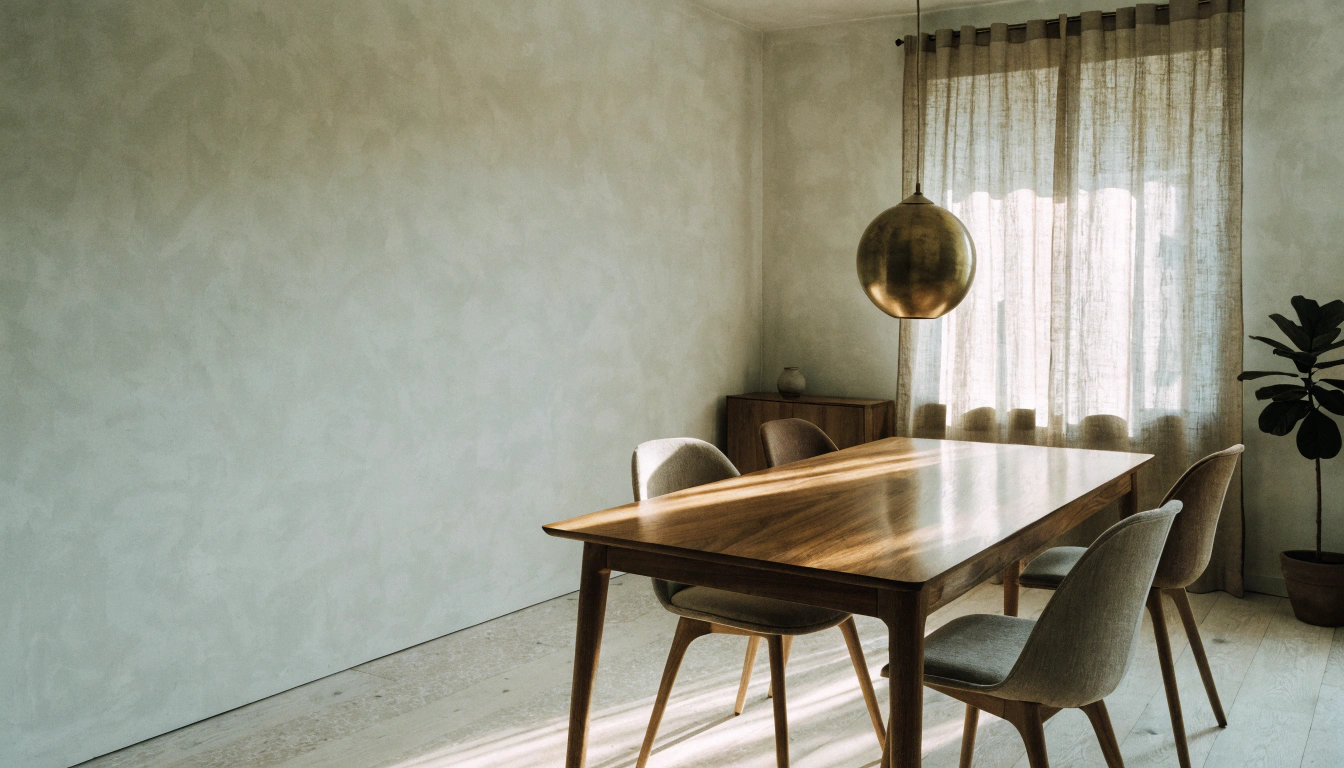
It is the legs that give it away. Tapered, angled, splayed out, that is the MCM calling card, though you will spot the odd pedestal or simple trestle base instead. Either way, the effect lands the same. A light-colored table lets the room breathe instead of filling it up. Add a slim top and softened corners, and you have the whole picture. Set that light, leggy table into a mid-century dining room, and the whole space feels open, since the eye slips right under it instead of stopping at a heavy, boxed-in base.
Natural Wood and Honest Materials

Real wood is the backbone of the style, the sort where you can see the grain running through. Walnut, teak, and oak do most of the heavy lifting. For something lighter and more Scandi, ash and beech fill in the rest.
Solid is not a requirement, though. A fair few MCM tables run a veneer over a steady core, or go with a glass top, or sit on a metal base. None of that kills the stripped-back, no-frills feel.
Why Mid-Century Modern Dining Tables Still Work Today

Trends come and go. This one refuses to. The reason is plain enough. A piece that pulls off comfort, daily wear, and good looks all at once is rare, and this style somehow manages all three.
They Feel Timeless, Not Trendy
Warm wood and simple shapes age well. Leave a walnut top for a few years, and it develops a richer patina rather than a worn-out one. A decade later, a mid century modern dining room table still looks at home. Quiet lines, a sensible size, and it never once shouts for attention.
They Fit Many Interior Styles

Scandinavian, Japandi, minimalist, contemporary, a little vintage thrown in, an MCM table lands in any of them and never picks a fight with the room. Stand a teak one beside a modern sofa, and it just clicks. Shove it up against a Japandi cabinet, and it still looks the part. Not many tables get along with this many rooms.
They Balance Beauty and Daily Function
Daily life is exactly what a good mid century modern dining table is built to take, and you never have to baby it. Picture a regular Tuesday: homework, laptops, and dinner all fighting for the same smooth top. By Saturday, it had turned into candles, wine, and friends. It pulls off both, plus a dozen jobs in between, and never grumbles.
Best Wood Types and Materials for Mid-Century Modern Dining Tables

Pick a wood, and you're really deciding three things together: the look, the cost, and how much fuss it asks of you. No two behave quite the same. Choose it for your home first, then for the way you actually live in that home.
Five woods come up again and again. Start with walnut. It runs a deep chocolate brown, the grain straight and soft, and it is tough enough that day-to-day scratches more or less disappear into it. Time only makes it look better, which is the whole pull of a statement walnut dining table.
Teak turns a golden-brown, carries a faint oiliness and a tight grain, and lasts for ages. As it weathers into a warm patina, you land on that genuine vintage teak dining table look. Oak sits lighter, somewhere between pale and medium, with grain bold enough to read from across the room. It is sturdy.
Dents land a little easier on it, so it earns its keep in Scandi or Japandi rooms that want a lived-in feel. Ash goes paler again, a clean cream, stable, and it takes a stain happily, which brightens a small room. Beech closes out the list. A light pink-beige, fine and even in the grain, and softer underhand than the rest. Warm. Easy to like. The one I would point a family toward.
Walnut for a Rich Statement Look

Walnut wants the spotlight, no two ways about it. Deep chocolate brown. Polished up. Relaxed about the odd scratch, and one will turn up. Put it on a classic mid-century modern dining room table, and it reads as properly high-end, with the color deepening year after year. Keep a walnut dining table long enough, and it only looks better than the day you brought it home.
Teak for a Vintage MCM Feel
Teak runs warm and retro. That golden color, plus the tight, oily grain, throws off a real vintage mid-century feel, and the wood is tough into the bargain. A teak dining table suits warm-toned rooms best. It also suits anyone chasing that honest 1960s look.
Oak, Ash, and Beech for a Lighter Look
After something lighter? Oak, ash, and beech keep a room airy. An oak dining table sits well in Scandinavian and softer modern spaces. Pale ash and friendly beech really hit their stride in small rooms and family homes. Lighter woods bounce more light around and read less formal, which counts for a lot in a busy house.
Solid Wood vs Veneer

Solid wood buys you decades and the freedom to sand it back and refinish it somewhere down the road. The trade is more weight and a steeper price. Run a good veneer over a stable core instead, and you get something lighter and easier on the wallet that still nails the full mid-century modern look. Neither one wins outright. Suppose you move house a lot, lean veneer. If you are putting down roots, solid wood earns its keep.
How to Choose the Right Size Mid-Century Modern Dining Table for 6 People

Begin with the room, not the table you fell for online. Nail the size, and a 6-seater dining table keeps the space open and easy to walk around. Miss it, and even a stunner leaves the whole place feeling boxed in.
What Are the Space Requirements for a Dining Table for 6 People?
Leave 36 inches of clearance on each side, and think of that as your floor, not your goal. You need that much just to push a chair back and step behind it without hitting the wall. Asdining size guides point out, the long sides matter most because that is where everyone walks.
A quick test saves you a lot of regret. Tape the table's footprint onto your floor, live with it for a day, and fill in the gaps before you spend a cent.
How Long Is a 6-Seater Dining Table?
A rectangular 6-seater dining table usually runs 60 to 78 inches long. Ovals land in that same stretch—a round one for six measures somewhere near 54 to 60 inches across. The math is easy. Give each seat 24 inches of width, and the elbows will stop knocking. Consider this your quick dining table size guide for a dining table for 6, so you can measure once and order with confidence.
How Many Chairs Can You Get Around a 6-Foot Table?
A 6-foot table 72 inches) fits six with room to spare. Thinking about squeezing two more onto the ends? It can work, as long as the chairs are slim and the base plays along. Take it to eight, though, and a proper sit-down meal gets cramped.
One note on bases. A pedestal or a trestle frees up more legroom than four legs stuck in the corners.
What Is the Standard Height of a Dining Table?
Stand most dining tables next to a tape measure, and you'll get 28 to 30 inches. Slide a chair under one, the seat sitting 18 to 20 inches up, and your knees end up with 10 to 12 inches of clearance below the top. Thestandard dining table height hardly changes from style to style, so a chair from one set usually fits another.
Best Shapes for Mid-Century Modern Dining Tables

How a room flows, and how easily people chat across the table, come down to shape. Choose the one that fits your space and the way you eat.
Round Mid-Century Modern Dining Tables

A round mid-century modern dining table works in square rooms and breakfast nooks. It is kinder to conversation too, since nobody winds up looking at the side of someone’s head.
There are no sharp corners, so it feels softer, and a chair tucks in from wherever you like. A round wooden dining table for six fits into a tight space without backing anyone up against an edge.
Rectangular Mid-Century Modern Dining Tables
A rectangular mid-century modern dining table is the safe bet for a regular six-person setup. It suits longer rooms and tucks in neatly beside a kitchen island. Want more seats later on? A rectangular dining table extends without much trouble.
Oval Mid-Century Modern Dining Tables
Take a rectangle, round off the ends, and you have a mid-century modern oval dining table. Those soft ends make a narrow room easier to walk through, add a little elegance, and still seat six down the sides. It sits right between round and rectangular.
Extendable Mid-Century Modern Dining Tables

An extendable mid-century modern dining table is made for two on most nights, with the odd bigger crowd. The built-in leaves take you from everyday size to party size in seconds. Arattan-accented round dining table stays warm whether it is set for two or packed out at six.
How to Style a Mid-Century Modern Dining Table

The table sets the tone, true, but it is the chairs, the lighting, and the decor that actually tie the room together. Build those up in layers, and let go of the urge to match every single piece. Once your dining room layout is settled, the room starts to feel like yours.
Pair It With the Right Dining Chairs

Chairs shift the mood in a hurry. Molded plastic or bentwood adds a fun, retro edge. Upholstered brings the kind of comfort that carries you through a long, slow dinner.
Keep their seat height and their weight close to the table's, and the set hangs together. A set ofupholstered dining chairs softens things up and still holds onto those clean lines.
Choose Lighting That Complements the Shape
Hang a globe or a multi-arm pendant 30 to 36 inches above the top. Got a long rectangle? A linear fixture suits it. A round table? Pair it with one round pendant.
Whichever you go with, the light wants to look deliberate, not tacked on once everything else is done.
Use Rugs, Art, and Decor Without Overcrowding
Lay a low-pile rug under the whole setup, sized so the chairs don't slip off the edge when someone pulls one out. One piece of art does it, or a single low centerpiece, and then you stop. A mid-century dining room looks best with a little breathing room, so resist the pull to cover every surface.
Build a Mid-Century Color Palette
Warm woods and earthy colors get along. Mustard. Rust. Olive or navy, set against white or a soft gray wall. A touch of brass or black sharpens the whole thing up.
A vintage sideboard or a piece of modern art slots in just as well. Stick to one rule. Echo a single thing somewhere else, a wood tone or a metal finish, and let the rest breathe.
How to Care for and Maintain a Wood Dining Table

Use the table hard every day, give it a little attention as you go, and it will last you years. A short routine keeps the finish looking sharp. There really is nothing more to it.
What Is the Best Thing to Clean a Wood Dining Table?
Most days, a soft cloth and a bit of water do the job. Wipe it down, then dry it so water doesn't pool and sit. Steer clear of harsh chemicals and scratchy sponges, since over time they grind down the finish.
After a deeper clean? Mild soap handles it. Just don’t let the wood soak.
Protect the Surface From Heat and Moisture
Coasters under glasses. Placemats under rough-bottomed plates. Trivets under hot pots. Felt pads under a centerpiece to spare the top.
The thing that helps most is wiping a spill the second it lands. Make that a reflex, and caring for a wood dining table becomes close to effortless.
Maintain the Finish Over Time
How much care a table wants depends on its finish. A clear matte or satin lacquer asks for barely more than a wipe. An oil or wax finish, the kind you see on teak and some walnut, needs a fresh coat of oil now and then to keep its depth. Veneer tops wipe clean easily but can’t be sanded, so go gently with those.
Keep Extendable Tables Working Smoothly
With an extendable design, look over the leaves, slides, and hardware every few months so everything keeps gliding. A single drop of furniture-safe lubricant on a stiff slide is all it takes.
Does the room get a lot of sun? Move the decor around once in a while so the wood fades evenly instead of in patches.
What Are the Six Items Necessary for Setting a Table for a Meal?

A nicely laid table can make an ordinary weeknight dinner feel a bit special. And the basics are easier than most people assume.
Everyday Table Setting Basics
Six pieces make up a basic place setting: a plate, a fork, a knife, a spoon, a glass, and a napkin.
The plate goes dead center. Fork on the left. Knife and spoon on the right. The glass sits up above the knife. Your napkin tucks under the fork or lies on the plate. That’s it. No diagram required.
Simple Styling for Casual Meals
On a regular night, a runner or a few placemats with a small centerpiece dress things up for next to no effort. Keep that centerpiece low and simple, and clearing up afterward stays quick.
Styling for Guests Without Clutter
Having people over? Set out candles, a low bunch of flowers, and linens that go together. Keep every centerpiece below eye level so folks can see across the table and talk. A light hand wins here.
Common Mistakes to Avoid When Buying a Mid-Century Modern Dining Table

A few small missteps can turn a lovely table into a daily annoyance. Head them off before you buy.
The first is buying before you measure. Tape out the footprint and check your clearances first. Chair width and leg placement come next because pedestal, trestle, and four-leg tables each take a different number of chairs.
Watch the finish as well. An oil finish that needs constant babying rarely suits a home with kids, pets, or steady dinners. And don’t run one wood tone through the entire room, or it falls flat. A vintage sideboard or some dining room display cabinets in a different finish add a welcome bit of depth.
Final Buying Checklist

Run through this before you place an order. It doubles as a quick dining table size guide, so you can clear the big decisions in one pass.
- Size. Measure the room first. Leave 36 inches of clearance around the table and a clear path to walk. Match the seat count to the space you actually have.
- Height. Standard dining room table height runs about 28 to 30 inches. Check that your chairs slide under with legroom to spare.
- Shape. Pick a shape that fits your layout: round, rectangular, oval, or extendable. Round softens a tight room; rectangular seats, more.
- Material. Weigh solid wood vs veneer here. Solid wood lasts and sands back to new; veneer costs less and resists warping. Factor in durability, cleaning, and looks.

Style it with a light hand at the end, so the table, chairs, lighting, and decor stay balanced and never crowded. Asolid-wood dining table and chair set is an easy way to start off coordinated, and abar and wine cabinet range rounds out the dining room whenever you are ready.
FAQs
What are the space requirements for a dining table for 6 people?
Leave 36 inches of clearance on every side, so chairs pull out easily and nobody has to turn sideways to squeeze past. A rectangular 6-seater fits comfortably in a room of roughly 10 by 12 feet at the smallest.
What makes a table mid-century modern?
Start with the legs and the proportions. You are after tapered or splayed legs, a slim top, soft rounded corners, and real wood with the grain on show. The feel should come across simple and a little organic, never chunky, glossy, or over-decorated.
How do you care for and maintain a dining table for 6 people?
A short routine keeps it looking fresh. It boils down to this:
- Wipe it down daily with a soft, damp cloth, then dry it so water never sits.
- Lean on coasters, placemats, and trivets, and mop up spills the moment they land.
- Skip the harsh chemicals and scratchy sponges that dull a finish over time.
- On extendable tables, check the leaves, slides, and hardware every few months.
How long is a 6-seater dining table?
A rectangular or oval 6-seater generally runs 60 to 78 inches long. A round one for six measures about 54 to 60 inches across. Bear in mind that chair width and base style both shift how roomy it really feels.
What shapes work best for six-seater tables?
Three shapes handle most rooms. Match the one below to your layout:
- Rectangular: the old reliable, ideal for longer rooms and lining up with a kitchen island.
- Oval: rounded ends ease the traffic in narrow spaces, so it feels softer than a rectangle.
- Round: at its best in square rooms and for easy talk, since everyone can see everyone.
What is the height of a dining table?
The standard dining table height runs 28 to 30 inches. Pair it with chairs around 18 to 20 inches at the seat. That leaves 10 to 12 inches of legroom between the seat and the tabletop, which is the sweet spot.
What is the best thing to use to clean a wood dining table?
Day-to-day, a soft, damp cloth wins, followed by a quick dry. Reach for mild soap only when you genuinely need it. Never let the wood soak, and keep away from abrasive or harsh cleaners that strip a finish.
How many chairs can you get around a 6-foot table?
A 6-foot table (72 inches) seats six in comfort. Two more on the ends can work, but only with slim chairs and a base that allows for it. Push to eight, and a full sit-down meal gets tight.
What are the six items necessary for setting a table for a meal?
Six pieces cover a basic place setting:
- A plate, set in the middle.
- A fork, on the left.
- A knife, on the right.
- A spoon, beside the knife.
- A glass, above the knife.
- A napkin, under the fork or on the plate.
That handles everyday meals and gives you a base to build on when guests turn up.
Sources
- Britannica – Mid-Century Modern (Design Style)
- Wikipedia – Mid-Century Modern
- World Interiors – Standard Dining Table Dimensions: The Size Guide
- Room Sketch 3D – Dining Table Sizes by Seats
- Froy – Dining Table Height, Bar Height, and Counter Height Guide
- Velets – Standard Dining Table Height Guide
- Hobbs Modern – Timeless Midcentury Modern Dining Table Care and Styling


Looking for something else?

Burl Wood Furniture: The Complete Buying Guide
LEARN MORE
What Is a Hope Chest? Meaning, History, and Modern Uses
LEARN MORE
What Is a Foyer? Meaning, Purpose and Design Guide
LEARN MORE
GREENGUARD Gold Certified Furniture: What It Really Means for Your Home
LEARN MORELooking for something else?

How to Clean a Mirror Without Streaks: Simple Step-by-Step Guide
LEARN MORE
21 Above-Bed Decor Ideas for a Stylish Bedroom Wall
LEARN MORE
Furniture Materials Guide: Picking the Right Material Room by Room
LEARN MORE


Further reading

18 Decorative Storage Box Ideas That Hide Clutter Well

How to Store Comforters Without Losing Space or Loft


