




Matching Bedroom Furniture Set: Should Your Dresser and Nightstands Match?
Here's the thing nobody actually admits about matching bedroom sets. Half the design world swears they're tacky and dated. The other half quietly bought one and secretly loves it. Both groups are kinda right, honestly. A matching bedroom furniture set looks great if you style the room around it. The same set looks like a budget hotel if you don't.This Apartment Therapy hot take digs into the debate around buying everything from one collection, and the takeaway lines up with what most designers will tell you in person — the set itself isn't the problem, it's how you handle everything around it. That's the whole secret most articles dance around. So this guide skips the tired should-you-or-should n't-you debate and gets into the actual stuff: when a matching bedroom furniture set wins, when mixing pieces wins instead, plus how to pair a dresser with nightstands without giving off Marriott vibes. No design credentials required. Just advice that holds up in real bedrooms.
Are Matching Bedroom Furniture Sets Still in Style?
Yes and no. Mostly no. But also yes, sometimes. The whole “matching bedroom set” thing got dragged hard on TikTok a couple of years back. Designers piled on. Influencers said the look was ick.
Meanwhile? Plenty of people still buy them, still love them, still have bedrooms that look fantastic. So the trend went one direction and reality went another. Welcome to interior design in 2026.
Why Matching Sets Got So Popular in the First Place

Convenience. That's basically the whole story. Pre-internet, you walked into a Macy's furniture floor on a Sunday, picked a set, and three weeks later, your bedroom was done. The dresser matched the nightstand, matched the chest, matched the headboard. You didn't have to know anything about wood tones, proportions, or which finishes “work together.” The furniture brand thought you had just signed the check. There's still something appealing about that, especially if interior design isn't really your thing.
Why Designers Stopped Loving Matching Sets

Around the “shop your house” era on Instagram, matching sets became visual shorthand for “I didn't really try.” Designers wanted bedrooms that looked collected over time. A vintage piece here. A custom-painted piece there. Nightstands that didn't even know each other before they showed up in the same room. That aesthetic took over magazines, blogs, basically anyone with a design degree. Suddenly, matching sets read as a catalog. Tired. Big-box energy.
When Matching Genuinely Still Wins

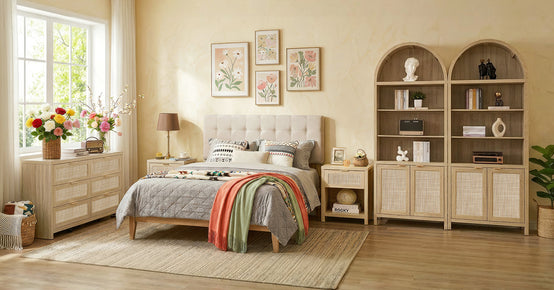
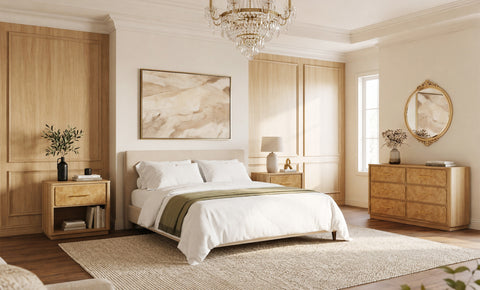
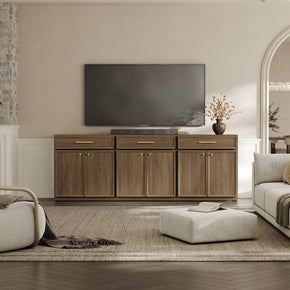
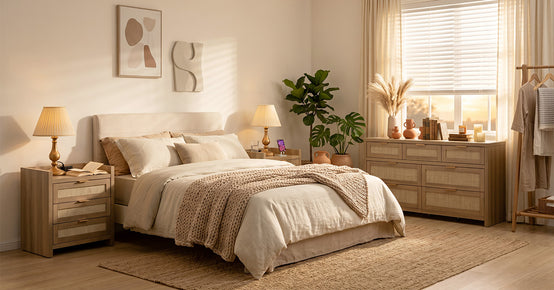
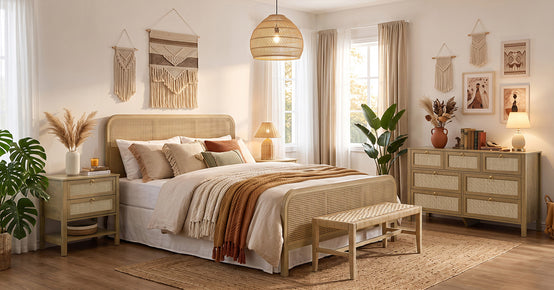
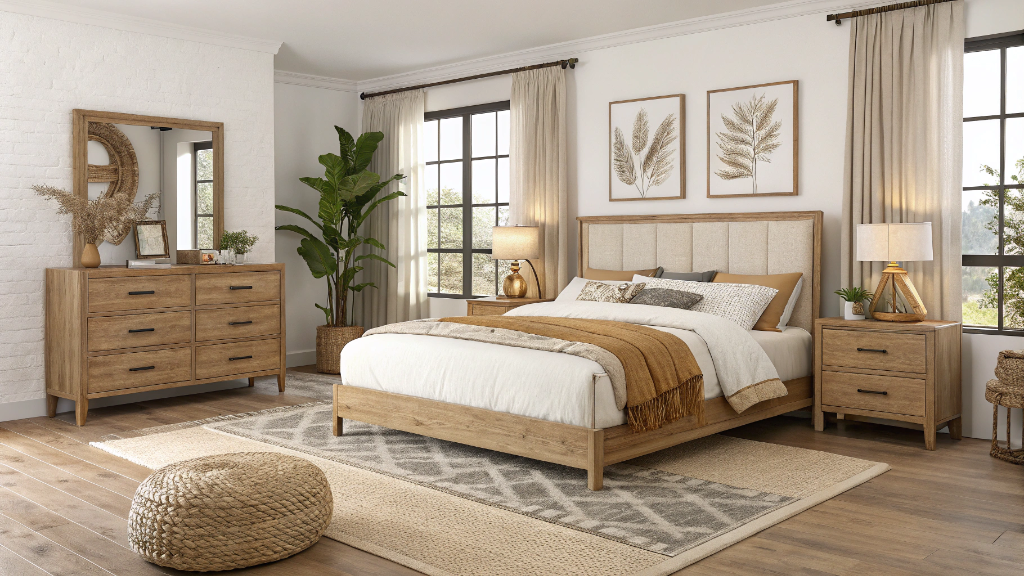
Solid wood with actual craftsmanship beats almost everything else, regardless of whether the pieces “match.” Browse the Sicotas bedroom furniture collection, and you'll spot pieces designed to work together but built solid enough that the matching isn't even the most interesting thing about them. Throw in good bedding, real art on the walls, a rug with some character, and a matching set, and it stops looking like a hotel. Starts looking like your room. The furniture isn't doing all the work. The styling around it is.
Matching vs Coordinated: What's the Actual Difference?
Quick definitions before going further, because most articles use these two words as if they mean the same thing. They don't. Mixing them up is half the reason people end up with the wrong furniture.
Matching Furniture

Same collection. Same finish. Same hardware. Same legs. Lay the dresser and the nightstand flat next to each other on the floor, and they look like Lego pieces from the same set. That's matching. Comfortable. Predictable. Occasionally, it's a little dull on its own, but not bad—just one specific look.
Coordinated Furniture

Different pieces sharing one or two design fingerprints. Maybe both have brass hardware. Maybe both are walnuts. Maybe they're both Mid-Century but from completely different brands. The eye reads them as related but not duplicated. This is what designers actually mean when they say “cohesive” bedroom. Coordination, not matching.
The “Cousins, Not Siblings” Rule

Reddit's interior design crowd came up with this one, and it stuck for good reason: cousins, not siblings. Your dresser and nightstands belong to the same family, but they're not twins. Same style era. Same color palette. Similar visual weight. Each piece does its own thing, though. Honestly, this is where most well-designed real-world bedrooms actually live. Not a full match. Not random thrift-store chaos. Just… related.
Do Your Dresser and Nightstand Have to Match?
Short version: nope. Slightly longer version: also nope, but with some nuance. Here's how that answer actually plays out when you're shopping.
Exact Matching Isn't Required

A walnut dresser and painted white nightstands can look incredible together. Just share one element across all three pieces. Hardware color works. Leg shape works. General silhouette. The wood tone of one piece matches the bed frame, not the other. The Cas 6-Drawer Dresser plays nicely with non-matching nightstands because its clean lines and neutral finish don't clash with anything else in the room. One shared detail is enough. Truly.
But Matching Nightstands Are Almost Always Fine

Weird exception worth noting. Matching nightstands on either side of the bed almost always work. Doesn't matter if the dresser matches. Doesn't matter if the bed frame matches. The symmetry around the bed reads as calm, intentional, restful. Try the opposite (two completely different nightstands) and the bedroom can feel slightly off unless you really commit to that asymmetry. Identical nightstands flanking the bed are basically a cheat code, and designers use them constantly.
Full Matching Sets? They Just Need More Around Them
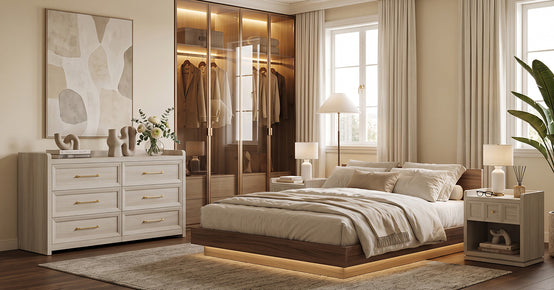
If everything matches (bed, dresser, chest, both nightstands, even the mirror frame), the rest of the room has to pull weight. Bedding that doesn't match the wood. Art that doesn't match anything. A rug doing its own colorful thing. Plants. Lamps that look like they came from somewhere else entirely. Without all of that? A fully matching set reads as a furniture store catalog photo—hotel-with-no-soul vibes. Easy enough to avoid, just takes a little intention.
Bedside Dresser vs Nightstand: What's the Difference?
People throw these terms around like they're interchangeable. They're not, and the difference actually matters when you're shopping or measuring a wall.
A Nightstand
Smaller piece. Designed for bedside basics: a lamp, your phone, a book, water, maybe one shallow drawer for chargers and chapstick. Usually 18 to 24 inches wide. Sits close to mattress height. Built to do one job well, not five.
A Bedside Dresser

Bigger. Wider footprint, more drawers, real storage. Usually 28 to 36 inches across. The Helio Nightstands Set is a great example of this category: wider than a typical bedside table, with three drawers each, and still sits at the right height to feel proportional next to a king or queen bed. People who haven't got enough dresser storage elsewhere lean into bedside dressers pretty hard. Smart move if the room can handle the scale.
Which One Actually Makes Sense for Your Room
Tight bedroom with limited walking space? Nightstand. Bigger bedroom, or you've already maxed out the closet? A bedside dresser earns every inch. Some folks use a small dresser as a nightstand on purpose, especially in apartments where every piece has to do double duty—totally legit move. Just measure your mattress top first, because a dresser that's six inches taller than your mattress becomes a daily annoyance you'll come to hate.
How to Mix and Match Bedroom Furniture Like a Pro

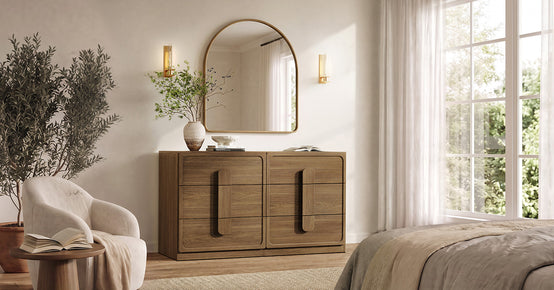
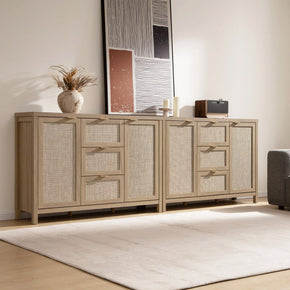
This is where most articles get vague and tell you to “use your eye” or “trust your taste,” which is genuinely useless advice if you haven't built a designer's eye yet. Here are the rules that actually work in real bedrooms. The Terra 6-Drawer Horizontal Dresser is one of those pieces I'd point to as a solid anchor for mixing, because its clean design supports a lot of different nightstand choices around it without clashing.
Heights Need to Be in the Same Ballpark

Nightstands are within a few inches of the top of the mattress. That's it, basically. Way taller, and you're reaching up at 2 AM for water. Way shorter, and your phone slides off, drops a foot, hits the floor. The math people forget: a tall pillow-top mattress changes everything. Measure mattress height first, shop second. Not the other way around.
Visual Weight Has to Roughly Match
A heavy oak platform bed needs nightstands with some substance. Slim spindle-leg nightstands look weird next to a chunky bed (it's like a dachshund standing next to a Great Dane). Sleek modern bed? Sleek modern nightstands. Substantial pairs with substantial. People constantly skip this rule and then can't figure out why the bedroom looks “off,” even when they can't name what's wrong.
One Shared Element, That's the Whole Move
You don't need three or four shared design elements between pieces. Just one. Same hardware finish across the dresser and nightstands. Or the same wood tone. Or the same leg style. Or the same era and vibe. Pick one, repeat it across the room, done. The brain reads coordination off a single connecting thread. Overthinking this is how people end up paralyzed in furniture stores.
Matching Lamps Solve Mismatched Nightstands Instantly

Underrated move right here: two completely different nightstands plus two identical lamps on top reads as intentional, not random. The eye latches onto the matching lamps, and the nightstands underneath become their own thing. Matching wall sconces work the same way. Two identical pieces of art are also above the bed. The shared element doesn't have to be the furniture itself.
Bedroom Furniture Scale and Layout Rules

Most bedrooms that feel “wrong” aren't suffering from bad furniture. They're suffering from bad scale. A gorgeous dresser in a small room is still wrong if it's too big. A perfect nightstand on the wrong wall is still wrong. Browse theSicotas bedroom sets collection sorted by size, not just style — it includes matching bedroom sets built for both small and large rooms, so you can find a fit before falling for a piece that won't actually work in your space. Scale wins the argument every time.
The 2/3 Rule for Furniture
Furniture or decor sitting under or next to something should be roughly two-thirds the size of that something. Bench at the foot of the bed: about two-thirds of the bed's width. Art over the dresser: about two-thirds of the dresser width. Mirror above a nightstand: same logic. Not a strict math rule, just a quick proportion check that keeps things from feeling weirdly small or oversized. The eye reads two-thirds as balanced, without you having to do any calculations.
The Single Biggest Placement Mistake
Buying furniture that's too big for the actual room. People fall for showroom pieces (showrooms are huge, your bedroom is not), bring them home, and suddenly the dresser blocks the closet door, the nightstand sticks into the walkway, the chest of drawers eats half the floor. The mistake isn't bad taste. It's bad measuring, or not measuring at all. Pull out a tape measure before clicking anything twice if you're nervous.
The 3-5-7 Rule in Interior Design

Odd numbers when grouping objects. Three candles. Five books. Seven small frames. The eye reads odd-numbered groupings as more organic, more lived-in. Two of anything tends to look intentionally paired (which works in some places, like on a nightstand). But three objects on top of a dresser? More interesting than two or four every single time. Small rule, big visual difference.
Leave Walking Space Around the Bed
At least 24 inches of clear floor on the sides you actually use.—more on the side where the closet or bathroom door opens. If you're sidestepping the nightstand every morning to get to the closet, the furniture is too big, or it's in the wrong spot. Don't normalize awkward room flow just because the furniture is pretty. Awkward gets old fast.
How to Make a Matching Set Look Less “Showroom”

You bought the set. Maybe inherited it. Maybe you regret it a little. Either way, you don't have to replace anything to kill the showroom vibes. Or, if you do want to swap one piece out for variety, a character piece like the Stria Dresser with Large Drawers can replace the original dresser while the bed and nightstands stay. Otherwise, here's what to change first, in order of return on effort.
The Bedding (Cheapest Fix, Biggest Impact)
New duvet cover. A couple of different throw pillows. Maybe a textured throw at the foot of the bed. The pattern and color on the bedding pull the eye away from the matching wood furniture entirely. Honestly, half the bedroom transformation videos on YouTube are just bedding swaps. The furniture stays the same, and the room looks unrecognizable.
A Rug That Doesn't Match Anything

Vintage Persian. Big bold pattern. Faded blue. Whatever. The rug becomes the personality move. A matching wood set sitting on a colorful or patterned rug reads as “curated,” not “showroom.” Even a plain natural-fiber rug like jute or sisal changes how the room reads. Floor space matters way more than people give it credit for.
Swap the Hardware (Underrated Trick)
Almost criminal how much this changes a room. Unscrew the standard drawer pulls, replace them with literally anything else. Brass. Matte black. Leather pulls. Vintage glass knobs. A $40 hardware swap on a matching set makes it look custom. People will think you commissioned the furniture. They won't. They just won't realize what changed.
Mismatch the Lamps
Said it already, but it's worth repeating because the move works that well. Two different lamps on the matching nightstands. One ceramic, one metal. One tall, one shorter. Doesn't matter which combination. Anything that breaks the symmetry of identical-everything makes the matching set feel less like a chain hotel.
Add Art, Mirrors, and Plants. Lots of Them.
Walls need stuff. Ceilings need lighting. Corners need plants. A bedroom with matching furniture and bare walls reads cold and uniform every time. Layered framed art above the headboard. A leaning floor mirror in a corner. A tall plant somewhere. Suddenly, the room has texture. The matching furniture stops being the only thing happening in the space.
Common Mistakes to Avoid
Buying the Set, Calling It Done
Number one mistake by miles. People buy a matching bedroom set, push everything against the walls, and consider the room finished. It isn't. A matching set without styling around it is a furniture placement, not a bedroom design. Bedding, rug, art, lamps, plants. All of those matter as much as the furniture itself.
Going Full Eclectic With No Through-Line
The opposite mistake is equally bad. Different styles, different eras, different colors, different woods, all crashing into each other. Eclectic done well shares at least one thread across the whole room. Eclectic done badly looks like a thrift store exploded. If you're mixing pieces, pick one connecting element and let it appear somewhere in each piece.
Wrong Nightstand Height
Nightstand way taller than your mattress? Or way shorter? Both are small daily annoyances that add up. The water glass you can't reach without sitting all the way up. The phone that falls because the table edge sits below the bed line. Measure your mattress top before buying. Get something within a few inches of that height. Not optional.
Dresser Too Big for the Room
A 72-inch dresser in a 10-by-10 bedroom is a crime against the room. So is a tiny 3-drawer chest in a primary suite. Match the dresser size to the wall it'll actually sit on, with breathing room. At least 8 inches of clearance on either side. Sometimes more, depending on what else is happening on that wall.
Choosing Pretty Over Functional
Tiny shallow drawers in a nightstand that has to hold half your nighttime stuff. A dresser with one giant drawer instead of several useful ones. Beautiful pieces that don't actually work for daily life. Function first. Pretty second. Pretty without function gets resentful inside a month, every time.
Quick Bedroom Furniture Buying Checklist
Before clicking buy on anything, run through this list. Skipping any one of these is how people end up returning furniture three weeks later, frustrated.
- Measure twice. Room dimensions, doorways, plus every wall where each piece needs to sit.
- Pick the bed first. It's the anchor. Everything else follows from that one choice.
- Decide your approach—matching, coordinated, or fully mixed. Pick before you start buying anything.
- Check the nightstand height versus your mattress top. A few inches above or below is the sweet spot.
- Confirm the dresser fits with the drawer clearance. Eight inches of wall breathing room on either side, minimum.
- Repeat one design element if you're mixing. Hardware finish, wood tone, or shape. Pick one, repeat across pieces.
- Plan the rug, lamps, and bedding too. Especially important if you're buying a matching set.
- Leave walking space around the bed. Twenty-four to thirty-six inches on the sides, you actually use.
Final Thoughts
Matching bedroom furniture sets aren't dead, and mixing pieces isn't automatically the right answer. The whole match-versus-mix debate kind of misses the real question, which is just: does the room feel like yours when you walk in? A well-styled matching set beats a poorly styled mixed set. The opposite is also true. Cousins, not siblings, work as a rule because they leave room for personality without completely throwing out cohesion.
Pick whichever approach actually fits your taste and your specific bedroom. Style the rest of the room with intention. Don't worry too much about what TikTok designers say, and honestly, don't worry about what your aunt with the full matching set thinks either. The bedroom you sleep best in is the one that looks like a person actually lives there. That's the whole game. Now measure something before clicking buy.
FAQs
Do the dresser and nightstand have to match?
Nope. They can match, but they don't have to. A coordinated look works just as well: the same wood tone, the same hardware finish, a similar shape, or the same era. The pieces should feel like they belong in the same room, not like they rolled off the same factory line.
What is the difference between a bedside dresser and a nightstand?
A nightstand is smaller and designed for the basics, like a lamp, a phone, and a book. A bedside dresser is wider and has more drawers, doubling as both a bedside table and clothing storage. Nightstand for small rooms. A bedside dresser is needed when you need actual storage by the bed.
How to mix and match nightstands?
Keep the heights and visual weight similar, then repeat one design element across both pieces. Hardware finish, wood tone, leg shape, or matching lamps on top. Two different nightstands look intentional when they share one connecting thread. Doesn't take more than that.
What is the rule for bedside tables?
The top of the bedside table should sit within a few inches of the top of your mattress. Match width to bed size: bigger beds, wider nightstands. Leave clearance for drawers to open fully, and keep enough walking space around the bed that you're not bumping into anything.
What is the 2/3 rule for furniture?
A piece of furniture or decor should be roughly two-thirds the size of whatever it relates to. A bench at the foot of the bed, about two-thirds the width of the bed. Art over the dresser, about two-thirds of the dresser's width. Keeps proportions feeling balanced without doing actual math.
What is the biggest mistake in the placement of furniture?
Picking pieces too big for the room, or pieces that block daily movement. People fall for showroom furniture without measuring their own space. Even gorgeous pieces look wrong if the drawers can't open fully, or if you're sidestepping the nightstand every morning to get to the closet.
What is the 3-5-7 rule in interior design?
Style decorative objects in odd numbers. Three, five, or seven. Odd-numbered groupings look more natural and visually interesting than even-numbered ones. Works on dresser tops, nightstands, open shelves, and side tables. Tiny rule, big visual payoff.
Can I use a dresser as a nightstand?
Yes, especially in larger bedrooms or when you need extra storage by the bed. Just make sure the dresser top sits close to mattress height, within a few inches above or below. Smaller dressers and short chests work best for this. People do it in apartments all the time.
Sources
- Apartment Therapy – matching bedroom set hot take — designer argument that intentional matching sets still work.
- Emily Henderson – dresser and nightstand pairing rules — practical guidelines for pairing pieces without going matchy-matchy.
- IKEA – bedroom furniture sets — modern 2-piece, 3-piece, and 5-piece bedroom set combinations.
- Ashley Furniture – bedroom sets FAQ — bedroom set FAQs covering style, sizing, and what's included.
- Apartment Therapy – bedroom design rule breakers — designer hacks for breaking matching-bedroom rules intentionally.
- Pinterest – mixing and matching bedroom furniture — visual inspiration for coordinated-not-matching bedroom layouts.


Looking for something else?

Burl Wood Furniture: The Complete Buying Guide
LEARN MORE
What Is a Hope Chest? Meaning, History, and Modern Uses
LEARN MORE
What Is a Foyer? Meaning, Purpose and Design Guide
LEARN MORE
GREENGUARD Gold Certified Furniture: What It Really Means for Your Home
LEARN MORELooking for something else?

How to Clean a Mirror Without Streaks: Simple Step-by-Step Guide
LEARN MORE
21 Above-Bed Decor Ideas for a Stylish Bedroom Wall
LEARN MORE
Furniture Materials Guide: Picking the Right Material Room by Room
LEARN MORE


Further reading

18 Decorative Storage Box Ideas That Hide Clutter Well

How to Store Comforters Without Losing Space or Loft


