




Industrial Furniture Style: A Complete Guide to the Modern Industrial Look
Industrial furniture style comes straight out of old factories and workshops. Metal frames. Wood tops with open grain. Bolts and brackets left on show instead of hidden under trim.
The look reads tough. You do not need a converted loft to pull it off. A rented one-bed handles it fine.
This guide covers the seven traits that define the style. You will also see what each material does and where the look splits from modern and rustic furniture.
After that are room-by-room ideas and a checklist to use while shopping; one section covers the thing people complain about most. Cold rooms. Those plain shapes trace back to mass-produced consumer products. Worth knowing before you shop.
What Is Industrial Furniture Style?

Industrial furniture style is a design approach that puts factory materials and factory logic inside a home. Steel or iron frames. Wood surfaces with visible grain. Construction details left where you can see them.
The pieces work first and decorate second. Storage. A flat surface at a usable height. Shelving that holds real weight. Any decoration usually comes from the material itself rather than from carving.
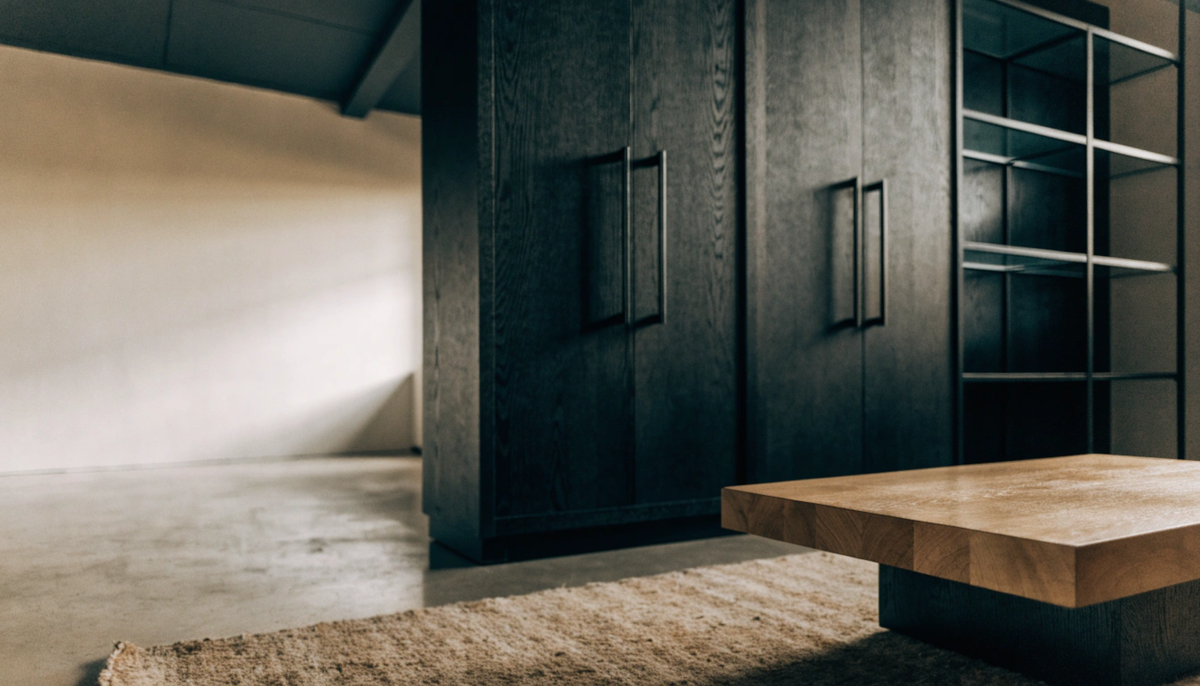
One distinction gets blurred constantly. Industrial furniture style stops at the furniture. Industrial interior design goes further and picks up the building itself. Brick walls. Exposed ducts. Concrete underfoot and big factory windows. Having one without the other is fine. Most people do.
Where the Industrial Look Actually Came From
Plenty of guides date this style to the 1760s and the Industrial Revolution. That period gave us the materials. It did not give us the furniture style.
Two later moments matter more.
Start with the 1920s. At the Bauhaus, Marcel Breuer built a club chair from bent tubular steel after looking at his bicycle handlebars. The Museum of Modern Art records that within a year, designers everywhere were testing tubular steel. Metal furniture for the home really starts there.
The second is loft conversion. Through the 1960s, artists moved into empty cast-iron factory buildings in New York. The city legalized living in those manufacturing buildings in 1971. The district was landmarked two years later.
Raw commercial space turned into a desirable way to live. The furniture followed.
7 Features That Define Industrial Style Furniture

Once you know what to look at, spotting the style takes seconds. Industrial style furniture design keeps repeating the same seven signals, whether the piece is a bookcase or a media console.
- Metal frames and exposed structure. Steel or iron legs with cross bracing and angle brackets. The frame is part of the design, not something to cover up.
- Weathered or reclaimed-look wood. Open grain and knots. Color variation across a panel. Wood is what keeps metal from feeling clinical.
- Function-first shapes. Straight lines and squared corners. Open sides. Very little carving anywhere.
- Matte low-sheen finishes. Matte black powder coat or aged iron—lightly sealed timber. High gloss breaks the effect fast.
- Visible hardware. Bolts and rivets. Strap handles and caster wheels. Fasteners get shown rather than plugged and sanded flat.
- A neutral earthy palette. Charcoal and black. Warm gray through brown and tan. Rust or aged brass as the accent.
- Real weight and daily practicality. Pieces look like they could take a knock. Newer designs use open frames to stay visually light.
Not every piece needs all seven. A media console with a dark frame and an oak top already reads industrial without a single visible bolt. Three or four traits usually do the job.
The trap is treating distressing as proof. Plenty of budget pieces carry printed grain and factory-added scuff marks. Look at the frame. Check the joints. The scratches tell you nothing.
The Materials Behind Industrial Furniture Design
Each material does a specific job. Get the balance wrong and the room tips either cold or shapeless.
Metal: Steel, Iron, and Powder Coating
Metal supplies the skeleton. Table bases and shelving frames. Cabinet legs and handles. Most affordable industrial furniture uses powder-coated steel rather than raw iron. The coating resists chipping and will not rust in a normal room.
Check the coating at corners and welds. Thin spots there are the first place wear shows.
Wood: Solid, Engineered, and Reclaimed

Wood brings warmth and texture. Oak and walnut show grain clearly. Pine and ash do the same for less.
Genuinely reclaimed timber runs expensive and inconsistent. Many pieces use engineered wood with a reclaimed-look finish instead. A tall black bookcase offered in reclaimed oak finishes gets the effect at a workable price.
Neither option is a downgrade by default. Engineered panels stay flatter across seasons. Solid timber takes repair better.
Leather, Fabric, and Glass
Without these three, a room ends up feeling like a workshop. Leather seating and wool rugs soften it while the colors stay put. Linen curtains and cotton cushions do the same. Glass shelving takes weight off a frame that would otherwise sit heavy.
Industrial vs Modern, Rustic, and Farmhouse Furniture
These styles get mixed up because they all favor simple shapes. The differences sit in finish and material, not in silhouette.
|
Style |
Main materials |
Finish |
Color feel |
Quickest clue |
|
Industrial |
Steel, iron, reclaimed or engineered wood |
Matte, raw-looking |
Charcoal, black, brown |
Visible bolts and frames |
|
Modern |
Polished metal, glass, smooth wood |
Sleek, low texture |
Black, white, gray |
Hidden joins, flush fronts |
|
Rustic |
Solid timber, stone, natural fiber |
Rough, hand-worked |
Warm brown, cream |
Chunky wood, little metal |
|
Farmhouse |
Painted wood, ceramic, shiplap |
Soft, often painted |
White, sage, oat |
Painted panels, apron fronts |
|
Mid-century |
Walnut, teak, molded plywood |
Satin, warm |
Walnut, mustard, olive |
Tapered legs and curves |
Vintage is not on that list on purpose. Vintage describes age or a period look, not one material recipe. An industrial piece can be vintage. Most sold today are not.
How to Style Industrial Furniture Without a Cold Room

People finish an industrial room and then find it unwelcoming. That is the usual complaint. The fix is mechanical.
- Cap the hard surfaces at roughly half the room. Metal and glass plus concrete or stone should not outnumber soft materials by much.
- Add three soft layers. A rug underfoot. Textiles at the window. Cushions or a throw on seating. Two layers is usually not enough.
- Repeat, do not match. Echo one black metal finish and one wood tone two or three times each. A full matching set looks like a showroom.
- Warm the light. Exposed bulbs look right but read harsh at high color temperatures.
That last point is where most rooms fail. Kelvin is the unit for color temperature. The Department of Energy explains how that rating shifts a room's mood. In living areas and bedrooms, keep bulbs between 2700K and 3000K.
Anything above 4000K makes gray walls and black metal look bleak.
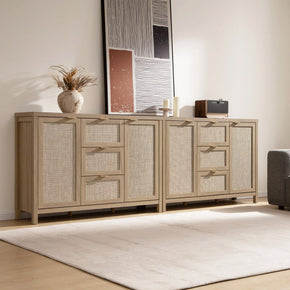
Plants help more than people expect. Leaving surfaces uncrowded helps too. If you are building the look from scratch, start with living room storage that mixes wood tops with dark frames. That gives you material contrast without committing the whole room.
Industrial Furniture Room by Room
The style adapts—only the dose shifts from room to room.
Living Room

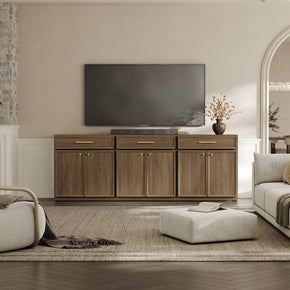
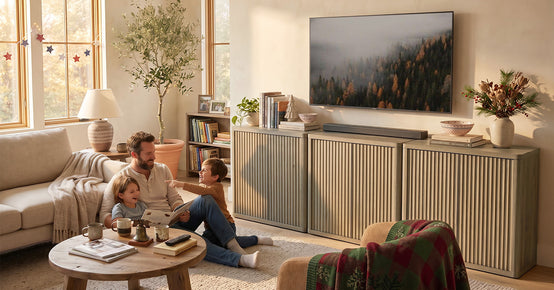
Choose one anchor piece first. Everything else follows it. A media unit is the usual pick since it sits at eye level and holds the wall. A tall black TV stand for a 65-inch screen does the job here. Cable routing matters too. Trailing cords ruin the effect fast.
Add a wood-topped coffee table beside it and some open shelving. The sofa should stay plain. Industrial living room furniture goes wrong when every item competes.
Bedroom

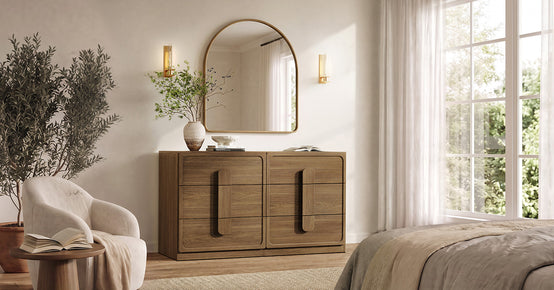
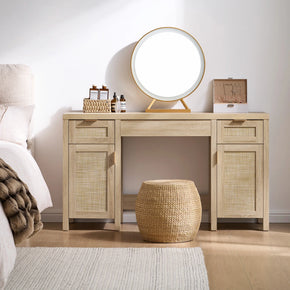
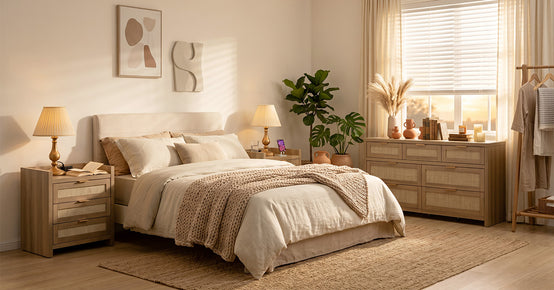
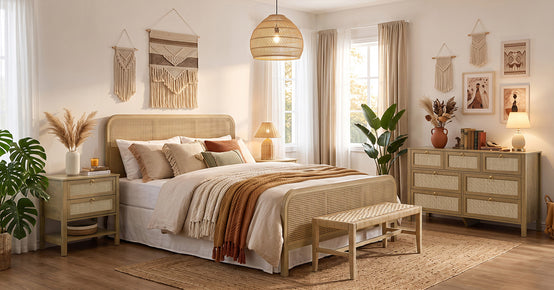
Keep bedrooms calmer than living areas. Dark metal handles and plain drawer fronts do most of the work. Warm bedding does the rest. A black six-drawer dresser with metal pulls gives you industrial-style bedroom furniture without a metal bed frame dominating the room.
Skip open shelving above the bed. Closed storage sleeps better.
Home Office

Function-first design suits a workspace naturally. A wood desktop and a steel-framed chair cover the basics. Add task lighting and vertical shelving.
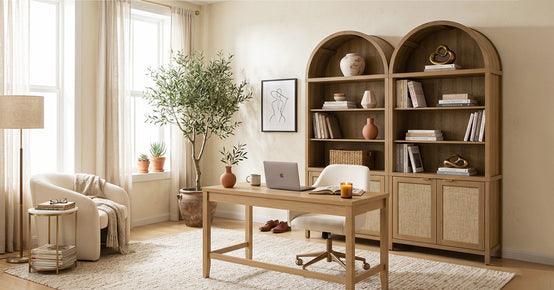
Look for home office storage with squared-off lines rather than curved or ornamental pieces. Keep one shelf deliberately empty for working space.
Entryway and Small Apartments

Small spaces need vertical, narrow, and multi-purpose. Slim frames beat bulky cabinets every time.
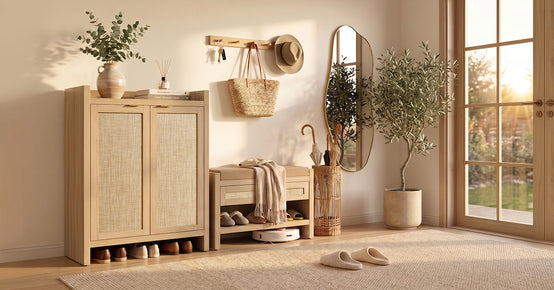
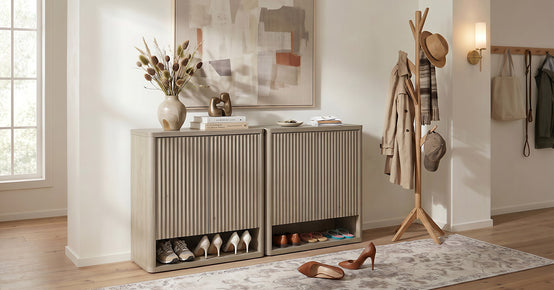
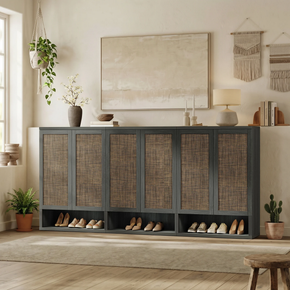
A five-tier shoe storage cabinet for a narrow entry handles the entryway job in a footprint most hallways can spare. Add a dark-framed mirror above it, and the corner is done.
Loft-style furniture does not require a loft. That assumption stops a lot of renters from trying the style at all.
What to Check Before You Buy Industrial Furniture

Looks are easy to fake. Construction is not.
- Frame and joints. Push the corners. Any flex now gets worse in a year.
- Shelf span. Long unsupported shelves sag under books. Check the stated weight capacity per shelf.
- Drawer glides. Metal runners with a soft-close stop last far longer than plain wood channels.
- Visual weight against footprint. A closed dark cabinet dominates a room more than an open frame of the same size.
Safety deserves its own line. Tall storage tips over. The Consumer Product Safety Commission counted 234 fatalities from clothing storage unit tip-overs between January 2000 and April 2022.
A federal stability standard has applied to dressers made since September 2023. Use the anti-tip hardware in the box.
Air quality is the other overlooked check. Most engineered wood furniture sold in the United States must be labeled as compliant under the EPA formaldehyde standards for composite wood products. Look for that label on the box or the listing.
Anything with a wood surface cares about humidity. In a normal heated home, indoor wood settles near 6 to 8 percent moisture content. The USDA Forest Products Laboratory publishes the tables behind that number. Keep the room between 30 and 50 percent relative humidity, and panels stay flat.
Industrial Styling Mistakes to Avoid
An all-black and gray room ends up flat. A full matching collection kills the salvaged feel the style depends on.
Treating a distressed finish as a quality signal leads to wobbly furniture. Fake gears and factory signage turn a room into a theme restaurant.
Ignoring seasonal movement in wood causes gaps that show up months later. Purdue University Extension explains the mechanics.
One more. People forget comfort. Industrial home furniture still has to be sat on, opened, and lived around every day.
Final Takeaway
Industrial furniture style rewards restraint. Start with one wood-and-metal anchor piece, repeat its finishes a couple of times across the room, then stop.
Balance every hard surface with something soft. Keep the light warm. Check the frame before you check the finish. You do not need exposed brick or a warehouse ceiling. A matching collection is not required either.
FAQs
What are the four types of industrial design?
Industrial design is a job, not a furniture style. Categories shift depending on who is listing them. One common grouping:
- Product design. Appliances, hand tools and consumer goods.
- Furniture design. Seating, tables and storage units.
- Transportation design covers vehicles and their interiors.
- Equipment design runs to commercial and medical hardware.
No single official list of exactly four exists. Treat any version you find as one classification among several.
What are the types of furniture styles?
Industrial sits alongside modern and contemporary. Traditional and French Provincial cover the older end. Mid-century modern and Scandinavian share clean lines. Rustic and farmhouse lean warm and worn. Coastal and Art Deco sit further out, with bohemian alongside them. Most homes end up blending two or three anyway.
What are 5 examples of furniture?
Five basic examples cover almost every room:
- Sofa
- Chair
- Table
- Bed
- Cabinet or dresser
The industrial version of each uses steel or iron with visible wood grain. Leather and exposed hardware finish it.
What does industrial mean in furniture?
It means the piece is made to look like working furniture off a factory floor. You spot it by the metal frame and the wood surface. Plain shapes and matte finishes finish the job, plus fasteners left on show.
What is industrial design style?
Industrial design style favors useful shapes and raw-looking materials with visible structure. Inside a home, that usually means metal and timber set against concrete or brick. A neutral palette holds it together, helped by a layout with room to breathe.
What are the 7 basic elements of design?
Line and shape. Form and space. Color, value and texture. Industrial interiors lean hardest on line and texture. That is how the palette stays narrow and still holds interest.
What is an example of industrial design?
A chair made in volume counts. A kettle, a power tool, and a factory-style pendant lamp do too. Staying with furniture, the clearest example is a steel-frame dining table built for mass production.
Sources
- Encyclopedia Britannica – Industrial Design: Definition, History, Schools, Types, Examples, and Facts
- The Museum of Modern Art – Marcel Breuer. Club Chair (model B3 / Wassily). 1927 to 1928
- New York Preservation Archive Project – SoHo-Cast Iron Historic District
- U.S. Consumer Product Safety Commission – CPSC Adopts Final Consumer Product Safety Standard to Prevent Tip-overs of Dressers and Other Clothing Storage Units
- USDA Forest Products Laboratory – Wood Handbook, Chapter 4: Moisture Relations and Physical Properties of Wood
- Purdue University Extension – The Shrinking and Swelling of Wood and Its Effect on Furniture
- U.S. Environmental Protection Agency – Formaldehyde Emission Standards for Composite Wood Products
- U.S. Department of Energy – Purchasing Energy-Efficient Light Bulbs


Looking for something else?

Burl Wood Furniture: The Complete Buying Guide
LEARN MORE
What Is a Hope Chest? Meaning, History, and Modern Uses
LEARN MORE
What Is a Foyer? Meaning, Purpose and Design Guide
LEARN MORE
GREENGUARD Gold Certified Furniture: What It Really Means for Your Home
LEARN MORELooking for something else?

How to Clean a Mirror Without Streaks: Simple Step-by-Step Guide
LEARN MORE
21 Above-Bed Decor Ideas for a Stylish Bedroom Wall
LEARN MORE
Furniture Materials Guide: Picking the Right Material Room by Room
LEARN MORE


Further reading

18 Decorative Storage Box Ideas That Hide Clutter Well

How to Store Comforters Without Losing Space or Loft


