




How to Furnish a Small Bathroom (2026 Guide)
One bad call is all it takes in a small bathroom. A bulky vanity, a wasted wall, and suddenly it feels like a closet. The trick was never shrinking everything. Knowing how to furnish a small bathroom means placing things well and sending the storage upward instead.
Step by step, the working plan for furnishing a small bathroom covers the layout, the right small bathroom vanity, vertical storage, layered lighting, and warmer materials. The moves lean on the samescale and proportion rules designers rely on, scaled for tight rooms. A weekend covers most of it.
Measure the Room and the Doorways First
The tape measure goes first, always. Wall lengths, ceiling height, and the actual locations of the toilet, sink, window, and radiator are all written down. Plumbing gets noted too, because shifting it later costs a fortune next to designing around it.
Do not forget the door swing. Inward-opening doors steal the floor nobody can spare. A pocket or sliding door usually hands back the very space the room was short on.
Tape out each footprint on the floor before buying. Stand where the sink goes. Reach for a towel. Swing the door. Whatever clashes show up right then, before you have spent a thing.
Plan a Space-Saving Small Bathroom Layout

A working small bathroom layout starts on paper, not at the fixture aisle. The fixtures call the shots here. Toilet, sink, and shower stay near the existing plumbing that feeds them, and the leftover pockets become storage: above the toilet, next to the vanity, and above the door.
Awkward angles are common with corner sinks and corner shelves. A scroll through small bathroom storage furniture with the tape numbers handy keeps every piece sized right for the footprint.
Keep one clear line from the door to the sink, no exceptions. A small bathroom can carry a surprising amount and still feel open, right up until something blocks the way through.
Choose the Right Vanity for a Small Bathroom

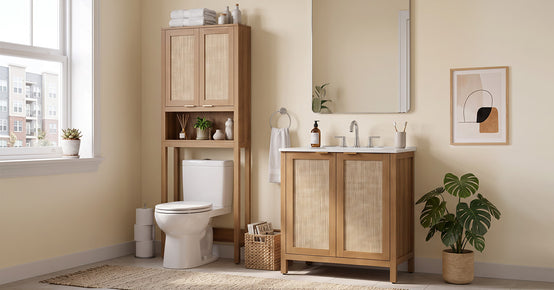
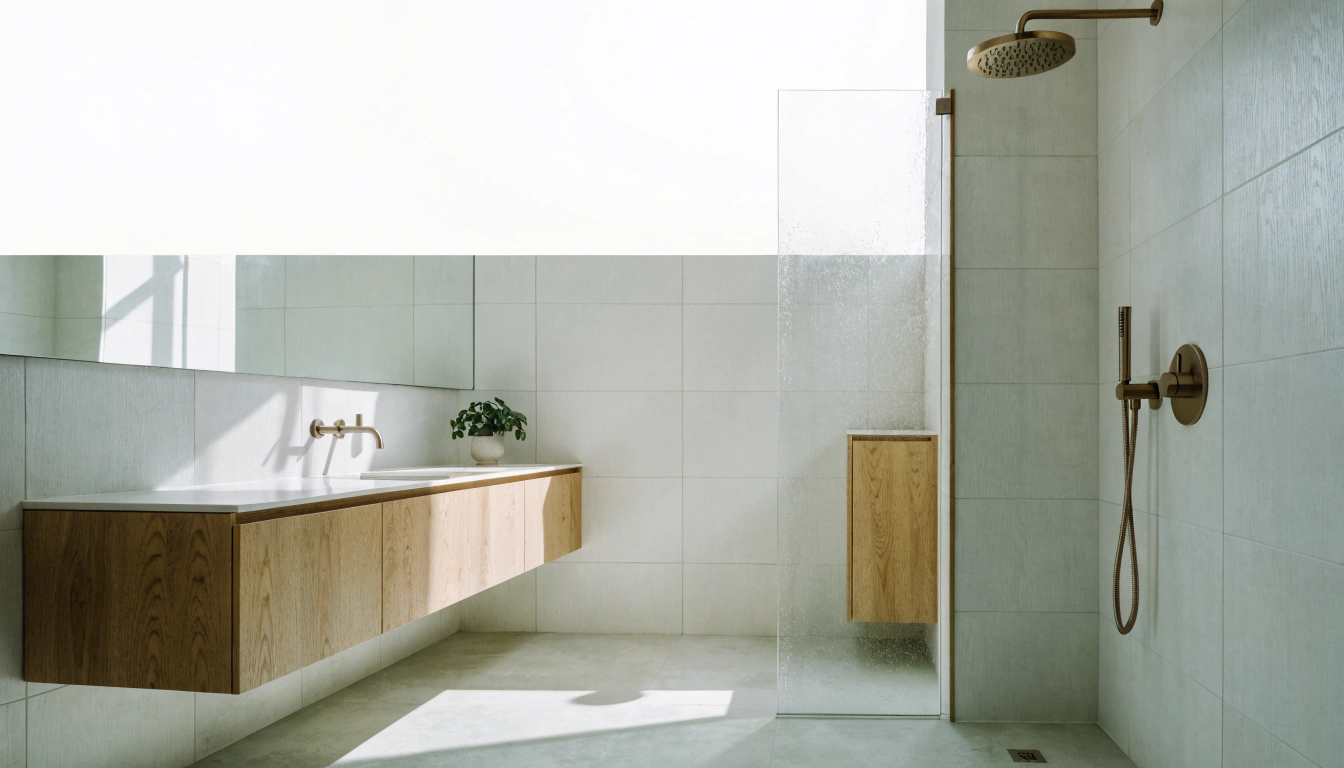
The small bathroom vanity carries the tone of the whole room. Floor peeks out under a wall-hung floating unit, and that sliver of floor draws the eye into a bigger room. When storage is not the worry, a pedestal sink trims back even further.
Three vanity types cover most tight layouts. A floating vanity mounts to the wall and shows the floor, which is the strongest visual trick for making the space feel larger, and it still holds drawers underneath. A pedestal sink takes the least footprint and suits half-baths or powder rooms where storage lives elsewhere. A corner vanity tucks into an unused corner and frees the main walkway, which is useful when the door swing eats into the room. Pick based on what the space actually needs first, storage or floor, then match the style.
Narrow, round-fronted vanities keep the sharp corners clear of the walkway. The wall picks the width, not the wish list, and one side keeps a little breathing room.
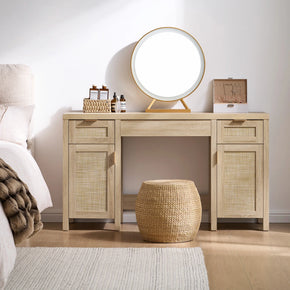
Some bathrooms double as the getting-ready spot, and those earn a compact grooming station. Something like the Savanna vanity desk with a door parks brushes, dryers, and products behind one tidy door just outside the splash zone.
Go Vertical With Small Bathroom Storage

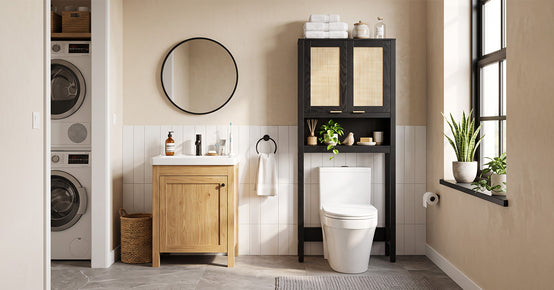
In a tight room, the floor gives out early while the walls sit mostly empty. Small bathroom storage that climbs upward pays off fast because the height is already paid for, and space-saving bathroom furniture keeps the standing floor clear.
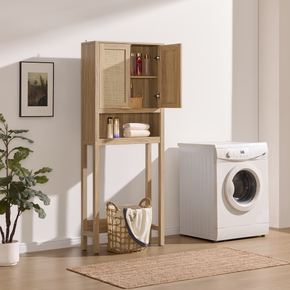
A slim tower fits the gap beside the toilet or vanity, and aslim bathroom storage cabinet fills it easily, with towels, paper, and cleaning supplies vanishing behind its doors, off the counter, and out of sight.
Recessed niches and over-the-toilet units claim the dead air above the fixtures. One tall cabinet almost always looks calmer than three little shelves dotted around the walls.
Squeeze Storage From Every Corner

A small bathroom keeps its storage in plain sight. Hooks or a slim rack ride on the back of the door. A cabinet or a couple of floating shelves sit over the toilet. The gap beside the vanity takes a pull-out.
Slip drawer dividers and stacking bins into the vanity, and one cabinet holds twice as much. A mirrored cabinet stashes a whole shelf of small stuff behind glass that you wanted on the wall anyway.
Leave open shelves bare, and they drift into clutter, so baskets rein them in. Keep like with like, rolled towels here, spare bottles there, and the eye takes it as order, not mess.
Use Mirrors to Double the Space

A mirror is about the easiest way to fake more room, no contest. One big mirror over the sink scatters light and pushes the walls back. Go wide here, close to the vanity's full width.
Two jobs, one mirrored cabinet: it reflects the room and hides clutter behind itself. Tilt any mirror to catch the window or a light, and the whole space lifts, no new fixture involved.
Layer the Lighting and Ventilation

One weak ceiling bulb drains the life out of a small bathroom. Layers bring it back: crisp, even light at the mirror for your face, and a gentler layer overhead for the room. Warm LED bulbs go easy on skin and tile alike.
Ventilation matters as much as light in a damp, tight room. Every finish in there depends on the exhaust fan, since the EPA notes that controlling moisture is the key to preventing indoor mold. Run it during every shower and a while after.
No counter to spare? The wall takes sconces beside the mirror, the surface comes back completely, and the face gets lit more evenly than one bulb overhead ever manages.
Pick a Color Palette That Opens the Room
A small bathroom reads as airy when the color stays light and consistent. That is not a call for white on every surface, though. One tight palette across walls, tile, and vanity keeps the room from looking chopped up. Two directions work well.
Light and Bright

Soft white, pale greige, sky blue, or the faintest sage throw the most light and blur the room's corners. Grout that matches the tile color helps the walls read as one clean surface, not a grid.
Warm and Spa-Like
Quiet comes from warm sand, greige, muted terracotta, or soft taupe. Wood and stone tones tip the look toward a little spa instead of a cramped box. Holding it steady, wall to wall, is the whole trick.
Add Natural Materials and Texture

Nothing but tile leaves a bathroom cold and flat. One natural material warms it quickly. Wood, rattan, stone, and woven baskets hang in the room; a hard, glossy space is missing.
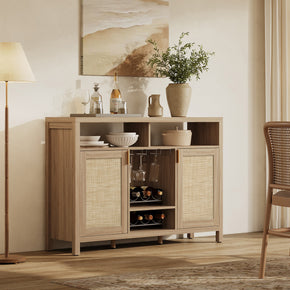
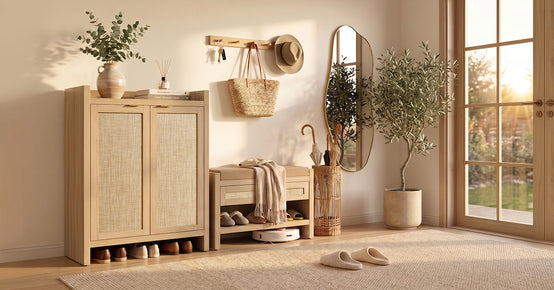
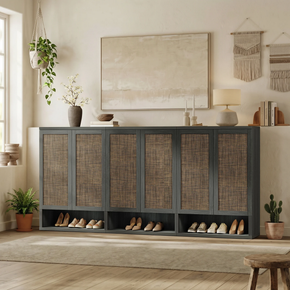
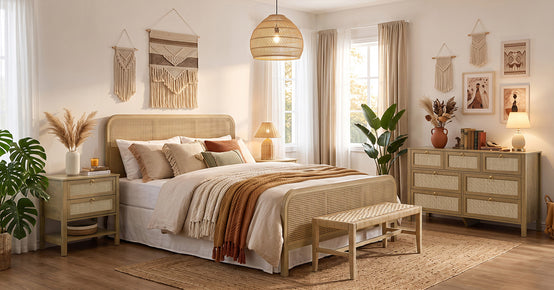
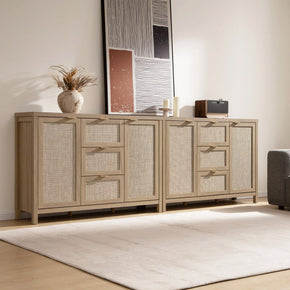
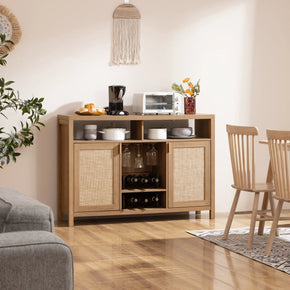
One rattan-front piece changes the room's temperature. TheAccent rattan storage cabinet delivers warmth and hidden storage in a single move, its woven doors taking the edge off all those hard surfaces. Wood does fine near a bathroom as long as it stays sealed or well-ventilated.
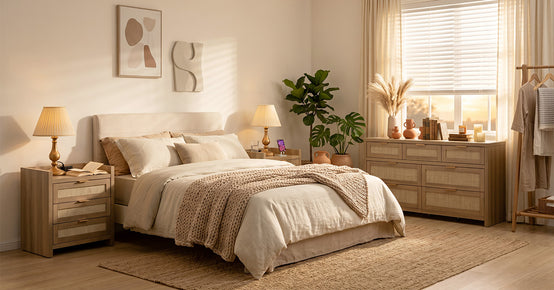
Softer materials also help make a small bathroom look bigger, because the eye reads texture as depth and stops bouncing off flat, shiny tile. A plant, a wood stool, or a stone tray rounds it off. One or two natural notes walk a small bathroom from clinical to calm, and nothing gets crowded. That same warm-wood thread runs throughmodern bedroom furniture and lets bathroom and bedroom share one material story when they sit side by side.
Scale the Fixtures to the Room

The core move in any tight small bathroom design is to size down the big pieces. Oversized fixtures swallow the room whole. A compact toilet, a corner or wall-hung sink, and a slim shower where a tub once sat win back the floor. Clear glass beats a shower curtain because the eye sails right through it.
Under wall-mounted faucets and toilets, the floor comes free, is easier to clean, and appears larger to the eye. Pair those with space-saving bathroom furniture like a floating vanity or a slim tower, and a visible floor does the rest. It is what convinces the brain that the room runs bigger than the tape says.
Decorate With Fewer, Better Pieces

Small bathrooms clutter more quickly than any room in the house. A single focal point does the talking, a bold mirror, a piece of art, a standout tile, and the rest goes quiet. One larger piece beats five little ones, every time.
A few daily items and nothing more, that is the counter's job. A small vanity with a drawer, like the Savanna makeup vanity with storage, tucks brushes and bottles away, and the surface stays clear—a candle, one plant, a stack of folded towels, warmth without the busy.
Common Small Bathroom Mistakes
The same short list of habits shrinks most small bathrooms. Watch for these:
- Ordering fixtures before you measure the room, the door swing, and clearance for daily use.
- Picking a bulky vanity that blocks the walkway and cuts into small bathroom storage.
- Letting vertical wall space go to waste when it could support real bathroom organization.
- Hanging a tiny mirror where a wall-filling one belongs.
- Running the room on one dim overhead light with no task lighting at the vanity.
- Skipping the exhaust fan and letting damp air breed mold that ruins bathroom organization.
- Loading every surface with clutter until small bathroom storage stops working.
Final Takeaway
Furnishing a small bathroom follows a certain order. The room and the doorways get measured, the plumbing gets worked on, and the vanity shows floor. Storage heads up the walls, the mirror goes big, and light and ventilation stack in layers.
Light and consistencywin the palette; natural materials bring warmth; and every fixture scales down—one focal point, fewer but better pieces, a clear path to the sink. Small stops mean cramped.
FAQs
How do I furnish a small bathroom?
The short answer on how to furnish a small bathroom is to lead with the essentials, then stack upward:
- A compact or floating vanity that shows the floor goes in first.
- Next come tall, narrow storage and over-the-toilet units.
- A big mirror, layered light, and a fan finish the job.
How can I make my small bathroom look bigger?
Two moves do most of the work in any small bathroom design: show the floor, reflect light. A wall-mounted vanity, a large mirror, a light, consistent palette, and a clear glass shower screen all stretch the space; a clear counter and good lighting round it off.
What kind of vanity is best for a small bathroom?
The wall-mounted floating vanity wins most of the time, because the floor showing beneath makes the room feel larger. It is one of the most reliable small bathroom ideas for tight square footage. A pedestal sink suits rooms that need space more than storage, and a narrow or corner vanity works in the tightest layouts.
Where do you store things in a small bathroom?
Three places already hold the space:
- High walls hold tall cabinets, over-the-toilet units, and shelves.
- Out of sight goes to mirrored cabinets and drawer dividers.
- The door carries hooks and slim over-the-door racks.
What colors make a small bathroom look bigger?
Soft whites, pale greige, gentle blues, and light sage give back the most light, and the walls open up under them. Shade matters; consistency matters just as much, so walls, tile, and grout stay close in tone and the room reads as one surface.
Should a small bathroom have a tub or a shower?
In terms of space and openness, the walk-in shower generally wins, and a clear glass screen helps most of all. A tub earns its footprint only if you genuinely use it or intend to resell it. A compact shower returns the floor space a tub would soak up.
How do I add storage to a small bathroom without remodeling?
Skipping the reno still lands fast fixes: a freestanding tall cabinet, an over-the-toilet unit, over-the-door hooks, a mirrored cabinet, and baskets on the open shelves. None of them needs plumbing or building work, and each adds storage in a day.
Sources
- MasterClass – How to Use Scale and Proportion for Better Interior Design
- U.S. Environmental Protection Agency – A Brief Guide to Mold, Moisture and Your Home
- Centers for Disease Control and Prevention – Nonfatal Bathroom Injuries Among Persons Aged 15 Years and Older
- National Institute on Aging –Fall-Proofing Your Home
- AFLORAL –Interior Design Color Theory
- VDCI – Design Principles: Harmony, Scale, Proportion, Balance, Rhythm


Looking for something else?

Burl Wood Furniture: The Complete Buying Guide
LEARN MORE
What Is a Hope Chest? Meaning, History, and Modern Uses
LEARN MORE
What Is a Foyer? Meaning, Purpose and Design Guide
LEARN MORE
GREENGUARD Gold Certified Furniture: What It Really Means for Your Home
LEARN MORELooking for something else?

How to Clean a Mirror Without Streaks: Simple Step-by-Step Guide
LEARN MORE
21 Above-Bed Decor Ideas for a Stylish Bedroom Wall
LEARN MORE
Furniture Materials Guide: Picking the Right Material Room by Room
LEARN MORE


Further reading

18 Decorative Storage Box Ideas That Hide Clutter Well

How to Store Comforters Without Losing Space or Loft


