





























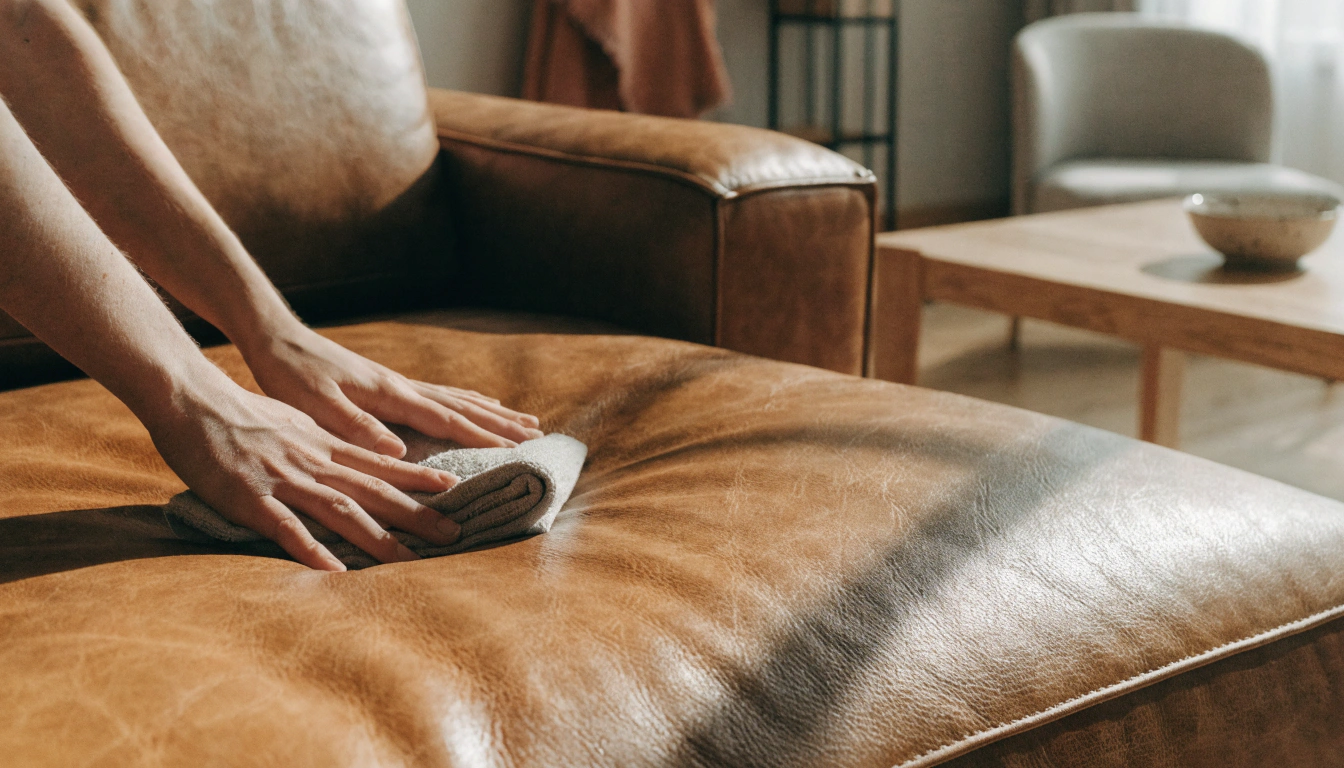

How to Clean Leather Furniture: Easy Care Tips for Sofas, Chairs, and Seats
Most people learn how to clean leather furniture only after something goes wrong, usually a stain that will not budge or a cushion that cracked beside a heater. This guide walks you through the best way to clean leather furniture at home, step by step, before any of that has a chance to happen. The leather was never the problem. Hide is tough. Harsh soap wears it down, along with dripping cloths and dry heat, and an owner controls all three. That is the reason we wrote this guide. It covers the weekly wipe, the deep clean, fixes for ink and grease stains, conditioning, and the spots in a room where a leather couch should never sit. This Old House offerssimilar leather care advice if you want to compare notes. Twenty years from now, the sofa can still look right, and none of the work takes long.
Know Your Leather Type Before You Clean a Leather Sofa or Couch

Most living room pieces are finished leather, the kind with a protective top coat. A damp cloth and mild soap will not bother it. Aniline leather plays by different rules. The dye runs right through the hide here, and no protective coating covers it, so liquids soak in within seconds. Test every cleaner before it goes anywhere near this type. Untreated and vintage hides need even more caution. Faux leather needs different handling, and a full section on it waits near the end of this article. First, though, find the care tag and read it before anything touches the upholstery.
The 30-Second Spot Test

Find a hidden patch first; the back corner near the floor works well. Put a little cleaner or plain water on a soft cloth, then press it against the spot. Wait five minutes. Leather that darkens, loses color onto the cloth, or feels different in texture is telling you to stop. No change means the product is safe for that piece.
Routine Leather Couch and Furniture Care

Set aside five minutes each week. Wipe every leather surface with a dry microfiber cloth so dust never settles into the grain. The seat cushions come out after that, because crumbs and grit collect in the crevices and grind away like sandpaper whenever someone sits. A vacuum with a soft brush attachment clears the lot. Dull patches get a gentle buff. A small scuff usually fades under your fingertip once the hide's natural oils spread back over the mark. Throws earn their keep here, too. A flip-open storage bench beside the seating holds the stack, and pets or kids end up on washable fabric instead of the hide.
How Often to Clean and Condition Leather Furniture
How often you should clean and condition leather furniture depends on use, but the baseline is simple. Dust weekly. Seams and cushions get the vacuum once a month. Wipe with a barely damp cloth whenever the surface goes dull. Conditioning lands every six to twelve months in most professional guides,including Pro Housekeepers. A busy family room sits at the short end of that window. The leather chair nobody uses can wait the full year.
How to Deep Clean a Leather Sofa at Home

Plan on a deeper clean about every six months. Soft cloths, distilled water, a dry towel, plus a pH-balanced leather cleaner or a drop of mild soap are the supplies. Our kit lives in nearbysideboard cabinets with doors, never more than an arm's reach from the sofa.
Nothing wet touches the leather until the grit is gone, so vacuum and dust first. Mix the cleaner next. One cup of warm water plus a drop or two of mild soap is all the mixing takes, and a leather cleaner made for furniture works just as well. If you would rather know how to clean a leather couch naturally, this mild soap-and-water mix is about the best home remedy for cleaning leather there is, gentle enough for regular use and safe on most finished hides. Get the cloth damp, then wring it out hard. Truly hard. Wet leather warps, darkens, and can grow mildew. Work on one small section at a time in light circles. Rinse the cloth every few passes. A clean section then gets a wipe with a second cloth dampened in plain water, followed by a quick towel-dry before you move on.
Two moves land squarely on the list of what not to use on leather furniture. Pouring liquid straight onto the upholstery is the first step. Steam cleaning is the other, because nothing causes cracked leather faster than heat mixed with moisture.
How to Remove Stains from a Leather Sofa
Speed beats any product. Wipe a spill inside the first minute, and it usually leaves nothing behind. Let it sit overnight, and it can bond with the hide for good. Whatever remedy you try, test a hidden spot first, a rule Family Handyman repeats across its natural stain treatments.
Grease and Oil Stains

Blot the excess with a dry cloth. No rubbing. A thick layer of baking soda or cornstarch goes over the mark next. Leave it alone for a few hours, or better, sleep on it. By morning, the powder has pulled the oil up and out of the leather. Brush it off gently and repeat once if a faint shadow stays behind.
Ink Marks
Ink spreads. Work slowly. Bob Vila trusts a simple fix here. Dip a cotton swab in rubbing alcohol, touch it to the stain and nowhere else, then blot with a dry cloth before the next pass. On an expensive piece, stubborn ink belongs with a professional, because scrubbing only blurs the mark wider.
Water Rings and Drink Spills

Blot fast. Let the area dry on its own at room temperature, since a hair dryer bakes the mark in. A ring that stays behind will sometimes fade once you evenly condition the whole panel. Prevention still beats every fix. Park a slim console table behind the sofa and set out a pair of sunglasses as a landing spot away from the arms.
How to Condition Leather Furniture

Conditioning feeds the leather. Cleaning cannot do that job. Hide dries out the way skin does. A leather conditioner restores lost moisture before cracks ever start. A small amount goes on a soft cloth first, never on the couch itself. Rub it in with light circles and give it whatever absorption time the label asks for. Buff when the time is up. HGTV shares a gentle, homemade version made with natural baby soap. Twice a year is plenty. Any more and a gummy film builds up, and that film grabs fresh dirt.
Protect Leather from Sunlight and Heat

Sunlight fades leather. Heat dries it until it cracks. Research from the Canadian Conservation Institute backs this up, showing hide breaks down faster even in the slightly warmer air beside a radiator. Give every leather piece breathing room from windows, fireplaces, heat vents, and air conditioners. Direct sunlight does the most harm.
Set Up the Room So Leather Lasts

Give the sofa the wall that never catches direct afternoon light. The bright wall can take the screen instead, cords tucked inside a 65-inch media console with closed storage. Sheer curtains knock down whatever light is left. And leave a few feet between any leather piece and the nearest vent.
Leather Care Beyond the Living Room
Sofas get all the attention. The smaller leather pieces around the house wear out faster, mostly because nobody maintains them.
Leather Desk Chairs

Armrests and headrests collect body oils more quickly than any other spot on a sofa. A weekly wipe with a dry cloth handles it, plus conditioner twice a year. Set the chair up with a simple desk from a home office desk range, and position it away from the window side of the room.
Leather Benches by the Door

Entryway seating takes the hardest hits. Wet soles. Grit. Dropped bags land on it, too. The bench gets the same weekly wipe as the sofa, and a two-door entryway shoe cabinet beside it moves the shoe pile off the seat and behind closed doors.
What Not to Use on Leather Furniture
More leather gets ruined by cleaning products than by accidents. The avoid list runs long. Bleach leads it, then ammonia and acetone. Add disinfecting wipes, harsh detergents, abrasive pads, and soaking-wet cloths; never let any of them touch the hide. Greasy oils belong on that list, too. Coconut oil looks harmless, but it sinks deep into the hide, darkens it in blotches, and turns rancid over time, so keep it off your furniture and reach for a proper leather conditioner instead. Olive oil and mink oil cause the same trouble. Vinegar is a gentler case: heavily diluted white vinegar is fine on finished leather after a hidden spot test, but never use it neat, and always condition afterward since it dries the hide. Dish soap is the other exception; use it only heavily diluted, at a drop or two per cup of water. Straight from the bottle, it strips color. A blow dryer never belongs near leather either.
Cleaning Real Leather vs Faux Leather

Cleaning 100% genuine leather and faux leather calls for two different approaches, and the split starts with the material itself. Real hide is porous. Moisture sinks in. The material stretches with use and slowly earns the patina people prize on genuine leather furniture. Faux leather works differently. Often sold as pleather, it is actually a plastic skin, so water beads on the surface. Mild soapy water cleans it without fuss, and conditioner barely matters. Faux surfaces also tend to crack and peel within a few years, especially in sunny rooms. The label settles it whenever you are unsure.
When to Call a Professional
A few jobs sit outside DIY territory. Soaked-in wine. Spreading ink. Paint, torn panels, deep cracking, and anything vintage or aniline. Restoration companies such as COIT can re-dye a panel, patch a tear, and deep-clean the entire piece without stripping the finish. Paying for that visit beats replacing furniture that a failed home remedy ruined.
Final Thoughts
Five habits carry the whole job. Dust the piece weekly. Gentle cleaning means a barely damp cloth, nothing more. Condition twice a year. Sun and heat stay at a distance, and spills get blotted the minute they land. Almost every question about cleaning leather furniture traces back to one of those five, and together they cover how to clean leather sofas, chairs, and seats safely. Leather cared for like this often outlives the room it sits in.
FAQs
What is the best thing to clean leather furniture with?
Nothing fancy. The safest routine runs on:
Start with a dry microfiber cloth for weekly dusting and a soft-bristled brush for crevices. Light grime comes off with distilled water on a wrung-out cloth because minerals in tap water can mark some hides. A pH-balanced leather cleaner penetrates deeper, and one to two drops of mild soap in a cup of water do the same. Spot test first.
What should you not use to clean leather couches?
Skip anything harsh. Bleach and ammonia sit in that group, along with acetone, disinfecting wipes, strong detergents, and abrasive brushes. Each one chews up the finish. Water soaks cause rings and warping. Cooking oils leave greasy stains that spread. A dryer's direct heat cracks the surface too.
Can I use vinegar to clean leather?
Yes, you can use vinegar to clean leather in small amounts. Finished leather takes diluted white vinegar once a hidden spot test passes. Follow it with a dry cloth. Aniline and untreated leather cannot cope with it. Vinegar dries the hide too, so condition afterward.
Can I use coconut oil to clean leather?
Using coconut oil to clean leather is best avoided on furniture. Coconut oil sinks in deep and darkens the hide in uneven patches. It also turns rancid over time and attracts dust to the surface. Use a conditioner made for leather furniture instead. It gets the same result without the mess.
How do you clean 100% genuine leather?
To clean 100% genuine leather, go gently, and the order matters. Start by dusting and vacuuming the whole piece so no grit gets ground in. Small circles with a barely damp cloth or an approved leather cleaner come next. Dry each section right away. Condition only once the leather is fully dry.
Sources
- This Old House – How To Clean Leather
- Bob Vila – How to Clean Leather Furniture
- HGTV – How to Clean, Condition, and Protect Leather
- Family Handyman – How to Remove Stains on Leather Furniture With Natural Products
- Canadian Conservation Institute – Care of Alum, Vegetable and Mineral-Tanned Leather
- Pro Housekeepers – How To Clean and Protect a Leather Couch and Sofa
- COIT – How to Clean a Leather Couch


Looking for something else?

Burl Wood Furniture: The Complete Buying Guide
LEARN MORE
What Is a Hope Chest? Meaning, History, and Modern Uses
LEARN MORE
What Is a Foyer? Meaning, Purpose and Design Guide
LEARN MORE
GREENGUARD Gold Certified Furniture: What It Really Means for Your Home
LEARN MORELooking for something else?

How to Clean a Mirror Without Streaks: Simple Step-by-Step Guide
LEARN MORE
21 Above-Bed Decor Ideas for a Stylish Bedroom Wall
LEARN MORE
Furniture Materials Guide: Picking the Right Material Room by Room
LEARN MORE


Further reading

18 Decorative Storage Box Ideas That Hide Clutter Well

How to Store Comforters Without Losing Space or Loft


