





























How to Choose the Right Shower Curtain (Size, Fabric, Style)
Choosing the right shower curtain starts with size, not style. Twice a day, every day, the curtain gets judged, and most fail on measurements before looks even get a vote. Cut too narrow, water escapes. Hung too long, the hem drags and grows mildew. Choosing the right shower curtain comes down to four decisions, in order: size, liner, fabric, and style. The size guides at Loo Academy back up every number this article uses. Standard shower curtain sizes come first below, then liners, materials, hooks and rods, cleaning, and the moment a curtain has earned its retirement.
Why the Right Shower Curtain Matters
 The curtain has three jobs, and looks come third. Keeping water in the tub or shower is job one, and a bad fit fails it daily, soaking the floor and inviting mold to grow underneath. Privacy is job two. Style comes last, though this single panel of fabric owns more visual space than nearly anything else in the room.
A closed curtain also keeps steam inside the stall. Makeup and steam were never friends, so the getting-ready half of the routine belongs at a rattan makeup vanity table in the bedroom, while the bathroom keeps the water half.
Step 1: Choose the Right Shower Curtain Size
 Most homes land on one of three standard shower curtain sizes: 70 x 70 inches, 70 x 72 inches, or 72 x 72 inches. That last one owns the market, filling roughly 85 percent of American bathrooms because the classic 60-inch tub-shower combo fits it perfectly, a figure the size chart at D and G Flooring confirms setup by setup.
Beyond the standards sit the specialty cuts. Tall rods and high ceilings call for an extra-long shower curtain at 72 x 84 inches. Narrow stalls take a shower stall curtain measuring 54 x 78 inches, and a clawfoot tub curtain needs to wrap the whole tub, which requires about 180 x 72 inches of fabric. Numbers worth taping to the wall. Standard tub, 72 x 72. Tall rod, 72 x 84. Narrow stall, 54 x 78.
Measuring beats guessing every single time. Start with width. Wall to wall across the opening, then add 12 inches, because a closed curtain should hang in relaxed folds rather than stretch tight—height next: rod to floor, minus 8 to 10 inches once rings are counted.
Aim the finished hem 1 to 2 inches off the floor. Puddled fabric on tile holds water, and mildew moves into the fold within weeks. Most rods end up between 72 and 76 inches high, with rings eating another 1 to 3 inches. Renters, measure anyway. Apartment tubs run odd more often than anyone admits.
Step 2: Pair the Curtain with the Right Liner
 Waterproofing is part of the liner, which frees the curtain to decorate. The liner hangs inside the tub; the decorative curtain hangs outside. Cutting the liner 2 to 4 inches shorter lets it tuck in cleanly. Mid-shower billowing against your legs has a fix, too: weighted hems or small magnets along the liner's bottom edge.
In terms of material, PEVA liners skip the strong plastic smell that old vinyl and PVC carry, which makes them the default pick now. They rinse clean. They dry fast. They cost almost nothing. Vinyl still works; it just announces itself. Backups make sense here, since spare liners cost little and fold flat, and a couple can wait inside a five-drawer rattan dresser drawer until swap day arrives. The two-piece rule has one exception. Waterproof-coated fabric hangs on its own; no liner is needed behind it.
Step 3: Pick a Shower Curtain Fabric That Fits Your Life
 Nothing looks or feels better than cotton shower curtains, soft, breathable, machine washable, and permanently in need of a liner behind them. Linen brings the same natural charm plus extra texture, at the price of slightly more care.
Hotels answer the durability question every day with polyester, the practical middle that resists moisture, dries quickly, and withstands wash cycles after wash cycles. Microfiber lives in the same neighborhood, quick to dry and cheap to swap out.
The simplest setup is a waterproof shower curtain fabric, such as coated polyester or nylon, in which the curtain and liner are joined as a single piece. No separate shower curtain liner to buy or wash. At the far end, hemp naturally resists mold and suits eco-minded bathrooms. Storage never becomes a problem, whichever fabric wins. Ironed flat, a cotton curtain folds into a seven-drawer chest between seasonal swaps and barely claims a corner of one drawer.
Step 4: Style the Panel with Color and Texture
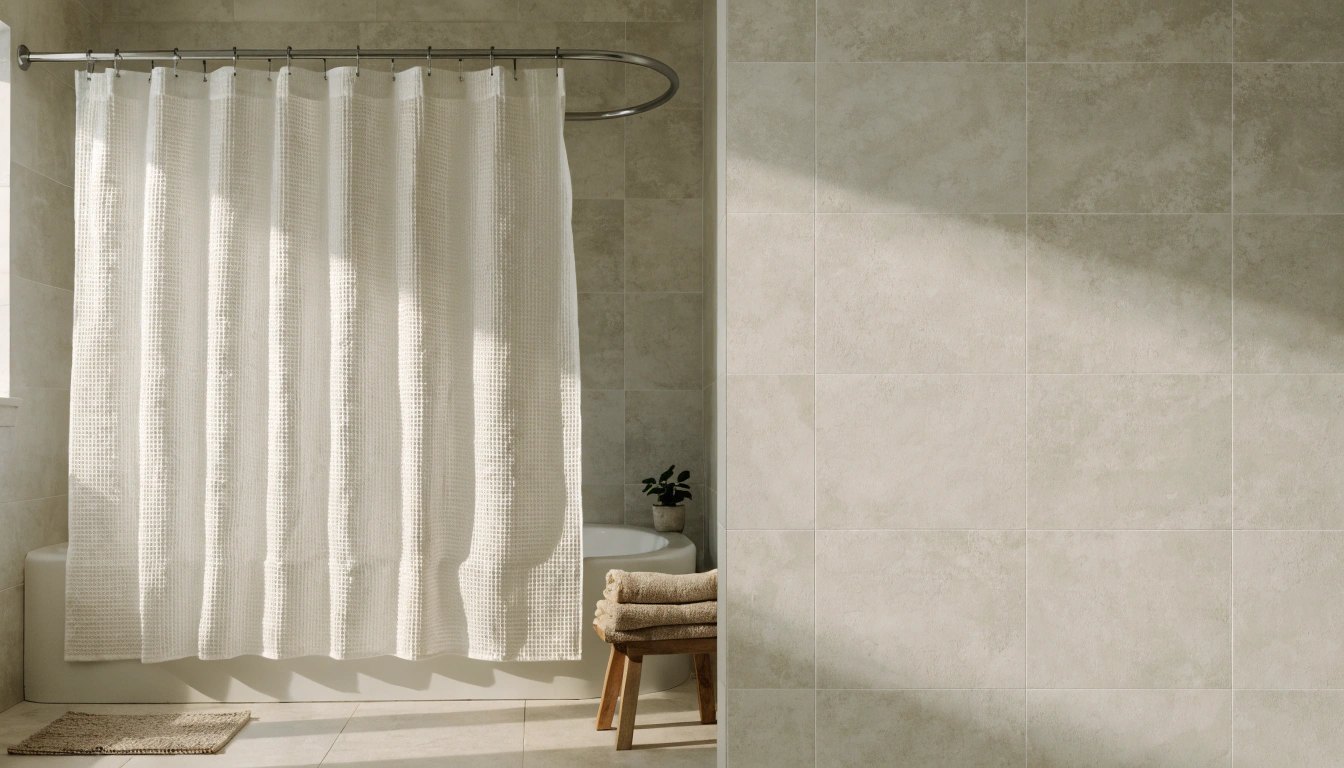
 One panel this large sets the tone for the whole bathroom, so pick with intent. Small bathrooms open up under light colors and soft neutrals. Plain white bathrooms find their personality in bold patterns and stripes, and the price of that personality stays tiny. Solid deep tones read calm and spa-like against light tile.
Texture counts as style here. Waffle weave reads upscale. Ruffles read cottage. The pattern does the decorating so that the walls can stay plain. Ensuite bathrooms get one extra trick. Carry the palette through the doorway, because a curtain echoing the coordinated bedroom sets beyond it makes the two rooms read as one plan. The curtain is also the cheapest seasonal refresh in the house. One swap changes the room faster than paint.
Step 5: Choose Your Hooks, Rings, and Rods
 Day-to-day life with the curtain runs through the hardware. Roller ball rings glide without the morning screech. Wash day gets easier with double hooks, since the curtain and liner hang separately and come down separately. Modern bathrooms lean toward hookless designs, where built-in grommets or snap liners skip the rings entirely.
Then comes the rod. A curved shower rod bows outward and hands you 4 to 6 extra inches of elbow room without moving a single wall. That makes it the smartest upgrade for a small bathroom, where every inch inside the stall counts. Use a curved shower rod over a standard tub when the curtain keeps brushing your arms mid-shower; the bow pushes the fabric outward at shoulder height while the hem still hangs inside the tub. Tension rods suit renters, up in minutes, zero holes. Heavy fabric curtains are best hung on a rod that can support the weight. Whichever rod you choose, mount it so the curtain lands 1 to 2 inches above the floor, and push it near the ceiling with an extra-long curtain when the room could use some height.
Step 6: Apply Small Bathroom Shower Curtain Tips
 The right small bathroom shower curtain does two jobs at once. It keeps water in, and it keeps the room from feeling boxed in. Clear liners are the easiest win. Light passes straight through, sightlines stay open, and the space reads larger than its actual footprint. Light fabrics work almost as well. A white or pale linen-look curtain bounces light around the room instead of blocking it. Dark panels do the opposite. They cut the room in half.
Height plays the same trick vertically. Mount the rod close to the ceiling and hang an extra-long shower curtain, 78 or 84 inches instead of the standard 72. The eye travels up, exactly the way it does under tall living room drapes. In a tight space, that vertical stretch does more for the room than any other single choice.
Keep the pattern calm, since a loud print in a tight space closes in fast. Mirrors pull their weight, and clear hardware all but vanishes. The biggest win is subtraction. Move what you can out of the room, and a makeup vanity with hidden storage in the bedroom takes the cosmetics clutter with it, leaving the tiny counter and the whole space breathing easier.
Step 7: Keep the Shower Curtain Clean
 Mildew never gets a foothold on a monthly wash schedule, the same rhythm as the cleaning pros gave TODAY's shower curtain guide. Let the machine do it. Two bath towels go in with the curtain and liner for scrubbing; half a cup of white vinegar is added at the rinse cycle; and anything plastic runs cold, so it never warps. Fabric curtains can tumble dry on low. Plastic always air-dries, no exceptions. A squeegee pass after showers helps—thirty seconds, big payoff. The habit between washes matters just as much. Spread the curtain fully open after every shower and let the fan run, since a wet curtain left bunched turns into a mildew farm by Friday.
Step 8: Know When to Replace a Shower Curtain
 Every 6 to 12 months, the liner retires, and sooner than that, once stains, cracks, or a musty smell stop washing out. Fabric curtains last 1 to 2 years with regular washing, while good polyester curtains last 3 to 5 years. Pink residue and black spots that survive a hot wash mean the material has absorbed the problem, and no amount of vinegar brings it back.
Trust your nose here. Musty beats thrifty. Rotation stretches every one of those numbers. Trade two curtains through the year, and each ages at half speed, with the off-duty one folded into the Savanna dresser lineup alongside the spare linens until its shift returns.
Shower Curtain Mistakes to Avoid
 Five mistakes cause almost every curtain complaint out there.
- Buying by guess instead of measuring, then living with gaps or dragging hems.
- Hanging a cotton or linen curtain with no liner and wondering why it soaks through.
- A standard 72-inch curtain was forced onto a narrow stall that needed a 54-by-78 curtain.
- Leaving the curtain bunched and wet after every shower until the folds turn spotted.
- Keeping a stained, smelly liner months past the point at which a fresh one costs less than lunch.
Final Thoughts
The whole decision fits on one short list. Run through it before you order:
- Measure the width of your shower opening.
- Add 12 inches to that number for proper fullness.
- Pick a length that leaves the hem 1 to 2 inches off the floor.
- Pair a fabric curtain with a PEVA liner, or use a coated fabric without a liner.
- Choose a color the room actually needs.
- Test that the hooks or rings glide across the rod without catching.
- Wash the curtain, liner, and rings once a month.
Ten minutes with a tape measure saves a return trip. Follow the list, and the curtain looks right on day one, then keeps working through a year of showers.
FAQs
How do I choose a good shower curtain?
Size first, always. Opening measured, 12 inches added, hem held off the floor. After that comes a washable fabric you actually like, a PEVA liner behind it unless the curtain waterproofs itself, and a color the room asked for.
What is the most common shower curtain size?
72 x 72 inches. The standard 60-inch tub-shower combo in most American homes fits under it, and enough width remains for relaxed folds when the curtain closes.
Do I really need a shower curtain liner?
Cotton, linen, and every other uncoated fabric need one, since the liner handles all the waterproofing. Skipping it only works when the curtain itself is waterproof, PEVA, nylon, or coated polyester.
What kind of shower curtain material is best?
Situation picks the winner:
- Easy care and fast drying point to polyester, which shrugs off endless machine washes.
- The best look and feel come from cotton or linen, with a liner always included behind them.
- Coated waterproof fabric when one no-liner piece sounds better than two.
How high should a shower curtain be hung?
The curtain bottom should float 1 to 2 inches above the floor, which puts most rods at about 72 to 76 inches above the floor. Going higher works too, paired with an extra-long curtain, and the ceiling reads taller as a result.
Are dark or light shower curtains better?
Small bathrooms feel bigger under light shades, which also show soap scum early enough to force timely cleaning, an odd little bonus. Dark tones bring calm, hide water spots, and can also make a tight, windowless room feel smaller. Let the room size make the call.
How often should a shower curtain be washed?
A schedule that works:
- Most bathrooms need it once a month, curtain and liner washed together.
- Busy or humid bathrooms with slow airflow should be cleaned every two weeks.
- Immediately whenever pink film, black spots, or a musty smell shows up.
Sources
- TODAY – How Often You Should Clean Your Shower Curtain, the Right Way
- Loo Academy – Standard Shower Curtain Sizes and Dimensions: A Complete Guide
- D and G Flooring – Standard Shower Curtain Size Guide for Every Bathroom
- Molly Maid – How to Easily Clean Your Shower Curtain and Liner
- The Laundress – The Right Way to Clean Shower Curtains and Liners
- SpruceBath – How Often to Wash a Shower Curtain: Frequency and Mold Prevention
- Little Upgrades – Standard Shower Curtain Sizes: Guide to Which Size to Use


Looking for something else?

Burl Wood Furniture: The Complete Buying Guide
LEARN MORE
What Is a Hope Chest? Meaning, History, and Modern Uses
LEARN MORE
What Is a Foyer? Meaning, Purpose and Design Guide
LEARN MORE
GREENGUARD Gold Certified Furniture: What It Really Means for Your Home
LEARN MORELooking for something else?

How to Clean a Mirror Without Streaks: Simple Step-by-Step Guide
LEARN MORE
21 Above-Bed Decor Ideas for a Stylish Bedroom Wall
LEARN MORE
Furniture Materials Guide: Picking the Right Material Room by Room
LEARN MORE


Further reading

18 Decorative Storage Box Ideas That Hide Clutter Well

How to Store Comforters Without Losing Space or Loft


