




How to Choose a TV Stand: Size, Height & Style
If you’re shopping and wondering how to choose a TV stand, this guide walks you through everything that matters—size, height, width, storage, cable management, and style—with simple rules you can apply in minutes. We’ll answer common questions like how tall should a TV stand be, how high should a TV stand be, and how tall is a TV stand on average, then help you pick the right finish and design for your room.
Short answer: pick a stand a little wider than your TV’s actual width, and set the center of the screen at seated eye level (often ~40–42 in from the floor). Those two choices do most of the work.
The 3‑Step Method (use this before you shop)
Step 1: Width first—match the TV’s real width Your TV is sold by diagonal, but stands are measured by width. A quick rule of thumb is to choose a console a few inches wider than your TV on each side; this looks balanced and gives room for speakers or décor. Most retailer guides say to measure the TV’s actual width and then add a small margin.
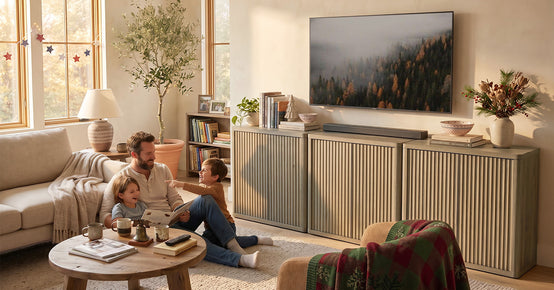
Step 2: Height next—center of screen ≈ eye level For living rooms, many AV guides recommend centering the screen around 40–42 inches above the floor. That keeps viewing neutral and avoids neck strain.
Step 3: Storage, airflow, style—fit your room Plan shelves for consoles and game systems, allow ventilation behind doors, route cables cleanly, and pick a style/finish that complements nearby furniture (so the stand “belongs” to the room).
How Wide Should the TV Stand Be?
Convert the diagonal to real width (or use this chart)
A 16:9 TV is roughly 0.872 × diagonal wide and 0.49 × diagonal tall. So a “55‑inch” TV is about 47.9 in wide × 27.0 in tall (bezels vary a little by model). You can confirm with a calculator or a trusted size chart.
Common 16:9 sizes (approximate screen width and height)
|
TV (diagonal)
|
Width
|
Height
|
|
50″
|
~43.6″
|
~24.5″
|
|
55″
|
~47.9″
|
~27.0″
|
|
65″
|
~56.7″
|
~31.9″
|
|
75″
|
~65.4″
|
~36.8″
|
|
85″
|
~74.1″
|
~41.7″
|
Buying tip: pick a stand a bit wider than the TV—many home guides suggest a few inches total each side (roughly +4–12 in overall). That margin improves stability and looks more intentional.
How Tall Should a TV Stand Be? (Eye‑Level Rule)

The most reliable rule for tv stand height is to place the center of the screen at your seated eye level. For most couches, that’s ~40–42 inches from the floor. Multiple AV setup resources repeat this because it simply feels better in daily use.
There’s also a professional comfort boundary: keep the vertical viewing angle modest—standards used in cinema/TV evaluation call for staying within ~15° vertically from a straight‑ahead line. That’s another way of saying “don’t mount or place the screen too high.”
The 1‑minute height formula
-
Sit on your sofa and measure floor → eye level.
-
Find your TV’s actual height (see chart above).
-
Estimate bottom clearance (distance from stand top to the bottom edge of the visible screen—often 1–3 in for TV feet; 3–4 in if a soundbar sits in front).
-
Calculate: Stand height = eye level − (TV height ÷ 2) − clearance.
This is the same logic behind popular “~42″ to screen center” advice you’ll find in reputable setup guides.
Size‑by‑size comfort ranges (assuming 2″ clearance)
These keep the screen center near 40″–42″ for typical seating:
|
TV size
|
TV height
|
Stand height for 40″ center
|
Stand height for 42″ center
|
|
55″
|
~27.0″
|
~24.5″
|
~26.5″
|
|
65″
|
~31.9″
|
~22.1″
|
~24.1″
|
|
75″
|
~36.8″
|
~19.6″
|
~21.6″
|
|
85″
|
~41.7″
|
~17.2″
|
~19.2″
|
(Adjust if your soundbar is taller or your eye level differs.)
Is 32″ too high for a TV stand? Often yes for 55–65″ TVs on a standard sofa, because it pushes the screen center well above the ~40–42″ comfort target. Go taller only if your seating is high (bar stools) or you routinely watch while standing.
Depth, Devices & Ventilation (quietly important)
-
Receivers and consoles need air. Closed cabinets should have rear cut‑outs or mesh/slatted doors so heat can escape and IR remotes still work.
-
Soundbar fit. Measure height so it won’t block the screen or IR sensor. If it must sit in front, reduce stand height so the screen center stays near eye level.
-
Cable management. Look for built‑in pass‑throughs to route HDMI and power neatly.
Safety: Anchor the Stand & TV
Large screens and tall consoles can tip. The U.S. Consumer Product Safety Commission’s Anchor It! campaign explicitly advises anchoring TVs and furniture to wall studs (even if you don’t wall‑mount the TV). Use the included anti‑tip kit or a rated strap/anchor.
Styles & Finishes (so it looks right at home)

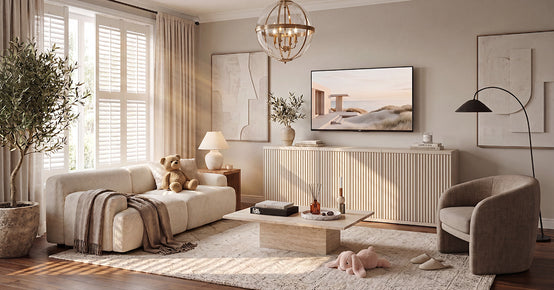
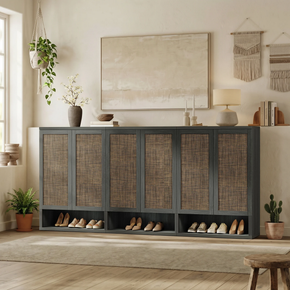
Modern/minimal. Clean fronts, low profiles, simple hardware. Pairs well with wall‑mounted TVs and “floating” looks.
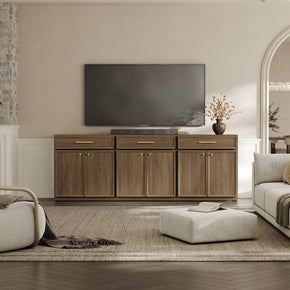
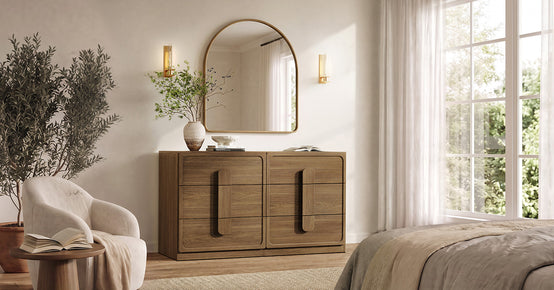
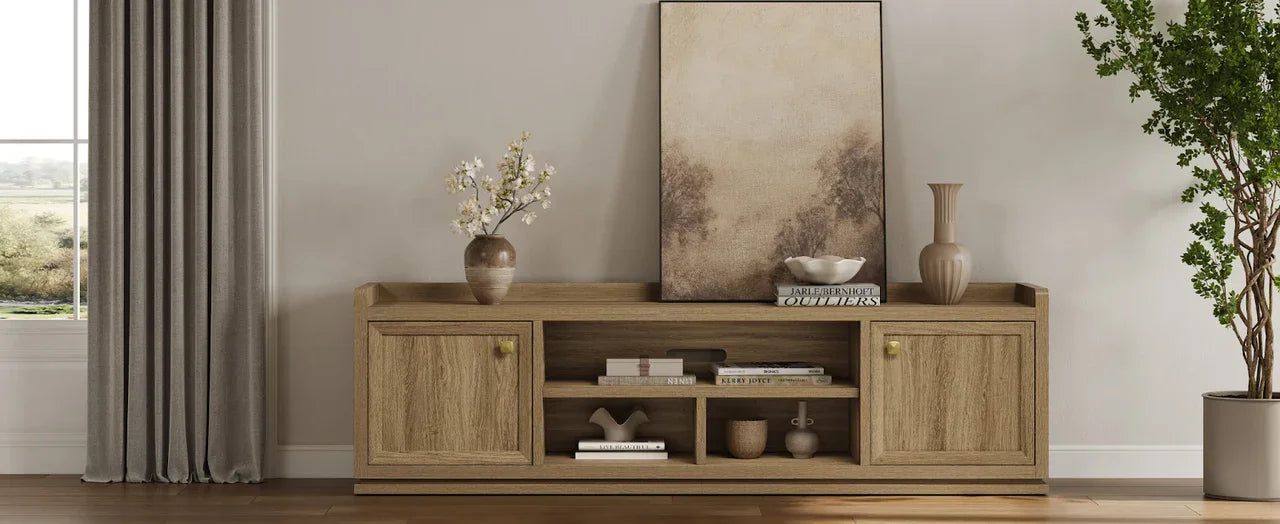
Mid‑century. Warm wood tones, tapered legs, framed doors. Invites textured baskets and turntables on open shelves.
Transitional. Balanced lines with framed or paneled doors; easy to blend into most living rooms.
Industrial. Metal frames, wood or wood‑look tops, mesh doors—great airflow for devices.
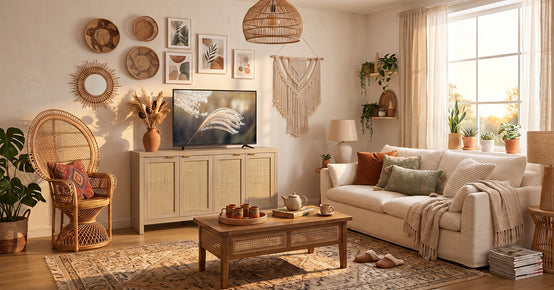
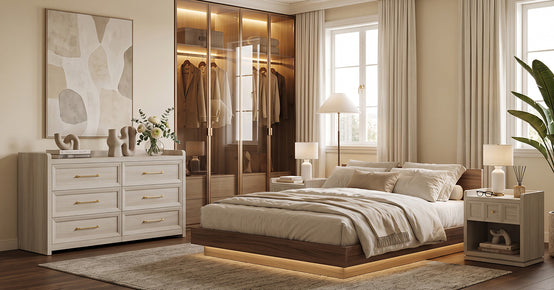
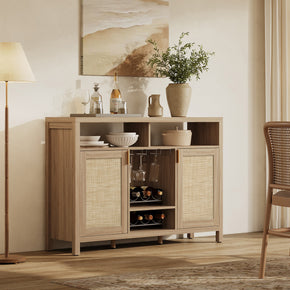
Scandinavian. Light woods, soft neutrals, and simple pulls—visually quiet in smaller rooms.
Color & sheen. If the room is dark, lighter finishes brighten; if it’s bright and cool, deeper wood tones add warmth. Match one existing element—flooring tone, coffee table wood, or hardware finish—so the new stand feels integrated rather than “new and different.”
Materials & Build: What to look for
-
Case construction. A full back panel keeps the cabinet square (less racking, smoother drawers/doors).
-
Shelves & pins. Heavier gear belongs on thicker shelves; adjustable metal pins are sturdier than plastic.
-
Weight rating. Confirm the top’s weight capacity exceeds your TV’s weight; check shelf ratings if you store receivers or game consoles.
Distance, Size & Why Bigger Screens Like Lower Stands

Viewing distance changes how big the image feels. A neutral “mixed‑use” guideline is around a 30° field of view; several AV resources translate that to **roughly 1.5–2.0× screen height or close to 1.6× diagonal for many setups. Choose a larger screen for a given distance and you’ll often need a lower stand to keep the screen center at eye level.
Quick Width Guide (pair the stand to your TV)
|
TV (diagonal)
|
Approx. TV width
|
Recommended stand width
|
|
50″
|
~43.6″
|
48–56″
|
|
55″
|
~47.9″
|
50–60″
|
|
65″
|
~56.7″
|
60–70″
|
|
75″
|
~65.4″
|
69–77″
|
|
85″
|
~74.1″
|
78–86″
|
This “a bit wider than the TV” approach echoes multiple retailer and setup guides; verify your TV’s actual width and leg/foot spacing before you buy.
Room‑by‑Room Height Notes
-
Living room (sofa viewing). Keep the screen center near 40–42 in; larger TVs typically sit on lower cabinets to maintain that center.
-
Bedroom (reclined viewing). The center can be higher (~50 in), since your torso leans back.
-
Open kitchens/bar seating. If you mostly watch from stools, a taller stand or higher mount can be more comfortable; keep vertical angle modest (under ~15°).
Common Mistakes (and easy fixes)
-
Ignoring airflow. Receivers and consoles run hot; pick doors and backs that vent.
Style Shortlist (choose by room mood)
-
Minimal & modern: low, long, handle‑less fronts; hides clutter.
-
Mid‑century warmth: walnut tones, framed doors, tapered legs.
-
Industrial edge: metal frames, mesh; great ventilation.
-
Transitional calm: framed fronts, balanced proportions.
-
Scandi lightness: light wood, soft whites, simple pulls.
A Calm, 2‑Minute Checklist (save this)
-
Measure eye level on your actual sofa.
-
Calculate stand height = eye level − (TV height ÷ 2) − clearance. Aim ~40–42 in to screen center.
-
Plan devices & ventilation (IR‑friendly doors, rear cut‑outs).
-
Check weight ratings (top and shelves).
-
Cable management (pass‑throughs or channels).
-
Anchor to studs (anti‑tip kit).
When you’re ready, compare widths, heights, and storage options in TV Stands and filter to match your measurements.
How This Aligns with Industry & Competitor Guidance

-
Comfort angles from the SMPTE standard keep vertical viewing within ~15°, supporting modest heights over “high and heroic.”
Bottom Line
To master how to choose a TV stand:
-
Size by width (stand slightly wider than the TV).
-
Set height by eye level (screen center about 40–42 in off the floor for sofas).
-
Plan storage, ventilation, and cable routes before you buy.
-
Match one finish in the room for cohesion—and anchor everything for safety.
Explore the full range of TV Stands to find the height, width, and style that suits your room and your daily viewing.
Frequently Asked Questions
What are the rules for TV stands?
Width: choose a console slightly wider than the TV’s actual width. 2) Height: aim the screen center at seated eye level (often ~40–42 in). 3) Storage & airflow: leave space and vents for gear. 4) Safety: anchor the stand/TV to studs.
What should your TV stand match? Match one major element—flooring tone, coffee table wood, or metal hardware—so the stand ties into the space without trying to match everything. Keep the screen the hero; the console should ground it visually.
What is a good TV stand height? Whatever places the screen center at your eye level—commonly ~40–42 in in living rooms. For bedrooms, higher can work because you recline.
How to choose TV stand color? Light finishes brighten small rooms; dark finishes anchor big rooms. If you’re unsure, pick a finish that echoes your floor or coffee table; then use accessories (vases, books, baskets) for contrast.


Looking for something else?

Burl Wood Furniture: The Complete Buying Guide
LEARN MORE
What Is a Hope Chest? Meaning, History, and Modern Uses
LEARN MORE
What Is a Foyer? Meaning, Purpose and Design Guide
LEARN MORE
GREENGUARD Gold Certified Furniture: What It Really Means for Your Home
LEARN MORELooking for something else?

How to Clean a Mirror Without Streaks: Simple Step-by-Step Guide
LEARN MORE
21 Above-Bed Decor Ideas for a Stylish Bedroom Wall
LEARN MORE
Furniture Materials Guide: Picking the Right Material Room by Room
LEARN MORE


Further reading

18 Decorative Storage Box Ideas That Hide Clutter Well
ARTICLE BRIEF
Primary Keyword
decorative storage box ideas
Secondary Keywords
decorative storage boxes · decorative boxes with lids · stylish storage boxes · DIY storage boxes
...

How to Store Comforters Without Losing Space or Loft
Storing comforters comes down to four things. Clean and bone dry. Loosely folded, and sitting in something that breathes. Miss any one, and next season you pull out something that smells like a dam...

Furniture Distance From a Fireplace: How Far Is Safe?
Furniture distance from a fireplace answers two questions with one number. Keep anything that can burn at least 3 feet from heat sources.The U.S. Fire Administration gives that message for fireplac...


