











How to Choose a Pet-Friendly Sofa: A Guide to Fabric, Color, and Care
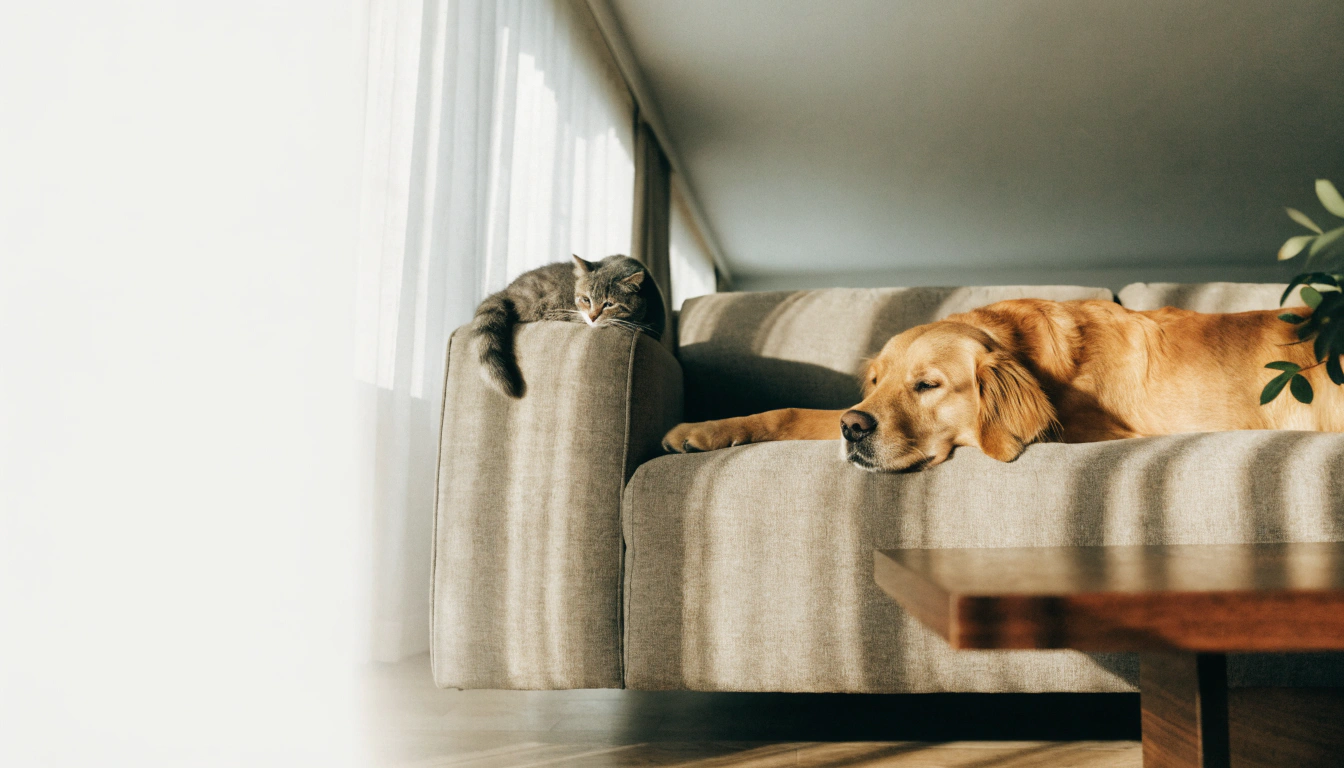
Learning how to choose a pet-friendly sofa starts with one honest admission. No couch on earth is truly pet-proof. Fur lands everywhere. Claws find the one loose thread, and a muddy retriever does not check the weather before jumping up. The fabric decides most of the outcome, and upholstery experts agree thattightly woven, easy-clean materials handle pets best. After the fabric comes the color, the cushion fill, the frame, and the cover design. So the best sofa for pets isn't about chasing a pet-proof label, but about how those choices stack up. My own dog claimed the left cushion years ago. The sofa survived because of choices made at the store, not heroics made at home. Every one of those choices gets its own section below.
What Makes a Sofa Pet-Friendly?

Knowing how to choose a pet-friendly sofa comes down to ignoring the pet-friendly sticker on the product card and checking four things yourself. A weave that resists snags. A surface that buys time when liquid hits. Covers that come off and wash. A build that survives a running jump from a seventy-pound dog. Ask about the frame.
Scratch-Resistant Upholstery for Pets

Claws need something to hook. A dense, tightly woven fabric offers almost no grip, and a smooth low-pile surface offers even less. Loose weaves and open loops hand a cat exactly what it wants. Drag a fingernail over any sample in the store, and the difference announces itself in about two seconds. Trust that test.
Stain and Moisture Resistance for Pet Accidents

Nobody sells a stain-proof fabric, whatever the tag implies. A stain-resistant finish just holds liquid in beads on the surface for a few extra minutes rather than letting it soak straight down. Those minutes are the whole game. A paw print you catch early wipes away, and one you find after work has moved in.
Washable Couch Covers for Dog Owners

A washable cover changes the entire ownership experience. Fur, smells, and small accidents stop accumulating because the cover goes through the machine every few weeks. Shopping forpet-friendly sofas with machine-washable covers means one shedding season never becomes a permanent part of the couch.
Strong, Practical Construction
Pets are hard on frames, not just fabric. A hardwood frame with reinforced joints takes years of jumping that would loosen a stapled softwood box. High-density foam matters just as much, since a dog that sleeps in one spot will pancake a soft cushion within months.
Start With Your Pet's Habits
The best sofa for pets depends on which pet. A lab sheds on furniture, a tabby scratches it, and an eighty-pound senior shepherd slowly flattens it, and those are three different problems. Buy for the animal that actually lives in your house. Mine is a shedder.
Dogs That Shed or Track In Dirt
Shedding calls for a smooth, low-pile fabric where fur sits on top instead of weaving itself in. Mud calls for stain-resistant and washable covers. A dog-friendly sofa for this crowd is really a fabric decision first and everything else second.
Cats That Scratch and Climb

Cats do not lean on a couch the way dogs do. They target it. Arms, corners, and the front edge of the seat take the claws. A cat-friendly sofa needs a tight, flat weave with no loops to hook, plus simple arms without piping or fringe.
Puppies, Seniors, and Big Dogs

Age and size change the checklist. Puppies chew and have accidents, so moisture resistance is a must. Senior pets need lower seats and firmer cushions for their joints. A big dog needs real seat depth to stretch out, or he will simply take the whole thing anyway.
The Best Sofa Fabrics for Pets
No single winner exists here. The best sofa material for dogs and cats isn't a single fabric, but the right match for your home, because the best sofa material for dogs that shed isn't the best for cats that scratch. Weigh each fabric against your actual household.
Performance Polyester and Microfiber

These two carry most pet homes. A tightly woven performance polyester resists snags and cleans with soap and water, while a microfiber sofa adds a dense, loopless surface that claws slide across. Fur stays on top of both. A vacuum pass removes a week's worth of shedding.
Is Leather Pet-Friendly? Leather Sofas With Dogs

A leather sofa with dogs handles fur well, because nothing clings and a wet nose print wipes off in one motion. The trade-off shows up the first time claws drag across it. Those marks stay. Calm dogs and leather get along fine. A scratcher will leave a permanent mark on the couch, and distressed finishes hide that signature better than smooth ones.
Performance Velvet and Corduroy
Short-pile performance velvet has no loops for a claw to grab, which surprises people. Corduroy earns its fans the same way, with a tight ribbed weave that hides small marks. Fur clings to both more than it would to a flat weave. Frequent vacuumers can ignore that.
Outdoor-Grade and Solution-Dyed Fabrics
Fabric built for patios laughs at pets' indoor life. Because solution-dyed fibers hold color through their entire thickness, plenty of them survive diluted bleach when a stain refuses to leave. The catch is texture. A few outdoor weaves feel stiff for everyday lounging, so get a sample in your hands before committing. Your back will notice.
Sofa Fabrics to Avoid With Pets

Four materials cause most of the regret stories. Each one fails for its own reason.
- Looped weaves like boucle and chenille, since a claw treats every loop as a handle.
- Fine linen and silk, which pick up stains quickly and fray even quicker around pets.
- Thick plush piles, where fur, dander, and smells sink past the reach of any vacuum.
- Bonded faux leather, since the coated surface peels and flakes under repeated claw contact.
Check the Fabric Before You Buy
Two numbers on a spec sheet tell you more than any product photo. The abrasion rating comes in double rubs. Fifteen thousand marks the floor for a pet home, and the heavy-duty options run past 50,000. The cleaning code matters too. W uses a water-based cleaner, S requires a solvent, and X allows only vacuuming.
Order a fabric swatch and be rough with it at home. Drag a fingernail across it, press a wet paper towel on it, and rub it against your pet's bed. While the swatch is out, look for an OEKO-TEX Standard 100 tag too. A pet spends hours every day with its face pressed into this fabric, so what the textile contains matters.
Pick a Color That Hides Pet Hair

The best sofa color that hides pet hair sits in the middle: solid black shows every light hair, and solid white shows every dark one, so the extremes lose no matter what you own. Mid-tones win. Heathered gray, warm taupe, and flecked weaves all break up the contrast. Getting the shade as close as possible to your pet's coat color helps most of all.
Watch what happens with a dark grey three-seater couch under a grey tabby or a black-and-tan mutt. Hair that would light up a white cushion simply blends into that tone until vacuum day comes around.
Look Past the Fabric
A durable weave stapled to a weak frame is still a weak sofa. The parts you cannot see decide how the piece feels in year five.
Frame and Cushions
A kiln-dried hardwood frame with corner blocks absorbs the daily landing of a big dog without loosening. Softer fill leaves a permanent dog-shaped dent over time. Firm foam does not. Pick loose cushions over attached ones if you can, since each one can be flipped, rotated, and washed on its own.
Legs, Arms, and Clearance
Raise the sofa five inches off the floor, and the fur-collecting cave underneath becomes a strip the vacuum clears in one pass. Rounded or plain arms give cats fewer corners to work on. Skip fringe, exposed piping, and decorative buttons, since each is a chew toy waiting to happen.
Sofa Size and Layout for Pet Homes

Count the bodies before choosing the shape. A loveseat cannot hold two adults plus one large dog plus a cat, no matter what the dog believes, and flexible modular furniture gives the seating room to grow along with the household. Then pick the shape.
Why Sectionals Suit Pet Households

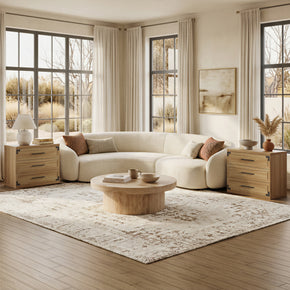
On a pet-friendly sectional, the wear has somewhere to spread rather than piling onto a single center cushion. Everyone stakes a claim. The dog gets his corner, the cat rules the chaise back, and the humans split whatever remains. Years later,a modular L-shape sofa with a movable ottoman pays off again as a modular sofa for multi-pet households, because a worn or scratched section can be moved, swapped out, or retired without dragging the whole piece to the curb.
Measure Twice, Including the Doorway
Mark the sofa footprint on the floor with painter's tape and walk around it for a full day. Doorways, hall turns, and the stairwell all need measuring as well. Then measure again. A perfect pet-friendly couch that cannot fit in the corner of the living room helps nobody.
Protect the Sofa From Claws, Chewing, and Mud
The sofa you choose is half the answer. Daily habits are the other half, and three of them do most of the work.
Build a Paw Station at the Door

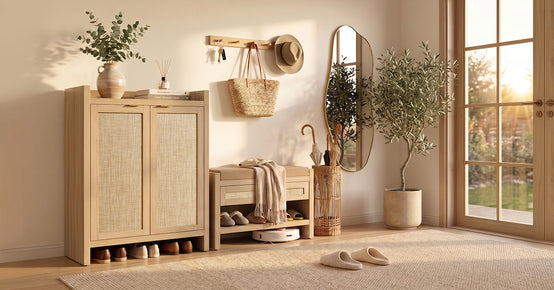
Mud never reaches the couch if it stops at the entrance. Keep a towel inside a wooden entryway bench with a pull-out drawer, wipe paws while your dog is still on the mat, and the rainy-walk problem ends fifteen feet from the cushions.
Redirect Scratching and Chewing

Put the scratching post next to the sofa corner your cat already targets, not across the room. The same rule covers chew toys, which belong near the scene of the crime. Once playtime ends, everything disappears into a single-door storage cabinet, and the living room stops looking like a kennel.
Keep Nails Trimmed
Short nails snag less and scratch more shallowly. Most dogs need a trim about once a month, and cats do better with a light clip on a similar schedule. Ten minutes with the clippers protects the fabric more than any spray or cover.
A Simple Cleaning Routine

Little and often beats deep and rare. A lint roller pass takes two minutes a day. The vacuum with an upholstery attachment handles the entire sofa once a week, and a slightly damp rubber glove gathers stubborn fur that the vacuum leaves behind.
Accidents get blotted, never rubbed, and always by the cleaning code on the tag. Rotate the cushions while you are at it so wear and fur spread evenly. Covers that unzip go through the wash before smells settle in, not after. They settle fast.
Final Thoughts: Choose for the Pet You Actually Have
A pet-friendly sofa is a stack of small, honest choices. Tight weave over loose. Washable over sealed. Mid-tone over stark white, firm foam over soft, and a layout with room for everybody in the house. Get those right at the store, and the couch stops being a battleground. It turns back into the spot where everyone piles up on a Sunday afternoon.
FAQs
What type of sofa is best for pets?
The best sofa for pets is a sturdy piece that checks these boxes:
- Upholstery that is tightly woven and stain-resistant, with nothing for claws to hook.
- Removable covers that survive a machine wash.
- A hardwood frame with firm, high-density cushions.
- A sectional or modular layout is ideal when several pets share the space.
What sofa material is pet-friendly?
Several pet-friendly sofa materials earn the label for different reasons:
- Performance polyester for all-around durability and easy cleaning.
- Microfiber for a dense, loopless surface that resists claws.
- Protected or distressed leather for shedding dogs with calm habits.
- Solution-dyed outdoor fabric for accident-prone or multi-pet homes.
What fabric is most resistant to pet hair?
The most pet-hair-resistant fabric is smooth, tightly woven, and low-pile because fur rests on top where a vacuum or lint roller can lift it. Plush and looped textures hold on instead. Color plays a part too, since fur that matches the fabric barely registers.
What is the most comfortable pet-friendly sofa?
The build decides comfort, not the fabric name on the tag. Look for supportive high-density foam, breathable upholstery, and a seat deep enough for your longest lounger to stretch out. Firm cushions hold their shape, and a soft one that flattened in year two stops being comfortable for anyone.
What material is pet-proof?
None. Not one. Every fabric on the market gives way to determined claws, teeth, or an untreated accident. Dense performance weaves come closest to being pet-proof in daily practice, and pairing one with trimmed nails and a nearby scratching post closes most of the remaining gap.
Is a leather or fabric sofa better with dogs?
Leather wins on fur and wipes clean in seconds, so it suits calm dogs and heavy shedders. Tightly woven performance fabric hides scratches far better and often adds washable covers, which makes it the safer call for diggers, jumpers, and dogs who circle before every nap.
Sources
- American Kennel Club – How to Trim Your Dog's Nails Safely
- Fabric Mill – Pet-Friendly Upholstery: Best Fabrics for Dog Owners
- Midwest Fabrics – Best Couch Material for Dogs: A Fabric Pro's Guide
- Zerorez – Best Couch Fabrics for Dog Owners
- Spoken – The Best Couch Materials for Dogs and the Worst Ones
- P.L.A.Y. Pet Brands – OEKO-TEX Certified Textiles for Pets, Explained


Looking for something else?

Burl Wood Furniture: The Complete Buying Guide
LEARN MORE
What Is a Hope Chest? Meaning, History, and Modern Uses
LEARN MORE
What Is a Foyer? Meaning, Purpose and Design Guide
LEARN MORE
GREENGUARD Gold Certified Furniture: What It Really Means for Your Home
LEARN MORELooking for something else?

How to Clean a Mirror Without Streaks: Simple Step-by-Step Guide
LEARN MORE
21 Above-Bed Decor Ideas for a Stylish Bedroom Wall
LEARN MORE
Furniture Materials Guide: Picking the Right Material Room by Room
LEARN MORE


Further reading

18 Decorative Storage Box Ideas That Hide Clutter Well

How to Store Comforters Without Losing Space or Loft


