




How to Choose a Buffet Cabinet for Small Kitchen Appliances
A buffet cabinet doing real work.
Last Thanksgiving I did a headcount and found eleven small appliances living on my kitchen counters. Eleven.
A buffet cabinet looked like the answer. Big, handsome, shelves everywhere. But here's what I learned the hard way: a cabinet that holds dinnerware beautifully can be a disaster for appliances. Dinnerware sits still and weighs nothing. A stand mixer is a twenty-five-pound toddler with a motor. Totally different job.
So this is the guide I wish I'd had: footprints, shelf ratings, door swing, and the one rule about hot appliances you can't bend. At the end I'll run two real SICOTAS sideboards through all of it.
Start With an Inventory: Dimensions and Weights That Matter
Measure first, shop second.
Every appliance owns three numbers — footprint, height, weight — and a cabinet can pass two and fail the third. That's the cruel part. Jot down your own numbers too; yours might run bigger than these ballparks.
|
Appliance |
Typical footprint |
Typical height |
Typical weight |
|
Stand mixer |
9 x 14 in |
14 in |
20-30 lb |
|
Air fryer (5 qt) |
12 x 12 in |
13 in |
10-20 lb |
|
Multicooker (6 qt) |
13 x 13 in |
13 in |
10-15 lb |
|
Toaster oven |
18 x 16 in |
11 in |
15-25 lb |
|
Blender |
8 x 8 in |
17 in |
7-12 lb |
Now the height column, because that's where the ambush lives. A stand mixer with its bowl attached stands around 14 inches — plus two inches of hand clearance, you need a 16-inch opening to slide it in without a wrestling match. I've watched people buy beautiful cabinets, get them home, and discover their mixer lives on the counter forever because it never fit through the door. A gorgeous display shelf for three hundred dollars. Don't be that person.
Sort by Frequency: Daily, Weekly, and Specialty Zones
Here's the trick every kitchen designer uses: stop organizing by size. Organize by how often you touch it.
Three zones.Daily drivers — the coffee maker, the toaster — earn the prime spots: the cabinet top itself, or a shelf right at counter height. If you use it before you've had coffee, it doesn't live behind a door — that's where appliances go to be forgotten.

Weekly regulars — air fryer, blender, that kind of crew — go on the middle shelf behind the doors. Out of sight, but one motion away. And the specialty gear — stand mixer, your 2019 juicer phase — goes low or deep, reachable without blocking daily wants.
That's the whole buying decision in one sentence: daily machines get reachable zones, heavy occasional machines get low, load-rated shelves.
Shelf Load and Top Load: Respect the Numbers
The failure mode nobody posts photos of.
Engineered-wood shelves come with a per-shelf rating, and it's not a suggestion. One SICOTAS manual puts it at 33 lbs per interior shelf and 55 lbs on top. Picture a 29-pound stand mixer plus a cast-iron Dutch oven sharing one shelf: over the line. It won't collapse tomorrow — it'll sag over months until the doors don't quite close.

So two rules: one heavy appliance per shelf, never stacked — and the heaviest machine on the lowest shelf or the top surface.
And my red-flag rule: if the product page doesn't show a shelf-load figure, walk away.
Lifting Height: Store Heavy Machines Where Your Back Agrees
A stand mixer weighs about as much as a packed carry-on bag, except the carry-on has wheels. Heavy machines belong at waist height, where you slide them out instead of hoisting them. The sweet band is roughly 28 to 44 inches off the floor — straight arms, flat back. Above shoulder height is blender territory. The Stria Sideboard with 2 Doors keeps its storage squarely in that band, which is half of why it suits appliance duty.
Doors, Drawers, and Opening Clearance
Appliances are wider than dishes — obvious, until your cabinet doors swing open six inches and stop dead against the fridge.

So measure the door swing with the doors actually open — physically open them in the store, or tape the arc on your floor at home. Not closed. Not "probably fine." Six inches of swing on a cabinet you open twice a day will drive you quietly insane within a month.
Which brings up the subtler point: deep shelves are where appliances disappear. Pull-out drawers beat deep shelves — you pull and everything's right there; on a deep shelf the waffle maker migrates to the back and resurfaces next Christmas. Check that drawers are included AND fully extending — the count alone tells you nothing.
Adjustable Shelves Are the Make-or-Break Feature
I'm going to say this plainly: fixed shelves are a deal-breaker. Full stop.
One fixed shelf height is a dinnerware cabinet in costume: your 17-inch blender next to a 10-inch rice cooker, every leftover inch wasted.

Shelves need to move. SICOTAS manuals show adjustable shelves with multiple height positions — one model offers five — so you build a tall bay for the blender and short bays for the toaster and the kettle. Custom storage, zero carpentry.
Cord Storage: Keep the Tangle Out of Sight
Every countertop appliance comes with a cord, and cords are how an organized cabinet still looks like a bird's nest.
The fix: a rear cable cutout — a slot in the back panel dropping cords straight to the outlet. Clean, invisible, done. But measure the cutout-to-outlet distance first: a six-foot cord traveling four feet sideways across the back drapes over everything inside the cabinet and you've gained nothing.

And one house rule: never daisy-chain power strips behind a closed cabinet.
Ventilation: Never Run a Hot Appliance Inside Closed Storage
Okay. This is the guardrail that matters more than everything else in this article, so I'll say it plainly.
|
Safety rule |
Hot appliances must never operate inside closed, unventilated cabinet storage. Store them there, run them on the counter. |
Storing the air fryer in the buffet: fine. Running it in there with the doors shut: never. These machines vent serious heat; a sealed wooden box becomes an oven your air fryer wasn't built to survive.

The workflow: counter with clearance on all sides, run it, let it cool, put it away. And if that little dance sounds like something you'll skip by Wednesday? Then that appliance lives on the counter permanently and you buy the cabinet for everything else.
Children, Tipping, and Anchoring
A buffet loaded with appliances is heavy — and heavy furniture tips fast when a toddler treats an open drawer as a ladder.
Kids in the house? Anchor the cabinet to the wall — install the included anti-tip kit instead of leaving it in the hardware bag.

If any stored machine has a blade or heating element, add magnetic child locks. The front stays clean, curious fingers stay out.
Two SICOTAS Buffets Worth Comparing
Two real sideboards from the sideboards collection, numbers verified live — wide workhorse versus compact pick.
Savanna Sideboard Cabinets: the Wide Workhorse
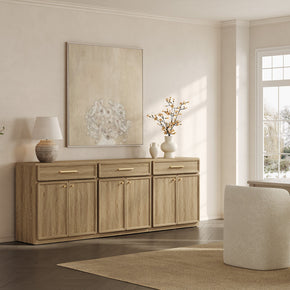
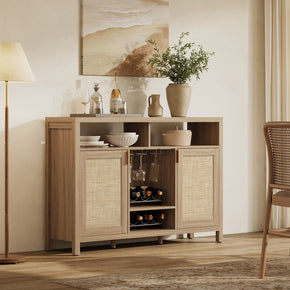
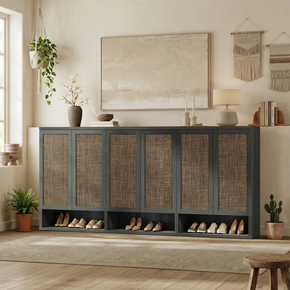
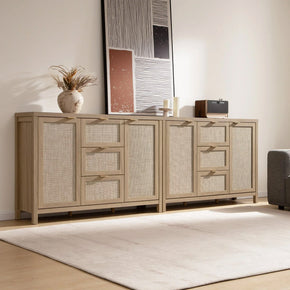
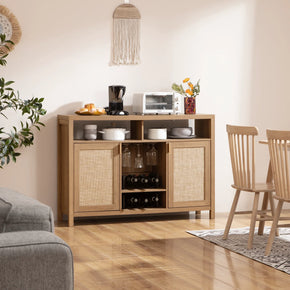
The Savanna Sideboard Cabinets is the big one: 35.43 in high, 51.57 in wide, 14.02 in deep, and 105 lb of actual cabinet. That 51.6-inch top is a genuine landing zone — the stand mixer can live up there permanently. Inside: three drawers plus cabinets with adjustable shelves — tall bay for the blender, short ones for the rest. Rattan fronts hide the clutter; 14 inches of depth hugs the wall instead of eating your kitchen.
Stria Sideboard with 2 Doors: the Compact Pick
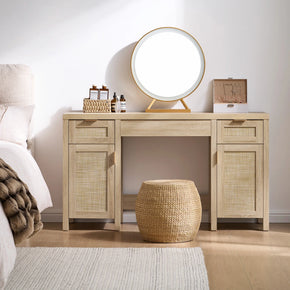
The Stria Sideboard with 2 Doors is the smaller footprint — 30.9 in wide, 34.1 high, 15.6 deep — but that 15.6-inch depth is the sleeper spec. Most air fryers and multicookers have 12-to-13-inch footprints, so they sit fully inside with a hand's room behind for the cord. Two doors open onto adjustable shelves, so the interior gets configured around your tallest machine. Right call when wall space is tight.
|
Savanna Sideboard Cabinets |
Stria Sideboard with 2 Doors |
|
|
Overall dimensions |
35.43 H x 51.57 W x 14.02 D in |
34.1 H x 30.9 W x 15.6 D in |
|
Top landing zone |
51.6 in: mixer plus daily drivers |
30.9 in: one station at a time |
|
Interior depth |
14.02 in |
15.6 in: roomier for deep items |
|
Storage layout |
3 drawers plus cabinets |
2-door cabinet |
|
Adjustable shelves |
Included |
Included |
|
Cabinet weight |
105 lb |
Check the product page |
|
Best for |
Big collections, mixer station |
Tight walls, deep appliances |
Your Appliance-Storage Comparison Checklist
Run every candidate through this list before you commit.
● Inventory written down: footprint, height, and weight of each appliance.
● Frequency zones: daily on top or counter height, weekly behind doors, specialty low or deep.
● Shelf load: heaviest appliance fits the rated capacity, one heavy machine per shelf.
● Top load confirmed for anything living permanently on the surface.
● Lifting height: heaviest machines between 28 and 44 inches, never above shoulder height.
● Door swing measured with the doors open, not closed.
● Adjustable shelves included. Fixed shelves are a deal-breaker for mixed appliances.
● Rear cord cutout or a clean cord route to the outlet.
● Ventilation: hot appliances run on the counter, never inside closed storage.
● Anti-tip anchoring if children are in the house.
Do that homework and the cabinet stops being a gamble. Skip it and you'll own a very pretty shelf your stand mixer doesn't fit in.
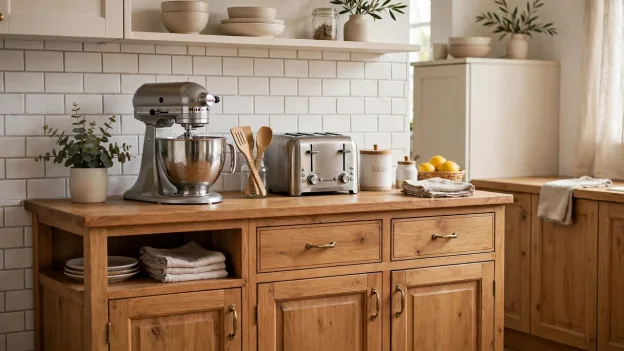
Daily drivers earn the top: reachable, ventilated, and ready before coffee.
FAQs
Can I store my stand mixer in a buffet cabinet?
Yes, if the shelf is rated for it and the opening clears the bowl plus two inches of hand room. Waist height (28 to 44 inches) — most mixers weigh 20 to 30 lbs, so give it one shelf to itself.
How much weight can a buffet cabinet shelf hold?
It varies — one SICOTAS manual rates interior shelves at 33 lbs and the top surface at 55 lbs. Always check the product page; a missing capacity figure is a red flag.
Can I run my air fryer inside the cabinet?
No — hot appliances must never operate inside closed, unventilated storage. Run it on the counter with clearance all around, then store it.
What size buffet do I need for a toaster oven?
Measure footprint and height, add two inches of hand clearance above and room behind for the cord. An interior depth of 14 to 16 inches covers most models.
Should heavy appliances go on top of the cabinet or inside?
The heaviest daily-use machine earns the top surface; heavy occasional machines go on the lowest shelf. Nothing heavy above shoulder height.
How do I hide appliance cords in a buffet cabinet?
Pick a cabinet with a rear cable cutout and route cords straight down to the outlet. At most one power strip, plugged directly into the wall.
Do I need to anchor a buffet cabinet to the wall?
Children in the home? Yes — especially taller models. Install the included anti-tip kit, and add magnetic child locks for bladed or heating appliances.
Is a buffet cabinet or a pantry better for small appliances?
A pantry wins for bulk storage, but a buffet near the dining area keeps daily and weekly machines closer to where you cook and serve — provided it passes the checklist above.


Looking for something else?

How to Choose a Bookcase for Board Games: Shelf Depth, Height, and Access
LEARN MORE
7 Best Narrow Nightstands for Small Bedrooms With Real Storage
LEARN MORE
Chest of Drawers vs Dresser: Key Differences and Which One to Choose
LEARN MORE
Narrow Shoe Cabinet Buying Guide: Depth, Sizes and Styles That Fit a Small Entryway
LEARN MORELooking for something else?
11 Best Mid-Century Modern TV Stands for Style and Real Storage
LEARN MORE
Mid Century Sideboard Guide: How to Choose the Right Size, Wood and Style
LEARN MORE
Fluted Nightstand Guide: Meaning, Sizes, Styles and Care Tips
LEARN MORE


Further reading
SICOTAS Brings Joy to Children with Donation of Drawing Books and Game Sets

Zen Bedroom Ideas for a Calmer Room


