

























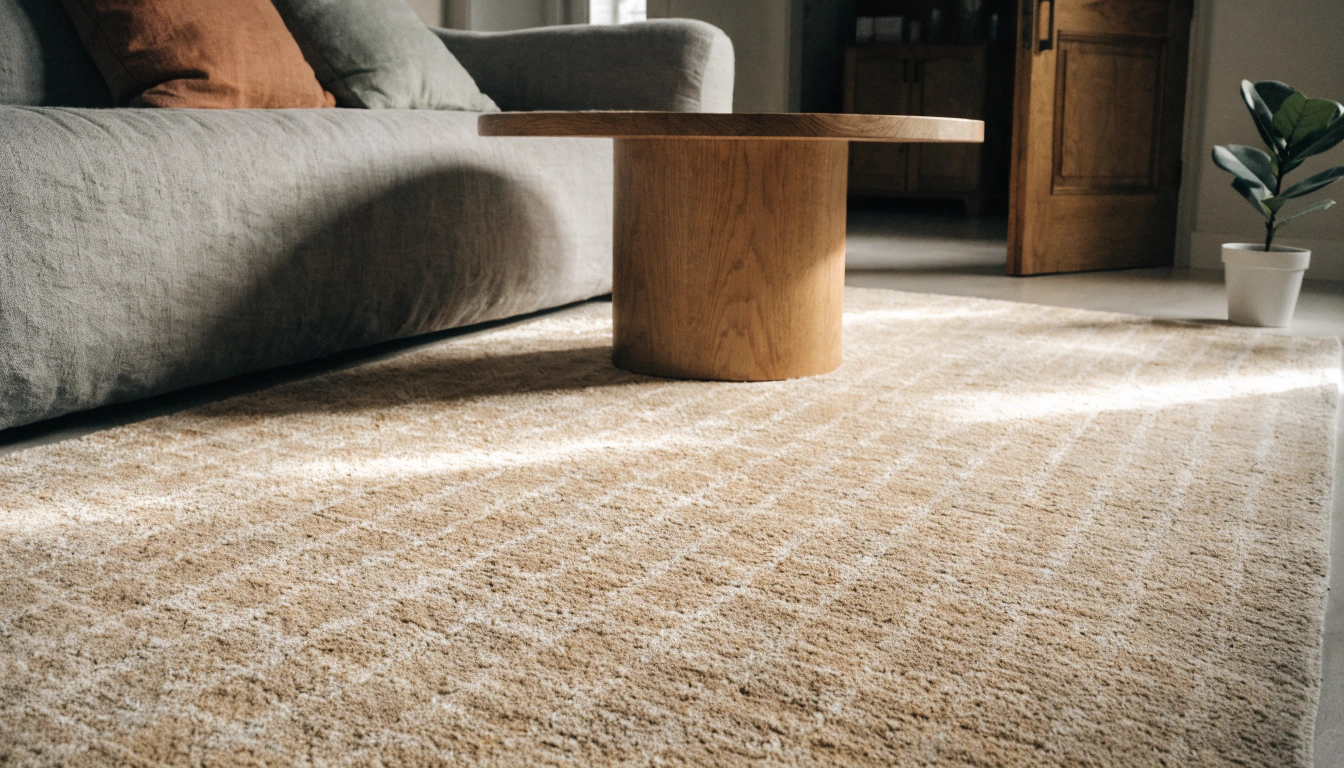

How to Care for Your Rug: Cleaning and Maintenance Tips to Extend Its Life
Your rug is an investment, and it takes a beating. Shoes track over it. Drinks get spilled. Sun hits one edge; furniture pins the other. Care for it right, though, and it stays soft and bright for years. EvenThe Home Depot calls rug care simple upkeep, not a chore.
The upkeep? Lighter than most people expect. Most rug care tips come down to three habits: you vacuum it, you jump on spills, and you turn it around now and then. That is the whole job. What trips people up is the wrong method, which can wreck the fibers faster than skipping cleaning altogether.
Below, we cover it all. Area rug maintenance by material. A simple routine. Rug pads, spot cleaning, the stain-by-stain fixes, deep cleaning, what to expect from a new rug, and the small rug cleaning and maintenance mistakes that ruin good ones. Learning how to care for your rug takes an afternoon of reading and pays back for years. Wool, synthetic, or something delicate, it is all here.
Know Your Rug Material Before You Clean It

One rule beats all the rest. Work out what your rug is made of before you clean a thing. Fiber identification is the foundation of how to maintain a rug, including caring for wool rugs and synthetic rugs, because the two require almost opposite treatment. Fiber drives every decision after that. How much water it can take, which cleaner is safe, whether you should even be doing this yourself instead of a pro.
Flip a corner over and read the label. It usually names the material and lists any warnings. No label, or not sure? Treat the rug delicately and go gently. You lose nothing by being careful, and you can lose a rug by guessing.
Wool Rugs

Wool is the workhorse of the rug world.
Soft underfoot, and it holds up in a busy room too. The fiber repels dirt and moisture on its own, which is why wool keeps its appearance for years. Spill something? It beads up on top. You get a moment to grab a cloth before it sinks in.
Cleaning it stays easy, as long as you are gentle. Cool water only, never hot. A mild, pH-neutral soap. Go light on the water, though. Too much wool can dry with a brown mark.
Synthetic Rugs
Then the synthetics. Nylon, polyester, polypropylene, mostly. These shrug off stains and take a firmer hand than wool, so warm water and a little scrubbing rarely cause trouble. That is exactly why they land in hallways, playrooms, and homes full of kids and pets.
Even so, read the label; how a rug is built matters as much as the fiber it is built from.
Delicate Natural-Fiber Rugs
A few rugs want a lighter touch, or honestly, a professional. Silk, viscose, bamboo silk. They look and feel gorgeous, and they also drink up spills and stains in a heartbeat. Viscose will mark even from plain water.
Jute and sisal bring the opposite headache. They cannot stand moisture and go brown the moment they get properly wet. With any of these, use as little water as you can manage, blot instead of soak, and hand anything serious to a pro.
Build a Simple Rug Care Routine
The simple rug care tips below are where most people stop paying attention, yet they are the core of how to make a rug last longer. Rug care is mostly prevention. Keep grit from grinding into the pile, and you win, because buried grit wears a rug out from the inside. Not the dirt you can see. The stuff you cannot see, working away underneath long before the surface looks tired.
Vacuum Your Rug Regularly

Run a vacuum over it weekly. Twice a week if the room stays busy or you keep pets. Ask how often you should clean a rug, and a weekly pass is the whole answer for most homes. It lifts the dust, grit, and dander before any work goes down into the base. TheAmerican Lung Association even suggests doing both sides with a HEPA filter to grab the finest particles.
Go easy on the aggressive settings, though. The best way to vacuum a rug is with slow passes on low suction, not fast ones on high. Suction-only is the safe bet for wool and other delicate fabrics, or use the setting that stops the brush from spinning. Let a beater bar run on the wrong rug, and over time it tugs loops loose and frays the whole pile.
Stop Dirt Before It Reaches the Rug

Easiest dirt of all? The kind that never lands on the rug in the first place.
Put a doormat at every door to catch grit on the way in. A no-shoes rule indoors further reduces the load. Small rugs are the easy case. Carry them outside and shake them hard, or drape them over a rail and beat the dust out of them—old trick, still good.
Check for Early Damage
Look at the rug every so often. You are watching for loose threads, little sprouts of yarn standing up from the pile, edges starting to fray, or a worn track where everybody walks. Catch those early, and a small problem stays a small problem.
One warning: if a thread pokes up, do not pull it. Pull, and you can unravel an entire row. Snip it flush with sharp scissors and leave the rest be.
Use a Rug Pad to Protect Your Investment

A rug pad does far more than feel nice underfoot, though it does that too. Pound for pound, a rug underlay is one of the most affordable ways to extend a rug's life, much like the rightmedia console or TV stand quietly anchors the seating area above it.
It stops the rug from sliding so nobody trips. It cushions the pile against foot traffic, which is the main way a pad helps prevent rug wear and tear over the years. It saves the floor from scratches. Air also moves underneath, so moisture never gets trapped down there.
A pad works as a buffer between the fibers and the hard floor below. That gap is what protects rug fibers from grinding down against wood or tile every time someone walks across.
Choosing the Right Rug Pad Size
Cut it a touch smaller than the rug, an inch or two in from each edge. That way, the pad stays out of sight, and the rug edges settle flat on the floor. Odd-shaped rug? Grab the next size up and trim it down with scissors.
How to Spot Clean Rug Stains Without Damage
Spills are going to happen. What you do in the first sixty seconds determines whether you end up with a stain. Knowing how to clean a rug safely comes down to a short list of steps, and the fastest way to spot-clean stains is also the one that does the least harm to the fibers. Get this part right, and you can avoid common rug-cleaning mistakes before they start.
Act Fast
Get to it while it is still wet. Fresh spills lift out far more easily than ones left to dry and set. Every minute it sits, it works a little deeper into the pile.
Blot, Never Rub

Lay a clean white cloth over the spill and press straight down to soak up the liquid. No scrubbing. That only drives the stain deeper and roughs up the fibers. Work from the outside of the spill inward, switching to a dry patch of cloth as you go.
Test Any Cleaner First

Before any cleaner touches a spot people can see, try it somewhere hidden first. Dab a little on a back corner and watch whether the color runs or lifts. That one small habit has saved many rugs from bleach marks or faded patches.
Use Gentle Cleaners Only

Try plain water first, nothing else. Need a little more muscle? A drop of mild soap, or a pH-neutral wool wash, almost always finishes it off.
Keep the harsh stuff away from the rug for good. Bleach, ammonia, and strong stain removers. They lift color, weaken fibers, and, worse, leave a tacky film that grabs dirt. Give it a week, and the spot will look worse than it did before you started.
How to Remove Common Rug Stains Safely
Different messes call for slightly different handling. Here is how to deal with the ones that actually come up.
Food and Drink Spills

Scoop the solids off first with the dull edge of a spoon or a butter knife, and do not press down, or you will grind them in. Chunks gone, blot the liquid and lift what you can. Then spot clean the patch with water and a touch of mild soap.
Pet Stains and Odors
Blot up as much as you can, fast. For the smell and the organic side of the mess, an enzyme cleaner beats soap because it breaks the stuff down at the source instead of just covering it. A set-in accident, or a valuable rug, is a job for a professional.
Red Wine and Stubborn Stains
Skip the salt-and-white-wine trick people swear by online. Acidic tricks can do worse than the wine did. Blot gently instead, then keep going with clean water. Color still there? That is your cue to call a professional, not to reach for something stronger.
Gum, Wax, and Sticky Messes

Freeze it first. Hold an ice cube on the gum or wax until it turns hard and brittle, then work it off with the dull edge of a knife. Slow hands here. Rush the job, and the pile lifts out right along with the gum.
How to Deep Clean Your Rug and When to Do It

Vacuuming and spot cleaning take care of the surface. What neither one reaches is the grit packed down in the base, and that right there is why a rug needs a proper deep clean once in a while. Any rug cleaning and maintenance plan worth following puts this step on a schedule instead of waiting for the rug to look dirty.
Most rugs do fine with a cleaning every 12 to 18 months. Got pets, kids, allergies, or heavy traffic? Make it every six. TheCarpet and Rug Institute lands on the same window for a professional job, since it lifts the dug-in soil that a vacuum misses.
You can deep clean rugs at home with a rented extractor on synthetics and low-pile wool. Professional rug cleaning earns its cost on the pieces you cannot risk: antiques, silk, viscose, natural dyes, anything hand-knotted. Water and a home machine ruin those in one pass.
When to Call a Professional
Some rugs should never see a DIY wash. Hand these straight to the pros:
- Antique, Persian, and Oriental rugs
- Silk and viscose rugs
- Jute and sisal, which turn brown when wet
- Any deep, set-in, or spreading stain you cannot lift yourself
A proper cleaner has the equipment to wash and dry those safely, with no colors bleeding and no fibers going out of shape.
How to Care for a New Rug

A brand-new rug acts a little strangely at first, and nearly all of it is normal. It is the same settling-in you get with any freshly unboxed piece from a boho or minimalist furniture range.
Shedding is the big one, especially with wool. Those loose fibers are just leftovers from spinning, working themselves out of the pile, and they slow to nothing over a few weeks. It does not mean the rug is coming apart.
Handling Rug Shedding
Vacuum gently and often through those first weeks, and the loose fluff clears much faster. Keep the suction low and skip any hard rotating brush. See a long thread standing up above the pile? Trim it level. Do not yank it.
Protect Your Rug From Fading and Uneven Wear
Two things quietly age a rug: the sun and the same feet on the same path. Both are easy to stay ahead of.
Rotate Your Rug

Give the rug a 180-degree turn every three to six months. Foot traffic then spreads across the whole thing instead of pounding one strip, and any sun fade stays even—simplest habit on the list, and one of the ones that pays off the most. Nothing does more to prevent rug wear and tear for the effort involved.
Keep It Out of Direct Sun
Given enough time, strong sun fades any rug, however good it is. Sitting in a bright spot? Soften the light with blinds or a sheer curtain. Rotating earns its keep here as well, so whatever fade creeps in lands evenly.
Guard Against Furniture Dents

Heavy furniture presses deep dents into a rug over time. Slip felt pads under the legs to distribute the weight. For a dent that has already set in, rest an ice cube on the spot, let it melt slowly, then work the pile back up with your fingers.
It matters most under the pieces that never move, like a sofa ora solid coffee table. Ask anyone about how to make a rug last longer, and the answer starts with what sits on top of it.
Common Rug Cleaning Mistakes to Avoid
Most of the damage people do to their own rugs comes down to a few bad habits, all of which are accidental. Steer clear of these. The common rug cleaning mistakes below cause more wear than years of foot traffic, and getting new rug care right from week one is what keeps a fresh piece looking that way.
Using Too Much Water
Drowning a rug in water is a quick route to trouble. Too much of it breeds mildew underneath, and on wool, it triggers that browning as the fiber oversaturates. Use the least water needed to get the job done, then dry the rug fully.
Reaching for Harsh Chemicals
Bleach, ammonia, and strong detergents. They lift color and weaken fibers, and some leave a residue that actually attracts dirt, so the rug soils faster than before. With a rug, gentle and mild wins every time.
Wrong Vacuum Settings
A beater bar on wool or a delicate rug drags the loops loose and frays the pile, and maxing the suction on a fine rug does the same kind of harm. Suction only, and drop the power right down for anything delicate.
Cleaning Blind
Cleaning without knowing the material is how good rugs get ruined. Silk is not wool, jute is not either, and each one wants a different approach. Check the label and match the method to the fiber before you start.
Are rugs high maintenance?
Honestly? Not really.
For most rugs, it comes down to a weekly vacuum and jumping on spills fast. That is the bulk of it, right there.
How much work a rug is comes down to the material, the spot, and how busy the house is. A tough wool or synthetic in a busy room mostly handles itself.
Do Rugs Help With Allergies?
Yes, they can, with one string attached. A rug pulls dust, pollen, and pet dander down into its pile, keeping them out of the air you breathe. Vacuuming is the part that matters, since it lifts most of the dry soil back out before it recirculates.
It all hangs on that word, clean. Neglect a rug, and it fills right up, then hands those particles straight back every time someone crosses it. Weekly vacuuming plus a yearly deep clean keep it on the right side of that line.
Final Thoughts

In the end, it comes down to a few steady habits. Vacuum weekly. Handle spills the second they land. Turn the rug once or twice a year, keep a pad beneath it, and stay out of harsh sun.
Do that and a good rug lasts for years, soft and bright the whole time. Set the room up right at the start, and the rest is easy. Browse stylish living room furniture to build the space around it, or the full Sicotas range for the rest.
FAQs
How do you take care of a rug?
Keep it simple, and be consistent. Vacuum once or twice a week so dirt never settles, and blot spills the moment they land. Put a rug pad under it. Rotate the rug every few months, and the wear spreads out instead of hammering one strip.
Add a deep clean on top of that every 12 to 18 months, sooner with pets or heavy traffic. And above everything else, match the method to the rug's material. Go light on the water and the harsh chemicals.
Do rugs help with allergies?
They can, so long as you keep them clean. A rug traps dust, pollen, and pet dander in its fibers, keeping them out of the air. That genuinely helps if you suffer from allergies, and it is the whole reason a HEPA-filter vacuum is worth having.
There is a flip side, naturally. Neglect a rug, and it fills up fast, then flings those allergens back the second anyone disturbs it. Regular vacuuming, plus a yearly deep clean, keeps it from hurting you more than it helps.
How to take care of a new rug?
Expect a little shedding at the start, especially with a new wool rug. Those loose fibers are just normal offcuts from production, and they thin out inside a few weeks. Vacuum gently and often to clear them. Keep the suction low.
Do not tug at any long threads standing up from the pile. Snip them level with sharp scissors instead. A rug pad from day one, plus a spot out of direct sun, also helps a new rug settle in.
How do people maintain rugs?
Most people stick to a light routine and leave it at that. Weekly vacuuming, spills caught straight away, a 180-degree turn every three to six months. That handles the everyday stuff. Underneath it all, a pad quietly looks after both the fibers and the floor.
Beyond the routine, most book a professional deep clean once a year or so, more often in busy homes or those with pets. The habit that pulls it all together is dead simple. Check what the rug is made of before you try any new product on it.
Are rugs high maintenance?
Most are not. Day-to-day, a weekly vacuum and quick attention to spills really is the whole of it. Upkeep only becomes a chore when the rug's material is the wrong choice for the room it sits in.
Tough wool or synthetic in a busy space stays low effort. Delicate silk or viscose asks for more care and a gentler hand. Pick the right rug for how you actually live, and the maintenance stays easy.
How to make a rug last longer?
Prevention is the whole game here. A rug pad stops crushing and slipping. Rotating every few months evens out the wear. Keep the rug out of direct sun to preserve the color, and slip felt pads under heavy furniture to prevent deep dents.
Then clean it the gentle way. Vacuum with suction rather than a harsh beater bar, blot spills instead of scrubbing at them, and skip the harsh chemicals altogether—an occasional professional deep clean rounds out a routine that adds real years to a rug.
Do rugs need to be washed?
Not all of them, and not often. Plenty of rugs get by on regular vacuuming, quick spot cleaning, and the odd professional deep clean rather than a full wash. Some newer rugs are machine washable, but only wash one if its label clearly says you can.
Delicate rugs, meaning silk, viscose, antique, or Oriental pieces, should never be washed at home. Those go to a professional because water and DIY washing can cause bleeding dye or permanent damage.
What are the common rug cleaning mistakes?
The two big ones are scrubbing a stain instead of blotting it and soaking the rug with too much water. Scrubbing spreads the stain and frays the fibers, while over-wetting causes mildew and browning, especially on wool and other natural fibers.
After that,avoid using harsh chemicals like bleach, running a beater-bar vacuum over a delicate rug, and cleaning without first checking the material. Dodge those four, and you dodge most of the damage people inflict on their own rugs.
Sources
- American Lung Association – Carpets and Rugs
- Carpet and Rug Institute – Carpet Improves Indoor Air Quality
- Architectural Digest – How to Clean a Rug in 9 Simple Steps
- U.S. EPA – Does Carpet Cause Indoor Air Quality Problems?
- Pottery Barn – How to Care for Your Rug
- King Living – Rug Care Advice


Looking for something else?

Burl Wood Furniture: The Complete Buying Guide
LEARN MORE
What Is a Hope Chest? Meaning, History, and Modern Uses
LEARN MORE
What Is a Foyer? Meaning, Purpose and Design Guide
LEARN MORE
GREENGUARD Gold Certified Furniture: What It Really Means for Your Home
LEARN MORELooking for something else?

How to Clean a Mirror Without Streaks: Simple Step-by-Step Guide
LEARN MORE
21 Above-Bed Decor Ideas for a Stylish Bedroom Wall
LEARN MORE
Furniture Materials Guide: Picking the Right Material Room by Room
LEARN MORE


Further reading

18 Decorative Storage Box Ideas That Hide Clutter Well

How to Store Comforters Without Losing Space or Loft


