




15 Furniture Leg Styles: Names, Shapes and How to Identify Them
Furniture leg styles change how heavy a piece looks, long before anyone notices the wood or the finish. A dresser on thin tapered legs reads light. Set it on a solid base, and it plants itself in the room.
Curators treat legs as dating evidence, because a chair's legs reveal its age and origin long after the upholstery and the hardware have been replaced.
This guide walks through 15 leg shapes you will actually run into at home or in a store. Names first. Then the tells that separate the pairs people mix up. Then the practical part: height, hardware, and stability.
Why Furniture Leg Styles Matter More Than People Expect
Legs do three jobs at once. They hold the weight. They set the height. They hint at the period a design belongs to. Change one of those and the whole piece reads differently.
A bulky sideboard on a solid base looks like a wall. Lift it four inches on angled legs, and the floor keeps running underneath. A small room breathes again. Nothing about the storage changed. Only the stance did.
Names get slippery though. Some describe a shape, like tapered or saber. Others describe how the wood was cut. Turned is the obvious one there. A few describe a period instead. Queen Anne,for example, favors one particular shape.
Knowing which kind of name you are looking at saves a lot of confusion later.
15 Furniture Leg Styles at a Glance
Use this as a quick reference. The detailed sections below explain the tells for each one.
|
Leg style |
What you see |
Era it belongs to |
Works best on |
|
Cabriole |
Double curve, out at the knee and in at the ankle |
Early 1700s onward |
Accent chairs, side tables, formal case pieces |
|
Straight |
Vertical, square or round, no shaping |
Every era |
Almost anything |
|
Tapered |
Narrows steadily toward the floor |
Late 1700s and mid-century |
Dressers, desks, consoles, sofas |
|
Turned |
Rings, beads, and bulges cut on a lathe |
1600s onward |
Farmhouse tables, benches, traditional chairs |
|
Fluted |
Vertical grooves cut into the surface |
Neoclassical |
Formal tables, sideboards, consoles |
|
Reeded |
Vertical ridges standing proud of the surface |
Late 1700s onward |
Coffee tables, sideboards, statement pieces |
|
Saber |
Sweeps outward in a shallow curve |
Regency and Empire |
Dining chairs, desks, occasional chairs |
|
Spindle |
Slim, rounded, often repeating sections |
Windsor and country furniture |
Chairs, benches, small tables |
|
Splayed |
Angles outward on a straight line |
Mid-century onward |
TV stands, cabinets, nightstands, sofas |
|
Hairpin |
Thin metal rod bent into a long V |
1941 onward |
Coffee tables, desks, benches |
|
Barley twist |
Carved or turned spiral |
Late 1600s revivals |
Occasional tables, stools, consoles |
|
Trumpet |
Flares wide at the top, tapers below |
William and Mary |
Highboys, stands, period reproductions |
|
Marlborough |
Square, straight, blunt block foot |
Georgian |
Sofas, heavy cabinets, library tables |
|
Spider |
Several thin legs radiating from one point |
Mid-1700s and mid-century revivals |
Tripod tables, small round tables |
|
Bun foot |
Short squashed ball |
1600s onward |
Chests, sideboards, upholstered furniture |
1. Cabriole Leg

The cabriole leg curves out near the top and back in near the floor. It forms a long S. Britannica traces the shape to the legs of four-footed animals and notes it returned to European fashion in the late 1600s.
Look at the knee. A true cabriole bulges there, then tapers to a small foot—usually a pad, a paw or the classic claw-and-ball. Early versions had stretchers between the legs. Later makers dropped them. The stretchers broke the line.
Cabriole legs suit accent chairs, side tables and dressing tables. Anything meant to read formal.
2. Straight Leg

A straight leg drops from the frame to the floor with no shaping. Square section or round section. Either counts. It is the most common leg in the world and the easiest to ignore.
Square straight legs feel architectural. Round ones soften a little. Neither draws attention. Designers reach for them when the top of the piece is already doing the talking.
3. Tapered Leg

Tapered legs get thinner as they go down. That single trick removes visual weight. It explains why so many storage pieces use it. A tall chest of drawers raised on tapered supports reads slimmer than its actual footprint.
The style belongs to two different moments. Neoclassical cabinetmakers used it in the late 1700s. Mid-century designers picked it up again around 1950. They never really put it down.
You will see it on dining tables, desks, consoles and sofas. Tapered legs are the safest pick when nothing else comes to mind.
4. Turned Leg

Turned is a method, not a silhouette. The blank spins on a lathe while the maker cuts rings, beads, and bulges into it. Two turned legs can look nothing alike.
The Metropolitan Museum of Art notes that early Baroque case pieces sat on delicately turned legs. Dovetail joinery made that possible. That combination gave furniture height for the first time.
Farmhouse tables, benches, and Windsor chairs all lean on turned legs. Antique reproductions too.
5. Fluted Leg

Fluting means grooves cut into the surface, running top to bottom. The reference is Greek and Roman columns, so the effect stays formal without turning fussy.
Fluted legs show up across Neoclassical furniture. The Victoria and Albert Museum credits Robert Adam with pushing that classical vocabulary into every part of an interior. Furniture included.
Good on console tables, sideboards and formal dining tables.
6. Reeded Leg

Reeding is fluting turned inside out. Instead of grooves cut in, you get rounded ridges standing out. Run a thumb across the surface, and the difference shows up straight away.
Reeded legs read a touch warmer than fluted ones. They catch light along the ridge line. The texture also photographs well. That helps explain why the look keeps returning to coffee tables and sideboards.
7. Saber Leg, Also Spelled Saber

A saber leg sweeps outward in a shallow curve and takes its name from the cavalry sword. Usually square in section. Usually tapering as it goes.
Regency and Empire furniture made it famous. The outward sweep widens a chair's footprint without adding bulk. From the side, the piece looks like it is about to move.
Common on dining chairs, occasional chairs and writing desks.
8. Spindle Leg

Spindles are slim, rounded and usually turned. Repeating sections run along the length. Think Windsor chairs and country benches.
A spindle is technically a turned leg. The difference is proportion. Spindles stay narrow the whole way down. Ordinary turned legs swell into bulbs and vases.
9. Splayed Leg

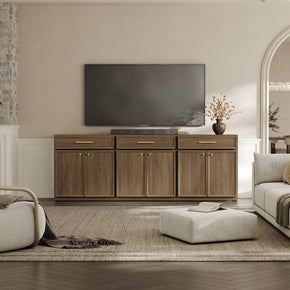
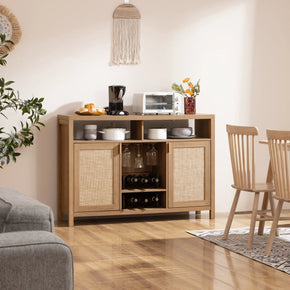
Splayed legs angle outward instead of dropping straight. The base gets wider. The piece feels planted, and more floor stays visible underneath. A media console with angled wooden legs shows the effect clearly in a living room.
Scandinavian and mid-century designers used this constantly. Modern cabinet makers still do. The angle solves a real problem. A large box looks smaller when its base sits away from the wall line.
10. Hairpin Leg

A thin steel rod bent into a long narrow V. Almost no visual mass. The floor reads as continuous underneath.
The design has a firm date. Woodworking Network credits industrial designer Henry P. Glass with creating it in 1941. Wartime scarcity pushed designers toward using as little steel as possible—the trade press named it after the shape.
Hairpin legs work under coffee tables, desks and benches. On anything heavy, they need careful mounting.
11. Barley Twist Leg

Also called a spiral or twisted leg. The surface winds around itself like a rope. English and Dutch makers popularized it in the late 1600s. It has come back in waves ever since.
This one is loud. One barley twist table in a room is a feature. Four barley twist pieces is a costume drama.
12. Trumpet Leg

Wide and flared at the top, narrowing sharply below, like a trumpet bell standing on its rim. It is a turned shape tied closely to William and Mary furniture of the late 1600s.
You will mostly meet trumpet legs on highboys, chests on stands, and reproductions. Original examples usually sit on flattened ball feet.
13. Marlborough Leg

Square and straight, with no taper worth mentioning, ending in a plain block foot. Sometimes fluted. Sometimes carved and never curved.
Georgian furniture made heavy use of it under sofas and large cabinets where the leg had real weight to carry. Chippendale used the form often.
14. Spider Leg

Several thin legs radiating from a central column or point. The name comes from the top-down view.
Eighteenth-century tripod tables used the idea, and mid-century designers revived it in metal. Thin legs look fragile. Splayed out from a single column, they turn out to be hard to tip.
15. Bun Foot

A short rounded support shaped like a flattened ball. Strictly speaking, it is a foot rather than a leg. Retail listings mix the terms constantly.
Bun feet lift a heavy piece just enough to stop it looking like a block. Chests, sideboards and wardrobes all use them. Some stay plain. Others get carved into rings.
Furniture Feet and Bases That Are Not Really Legs
Most guides stop at leg names. That leaves out half of what you actually see in a furniture store. Plenty of pieces have no legs at all.

Bracket Foot
An angular foot with a shaped inner edge, fitted at the corners of case furniture. Chests of drawers, cabinets and desks use it. Georgian and Colonial pieces are full of them.
Claw-and-Ball, Pad and Spade Feet
These are endings rather than legs. A cabriole leg can finish in any of them. The claw-and-ball grips a sphere. A pad foot is a flattened disc. A spade foot is a small tapered block found on Hepplewhite pieces.
Plinth and Sled Bases
A plinth is a solid recessed box the cabinet sits on: no gap, no visible supports, maximum grounded weight. Modern minimalist furniture uses it constantly.
A sled base is a single continuous frame of metal or bent wood forming a runner on each side. Industrial and contemporary pieces favor it. Neither counts as a leg. Both compete for the same job.
Leg Styles by Furniture Type, Including Storage Pieces
Chairs and tables get all the attention in leg guides. Storage furniture rarely does, even though the leg choice matters more there. A cabinet is a big box. Its base decides whether it looks like furniture or like a shipping crate.
Dressers and Chests of Drawers

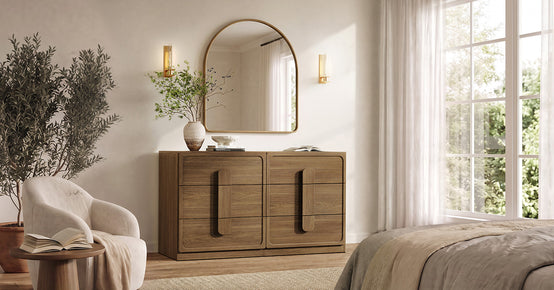
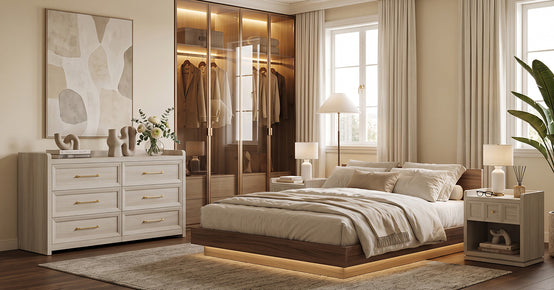
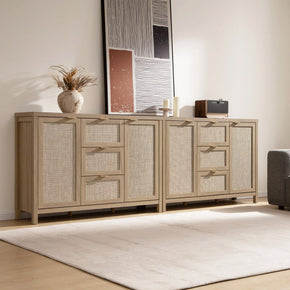
Tapered and splayed legs dominate here with plinth bases running a close third. Bun feet appear on traditional chests. If you are comparing options across the full bedroom furniture range, check the stance before the drawer count.
One caution. Tall chests on slim legs must be anchored to the wall. The CPSC adopted a mandatory stability standard for clothing storage units in 2023 after tracking hundreds of tip-over deaths. Most of the victims were children.
Nightstands and Bedside Tables

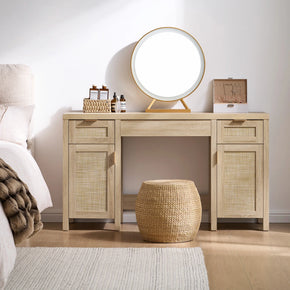
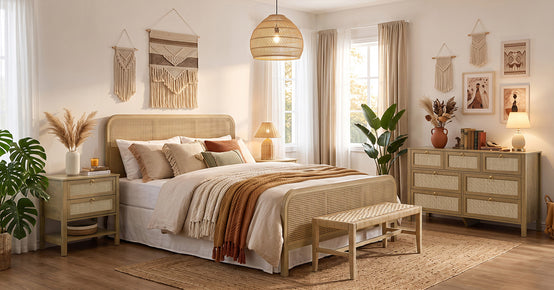
Small footprint, big visual effect. Legs on a nightstand keep a tight corner from feeling stuffed. A pair of bedside tables lifted clear of the floor leaves room for a rug edge and a charging cable to pass underneath.
Tapered and straight legs are the usual pick. Splayed legs look good but eat floor space. That matters when the gap between bed and wall is narrow.
TV Stands and Media Consoles

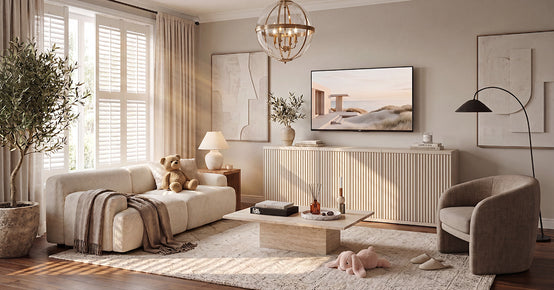
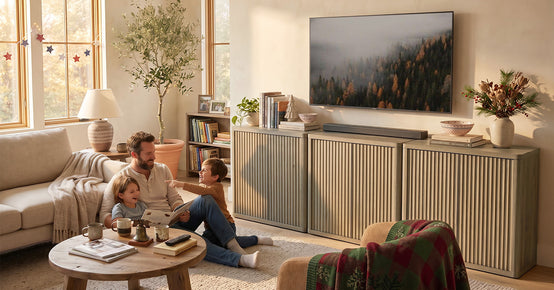
Media units are wide and low. The base sets the whole mood. Splayed wooden legs give a mid-century read. Straight legs disappear. Plinth bases suit minimal rooms. Comparing living room furniture built for open floor space side by side makes the difference easy to see.
Practical note. Legs raise the screen height. Measure before you commit. A stand that runs two inches taller can push a large TV above comfortable eye level.
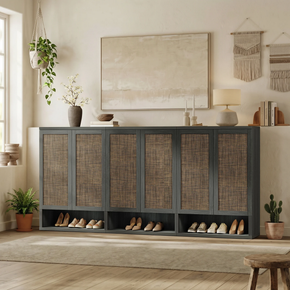
Shoe Cabinets and Entryway Benches

Entryways collect dust and grit. A raised base is far easier to sweep under. A cushioned entryway bench on short legs handles daily sitting better than a flush box, since the load spreads to four points instead of a rim.
Short legs are the norm here. Anything taller makes a bench awkward to sit on while pulling boots off.
Sofas and Upholstered Chairs
Sofa legs come in bun feet, block feet, tapered legs, turned legs, and splayed metal legs. The frame decides what is safe. Upholstered frames have fixed mounting points. Swapping to a longer leg changes seat height and the angle you sit at.
Furniture Leg Styles by Interior Design Style
Traditional and Period Rooms
Cabriole, turned, fluted, saber, and barley twist legs. Finish them with bracket or claw-and-ball feet. Curves and carving carry the look.
Mid-Century Modern
Tapered and splayed legs plus hairpin and spider designs in metal. Everything sits high. Floor stays visible. The whole style depends on furniture looking like it is hovering.
Farmhouse and Rustic
Turned legs, spindle legs, chunky straight legs and bun feet. Thicker sections. Visible grain, often painted or distressed.
Industrial
Hairpin legs, straight steel tube, angled metal frames and sled bases. Raw finish beats polish here.
Modern and Contemporary
Straight legs, slim tapers, plinth bases and hidden supports. Ornament drops away, and proportion does the work.
Leg Height and Floor Clearance: The Numbers Nobody Publishes
Style guides skip this. It is the part you notice every week.
|
Leg height |
Floor clearance you get |
What that means day to day |
|
Under 2 inches |
Almost none |
A cloth reaches only the front edge. Dust settles and stays |
|
2 to 3 inches |
Narrow gap |
A flat mop head fits. Most robot vacuums do not |
|
3.5 to 4.5 inches |
Comfortable gap |
Common robot vacuum bodies clear this range |
|
5 to 7 inches |
Open gap |
Easy cleaning, and the floor stays visible across the room |
|
8 inches and up |
Tall stance |
Looks light, but tall storage needs anchoring more than ever |
Measure the gap under a piece before buying if you own a robot vacuum. Bodies vary. Most sit in the three- to four-inch range. A cabinet that clears by half an inch will still catch on a thick rug.
How Furniture Legs Attach, and Why It Matters for Swaps

Anyone planning to change legs needs the mounting method first. Buy the wrong style, and it will not fit.
Hanger Bolt and Threaded Insert
A double-ended bolt screws into the leg at one end and into a metal insert in the frame at the other—standard on many wooden legs. Sizes vary. Check the thread before ordering.
Mounting Plate
A steel plate screws to the underside of the frame and the leg threads into it. Angled plates create splay. This is the usual method for sofas and upholstered pieces.
Direct Screw and Integrated Legs
Some flat-pack furniture screws the leg straight into the panel. Some legs are part of the frame itself. You can't swap integrated legs without cutting. Check before buying replacement hardware.
How to Choose the Right Furniture Leg Style
Match the Leg to the Visual Weight
A heavy piece on a slim leg reads lighter. A light piece on a chunky leg reads grounded. Pick the effect first. The style name comes second.
Stability Is Not a Style Question
No leg shape is automatically stronger. Stability depends on spacing, joinery, material, and how the load sits. Anchoring matters most. Tall storage needs a wall strap,no matter what the legs look like.
Coordinate, Do Not Match
Repeating one wood tone or one leg angle across a room is enough. Identical legs on every piece turn a room into a showroom floor.
Check the Floor Before You Commit
Thick carpet swallows short legs. Uneven boards make four-point legs rock. Sled and plinth bases spread the load. They cope better with soft flooring.
Furniture Leg Styles People Mix Up
Fluted vs Reeded
Fluted grooves go in. Reeded ridges stick out. Touch it, and you will know.
Tapered vs Splayed
Tapered gets narrower. Splayed leans outward. A leg can do both at once. That is where the confusion starts.
Turned vs Spindle
Turned is the process. Spindle is a slim result of that process. Every spindle is turned. Not every turned leg is a spindle.
Cabriole vs Queen Anne
Cabriole is the shape. Queen Anne is the period. Roughly the 1720s to the 1750s. It favors a restrained cabriole ending in a pad foot. Chippendale versions carry heavier carving.
Saber vs Splayed
Both go outward. Saber legs curve on the way. Splayed legs travel in a straight line.
Legs vs Feet
A leg carries the piece up to a real height. A foot is a short support or the tip of a leg. Bun and bracket are feet. Cabriole and tapered are legs. Retail listings will not always agree.
Mistakes to Avoid When Changing Furniture Legs
- Adding height without re-checking the anti-tip strap on a chest of drawers
- Fitting hairpin legs to a heavy cabinet without a reinforcing block above the mounting plate
- Raising a sofa without checking the new seat height against a windowsill or radiator
- Buying legs before measuring the existing thread size or plate pattern
- Ignoring floor protection. Bare metal and hardwood do not get along for long
- Mixing four different leg styles in one small room
Final Takeaway
Learning furniture leg types comes down to three questions asked in order. Is the leg straight, angled, or curved? Is the surface plain, turned, fluted, or reeded? Does it end in a separate decorative foot?
Three answers narrow almost any leg down to a handful of names. Enough to date a secondhand find, describe what you want to a seller, or pick a base that suits the room instead of fighting it.
The Getty makes a related point about modern design. People rarely remember the ornament that was added. They remember what got taken away. Legs are where that shows up first.
FAQs
What are the different types of furniture legs?
The commonly named ones fall into a short list:
- Straight, tapered, splayed and angled legs
- Cabriole, saber, Queen Anne and Marlborough legs
- Turned, spindle, fluted, reeded, barley twist and trumpet legs
- Hairpin and spider legs in metal
- Short supports such as bun feet and bracket feet
No fixed master list exists. Categories overlap, and manufacturers keep adding hybrid shapes every season.
What are the different types of sofa legs called?
Sofa legs usually go by these names:
- Bun feet and block feet on traditional frames
- Tapered and splayed legs on mid-century styles
- Turned legs on farmhouse and country sofas
- Cabriole legs on formal and French-inspired frames
- Hairpin and metal angled legs on contemporary pieces
The frame limits the options. Upholstered sofas have fixed mounting plates. The plate angle decides whether a splayed leg is even possible.
What are 10 different furniture styles?
Traditional, modern, contemporary, mid-century modern, Scandinavian, industrial, farmhouse, rustic, Art Deco, and French Provincial. These describe whole furniture aesthetics rather than leg shapes. Each one still leans on a few leg types more than others.
What are the different types of furniture legs?
Common furniture feet include bun feet, bracket feet, block feet, pad feet, spade feet, scroll feet, and the claw-and-ball. A foot is either a short support in its own right or the finished tip of a longer leg.
Product listings often use foot and leg interchangeably.
What are the types of legs?
Group them by geometry, and five families appear: straight, angled, curved, turned or carved, and metal frame. Every named style sits inside one of those. Cabriole is curved. Hairpin is metal frame.
Sorting a leg into its family first makes the specific name much easier to find.
What is a saber leg?
A saber leg curves outward in a shallow sweep that echoes the blade of a cavalry sword. It usually tapers toward the floor and often has a square section.
Regency and Empire furniture from the early 1800s used it heavily on dining chairs. Saber is the American spelling.
How many leg types are there?
There is no official count. Furniture history holds dozens of named variations, and modern manufacturers keep inventing more. Most are built on a small number of underlying shapes. A guide covering 15 recognizable profiles handles nearly everything you will meet in a house or a store.
Sources
- Encyclopedia Britannica – Cabriole Leg
- The Metropolitan Museum of Art – American Furniture, 1620–1730: The Seventeenth-Century and William and Mary Styles
- Denver Art Museum – 3 Things Chair Legs Reveal about Design and History
- Victoria and Albert Museum – Robert Adam: Neoclassical Architect and Designer
- Woodworking Network – Hairpin Leg, at 75, Is Now a Modern Classic
- U.S. Consumer Product Safety Commission – CPSC Adopts Final Consumer Product Safety Standard to Prevent Tip-overs of Dressers and Other Clothing Storage Units
- Getty – What Is Modern Architecture, Anyway?


Looking for something else?

Burl Wood Furniture: The Complete Buying Guide
LEARN MORE
What Is a Hope Chest? Meaning, History, and Modern Uses
LEARN MORE
What Is a Foyer? Meaning, Purpose and Design Guide
LEARN MORE
GREENGUARD Gold Certified Furniture: What It Really Means for Your Home
LEARN MORELooking for something else?

How to Clean a Mirror Without Streaks: Simple Step-by-Step Guide
LEARN MORE
21 Above-Bed Decor Ideas for a Stylish Bedroom Wall
LEARN MORE
Furniture Materials Guide: Picking the Right Material Room by Room
LEARN MORE


Further reading

18 Decorative Storage Box Ideas That Hide Clutter Well

How to Store Comforters Without Losing Space or Loft


