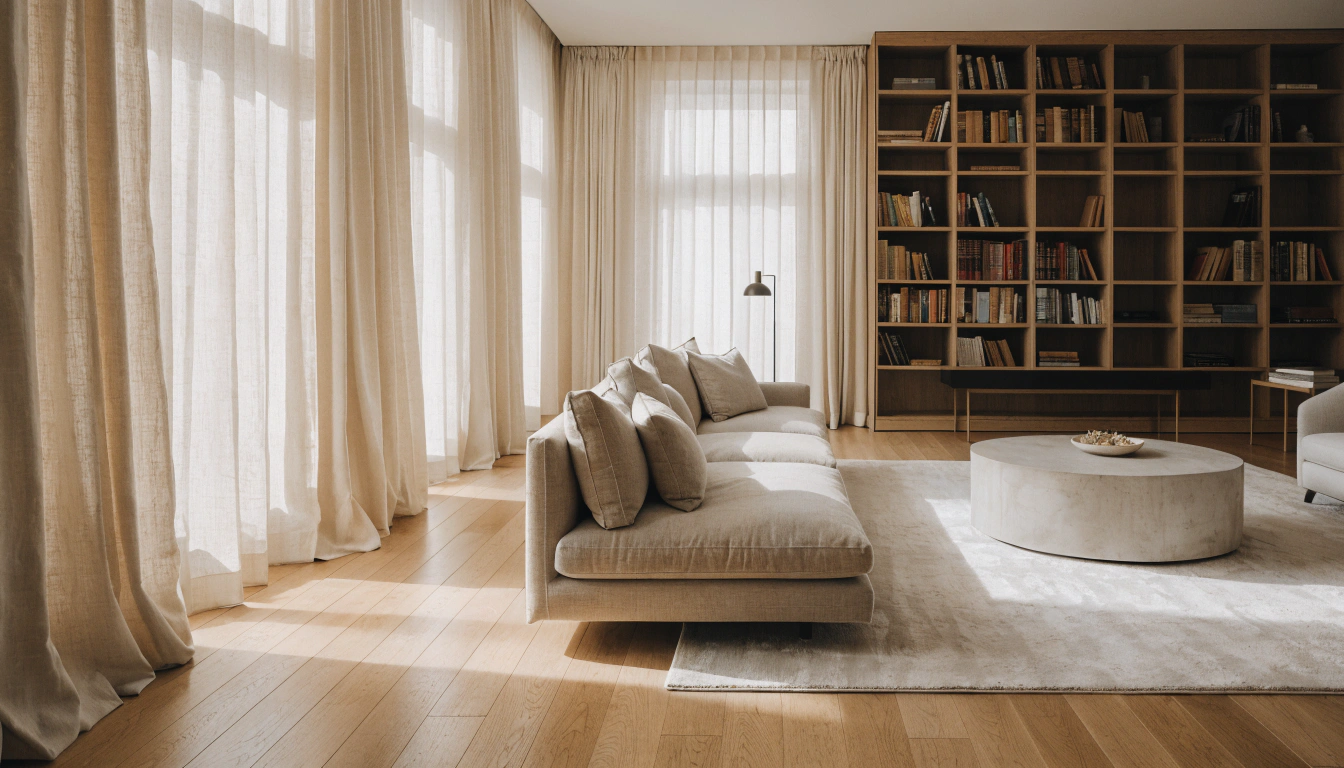




Feng Shui Living Room Layout With TV Stands and Storage Furniture
Most people overthink feng shui. A couple of friends I’ve set up living rooms for, honestly, thought it was about crystals and chimes over the sofa. It isn’t. Where you put the sofa, the TV, and your storage decides how a room feels the second you walk through the door. That’s the whole game. A well-planned feng shui living room reads calm even when the day doesn’t. No incense needed. This guide is for people who want practical, opinionated advice — sofa placement, TV stand position, storage that hides the daily mess, and the small fixes that get you to good feng shui without turning the project into a hobby in itself. Eighteen tips. A short checklist. Quick answers to the questions you’ll actually ask.
What Is Feng Shui in the Living Room?

Feng shui is an ancient Chinese practice with thousands of years of design thinking behind it. The name literally means “wind and water.” Strip the mysticism away, and one idea sits at the center: arrange your space so energy — sometimes called chi — can move through it without getting trapped. The deeper layers (yin and yang, the five elements, all of that) are interesting, but optional for this guide.
Why obsess over the living room? Easy answer. It’s where everyone lands. Family and friends, weekend movie nights, the random Wednesday afternoon you needed five quiet minutes. It all happens here.
You don’t have to believe in chi to feel the difference. Walk into a room with open pathways, soft lighting, and storage that actually hides the daily chaos. It just breathes better. That’s applying feng shui at its most useful — less philosophy, more lived-in calm.
Why the Living Room Sets the Tone
Walk into a cluttered room, and you'll feel it before you've sat down. The body picks up on layout faster than the brain catches on. Blocked path from the door, sofa pointing the wrong way, tangled cords behind the TV — none of these are deal-breakers alone, but they pile up. The living room is also the first room most guests see in your house. It sets the read on everything beyond it. Get the layout right, and people relax before they've shaken your hand. Layout first. Decor second.
18 Feng Shui Tips to Set Up Your Living Room
Below: 18 ways to apply feng shui in a living room without overdoing the rules. Some pull from classic feng shui principles. Others are practical furniture calls. Most people lean on the two pieces that quietly run any room: their TV stand and their storage furniture.
1. Clear the Clutter First

Don’t buy a single new piece until you’ve thinned out what’s already here. Old magazines you’ll never read. Three remotes for one TV. The shoebox of cables you’re saving for the apocalypse. Out. Clutter blocks the flow of energy, yes, but the more practical issue is that it makes the room feel smaller, louder, and busier than it actually is.
Sort by use. Store what you rarely touch. Donate or toss the rest. A rough rule: keep flat surfaces around 60–70% clear, and you’ll feel the room exhale.
2. Sit the Sofa in the Commanding Position

Of every feng shui idea, the commanding position is the one I’d refuse to compromise on. Set your sofa where you can see the front door from where you sit, but at an angle. Diagonal works. So does an offset across the room. A solid wall behind the sofa is the cherry on top.
Nothing mystical about why this works. You relax more when you can see who’s walking in. Nobody enjoys being startled by a flatmate while half-asleep on the couch.
3. Anchor the Room With a Solid TV Stand

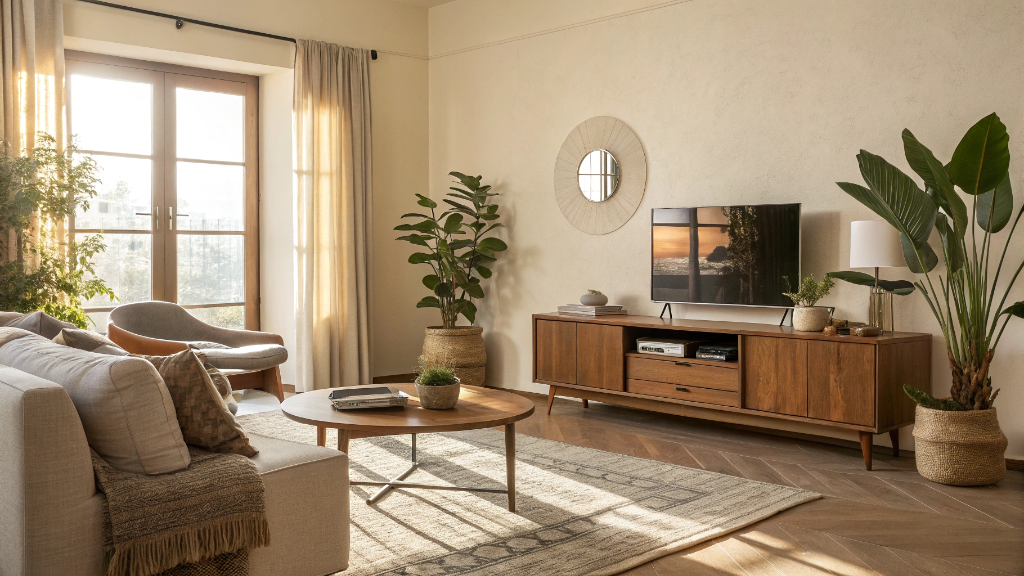
Don’t treat the TV stand like background furniture. It’s the visual anchor of the whole space — usually the first thing the eye lands on when you step in. Go wide. Go low. That shape balances the sofa and grounds the wall behind it instead of fighting it. Closed storage is doing extra work too: it hides cables, remotes, controllers, and that one HDMI dongle no one can identify.
Something like the Cas 65-Inch TV Stand with Cable Management does this job cleanly. The built-in cable channel deals with the cord mess that drags down 90% of otherwise great living rooms.
4. Don’t Put the TV Above the Fireplace

Every feng shui guide flags this one, and they’re right. Mounting a TV above the fireplace pushes your eyeline too far up — your neck will tell you within a month. It also pits two strong focal points against each other. Fire energy below, screen energy above, both demanding attention. Nobody wins.
If that’s the only TV-friendly wall you have, soften the contrast with art on either side. Better option: drop the TV onto a real media console and let the fireplace do the job it was already doing.
5. Hide Cables and Daily Mess in Closed Storage

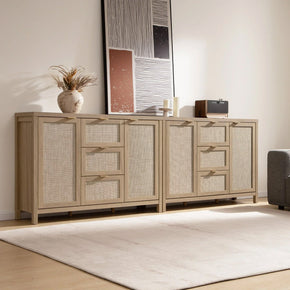
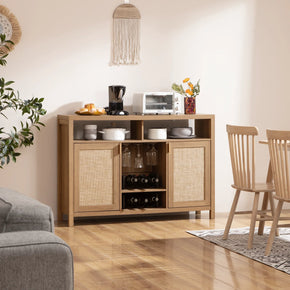
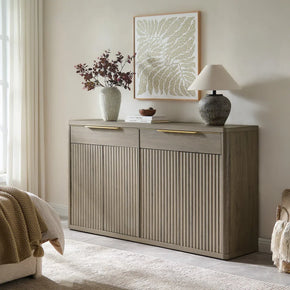
Two things kill the calm of a living room faster than anything else: visible cords and overloaded open shelves. Both are fixable with closed doors. Cabinets, sideboards, or media consoles — anything with adjustable internal shelves and a real cable pass-through will quietly fix what’s bugging you.
Stash remotes, chargers, and the gaming setup behind doors. The room reads lighter the same day, even before you’ve touched anything else.
6. Go Modular for Large or Open-Plan Rooms

Open-plan layouts have a strange problem. A normal-sized media stand makes a wide wall look unfinished. Pieces float. The space feels under-dressed. Modular storage solves it without making the room feel cluttered.
The Helio Modular TV Stand for TVs up to 100 inches handles big walls well. Stack, rearrange, expand later — it adapts as the room changes. Honestly, that flexibility is closer to the spirit of feng shui than the rigid “this goes here” version most articles describe.
7. Choose a Round or Soft-Edged Coffee Table

Curves over corners. That’s the rule when something sits within shin-bashing range of the sofa. Sharp edges pointed at where people sit create what feng shui calls poison arrows — a dramatic phrase for energy that doesn’t sit right. You may not be able to name the feeling, but you’ll feel it.
A round or oval coffee table softens an entire seating zone. Pair it with a wooden TV stand, and the room warms up immediately. The bonus you didn’t ask for: round tables are way easier to walk around with a tray of drinks in your hands.
8. Balance the Five Elements

There are five elements in feng shui: wood, fire, earth, metal, and water. A balanced room hints at all five without going overboard. The water-fire balance is where most rooms slip. Too much fire reads frantic. Too much water can drag the energy down. Use the chart below as a quick reference, not a homework assignment.
|
Element |
How to bring it in |
|
Wood |
Plants, wooden TV stand, sideboard, bookcase |
|
Fire |
Warm-toned lamps, candles, red or orange accents |
|
Earth |
Ceramic vases, beige or brown rugs, stone décor |
|
Metal |
Round mirrors, metal frames, white or gray accents |
|
Water |
Glass surfaces, dark blue throws, wavy art |
You don’t need to audit anything formally. Just notice what’s missing. If the space feels cold, add wood plants, a warmer-toned TV stand, or a candle. If it feels heavy, lighten it with metal or water touches like a round mirror or a glass tabletop.
9. Use a Console Table to Anchor a Floating Sofa

Sometimes the sofa simply can’t go against a wall. A row of windows. A doorway in the wrong place. An open-plan layout that places the living room at the center of everything. Don’t fight it. Put a low console table behind the sofa instead.
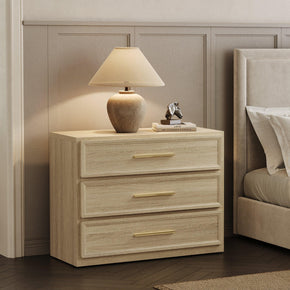
The Savanna Console Table with 3 Drawers does the trick. It gives the sofa visual backing, and the drawers swallow throws, paperbacks, the spare remote — anything that would otherwise pile up on the arm of the couch.
10. Add a Bookcase for Wood Element and Visual Calm

A bookcase brings in the wood element, which feng shui ties to growth and creativity. More practically, it solves the problem of tall, blank walls that quietly drag down the room. Pick one with both open shelves and closed doors. Display the books, photo frames, and the nice ceramic vase. Tuck the rest behind a door.
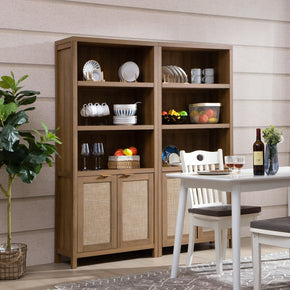
The Savanna Arched Bookcase works hard here. The arched top and rattan-detail doors keep it from feeling boxy or office-y. It pairs with most modern sofas and disappears into the background when you want it to.
11. Place Mirrors Carefully

Mirrors carry real weight in feng shui. They reflect — and amplify — whatever they face. Hang one across from a window, and you double the natural light pouring in. Lovely. Hang one straight across from the front door, and you bounce incoming energy right back out. Less lovely.
A few placements to avoid: across from clutter, across from the trash bin, or anywhere they catch a sharp corner. Round mirrors are usually considered the most balanced shape, but a clean rectangular one over the sofa works just as well in a modern space.
12. Layer Your Lighting

One overhead light is doing too much. Feng shui likes layered lighting that you can dim, brighten, or swap through the day. Warmer bulbs for evening. Cooler ones if you’re reading or working from the couch.
Aim for at least four light sources across the room:
- A ceiling fixture for general light
- A floor lamp next to the sofa for reading
- A small lamp on the console or sideboard
- Sconces or accent lights for art and shelves
The bigger goal: kill off the dark corners. Stale energy gathers there, and so does dust.
13. Bring in Healthy Plants

Living plants pump fresh chi back into a room. They also clean the air, soften the hard edges of furniture, and lift the mood in a way no decor object really can. If you’re new to houseplants, start easy: snake plant, pothos, peace lily, rubber plant. They forgive a lot of neglect.
One rule, though, and it’s strict. A dying plant in the living room sends the opposite message you want. Pull dry leaves. Rotate pots toward the light. Anything that’s clearly past saving — replace it. Don’t put it on display.
14. Pick Calming Colors and Earthy Tones

Warm neutrals are the safest base. Soft white, sand, beige, light gray, and the warm tone of natural wood. Use those as the canvas. Save the actual color for pillows, throws, art, and one or two accent pieces.
Greens calm. Blues cool. Yellows lift. Reds and oranges are sparks, not floodlights — a couple of throw pillows or one small piece of art is usually plenty.
15. Keep Pathways Open

Walk the room and pretend you’re a guest seeing it for the first time. Can you get from the front door to the sofa without sidestepping anything? Can you reach the windows without weaving? If so, the energy flow is working. If not, fix it now.
Pull bigger pieces a few inches off the walls. Counterintuitive, but the room actually feels larger when furniture has space around it. Don’t stuff every corner. Leave one clean route from the entrance straight through the seating zone.
16. Choose Storage Furniture That Closes

Open shelving looks beautiful in design magazines. In real living rooms, it collects dust and stray junk within a week. The realistic move is a mix — a few open shelves for the items you actually want on display, closed doors for everything else.
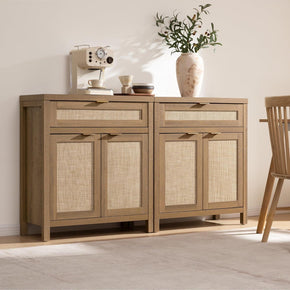
When matching pieces work together to create harmony across the room, the brain reads the space as calmer. Browse the Sicotas living room furniture collection if you want a set that already does this work — coordinated TV stands, sideboards, bookcases, and consoles—less decision fatigue. Cleaner result.
17. Hang Art at the Right Height

Most people hang their art too high. The center of any piece should land around standing eye level — roughly 57 to 60 inches off the floor. If it’s going above the sofa, leave a 6 to 10-inch gap between the back of the couch and the bottom of the frame.
What goes in the frame matters too. Pick something that lifts you. Skip the moody self-portraits, the storm-cloud landscapes, the gift print from an ex. Nature scenes, soft abstracts, calm photos of family and friends — all good calls for a social room.
18. Refresh Air, Light, and Energy Often

A feng shui living room is never really finished. That’s part of the point. Open the windows for nine or ten minutes a few times a week. Feng shui considers nine an auspicious number, but honestly, the room just feels better after it’s been aired out.
Move things around every couple of months. Swap a throw. Rotate art on the wall. Change pillow covers with the season. Small shifts wake the room back up and keep it from going stale.
Quick Feng Shui Living Room Layout Checklist
Before you stop tweaking and let yourself enjoy the room, run through this:
- The sofa faces the entrance, but isn’t directly in line with it
- A solid wall or console table sits behind the sofa
- Walkways are open and clear
- The TV stand is low, with closed storage for cables
- The coffee table is round or has soft edges
- All five elements show up in small touches
- Mirrors reflect light, beauty, or nature — never clutter or the front door
- Plants are healthy placed
- Lighting is layered, with no dark corners
- Décor feels meaningful, not just trendy
Tick most of these, and you’re already 80% of the way there.
Common Feng Shui Living Room Mistakes to Avoid
A few small habits quietly wreck a well-styled room. Catch them now or you'll be redoing it in three months.
Blocking the door. Bags, shoes, oversized consoles near the entrance kill good energy before it gets in.
Back to the door. A sofa with its back to the entrance feels uneasy, even when no one's around. Hard to explain, easy to feel.
TV everywhere. When the screen dominates every angle, the room can't rest. Move it, hide it, or pick one sightline.
Sharp angles at seating. Cabinet corners, bookshelf edges, and sharp lines at the sofa create quiet tension. Soften them.
Dying plants, broken items. Both signal stagnant energy. Fix, swap, or remove.
Mirror facing the front door. Reflects energy straight back outside. Turn it 90 degrees.
Too much furniture. Crowded rooms feel heavy. Less almost always wins.
Fix two of these. The room shifts. You'll feel it within a week.
Build Your Feng Shui Living Room With the Right Pieces

You don't need to redo the whole house. Honestly, you don't. Nail the layout first, then swap in one or two pieces that actually pull weight. A TV stand that fits the wall, a coffee table that doesn't block the walking path, a closed sideboard, one healthy plant — that's 80% of the win right there. The wider modern Sicotas furniture range covers the categories that matter for this: media consoles, bookcases, sideboards, and storage. Skip the urge to fill every corner. Pick a few pieces that read calm in the room and still hold up three years from now.
FAQs
Where should I place the sofa for good feng shui?
Set the sofa where you can see the front door from where you sit, but at an angle — never directly in line with it. A solid wall behind is the easiest backing. If you don’t have one, a console table or low cabinet works just as well.
Should the TV stand face the door in a feng shui living room?
No. The TV stand belongs on a wall that doesn’t compete with the front entrance. In feng shui, the sofa — not the TV — takes the commanding position. Keep the screen at a comfortable seated height and use closed storage to deal with cords.
Is a TV good or bad feng shui?
TVs aren’t inherently bad feng shui. The screen just shouldn’t run the room. Mount it cleanly or place it on a low media console with real storage. Keep speakers and gaming gear tidy underneath. And try to avoid hanging it above a fireplace if you can.
What color is best for a feng shui living room?
Warm neutrals are the safest base — soft white, beige, light gray, natural wood. Layer accent colors with intention: green for calm, blue to cool the room down, small touches of red, yellow, or gold for warmth. One bold color across an entire room usually overwhelms the space.
Sources
- Britannica – Feng Shui
- The Spruce – How to Feng Shui Your Living Room
- Castlery – Expert Feng Shui Tips for the Living Room
- MyDomaine – Feng Shui Living Room Tips From an Expert
- IKEA Life at Home – Feng Shui the Modern Way
- PODS Blog – Living Room Feng Shui Guide
- Better Homes & Gardens – Feng Shui Basics for Every Room


Stay In The Know
Expert advice. Very good deals. The absolute best (and worst) things we've tested lately.
Looking for something else?
Best Vase for Tulips: A Florist's Honest Guide to Shape, Height, and Styling
LEARN MORE
41 Small Outdoor Living Spaces Ideas to Transform Even the Tiniest Patio
LEARN MORE
Modern Sideboard for Living Room: Complete Buying & Styling Guide
LEARN MORE
17 Camel Leather Sofa Decorating Ideas to Transform Your Living Room
LEARN MORERead more from Blogs
Looking for something else?
36 Wall Art Ideas That Make Any Room Feel Finished
LEARN MORE
What is an Ottoman? 8 Reasons Why You Need One
LEARN MORE
How to Sit in Bed With Good Posture: 10 Simple Tips
LEARN MORERead more from Blogs
You may also like


Further reading
What Is a Platform Bed? A Simple Guide to Types, Benefits, and Buying
Bed Sizes Guide: Dimensions From Twin to King